Episode 96: Miles Hlivko
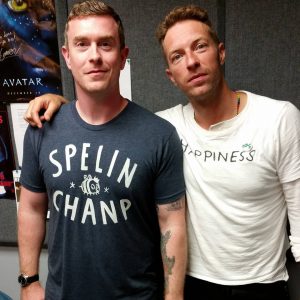 NOT Chris Martin[/caption]
I LOVE KIIS. Grew up there, it was my favorite station and they remain a leader on the cutting edge of major market CHR radio. The not so new Imaging Director (about 1 year in now) is Miles Hlivko. YEP...Another major talent to come out of Ohio, and more specifically, Cleveland. He was at WMMS for years elevating to APD in 2013. As we learn in the interview he had two shots at the KIIS gig but waited until everything was just right. His creativity is off the hook. And when guys like John Frost are singing your praises...you are doing something right!
Check out the show and hit Miles up on Twitter HERE: https://twitter.com/mileshlivko
NOT Chris Martin[/caption]
I LOVE KIIS. Grew up there, it was my favorite station and they remain a leader on the cutting edge of major market CHR radio. The not so new Imaging Director (about 1 year in now) is Miles Hlivko. YEP...Another major talent to come out of Ohio, and more specifically, Cleveland. He was at WMMS for years elevating to APD in 2013. As we learn in the interview he had two shots at the KIIS gig but waited until everything was just right. His creativity is off the hook. And when guys like John Frost are singing your praises...you are doing something right!
Check out the show and hit Miles up on Twitter HERE: https://twitter.com/mileshlivko
Transcript
62 min read • 9,286 words
Announcer: The Producers, featuring the most respected international talent in the world of audio production and voiceover. Radio, TV, film, and online. In-depth interviews, industry insights, putting you on the inside. This is The Producers Podcast with Ryan Dreen.
Ryan: Hello, hello, podcast time, obviously, because you're listening to it. Maybe download on the site, whatever. Let's see here, I don't have a ton to do here in the intro, 2 little pieces of business, I guess, really just to let you know, or a reminder perhaps. I went ahead and simplified the entire website. The domain is now simply ryandream.com, but producerspodcast.com still works. Ryan on the Radio, in fact, still works. But if you wanted to update your favorites, if you have any bookmarks, I should say, for, you know, the show feed or the main site, whatever you have, you can do that. If you wanna reach out to me, or I should say business number 2, if you wanna reach out to me with names, people that you think should be on this show. I don't think I've mentioned this in the intro in a little while. I always love the request, especially if it's people I just simply don't know about. Don't be afraid to throw names at me, especially if you're thinking, hey, he's gotta know about this guy, right? Or this gal, right? But toss them at me. I don't know everybody, that's for sure. That's my simple Gmail address I'm happy to hand out. You can also hit the contact form at the website. which again is just simply ryandreen.com. Alright, I'd say that's enough. Plenty of shows that I'm working on, blah blah blah, nobody to really mention as of yet. 100th episode coming up soon, but for now, the interview with Miles Hlivko. In fact, I'll mention his Twitter in the outset here. It's simply @MilesHlivko, and that is H-L-I-V-K-O. I think I said his name correctly most of the time, maybe not all the time, but let's start with some Fabulous audio from Miles, and then we'll get into the interview. Los Angeles, 500 years in the future. I don't see anything yet. Yeah, just keep looking. Anything over there? Oh wait, hold up. Oh, I just realized where we are. This is the stage. This is where it happened. Where what happened? Think 2015. Oh my God. Wango Tango 2015. The crowds getting all amped up, screaming, knowing all the words. Epic. Out of this world. Wango Tango. Oh my God, a tiger! Oh wait, I'm at the zoo. Let's listen to 106.7 The D, Whatever Rocks. Tiger! Live every day like it's Taco Tuesday. 102.7 KISS Look, lads, on the horizon! Twelve K a day! Nice, enough booty for everyone. Get your hands on some of this booty. Win a thousand dollars every freaking hour. All you have to do is text the keywords in. Listen for keywords. Text the bid and take your cut of the Twelve K a day giveaways. Twelve K a day, I heart radio, I say. Just keep it here for the keywords to text in for your shot at a grand. It'll ding a. Ding dang, you're ding-a-long ling-long. On air with Ryan Seacrest. In speakers now on 102.7 KISS FM.
Ryan: All right, we, we roll again with, well, he produces— it's still one of my favorite stations on planet Earth. I grew up with it though. I love KISS FM, always have. But, why don't I say his name and I'll do my best. Miles Hlivko or Livko?
Miles Hlivko: Yeah, nailed it.
Ryan: Okay, so that was actually gonna be— I was joking with you before we started here, and I kind of joked in my previous episode that I would just simply ask you how to do it, but I guess I got it all right. So say your name though so that everybody knows exactly, you know, how it's properly said.
Miles Hlivko: Yeah, it's Miles Hlivko. So the H isn't like totally silent, but normally like if I'm going easy on people, I'll just say the H is silent, you know, you can leave it off. But it's almost like you just kind of breathe before you get to the L.
Ryan: Yeah, cool. I heard Frost say your name a couple times when I chatted with him last, and I went, okay, wait, no, I know, I know how to say it. I know how to say it. And then whatever. anyway, we actually—
Miles Hlivko: I had, Hosier in here, not too long ago, and, he's an artist whose name everybody, will butcher. You know, he gets like, Hosier, Hosier, Hosier. yeah, and all that. So we, we related on that level.
Ryan: That's good, that's good. But he uses his H to the full extent.
Miles Hlivko: Yeah.
Ryan: You go 50% H. So, okay. Anyway, being completely serious though, I did grow up in Los Angeles, and while most of my friends were listening to K-rock, I would, you know, tune into it on occasion, but I just loved KISS. I love KISS. So, you know, how awesome is it to work at KISS?
Miles Hlivko: Oh my God, this is a dream. if not a dream job, the dream job, you know what I mean?
Ryan: Yeah.
Miles Hlivko: Like, when I first learned what radio imaging was, I was listening to sort of like secondhand acquired John Frost stuff from KROQ. And through that, like, I got on to listening to Kelly Kelly Kelly stuff at KISS. And I always dreamed like, man, what would that even be like to be working at a station like that? And to be here now is just— it blows my mind. Like yesterday I was just hanging out outside with my wife. And I wanted to call John Ivy and be like, dude, my life is so good now. I can't thank you enough for bringing me out here. But I don't know. He would've thought I was crazy and he probably already does. So I didn't call.
Ryan: Yeah.
Miles Hlivko: Yeah.
Ryan: You may as well let people assume you are crazy and don't prove it often. Sometimes is a good rule. So it's awesome as I could expect it would be. That's great. Where do I start? I mean, I've written here, Cleveland. I don't actually know where you were born and raised. I'll ask you that. But on top of that, fricking Cleveland puts talent out there, man. What is the deal with Cleveland?
Miles Hlivko: well, there's a stand-up comedian, and I forget, who it is off the top of my head, but, it might be Jim Gaffigan, or, I think it's Bill Burr actually has a bit about, Ohio has the most astronauts of any state. And it's like, what is it about your state that makes people want to leave the fucking planet? And like, you know, I think people from the area have a good sense of humor about that stuff. Like, I love Ohio. I'm from Akron, Ohio, same birthplace as LeBron James and the Black Keys, Devo. That's my guy. Marilyn Manson's from Canton, which is, real close to there.
Ryan: Mm-hmm.
Miles Hlivko: And, but, yeah, I don't know. I think, people from that area, have a tendency to work really hard. You know, it's like a blue-collar Rust Belt, area. And, you know, we're raised by usually either like farmers or factory workers and stuff. And so that it's a real grind mentality and, people work very hard. I don't know if it's, you know, a unique thing to have a hardworking mentality. But my mom told me when I was considering moving out here that when she was pregnant with me, she was thinking about maybe moving to Los Angeles and all her friends were like, you should totally do that. Just tell them you're from Ohio and they will hire you because people from Ohio work hard.
Ryan: Yeah.
Miles Hlivko: So, I mean, that's one of the mom stories and there's probably some truth to that, but Yeah, I don't know. I love being from there and I think it's instilled some good hardworking values into me.
Ryan: Yeah. Well, before we get into your actual, you know, the chain of your events in your career, it is crazy just from a radio perspective and even from a radio imaging producer perspective. I don't even want to start listing names because I'm going to leave some people out, but there's a really long list of legendary people that have come from, or at least worked in, the Cleveland market. And, you're one of them now, man.
Miles Hlivko: Well, thank you for that. And, like, well, I, I'm nervous just to be on this podcast, you know, seeing the list of people that you've had on here before. It's like, fuck, how am I gonna live up to that? but yeah, I mean, it was kind of the same thing when I started at WMMS in Cleveland, you know, like there was a, you know, that's a station with a ton of heritage. and a long line of really fucking awesome imaging people. And I cuss a lot, I apologize. is this a—
Ryan: Yeah, I was gonna say, I've heard cussing on the podcast before.
Miles Hlivko: It's not like a PG thing, right?
Ryan: no, I, I, I usually ignore it. I, don't— whatever.
Miles Hlivko: I mean, do it.
Ryan: Talk how you talk.
Miles Hlivko: I just don't want to create an editing nightmare for you.
Ryan: I don't— I don't know if I would edit you or not. I probably will wait until I figure out if it's an issue or not. So anyway, don't worry about it. Talk how you talk and, If I— whatever, don't worry about it.
Miles Hlivko: Yeah, but so when I started interning at then Clear Channel Cleveland, Bob Coates was imaging WMMS and he is phenomenal. He's crushing it at TAM and at Production Vault now. Prior to that, I think I have the order all messed up, but Cousin Deke, Mitch Todd, and Len Boom Goldberg being the voice of the station for 30 years and when I first got to MMS and I started hearing the imaging in person, I was like, oh, like, I've heard this stuff in the car, and some of the stuff actually, like, stood out to me from just listening as a listener, to the radio station. Like, there was a sweeper, where John Wells says, we think gun control means using both hands. And, you know, like, that's sort of like a bumper sticker line, but his delivery on it and the way that, Deke produced it just sounded, like, really dark and kind of like affects you emotionally when you hear that. And so yeah, there were some really big shoes to fill there when I started. Yeah.
Ryan: And the market in general too, a lot of other great talent has come from there. So it's cool. It's exciting. But you said you interned there. That wasn't literally your first radio job, was it? MMS Cleveland?
Miles Hlivko: Yeah. Well, I was going to the Ohio Center for Broadcasting and because like My plan for my whole life was to draw comic books for a living.
Ryan: Okay.
Miles Hlivko: And, like, I don't know, it wasn't working out. Like, I started getting positive form letters back, but they were still form letters, and I wasn't getting any work. Like, I think the most money I ever made drawing comic books was like, when I was going to broadcasting school, I would draw like pinups of like X-Men female characters and sell them on eBay for like $5 or $10. So my mom was tired of me living in her house and she went to the Ohio Center for Broadcasting and did mornings in Youngstown for like 15 years. She's on in Akron now. And so she talked me into going there.
Ryan: What is she on in Akron? What is she on in Akron?
Miles Hlivko: Yeah, my mom is Bobby Horvath. She's on WAKR, does midday talk there.
Ryan: Oh, cool. So you were— you had it in the blood. You never had a chance.
Miles Hlivko: Yeah. Yeah, I guess so. but, yeah, so I started going there and, I was interning. I got an internship with Scott Glaser who was imaging, Mix 106.5 at the time. And, so he brought me in and kind of showed me how to use Pro Tools. And, yeah, I mean, I guess I got into it from there and I would just produce stuff for fun. And I produced this comedy bit, just to entertain myself. that was like a car dealer spot, and the car dealer was saying, if we can't get you approved for a loan, you can throw a baby off the roof. And so this guy comes up and he's like, hey, we didn't get approved for the loan, it sucks. And he goes, here you go, grab a baby out of this bucket and throw it out on the freeway, buddy. And so that was the whole bit. Like, the whole joke was just the sound effects of babies flying off of the roof and landing on the freeway and getting run over by semis. And So Scott played that for the afternoon guy on MMS at the time, who was Slats, and Slats loved it and started playing that. And that actually got me a gig for like 6 hours a week getting paid to do bits for Slats. And that was my first production job, was doing the comedy bits.
Ryan: Yeah.
Miles Hlivko: And so through that and like learning imaging from Scott Glaser and, you know, other awesome guys there like Bob Coates and AJ Allen.
Ryan: Mm-hmm.
Miles Hlivko: Like, I started making demos and I got pulled into Kevin Matheny's office at one point, and he was very enigmatic with the way that he spoke, and which I just thought was fascinating. And he is making this circular motion with his finger and he says, forces are at work and I may have a position for you. I need you to make a demo for each one of the 6 stations in this cluster. And, so what was actually happening was Jay Bohannon, was leaving imaging at WTAM. Bob Coates was moving from MMS to TAM, and they were thinking of putting me in the MMS slot, but he couldn't— you know, this was all confidential, so he couldn't tell me. So he just said, make a demo for each of the formats.
Ryan: Mm-hmm.
Miles Hlivko: so I waited for everybody to leave, and, highly unethical, I don't recommend anybody do this, but I snuck into everybody's studios after they left and took voiceover sessions off of their computers so that I could produce them with my own production and stuff. And I made all 6 demos that night and slid them under Kevin's door so it'd be waiting for him in the morning when he got in. And so things kind of— I mean, the short version is things worked out from there.
Ryan: Things worked out, right. And, well, that's— there's a lot of things to discuss from that. Do you, you know, the late Kevin Matheny, now sadly. But do you— just for those that might not know who he is, would you like to tell people who he is?
Miles Hlivko: Kevin Matheny was, not so flatteringly portrayed in the Howard Stern Private Parts movie by Paul Giamatti. And, his character name in the movie, which, I hear was like— it was like a combination of Kevin Matheny and another one of Howard's bosses. But, he was referred to as Pig Vomit in the movie. And, on the air, he was actually Pig virus, but yeah, man. If Kevin didn't like you, he would not mince words about that. But you know, a lot of people were on his good side, and like, if not for him, WMMS might have been blown up because he made a huge coup and got Rover's Morning Glory from our competition across the street at 92.3 and brought Rover over, and like, MMS has been killing it. since then. Like, that was a huge move.
Ryan: That's funny. There's so many of these little connections. When I first started in radio, Rover's— actually Mike Crank, but Rover's real— his entire show was kind of like, oh, wait a minute, I want to do stuff like that. But he was on Nights at the Peak in Denver, and that's when I would hear him.
Miles Hlivko: Okay.
Ryan: And then, yeah, so then when Stern left and they started filling him up all over the place, and then Rover— anyway, that's funny that you were there. when he actually went to MMS.
Miles Hlivko: Yeah, and I love those guys. I still like do like some funny stuff here and there for Rover's Morning Glory and like listen to their podcasts and watch the TV stuff. I love Rover and them.
Ryan: That's awesome. Are you— this is really random and odd, but— and he's at your competition, but are you familiar with Mike Crank by chance?
Miles Hlivko: Yeah, he's— I know he's really good friends with Rover and, you know, I listen to KROQ and Jack FM when I can, you know, Crank's a genius.
Ryan: Yeah, cool. So the KISS gig, let's just move ahead to that because, you know, I like hearing the— I like hearing— it's almost like the professional meet cute, you know, how Ivy must have said, hey, hey buddy, you know, however it goes. But, you know, seriously, how did it go to get you to KISS?
Miles Hlivko: Well, actually, a few years ago it sort of came up and I wasn't ready for it at all. Like, I had heard that there was something going on in LA, and Kelly called me and said, "Hey, like this is what's going on. We want to bring you out to kiss." And I was like, "Oh man, like I'm not ready to move right now." Like I was really scared about you know moving to a really big city. I had just bought a house, and like I got that crazy tax credit. So if I tried to sell my house, then I would have owed. 10 grand back to the government. And really, I was just too nervous about it and wasn't mentally prepared for the pressure of it, I don't think. And so I passed on that. And Forrest Martin came in and, you know, was killing it. And now he's killing it over at Apple Music. And so when he left, the position was vacant again. And At that point, I was totally ready. You know, like, I had some more experience with doing the National Programming Group stuff for iHeartRadio, and so that had calmed my nerves a bit as far as like working on gigantic projects. And, you know, doing the iHeartRadio Music Festival stuff and, you know, national promos that are on in like a bunch of different markets, I think calmed my nerves about that. And I think to some extent I was kind of ready for a new, a new city to explore and like to get out of my comfort zone career-wise and come out here and start working for KISS. So I was super excited about it when they called me about it then.
Ryan: And so obviously, well, you just said Kelly contacted you about it, but was it really— is that a John Ivy decision? I mean, is he at the end of the day, he was the wall and you had to— did you know him before that or was this like a first-time meeting? You had to kind of impress him and really show him what you were all about?
Miles Hlivko: Yeah, it was my first time meeting him. I knew of him obviously because of his involvement in national iHeart stuff. Oh yeah. When we have world premieres and all that, we'll get emails from John Ivy. But yeah, that was my first time meeting him was when I came out here for the interview. And, like part of the interview process, I had to write, voice, and produce some stuff to play for him. And, you know, just to kind of see what I could come up with on the fly. But yeah, I mean, like we hit it off right off the bat, I think, you know, like he's super easy to get along with and He's like a no-BS kind of person, and I tend to gel with those people pretty well.
Ryan: Totally off topic, but I was at CRS this past year. I think it was probably my favorite panel, although there were a lot of great ones. But I don't even know if you know what that is. It's the Country Radio Seminar. Anyway, John Ivy was on a panel with some non-country people talking about the format, and he was probably my favorite person. Just, but it's literally what you just said. No BS. Here's the way it is, like it or not.
Miles Hlivko: Yeah.
Ryan: very impressive individual. And, I, I just, I think it would be a pretty awesome experience to be able to work for him.
Miles Hlivko: Oh yeah. And like to hear, his stories about the people that he's worked with and, you know, the experiences that he's had with, mega superstars, you know, telling stories about hanging out with, you know, David Bowie and Frank Zappa. And, yeah, it's, it's very inspiring to work with somebody who is as good as he is, and it's super fun to work with somebody who, like, I don't know, has, has cool stories to tell and doesn't give a shit about busting your balls.
Ryan: you know, we could talk about day-to-day at KISS. I guess I, I'd be interested just to give people a feel for the environment, you know, those that have never really had a gig like you have. Is it an 8-hour-a-day job? Is it, you know, you're working weekends? Is it you might be working overnights on some projects? Give me a feel for how things go there.
Miles Hlivko: I don't know. It's— I sort of was expecting questions like that, but I honestly don't really keep track of stuff like that. You know, ideally I try to work, you know, from like 7:30 or 8 in the morning until, you know, 5-ish in the afternoon. And like, I— barely ever leave my studio. I'm in here, like, I eat lunch while I'm working so that I don't have to, you know, spend too much time away from home and stuff like that. But, you know, I mean, there are 16-hour days, and it's hard. It's kind of hard to quantify because, like, what do you consider work? Like, if I'm at home and I'm just kind of sitting around writing stuff, like, is that considered work? Or, you know, because it's stuff that I'm gonna use when I get back to the studio.
Ryan: Yeah.
Miles Hlivko: And so if— I mean, I'm constantly writing stuff. I work at least a little bit every single day.
Ryan: I'd say to give people a better idea of just kind of the environment, I mean, so, you know, you're kind of in the office, quote unquote, you're in your studio, you know, by 8-ish in the morning, and you never really leave before 5. But generally speaking, you're rarely in there grinding out production until 2 in the morning.
Miles Hlivko: Yeah, that's— I mean, that's pretty rare. Like, I Since the first month I was out here, there hadn't been like a dedicated imaging person here for at least a couple months, I think. So stuff was pretty stale, and I was trying to just reimage the entire station in that first month. So that first month was pretty much like 12 to 16 hour days every single day.
Ryan: Hmm.
Miles Hlivko: But I also was out here by myself, and my wife hadn't moved out yet, so I didn't really have anything else to do, so it was fine. and I was kind of Trying to feel out what the voice of the station was going to be. So it was a lot of work right off the bat. Since then, I've had long days, but they're an exception and not the norm, I would say.
Ryan: And then meetings, is it regular? Do you have writing meetings with Jon or other people at the station? Do you work pretty solo? Do you have all of your work need to go through a committee before it hits the air? You know, how are those things worked out at a station like KISS these days?
Miles Hlivko: well, we have promo meetings every week. as far as, creative sweepers, I usually try to run those by John, when I get a chance. And I don't send scripts, I'll just produce them up and, like take a CD down and listen to them or email them to him or something like that. But, stuff that is, that I know is going to be safe or stuff that I feel like urgently needs to be updated, I'll just throw it on the air and, you know, it's fine. Like, I've been told to pull like 2 things in the past year that I've been here, so I think that's a pretty good track record so far.
Ryan: Yeah, no, I mean, unless you let like the C-word get through somehow, that would be bad.
Miles Hlivko: That would be super bad.
Ryan: Yeah, yeah, it wouldn't be ideal. Cool. I mean, we could probably talk, you know, day-to-day stuff, but that could probably get a little tedious and boring. I'm a little more interested in It sounds like when you started out, you were very creative. You were obviously on the creative side of the spectrum. And my spectrum is kind of like, you know, 100% creative on one side, 100% technical on the other. And I think we got to find a balance. So where do you lean now? Have you become more technical? Do you still kind of stay wacky and stay over on the creative side? Where do you categorize yourself?
Miles Hlivko: I think for the most part, I keep things pretty loose, like in terms of The technical side of production, the, the most intensive part of that is processing a voiceover because other than that, if you have high-quality sound effects and high-quality music, like that stuff has already been mixed and is basically ready to go unless you have like a super loud lead instrument in a music bed that you need to bring down a little bit. Then you do kind of like a scoop EQ around the 800 Hz range to make a hole for the voice to punch through.
Ryan: Mm-hmm.
Miles Hlivko: But other than that, I, you know, it's, it's not like music production where you're trying to balance the mix, and, fit, all of these different, voices and instruments under your headroom, you know? Like, I think imaging is, not as complicated as that. And if you make it overcomplicated, sometimes it can end up sounding worse, you know?
Ryan: Yeah, yeah, for sure. Tell us a little bit about— let's talk tech real fast. first of all, would you categorize yourself as a pretty you know, big-time audiophile? Are you way into, you know, all of the plugins and very technically savvy when you're in your mix, you know, as far as the things you're putting on your master bus?
Miles Hlivko: depends who you're comparing me to. compared to Drew Hall, no.
Ryan: Okay.
Miles Hlivko: but, yeah, I mean, I, I kind of experiment with different, compressors and limiters and pick the ones that I think sound best. And I don't know what kind of programming magic makes one sound different than another, but, there's—
Ryan: But they do sound different and you know that.
Miles Hlivko: Yeah, for sure. yeah, and, I'm sorry, what was the question?
Ryan: Well, you know what, you know, you're kind of answering it, I'd say. you actually brought up Drew's name, so you probably know your way around, you know, aux buses and chaining, you know, comps and EQs together on your master and all that.
Miles Hlivko: Yeah, yeah, that kind of came out of, necessity because I didn't have enough, RAM to run all of the plugins that I wanted simultaneously. so that's how I learned to route the VO channels to an aux bus.
Ryan: Sure. And you already brought up Drew's name, but are there other people though that you still kind of look up to, at least on the technical side, where you, you go to for assistance or to find out about new software or maybe even hardware that you'd like to use?
Miles Hlivko: Oh yeah, the whole Tampa echelon of Drew, Eric Chase, Nick Daley, those guys, I don't know that it gets any better than them, seriously. And, you know, if you want a clean sounding mix that's as loud as it can possibly be, they're the ones to talk to. And, like Nick Daley, was posting some stuff about the RX, audio cleanup suite of plugins, and he's got like the mega, you know, for TV, dialogue audio version of that. But I got the cheap one, and, even with that, that plugin— those plugins are amazing. Like, they're so easy to use and they sound so much better than like what we're used to as far as noise reduction. The D-Clipper—
Ryan: Uh-huh.
Miles Hlivko: is unbelievable. I didn't think that was ever even possible. but, I actually tweeted at them. I was like, there's no magic wand for bad audio is no longer an excuse because of the stuff that they did. Like, it's crazy.
Ryan: Yeah, no, it's totally true. I might've actually, I can't remember. I had, I was looking for something in that realm and it might've been something I read from him or others, but yeah, I grabbed the same thing. Totally agree. That is a great tool for people to have for a rather good price.
Miles Hlivko: Yeah, especially like around the holidays, or like around holidays, they'll put it on sale for like $80.
Ryan: There you go, exactly. I was gonna say under $100, you can grab yourself that. you could also spend thousands on, restoration type plugins as well if you want to. as far as, you know, technology you have going in the studio, you already mentioned Pro Tools. Are you a Mac or a PC guy?
Miles Hlivko: neither, both. I have a—
Ryan: whatever—
Miles Hlivko: iMac, at the studio. Because that's, you know, what they got for me. At home, I have a couple PCs that I built myself, and one of them was like my dedicated gaming PC, and one of them was my production PC. But when I upgraded to Pro Tools 12, the new software structure doesn't work on the Core 2 Duo processor, so I had to move it over to my i7 rig. But it still was a great move.
Ryan: Yeah.
Miles Hlivko: Like the offline bounce with the 64-bit Pro Tools is, a game changer for sure.
Ryan: Yeah, big fan. Love the version 12. There's a lot of other little features that are fun. you know, it's the little things that they do though, because I'm kind of a nerd. I think you probably— it sounds like you're a bit of one too. just dragging tracks around the way that they've kind of more elegantly coded it so you can see the waveform as you move a little bit better.
Miles Hlivko: Yeah.
Ryan: And where you're going to be dropping. Little stuff like that I really enjoy.
Miles Hlivko: it's cool that, they're more open with the interfaces that you can use now too. 'cause I'm still using, my, Mbox 2 Mini, as my interface on that.
Ryan: I almost, I almost joked and said, you're not using an Mbox 2, are you?
Miles Hlivko: Well, you know, I'm not recording orchestras at home. It's either like a guitar or a microphone. So. Yeah. Yeah.
Ryan: Yeah. I mean, it's always the number one rule above everything else. If it works for you, it's fine. And that's all that matters.
Miles Hlivko: I was playing around with some other, DAWs to see if I could do— go like a cheaper route versus getting like new Pro Tools and new Waves plugins and all that. so I was playing around with Reaper for a while, and that is actually like, if all you— if all I were doing was music, I think I would stick with that. because that's super powerful and really cheap, and the developers, are constantly updating it with new features, and they listen to the community with stuff that they want.
Ryan: Yeah.
Miles Hlivko: but it doesn't have, the, what do you call it? Like destructive audio, like the audio suite that Pro Tools has. like you have to integrate a third-party kind of audio editor to be able to do stuff like that, which is kind of clunky. And I think that's pretty essential to imaging.
Ryan: I absolutely agree. And I had not, I opened Reaper once or twice and I honestly, I just really, really enjoy Pro Tools. And I thought, what am I going to do? I'm going to sit, I'm going to put myself through hours trying to get used to a new DAW. And then, Why am I doing that? I'm just going to stay. So I didn't bother. I really don't know what, what it has, but I've heard a lot of great things about it.
Miles Hlivko: Yeah. I'm the same way with new software. Like I have Ableton, which I got like a year ago so that I could start learning how to use it to use for the WUBN fireworks in Cincinnati, because there's a lot of like beat matching and music mixing and stuff like that. I was like, oh, Ableton would probably be super useful for that. But I just, You know, I'm not motivated to take the time to do all the tutorials and learn it and stuff. I really need to, but maybe with that deadline coming up, I'll be motivated to take a crash course.
Ryan: Yeah, for sure. I know with music, I've now heard it way too much to not bring it up. Have you— I don't know if you like to make music, but Logic is kind of becoming the end-all be-all. Like, if you are just making music, you're using Logic. There's, you know, that's kind of the consensus.
Miles Hlivko: Yeah, Logic is good. I actually, I got into production because of music. Like when I was a teenager, I listened to a lot of industrial music. So like Nine Inch Nails, Frontline Assembly, Ministry, stuff like that. And I would hear the music that they were making. I would say, wow, that sounds really cool. I want to learn how to do that. And so that's how I got into the whole like editing and audio side of things.
Ryan: Yeah.
Miles Hlivko: And like, I still work on music personally, like just for fun and stuff. I was in a metal band for a while and our drummer was the producer and he used Logic and would, you know, throw shade at me for using Pro Tools and stuff. And, yeah, I mean, you can pretty much do anything with any audio editor. Like, they're all like, Pro Tools, Reaper, Logic, Audition. Like, you can do all the same stuff with all of them. They're just sort of like— it's like learning a different language, kind of.
Ryan: Yeah, yeah. Or even just a different dialect of the same language.
Miles Hlivko: Yeah, for sure.
Ryan: okay, great. What other tools do you have in your studio that we should know about? Software, plugins, or anything else? You know, some awesome audio destructive plugin that you love, or what are some things you use every day?
Miles Hlivko: well, I know that Frost brought this one up, but Speakerphone is really good and a huge time saver. Yeah, because like if you want to emulate a certain kind of speaker or microphone or environment, you know, normally you'd have to go through all kinds of EQing and dynamics processing, reverb, you know, delay, all that, and they just have it figured out for you already. You know, just plug and play with that.
Ryan: Yeah, for sure.
Miles Hlivko: Other than that, I've got, hang on, let me— I've got—
Ryan: Pull open a session?
Miles Hlivko: No, I've got, some mobile recording things that I'm a big fan of.
Ryan: Oh, cool. You mean like literally to get audio on the street?
Miles Hlivko: Yeah.
Ryan: Are we talking iPhone apps or are we talking—
Miles Hlivko: No, no, no, no.
Ryan: Literally a piece of hardware.
Miles Hlivko: Okay. I've got this Marantz, old school field recorder. It's like the size of a VCR. but, you know, it's got phantom power. You can plug 2 mics into it. You can do, RCA, ins and outs. And, like, it's old and kind of embarrassing to carry around, but I got it for $70 on eBay. And, you can put a humongous card into it and you could throw it down a flight of stairs and it'll still work.
Ryan: Nice.
Miles Hlivko: But I did actually come into the 21st century recently. And I got this Tascam DR-40, which has like stereo built-in mics, which you need to put a muff on because they take so much of a beating from the wind. but, it also has phantom power, for 2 mics onto that. And when I'm plugging in a mic, I just go with a, SM57 because those are, those are great for listener audio because they won't pick up, you know, a ton of background noise.
Ryan: Yeah.
Miles Hlivko: And the stereo mics on it that are built in actually are really good. I took that to Wango Tango. Wango Tango is our big summer concert, and I took this thing out there and recorded the crowd cheering for the different acts, and it sounds incredible.
Ryan: Oh, that's awesome. I was gonna ask what kind of, you know, listener audio or outside audio are you getting? Are you— what, from the guy that works at KISS, what is he getting?
Miles Hlivko: I try to get stuff that, is just gonna be, really useful, you know, because like most listeners, aren't gonna have a ton of, you know, like they don't have an attention span to do a whole session with you. You know what I mean? And, yeah.
Ryan: Yeah.
Miles Hlivko: So I, I get the basics. I get them saying the slogan and a lot of like, service stuff that if, if you just have announcers saying it constantly, it gets kind of repetitive and stuff. But if you have, different listeners saying, KISS FM is LA's number one hit music station. You know, like that's a different voice every time and kind of helps break things up. And if you have a, you know, a positioner like that which has a ton of words in it, I feel like having different voices makes it seem shorter than it is, if that makes sense.
Ryan: No, absolutely. More dynamic for sure.
Miles Hlivko: Yeah.
Ryan: What, what is your strategies for getting good audio? In other words, where do you like to get the audio and what type of people do you key on Where, you know, oh, that person's going to do, you know, they're going to deliver.
Miles Hlivko: The best places to get audio are at station events because they're your P1s. Like, they're already into your station and they're probably going to be excited to be on the radio station. So I literally just go to Wango Tango and Jingle Ball and spend a few hours going around and talking to as many people as I can. And yeah. And what I do to, kind of break the ice and make people feel more comfortable, and also to kind of key in on the people who are going to be, you know, like superstars, is, I'll just go around and be like, okay, finish this line for me: 102.7. And, the people who get really excited and go, KISS FM! Like, I know that they're gonna be awesome.
Ryan: Yeah.
Miles Hlivko: I actually tried something recently that did not work out with listener audio. I went to Wango Tango and I wrote a bunch of like attitude liners And so I was going around and I had them like cut up on separate strips of paper, and I would say, okay, reach into here and just read whatever that says as soon as you open it up. And first of all, they wouldn't just do that. Like, they always read it first, and then they would be like, what does this even mean? So I thought that was gonna be funny, but it totally failed.
Ryan: Didn't work out. All right, so everybody make a note of that.
Miles Hlivko: Yeah.
Ryan: No. So you— do you go out very often though, or just pretty much the 2 times a year, or are you going out regularly?
Miles Hlivko: No, no, if I need like supplemental stuff in between, we normally have, like an in-studio performance, here at the station or over at the iHeart Theater, and, there's a ton of listeners at both of those that I can grab if needed.
Ryan: Nice, nice. As far as sort of non-radio imaging, you already brought up a lot though. I mean, obviously you, you have or, or had your hands in a lot of different things, but what else do you do? Are you You're voicing something. I mean, are you doing that for a living? Are you producing other stations? Are you producing non-radio-related audio? What else do you have going on?
Miles Hlivko: I, I image, several stations in like other, iHeart markets, and, I voice a handful of other ones. and, like I, I have a fully functional setup at home, so I'm able to, produce and voice stuff at home as well. as far as like, non-radio audio, I don't know. I work on music for fun, but, my problem is like, I don't have a ton of time, to devote to stuff. And usually when I'm done working, I don't want to stare at Pro Tools anymore.
Ryan: Yeah.
Miles Hlivko: So it's, it's tough for me to work on music even though I want to, just because it ends up feeling like work. I think if I just had like an acoustic guitar and a couple microphones in front of me and I could just kind of jam, maybe I would complete songs more often. But I don't have an acoustic guitar, so that doesn't happen.
Ryan: Okay. what, what's your, you know, how many, about how many stations do you do and how many do you voice? That just general numbers to give people a feel of your, your day or your situation.
Miles Hlivko: I think If you combine them, I'm— I want to say like 15-ish. and that's not including obviously the, like national iHeartRadio stuff. I do the, national, iHeartRadio alternative stuff.
Ryan: Oh, you do a national alternative? I was gonna ask you about that.
Miles Hlivko: Yeah. Okay.
Ryan: Is that, is that weird or good, or do you like that? The fact that you're kind of CHR most of the time and then alternative on the national scale?
Miles Hlivko: Oh yeah. Like, I love doing all kinds of different formats. When I was in Cleveland, I was doing active rock, talk sports, CHR, alternative. And so, yeah, like, you know, I mean, people are multifaceted. And so, you know, like the top 40 side of me is one side of me. The alternative thing is one side of me. Like when I get to do active rock like I do for WBN in Cincinnati, like that stuff is super super duper aggressive and active rock. And, you know, just, just like when I was in Cleveland doing stuff for Rover's Morning Glory, like that's about as, aggressive as imaging gets, I think. Like I wrote, I, so when I was doing stuff for Rover, I would intentionally, write the meanest things that I could think of, hoping, like it was my goal to get at least one pulled off the air from each batch.
Ryan: Mm-hmm.
Miles Hlivko: And, —
Ryan: and now, were you typically successful at that, or did they always say, nope, love it, keep being mean, get meaner?
Miles Hlivko: I mean, I can think of a handful that got pulled, so it wasn't every batch, but that's what I went for each round.
Ryan: Yeah. now I know it might not be your, — well, how do I word this? Maybe not your favorite format. Oftentimes the format we are best at is not actually our favorite. Is that true for you or not true? And what is it?
Miles Hlivko: I don't know. I love doing top 40 imaging, and I actually like the music on top 40 more than I do active rock. Like, active rock imaging probably is easier for me to write because I'm in the demo. But as far as like what station I would like to listen to, you know, I like top 40 music and I like— because it's— I like listening to how it's produced. I think that you can learn some, you know, vocal production techniques from pop music. And sort of like the way that things are structured and written is interesting to me. But I think the hardest format for me is sports because I'm not a huge sports guy. And like, it's, it's hard for me to make it sound cool when like I'm just super like not into it. Yeah.
Ryan: Yeah, I understand. I could see how that would be if people hate country music. And they work in a cluster and they're told you're imaging the country format now, it might be tough to think you're doing good work over there.
Miles Hlivko: Yeah.
Ryan: If you don't like it. Yeah.
Miles Hlivko: But I guess to some extent, you know, like sports, you can basically just kind of image as the same attitude as you would a rock station. And that's, you know, I still do sports stuff and that's kind of how I end up doing it. But when it comes to like talking about stats and stuff, I just, you know, my eyes glaze over.
Ryan: Yeah. I'm with you on that. you know what, I do want to— I'm going to bring up writing again real quick. We touched on it a little bit, but it's so important. For you, what works? Where do you write? How do you write? When do you write? Can you write well anytime?
Miles Hlivko: no. when I'm stressed out, it's really hard to write. And, because I can't focus. So I try, to actively like manage my stress and just make sure that if, if something is stressing me out, I need to address it and fix it before it starts affecting my work, because writing is like such a huge part of what I do. And so, so that, that's one part of it. Another part of it is like get the ideas down while they're hot, you know? Like if I get an idea for a line, I'll either email it to myself or make a note on my phone, or like sometimes if I'm not sure about a joke, I'll post it on Twitter.
Ryan: Oh, yeah.
Miles Hlivko: and sort of gauge people's reaction on it and see if people think it's funny or not. And so that sort of works as a scratchpad where when I need some ideas, I can go back to my Twitter feed and look if there's any jokes on there that I might not have used yet. But other times, I'll just say, okay, I'm gonna write now, and I'm not gonna stop writing until I have 15 sweepers that are funny.
Ryan: Yeah. So you kind of do the prisoner solution, lock yourself somewhere and don't let yourself out until you win?
Miles Hlivko: Yeah, yeah. Sometimes, you know, you have to minimize your email so the notifications stop distracting you and just focus on seeing where the train of thought takes you.
Ryan: Yeah, yeah, yeah, that's cool. Any other— I mean, it's hard to talk about writing. I even said this in the very last interview I did. I find it's a little difficult. It's one of those things where you would say, I don't know, I just do it. You know what I mean? Like, it's— how do you explain to be a good writer, right? Or maybe you've got the answer.
Miles Hlivko: Well, I mean, if you want to be a better writer, you have to read other people's stuff and be inspired by things. You know, like, if you spend your entire life in the studio not talking to anybody, you're probably going to run out of juice pretty quickly. And so that goes back to Dave Fox's tip of live like a listener. You know, you have to go to movies, you have to go on vacations, you got to go to the beach, you got to go to Home Depot and run errands and shit and like live life, and that's where the ideas come from.
Ryan: Yeah, and certainly station events, another thing that's come up, go— just be actually going to the events, which some producers might not even, you know, it doesn't make sense, but literally just showing up and standing there can be worth its weight in gold.
Miles Hlivko: Last year, my first experience at Wango Tango really opened my eyes to what— I mean, obviously I knew this was a huge gig before I took it, but I had been here for like a month and went to Wango Tango for the first time. And, you know, I have got a working badge, so I'm able to go literally anywhere, like dressing rooms, backstage, you know, whatever. And so I'm just walking around and taking this all in. And, you know, here's like the StubHub Center completely sold out with people who will cheer for the name of your radio station. And, you know, like, that is just like— it was unbelievable to like kind of be standing on the loading ramp going out onto the field and see the like intro that I produced up on the Jumbotron. It was really humbling. And like afterward, Ivy pulled me aside. He's like, yeah, you starting to get it now? This is the big time. And I was like, yeah, I get it. This is huge.
Ryan: This is the big time. Yeah, I guess it is.
Miles Hlivko: Wow.
Ryan: That's awesome. Let's round it out. I know you're a busy guy. You got a station to run over there. To kind of round it out though, as you're one of— there's a lot of groups of people that come on this podcast, and one of them is your group where you sort of showed up where you were and you just worked your ass off. And so you didn't have to bounce around the country a bunch of times. You know, what's your advice on how it worked for you? Why did it work for you? Why are you at KISS FM today?
Miles Hlivko: I was, I've looked up to Malcolm Riker a lot, you know, for my whole career. He was one of the guys that, like got me into doing what I do. And, if you want to talk about like being a team player and having career longevity and, You know, like, he's, he's just such like an awesome dude to work with. And so I try to keep that in mind, like, what would Malcolm do? And what Malcolm would not do is like be a pain in somebody's ass. And, you know, so I just try to be easy to work with and work hard. And I hate to say no, like, I have to say no sometimes, but you know, I was in Cleveland for 13 years and, there was a lot of branching out and taking on side work and, making— trying to make other people's jobs easier. And I think that's how you get, a good reputation in such a small industry as radio where everybody knows everybody.
Ryan: Mm-hmm.
Miles Hlivko: And, you know, word spreads pretty fast if you're easy to work with or not so easy to work with. And, so I think you just gotta have a good attitude and Love radio. You know, the day I stop feeling lucky to be doing what I'm doing for a living is the day that I'll retire, because what's the point at that point?
Ryan: Yeah, man, awesome. Great. Love to end it on that note. although nobody wants to see you retire, especially not now. I think you're a little too young. I think—
Miles Hlivko: oh yeah, I've got way more to do.
Ryan: Miles Hlivko. Hlivko.
Miles Hlivko: Thank you.
Ryan: I said it correctly, I think.
Miles Hlivko: Thanks for having me on. Like, it seriously means a lot to me. And, I, I listened to some of my buddies who have been on previous podcasts. And, I, I have to thank Frost and, Drew Hall for saying nice things about me.
Ryan: Oh yeah, yeah, yeah. you, you've been on my list. I finally just— I, I probably should have had you on before. I— you, you know what it was actually with you? I, had planned to get you on as kind of one of these, you know, long time in the same place guys, and then you took the job at KISS. I'm like, I'm not gonna go after him 5 minutes after he got in the door over there.
Miles Hlivko: So yeah, I was still terrified, like deer in the headlights, when I first got here.
Ryan: Yeah, I know how it is. You know, I had the kind of the big gig at one point, and it was like, oh my God, they're gonna find out I'm a fraud. Like, this, this is horrible. What have I done? You know, and you just get through it. Then it turns out you're not as bad as you think. And they— anyway, how do people reach out to you? Where are you at? Twitter, Instagram, etc.?
Miles Hlivko: Yeah, I'm on Twitter. I think it's just my name. Hang on one sec. Okay. @mileshlivko. And that's probably the best place to do it. Like, I don't really— like, I'm on Facebook, but I don't really check it super often.
Ryan: Yeah, well, you're also not 45. Well, maybe you are, but still.
Miles Hlivko: I'm 35.
Ryan: Good, good. I almost said that. I'm like, hey man, what if he is 45? I don't think you are though, but that would be— you'd look great for 45.
Miles Hlivko: Yeah, I agree.
Ryan: Okay.
Miles Hlivko: I look even better for 60. Yeah.
Ryan: Miles Livko on Twitter. Otherwise, don't bother him. That's where you find him. Anyway, that'll put a cap on it. That's just such a professional way for me to end this podcast. Miles, thank you. Thank you so much. You know, a year late, but congrats on the KISS gig.
Miles Hlivko: Thank you.
Ryan: Here's to many decades there and to all the great stuff for you in the future. Thank you for being on the show.
Miles Hlivko: Thanks, Ryan. I'm gonna listen to your backlog of podcasts while I'm stuck in LA traffic.
Ryan: Yeah, great. Hopefully it doesn't make you drive into a pole.
Announcer: Contact the show, contribute your opinions, see additional content. Or simply stay connected at producerspodcast.com.