Episode 87: George Taylor
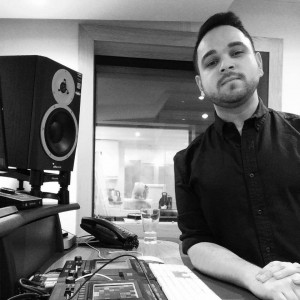 Sorry for my extended time away! I had some unexpected delays with 3 different guests but GEORGE TAYLOR made himself available quicker than I thought so he saved my schedule a little.
George is the Imaging Director at IMGR and a writer at Wise Buddah. He is extremely musical as an Imaging Producer but... also a composer of music. So he definitely rides a line between two worlds. Or perhaps better stated, he merges two worlds that might have been considered separate in the past.
Fun Fact: I didn't tell George but I went to No Sheet Music and appropriated one of his library tracks as our bed music this episode :) Its VERY cool. (Ask for forgiveness rather than permission...right!?)
Sorry for my extended time away! I had some unexpected delays with 3 different guests but GEORGE TAYLOR made himself available quicker than I thought so he saved my schedule a little.
George is the Imaging Director at IMGR and a writer at Wise Buddah. He is extremely musical as an Imaging Producer but... also a composer of music. So he definitely rides a line between two worlds. Or perhaps better stated, he merges two worlds that might have been considered separate in the past.
Fun Fact: I didn't tell George but I went to No Sheet Music and appropriated one of his library tracks as our bed music this episode :) Its VERY cool. (Ask for forgiveness rather than permission...right!?)Transcript
75 min read • 11,240 words
Announcer: The Producers, featuring the most respected international talent in the world of audio production and voiceover. Radio, TV, film, and online. In-depth interviews, industry insights, putting you on the inside. This is The Producers Podcast with Ryan Dream.
Ryan: All right, welcome to it, another edition of The Producers Podcast. I'm recording the intro live today because every time I try and record the intro later, I screw it up 15 different times. I'm too particular, so I'm just gonna record it live and whatever comes out is what comes out. Coming up here, in fact, standing by on the line, the one and only George Taylor from Imager, also Wise Buddha there in the UK. I've now known George for a couple years. I've seen him speak live twice, and honestly, after the first time was warranted enough to get him on the show. But I pinned him down at the Imaging Days this year in Amsterdam and said, you are coming on the show. And he said, yes, absolutely. Cool. So we're gonna do that in moments. Just to give you a little preview of what's coming up on the podcast in the next month or two. You know, I will apologize, this episode's a little delayed because everybody— not, not George, but everybody else— was like, yeah, yeah, I'm ready to go, and then nope. So anyway, Brian Apple, who is working up in Ireland, he, you know, is from the States, but he's doing video game sound design now. It's a really cool job. I've been trying to get him on the show for literally months. Oh, yeah. We're finally getting that one locked in. Also, you know what, I'm not going to go into too much detail, but I've got a large team of producers out of Dubai that are going to come on with me. I met a few of them at the Imaging Days, and so, you know, we did the whole networking thing, and we're going to put together an entire team interview that might end up getting pushed out after the first of the year, as we are already in middle of November. And then, finally, another person who I've chatted with a number of times, and he was kind enough to join me on a panel in Amsterdam, Mark Vickers, who's the creative director of Wise Buddha Jingles, who works alongside my guest today. So before we get to the one and only George Taylor, let's go ahead and hear a sample of the great work from George Taylor. Vancouver's best mix. Turn it up and don't turn it down. Z100. This, this, this, this is Rihanna. You're listening to New York's hit music station, Z100. Let me make it clear, we play hit music here. Make it clear. We play hip music here. We play hip music. We play hip music. We play hip music. You control the sound of your station. Imager. Imager. Key 103. Number one for Manchester. I need you every day. We've got the music. Your music. Your life. Yeah, go! P one A three. All the hits, all the hits across the UAE. Channel four. Three.
Ryan: Oh, one. Epic work. I believe that I can use the word epic in an appropriate manner. George Taylor, great stuff there. I was so looking forward to having you on the show. Thank you so much for joining me.
George Taylor: Thanks for having me. It's a real honor.
Ryan: Yeah, I've now met you a couple of times. As I was kind of joking, I'm now a 2-time world traveler. I've been to Europe twice now. But, we'll get into your panels here in a little bit. We'll get into, some of the, the key elements to your production, which I think makes you, stand out in the industry, because there's a few things that you've taught me. But, you know, first, the particulars You are the imaging director of Imgur, also a writer at Wise Buddha Jingles. and then as far as Twitter goes, you said, let's just go ahead and hype the Imgur Twitter, which is @imgr. Anyway, why don't we start with, imaging director of Imgur? Exactly what does that entail?
George Taylor: So, this is a role that I started a couple of years ago. people may or may not know, but before I was doing Imgur, I was actually, at Production Vault with Real World. And so I guess production services is something I've been doing for quite a long time now. I think I'm coming up on 8 years or something like that.
Ryan: Okay.
George Taylor: So it's been that long since I worked in the station. But, yeah, so basically Imager is kind of like a— it's a bit different from the other imaging services in that it builds the content for the station. So we put a load of kit files into the service for them. And when we build stuff, you hit a build button, and it basically creates a version for each station. But the premise is kind of the same in that we're just creating content for CHR and Hot EC stations. And so my job is to kind of figure out what we do on a weekly, on a monthly, and yearly basis, which involves a lot of listening to radio and talking to our clients and potential clients. And so my job is kind of, I guess, like a sort of creative director, if you like, coming up with ideas.
Ryan: Sure.
George Taylor: And then sort of, I've got a team of about, 4 producers now, and I spend a lot of time sort of training them and getting them into the right position. And yeah, it's quite, quite a fun gig really.
Ryan: It sounds amazing. I do love the interface. I'm gonna be completely honest, when I first saw it— I try to be honest at least— I thought it was a little bit more gimmicky than it was, you know, just amazing production. But then you start to hear the production, and as an imaging geek, I really love it. So it went from being a little gimmicky to really being this very interesting app, you know, this imaging app that also had some stellar, you know, sounds. Talk about your team, because I know that you guys launched this now a little while ago and you've been slowly building up. Do you have people that are specific to CHR, specific to Hot AC? Do you have all full-time producers in the building? Do you contract people around the world? Talk more specifically about who you're using.
George Taylor: So it basically— well, When we launched, it was me full-time and then I had a couple of freelancers. And basically what we've worked out is that it's just more effective to have full-time staff. So all of my producers are now in-house. I've got 3 guys here and then there's me and then I've got a guy who's based in Hungary who's effectively full-time but he's a freelancer if you like because he's not really in the office. Yeah, so they're kind of like split between the different formats. I tend to keep like one producer in charge of each format.
Ryan: Yeah.
George Taylor: And so they kind of look after it, and then I sort of oversee the whole thing. And we just hired another full-time guy who's going to be helping us launch our country service, which comes out next year. So we're just trying to get that right at the moment. I think that's going to be quite a hot country service and sort of fill that kind of gap in the market, because it's kind of— when we talk to people, it sounds to be the kind of thing that people are missing at the moment. It's just a country service that is really, really CHR and really hot. So that's kind of what we're working on at the moment. But, but yeah, it's just picking up on your point about it being a bit gimmicky. It's kind of— it's interesting because, the thing that I found as we've kind of gone along is that, people have realized that it, it, it sort— it sort of sells itself as a, as a customized service, but really it's quite versatile because all the work parts are there anyway. And so you get some users who sort of take it as it is in the box and put it straight on air.
Ryan: Yeah.
George Taylor: And you get the others who just go in and sort of take the work parts and the bits they need, which is what I'd do if I was at a station. I don't think I'd ever put anything on air that I hadn't done myself. I think a lot of people are the same.
Ryan: Yeah.
George Taylor: And I totally understand that. And that's— I think the majority of our users kind of use the service that way and sort of just take what they need and use it for inspiration and ideas.
Ryan: Now, as a direct competitor with you, which obviously most people I bring on my show I'm going to be in some competition with, so it's all friendly. You know, running a country service. You mentioned Hot Country, which is very cool. I would suspect you probably— well, I don't want you to give away anything you don't want to, but you probably have to have at least one, if not more, Americans involved. Or do you disagree?
George Taylor: No, I totally agree, because I think it's such an American thing. It's basically America and Canada. are the only places where you have such a large amount of country stations. And if I'm being totally honest, as much as I believe in myself as a producer, I just don't know this format at all. And so, yeah, we need an American involved big time. And so that's something that we're doing at the moment is just talking to lots and lots of different people, getting lots of feedback, and also trying to line up somebody to get involved on the American side. Yeah. So if anybody's interested, get in touch. Do you—
Ryan: now, I think you had mentioned getting an American, you know, the country service is coming out next year. I remember hearing about that, and that's fine. You know, the playground has plenty of room, as they say. But yeah, did what you just say mean you are actively seeking, you know, the great American country producer to come work for you?
George Taylor: I mean, I'm looking all the time to who's out there. And the great thing about this business is I just— it's very versatile.
Ryan: Yeah.
George Taylor: And if you can make enough of a business case for somebody getting involved, it can usually happen. And We're quite flexible here, and people listen, and everyone's got a voice. And so if I speak to the guys who control the money, then it's— you can often make a case, which I think is what makes the service move along as it does, because it can constantly evolve.
Ryan: Well, there's plenty of great American talent out there, so I just wanted to make sure I was not going to be plugging an opening that didn't exist. But, you know, simply email you if there's people out there that are interested in what you have going on.
George Taylor: Absolutely. Yeah, absolutely. And voiceovers as well, which we're looking for voices at the moment as well. It's always good to hear who's out there. So yeah, if there's any voiceovers that want to send a reel over, I'd love to hear it.
Ryan: Yeah, cool. Cool. I have a demo on my site, by the way. Is it george@imgr.com?
George Taylor: Is that your email? Yeah, that's the one.
Ryan: Okay, great. All right, cool. Anyway, we'll, we'll bring up Imgur, I'm sure, as this conversation moves on. I do, I do want to say though, the app side of the service aside. I'm more like you, I'd probably be grabbing the audio bits and pieces that you put up there. But just stellar work there. Writer at Wise Buddha Jingles. So I'm assuming this means music writer, you're actually writing tracks for jingles. Yeah.
George Taylor: So basically, there's Wise Buddha, there's, there's 5 of us that kind of work as producers and writers for the jingles. And I don't do that much for it just because I'm, I've Obviously my full-time gig is with Imgur and it takes a lot of my time.
Ryan: Yeah.
George Taylor: But every now and again we do get projects that come in that I get to pitch for and work on. And it's just a little bit different because obviously when you're creating stuff from scratch, when you're writing it, you're coming up with the whole thing. It's just a different thing to do and it's not something I do that often for Wise Buddha, but when I do, I absolutely love doing it because it's just, It gets— it allows me to exercise a different side of my creativity, if you like. And today I was working on Bauer, who's one of our big clients over here, and just doing some top of hours for them. And I actually wrote the music for these ones, which is quite nice because quite often the other guys write it and then I just do the post-production on it. But, but yeah, it's a really fun gig. And if you look at Wise Buddha's client list, it's so varied.
Ryan: Mm-hmm.
George Taylor: You've got Radio 2, which is kind of a lot It was, I guess, adult contemporary. And then you've got stations like 538 in Holland, which is like really, really in your face. And so we get to work on such a range of different clients. And what happens is that the person who's most appropriate for the station gets chosen. And so I get to work on a lot of the youth format stuff. And we've got some really exciting stuff coming up next year, which I'm not allowed to talk about.
Ryan: Hahaha, that's alright.
George Taylor: But it's a biggie. I can't wait. so yeah, it's all good.
Ryan: Yeah, I know, Radio 538 is a— for anybody that's not familiar with Radio 538, that's the big, you know, just massive, like you said, in-your-face CHR station, network, I guess, and, based out of Amsterdam. They were kind of the, local imaging celebs at the Imaging Days. You know, they kind of roll in there like they own the joint. But theirs and your sessions were, 2 of my favorites because it was literally Let's open up sessions and let's just slam audio around and show you to the second, you know, every single decision we made when we made this awesome imaging.
George Taylor: So, thanks very much.
Ryan: Yeah, seriously, I really can't speak highly enough about what you guys did there.
George Taylor: I think on the first year, if anybody who went or saw any videos afterwards, I think it's fair to say I kind of went quite deep into settings and techniques and stuff like that. And I think half of the room probably found it really boring, because I think there were some people there that probably don't sit behind Pro Tools every day. And so, to understand the inner workings of a Pultec EQ probably isn't the most useful sort of thing. But yeah, I'm a massive geek, and so getting to do that sort of stuff is really, really good fun. And if you stand up there on stage and you have to kind of figure out what it is you do, it kind of makes you ask questions of why you do what you do.
Ryan: Yeah.
George Taylor: I've actually found there's some stuff that I've stopped doing from sort of doing those sessions because I sit back and think, well, you spent quite a long time doing that. And I'm kind of trying to find ways to do things quicker at the moment. That's kind of my thing at the moment.
Ryan: Yeah, like for example, maybe on a vocal bus you used to use 4 different EQs and 4 different compressors and you're starting to think, maybe I can get the sound with this setup with, you know, 1 and 2.
George Taylor: It's interesting because when I moved to Wise Buddha, I'd been at Real World/Pure Tonic for about 7 years, and I had a really, really good setup there. I had PreSols HD, and I sort of knew my studio really, really well. And then suddenly I left, and over here the setup was slightly different, and I've sort of slowly accumulated stuff rather than having everything to go with.
Ryan: Mm-hmm.
George Taylor: And I think I was spending so much time trying to get the same sound that perhaps I had in real world, just trying to kind of get the same sound out of this system. And it's only just, I'd say, in the last few months or so I've really, really got to understand my gear and have stopped trying to go for that sound and just sort of use my ears more. And it's been quite an interesting sort of experiment, I guess. But yeah, I'm in a much happier place as a producer at the moment in terms of sound.
Ryan: That's cool. Yeah, you know what, let's just bounce all over the place then, because I think templates are something that you can either love or hate, and I think a lot of producers have come to say At least the ones that I respect have come to kind of like, eh, templates aren't really the best way to go. It's a lot better if you just have the idea, or, you know, the goal of the production, and just dive in and go. Don't be so locked into that sound you were so used to using. Templates sort of backs you into a corner, forces you to make decisions you might not otherwise make creatively.
George Taylor: I totally agree with that. I used to use templates all the time, but I just don't use them at all. really anymore. And it's because, well, for example, I was working on a different client last week, and it's a different set of voiceovers anyway, so you kind of want to create something that works for those voices. But even then, like, I'd make one idea, I'd move to the next, and I didn't want it to sound like the idea before. And so I'd start that from scratch, and it might make the process a little bit slower, but I think it— for me, I find it more creative, and it keeps me interested in the job. Not that I'm not interested, but you know what I mean?
Ryan: Yeah, no, I know what you mean.
George Taylor: So it's like you have a blank sheet of paper and you can come up with whatever you want for this idea, and you don't I have to take all the things from the old one. Now, people could argue that that's kind of a bit silly because it makes you a lot slower, and I suspect a lot of my colleagues or former colleagues have probably torn their hair out with how slow I am sometimes. But I mean, I'll work 16-hour days if I have to, just to kind of get the sound I want.
Ryan: Mm-hmm.
George Taylor: And that's, in fact, that's what I did on Friday. I worked a really, really long shift just because I knew I had a deadline to hit, and I knew I wanted it to sound a certain way, and I didn't want it to be boring. I may have sat in front of my computer for the whole day, but I had a really, really good time doing it, and no templates were involved.
Ryan: In a day like that, I'm just curious, and I really do hope that people enjoy the demo that I played of yours, and they do respect how, you know, tight, how skilled, how detailed that your production is, but what takes you the longest to figure out or to just get done when you're producing?
George Taylor: I think I think a lot of my stuff's quite musical, and so there's a lot of layering in there.
Ryan: Definitely.
George Taylor: In terms of, sort of pitch and harmony and things like that. And, I'm not a trained musician at all. I was a drummer, and so I didn't really need to know anything about, like pitch or anything like that. So it's something that I've learned over the years, but I'm still a lot slower than, say, Ben Townsend, who works here at Wise Buddies, one of the writers. who is— he knows the theory behind it, so he's kind of— he's always ahead of— he would always be way ahead of me in terms of like knowing what he wanted to do musically, and I— it takes me a lot longer. And so a lot of my time is spent just trying to figure out exactly what it is I'm trying to do, if that makes— you have an idea, you hear it in your head, and then I spend a lot of time just figuring out how to do it.
Ryan: It sounds like that's more related to actually producing music. I'd be more curious though in just your general, you know, imaging.
George Taylor: No, no, but this applies to imaging as well, so if you listen to the voice— the voices that I do, there's a lot of tuning and stuff that goes on. I try not to do stuff that's noticeably tuned, if that makes any sense.
Ryan: Yes.
George Taylor: So I don't want it to sound like a T-Pain record, or I don't want it to sound like there's just too much tuning going on. So a lot of the stuff I do is very subtle, and there's lots of background harmonies and delays and things like that that are tuned. And that's sometimes the thing that takes me the longest, because I need to work out what harmonies are going to work with the piece of music, that kind of thing.
Ryan: And just so people are clear though, you know, we're talking about a, you know, an imaging sweeper. It's not necessarily a jingle.
George Taylor: No, no.
Ryan: But you, no matter what it is, you always make it musical. You'll take a voice bit, a movie clip even, whatever it is, and you're not going to just drop that over the bed, then have your voiceover, then a sweep out. You're going to music— what's the word? You're going to make it musical. No matter what it is.
George Taylor: Yeah, that's it. And I think there's, there's probably quite— there's probably quite a few of us now in the industry who do it. There's like a generation of producers now who are sort of, I guess, working for a lot of the production services who kind of have this technique. I mean, a lot of the guys I used to work with, people like Ben Martz, for example, who did that amazing One Extra Package.
Ryan: Yeah, that was a cool session, by the way.
George Taylor: Oh, so cool. Yeah. And like, and his stuff is just like, very rhythmic but also very musical at the same time. And it's kind of— that's just the sort of thing that I'm into. And I like the idea that the ID transitions from one record to the next and the whole thing just sounds like it fits together musically.
Ryan: Yeah.
George Taylor: So I guess it's like my stuff is a hybrid between an imaging and a jingle. But I'm quite restricted in how I do it with Imager, for example, because we can't do any of that sort of stuff with the station name. So I can't tune the words like amp radio or anything like that. Just that top. Yeah, I can't do that because I'm restricted by the service that we've got. So I do it a lot with drops and with interviews and things like that. And yeah, I'm just trying to find ways to do it more subtly because quite often now if I hear stuff that is heavily tuned, and some of my guys are guilty of this and I pick them up on it sometimes, it just kind of gets my— I don't know, I feel like it's something that is kind of starting to die away a little bit. And so I'm just trying to find ways to do it that are a bit more subtle.
Ryan: So, I mean, obviously we're talking about harmonic mixing, and that was something that I wanted to definitely touch on here. So if we can continue on that, when in your career did you— you might have already been doing it, but when did you figure out that, you know, A, what you were doing or what you wanted to be doing was harmonic mixing, and And, you know, when did you sort of start to ultra-focus on that?
George Taylor: I think it was— it must have been back in like 2008 or 2009. I'd been with Production Vault for maybe a year or two, and the records that were starting to get played, you were starting to hear a lot of this tuning going on in the records, stuff like Black Eyed Peas, Boom Boom Pow, that kind of thing. And then you start to realize that you have the tools to do this on your computer. So I think I had a copy of Waves Tune Lite. or something like that, and you start to realise that this is a possibility. And so you start to do it that way. And I was doing a lot of imaging for KISS back then as well.
Ryan: In London?
George Taylor: Yeah, KISS in London, yeah. And you could always do a lot of— you could always experiment a bit more with that format because they were always open to stuff that was a bit more modern. And so I guess it was just a lot of experimentation, and I started to really enjoy how that sounded. and I guess it's just evolved from, evolved from there really. And I don't think there's anything I make now that doesn't have some kind of like harmonic or musical element to it, which can sometimes be a bit of a pain in the ass, to be honest, because, like I was trying to do a simple sweeper last week and overcomplicated it and it ended up in the bin. Like it didn't even, didn't even make it to the service.
Ryan: Yeah. So this is interesting. I want to get to that kind of a thing too. Those stories are cool, but, Harmonic mixing to me isn't something I've been, you know, widely familiar with for more than a couple years now, maybe 2 or 3 years. So was there— I mean, you talked about the records you were hearing, but was there imaging you were hearing, or do you feel like maybe you were a bit of a pioneer in that, really applying music or musicality to just standard voiced imaging was kind of a George Taylor thing?
George Taylor: I don't know. I can't— I don't want to take any credit for it whatsoever, but I think it was heavily influenced by— I mean, because obviously, when I was back in those days, it was Pure Tonic, which was in conjunction with Real World. So basically, Pure Tonic provided the content, Real World sold it.
Ryan: Yeah.
George Taylor: In the very early days, it changed obviously as it moved along, but because we had that connection, I was listening to a lot of the stuff that Real World were doing for their stations, and They, they, if they had a solo voice, for example, that was heavily tuned or was vocoded or something like that, you'd think, well, that's not the— a solo voice is not that much different from like the spoken voice. And so I guess I was influenced by that stuff early on. Yeah, that makes sense. But if I'm— if I think from an imaging point of view, I can't think of anything that was really on air anywhere that was doing that kind of thing. And I think KISS and the people who were working there and me and the guys that were working at Pure Tonic, I guess, were pioneering a little bit in that sense.
Ryan: Yeah.
George Taylor: And at first, a lot of people didn't like it. And I remember it used to get a bit of a bad rap. You'd often see people on forums kind of saying, oh, it doesn't sound very good. And I remember standing in the reception of a well-known production company in this country, who I won't mention, and the guy who runs that was basically I was gonna use the term taking the piss, but I don't think that's something that they use in—
Ryan: He was trashing you.
George Taylor: Trash, true, he was trashing me.
Ryan: Yeah.
George Taylor: and saying it sounded like a Black Eyed Peas record, which, was meant to be an insult, but I took it as a massive compliment. Yeah, right, because that's what was number 1 at the time, and it's like, okay, well, it does sound like that. Yeah. Yeah, say thanks. I thought so. I think it was kind of like It was changing, and perhaps people didn't like it at first, but it's— you listen to radio now, it's everywhere, all over the world. In the States as well, it's big, big business in the States now as well. And so yeah, I think it's probably going to be here to stay for a little longer.
Ryan: Yeah, I like how you differentiated between, you know, tuned vocals or tuned elements, you know, harmonic mixing the way you do it, versus things that sound tuned. I think you're right. That sound-tuned part of that is what's key, because that's the part that makes it feel dated. And obviously with contemporary music, you want to feel as contemporary as you can.
George Taylor: I think it's always important to be in touch with what's going on, like, sort of out there in popular culture and kind of what people think about things. And I've been in the car before with friends of mine, and something's come on the radio and it's like really heavily tuned and everyone in the car is laughing. saying, what the fuck was that? And it's kind of— and so you have to take notes of that. It's the kind of stuff that people will laugh at if it's too over the top.
Ryan: Yeah.
George Taylor: So you don't want to become a parody of yourself. You want to find a way to do it creatively. So I guess you have to talk about what the purpose of it is. And for me, it's you're making imaging for CHR stations or Hot AC stations. I want it to sound like it fits with the music. And so I'll find ways to make it musical so that you get like nice transitions and stuff like that. So there's a purpose to doing it. And also as well, I believe that because imaging is about messages and sort of communicating a message to your audience, that if something has a melody or rhythm, it's much easier to stick in someone's head. And I guess that's one of our goals really, isn't it? To make sure people know what they're listening to.
Ryan: Okay, my next question is going to be about some of the tools you used— you use. We haven't brought— I haven't said this yet. I'm holding in my hand now my printed out Camelot wheel. Do you have this memorized? Before we really get into what it is, do you have this memorized?
George Taylor: No, but the theory is, isn't it always— it's relative major/minor, which is always, I think it's 3, isn't it 3 notes up? I always forget if it's 3 notes up or down. So no, I've got Mixed In Key on my computer and I use it all the time.
Ryan: Okay, so there, let's start there. So my next question on this topic, I had a feeling that I would keep our conversation really in the harmonic mixing side of the world today. You mentioned a lot of tools at the Imaging Days, a lot of people did, but for right now, for our listeners, let's assume A, they weren't there, and B, that, you know, really incorporating harmonic mixing isn't something they've done yet. So what are some tools that people can get, or resources they can acquire, that will really show them the way in this world?
George Taylor: What's the things that they can use to create this kind of sound?
Ryan: Yeah, yeah, like, I mean, obviously if you have a great ear, you just know you're going to tune down something X amount of semitones, And you're going to get where you need to be, blah, blah, blah. But what are some other things you can use to make it a little easier?
George Taylor: Well, I mean, well, Mixed In Key is really good as a first port of call, because if you put all your playlists in there, for example, it will tell you what key it's in. Quite often it's perfect. Sometimes it gets it wrong, but it's usually spot on. And you get like a little keyboard that comes with it as well. And so, if you can start to realize when something sounds like it's in like C minor, or, you know, if it's in C major or something like that, then it's going to help you hear when you're doing your imaging what you should be listening out for. And so, yeah, that's a really, really powerful tool. I mean, the thing is I can do it without that. I can do it using a piano and I've been able to and I did that way before Mixed In Key was available, but it just gets the job done quicker and I'm not trying to prove anything to anybody. I'm more than happy to use tools that just kind of really help you get there a lot quicker.
Ryan: Now, if you have no musical background whatsoever, you get this program Mixed In Key. All you know is you want your imaging to sound a lot more musical, like some of the stuff George Taylor is doing. So if, you know, again, no musical background, you got Mixed In Key, is that, is that it? You just start going, or what are you paying attention to? What are the things you need to be thinking about when you want to get more musical?
George Taylor: Well, I think that's a really good question. It's a good question. I mean, I guess if you want your stuff to sound that way, you— I guess you try and start experimenting, don't you, with what you can do with it?
Ryan: Yeah.
George Taylor: But I think if you can start to understand keys and notes and and maybe even chords to a basic level and rhythm as well, rhythm is really important, then I think it just starts to help you formulate in your head how you can put this stuff together. So, you might hear, for example, that the kick always goes on the downbeat and the snare on the offbeat and things like that. It's just sort of trying to listen to music and how it's put together. And listening out for layers as well, listening to where the bass guitar sits and where the like where the piano is and the voice and things like that. It all helps when you're trying to do this kind of harmonic imaging because the process is pretty much the same. Like, I write music as well for commercial reasons and also just for my own personal stuff. And it's kind of when you start to make music, you start to realize it's so similar to imaging in the way you build up the layers.
Ryan: Yeah, I guess I was wondering if you would bring up Well, okay, for example, I brought up the Camelot system, the Camelot wheel, you know. So, so I got into that a few years ago, and I got Mixed In Key, and I started to try and pay attention to those things. Because it's like, when you're producing imaging, you can pay attention to tempo, which everybody talks about, you know, ending on a downbeat, making sure that when you make transitions between hooks and a promo, they kind of stay in the general tempo range, and, you know, they transition on a proper beat.
George Taylor: Mm-hmm.
Ryan: You know, next level is to make sure all the different things are in key. But, you know, if I just— if I have a song that's a 12B and a song that's a 12A, I can just mash them together and, you know, or—
George Taylor: Well, I mean, this is the whole thing. You just— you need to know what you're listening out for. And it might tell you on paper that it's a 12A and a 12B. But in reality, it might not always work. Like, there might be certain elements in the song that don't fit. with the track that you're trying to mix it with. And so it comes back to the idea and sort of knowing what you're trying to create in the first place.
Ryan: Yeah.
George Taylor: And if you're trying to create a beat mix that is tempo synced and key synced, you really, really need to listen to how the whole piece of music is put together. And there are some people out there who are just really, really good at this. I've got a guy here called Kenny, who's one of our producers for Imager. He just hears it. better than I do, like way better than I do. And he's— he— this is why when we do all this kind of like, stuff that has— that uses a cappellas and like different parts of different songs and you put together and effectively create like a mashup, I always give that stuff to him because he's got an ear for it. And I think that's the thing, you have to, I guess, know where things fit musically and how you can transition them and put them together. So I don't— it's— I don't think it's as simple as like seeing on a piece of paper that—
Ryan: Yeah.
George Taylor: 2 things are in the same key or the same BPM. Musically, you need to kind of understand in your head how they can work together, and that's a real skill, and it takes a lot of effort.
Ryan: There's no, you know, golden whatever. There's no tip that's just gonna make it all just easy, a few seconds and you're done, everything's musical now. It actually is work.
George Taylor: Practice makes perfect. Like, just keep playing because, Yeah, I'm a great believer that if you don't experiment with stuff and if you don't get it wrong a few times, you're never going to know when you've kind of got it right. And, you know, boy, have I got it wrong a lot more than I've got it right. And it continues to happen to this day.
Ryan: Well, if you permit me to interrupt, I wanted to bring back up that thing that went into the rubbish bin. I remember you brought that up when I talked to you last time that, you know, you'll spend hours on something.
George Taylor: That was a different piece.
Ryan: Yeah. No. Yeah.
George Taylor: Okay.
Ryan: Okay, great. At what point, you know, how long do you get into something Before you say, all right, this didn't work, I'm throwing it away. I mean, are we talking hours, days, minutes?
George Taylor: Yeah, hours. Yeah, and the worst thing is you should think— you'd think that having now done this for like 12 or 13 years or however long, you'd realize that if you're spending a long time on something and it's just not happening, that it probably isn't going to happen. The stuff that I find is the best is the stuff that often falls together quickly or stuff that it might take a long time, but you know the whole time you're doing it, you're doing what you want to be doing.
Ryan: Yeah.
George Taylor: Rather than sitting there tearing your hair out because something's not working. And I think quite often it's— my advice is to just step back and try and figure out what it is you're trying to do, and trying to do it— try to do that as soon as you possibly can. Because with this particular piece that ended up on the cutting room floor, the whole way through I was thinking, this is just gonna work. I don't know, this is— and I really wish I'd trust my instincts. And this is, I was speaking to Mark Vickers about this the other day, and about trusting your instincts. Quite often, the things that I do that I know aren't right, I know they aren't right the whole way through the process. And I wish I listened to that voice in my head saying, this is a waste of time, stop doing this, move on to something else. But I never do. I guess it's the challenge of trying to get it right. But it's foolish. It never works out.
Ryan: It's so funny. I think you can apply that to just about anything in life. For example, what came to mind is there's a poker phrase, think long, think wrong. You know, when you're making a decision at the poker table. It probably is true with just about anything in life, but it's obviously sounding more true more often than not when you're getting deep into these mixes too.
George Taylor: Do you ever find that you have the same problem?
Ryan: Yeah, you know what's surprising? I do. I think I might be in a position where I don't have as much— well, no, no, actually I'm with you on that. I think mine happens a little more in commercial production with the writing process. I have an idea. I know where I want to get. I think ultimately the message will be great, and I think— but you spend so long trying to get there, and you end up forcing it. And then especially when you end up playing what, you know, you play it for somebody and their reaction is so bad, and it just crushes you because you just spent, you know, hours, and you know that you can get there, but you just don't know how. Yeah.
George Taylor: I always know when I've done something that isn't right when I'm afraid, when I, when I'm kind of like, when I play it to somebody and I just, I don't want them to listen to it. And there's these 2 feelings I get. I get that feeling when I know I've done something that could be amazing, or when I know I've— when I fear that I've done something really bad. It's the same feeling. And so quite often I can't differentiate between the 2. And so I'll play something to somebody, but you can kind of gauge by their reaction.
Ryan: Mm-hmm.
George Taylor: whether or not it's good. But at the same time, it's subjective. Like, something might be great to one person, but not great to another.
Ryan: Yeah.
George Taylor: And, and it is only radio imaging at the end of the day. Not that I— not that it isn't the most important thing in my life, because obviously it is. But it's like, you know, no one's gonna die if it's really bad.
Ryan: Yeah, absolutely. I remember my first job, I was frustrated about something really stupid. And one of these— it was a talk station— one of these guys that had been on the air for like 40 years, Saw my frustration. He's like, hey man, just remember it's only radio. No one's gonna die. You know, he's this old cool Southern dude. And anyway, he's right. Yeah, absolutely. Some of the best advice I ever got, and I'm lucky that I got it really early because, you know, I see people that are deep into their 40s and 50s still get so frustrated over this. They get so upset, and it's like, man, you're just, you're just working in radio. You know, don't take it so seriously.
George Taylor: Anyway. And also, if you get feedback from people, it's quite easy to kind of— when you've spent hours on something that you think— which obviously you've put so much of yourself into, and then you get perhaps not the response you'd want. I've started to now turn that— trying to turn that into a positive thing. People are trying to give you their feedback, and obviously you can choose which feedback you take on and which feedback you don't, but it's someone's opinion and, yeah, you should listen to what everybody says really. And, it all makes us better. I think if you do actually listen and you try not to get your back up, which I used to do quite a lot, I used to be quite difficult to give feedback to, I think. But, yeah, that's a—
Ryan: With, with Muggs game, with age, and experience comes a little more acceptance that we were allowed to be flawed.
George Taylor: Absolutely. Yeah, it's true.
Ryan: You know, when you're younger, it's like, especially if you're good at what you do, you know, I can't be flawed. If I'm flawed, they'll fire me and I won't get the big job and, you know, all that.
George Taylor: That's— I think there's a lot of truth in that as well, because I had— I've been doing this since the age of about 16, and my career kind of— it sort of took quite a sharp rise, I guess. And I took it so seriously, and I think it wasn't until sort of the last days of being at Real World and then sort of afterwards when I had a little period out, that I started to reflect on the whole thing and think, just stop taking it so seriously and enjoy it.
Ryan: Mm-hmm.
George Taylor: Because, you know, I was getting stressed out big time because I was— I didn't think I was as creative as I was a few years before. I wasn't quite happy with what I was doing. And, you know, that lasted for quite a long time, and it's only been in the last year to 18 months where I've started to really enjoy the job again because I just don't get bogged down with stuff like that anymore. It's pointless.
Ryan: It's so weird how that works. I mean, it's obviously age, although you are still relatively young. But, you know, we— I was gonna get to this kind of in the back end of the interview, but this is as good a spot as any. You already talked about your— about, what'd you say, 7 years or so with Real World?
George Taylor: Yeah.
Ryan: You've been with Wise Buddha now for 2 years?
George Taylor: Yeah, 2 and a half years.
Ryan: 2 and a half years?
George Taylor: Yeah.
Ryan: What— where did you start, and what was the really big leap or 2 early in your career? Because I know that you did have a pretty quick elevated you know, situation there?
George Taylor: Yeah, so I think when I started doing production, it was kind of— I sort of fell into it by accident because I wanted to be a jock. Yeah. And I think it was— I was working for— it was the GWR Network at the time, which is now Global Radio over here. And I was working at one of the smaller stations, and I think there's a guy called Link Kelly who I think he works for the SCA Network in Australia now. He did take a period out, but he was the head of production for that group, and he obviously saw something in me and gave me the opportunity to go to LA for, you know, the Dino Day production summits.
Ryan: Yeah.
George Taylor: I don't know if— do they still take place?
Ryan: I haven't paid a ton of attention to those for other reasons, but I think there's something involved. I mean, there's emails that go out. Anyway, go on.
George Taylor: From what I remember back in those days, which would have been 2003, 2004, Yeah. that was like the thing to go to if you wanted to sort of, sort of better your career, I guess. And, he saw, something in me and I got taken there as a trip, which at the age of 17 is the most amazing thing in the world. It's kind of like, wow, I can't believe I'm going to America on a company trip. Like, I'd never imagined anything like that could happen. And I think Dave Fox, was talking at that seminar and he was doing his, I think it was his imaging toolkit.
Ryan: Yeah, like the Swiss Army knife thing?
George Taylor: Yeah, the Swiss Army knife thing. And I got so much out of that so early, and I think that sparked something in me. And obviously I found out about Dave leaving Z100 last week, and yeah, I sent him a message saying, you have no idea how much you influenced what I wanted to do as a job, because back in those days I didn't have the imaging bug, if you like.
Ryan: Yeah.
George Taylor: And I think that sparked something in me, and then just everything took off from there, really. Went to go and work for the biggest station in the network, and then, went to go and work with Steve Pogot at Pure Tonic.
Ryan: What was the biggest station in the network that you went to work for?
George Taylor: So that was Trent FM, which is now Capital Nottingham. The radio over here is like— stations have changed ownership, and like, yeah, some have gone with one network, some have gone with another. But Trent, back in the GWR days, was like their sort of big kind of station. I had like the biggest breakfast show. They always won like Sony awards and things like that. So that was a big gig to get first because I was only 18 or 19 when I went to go and work there. And yeah, and then I applied to go and work with Steve at Pure Tonic, and then things just went boom from there because suddenly you're working for KISS, you're doing stuff for Production Vault, which has obviously been aired on lots of stations in the US, and then—
Ryan: Yeah.
George Taylor: When Pure Talent merged with Real World, the opportunities sort of grew from there. And then Pure Talent were really big over here as well. So I did stuff for like Radio 1, 1Xtra, XFM, KISS obviously. And so I got to work with all these really, really big clients quite young. And yeah, and then we merged with Real World and then I just spent all my time doing Production Vault. I think that's when things changed a little bit. I think I got a little bit disheartened by the job and that's not anybody's fault.
Ryan: Sure.
George Taylor: It's just when you are day in, day out doing imaging for CHR stations, you just need to mix it up a little bit. And that's what I'm very fortunate to be able to do here by sort of having 2 roles. And it's, yeah, it's really nice.
Ryan: So, so you were in the actual radio station environment for a short period of time very early. I don't even know if you were there long enough to miss it, but do you miss being in an actual station on a day-to-day basis at all?
George Taylor: Yeah, of course. Like, that's why we do what we do, isn't it? Really, it's kind of very Yeah. The radio bug will always be there. And I mean, I still listen to radio all the time. I still love it as a medium, and I'd love to go back into a station one day, but I don't know if it would be as an imaging producer. Do you know what I mean? It's kind of— yeah, I probably want to go back in as a show producer, or dare I say, even go back behind the microphone, but probably on a talk— I probably would want to do a talk station rather than like a music station. And I'm talking like way into the future here.
Ryan: Yeah.
George Taylor: but yeah, it's— yeah, I, yeah, I really miss being in a station, but not enough to, to want to stop doing what I'm doing. Because more than being in a station, I much prefer being in a studio in front of a pair of speakers and just mucking around for a week, which is what we get to do.
Ryan: You, you— I actually had this written down. You, you brought it up first. Dave Fox leaving, after 29 years at Z100. And I actually, you know, I know that there's different relationships over there, so I don't know if you're pals with him at all or not, but he's a good friend of mine, Chris Nicholl, Capital.
George Taylor: Yeah, me and Chris are really close, yeah.
Ryan: Okay, good. He's announced his— maybe it's real, maybe it's not, but it seems like producers or creative talent in the UK tend to be at a job for a lot less time than those in the US, while people in the US still get fired or get laid off or whatever. If you're good and you're at your big job here, it seems like if you want, you can keep it for 10, 20, 30 years. Whereas over there, I see the big names bouncing in and out a lot faster. Is this true? And if it's— if it is, can you shed some light on why?
George Taylor: Do you know, it must be because the only person I can think of off the top of my head who's been working for a station for a long period of time is Matt Fisher. He's been at Radio 1 for 10 years now.
Ryan: Yep. I was gonna say, he would be the only one I can think of that's double digits over there.
George Taylor: And, I mean, he, again, Matt's a good mate of mine and, he absolutely loves it there, 'cause he, he's got to, he's got the opportunity to reinvent himself all the time because a station like Radio 1, you have to reinvent yourself and they quite often just rip people out, put new people in. Nobody knows that better than, our director Mark Goodyear, 'cause he was there for a long time and suddenly he wasn't the new wave of, of jocks that they wanted on air. So he was, he was kind of put out, but it's the way it goes. Radio 1 is a station that constantly evolves and constantly moves.
Ryan: Mm-hmm.
George Taylor: And the fact that Matt has been able to stay there for so long is a testament to him as a producer. But also, I think being able to reinvent yourself that often keeps the job interesting, whereas perhaps that maybe isn't the case at other stations. I don't know, like, I— or maybe it's because the industry's just a bit smaller over here and there's kind of— everybody knows each other and opportunities come up and like you think, well, maybe I'd like to go to that place and It seems to be a lot more fluid. It's the same with Ireland. I think Ireland is quite a similar market as well. People tend to move around quite a lot within that market on quite a short rotation. What do you reckon the average is then in the States for imaging guys to stay in their gig?
Ryan: You know what, I think that sadly over the last, since '07-ish, '08, that we've lost a lot of the high-profile jobs. We don't put as much emphasis into the imaging and actually having high-paid, high-profile producers at the station level, not as much as the UK does. But I think that the ones that have stayed, you're talking, I mean, 10 to 15 years of the big ones. Heck, I did almost 7 at KSES and I would probably still be there. I mean, I'd be going into my 10th year now. And I just think that for some reason in the States, That maybe it's the mentality. I'm not really sure what it is, but when you get into a place that you like, you're more willing to stay than you are in the UK for whatever reason.
George Taylor: I don't know. I just don't— I don't know what that— why that would be, but I think maybe it comes down to like the actual job itself. And I think radio over here is quite cutthroat. There's a lot of emphasis on RAJARS, which is our system for monitoring listening figures and stuff like that. And, you know, if a station is having a particularly bad period, people will get cut and it can be quite brutal. And perhaps that has something to do with why people kind of move around a bit long— a bit quick— a bit more quickly. But I mean, if you look at Wise Buddha as a company, all the people that write for us have been doing it since the day they started writing for us, if that makes any sense.
Ryan: Yeah.
George Taylor: So the turnover of staff here is— it just doesn't happen.
Ryan: Yeah.
George Taylor: And I've been here for 2, 2 and a half years, and we've only ever hired people, and nobody has left on the creative side. And I think it's pretty quite similar with when I was at Rare World as well. Like, a lot of the people who are there to do the creative jobs, they stick around for a long time because they're good places to work. And the opportunity— you get a lot of opportunity and a lot of chance to do different things and change and evolve. And I think maybe the production companies retain stuff a bit quicker, but yeah. Yeah, but the station's just a bit more cutthroat. How do you think imaging has changed in America over the last 10 years?
Ryan: I guess if I try to always be honest, I would say it's definitely gotten worse. I would say the quality isn't what it was, but that's because— not because the talent is worse, it's because the time is not being spent on it as it is in Australia and the UK. Those are the 2 big ones that I would point out. Although, I didn't know anything about Belgium radio before I met Steven Lemmens, and hearing what they do there, just at his outlets, wow. So anyway, the US is relying a lot more on the services, relying a lot more on one person for 10 stations, as opposed to maybe 5 for a network of 10 or 20.
George Taylor: This is the thing I find when I speak to a lot of people stateside, a lot of their challenges are that they have to deal with so many stations.
Ryan: Yeah.
George Taylor: And it's, it's such a shame because, I mean, radio is still making a lot of money, and so the money is still— must still be there. But it just doesn't seem to— people just don't seem to see imaging as being something worth investing in, maybe. I mean, I don't think that's true of all stations, but I do think a lot of people look at how things look on a spreadsheet and they think, well, because cut that down.
Ryan: Yeah, well, especially if you have to cut, you know, if you've been told by corporate that, you know, you have to reduce 5% expenditures and, well, you know, we've already cut, you know, we only have one live jock left, that's mornings, so we have to keep them. the sales staff is down to nothing. We have a program director for 4 stations, you know, and we've got this producer. I guess we have to cut the producer, you know.
George Taylor: I think, I think it's why the production services is such a lucrative business now because, yes, because they allow producers to, I guess, keep the quality up but the time down. and I, I guess, I guess obviously that's a good thing for the people who work for the production services, and hopefully it's still a good thing for the, for radio. But, yeah, at the same time, it probably means that a lot of people have maybe stopped doing imaging to the same level that they used to because they don't have to, or because Like you say, they just simply don't have the time, and that's really sad.
Ryan: Yeah, yeah. I've talked about this, which is kind of where we were going here. I've brought it up with a lot of different people that I've talked to from services of various types. And yeah, I mean, for sure, if a station is willing to give up the inventory, then they can still have great imaging. But that's kind of where it's gone. It's, you know, you're no longer giving up the salary to get the great producer. It's turning more of give up the inventory to get the great service. And as the services get a lot more custom, which is why Imager is great because it's kind of, it's definitely a hybrid. It's not fully customized imaging like maybe a mix group is offering.
George Taylor: No, no.
Ryan: It's an app which still lets people get in there and feel like they're customizing it, but really at the end of the day, you just have to be able to slide bars around, right? And then you can get your produced imaging.
George Taylor: And I still think as well that it's becoming quite a saturated market, maybe. But there's, there's still space for everybody to exist.
Ryan: Yeah.
George Taylor: And all the services are slightly different. They offer something a little bit different. And, and the, the thing we're finding is that people just like it. They're like, it's the same in the way you might eat a packet of chips. Like, people like a different flavor, so they're gonna, they're gonna buy that. And it's kind of, I think there's enough room for all of us to be. And, you know, all these people are my friends as well. It's like, yes, for me personally, there's no, there's no rivalry. Obviously, there's obviously, from a business point of view, you want your— the thing you're working on to succeed. But from a personal and a creative point of view, I mean, I still listen to what Andy does for Production Vault and I'm constantly wowed by it. And the same with the guys at Imaging Blueprint. Adam and Tom are really good friends of mine.
Ryan: Yes.
George Taylor: And I think what they do is absolutely amazing. And the service they offer is different to the service we offer, but it's kind of— you work for your clients and you get it right for the people that that like your flavor of chips, I guess. And that's kind of, yeah, I think it's been quite interesting working on now for 2 different services, seeing how the businesses operate differently and the kind of people you talk to and what people want. And yeah, it's really interesting, but there's enough space, which is good.
Ryan: Yeah, this is actually becoming a really great place to sort of wrap things up here. You know, George, thank you so much for your time. I'm going to ask you my final question in a minute, but on Twitter, @imgr, @imgr, Also go to imgur.com, imgur.com. There's plenty of demos there. They— you guys put out pretty much monthly scopes, right?
George Taylor: That's correct. Yeah, check out our SoundCloud. Okay. It's soundcloud.com/imgurchr.ac, I think it is. Yeah, we just search Imgur on there.
Ryan: I was gonna say the SoundCloud, I actually do a lot of work for them and they're— I love that platform and they are very easy to search. And I think I've shared some Imgur stuff on my profile too. So Nice to meet you. In 2016, we're going to see multiple country services coming from UK-based production houses, services, library, whatever the— whatever word I'm looking for, you know, you. Like I said, I really, you know, being a guy who runs a country service, although mine is definitely way more jingle-based and music-based, I'm really interested to see what you guys do. I'm really looking forward to that.
George Taylor: So am I. And to be honest with you, at the moment we're still experimenting and we're doing a lot of— we've got some people that are sort of, I guess, beta testing the audio for us. And we're just doing lots of consulting. We really want to get this one right and just make sure that it fits in the gap that is available in the market rather than just create a service that other people are doing because there's such a wide range of stuff that's out there. It'd be foolish of us to try and fit on the same part of the spectrum as other people. So we're gonna look for our little niche, and, and I can't wait for it to, to come out next year.
Ryan: Yeah, absolutely. Good luck with that. Although I'll destroy you in every market I can.
George Taylor: It's on.
Ryan: Yeah, fight in the square, town square. Let's, let's wrap it up though. You know, you started in the ballpark of, would you say, 15 to 17, somewhere in there?
George Taylor: Yeah, that's right. Yeah.
Ryan: You know, if you could look back at yourself even, what's the one thing you would say to, you know, 17-year-old you to be successful? The advice you'd give to be successful in this field?
George Taylor: That's a really good question.
Ryan: Thank you.
George Taylor: Learn time management, which is something I still haven't done. But I often see a lot of people around me who have this down to a T. And, they, they do, they do really well, both financially and kind of in, in where they stand in the industry. And I think, it's often something that lets me down, and I wish I'd got my head around it when I was younger because I've picked up a lot of bad habits. And so if you are young and you're listening to this now, sort your shit out. That's my advice.
Ryan: Hey, that's a great place to end. George Taylor, everyone. George, One more time, thank you, thank you so much for joining me.
George Taylor: Thanks, man. I really appreciate it.
Announcer: Contact the show, contribute your opinions, see additional content, or simply stay connected at producerspodcast.com.