Episode 88: Chris Nicoll
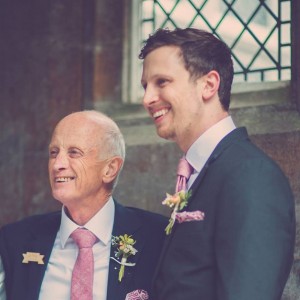 A skilled talent in creative imaging and radio management/administration, and someone who I am lucky to call a friend, has left one of the top Imaging Gigs on EARTH to find greener pastures. Chris Nicoll is (or was, depending on when you read this) Head of Production for Capital Radio, Capital Xtra, Capital TV, Capital Solar System and Capital Networks at Global Radio in the UK. There were two of these pretty major announcements within days of each other near the end of 2015, Dave Foxx leaving Z100/NYC at iHeart Radio being the other. Chris is still young and showed no signs of being "pushed out" so it might have been more surprising to hear of his departure. Well, we discuss it all. I appreciate his candor and his time and look forward to what he has coming next. (If you listen to the show I think the photo I grabbed of Chris and his Father is pretty appropriate)
BONUS: I interviewed the TEAM @Capital a while back. Hear Part 1 here - Part 2 Here
See him online at WizzFX.com or on twitter @C_S_Nicoll
A skilled talent in creative imaging and radio management/administration, and someone who I am lucky to call a friend, has left one of the top Imaging Gigs on EARTH to find greener pastures. Chris Nicoll is (or was, depending on when you read this) Head of Production for Capital Radio, Capital Xtra, Capital TV, Capital Solar System and Capital Networks at Global Radio in the UK. There were two of these pretty major announcements within days of each other near the end of 2015, Dave Foxx leaving Z100/NYC at iHeart Radio being the other. Chris is still young and showed no signs of being "pushed out" so it might have been more surprising to hear of his departure. Well, we discuss it all. I appreciate his candor and his time and look forward to what he has coming next. (If you listen to the show I think the photo I grabbed of Chris and his Father is pretty appropriate)
BONUS: I interviewed the TEAM @Capital a while back. Hear Part 1 here - Part 2 Here
See him online at WizzFX.com or on twitter @C_S_NicollTranscript
52 min read • 7,670 words
Announcer: The Producers, featuring the most respected international talent in the world of audio production and voiceover. Radio, TV, film, and online. In-depth interviews and industry insights, putting you on the inside. This is The Producers Podcast with Ryan Dreen.
Ryan: And here we are. You know, this might be the second-to-last podcast of 2015, and really, I'm gonna— I mean, I hate to say jam 2 episodes in in last minute because they're 2 very big episodes. I will just take one moment to hype the next and what would be final episode of 2015. the one and only Mr. Dave Fox will be joining me, who is leaving his massive— you know, the gig, really, if we talk about it, the gig. and you know, that's been all over the news, people talking about it. Dave was kind enough to tell me, yeah man, I'll come on with you, we'll discuss it all, we'll figure out where life is going for me and all that. We're gonna do that next. But another one that, I'm not gonna say it shocked me, I'm gonna say that I was surprised, and I'm gonna say I'm really happy you decided to join my show to, discuss it in depth and then also talk about all the other things of life, is the one and only Chris Nicholl, head of production, Capital, Capital Extra for Global Radio there, in the, in the heart of London. Chris, thank you so much for joining the show, man.
Chris Nicoll: Thanks for having me.
Ryan: I kind of used the word surprised. I guess, you know, why don't I just come right out of the gate and ask, did you decide to leave Global first, or did you get a new job first and then that led to leaving Global?
Chris Nicoll: I decided to leave first.
Ryan: When you, when you left, did you have any idea where you'd be going, or was it one of those kind of scary scenarios where, you know what, I know I need to leave here, I'll figure the rest out later?
Chris Nicoll: Yeah, it was more that actually. Like, I had a bit of a rough year in the end, which kind of just sort of made me look back at, like, you know, what I've been doing with myself and with my career and that, and sort of realized that every decision I'd made was because I wanted that next big job, or, you know, I wanted to do better at my job, or get, you know, be better with my audio or whatever, or reach out and do something, you know, the next big thing.
Ryan: Yeah.
Chris Nicoll: And yeah, and I just sort of stopped and my father tragically passed away a couple of months ago, which really hit me quite hard. And it just sort of made me stop and look and go, why am I doing this? Like, what's my goal? Where am I going? And I thought, you know, I've made every decision for my career. And I just kind of look back at everything and all of the trials and tribulations of this game, this world of imaging, and what it's like to work in a radio station. And we all know what that is. And it can be, you know, we love it, so we do it. But it can be long hours, and it can be little reward in terms of people seeing those hours, because it's all about how it sounds. And that's cool, because that's why we do it. But I looked at that and I thought, I need a break. I need out.
Ryan: Mm-hmm.
Chris Nicoll: And I need to just take some time for me. So that's why I made the decision. And I wasn't going to do anything. I was going to just chill out for a bit. Obviously, my own thing with WizzFX, that could tick by and pay some bills, and I could just sort of relax a bit. And I was going to maybe take 6 months and just put my feet up and enjoy life a bit. I'd say I was going to sit in the sun, but it doesn't get that sunny in London that often. And it's kind of going into winter, right? So there's no sun at all.
Ryan: Yeah, right.
Chris Nicoll: But yeah, and then, so I did that and about maybe 2 weeks later, I was just having a random conversation with the guys at Wise Buddha and that sort of led to this new thing. So yeah, it sort of happened quite quickly, but obviously it kind of, it's worked out quite well because I've made a decision for me personally, but I've ended up with like a really awesome new job. Yeah.
Ryan: First, I want to say I'm really sorry about your dad.
Chris Nicoll: Thank you.
Ryan: That's, you know, what do you say? Really sorry about that. I'm glad you're able to, kind of come out of that with a little bit more, I don't know, clarity or something. I guess I would ask though, just kind of hearing everything you just said, you, you at one point you felt you needed 6 months and you wanted to not do something for your career, but it seems like you jumped into a new gig pretty quick there, no?
Chris Nicoll: Yeah, well, I mean, and that's the funny thing about it. So when I stepped back, I sort of was like, right, I'm leaving because I want these things. I want to have more time for myself. I want to enjoy the creativity and not feel pressured to deliver a product. I want to feel inspired to deliver it. And I think I need some time with that. And in my conversations with the guys at Wise Builder and Imager, they were like, well, whatever you want this to be, it can be that way. So if you want time for you, if you need, you want to—
Ryan: Yeah.
Chris Nicoll: If you want to spend 2 days just thinking about an idea before you do it, that's how we'll work. It's going to be up to you, and we'll just make this whatever you want it to be so that you feel inspired and happy. They've given me the chance to kind of do it from a people perspective rather than from a delivery perspective. We need this much per month. It's more, get involved and come and help us, and let's see what it can be. I really like that, and I thought, well, that actually really suits me.
Ryan: Yeah, so it sounds like you might be able to, you know, get back a little more into the nuts and bolts of just pure station sound, but also you get to still be connected with people. Looks, you know, it sounds like they're gonna have you kind of in touch with clients and also producing great audio and really doing whatever you want.
Chris Nicoll: Yeah, right. So, and I think that's what's really exciting about it is, you know, I spent the last sort of 5 years actually managing a team and making a lot less audio. So yeah, I'm looking forward to making, you know, probably about the same amount of audio, maybe a little bit more. But yeah, I'm looking forward to kind of further sort of spreading my— I guess spreading my wings is a bit weird, but like kind of further improving my skills at, you know, working with creative people and helping deliver what is already an amazing product. And, you know, that's gonna be really awesome. And they've got, for example, I know you talked to George last week. Yeah.
Ryan: Yeah.
Chris Nicoll: You know, hands down, probably one of the best people I've ever heard make imaging. So like, it's gonna be really awesome to work with him and I'll learn a lot off George. And I hope that I can bring something really different to the table with how I, you know, sort of my approach to it. And hopefully with sort of my managing hat on, hopefully streamline some stuff, make it easier, but also improve it. You know, I don't know. I can't tell you there's much to improve. So I'm just kind of going to turn up and see what I can do, I guess.
Ryan: I've had a job like that where you're kind of, you know, you're hired because they see value in you and you look at what's happening, you're like, I don't know how I can make that better. It's like, are you sure you need me? Because boy, a lot of great things are happening over there. That's kind of—
Chris Nicoll: That's it. That's exactly how I see it. I mean, I know one thing I can bring is an amazing array of Christmas jumpers. It's about like I have right now, I have one on that's full of baubles, as in dangly baubles. I look like a Christmas tree. So I can do that much at least.
Ryan: No, that's cool. You know, let me ask you this. November I think it was like 15th, November 15th or 16th. Did you already know about your new job at Imgur?
Chris Nicoll: No, I think I probably didn't. I probably didn't do that for another— that was probably like 2 weeks later or—
Ryan: Yeah, I'm trying to catch George because I interviewed him on about the 15th or the 18th, somewhere in there. And if he didn't tell me about you, then I would have been pissed. But maybe it, you know, wasn't worked out yet.
Chris Nicoll: We were still negotiating my total approach to relax and just chill out vibes that I'm after.
Ryan: Yes. I know you were also relatively recently married. I've yet to meet your lovely bride, but I'm guessing while she's sad to see you go, perhaps being around you 24 hours a day, you know, she doesn't have to do that anymore. So maybe this is almost a benefit to her as well. Totally.
Chris Nicoll: I think of it as a belated wedding present slash honeymoon. Yeah, yeah, she's real happy about it, I think. Well, I think yes and no, right? Because like, she's like, yeah, okay, it's really cool, but at the same time everyone's having to pick up more work because I'm walking out the door. So yeah, yeah, it's catch-22.
Ryan: Yeah, that's funny. and it's funny, I didn't, I didn't mean to make my podcast so Wise Buddha heavy here, towards the end of the year, but, you, you've become a friend of mine, and so I, I knew that I wanted to have you on as quick as possible because, like I said in the intro, Dave Fox leaving his job is certainly one of the biggest— and again, I don't like to use the word shocking. I mean, you know, people leaving a job shouldn't be shocking, but, you know, that was a stunning announcement to people in the imaging world. But I think yours was relatively stunning as well. So what was the reaction of people you worked with? I mean, because being on the inside, you know, the view is often very different than outside.
Chris Nicoll: Yeah, I think some people, I think, saw it coming. I really was starting to struggle a lot. It's funny how your personal life can really sort of affect your professional life, no matter how much you sort of try and draw a line between the two of them.
Ryan: Yeah.
Chris Nicoll: So yeah, I was really struggling. We've had some things sort of going on within the station that are kind of— I sort of looked at them and thought, how much do I care about this now? And whether it was sort of worth the battle from a creative standpoint. And just because I think I was, you know, in my mind personally, not really that great, I sort of thought, you know, all of these things make me feel like I'm not that interested anymore in what we're trying to achieve with the brand of Capital.
Ryan: Yeah.
Chris Nicoll: And it's not fair, I think, for me to sit here and continue to do the job without that 100% passion for the brand.
Ryan: I figured that word passion would come up.
Chris Nicoll: Yeah, absolutely. And it is about passion. That's why all of us do this kind of stuff. And I think, because I didn't feel 100% passionate, and I know some people could tell, but were giving me sort of a little bit of leeway. The people that manage me were giving me some leeway because they knew what I'd been through. But in the end, it's not fair for me to lead a team when I feel that way, not at 100%, and I just couldn't get myself out of it. So yeah, some people expected it.
Ryan: Yeah.
Chris Nicoll: Certainly those immediately around me, but I know a lot of the other people at the station and at some of the other brands in this group were quite shocked. And I think maybe the anorak industry here reacted You know, kind of with equal bits of surprise and expectation that this would be coming one day. So yeah, it's been quite a mixed bag, I guess, all in all.
Ryan: Yeah. You know what, now you put— I mean, I've got a list of questions here, but you just used the word anorak. It's so funny. We had our Christmas party, you know, I'm over here at TM Studios. So, you know, a death-to-the-death competitor of Wise Buddha, by gosh, no, not at all. Anyway, we were— we had somebody from outside the industry ask us about kind of those jingle freaks. I say that lovingly, but somebody used the word anorak. It's way more of a UK word, I think, than a— so anyway, can you say what that means for those listening that might have heard the word and have no idea what anorak is?
Chris Nicoll: Sure. I think it's probably you and me, Ryan. Like, we're anoraks because we like to sit around and have a beer and talk about radio.
Ryan: Yeah.
Chris Nicoll: So I guess it's that, but probably more to the extreme if I'm actually being fair. It's the people that, you know, they may work in radio, they may not, they may have once worked in radio, but they just, you know, they consume all of the news and the gossip and they love it. And they know everything about, you know, from how it's transmitted to how, you know, how it gets to the transmitter to, you know, who does the imaging to what software they use to do the imaging to the broadcast system to all of that stuff. So it's really Like in-depth knowledge of everything radio.
Ryan: yeah, I, I still, I guess I honestly have no idea where the, like, why that word is used for that definition. I don't know if you know that.
Chris Nicoll: I just picked it up because I live here. I couldn't, I couldn't tell you where, you know, sort of the, the history of the word.
Ryan: None of us could.
Chris Nicoll: I know that an anorak is also like a jumper, not a jumper, like a jacket.
Ryan: Yeah, it's like a, like a, like, what's the word, like a parka.
Chris Nicoll: Yeah, totally.
Ryan: I think that's the word. It's a big-ass jacket with a hood or something.
Chris Nicoll: Yeah.
Ryan: Anyway, we were talking about that, how literally we knew what the word refers to, but we just had no idea why it was that. Anyway, I digress. So we mentioned this quickly before I jumped on and started the actual interview here, but it's pretty big shoes to fill, I'd say. I'm one to think companies might promote from within before they'd go looking outward, but do you know the scenario there? Like what happens to your job? Who might be up for it if it's still available? What the whole story is?
Chris Nicoll: Well, I'm sort of being kept, you know, not out the loop's the wrong turn of phrase, but I'm sort of not involved in that. I think there's a fair amount of change sort of sweeping through the brand in terms of how they unify the radio station, the digital presence, the TV presence and things. And I think they're sort of, I wouldn't say looking at restructuring, because that's not the right way to explain it. I think they're just looking at their options. How would it be best put together? Who might that be? And so I sort of think, given the sort of timing that I sort of resigned, I think they've sort of gone, right, we're going to think about this just a little bit more then and not rush into a decision. So I think that's kind of where it sits at the moment. I know they did advertise for about 2 weeks, but I'm not sure where that's got to at this stage.
Ryan: Yeah. And that's pretty understandable. I'd say that would be the case everywhere. Now, the part that's a little surprising to me, unless— I'm not aware of your setup there, whether there's a contract or whatever, but I know you're on the job for at least another month and a half from now. Are you compelled because of a contract, or is that just sort of they asked you to and you said yes, or how— where's that? What's that all about?
Chris Nicoll: So yeah, it's to do with my contract. So I have a 3-month notice period. So, I mean, and that's obviously to give them— well, give them— give the company, give Global the time to find the right person for the role.
Ryan: And I mean, you know, as far as the stakes go in the UK, really maybe all of Europe, CHR Radio, there's nothing bigger, so they've got to take their time.
Chris Nicoll: Yeah, that's right. And, you know, I like to think that whoever does sort of come here will hopefully pick up quite a well-oiled machine and, you know, be able to slot in and hopefully take it to the— take the brand to the next level, because that's what it's about, right? We want to keep, you know, when you're there, you want to make it the best that you can, and then you want to kind of hand someone the baton with a kind of, there you go, it's your turn to like keep running with it and make it bigger.
Ryan: And again, not to totally dwell on the past, looking backward, although I think people are a bit interested. I would ask it like this. If you were to look back at your time at Capitol, and maybe not even just the most recent months where you said things weren't the best, but in the overall 5, 6, however many years you were there, what would be the thing you wish you had done a lot better? And then what would be the thing you think you did best?
Chris Nicoll: I wish that I had been a better manager. I think there are things— this was my first management job.
Ryan: Sure.
Chris Nicoll: And that was a trial by fire. So certainly some things I wish I'd done better. I can think of occasions I've said things I shouldn't have said. People who know me know that I've got quite a sarcastic and What's the word I'm looking for? A sarcastic wit? Totally.
Ryan: A wry wit, a wry sense of humor.
Chris Nicoll: Totally. And I also, I like really offensive jokes. So funnily enough, they're not what got me in trouble. It's the, when I've tried to do something by the book, I seem to have kind of messed it up somehow. So there are times like that I look back and go, what did I do that for? So there's a couple moments like that. So definitely people management, I feel there are parts I could have done better. And from an audio sense, I think there's always stuff you can do better. What I know now, I wish I knew when I started. So I wish I could go back and sort of have started from this point to grow it to something amazing rather than the point I did start at. And the thing I think, I like to think I got really right was in the end building such a great team here. And I think not so much this year, just given sort of where my brain's been at and, you know, what I've been dealing with. But I think like last year we had the station absolutely humming and, you know, how it sounded.
Ryan: That's when I had your whole team on my show. I wanted to say that that still is one of my favorite episodes and it really sounded like you guys had a great thing going.
Chris Nicoll: Yeah. And I mean, we had that thing working I wouldn't say perfect because nothing is, but I think, you know, for where we were at, it was damn close. So yeah, I'm really proud of that, really.
Ryan: Yeah, that's great. Is, you know, I had, I think, 5-ish of your team on the show at one time, and I would highly recommend people going back and checking out that episode, especially now. Who knows? You know, I didn't listen to it, but maybe there's something in there that's going to, you know, hint to what's happening now for you.
Chris Nicoll: Yeah, maybe.
Ryan: Maybe. Anyway, the only person that I think I met in person from the Capitals team was that dude from Iceland. Yeah, Steffan.
Chris Nicoll: What's his name?
Ryan: Steffan. I was going to say Thor. I knew that wasn't right.
Chris Nicoll: That also works.
Ryan: Okay. Is he still there?
Chris Nicoll: Yeah, he's still there. Yeah, yeah, yeah.
Ryan: Okay, good. Yeah, I knew he was younger and he was one of those guys that you kind of told me you sort of broke a couple of your own rules or maybe even the global rules where they didn't like to hire out of the country, but then you saw something in that guy. So it's good to hear he's working out then.
Chris Nicoll: Yeah, no, it was just the language barrier there. I think everyone was a little bit worried of, you know, I don't know, I apologize if I come across sounding a little bit racist and I'm not trying to be. But, you know, like when I think when you speak English as a second language, there's some subtlety that you might not get. And so It was funny to interview him and realize that he spoke English better than me. And everyone that met him has felt the same. So he's done incredibly well here. And actually, you'd be hard-pressed to find anyone that would think that English is his second language, other than the fact that he has an accent. But then I have an accent and English is my first language. So, you know.
Ryan: Yeah. Well, I guess I have an accent too, depending on who you're talking to.
Chris Nicoll: Yeah, that's right. It's perspective.
Ryan: Moving forward now, let's look forward and not look back.
Chris Nicoll: Cool.
Ryan: Okay, so you're going to be on the job, quote unquote, for another little while, and then you told me you get a little bit of time off.
Chris Nicoll: Well, I think for those 3— I've got 3 weeks between jobs, and I'm gonna be watching a lot of movies. So if anyone has good recommendations, that would be very helpful.
Ryan: So it's a binge type of a 3-week, just to turn the brain off time then. It's not— you're not looking forward to traveling around the world or something like that? No, no.
Chris Nicoll: Jo will— my wife Jo, unfortunately, she'll be still working. So I've got 3 weeks and I'm literally going to sit at home. The most I might do is finish building my home studio, which always seems to be being finished being built, if you know what I mean. Like, it always seems to have one more thing to add to it. But I'll probably just watch movies and sit around. I mean, it's winter. I don't want to go outside.
Ryan: Right.
Chris Nicoll: So yeah, and then Just, yeah, I'm looking forward to catching up on a lot of sleep. So that'll be good. That'll be cool. When I get to the job, right. So I don't know, I'm just really looking forward to a new atmosphere. And, you know, I know quite a few of the guys down there. I'm just looking forward to working with them. I've known George for a long time, like actually about 6 years. That's about how long I've been in the UK. In fact, He was one of the first people I worked with when I moved here. I did maybe a few weeks at Pure Tonic, as it was back in the day, which was Production Vault before it became Real World.
Ryan: Steve's company.
Chris Nicoll: Yeah, totally. So I did a week or so, so I met him then. So we've been friends ever since then. So that's cool. Like, I know everyone knows George, so it's easy to say I'm looking forward to working with him, but there's some other great guys there. There's Guy Kenny and Guy Scott, who I'm looking forward to working with. They just hired a writer there, a guy called Alistair, who is from a town really close to where I grew up in New Zealand, which is really cool.
Ryan: Oh, really?
Chris Nicoll: I went to school with his cousin, so that's quite weird. So I'm looking forward to that too, right? Like, I'm just looking forward to working with like a group of people that I know already, so it makes it really easy to slot in and have fun.
Ryan: Had you been over? I actually don't know specifically. I mean, I know they have a facility at some You know, is it, is it like in, in London? And, okay, what's that about? Are you going to be working there day to day? Are you going to be spending more time working in your home studio?
Chris Nicoll: I think it'll probably be mostly there. I like being in an office with people, but I've, you know, if, if I need to, I'll go home and work in the studio at home. it will just depend on what I'm working on at the time. Like, if I find I'm doing more like management and chatting with people and, you know, organizing, Then it makes sense for me to be in the office most of the time. But if I'm sort of doing that 3 days a week and then, you know, we decide that we need to make loads of audio and I'm going to do that, then it might be 2 days a week at home. I dunno. It's going to kind of— we'll cook it as it comes, I guess. Yeah.
Ryan: Yeah. Yeah. That's exciting. I hate to speculate. Right. So you haven't gotten on the job yet, so there's no sense in us guessing, you know, what you'll be doing, but it just sounds a lot like a lot of fun for you. It sounds like it's a lot better for your mentality, at least.
Chris Nicoll: Yeah, absolutely.
Ryan: Good for you. let me— before I kind of wrap it up here, is there anything that you wanted to say about your time at Capital or anything else that I might not have brought up? You might have had goals in talking to me that I just simply glossed over, and I don't want to leave anything on the table. No, no.
Chris Nicoll: I mean, you know, I think Capital is an incredible brand, and it, has— it— I mean, it continues to go from strength to strength, right? It's like the It's like the CHR brand in the UK certainly, and potentially across Europe. It's on a par at least with NRG, and there's also KISS here in London and stuff, and there are lots of fantastic people that work at all of those stations. So I think the thing I would get across is that Capital is fantastic and such an amazing group of people that work here, and I hope that whoever they find to step in is going to be awesome and really take it to that next step. As I mentioned before about the baton, I think that's really important. And obviously when that new person comes in, I hope that they might think about a wonderful service called Imager. I don't know if you know about that.
Ryan: No, no, I haven't heard of it. No, I'm not aware. I didn't see it at multiple conferences put on display. I didn't talk to the guy who runs it.
Chris Nicoll: But no, I think all in all, Capitol is amazing and it really pushed me so far as an audio producer and also as a manager of people. And I've learned so much and to sort of now be able to take that to somewhere like Imager and hopefully apply that, obviously in different and new ways because it's a different sort of place. It's really, really exciting. And it's gonna be an excellent, excellent challenge. All the while, I think, allowing me to just claw back a semblance of myself alongside that and remember what it's like to be creative. Because I think when you work in a radio station, I think a lot of people will feel this, but maybe not necessarily talk about it, is that The whole thing of, okay, I've got to be the audio guy, but then there's also the, I've got to load it into the broadcast system, and I've got to do all the admin on that cart so that everyone knows what it is, and I've got to make sure it's scheduled or put on a cart wall, or I've got to make sure they use it right, or I've got to make sure that the script's right for the client. And suddenly your just make 5 sweepers turned into like a 5 or 6 hour job dealing with 5 or 6 other people.
Ryan: Yeah.
Chris Nicoll: You know, I think I'm looking forward to going somewhere where it's, okay, we've got to make 5 sweepers, and this is what we've got to do, and this is how it's going to work for the service, and then doing it.
Ryan: You haven't had a lot of hindsight here. In fact, you're still on the job. But I would be curious to know, in your mind right now, you're about to head outside the station, you know, and I think a lot of us find that a little bit scary. I did it myself. A lot of people have done that. Do you see yourself kind of remaining on the outside and maybe servicing stations now? Or do you think there's a time in your life where you'll find yourself back inside the brick-and-mortar radio station or radio network in some capacity?
Chris Nicoll: Yeah, I would, I would never say never. I think I'm not ready to not do audio production stuff, but I love doing management stuff.
Ryan: Yeah.
Chris Nicoll: So I'm kind of like, Yeah, I'm not so scared about getting out. I think the scary thing, like we were saying earlier, is just quitting and not having anywhere to go. So I was more scared about that if I was, you know, if I'm brutally honest. I mean, I might sit there and say, I just want to relax for 6 months, but it's still scary. You got to pay the bills. But I think—
Ryan: Well, you do have that sugar mama who makes the big capital lines.
Chris Nicoll: Yeah, that's true. That's true. Yeah, I planned as well. Yeah, I think my first love was always to work at a radio station. So, you know, I think I would like to head back at some stage, maybe, you know, down the pathway somewhere. And whether that will be doing imaging or whatever, I'm not so sure. You know, I have an interest in, you know, perhaps coming back and running a station. I don't know. But I don't think I'm ready for that. You know, I think I need to get some more experience under the belt and that. And we'll see what happens.
Ryan: Another thing that I wanted— I actually forgot to ask this earlier when I brought up George, and I had asked George this question. It's something that I've noticed now that I know a lot of people from Australia, the UK, and over in Europe that kind of do what we do, where before I really only knew how it was in the States. It seems like over there, especially the bigger, the higher-profile jobs, people don't keep their jobs or stay in their positions near as long as they do in the States. In fact, I think it was George that brought it up, and I agreed that Matt Fisher might be literally an exception that proves this rule.
Chris Nicoll: Yeah.
Ryan: Because he's been there, I think, maybe 10 years now.
Chris Nicoll: Yep.
Ryan: Do you see that as a phenomenon? Is that true down in New Zealand, Australia, that area? And if so, why do you think that is?
Chris Nicoll: I mean, in New Zealand, I know that there's a guy, Grant Brodie, who's—
Ryan: Yeah, I met him.
Chris Nicoll: Right, he's a bit of a legend. And he's been working for The Edge and The Rock for years. In fact, he was— he'd been doing it quite a few years before I started getting into it in New Zealand. And he was certainly an inspiration for me back in the day. And he's still there, still doing it. There's another guy, Kieran Bell, who's been at the station I left in New Zealand, ZM, for gosh, 6 years, and he was there for 2 or 3 years before I left, working alongside me.
Ryan: Mm-hmm.
Chris Nicoll: So, yeah, and I do agree. I think that there, certainly in the UK, has recently been quite a lot of— quite a fast turnover of people. And I think that that's probably just indicative of the sort of work that's available. You know, people are moving around a little bit. And there's also been a lot of change in terms of stations that have merged. You know, new stations launched, services and products and things being established. And so, people are sort of moving around and finding their best fit, if that makes sense.
Ryan: Yeah, it definitely makes sense. I also just simply feel like there's a different mentality when it comes to, I don't know, career or just what a job really is. It seems like there, people are kind of not I don't know, more likely to be looking for that next spot and not so worried about just making the security stronger, you know, just entrenching themselves and just kind of staying put. They're really more looking forward to what's next, whereas in the States, I feel like when we find a good opportunity, we're more willing to figure out how to make it stick.
Chris Nicoll: Mm-hmm.
Ryan: And it's just interesting to me. I didn't really know if there's really a why.
Chris Nicoll: Yeah, no, and theorizing on that a bit more, if I look at the turnover of my own team since I started, if we take that, so in 5 years I've got 7 producers on my team now and only one of those, just thinking, yep, one of them was there when I started.
Ryan: Oh, really?
Chris Nicoll: So I've hired all of them. over the years.
Ryan: Is it because you ran the original crew out of there?
Chris Nicoll: Yeah, no, I ran everyone into the ground. I worked them so hard. No one wants to work for me ever. No, I think it's just, I guess the mentality is definitely different. People, you know, and I guess like me, you seek different creative opportunities. And some roles allow you a great deal of that. You know, I was very lucky because I was sort of leading a team. I could sort of get the team involved in all of these various creative opportunities. But as time goes on, people, you know, a lot of people move to London to work here, but they're not from London and they don't ever see themselves settling down in London. And so then they, you know, an opportunity comes up back home or, you know, somewhere different. And so they go and they try that out, I guess. But certainly I think there's some merit in the idea that With all of these, you know, I know that The Real World is based in Manchester, for example. Imager, obviously, they're based here in London with Wise Buddha. So just taking those 2 as examples, if opportunities come up at these companies, people go and they take a punt and have a blast at it and go and try working there. And then that leaves a hole in a team. So then you fill it.
Ryan: Yeah.
Chris Nicoll: And so people start to cycle around a lot more. I would also say that perhaps there's some, you know, people who do radio imaging and that who can obviously do other audio work. I mean, we all can, right? Because we work in audio. So then there's all, you know, you can mix TVCs, you can do anything, compose, whatever. And so a lot of people end up going down the freelance route because perhaps they want to keep their own time. Something I didn't mention before, but one of the reasons that made it really easy for me to resign with nothing on the horizon was I have no responsibilities. So, I only really— yes, I'm married, but Jo still had a job. And so, I just need to make enough to pay my part of the bills, really. So, it makes it easy for me to make that choice. And I think the lifestyle in London is very much like that because people don't get a job somewhere at capital and then buy a house and move. They find a flat and they rent it and they stay in that rented accommodation. So there's no tie to a place. So it's a lot easier to go, right, you know what? I've done my 3 or 4 years. I'm out.
Ryan: So it's more of a temporary mentality all around when you— yeah, I see how that is.
Chris Nicoll: But I think like, you know, I didn't see myself leaving ever. You know, I thought I got this job and, you know, It was so daunting. And I just thought, there's so much I want to do with this brand. And there was still so much I wanted to do. But then, you can't control life. And everyone has something that happens or makes you reevaluate or change what you want from your life or what you want from your career. And I think that there's certainly a sort of a generation now Certainly, definitely before, we're talking about a younger generation that aren't as tied and as loyal to brands and jobs and things.
Ryan: Yeah.
Chris Nicoll: So, a lot of the people who are incredibly talented at imaging that are coming up are very fickle about where they want to be. So, they don't stick at things for as long. Now, I think I'm definitely outside of that, but I've hired people like that for sure. So I think it's also in part down to that.
Ryan: You know what, I feel bad I didn't bring this up. I know, you know, you've got things to do. I'm not trying to hold you on here so long, but I did want to bring up, you know, your WizFX brand. You mentioned it early on. I think your accent might have let it fly by. If people, especially in the States, they might not even have heard you mention it. But I know Wise Buddha is going to be repping that. If you wanted to say something about WizFX and its future and what it does and What people can get from it?
Chris Nicoll: Sure. Well, basically, when I first started in radio, I started making my own sound design because I couldn't get budget to buy it. So it just grew from there. Right, right, right. So yeah, I just started making loads of effects. And for a while there, I've been sort of pushing the business to be more and do lots of stuff like custom packages and whatever. But now I think it's gonna be more about sound design. So if someone's looking for sound design, I have 3 or 4 libraries of stuff that I've made, and I just kind of sell that on or I provide that.
Ryan: Mm-hmm.
Chris Nicoll: But I mean, obviously now moving over to work with Wise Buddha and Imager, part of the deal will be to service that through them, which is excellent because it's exposing me to a greater base of potential customers, I guess, to put my sales pitch hat on.
Ryan: Does it not compete with them directly or indirectly in some way? Or maybe it wasn't a concern for them?
Chris Nicoll: I mean, I think the idea is that it's a product that they can use for their stuff, which I'm more than happy with. And I don't know, I think a lot of people who do freelancing would agree that when you're trying to do a serious business, it can be quite hard to cut the— you can have someone who wants 5 sweepers for their online radio station.
Ryan: Yeah.
Chris Nicoll: More people who run those sorts of stations will approach loads of freelancers looking for a good price than the big radio station that we all want. So certainly in my case, I have sort of 5 or 6 all right sort of stations that I can work with. In fact, all right, great stations. A couple of amazing ones in Iceland, funnily enough, and a couple in New Zealand, which is great. But in terms of actually making a real career out of that, it would be a lot of hard yards. You look at people like Adam Burgess and Tom Cross from Imaging Blueprint who've done that. And I mean, that's an incredible feat. But few people achieve it. So, with my discussions with Wise Buddha and Imager, It just came down to, well, I still want to have this thing, but how can we make this fit with the family of Wise Buddha and its products so that it really helps everybody out?
Ryan: You've moved continents, you've had lots of profile jobs, you've been in this business just long enough, I think, to have a little hindsight. I'd be curious to know, as you look back on everything, I always like to ask this of my guests, and your perspective will be different from anyone's. You know, if you had to think of one thing that you've done right or that helped you most and made you successful in this radio imaging crazy world, what would that be?
Chris Nicoll: I think, hmm, definitely that when I had my lucky break to get in the door, I worked really, really hard. And I mean, all hours. I think my first day in a proper radio station, where I was being paid as an intern, so very little money. I'd work 17-hour days, and I did that for 3 months until someone decided that maybe I could get paid a little bit more. And I think that's the one thing I did right in the end, because it's taken me a long way, is to have really applied myself and thrown myself in, like, to be really anarcho right at the beginning, to use that word again.
Ryan: Yeah.
Chris Nicoll: And I think that that's the most important thing, because then when I shifted continents, I kind of had to start again. Because I was going somewhere where I didn't know anyone, and I didn't know the lay of the land and the people I'd be working with. And, you know, having to then get in the door and really, you know, work your ass off again to sort of prove to people that you're able to do it. So definitely that mentality has really helped me.
Ryan: Yeah, that's great. No substitute for hard work.
Chris Nicoll: That's right.
Ryan: A grandpa probably said that somewhere.
Chris Nicoll: Totally character building, right?
Ryan: Yeah, absolutely. I really, really appreciate you taking the time to kind of just chat about it. I thought these would be good, themed episodes for the end of the year, you know, these transitional moments, especially for people like you and then ultimately Dave Fox with these massive jobs that have pulled the trigger themselves on leaving. I think you've probably taught a lot of people, some very good lessons today, so I thank you for that.
Chris Nicoll: No, thank you very much for having me.
Ryan: Oh man, Chris, I never said where they can find you. Not once in the beginning. I was supposed to and I didn't. Can you throw out your details? SoundCloud, Twitter, whatever else?
Chris Nicoll: Yeah, twitter.com/c_s_nicoll. N-I-C-O-L-L. Or wizfx.com is fine as well for the minute.
Ryan: Cool. Okay, so they can hear some audio from you. They can get in touch with you there, and I know you're on SoundCloud. cloud somewhere. They can go and find you there. But okay, final, final, final time to say thank you, Chris. Dave Fox is next. That is it.
Chris Nicoll: Bye.
Announcer: Contact the show, contribute your opinions, see additional content, or simply stay connected at producerspodcast.com.