Episode 86: Kelly Doherty 2015
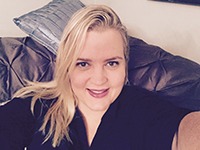 It was high time I had another recorded conversation with Kelly Doherty. Since we last spoke she moved across the country, twice, and elevated to what might be the most prominent imaging position in the U.S. Kelly is the Vice President of iHeartMedia. Again, as would be expected with Kelly no holds barred content-wise and we covered a lot. We also got into The Imaging Days panels she will be a part of. Her's sounds amazing! She will also do me the favor and join my Monday Power Player panel: INNOVATION. Check out the show below!
Transcript
53 min read • 7,932 words
Announcer: The Producers, featuring the most respected international talent in the world of audio production and voiceover. Radio, TV, film, and online. In-depth interviews, industry insights, putting you on the inside. This is The Producers Podcast with Ryan Dreen.
Ryan: Hey, hey, hey, hey, podcast time. Thank you so much for checking it out. I am appreciative of your time. I also I'm appreciative of you dealing with an influx of extra episodes from me. And yes, I realize others are doing podcasts every single day for multiple hours or 2 or 3 times a week or weekly. For me, 4 in a month is a pretty big deal. Yeah. Kind of time-consuming, but I thought it was worth it leading up to the Imaging Days to revisit with a few of the guests I've had on that will also be at the Imaging Days, including Kelly Doherty. the Vice President of Imaging for iHeartMedia. I would say risen to, if not the most prominent imaging position in the States, certainly one of the top imaging jobs in the United States. Worldwide, I don't know if I can really speak to that, but anyway, Kelly was a great interview. We always have a good time chatting and we got into everything. Very, very busy woman. So that interview's coming up in seconds. I won't bother with an outro on this one. I'll just kinda let this one. I'm Kelly. round out under its own volition. But anyway, I did want to say at the Imaging Days, which is coming up Monday and Tuesday, I'll be flying out of the country in, I don't know, a little over 24 hours. If you're out there, I do hope you come and say hi. But I'm excited to welcome— I'm creating 2 panels this time. I'll do my final sort of plug for what I've got going on. Day 1, Monday, I will have what I'm calling more of a power player panel just based on who I've put on it. But we're going to mainly discuss innovation in our world. So it's one thing to do good creative, but you know, what are the tools we can use to advance and do things that really feel like you're living in the future or really feel like we are evolving the product more than just simply doing the same old, same old and doing it well. But you know, anyway, Kelly Doherty, who will be the guest right now, will be on that panel. Also going to welcome Mark Vickers, the creative director of Wise Buddha in the UK, a highly successful imaging and branding and music company. Really cool dude. He's also doing— you are gonna be a part of another panel. But anyway, and Andy Sonneman, who is the president— no, the CEO, excuse me— of Benztown, been a friend of mine now for years. And again, he was on one of my very early podcast episodes. Just gonna be a real good time talking to those 3 heavy hitters. And then we go really creative on Tuesday with a panel which really breaks down to how do we stand out? Radio is competing more than just with radio, we're competing with web and streaming and TV. We're gonna talk to Dom Narrow, Hot 97, he will also be opening the show, by the way, on Monday. But anyway, this will be on Tuesday, we're gonna have Steven Lemons, I almost said his name wrong, I don't wanna do that. Anyway, Studio Brussels, Belgium, one of the big heavy hitters in Belgium, he's also doing a panel of his own, but he'll join me on the station producer panel. And then finally, a guy who has become one of the most prominent radio imaging producers and now managers really in the UK, all of the UK, at BBC Radio, Matt Fisher. Another person I happened to have had on this show quite a while ago. It'll be good to catch up with him at the show and all 3 of those guys and really just talk about branding our radio stations and how we stand out and stand above. So that's kind of what I'll be— what I have going on over there at the Imaging Days. And that should do it. theimagingdays.com or ryanontheradio.com for more information. I'm on Twitter @rdreams.
Kelly Doherty: Thanks, Ryan.
Ryan: R-D-R-E-A-N. I made my Twitter handle just so creative, I know. For now, Kelly Dougherty. Kelly, thank you so much for joining me again.
Kelly Doherty: Woo!
Ryan: Yeah.
Kelly Doherty: Where are all the sound effects? Or do you put those sound effects in later with all the applause and the crowd and—
Ryan: Oh yeah, I don't need to. Kelly, you, you've achieved quite a bit since the last time we spoke. You were already one of the, just the monsters right atop the world of radio imaging, certainly in the United States, if not the world. You have a fancy title, which comes with a whole lot of responsibility that I wanna talk about, but you are the Vice President of Imaging for iHeartMedia.
Kelly Doherty: That's right. That's right, that's a fancy title.
Ryan: Am I correct in saying that actually that's pretty unique? Most radio companies don't actually have a person for imaging at the vice president level.
Kelly Doherty: Yeah, no, that was one of the reasons why I wanted it, because it didn't exist yet. And there's been a lot of jobs that I've held at certain stations where different titles didn't exist. And I'm of the whole don't ask, don't get mentality. If you don't ask for it, you're never—
Ryan: Mm-hmm.
Kelly Doherty: There's 100% chance you're never gonna get it. And part of me moving to New York was that vice president title. I just thought, wow, how cool would it be to sit atop a great group of imaging people who want to do great things and want to be recognized and can contribute to the whole, you know, all the tentpole events that iHeartMedia does, whether it's the festival, the awards, or group contesting. And it was a pretty— it's a pretty cool position to be in.
Ryan: Yeah.
Kelly Doherty: Because then you also find out other people in the company that have wanted to do imaging for years or wanted to do voice work for years, and there was no platform for them to really launch that. And, you know, we've found a few diamonds out there that we never knew existed. And I think there's a whole lot more. So it's a pretty good position to be sitting in.
Ryan: Yeah, it sounds great. I think we were talking about this before we actually hit record, but I've had a few of your team on this show already. In fact, just in recent months, I've had a few of them on. You have a really stellar team. But before I get to that, I actually was going to start the interview with this softball. I was just going to lay this one up there and let you tackle this softball of a question. Are you the most powerful person in radio imaging on planet Earth?
Kelly Doherty: Oh, Jesus. This is a softball for you. Wow. No, absolutely not. I mean, wow, that would be cool, but I don't think so. I think that, you know, I think I'm in a great position with the fancy title, but there's so many different aspects to it, to imaging, whether it's writing, producing, managing, helping to get the best out of creative people, or I'm certainly not the best out there. I'm just fortunate enough to have a fancy title where I can point at someone and they might get, you know, we might be able to train that person to become better. And I don't think it's the most powerful. I think the most powerful is what you hear, meaning the sound coming out of the speakers.
Ryan: Sure.
Kelly Doherty: I think there are many more powerful people out there, but God, that's That's— can you repeat that? Just kidding.
Ryan: Hey, I'll be honest and say that I wasn't the first person to say it, but when you really think about the landscape, you know, so you take the largest radio operators in the world, while iHeart is no longer just a radio operator, you know, hence the brand change, but furthermore, all the different spaces they're in. But seriously, when you take all the operators out there and then you find the highest people at the top, You know, you're up there. Without a doubt, there's a good argument to be made that if you really wanted to look at the landscape, you have a lot of power to wield when it comes to branding radio stations.
Kelly Doherty: Well, I'm going to make the typical comment. It's not just me, it's the whole team. Meaning, the NPP, which is National Programming Platforms, they handle all the national events, whether it's marketing events, production, or anything like that. The guys on my team represent, I believe, to be the best imagers in the country from their respective formats.
Ryan: Wow.
Kelly Doherty: So if, you know, one of them leaves, it rocks the boat. It's a matter of everybody being in sync and being consistent in all the formats that makes this a cool position to be in. And it's also the The biggest thing about this position is, God, there's so many things to do with it. There's so many—
Ryan: Yeah.
Kelly Doherty: You know, when's the last time that, that you, you know, someone sent out an all-company voice audition or things like that? There, I think there are a lot of creative people in the company and everywhere else. They just don't know how to get there. And I'm so I crave finding out who they are and bringing them up because there's not a big training ground for people who do our type of work anymore. It's a lot of shells and stuff.
Ryan: Yeah, there's certainly not a great farm system. And we've discussed that on this show in the past many times. But I do like what I see with iHeart. I feel like I don't really know when it happened, but Perhaps— 'cause I used to be with Clear Channel for years. I loved it there. I've said it in the past on this show many times. I loved it because they let me do everything. And it's a guarantee I wouldn't be where I am without it. But there was a point at which the company seemed like they were just trying to get the money worked out, you know, just kind of reduce staff. But then at a certain point, you realize that they were actually fostering talent, which brings me to kind of the second major point. Obviously, the first, my softball was tongue-in-cheek a bit, but—
Kelly Doherty: Yeah.
Ryan: Talking about your team, as you discuss some of the things you already do, but can you give us an idea of the structure? I mean, I know kind of you're at the top and then there are genres you cover, but then there's also specific imaging talent. Give us an idea how it all works there.
Kelly Doherty: Well, think of if you want to do, you know, you're promoting something. Our by far biggest tentpole event is the iHeartRadio Music Festival, and getting the consistent sound and the consistent positioners that you want to say, or maybe the goal for this week is to push the grand prize, and maybe the goal for the next week is, you know, maybe we want to up the sound of winners. And it's giving that same message across all formats, but then tailoring those formats to something that those listeners of those respective formats— Yeah. Will connect with. Like, if you just do one promo and run it across all different formats and country and urban and news talk and rock and pop and Spanish and all those things, it's not going to translate as well unless it's something that the listener can connect with. And that's basically what my job, the main part of my job is, is to provide a consistent message.
Ryan: Mm-hmm.
Kelly Doherty: We have an imaging conference we do once a year, and it's grown bigger and bigger, and last year was by far the biggest. But we actually sit there and say, okay, what are we going to do for the festival this year? What are some cool positioners? What do we want to say? And we brainstorm, and out of these brainstorming sessions, having all this creative power in one room is incredible. And we come up with the positioners for the festival and for our big events, and we come up with ways to do something better. And we have kind of a venting session of what are we doing wrong, what can we do better, and stuff like that. So as a whole, it's hopefully uplifting the imaging, the whole sound of the company.
Ryan: Yeah, and to kind of piggyback onto that, so, you know, that just sounds great. You know, that's kind of like a creative person's dream. where you get to get all of your peers together in one place and then do the best possible creative. And then you see it come to life over the course of the next month or 6 months or year, depending on the— As far as the actual, the real structure, do you have like 5 people that directly report to you and then they have teams? Or do you have literally one person per format and they all report to you? How does that work? And does everything have to kind of come through you?
Kelly Doherty: Well, everything, yeah. Every person on the team is in charge of a format. There are a few exceptions. We have guys that can produce multiple formats. And while other guys are busy doing one thing, they can jump in and say, okay, let me help with that. So there's one person, but everything that those people do has to go through a brand manager. So the brand manager is first to say, that doesn't sound right, or, no, this hook tested better, or something like that. And then it comes to me, and then it goes to some other people. There are a lot of people in the approval process.
Ryan: Mm-hmm.
Kelly Doherty: But yeah, it does come through me, and I've got other people on the NPP team, like Stephanie and Eric Tomlin, who are just— I don't know what I'd do without them. It does get overwhelming sometimes, but there's always people to help out. And same with the guys on the team, even though their title says they may be alternative. They know other formats and how to produce in other formats. So if one guy is getting overwhelmed with something, another guy can jump in. They all have a very good rapport with each other. You also have to realize that all of these national guys, this isn't their main job. Their main job—
Ryan: Yeah.
Kelly Doherty: —is their local responsibilities where it's very rare to just image one station. So most of these people, are imaging multiple stations in their own local market, and then on top of it, they've got the national stuff. So these guys are so amazing in not just that they can produce great audio, but that they can— they always come through on what needs to be done on top of their local stuff. And that's part of the struggle and part of the job too is You know what they go through and you try to help them prioritize. Well, is this more important than this? We don't want to upset the local managers and we don't want to upset these people over here. So there's constantly compromises being made, but they still have their local duties on top of it. And some of them also have freelance on top of it. Some of them are the go-to people, not just national, but other— their brand managers might have a project for them.
Ryan: Mm-hmm.
Kelly Doherty: So these guys are just top of the game, and not only in what comes out of the speakers, but actually, you know, the whole creative process. And we all bounce ideas off of each other. I just had someone on the team call me today, and, you know, with how do you handle all this? How do you— where's the balance? And that's part of it.
Ryan: Yeah.
Kelly Doherty: You know, because creative people worry a lot. Creative people worry too much about what this person's gonna think or what that person's gonna think or what their reputation is. And sometimes they just need a pat on the back. Sometimes they just need to, you know, out of the blue, hey, you're doing a great job. And that goes so far with them. So there's so many different There's different aspects to what they do that are all important.
Ryan: You just got somewhere where I wanted to go, actually. How do you know when it's a good time to be stern and maybe use negative reinforcement, tell somebody, look, that was bad, or when it's time to just use positivity to boost somebody up? I assume there's a good place for both of those.
Kelly Doherty: There is a good place for both of those, but the main thing is honesty. If you're always honest with them. If there's a great promo that they're doing and you point it out to them and say, God, this is just over the top amazing. I also have a very real relationship with these guys that if something's off, if there's a sound effect that's overtaking a VO and you can't hear it, and once you point those things out to that imaging person, they already knew it. They just needed someone to call them on.
Ryan: Right.
Kelly Doherty: They're never gonna produce bad stuff. And I constantly remind them of that, that their stuff is, you know, better than most of the people in their field. So when they're putting out stuff that they don't think is, you know, great or over the top and this and that, it's still really good.
Ryan: Yeah.
Kelly Doherty: Like, Dave Fox told me one time, you can't always produce a home run. And I'm like, no, you can. If it goes on the air, it has to be a home run. And then throughout my career, I've realized that he's right. You can't always knock it out of the park. But these guys are so great at their job that once they put something out, it's good. So there isn't really a time to be negative unless they're really fallen down. And even that isn't really a time to be a negative. It's a time to say, okay, what's up? Lay it on the table. What's going on? You're not usually like this. There's something else bigger. And usually it's, you know, they don't know how to prioritize, or 99% of the time it's they're overwhelmed. And so I'm always very honest with them.
Ryan: Right.
Kelly Doherty: If a promo just isn't making it and there's— you can't give them suggestions, it's more like, you know, redo the whole promo. They get that.
Ryan: Yeah.
Kelly Doherty: Because in part of their mind, they were thinking the same thing when they were producing it. It's just they didn't have time or something. So I don't like being negative with them.
Ryan: It sounds like you answered my question by telling me I wasn't right, actually. That really, it feels like your management style is to always either be positive or honest honest, but keep the negativity out of it. Negative reinforcement might not necessarily be a good way to handle creative people.
Kelly Doherty: Creative people are a whole different breed. Creative people don't work good— don't work good. Creative people don't work well with negativity because we will dwell on it. And you can say 100 great things, but we will concentrate on the negative comment. So negativity isn't great. If something's bad, there's a reason.
Ryan: Oh, so it is crazy. And I like to think that I've kind of fallen over onto like a 50/50 sort of managing either people or projects side, but still one negative thing and it just pierces you.
Kelly Doherty: Yeah.
Ryan: It's hard to let those go. If I could throw this one at you, you have, since last we spoke officially here on the podcast, at least, it's been years, 5 or 6 years.
Kelly Doherty: Yeah.
Ryan: And you've had a lot of major changes in your professional world. If you could pick the one biggest change you've experienced in maybe that time, what would you break it down to?
Kelly Doherty: Wow. Asking for what I wanted, even if it doesn't exist. There's a corporate side of radio where there's a little bit of creativity and a lot of the business side. But when you get to people who specifically work with creative things, It's not just audio. It might be something that everybody has on their minds that nobody's done yet. Or, hey, we're always switching artist drops. Let's just put it on one main forum and throw artist drops up there all the time. Or, you know, it's thinking of things like that and doing it as a group and being able to do that.
Ryan: Mm-hmm.
Kelly Doherty: I guess one of the big things was getting the VP stripes and just sitting back and going, I can do, within reason, I can do anything I want with these, the imaging side of iHeartMedia.
Ryan: Right.
Kelly Doherty: I could do anything I want, meaning I can find a way to get people who no one knows about, but they create sweepers on their own in the middle of the night that are great, and they just want to be recognized. Or creating a company-wide system of, you know, getting drops or beds or sound effects or something like that. These great big things and sitting back and realizing that and then writing everything down and thinking, oh my God, what would the imaging world be like if I could get all these things done?
Ryan: Yeah.
Kelly Doherty: accomplished. And when I went to New York, that was— it was a tough move because I moved from home. But the realization of being in a position to do all that stuff and having people on the corporate level that are fans that will actually listen to it, it's quite an adrenaline rush.
Ryan: When you were awarded the VP stripes, when you were made a vice president, and when you moved to New York, I'm curious if you experienced any sort of pushback or any people voicing or maybe passively voicing the fact that maybe they didn't think that that was appropriate. Some jealousy perhaps, any of that?
Kelly Doherty: There was a little bit of that, but not much to care about. Meaning it was such a—
Ryan: Yeah, good.
Kelly Doherty: It was such a cool thing to be vice president of imaging. I mean, an imaging director of a radio station, all of a sudden they're vice president of imaging for the whole company. It was just as cool for me as it was for a lot of my coworkers. It was, oh my gosh, this exists and look at what we can do.
Ryan: Wow.
Kelly Doherty: So it wasn't just me. It was— I got a lot more positive comments than negative ones, which was really cool because there is a lot of—
Ryan: It would be assumed. It would be assumed that you would. But I wanted to ask that to not only— not just you per se. I like to do what I can to expose the talented and the powerful women of our business because sadly there are so few.
Kelly Doherty: It's really cool to see people's reactions. I remember when I had just started in radio and I knew of one other woman that— one other female imager, and that was Anne DeWig.
Ryan: Sure.
Kelly Doherty: And Anne DeWig and I connected and would catch up on the phone, and it was It was crazy because people would actually write articles or start things in the rumor boards, the message boards and the rumor mill about how we hated each other. And every single time one of those reports came out, she called me or I called her and we're like, look, I just read this. Just be aware of it. And we'd laugh about it because it's like, okay, 2 women are doing a job that's in this male-dominated field. And instead of celebrating it, people are trying to make shit up and put us against each other. And it wasn't real. It wasn't the case. And now there's so many women producing that it's just a matter of time when more people know who they are. There's Ashley Pilger and Ashley, how do you say her last name? I always say Cavalier, but I know that's not right. But she's in New Haven, Connecticut. And there are all these up-and-comers that are doing great things where that wasn't the case before. So being—
Ryan: Yeah.
Kelly Doherty: So answering your question, being a female in this role is pretty amazing. And I know I'm lucky to be there every single day. It's unusual and it's pretty exciting.
Ryan: I don't like the word luck though. Luck intimates that maybe you didn't deserve it. We'll use a different word. Anyway, I'm glad to see it. I'm glad we talked about that issue too because I think the world has changed for the better anyway. Anyway, I want to get a few more topics out there because I can't take a ton of your time here and we got a few other big things. but something I've got to bring up.
Kelly Doherty: Okay.
Ryan: When I last talked— now again, I didn't go back and re-listen to that episode because I wanted to be fresh when we talked again. But I remember at the time you didn't have a home studio and you were still using Saw. What have— or well, forgive me, Saw Plus maybe. Saw Plus 32? I forget exactly what it's called. Anyway, what of those has changed? And if so, how have they changed?
Kelly Doherty: You know what? I used to be ashamed of this, but you know, whatever works works. So bring it on. Saw Pro.
Ryan: Saw Pro.
Kelly Doherty: That has changed to Saw Pro now. I still work, I still work on Saw Pro. I can use just as many plugins as everybody else uses. I mean, for the most part. I work on Saw Pro still, but it's so— there are a few changes that are coming. So the next time we talk, I could be working on something completely different. I mean, Saw Pro is an XP-based, Windows-based program, and the support for XP is long gone or dwindling out to practically nothing now.
Ryan: Yeah.
Kelly Doherty: So I still have one computer that I have set up with XP, and that's what I run Saw on. and do a lot of voice work. Well, all the voice work is done on there. I do have another computer, some Alienware that has just kept kicking for years and years and years and is just as fast. And I use that for some of my work too, but it's mainly the laptop and Saw because—
Ryan: Mm-hmm.
Kelly Doherty: Honestly, there's so much to do that I don't have a lot of time to stop down and learn something. I might be able to learn it as we go, which might be happening with Pro Tools very soon. soon. But there is so much going on and multitasking, and by the end of the day, you just want to sit down and breathe. So there hasn't been a lot of opportunity to learn a new program, and that could also be me just procrastinating. But I don't want to learn a new program right now. I want to— there's—
Ryan: That's—
Kelly Doherty: There's so many other things I want to do within the imaging realm as a whole. And it's not just producing. It's a lot of ideas that I want to come to fruition. So I've kind of put that on the back burner. So yes, it's still Saw Pro. My studio—
Ryan: Yeah, I was gonna say, and I already know, I know that you have stepped up your home studio game because you had to, I guess.
Kelly Doherty: I love my studio. My best friend Brandon is an audio and tech wizard, and he came in here and we just did a whole overhaul of this room. And, you know, as soon as the black soundproofing comes up with the red walls and the black soundproofing, it's like, oh, this is it, let's put a guitar there. And, you know, and the cool factor raises considerably. So we got— it's just a— it's kind of a basic setup. I don't need a whole lot of stuff to produce. It's a lot of plugins. Like I said, Saw Pro. I've got a— What is that? A couple 24-inch monitors here and the Focusrite and a board and my secret settings and all that stuff. That's all I really need. And the Sennheiser, the mic, the 416, that's all I really need.
Ryan: You use the 416 exclusively? And are we hearing you on that now?
Kelly Doherty: Yeah. Yep. Yeah, that's everything. But I just got a new desk. And it's the fancy desk that raises and lowers.
Ryan: Mm-hmm. Yeah, I'm sitting over here jealous.
Kelly Doherty: It's the coolest thing in the world.
Ryan: Now, did you get one from like Germany or something?
Kelly Doherty: The Herman Miller. I did it with Design Within Reach. So I got the solid, it wasn't cheap, and I didn't wanna get something just for, I didn't wanna get something that was temporary. So I splurged and I got this. And it's just fun. Like, some days you want to produce while you're sitting down. Some days you want to produce standing. Sometimes you want to sit 5 feet high in your studio, and this thing goes high, and it's really cool. So that was my newest purchase.
Ryan: And it's motorized, right? Motorized up and down?
Kelly Doherty: Yes, motorized with a glowing little blue lever that lights up when you want it to go higher or lower. Yeah, it's, it's a new gadget.
Ryan: I, I've been wanting one of those. It, to me, honestly, making a switch to a different DAW actually seems less daunting than trying to rip apart my studio and switch desks, because I've got everything, you know what I'm saying? Everything's so where it is that to try and— anyway, very jealous. I love, I love that. Good for you.
Kelly Doherty: these guys, this— it was actually a funny quick story. When they arrived at my door I was in Tucson dealing with some family stuff. So, when I came back, the day after I got back, they were knocking on the door with the desk. I'm like, wait a minute, I have to take out my old desk. So, I paid them a little extra money and they came in and ripped out the old, put in the new, and it was much easier just getting it done.
Ryan: Oh, that's awesome. That actually brings up something I meant to ask you a few minutes ago, but I'd be curious and I think people would be curious to know. You've been talking about your team and all of this high corporate stuff you have to deal with now, and you're managing things on a national platform, a national scale, all of that. I'm curious if you could break it down maybe by percentage. What percentage of your day is dealing with the other executives within the company or programmers around the country versus actually producing audio versus your voiceover work?
Kelly Doherty: It doesn't balance. It's kind of all interspersed there. Let me think about it. As far as—
Ryan: Like production, maybe start there. Like what percentage of your day is spent actually producing imaging?
Kelly Doherty: I don't spend as much time producing imaging. I produce the stuff for Seacrest still, like AT40 and things like that. Other stuff I produce are like the big roadblocks that run across every station. when we announce the lineup to something. I kind of try and stick to the big things like that. And the other times I produce are when something comes in so last minute that it's just easier for me to just get it done and send it out.
Ryan: Yeah.
Kelly Doherty: So on a day-to-day, I'm not producing, which kind of, you know, it's kind of sad because I really like producing. So I find a way to hang on to it and go, you know, think I can produce anything I want. But if I say I'm going to produce it, I better produce it because so many other things come into play.
Ryan: Mm-hmm.
Kelly Doherty: Like, you know, talking to Marissa Morris, who heads up our artist programs, and so much time is spent organizing that if I say I'm going to produce something, and don't have time with it, then I'm in trouble. So I go with the easiest answer and assign the production and deal with the organization and putting events together and stuff like that mainly. So, and as far as dealing with other people, the other executives, that's constant. It's all the time.
Ryan: I'd be curious just to go back to the production It— when you, when you left KISS officially, and at the time I think Forrest took over— heck, by the way, Forrest is awesome. He's great.
Kelly Doherty: I've gotten to know him a little bit.
Ryan: His tips to me have been great. And anyway, and now of course he's way up there in the big, the big world.
Kelly Doherty: Yes.
Ryan: Way above. Anyway, you know, and then when you would start, you know, so you took the national job. Did it ever kind of get into your head like, you know, you know you're good, was there even more pressure because now you're the boss of the producers? so what you make has to nail it?
Kelly Doherty: No. I mean, it should.
Ryan: Maybe I'm just neurotic.
Kelly Doherty: Yeah, it should. Well, that's— well, that's the thinking of it. And I've learned so much about, you know, managing creative people, and, and they have the same insecurities. We all have the same insecurities. So when you— when you get the fancy title and you have to and you produce something and you think it has to be that much better. There are so many other things going on that, yeah, it has to be good, but you also have to trust yourself that they gave me this job for a reason. I'm not going to suck at it. I'm going to do a good job. And you can sit there and tweak a promo or an effect or a VO forever, but at some point you have to say, okay, Mm-hmm. This is done. I have all these other projects. Let's, let's get this done and move on to the next one. When I got to KISS, yes, I— the pressure was on. But when I left KISS and went national, it's there, you know, you have to have some inner voice that says, you can do this. You know how to do this. And you get it done. You move to the next thing. So, There was a little bit of pressure on dealing with the team, meaning, okay, let's create the best team. Are they going to respect me? Are they going to respect me as their boss? Not their main boss. I think everyone has like 3 or 4 different bosses these days.
Ryan: Yes.
Kelly Doherty: Am I going to be able to work well with this team? You have to give them an equal amount of respect if you want it back. So that was the nervous part of seeing how the team's going to work. And it worked out really well. And we all work really well together. If I'm wrong about something, they tell me I'm wrong. And I'll say, okay, I get it. I see your point. Or I say, no, you're wrong. But it's just—
Ryan: Yeah.
Kelly Doherty: We work very well together. That was the pressure for me. It wasn't the actual producing. You have to have some security in that if someone believes in you enough to put you at that level.
Ryan: And just finally, to kind of round out the whole creative side here in your world, the voiceover side of things, I mean, you're still on an epic number of radio stations. Let's just say I've heard a number. You don't need to tell us the number of stations unless you want to, but I've heard a number that is probably pretty accurate. And people with a quarter of that many stations, that's their whole job. They do that all day and that takes up their whole life. Have you decreased that workload or are you still able to punch out the copy that all of your stations need?
Kelly Doherty: That's a really good question. And I was just talking to someone on the team about it. The, Here's the answer. You can't be everything to everyone. You first have to have a life. You have to laugh. You have to cry. You have to eat. You have to get out of the house. You have to get out of the studio. You have to be able to drive around listening to the station. You have to be able to still get that adrenaline rush when you hear your favorite song while you're driving or whatever. You still have to feel those feelings and do those things that make you creative.
Ryan: Mm-hmm.
Kelly Doherty: So life still has to happen. When you get into, you know, a corporate side, you give up a lot of that, but you're doing such great things that that also becomes a source of your adrenaline. I am so set on doing so many things in the imaging world and really cool things and recognizing people who are doing great things, but no one knows about. And I just, I think there's so much talent, especially within iHeartMedia, within my own company, that no one knows about. And they're just, you know, they're sitting there waiting for their time and waiting to raise their hand. And that to me is—
Ryan: Mm-hmm.
Kelly Doherty: Is really exciting. So sometimes I always put voice work, unless it's an emergency, I always put it towards the end of the afternoon. And then it becomes the evening and stuff like that. So sometimes you have to prioritize and you want— you're going to piss people off sooner or later. And hopefully they don't. Hopefully they understand. And if they don't, you work with them a little bit. And I've lost clients because of—
Ryan: Yeah.
Kelly Doherty: Because I couldn't turn around their stuff quick enough. And it happens.
Ryan: Do you still have— I mean, would saying you have a colossal amount of radio stations on your roster still, is that a true statement?
Kelly Doherty: I still have a lot. I don't know if it's colossal. I voice a lot of stations, you know, customize a lot of stuff for them. I also do a lot of stuff for Ryan that puts me on you know, hundreds more radio stations. So you can say I'm heard on X number of stations. The majority of them I'm not doing customized stuff for. It's, you know, you can hear me in these things. But I still do, you know, Sydney and Lebanon, and I still have my international clients. But I still have— As much as I can handle for customized stuff. So if it gets to a colossal amount of stations, I've just shot myself in the foot. I can't get to a colossal amount of stations because I can't deliver to them what they're expecting. I have enough where I'm happy.
Ryan: That's good. And it kind of leads me to where I wanted to round it out. In fact, first, let's bring up the imaging days. I hope you have a few more minutes because I wanted to—
Kelly Doherty: Of course, let's go for it.
Ryan: The last couple episodes I've done here, I've actually fired— I will have fired off 4 episodes, I believe, in almost a month, which for me is quite a few because it's, you know, these are time-consuming. Anyway, I featured everybody that's gonna be there, or Anthony, who's actually putting it on. You're doing a panel. First, in general, tell us a little bit about your session. What will that be about?
Kelly Doherty: well, mainly the stuff we just talked about. Yep. So have I blown it for everyone then?
Ryan: So it's ruined? Okay, great. We'll just play the— we'll hit play and then you can sit down.
Kelly Doherty: There's— okay, that'll work.
Ryan: There's a lot of—
Kelly Doherty: I'm not writing every little thing down that I'm gonna talk about because there are so many of these topics that I can explore on. The best mistakes I've ever made There are a lot of them. Being creative in the studio and out of the studio, meaning, you know, the things that happen around in your life or what you do to spur creativity. Managing creative types, like kind of the dos and don'ts of what we already know how we wish our bosses would treat us and and how to get that done in most cases. The best audio I've ever heard. There's some really cool stuff. And that is also tied into the biggest mistakes I've ever made. If, you know, I'm sure you've been producing stuff and it's a total mistake, but it sounds really good. And it's in the opposite direction you wanted to go. Some of those and the stories behind them and adrenaline. There's a specific way I start out every single and it gets the adrenaline going, and it works every time.
Ryan: And that's a, that's a big secret. We'll wait for that for the, for the imaging days. That's when you'll divulge that, right?
Kelly Doherty: Yes. Now I'm gonna have to make it sound bigger than it is. Shoot.
Ryan: Okay. Well, you know, overhype in radio, sometimes overhype, that happens. It's not good.
Kelly Doherty: That's true.
Ryan: That sounds really exciting though. I know everybody is looking forward to you. I'm helping Anthony out with, you know, some of the the information, I guess, the magazine he's putting together, other things. And I'll be honest, you're probably tied. I wouldn't say you're in the lead, but you're tied for the panel or the session that everybody's looking forward to most. Can you guess who the other person you might be tied with is?
Kelly Doherty: Probably Mr. Frost.
Ryan: There you go.
Kelly Doherty: Oh, God. I can't wait. I cannot wait. I can't wait to get out there. And then after the conference, Frost and I and Rihanna, his fiancée, are going to travel through Europe, and a couple of the nights we're sharing rooms. Oh boy. Just— wow.
Ryan: Imagine that. I gotta get recordings.
Kelly Doherty: Oh my God.
Ryan: We need footage.
Kelly Doherty: It's gonna be fun. I'll have lots of stories.
Ryan: That's exciting. Everybody's looking forward to it though. I know that, you know, it's an amazing event. I was lucky enough to be there for the first year, and it blew me away. and the cast of characters is even bigger. And I know there's a lot of people already planning to attend and more will come. So great. So Kelly Doherty, Vice President Imaging at iHeartMedia, will be there, one of the featured speakers, October 5th and 6th, theimagingdays.com. Finally, I just wanted to ask you this final question. I've been sort of changing up the last question I ask everybody in the last few episodes.
Kelly Doherty: Mm-hmm.
Ryan: But your perspective might actually mean more or as much as anyone's. And I'd certainly love to hear your— how it relates to you personally, but I'd love to hear what you think will happen to radio within the next 5 to 10 years.
Kelly Doherty: Well, I will say where I hope it will be, meaning—
Ryan: Sure.
Kelly Doherty: I don't think that imaging people have always gotten the credit that they deserve. I'm finding lots and lots more people in powerful positions realizing the value of great audio. And I'm hoping that there'll be more importance put on imaging. One of the things I'm talking about at the session is, you know, a couple things that need to be fixed. And one of it, one of them is including imaging people more into the— from the inception of the promotion to when it hits the air. Because creative people don't just produce great things, creative people also have great ideas. And they might shift the way a contest is done. And I get approached with that more frequently now from people within iHeartMedia saying, Well, your guys might have some great ideas. We're thinking about doing this promotion and tying them more into the promotion and including them in more. And it's not just appreciating them a little more, it's using them for what they want. They want to be— we want to be included. We want to be included in stuff. So hopefully imaging becomes you know, right up there with programming, with music, the DJs. And some people do have imaging up there with that, but there are a lot of people that don't because there's so much other stuff going on that it kind of hits, you know, falls to the side a little bit. So I hope—
Ryan: Yeah.
Kelly Doherty: I hope that imaging will take on a bigger role, and they'll utilize the assets of the creative person not just for audio but also for brainstorming and creative ideas.
Ryan: Yeah, 100%. Also, I think it'd be cool to see the importance that we place on our creative be put up there with the importance we place on sales. I feel like if you would like more sales, the stuff you're selling needs to be better, and I think imaging talents are some of the best people to make that happen. So pretty much just to agree with what you said.
Kelly Doherty: Yeah, all tied in. It's all tied in together.
Ryan: Without a doubt. Well, I know your time's valuable, Kelly. I really appreciate you joining me on the show here. It's gonna be great at the Imaging Days.
Kelly Doherty: Yeah, looking forward to it.
Ryan: Yeah, I didn't mention this yet. I'll mention it really quickly. I'm actually hosting a couple of panels there, one of which will be the Power Player panel. It'll be focusing on innovation and But you'll be on that panel. So thank you for doing that.
Kelly Doherty: Absolutely.
Ryan: It's gonna be great. And there's a couple other issues I didn't get to on this podcast today that I can't wait to get to up there. And we're gonna fix radio if it needs fixing. I'm not saying it definitely needs fixing, but we're going to do it.
Kelly Doherty: Absolutely. Let's do it.
Ryan: Cool. Kelly Doherty, the Vice President of Imaging for iHeartMedia, thank you so much for joining me. We'll talk to you next time.
Kelly Doherty: That's awesome.
Announcer: Contact the show, contribute your opinions, additional content or simply stay connected at producerspodcast.com.