Episode 129: Roger Keeler 2019
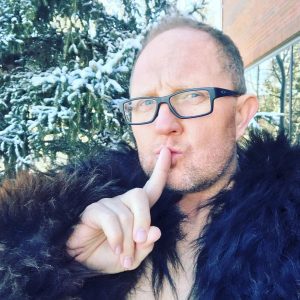 Roger Keeler is UNIQUE. He is also immensely talented, creative, experienced, off-beat, musical, and highly SKILLED in all things audio. BUT above all else - UNIQUE. This is one of the few people I wanted to have on for a second time. When I am out in the wild talking Imaging with other pros his name comes up often. I doubt he knows how many people look up to him. His skills are wide ranging but he excels at one of the most important - WRITING. Listen to his work and it will be evident.
Roger handles many responsibilities for iHeart Denver for 29 (almost 30) years and counting - Production for Channel 93-3 (KTCL), KBCO, a little on The BULL, Punk Tacos and others PLUS he is the signature sound of Radio 94-9 in Fort Collins, CO (Anyone who knows me knows why that town is important to me).
Instagram: @rogerkeeler
Be sure to check out the SHOW NOTES PAGE for this one. Roger gave us so much great audio!
Roger Keeler is UNIQUE. He is also immensely talented, creative, experienced, off-beat, musical, and highly SKILLED in all things audio. BUT above all else - UNIQUE. This is one of the few people I wanted to have on for a second time. When I am out in the wild talking Imaging with other pros his name comes up often. I doubt he knows how many people look up to him. His skills are wide ranging but he excels at one of the most important - WRITING. Listen to his work and it will be evident.
Roger handles many responsibilities for iHeart Denver for 29 (almost 30) years and counting - Production for Channel 93-3 (KTCL), KBCO, a little on The BULL, Punk Tacos and others PLUS he is the signature sound of Radio 94-9 in Fort Collins, CO (Anyone who knows me knows why that town is important to me).
Instagram: @rogerkeeler
Be sure to check out the SHOW NOTES PAGE for this one. Roger gave us so much great audio!
Transcript
85 min read • 12,646 words
Announcer: This is The Producers Podcast. Featuring the most respected international talent in the world of audio production and voiceover. TV, radio, film, and more. In-depth interviews and industry insights, putting you on the inside. Learn more at ryandreen.com. The Producers Podcast. With Ryan Dreen.
Ryan: Here we are again, Producers Podcast. let's see here, Roger Keeler is the guest, and, the title of this is episode 129, Roger Keeler, 2019 because he's been on before. Pretty rare that I bring someone on again. It's happened and for good reason in the past. You know, big events, launches of websites, you know, like Kelly and the Imaging House, or your name is Dave Fox and well, you bring on Dave Fox as many times as you can. That's the way the world works. Anyway, today Roger Keeler is back because the main reason is 'cause I've been going to various events over the last however many years and I talked to radio imaging people or voiceover talent who have their hands in it and programmers, and his name comes up. It keeps coming up. People look up to him. People say, when I need some inspiration, I go check out and see what Roger's been doing, or I'll stream, you know, Channel 93.3, which is KTCL in Denver, or KBCO. He works on— he works at iHeartDenver. He's been there for 20, I believe 25 years. He's been in the business like basically 30. A rather secure job and plenty of longevity. But let's be honest, Denver's a very solid radio market and he works on 2 extremely important brands. So he's doing some really great work there. But as far as writing, localized radio imaging writing, I'd put him up against anybody anywhere. And you'll hear it. Go and listen to the audio he provided at the show notes page on the website or a little demo I'm gonna play here in a minute. You'll hear what I'm talking about. But, you know, to write for the consumer of your brand locally as well as he does and to connect with them, it's, it's— and, and to do it in the quantity that— the quality and the quantity that he does, it's pretty astonishing. So I like to get Roger's take on the industry now, a decade after we spoke before. You can get Roger on Instagram @rogerkeeler, and that's about it. Oh, by the way, you ask him his title there, he's like, no, no, production, whatever, it doesn't matter. I already mentioned some of the brands he works on. He's, he's also He's also doing something called Punk Tacos. We'll talk about that. And he's got a station in Fort Collins, which has a nice little sweet spot in my heart because I spent plenty of years there. We'll talk about that as well. I would appreciate a rating and review on this podcast if you like it. It helps me, you know, so selfishly, I guess, but it does kind of help the community. It gets a little more visible. And I can kind of see the numbers go up and up over the years and the months. seeing as this podcast is almost old enough to drive now. So it's fun and it's cool. It's really appreciated if you take the time and do a rating and a review. Hopefully it's a positive one, but I'm not gonna tell you what to write or how many stars to give. All right, so that's it. Let's hear some audio from Roger Keeler, and then let's get to the interview with the one and the only Roger Keeler. Channel 93.3.
Roger: Channel 93.3's Coloradopedia Spotlights, 303 Day. Hello, today we're talking about the greatest day of the year, the day when we celebrate all things Colorado. I mean, where else can you go where people worship a 32-foot-tall Blue Devil horse? Or celebrate a Mexican restaurant where only children can eat the food? And where else can you name that has more weed stores than liquor stores? I'm talking Colorado, the greatest state in the universe. So come celebrate with us for 303 Day. Thank you. Ooh, ooh, ooh. Ah, this beer, I could just bathe in it. Well, you wouldn't be the first. Platte River Beer from Rhino. Mmm. Brown, earthy, a little skunky. It captures the essence of Denver. Ah, I haven't had a beer like this since City Pond Stout. Diuretic, bitter, a bit goosey. That's Platte River Beer. Ugh, I can't drink this. It is an IPA. Then I love it! Grab a mason jar full at a Loaf 'N Jug near you. Platte River Beer! We're the kind of people that drive a car that costs about as much as all the snowboard gear we throw in the back of it. Oh, you too? Cool. Colorado's Finest Rock is on Radio 94.9. Yeah, let's go ride sometime. If you've ever gotten really excited when your favorite brewery brought back that double pale ale you love, then you've probably found the right radio station. Colorado's Finest Rock, Radio 94.9. Hello? Crested Butte is calling you. Tell Crested Butte to text next time like everybody else. Where'd this payphone even come from? Experience the last great Colorado ski town with 2 nights Nice lodging, lift tickets for 2, and no I-70. You had me at no I-70. All you have to do is listen to some songs and let us know what you think at kbc.com.
Ryan: Roger Keeler, thank you for joining me on the show again. I'm honored and, privileged and so excited to have you.
Roger: Thank you. Thank you, Ryan. I think it was 13 years ago. Yeah, it was 2005. Yeah, yeah, 14 years ago. Yeah, it was probably—
Ryan: well, probably '08-ish, '09. My first one was in '08, and you were right. I mean, you were right in the beginning.
Roger: Oh, okay. I was thinking it was 2007 or 2006. Oh, it doesn't matter.
Ryan: Well, you know, the decades slide by. Yeah, you get old. So, so I, you know, I used to live in Denver, and you basically work for my favorite radio stations. And so originally I was like, well, I got to get, you know, that guy. And then I start hearing— so I hear your name all the time. And which is why I wanted to have you back on, because I like your perspective on the industry. But also, seriously, I talked to imaging people and often they're like, yeah, you know, this guy does good stuff. Oh, but, but Keeler in Denver did. So do you realize that your name comes up all the time?
Roger: I did not know. Well, I really— I try to do weird stuff and 9 times out of 10, the boss doesn't want it. But on 93.3, they do. Yeah, I can do anything, and they're like, more!
Ryan: I have a, you know, one of the things I'm gonna bring up is just the evolution of Channel 93.3. But before we get there, because again, that, that, you know, when I— I haven't lived there in a long time, but this used to be my favorite station. Anyway, so let's see, it's been a decade since last we talked. Everything's about the same, right?
Roger: Yeah, pretty much. I got 5 stations now here, and I think I had 2 then.
Ryan: Yeah, yeah, so start there. what are your 5 stations now?
Roger: what I do, I do, Channel 93.3, and that's KTCL. I do, 95.7 The Party. We just got a new PD, so a lot of changes. we have KBCO, that's a big one. Radio 94.9 in Fort Collins, and they let me voice it there, and I can just voice it like this, just like a— because it's a small town, so they're like, yeah, that's perfect. I was like, thanks. And then I have Punk Tacos. That's my favorite.
Ryan: Yeah, I'm gonna get to Punk Tacos here in a little bit too. I wrote— I made a note of that. So I was joking with you— not joking, I was being serious when I asked the question, but I said, you know, officially, what is your title? And what was your response to me?
Roger: I don't really know. I just— production, I guess. But I do a lot.
Ryan: Yeah, I mean, I'm a DJ. It's like, oh, just production. But yeah, you're So, I mean, tell— I mean, you can just rattle off the stations, but what are all of the things that you do?
Roger: Well, I also do commercial production because we only have one guy, and when he's out, we all got to fill in. And that's okay. I like that. It kind of gets me out of the imaging and into more slower, clearer, and like getting the message clear rather than the attitude.
Ryan: Mm-hmm.
Roger: I like that because it's kind of a challenge too. But I also do DJ work. I'm constantly helping sales write stuff. That comes up a lot. And I do a couple endorsements, or actually, I'm currently not doing an endorsement. I was trying to do one for a head shop, which is ironic because I don't drink or do anything like that. But they liked my commercials. So sometimes you'll hear me a lot on head shops in Denver.
Ryan: Yeah. And that's not really a big thing in Denver, is it?
Roger: No, not at all.
Ryan: No.
Roger: But for some reason, they like my ridiculousness because they'll send their copy to an ad agency. And they're like, You know, hey marijuana enthusiasts, or something. It's the stupidest copy you've ever heard in advertising.
Ryan: For all your marijuana needs. Yeah.
Roger: Yeah. What up, Dankos? And then I'll start the commercial like that or something.
Ryan: Yeah. So you're— but I mean, obviously on the imaging side, and we'll get there, you're writing and producing and voicing and everything, but everything else, you know, commercials, you're actually writing commercials, you're producing them and voicing them and that stuff too?
Roger: Oh, absolutely, yeah. And then we have our performance studio, so I'm always editing those sessions up too. I guess imaging director doesn't fit the title.
Ryan: No, it really doesn't. I mean, even creative services director doesn't fit the title.
Roger: It's more just programming. Yeah, whatever programming needs to be edited.
Ryan: Man, and it's funny because, you know, like I said, a decade ago, a lot of work would have been imaging 2 stations, and then you were also on the air. I think you've been on the air in some capacity forever, right?
Roger: Oh yeah, since my whole time here. Yeah.
Ryan: Yeah, and you rock it on the air.
Roger: I do. I don't tell anybody when I'm on the air, Well, I'll tell you on this podcast. It's Saturday mornings at 6 AM, but I come in and I drive in and I do it live.
Ryan: Oh, that's awesome. And that's on Channel 93.3, right?
Roger: Yeah.
Ryan: Yeah. Are you on the air anywhere else on any of the other stations there?
Roger: I do voice work for Evolution Radio, but that's not DJ stuff. But, okay, that's about it. Yeah.
Ryan: Yeah, cool. but yeah, so it's funny. I mean, 10 years ago, you know, 2 stations and on the air a little or whatever.
Roger: People were calling me crazy for doing that. Yeah.
Ryan: Yeah, exactly. And so now 5 stations, plus commercial production, plus you write everything, plus you're on the air, and you're cutting up, mixing, editing, mastering, etc., the live stuff too. So doesn't that seem crazy that it, you know, I guess you just deal with what you have to do, right?
Roger: Well, yeah, and I forgot one station, so I guess it's 6. I help out with the Bull too. It's the country station. But the country and the CHR, those both of those stations write everything for me, so I just got to slap it together.
Ryan: And when you say help out with the Bull, you actually produce imaging?
Roger: Yeah, like Josh Jensen does it for them. Like, he's a— like, he does their full-time package. But, but there's always, you know, stuff that comes down from corporate last minute that just needs to get on the air now, you know, stuff. Right. And yeah, I'm back.
Ryan: And since Josh is in LA and you're sitting there, it's sometimes—
Roger: And I'm literally 5 feet from the Bull studio door, so they just, hey, Rog, can you help us out with this? And I'm like, Okay, yeah, whatever you got. I'm happy to be here.
Ryan: I'm happy to be in the woods. Do you like producing country?
Roger: I don't notice any difference from that and CHR, with the exception of the hoots and hots and ooh, ah, yeah, you know, all the screams and shouts. But yeah.
Ryan: What about music? Do you like country music?
Roger: You know what? As I get older, I find that my musical tastes are totally upside down. I've been taking jazz guitar lessons for 7 years. And when I listen— and so that's one random style. But then when I listen to country, it feels happy and peaceful. And I kind of— I find that at this age, you know, I'm 46, I'm gonna be 47 in a month. I find that that's kind of more important to me, is finding a good song that's about wholesome things. I don't know. Yeah, is that weird?
Ryan: Well, no, not weird at all. I mean, I've liked country forever, and I don't really like it when people say, oh, I like all music except country, and it's a cop-out. And I just don't believe you're— It's a hell of a cop-out.
Roger: These guys are brilliant. I mean, and they're real people that had real struggles just like me. And maybe that's what, as I get older, I find that I have more in common with the country artists than maybe I do with the younger alternative or even top 40.
Ryan: Right. And some of the EDM folks that are just a totally different lifestyle. They all have value though. I mean, everybody that's making music has value.
Roger: Yeah.
Ryan: Another thing that I'm going to get to in a little bit is your musical endeavors, but Let me try and stay on track. So you're also celebrating an anniversary there, although it's not quite the momentous one we thought it was, right?
Roger: Yeah, we thought it was my 30th anniversary in radio, but it was 29. It doesn't happen when I got my radio license in high school.
Ryan: That's great. So 29 years, and how many of those years in, in that building effectively, or at least in that little group?
Roger: This is my 25th year here. I started in '94. So Labor Day, I'll have 25 years.
Ryan: Yeah. And did you start working on KTCL in '94?
Roger: No, it was KBPI.
Ryan: Okay.
Roger: KTCL was in Fort Collins at that time.
Ryan: I was gonna say, because I started college in Fort Collins, like right when KTCL was— I think right when they moved, like they moved in '95-ish or something, right? '95, '96?
Roger: Yeah, that was a weird deal. And I was ready to quit and go to work at a TV station in Arizona. And they're like, KTCL's coming down. I was like, What? That's my favorite radio station my whole life. Yeah.
Ryan: Right.
Roger: And they were like— and, and, and it sucked because some other guy got the production gig as soon as they moved over. And I was jealous for about 2 years. And then he messed up. He didn't mess up. He just— he started, you know, slipping up and just wanted to do something different. So I was right there with a demo that they needed.
Ryan: Nice. So you were on— I mean, BPI was definitely a powerhouse, though.
Roger: It was monstrous back in the '90s. I mean, we had every— I remember one time we celebrated, we had number 1 and Everyday part. We had the trifecta.
Ryan: Yeah, yeah, just goes to show you what's happened to rock radio over the— since last we spoke even, but definitely since the '90s.
Roger: Well, they moved KBPI's frequency, and that really— I think that's— well, that's— they're struggling right now, but, but they're also in a new era where people are using the app more too. and as soon as you get those people to turn over and, you know, apps are becoming more useful, like in your car, and that's, that's in the last 2 years that, you know, it's an actual functioning device. But so as soon— so they got moved to an inferior signal, but they're on in Colorado Springs and Fort Collins. So they're—
Ryan: yeah, they're on the whole state. What is it, 107.1 or something? They're on like 4 sticks?
Roger: Yeah, 107.9. Yeah, and it comes up and you get all the way up to Cheyenne, Wyoming.
Ryan: Yeah, so they're basically like blanketing north to south, but they're not on the big monster 106.7.
Roger: Yeah, and when you get close to the mountains, you get It's like a reflection of the transmitter. It bounces off, so you get like a little bit of distortion. What's it called? Multipath? Something like that, where they hit each other.
Ryan: Yeah, that's not above my— I'm not describing it.
Roger: Yeah. Clearly, I know what I'm talking about too.
Ryan: Yeah, it sounds right though. You sound right.
Roger: Yeah, but the closer you get to the Front Range Mountains, it'll bounce off and you'll get like a double effect, almost like a chorus.
Ryan: So as far as kind of just— I'm gonna use the term alt really generically, but as far as alt stations go, so you've been on KTCL/Channel 93.3 for, well, over 20 years. 24 years? Whatever it is.
Roger: Oh yeah, I think, well, Nerf and I started in 1999.
Ryan: So, so 20 years. How do you explain the success that Channel 93.3 has had for that long? Especially in eras where alt sort of went down, you know, wasn't really— and then, you know, it's been coming and going, but how do you explain that?
Roger: I would like to take credit for it, but I can't. You know what we do?
Ryan: You take some credit.
Roger: If you listen to our station, everything's about Colorado. I could give two shits about going— what's going on in LA or making the charts or this, this, and this. So when I do imaging, I don't think about anything other than Colorado and how does it affect you in your car. And, and that's kind of what we base the imaging around.
Ryan: Yeah, without question. Tons of—
Roger: I'll hear alternative station DJs like talking like they just read it in People fucking Magazine, and you're just like, right, you're out of your depth, man. You shouldn't know. Stop talking down to people. Get on the ground and talk eye level with them like they're real people. And I think we made that matter to them on the local level, you know, with local bands. I mean, Nerf brought in— we've signed so many local bands, and so many huge bands have come from Colorado. Yeah, because of people like Nerf. And so yeah, I think Nerf gives that credit. We have some killer events that, like a free thing on St. Patrick's Day every year. That's— it's now it's its 14th, 13th year. It's a huge free show we do, and we've had big bands. We've had AWOL Nation at that thing. We've had, you name it. Yeah.
Ryan: Do you think that you guys have access to bands that you probably shouldn't have, or in a capacity that you shouldn't have, just because of your reputation?
Roger: 100%. I mean, I mean, I hate— I don't think the suits would like me to say something like that, but— or maybe they would, I don't know. But I think that there's a direct correlation. I think we talked last time what turned around— I memorize conversations, and last time we were talking about how what changed, because KTCL used to struggle, and then we changed the frequency name, you know what I mean?
Ryan: Yep.
Roger: To Channel 93.3, and day one you saw different ratings. We added that with a stick, and we just saw huge success. In 2004, and we, and we've been riding that for quite a while now.
Ryan: '04 is when you shed the Calls as the brand and went to Channel 93.3?
Roger: And got a new signal. Yeah, a new transmitter. I think the— actually, actually, I think the transmitter came in in 2005.
Ryan: Yeah. And it was always 93.3. Well, not always, but it was on 93.3. But you did like a move-in or something, right?
Roger: Yeah, we just did a rebrand, a reimage, a rename, and it was a risk, but I'm glad it worked out for us.
Ryan: Yeah, as far as the stationality itself though, you already sort of talked about this, but would you say you're focusing a lot more on, you know, the listener or the lifestyle or just being in Colorado as opposed to the music itself? And would that necessarily work for all, you know, imaged alt stations? I mean, could it work everywhere?
Roger: Here's what I think, and here's a theory. This— I don't have any research.
Ryan: Yeah.
Roger: I think radio slips because it sounds like everybody's doing the same thing the other station is doing. So when everybody's zigging and we zag and just make it sound like a bunch of idiots just don't really care about the rules and aren't trying to be perfect, we kind of let that go, or really let our flaws shine, and that makes us sound a little bit more attainable and a little bit more real. Like, we'd rather— we would, you know, we have those cash contests for $1,000, $1,000. We did a cash contest for, I think it was $125. And the ratings went through the roof. It seemed like it was more attainable than all these cash contests or something.
Ryan: Yeah, well, I guess when you hear so many stations doing that—
Roger: $1,000, $1,000, $1,000. We're like, we got $125 before taxes.
Ryan: And it's like you assume, well, I must be competing against the whole country. Like, people got used to thinking, well, these are national. I think people figured out that national contests were happening. And now you hear $125, you're like, oh, well, wait a minute. That money must actually be handed out just here locally.
Roger: I could buy a bag of weed with that.
Ryan: Right, exactly. I can go to the store and legally buy a bag of weed with that.
Roger: The nearest dispensary is 80 feet from my house. And they're everywhere. They're like on every damn corner.
Ryan: They're everywhere.
Roger: Yeah.
Ryan: Oh, you know what I was surprised? My folks still live there, so I get there not too often, but enough. I didn't realize that there were still actually medicinal dispensaries.
Roger: Oh yeah, it's tax-free. That's the benefit.
Ryan: Oh, is that the— I was wondering what the virtue was. So tax-free.
Roger: And, I don't think your health savings card works there. I, I think, I— there was a time when I did do weed and, I can't do it. The health card didn't work there. I tried it.
Ryan: Yeah. I wonder if my— I guess my Texas health savings account won't work there either.
Roger: No, I think that'll land you in jail.
Ryan: I probably would. Yeah.
Roger: Okay.
Ryan: Well, I won't, talk about felonious activities with airplanes right now.
Roger: How's your wall coming?
Ryan: I think we've built 50 or so feet. I mean, I think there's, there's some wall. I'm pretty sure, I think.
Roger: Anyway. I like that he rips on China about copyright infringement, and then he totally rips off the Great Wall from China.
Ryan: This isn't that podcast. This isn't that. This is not that. This is not that podcast.
Roger: I'm just teasing. I wrote that joke this morning and I had to try it. It didn't work.
Ryan: Yeah, no, no, I like it. I like it. It'll be in a sweeper sometime, right? There you go. Okay, here's— let me switch gears a bit. I mean, I'm gonna bring up probably Channel 933 and the other brands here as we move along, but I have— I just wanted your opinion on this. I believe, and I think this is, you know, I'm not— I might be talking about you a little bit, successful creative slash innovators are also more wacko. And I always thought that there's a, a correlation. The more creative you are, the more wacko you are. Agree or disagree? I agree.
Roger: I also agree because I'm also an alcoholic. And I know people that go to my meetings that, you know, we'll keep that anonymous. But yeah, but yeah, let's not say names. But they're all— I don't know, put myself in that category, but they're all like highly intelligent, random, creative, you know?
Ryan: Yeah.
Roger: It's just that it's— and I think that I found that niche where I could kind of— I found a groove that I fit in just perfectly. Like, it's like my life and is random and goofy and and, you know, the drama that I've had. It's just— I wear it like the best fitting coat ever.
Ryan: Yeah. I think you probably said it best. I just— I've never fully understood the why of that, but I mean, when you really look at history, I mean, even someone like Steve Jobs, he was a wacko.
Roger: Oh, absolutely.
Ryan: Who innovated more than him? Who changed life in the last decade more than— or in his last decade than— you know, so it's just weird that you just have to be on the wacko side.
Roger: Is it wacko, or would we use a euphemism for wacko as original?
Ryan: Yeah, original. How about that then? Yeah.
Roger: Striving for uniqueness, I think. I mean, if you listen to my music, it doesn't sound like any other kind of music.
Ryan: Yeah. So here is something before we, you know, dive down the rabbit hole of, you know, Punk Tacos, for example, and your musicianship. Daily, to give people an idea of what it is you do daily, when do you get there? How's your time divided? When do you leave? Talk in those terms. for us?
Roger: I try to get here, I'd say between 8:30 and 9:00, and then I leave at exactly 5:00 no matter what. And I used to just stay all night and all day, but I learned if I set a deadline, it keeps me focused and more productive. Yeah. And I don't— another thing that helps, I don't drink caffeine after 7:00 a.m.
Ryan: After 7:00 a.m.? Okay.
Roger: Because if I do it during the day, I can get off track and I can get scattered with so many people coming at me from all directions. I mean, I have 5, 6 PDs in this building I got to deal with, plus a sales manager. You know, it's like I can get off track really easy, but if I kind of stay calm, I can stay in control of it.
Ryan: Yeah.
Roger: And I can just stack everything on top of each other. And I have a little list. It's handwritten. There's 5 things on it every day, and I just check them off, the most important things. And then there's a lot of filler for updating and stuff.
Ryan: Is checking off lists like cathartic to you as well?
Roger: Yeah, I, you know, after reading The 4-Hour Workday, I heard that you can't have a big giant to-do list through Outlook. You got to make a little handheld one.
Ryan: Okay.
Roger: And just like little scribbles, like, oh yeah, I gotta do this promo, I gotta do this, this, this. And then it's, yeah, and then, yeah. But if I do it through Outlook, stuff falls through the cracks all the time.
Ryan: Yeah, I definitely see that. I keep mine digitally, but you know, I use like Keep, actually Google Keep is what I happen to personally like.
Roger: Okay.
Ryan: But yeah, I think a handheld, I didn't read that, But I think a handheld list would, would make sense.
Roger: I think it's— yeah, I think maybe that's more the cathartic thing where it's like, because there's so many digital stuff that I like to shut it off. Yeah, I have to shut it off. But I come in and I come in and I first will walk into KBCO and I go, what's broke? And he goes, nope, nothing today. And I go, cool. And then I go to the next PD. All right, how are we doing? And he's like, gives me, hey, can we work on this? Cool. And I write that on the list. And then yeah, I just go through and I talk to 3 PDs and then usually You know, there's usually a meeting at least once a day, something that I—
Ryan: Right.
Roger: Wish I wasn't involved in, but, but I must be good because they keep asking me to be in them. So.
Ryan: Exactly. I guess out of your day, is it 90% producing something?
Roger: No. Or no?
Ryan: So what—
Roger: It's a bunch of screwing around, going to meetings.
Ryan: Yeah.
Roger: I think my actual production time is probably 3 hours.
Ryan: Okay.
Roger: And that's sad. And that's sad. But I mean, it's a solid 3 hours nonstop.
Ryan: And you already talked about that you're working solidly for 5 stations. I know that 94— I'm gonna say it wrong. What is it, 94.9?
Roger: Radio 94.9 in Fort Collins.
Ryan: Radio 94.9. That's in Fort Collins. They're physically in Fort Collins, right? They're not originating from Denver.
Roger: Yeah.
Ryan: So you're obviously not there. How many actual Denver iHeart stations are in the building you work in?
Roger: Well, let's take KBCO, KTCL, 40, the Bull, and Punk Taco. So 5 are in Denver and then 1 in Fort Collins.
Ryan: And then what about, is there a, what about like, you know, KOA and other stations that you don't work on?
Roger: They're upstairs.
Ryan: Okay, so you're all in the building?
Roger: Yeah, yeah, yeah, we're all in the building. We have 9 stations here.
Ryan: Yeah, so it's a megaplex. There's a lot of, a lot of activity there.
Roger: Yeah.
Ryan: What do you think about that environment for, for the creative types? Good or bad? Does it help? Does it hurt?
Roger: I think every other P— or every other pro production guy in the country would like to work from home, but for me, I'm kind of a people pleaser, so I need that. I need to bounce stuff off and get emotion from people. Plus, I have so many female voices here that I wouldn't be able to do it from the house.
Ryan: Right, or at least it would be a lot more difficult.
Roger: Yeah, our second floor is all sales, and there's a lot of young women that sound great on the party to do voices and stuff when you need them in a pinch.
Ryan: Yeah, that's cool. all right, we'll probably get back into more about what it is you're doing daily, but I got to bring up Punk Tacos. Explain that. What is that?
Roger: Well, iHeart contacted Nerf and they go, hey brother, how would you like to do a jam band station? And Nerf and I are so anti-hippie, we're just like, fuck no. So he goes, but if you ever need a punk station, I'll do that. Like, next day, hey, do you want to do a punk station? Like, but they wanted to call it— and I'm not dissing them. I mean, they've given us this platform and I love it. Nobody else can do a punk station like this. But they wanted to call it iHeartPunk.
Ryan: Okay.
Roger: And I was like, what punk kid says those words?
Ryan: None of them.
Roger: I was thinking like, you know, the shape you do with your hand to make it a heart, but just covered in blood.
Ryan: Okay, yeah, you gotta do something to it, or another fluid.
Roger: Yeah.
Ryan: Yeah.
Roger: Ew. Yeah, and, but I love that station because a lot of the punk bands, you know, I've loved them my whole life, but a lot of them haven't been talked to by a radio station in like 25 years.
Ryan: Yeah.
Roger: Like, yeah, so I just, you know, knock on the door, GBH answers the door, oh, welcome in, mate, let's talk. You know, and they just love to talk, so these old punks are great to interview.
Ryan: That's awesome. And Punk Tacos is on the app, is on the iHeartRadio app?
Roger: Yeah, it's also the HD2 station here in Denver.
Ryan: Of Channel 93.3?
Roger: Uh-huh, yeah.
Ryan: Nice, cool. So any of— so for all of my thousands of Denver-based listeners, yeah, they know where to go on their HD2.
Roger: Yeah, it's the number one station for Lyft drivers. Not Uber, they're too rich.
Ryan: Yeah, yeah, let's not get—
Roger: you know, you don't get them in like the all-black stretched car. No, they don't listen to punk. But the guy who picks you up in the Honda Civic with like one irregular wheel, that guy He listens to Punk Tacos.
Ryan: He's driving on the spare donut 24/7.
Roger: Yeah, yeah, for the last 2 years.
Ryan: Yeah. What about— you know what, I wasn't gonna bring this up, but I'm curious. This whole HD radio experiment that's been going on for like 15 years, what do you think about it? What does iHeart do with the other HD channels in town? And just what are your thoughts on it?
Roger: Well, I think it's like any industry, you know, go to McDonald's or go to Taco Bell now, and they're offering vegan options because they're trying to stay in tune with like the Whole Foods, you know what I mean? And I think that's kind of what radio did is like kind of still, hey, how can we evolve to stay tuned with that same group of listener, you know? Or how can we embrace technology? In fact, you should embrace technology. What is it, Kodak had the patent for digital encoding for pictures?
Ryan: Yeah.
Roger: Yeah, and they were like, no, we're gonna stick with film because it's superior. And they lost their ass.
Ryan: Yeah, and then they don't make film anymore.
Roger: Yeah, or Polaroid. It was one of those 2 companies had the patent for it, and it was just like— but they didn't know what to do with it. So I think you need to embrace whatever it is out there. I think if HD Radio would have came out 10 years earlier, I think it would have worked a lot better.
Ryan: Hmm. What else do you guys do in town there though on the other HDs? I mean, you obviously put effort into Punk Tacos, which is on the HD2 of 93.3. Is there as much effort being put onto any other HD channel?
Roger: KBCO does, because that's a tough one, because their Studio C, all those live performances since 1988. They play those, but because it's a streaming station now, you have to get special rights and privileges, you know, for publishing.
Ryan: Yep.
Roger: Yeah. So there's a hoop, but KBCO does an excellent job of getting all those songs played. So it's an entire station of Studio C songs, and people love it.
Ryan: And you do the imaging for KBCO, right?
Roger: Yes. Yes.
Ryan: Yeah. So tell people about that station. I mean, we talked about it 10 years ago, and people have probably heard of it, I would hope. But if they haven't, it's a pretty pretty important station.
Roger: You know, it is. It was the first AAA station. It was out of Boulder, Colorado. I'm from, I'm from Louisville, so it's like 5 minutes from Boulder. Like, I'm— there's a hill between me and Boulder, my parents in Boulder. And, I, I— so I just grew up always taking the bus to Boulder and just— it was, you know, it's a different vibe. It's in a bubble. There's nothing— there's no place like it except for maybe like Aspen, maybe Berkeley. There's a couple, you know, like those little, those little niche places that are unique.
Ryan: Austin, Austin, Texas is—
Roger: Yeah, no, perfect example. Yeah, it's, it's the perfect example. That might be a little more extreme of right and left, you know. But Boulder's kind of like that because, yeah, for so many years Colorado was, was a red state, you know. And for that, and Boulder just like was this haven for—
Ryan: Big blue pimple right, right in there. Yeah, yeah.
Roger: But it's awesome because, you know, I grew up— I mean, I don't care I don't do jam bands or hippie stuff, but a lot of my friends are. So I grew up with these people my whole life, and it's a unique lifestyle, but most of the country's kind of embracing that Whole Foods sort of small town boutique kind of life these days. It's not— go ahead.
Ryan: Yeah, and KBCL was so, So, okay, at one point it doesn't originate from Boulder, right?
Roger: No, it does. Well, it's actually— excuse me, let me get the mountain right— Eldorado Canyon. Yeah, it's Boulder County.
Ryan: So they still have— because I think at one point they actually had the studio there and you would go there. I mean, you would— didn't you work out of there at some point?
Roger: Yeah, 2 days a week, and it was madness. Yeah, we did it as an experiment where I worked 3 days in one city and 2 in another, and it And it was just really taxing.
Ryan: Yeah. Yeah.
Roger: Learning curve.
Ryan: So that doesn't happen anymore?
Roger: No, no, no, no. They moved us over to Denver in 2010.
Ryan: Okay. Yeah. So since we talked last, that happened.
Roger: Well, the rent in Boulder was through the roof. It was like, I think it was a third of a million dollars for a year for like 5 rooms.
Ryan: Yeah, I remember that. I think, were they on like the second floor of a little corner building or something? Yeah.
Roger: And they kept our sign up when we moved here for like 6 years because nobody rented that space. Nobody could afford it.
Ryan: They're like, oh, so the sign just got to stay.
Roger: Yeah. And we had to actually ask them because it's— well, it's— you get into— well, they were kind of letting it run down, get run down too. So that hurts our image, obviously.
Ryan: It's hurting the brand.
Roger: Yeah, exactly. We had to ask them to remove it and they did. I mean, I think we— if they wouldn't have, we would have legally done it.
Ryan: So Radio 94.9. So that was— in fact, I wasn't aware of that until we talked a while ago, a few weeks ago. So tell us about that.
Roger: Well, that's— man, my first boss here in 1994, he's still— he's here again, but he took a little sabbatical. He went to San Francisco and tried to do something there. And it didn't work out for him. So he came back and, you know, obviously his position was filled. So he went to Fort Collins. And it was cool. One day he's like, hey, I like your voice. And I have this station that nobody knows about. It's 100 watts. on the FM dial here. It's tiny, but it broadcasts perfectly to the city limits. And he goes, you want to voice it? And I go, yeah. And I made some stuff, and I hear that stuff now, and it's so horrible. But over, you know, a couple years, we've— I've got my own sound, and that's kind of nice. I've never had that before. Yeah, it's cool.
Ryan: I played a little bit of that in the intro. I have the entire demo you sent me on the website. I'll put it on the website. But, what—
Roger: They just let me be me, and that's kind of cool.
Ryan: Yeah. Yeah, yeah, so that's kind of, I don't know if that's rare. I'm sure there's plenty of talent that just being themselves works perfect, but was that kind of a first for you?
Roger: Yeah, 100%. And so far, I thought it would lead to more stations, and so far nobody's picked up on it. Well, I know— I'll send my demo out and they're like, wow, that sounds really good, but not what we're looking for.
Ryan: Exactly, I love that one. Oh no, it's great, it's just not something I want.
Roger: Oh yeah, you sound great. Yeah, but good luck.
Ryan: Good luck. Don't let the door hit you in the ass. All right, get out of my office.
Roger: Yeah, but that's a great station because it's nice to drive up to Fort Collins because Denver's so saturated now with people and traffic. So some— I love driving in my car going nowhere, and I'll head up there, or maybe a punk band will be up there and I'll go get IDs or something, and I'll drive up there and it sounds so good even though it's 100-some watts or 200 210 watts or something like that. It sounds so good in the radio. It's nice and warm where you don't— I don't think on the app it sounds as nice and warm like it does in a real radio. It's like an album.
Ryan: It's like vinyl. Yeah, vinyl versus really anything else.
Roger: Yeah. Yeah.
Ryan: Yeah, Fort Collins is a great town. I had a really, really maybe too good of a time there for 5 years in college, but I highly recommend a visit if anybody's going to Colorado. It's worth swinging up there.
Roger: Yeah.
Ryan: All right, well, you know, maybe organically we'll talk about other station stuff here, but writing is something I wanted to make sure I spent some time on.
Roger: Okay.
Ryan: You've already alluded to it, but, you know, maybe you've already answered this, but your goal in writing— and let's start with Channel 93.3— I don't know, do you have a singular goal? Do you—
Roger: how—
Ryan: what's your process? Because you have a unique style, and that station is extremely unique.
Roger: Oh, you're gonna— this is gonna be a horrible quote. I don't give two shits about the promos.
Ryan: Great.
Roger: Everybody in there was like, what? That's like the— but that's your most important thing that promotes you. But I think maybe that's— maybe that— and maybe that's the allure of Channel 93.3, is that we don't take ourselves seriously. So it's like, you know, I'll just have Malcolm in, and I'll just have him voice it in first person. Hey, it's, you know, Malcolm, voice guy here at Channel 93.3. Well, that's, you know, that's, that's a side gig. My real job is head groundskeeper at Fiddler's Green, so I'm mowing the lawn right now. And we'll just get him in different jobs, but we'll have him use his name Malcolm.
Ryan: Yeah.
Roger: So like, there's Nerf, there's Bailey, there's Steve, and there's all our jocks, and Malcolm is like— he always says his name.
Ryan: Yeah, I love that. It happens very rarely where a station will decide to give the voice an identity.
Roger: And yeah, we used to have a British guy and he was great. And sometimes we still stick him in. I'll call him. He lives in San Francisco and he's really old. Well, he's not really old, but he's probably 70.
Ryan: So what's his name?
Roger: Brian Butler.
Ryan: He had to have come up the first time we talked. I don't remember that, but yeah, he was so, I don't know, integral to that, to KTCL.
Roger: Yeah, because it'd be like everybody else would be like the big voice guy and he's like, right, the song would end like You're listening to KTCL, Channel 93.3.
Ryan: Yeah. And it was like, still weird. He's still on the air there?
Roger: We use him on throwback stuff.
Ryan: Like on occasion? Yeah.
Roger: Cool. Sometimes I hear him and I'm like, oh, I gotta get him off, but I'm so lazy.
Ryan: I was gonna bring up social media as it relates to writing, because I will see you post, you know, randomly, like, hey, give me your— just an example. You know, you'll be Yeah, give us an example of how you use social media for writing.
Roger: Well, we'll— well, we do a bit every day on Channel 93.3. It's Nerfs LOL at 5:05, and we do it every day, and it's exhausting. It's, it's really tough. But sometimes we'll just come up with— because I think people always come up with stupid band names, like, oh, that should be a band name, or something like that. So we thought we'd make a bit out of that that comes up every time we have a concert. We try to get local bands to open the show. So, we'll make a bit about it. It's like, and I'll put it on Facebook, hey, give us some fake local band names that you think are things that you'd think would be funny for a band name. And I'll put that on Facebook.
Ryan: Yeah.
Roger: And then, I'll literally, I'll get probably 105, 110 of them, and I need about 30, and I'll just start chopping. And we do that because we do a local— we'll get a local band for our summer show, for our Christmas show. Usually a couple others too, and we'll do like a local band submission thing, and then we'll make a bit out of it. And they're stupid names, you know. I can't think of anything.
Ryan: But you've done it with other things too. I've seen you just like— I'm assuming if you just need a little inspiration or like, you know where you want to get to, you're not quite sure how to get there.
Roger: Yeah.
Ryan: You post online and people are all willing to help.
Roger: I know what it was. We were doing— one of our bits was places that are still available for Valentine's Day reservations. It was like the day before. So I put it on Facebook, like, can you give us a list of shitty Yeah. And then— and we're just listening, but we'll be like, you know, Casa Bonita, this, Big O Tires, Golden Corral, you know.
Ryan: Yeah.
Roger: Taco John's of Longmont, you know, just all these. And they're not shitty restaurants. Taco John's is probably fine.
Ryan: No, no, you're right. You're not even destroying the restaurant or potential client, etc. But you're util— I mean, you— I mean, I think it'd be hard for anybody to come up with something genuinely funny every single It's every day at 5, right?
Roger: I mean, right? Yeah. I don't write at all. What we do, we have a brainstorming meeting Monday at 11 PM or 11 AM, and there's 3 of us, and we just start spitballing ideas of random stuff we can do for 5 days.
Ryan: Okay, that's kind of what I was trying to— yeah, that's what I was getting to. So that's, that's an example of how writing gets done. So yeah, Monday, the Monday meeting.
Roger: And then I write the KBCO stuff, but I always like to bounce it off a couple other employees. The Party, they write their own because I'm wickedly out of the demo.
Ryan: Yeah, yeah, that's a pure CHR.
Roger: Yeah, it's like all that and a bag of chips. They're like, dude, really?
Ryan: Don't let Roger write anymore.
Roger: And sometimes they let— they've let me write a few things on The Bull. I don't think they used it, but they let me write it.
Ryan: Thanks, thanks, Rocket. I'll get back to you.
Roger: Thanks, Rock. No, I think it was— yeah, we were I don't know. Oh, that's what it was. Oh, they actually used it. Because I would do this thing on the party. It was like you'd have these swimming sounds and they're like, it's like a pool party with all your favorite artists. And then you have the artist IDs sitting in the water or something, you know?
Ryan: Yeah.
Roger: And then so I was like, I did it for the country station. It's like an above-ground pool party with all your favorite artists. Like, hi, it's Kenny Chesney. And you could just picture an above-ground pool party with all these artists in it. And they loved it.
Ryan: And I was like, no, that's right. That's great. No, that is, that is excellent country imaging writing.
Roger: I can write, I can be a dick. Yeah, I say white trash, but that's, I mean, that's who I am. but I, I can write some white trash lines and then send them to them. They're like, this is great. Yeah. So it's kind of cool. You can use your adversaries as a, as, as your weapon. You know what I mean? If you embrace it, like, you know, like you said, some people, I like everything but country. Well, Well, okay, that makes, that makes it kind of easy. Why don't you use all the things you hate about country and then make that funny and then send it to them and see what they say? And they're like, that's brilliant. We do do that. It's almost like showing the country humility. I don't know.
Ryan: Exactly.
Roger: And I think that's where you get on the eye level with the listener that we were talking about with 93.3 earlier.
Ryan: Yeah. So it can be done in, in all the formats or something.
Roger: Yeah. Crank it up in your big stupid truck with nuts. And they're like, yeah, I do have a big stupid truck with nuts, you know? And, But, and I'm not being disrespectful. I mean, I got friends with truck nuts.
Ryan: There's a fine line though, right? I mean, especially when you're writing in that style.
Roger: The boss will let you know where that line is, that's for sure.
Ryan: Is that how you do it? Do you just, do you just throw stuff against the wall or throw it on the paper and let someone else tell you no? Or do you have a— okay.
Roger: Yeah, yeah. And I just throw them random, and sometimes they go for it, a lot of times they don't. But so I don't take it personal. I just I think a long time ago I learned that if I try and do mad scientist and come in here and run the whole show, I'll lose my fucking mind. But if I get up and I go and I just drive it, I don't even drive in the fast lane. I hop in the right lane just to stay calm. Yeah, and I get here at a nice, easy, even keel. And, you know, I meditate in the mornings and stuff, like about 20 minutes, just like pure science, and it helps.
Ryan: And like you said, you've been getting into jazz. Yeah, well, you've been learning, you've been playing jazz, but I mean, you've— that's for me, whenever I was getting a little like, oh boy, this world's about to get to me, I'd throw on the jazz station and get over into the right lane and just chill on the way home that day.
Roger: But if I, if I focus, like when I come in here, if I stay mellow and focused on just what the boss needs and not worry about me being a rock star or something, yeah, we get along a lot better. If I come in here and think I know something or know how people should do their breaks or how to schedule music, Fuck no, no, it'll go, it'll, it'll go upside down real quick. But if I come in here and just be cooperative, yeah, everybody loves it.
Ryan: I mean, it is really— I mean, this phrase has become so trite, but it is kind of a stay-in-your-lane type of a situation.
Roger: 100%. Yeah, I was just thinking about that actually.
Ryan: Yeah, and that is also how you get to work at a legendary cluster of stations for almost 30 years.
Roger: Yeah, I mean, I hear some shitty commercials. I mean, I don't mean that in a disrespectful way, but just some really remedial—
Ryan: Yeah.
Roger: You know what, you did commercial prod for a long time, you know.
Ryan: Oh yeah.
Roger: You get them sent to you and you're like, we're airing that? All right.
Ryan: I still voice some just god-awful stuff. Yeah.
Roger: And, and sometimes like I'll come in and I'll hear that spot and I'll make them a spot and send it to them. Here, I just thought this might help you. Try it out sometime. And then, you know, I'd say 4 to 5 times they'll go, hey, that's great! But then they're like, can we get another?
Ryan: Yeah, then you've just— oh, you've gone down the rabbit hole. Yep.
Roger: Yeah, so you gotta— you gotta— it's tough to keep boundaries in this place because it's coming at you in all directions.
Ryan: Oh man. On the tech side, I mean, we can talk as much tech as you want, but would it be a true statement that in the last 10 years you've become way more of a gearhead?
Roger: Absolutely.
Ryan: I've seen some of your videos when you're making music, and I feel like I keep seeing new new fun tools pop up in there?
Roger: Oh, I have 2 studios at the house. Oh, I made one on my coffee table because I thought I was most creative there watching TV. Well, I don't watch TV anymore, but I have— have you heard of Groove Theory?
Ryan: Groove Theory?
Roger: It's been out for about 12 years. It's a website. But so I got rid of cable and I can pull it up on my Roku TV, and it's called Groove Theory. And I think we should mention this because all it is is audio technical tutorials.
Ryan: Oh, Groove Theory.
Roger: Groove 3, I think.
Ryan: Groove 3.
Roger: Yeah. Okay. And all this is tech. Yeah, Groove 3. It's— and it's $15 a month, and I can take Pro Tools, I can take Waves, I can do— I can learn different techniques for live recording. Yeah, there's— and so I just go home and I take a tutorial every night.
Ryan: Yeah, I've been here. This is familiar. I've never paid to use it though, so this is Keeler approved.
Roger: Yeah, I think Forrest Martin turned me on to it a long time ago with— because I used to have a Maschine, you know, the little 16-pad thing, and I honestly couldn't figure it out, so I sold it.
Ryan: You mean like Kontakt machine?
Roger: Well, I use Kontakt, I use all that stuff, but the actual device, yeah, I struggled with it. But this past fall, I was like, well, I was single again, so I was like, you know what, I'm just gonna stay at home and just work on this, and I'm just gonna take a tutorial about this every night. So I bought a new one, so I've been making music with that like every day. for, I don't know, 3 months, 4 months.
Ryan: And so would you say then over the last however many years you've— well, I mean, I was asking about gear before, but are you maybe a little more into the actual, you know, the production of music, the act of producing within software? You've fine-tuned your skills there?
Roger: Yeah, I had a lot of help from people. Like, I have a tough time reading manuals, I don't know. I love fiction. I can read fiction. I can read philosophy. Like, I have a Marcus Aurelius book sitting next to my bed that I read every night, and it's really in-depth stuff. But for some reason, an audio technical manual, I can't read it. And so luckily Miles does. Miles reads them all. And so Miles has answered like every question known to man in the last 10 years. He totally does that as a free service for me.
Ryan: But yeah, and so Miles is— I think everybody has someone like that, or they are that person, but And this is Miles at KISS in LA for anybody that's—
Roger: Yeah, so he really turned me on to a lot of quality. And Drew Hall too. Drew Hall's an amazing guy. Where those 2 guys are so Pro Tools technical savvy. I don't even use Pro Tools. I use Reaper. So, okay, but they really helped me out with proper EQ and that. And I, and, you know, day and night I heard instant change in the sound of my production.
Ryan: I don't know about you, but, you know, a long time ago before I started actually working around people that were much better than me at you know, production. My gain staging was terrible. I was slamming everything into the roof, and it was horrible until somebody finally pointed it out. Is that something you had to deal with at some point?
Roger: Well, yeah, I think we even talked about that the last time. Sorry. Okay, I do memorize things. And we were talking about how I had a boss that gave me the wrong EQ, and— but he kept demanding that I keep boosting it there. Yeah, years. And then as soon as he left, I started talking with Miles and Drew, and they're like, no, do it this way. And I was like— and I started doing it their way, and it was so much better.
Ryan: Yeah. What— so when you're making music, I definitely wanted to talk about this because you do make— you know what you're doing, you're making quality stuff. But like you already said, it's a little bizarre. It's not, not like, you know, so I don't know, are you making a lot of music that you use in production, or is mostly what you're doing for fun? How, you know, what's the balance there?
Roger: It used to be all production. but lately, that's definitely when I became single. I was like, you know, I could either be depressed or I could make that and turn it into the blues. You know, where's the silver lining in this? And, and literally since day one, since I've been single, I've been able to write songs that I never could before. I could always write commercial music, you know, and find where, you know, a song needs to peak at the right part of the 30 seconds or whatever.
Ryan: Yeah.
Roger: but eventually I hope to get back into making production music. I had to take a little break from it. Yeah, I think it also— you know me, I've been making beds since the '90s, and after a while you get burnt out on it.
Ryan: Yeah, absolutely. I was curious though, so at a certain point when in your imaging production, how much of the actual work parts you're using do you, or did you make, or still make?
Roger: I make a lot of them, but Well, all of them on KBCO and Radio 94.9, and those are all me, all my sound effects. Probably just out of— well, Scott on KBCO, he doesn't like imaging sound effects libraries.
Ryan: That is definitely true. That's been true about that station forever.
Roger: And if you ask him, he'll say there's no imaging sound effects, but I make them, so there are. I know there are, but he'll say there isn't. But maybe I've done a good job at making them subtle, you know, make the, the words and the music more important.
Ryan: Yeah, messaging. When you hear that station, it's absolutely— well, and also the fact that, well, I'm gonna say this, I don't know if it's true, but you can't really pinpoint the imaging voice. And I haven't listened to KBCO in a little while, I'll be honest.
Roger: Yeah, it has a lot. Same thing with 93.3. I like random voices.
Ryan: Yeah, it was always about— and but it always sounded like, you know, friends are the voices of the station.
Roger: Yeah, yeah, that was Jonathan Hance that found Jen Sweeney. And Jen Sweeney's from Boulder, so she gets the vibe, and she used to be a DJ there. And, and John— excuse me, Jim Conrad in Canada, he's a phenomenal voice that he's uncommon for American radio to hear. And I mean, he doesn't have an accent or anything. Well, he says Paramoon Or something.
Ryan: Hey, right, a boot.
Roger: Yeah, Paramount Theater, the Paramount. Paramount. Yeah.
Ryan: Oh yeah, that is kind of an important name to say in Colorado.
Roger: Yeah, but yeah, so they've always had these— yeah, well, Jen Sweetie's not a secondary voice anymore, but I think they both— of those 2 voice talents got their start on KBCO.
Ryan: Mm-hmm.
Roger: That's because of Jonathan Hans. He was brilliant.
Ryan: And yeah, besides this stuff you make, which obviously, as you already said, on those stations is all you, What other, you know, audio production services or tools or etc. do you like to use on Channel 933 or The Party or anything?
Roger: I just use Frostbite on 933, or I make them. Yep, depending. Well, a lot of, you know, the LOLs have sounds that don't exist because we invent so many. We do so much theater of the mind stuff. Some of those sounds don't exist, like So you're like a Foley guy? Yeah, like a good bicycle wreck.
Ryan: Yeah.
Roger: You know, I mean, I actually— I think there is on Hollywood Imaging, there's— I think there is a bicycle wreck. But we had one Thanksgiving, we came up with this thing. It's called a turducken collider. You know a turducken? It's like a—
Ryan: I do.
Roger: Turkey inside a— Yeah. But we thought it'd be cool if there was a device that did it.
Ryan: Okay.
Roger: Yeah, yeah. And so I made a turducken collider sound effect. I can email you that. We can post it if you want.
Ryan: Oh man.
Roger: And it's just, you just hear this pig. It's a pig inside a duck inside a chicken. So you hear all the sound effects and it's like, thump. And you know, it just, you know, it's kind of goofy sound effect, but—
Ryan: I'm writing down turducken collider in my notes because I want that.
Roger: Yeah. Okay. Yeah. But I invent, like, I needed, I needed like 2 aliens fleeing a crime, like aliens, like within their spaceship. And they like—
Ryan: See, this is what I wanted to hear. I just want to hear stories like this. This is what people want to hear from you. Yeah, yeah.
Roger: Like, I think I sent you a, the history of Blucifer. Did I send you that?
Ryan: let me look. I got the list of the files right here. I'm just scanning really quickly. I don't know what it would have been called. I'm not seeing it right now.
Roger: Oh, no worries. But we, well, we invent a lot of fake history too, and, you know, it just involves sounds that That you know are uncommon. I'm trying to think of some offhand. I wasn't prepared for this question.
Ryan: It's all right. You kind of—I mean, when you just said two aliens fleeing a crime scene. Yeah. Yeah, that's pretty good. Turducken Collider kind of did it also. That's yeah.
Roger: And I got to do alien voice. Da da da da da da da. You know something like that.
Ryan: That's cool. But they have to.
Roger: But you hear the—that's the cool thing. I can send you the aliens. But you could hear them put the key in the ignition, like they have an ignition, and then it starts up. I think it's an old Pontiac sound effect, and then blasts off into space. I'll definitely send that to you.
Ryan: All right, I've got a question that I've thought of in the past too, where you might put a lot of work, or even it doesn't take a lot of time, but still you think something really nails it. And I think those air once, but when something— when you know it's probably gonna just be lost on 95% of everyone who's listening, Oh yeah. I mean, doesn't that just suck?
Roger: Yeah, and that's 90% of our LOLs. I don't think they're funny. I don't. And I think it's 'cause I'm too close to it.
Ryan: Yeah.
Roger: But what I've learned, it doesn't always have to make me die laughing.
Ryan: Right.
Roger: I know that we just make one every day. I do my best. And that every time when I hear one on the air, I go, what could I have done better?
Ryan: Mm-hmm.
Roger: And sometimes, even after we— 'cause we podcast that every day, so it goes out on a podcast every day.
Ryan: Oh cool, that's good.
Roger: Yeah, so you can get it in your phone. And that's how they get shared and go viral.
Ryan: So basically there's the LOLs podcast that will just update every day. Like, if I— I can subscribe to it?
Roger: Mm-hmm. Yeah.
Ryan: Oh, yeah. All right. Well, I'll be subscribing. I'm gonna write a note about that too.
Roger: You know, and I'll listen and I'll go, God, those just aren't funny. But then I'll hear them back to back after I haven't heard them for a month and I go, God, those are great.
Ryan: Yeah.
Roger: So I think I'm just too close to it.
Ryan: It's got to be true. Plus, I mean, how many times have you been somewhere, even a comedy show, where where certain people are uproariously laughing at something and it didn't make you laugh at all, but you look around and go, okay, well, that clearly is funny.
Roger: Yeah.
Ryan: It's just not funny to me.
Roger: Yeah.
Ryan: But obviously it's funny.
Roger: Well, we've done jokes that didn't land and horribly, you know, and— but I think the goal is we do it every day, even if it sucks.
Ryan: Yeah. That is hard. I mean, that is not easy.
Roger: We've had bits that ran once and we're like, yeah, not again. But yeah, you take your ego out of it. I think that's— we all struggle with, you know, battling our egos and our importance to ourselves. But the reality is just kind of let it go and go with the flow, and the pieces all seem to fall in place on their own.
Ryan: I don't know. Yeah, yeah, man.
Roger: When I'm trying to control the situation or micromanage it, it's 10 times not funny, you know? Like, it's— it's— it's— yeah, you think you get what I meant. I didn't.
Ryan: Yeah, when you overthink it then it's, it's way worse than if you just, just let it go. Just do it.
Roger: Yeah, yeah, yeah. When you overthink it, it's personal then. But, but here's a cool thing, like, when we don't land a joke, I think it fits in with our image of not even caring.
Ryan: Yeah. Yeah, well, I mean, which friend do you like? The guy who's always got to be on and it's just like, ugh, just— or the person who's just, you know, genuinely kind of funny and, you know, is just normal?
Roger: I think that's where we need to go. Yeah. And so we're not always trying to be funny, but we are always dorky, and that makes us real. I think that helps. I think that goes a long way rather than trying to be funny.
Ryan: So just talking to you now for what has almost been an hour, and it flies by, man. You know, Channel 93.3 is still clearly your baby. I mean, you've been there so long and it's so important.
Roger: You know, they call me at 3:00 in the morning, I'll come in and fix it.
Ryan: Yeah. Yeah. So I mean, you've seen— so not just since we spoke, but since you started on that station, you know, 2 decades. What do you— have you put any thought into the next 10 years and what could or might happen to local radio like that?
Roger: Yeah, I've learned this because, you know, definitely you get to like, you know, like me, I'm 46, and I'll be 47 soon. And you get to like, God, I'm not cool anymore. Radio's not cool, or radio's not the hip thing. And I've come to the realization, and I'll tell you where I got it from. I heard Sheryl Crow once say, when I was cutting up Studio C audio, she goes, she goes, I'm heading at that age where I'm not the young hot thing anymore. And you know what? That's okay. I'm gonna do it until the wheels fall off, 'cause it's what I was clearly born to do.
Ryan: Yeah.
Roger: And when that happens, I'll sell my house in Denver and go live off the grid and just go buy a little, you know, $100,000 place out in the middle of nowhere. And just— I found a place, I don't want to tell anybody, but it's, the best ski area in Colorado nobody goes to.
Ryan: Okay.
Roger: Wolf Creek. And I found a place 20 minutes away from there for $90,000.
Ryan: Oh, there you go. all right.
Roger: which in Denver might— I mean, that's unheard of. Denver's astronomical rent right now. So yeah, it's almost like San Francisco.
Ryan: Yeah, yeah. Denver, yeah. Yeah, we can get into a real estate show too and talk about—
Roger: They legalized weed and everybody moved here.
Ryan: Yeah, yeah, that's crazy. So I mean, in general, it just, it feels like society wouldn't be correct if there wasn't a Channel 93.3 to tune into. I don't know, I just don't see local radio ever actually going away.
Roger: I don't think so. Well, here's the thing, I think it could But what I think, so I think it'll still live big time in the smaller markets. I think so. Maybe I think that's why Radio 94.9 works, because you just drive in, you're like, and you turn it on, you're like, this just fits this amount of people. And I think you find those places.
Ryan: Yeah, yeah, man. Let's see here. Well, gosh, I feel like I think we might have covered it. Hopefully I did. Hopefully I did you justice because I really wanted to have you back on. You know, I'm a big fan of yours. You know that. You're a cool dude.
Roger: Yeah, you're a nice guy.
Ryan: Get you on Instagram, you know, Roger Keeler. It's pretty easy to find you.
Roger: Yeah.
Ryan: You're posting a lot. Let me, let me try to get your take for— I try to ask this question at the end of every—
Roger: I'm lonely.
Ryan: What's that?
Roger: I'm lonely. I'm posting a lot.
Ryan: You can tell when people are lonely because they post through the roof. Funny. It's sad, but true.
Roger: It is. It is. It is. It's like I'm reaching out for approval. Yeah.
Ryan: Especially when you see more of the posts, like, hey, it's like questions. Like, will will you? What do you think of my shirt? I don't know. Like, yeah. Please interact with me. Yeah.
Roger: How did I wear the dress? Is my lunch good enough today?
Ryan: Yeah. No, I'm trying to think of you know. I mean, we're not— I'm not like Negative Nelly here. We're not saying the world's coming to an end. But for anybody that is kind of starting out, and there are— there still are— they're fewer, but there still are younger people that are interested in getting into this business, especially since you have quite a bit of, you know, you can look back and you can look forward. What's your advice for people that want to have a successful career doing what you do?
Roger: Do it only if you love it. Yeah. Do whatever, and that goes with any career, you know? You know, it's like, because I think about all the time, I'm at that age where I'm starting to get fear. What am I gonna do when I'm 50 and I can't code? And how am I gonna find a job?
Ryan: Oh, shit.
Roger: And I think about it, you know, I'll find something involving people, or I'll find, you know, what I am good at. And so far, what I've proven that I'm good at is this. And so I just try to— I guess my advice would be You got— you really got to follow what you— your heart. And I know it's a really difficult era in America to do that because it's so expensive. I mean, especially in Colorado. I mean, it's outrageous here. And I don't know how kids do it, but get into radio only if you really, really want to.
Ryan: Yeah, that makes sense.
Roger: Because we get so many kids, you know, they get out of college, they got all this debt, they get a full-time job here, they buy They buy a brand new $35,000 car and they have all this debt and then they, you know, they burn out in 3 months or something. And they're just like, oh, it wasn't for me. I didn't make enough money. Well, know it is right for you before you jump into it. And do the research. Start asking people, can you live like this? You know, we've all been grandfathered in, so we've kind of found our place, you know?
Ryan: Yeah, no, it's true. You started before a certain year and you feel like you had an advantage.
Roger: That's why all the jocks are 40 years old now, right?
Ryan: I don't— exactly.
Roger: You don't see too many 20-year-olds or 19-year-olds as you did when we were growing up.
Ryan: No, they're all YouTube creators.
Roger: Yeah, exactly. Like, I mean, I started when I was 17 years old.
Ryan: Yeah, yeah, man. Well, hey, this is great. I honestly, I could— there's a few things, you know, we could go on and on, so I'll have to have you on again.
Roger: Okay, cool.
Ryan: We'll do a third Keeler Show someday. But I listened to the other one.
Roger: There's so many errors about stuff I said about technical stuff, and I was like, I've since fixed all those problems, everybody.
Ryan: I, you know what, I, I'm not gonna say don't go listen to the first one, but I didn't because I, you know, I've known you forever, and I, with social media, it's almost like we see each other all the time, you know? Absolutely. Yeah. So yeah, I hope you enjoy this, but go to the show notes page. I have— Roger gave me tons of audio More than what I featured in the demo up front, and I'm gonna be requiring the turducken collider and the aliens. Yeah, the aliens escaping a crime scene audio as well.
Roger: Yeah, okay, I got the alien and I'll find the turducken collider.
Ryan: All right, all right. Hey, Roger Keeler out of iHeartDenver, @RogerKeeler, find him on Instagram. Man, thank you so much for joining me.
Roger: Love you, bud.
Announcer: Visit ryandreen.com to subscribe, contact the show, and listen to every episode. Please rate and review The Producers Podcast on iTunes or on your favorite podcast app. The Producers Podcast with Ryan Dreen.