Episode 130: Mark Peeples
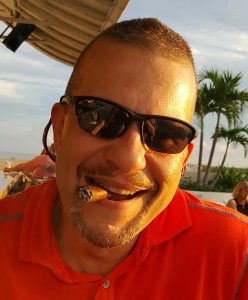 A veteran Voice Actor, Mark Peeples is heard...everywhere. Radio, TV Affiliate are the BIG ones for Mark but he also reads Promo, Trailers, Commercial, Late Night TV bits and more in his Alabama studio. Mark started in Radio but shifted to Voiceover pretty early in his career in Atlanta. One of his big "breaks" was for Turner and as you will hear it basically all got rolling from there. I kick off the interview with a small sample of his work, including one of the spots from that first Turner campaign, The NBA on TNT/TBS. Visit his Site (and yes he has a redesign in the works) to hear even more audio demos: http://markpeeples.com/
Check out his pics, studio at the top, the brains behind the operation (his wife) mixed in there too!
[gallery link="file" ids="14739,14740,14741,14742,14743,14744,14745,14746,14747"]
A veteran Voice Actor, Mark Peeples is heard...everywhere. Radio, TV Affiliate are the BIG ones for Mark but he also reads Promo, Trailers, Commercial, Late Night TV bits and more in his Alabama studio. Mark started in Radio but shifted to Voiceover pretty early in his career in Atlanta. One of his big "breaks" was for Turner and as you will hear it basically all got rolling from there. I kick off the interview with a small sample of his work, including one of the spots from that first Turner campaign, The NBA on TNT/TBS. Visit his Site (and yes he has a redesign in the works) to hear even more audio demos: http://markpeeples.com/
Check out his pics, studio at the top, the brains behind the operation (his wife) mixed in there too!
[gallery link="file" ids="14739,14740,14741,14742,14743,14744,14745,14746,14747"]
Transcript
77 min read • 11,476 words
Announcer: This is The Producers Podcast. Featuring the most respected international talent in the world of audio production and voiceover. TV, radio, film, and more. In-depth interviews and industry insights, putting you on the inside. Learn more at ryandreen.com. The Producers Podcast. With Ryan Dreen.
Ryan: All right, here we are, Producers Podcast. Thank you so much for checking in. I have Mark Peoples as the guest today. Mark, if you're not aware of the name, although I think I think he's a pretty big name in the voiceover industry, but if you're not aware, definitely, you know, big-time voice actor. He has a pretty balanced workload from television to radio. He does a lot of radio imaging and a lot of local television affiliate work. He does some commercial work. He also does some national promo work, movie trailers. I would recommend hitting his website, markpeoples.com. It's spelled P-E-E-P-L-E-S, markpeoples.com. You can hear a lot more demo audio. He has video demos. demos there, also links to his social networks, everything right there on his website. And I'm also pushing his website because he is going to be updating that at some point, so I'd like people to go check that out when it happens. So go connect with the guy. Hell of a nice guy. He's based out of Alabama. He used to be in, you know, one of the larger markets in Atlanta. He went back home and has plenty of success there. So we get into the geography of the business as well. I should note, I guess, I don't know if it's a big deal, I don't remember how much we talked about it, but we recorded this right before the Radio Summit. in Burbank. And I mean like the day before, late, so hours before he was flying away. And I'm producing this during the Radio Summit, but as I'm sticking to my schedule, it will be pushed out to the world on the 1st of April, after the Radio Summit. Again, I don't remember what we talked about in the interview, but if that timeframe is weird to you, that's why it is weird. Oh, and for the record, Ryan— me, that's me— I'm extremely jealous because I love going to the Radio Summit because it is filled with voice actors, and imaging producers, all the kinds of folks I like to hang out with. I had a transaction to tend to and other work-related crap. I realize that sounded weird. Transaction like a house, not like drugs or, I don't know, something else nefarious. Anyway, just know that no, I'm not #blessed or humbled or any of that. No, I'm #jealous. It's a great conference, especially for us, and I wasn't able to go. Oh well, there's always next year. So there we have it. That's your intro today. I ain't recording it again. Before I get to the interview though, I would like to politely request you subscribe and rate this podcast. I really only say that because when I listen to other podcasts, the professionals that do this stuff always say that. They say it a lot of times. I say it once. Either way, no, I do know the realities of metrics and, you know, getting this thing out in front of more people. I would be very grateful if you would take the time and rate and/or review this on iTunes or wherever you listen to podcasts. That would make me oh so giddy. Now we get to the guest. It's the one and the only Mark Peoples.
Mark Peeples: It's the place everyone wants to be. With a set as famous as the guests, 25 amazing years of television now come to an end. Celebrate with newsmakers old and new, and unforgettable fan favorites as CNN counts down to the final live hour. In this arena, the world's greatest warriors come to battle. No scripts, no lines, just heart-stopping excitement. The NBA is on TNT and TBS. How you doing? 102.7 KISS FM, High Five at Five, number 2. Allow me to Ta-da! It's a snake sitting on a couple of walnuts. Oh, the Monster Ball Tumor. So the boss says, make it easier to listen to 102.9 The Hog. So I says, no commercials weekdays after Bob and Brian till noon. That's easy.
Ryan: All right, and, I'm gonna take a wild guess that you know that voice. If you're listening to this podcast, you definitely know that voice, but that voice is Mark Peoples. Hey, Mark, voice artist extraordinaire. Thanks for joining me on the show. I appreciate it.
Mark Peeples: Well, hi. How are you, Ryan?
Ryan: There it is. Oh, that's the real voice, right? Everything else is a put-on?
Mark Peeples: Listen, man, I'm gonna tell you, it happens so much. I know this question is coming, but maybe I shouldn't have got ahead of you here, but—
Ryan: Yeah, that's fine.
Mark Peeples: My clients, they say, well, why is he in Alabama? Well, so I have to go through the story, you know, and it's always quite entertaining because, you know, hey, It's strange when you work for a major network, you do some work and the producer's like, where are you? You say, I'm in Muscle Shoals, Alabama. A lot of times that's all you have to say. People know where Muscle Shoals is.
Ryan: Yeah.
Mark Peeples: I mean, it's like the Rolling Stones frequented this place. I mean, and so many other big names, Aretha Franklin. It's a huge music town, man. We love it. But people outside of it, Why?
Ryan: Yeah, well, that was actually my third question. I was going to bring that up real early here.
Mark Peeples: I'm sorry.
Ryan: No, no, no, it's great. We will get to that because I want to hear more about kind of— you had some regional transit or geographical transitioning in your career. But I wanted to start with this question before we kind of get into the background. Was there a moment or, you know, something that sort of popped and made you go, oh, I'm going to talk for a living. Did that happen at some point in your life?
Mark Peeples: Well, I'll tell you what happened, and I— there's no way to really make a short story out of this, and it's— and my kids, it's very flattering. My kids will actually come to me and say, Dad, you know, every once in a while they want to know, how did you start doing what you're doing? I mean, they've known this all of their life. This is what they've known because, well, let's see, I was in radio. When, you know, I started in radio in '86, and they hired me at Big River Broadcasting, which is WQLT here locally. Huge, huge tower, 100,000-watt station, and they're still there. They're still owned. Sam Phillips owned the station, and yes, it's the same Sam Phillips who discovered Elvis Presley.
Ryan: Yeah.
Mark Peeples: You know, Sun Studios out of Memphis. And his son Jerry owns it now. And I'm actually doing the voice work for their country station, KIX 96. So it's nice to be back home doing some voiceover. So anyway, long story long, here we go back to 1986. Man, I hated how I sounded. My dad was a radio vet from the '50s and '60s at various stations in Jacksonville, Florida, and Atlanta, Georgia. And he says, son, you need to do radio.
Ryan: Yeah.
Mark Peeples: Yeah, right. Okay. Why and how? Well, he says, you just need to record something. Well, my dad was, he was, you know how it is. You get into broadcasting, it's in your blood. You can't, you can't have some kind of a witch doctor bleed it out of you. It's there.
Ryan: Yeah.
Mark Peeples: And so he had a full radio station. It was a broadcast radio station in the basement, you know, and, and I would go down there and play on this thing, and I recorded an air check, and all I did was read the newspaper, and, they hired me. I remember my first shift was on a Sunday morning, and, I was just a kid, you know, and I ran syndication. I did. I had one air that I was— one, one hour that I was live.
Ryan: Oh, wow.
Mark Peeples: Yeah, just one hour, man. That was my, my hour of fame. How old were you? I was, I think I was 14 at the time. I was terrified. I was absolutely terrified. It was, you know, you have to get into— I think if I were to go back into radio right now and open the mic, I would be like,. I'm trying this little experiment we'll get into later, but with an internet broadcast, and that should be fun.
Ryan: Right.
Mark Peeples: But yeah, we, I remember CD players were brand new. It was a brand new thing. Even the, the voice guy for the station, it was, they would write liners and say, and now from Compact LaserDisc, you know, and it was actually a thing. I mean, it was a marketing thing, you know. And yeah, right, man. I, I was in a very, awkward position, the morning, The morning routine. And there was a very strategically located speaker right above the toilet in the bathroom. It was an air monitor speaker, and it went silent. And I'm like, oh God, you know, so I'm jumping up and trying to get back in there as quickly as I can. And I walked in and they had 3 at the time. They weren't— The CD cart decks. These were like the first ones that were available and they looked consumer grade to me. You know, like if you bought a set-top, you know, kind of thing. And there were 3 stacked—
Ryan: They have a tray that opens up?
Mark Peeples: Yeah, yeah. There were 3 of them stacked on top of each other and I walked in and it was like they were opening and closing by themselves and of course, it was the Yeah, the Century 21 discs. And of course, it was the hit discs where they've got multiple formats on there.
Ryan: Yeah.
Mark Peeples: You know, track 1 through 5 might be country, and then, you know, whatever. And so it's playing— we were an AC Top 40 station, and it's playing country and then some hard stuff. And I'm like, oh my God. So the general manager of the station, the big red light started going off.
Ryan: Yeah.
Mark Peeples: Oh God. Oh, it was bad. It was bad. Very bad. So those were the early days in radio, and I did that up until, I would say— let's see, when did I do my first voiceover job? It's been a long time ago. Oh yeah, it was in, December of '94. Having a look at some notes here. December of '94, we, we were living in Atlanta, and that's where it really started.
Ryan: What was the— was there like a momentous occasion? I mean, were you doing radio in Atlanta and then you found your way into voiceover there, or did you know— how did that little transition happen?
Mark Peeples: No, actually, I got tired of moving all over the country because I loved radio, but at the time, you know, it was getting to that point where those big glamorous large market jobs, they were getting even smaller as far as the opportunity goes. And so if radio was gonna be your career, as I'm sure it is now, I mean, you stick with a very stable medium market to small market station group, or you just move all the time.
Ryan: Yeah.
Mark Peeples: And I, man, we were starting a family, the kids were coming, and we just, I needed a career, I needed a career change, but I, and I knew I could do something, it probably was not going to be my passion, which was radio at the time. So we moved to Atlanta, good job market, you know, and I say, you know what I'd really love to do? I would love to do— because my favorite thing was audio production. Man, I can get lost in audio production. It is so much fun.
Ryan: Yeah.
Mark Peeples: And I said, I'm going to try and apply with a recording studio. Or something. So I went basically door-to-door with, you know, filling out resumes or filling out applications.
Ryan: Mm-hmm.
Mark Peeples: And there's one little studio on Spring Street in downtown Atlanta. I was in the lobby talking with the manager of the studio, and he was being nice, giving me that, you know, the typical, well, just leave your resume and fill out an application, and if something comes open, we'll get in touch with you. Thanks for stopping by. Well, all of a sudden, this— in my mind's eye, I can picture Marie from Everybody Loves Raymond.
Ryan: Mm-hmm.
Mark Peeples: This sweet little old lady walks out of this office, and she walks up to me and she says, hon, I couldn't help but overhear your conversation. She says, you don't want to do what these flunkies are doing. She said, you need to be in voiceover.
Ryan: Mm-hmm.
Mark Peeples: Well, what? well, I— wow, thank you so much, man. That was a compliment. And, and before I could really respond with anything articulate, she says, tell you what, my son works for Turner, and you come in Friday, I'm gonna have him produce your demo tape for free.
Ryan: Wow.
Mark Peeples: I'm like, you have got to be kidding me. I always said to I was at the right place at the right time, and she got flowers for a long time.
Ryan: Yeah.
Mark Peeples: Yeah. Had to explain the lipstick marks on my cheek when I came home, but, you know, hey.
Ryan: I guess. Yeah, they were worth it, though.
Mark Peeples: Very much so.
Ryan: So you go to Turner, get that demo cut. Does that mean you actually do work for Turner right out of the gate, too?
Mark Peeples: No, no, her son worked for Turner. He actually was doing some gig work.
Ryan: Yeah, no, but I figured, yeah, like, did he say, oh yeah, you know, you actually are legit? I'm thinking your first voiceover gig was something for Turner or something.
Mark Peeples: He did. He did a— I believe— now, I don't know for sure, but I really believe that he was— I know his mom was. The lady I was speaking of, somebody out there might remember her and remember her very well and affectionately. Her name was Maggie Kinder, and her son's name was Jeff, and he did a lot of custom music and that sort of thing for Turner. Turner Films, Turner Broadcasting.
Ryan: Yeah, that's great. So you're in Atlanta and that's where you basically start your voiceover career.
Mark Peeples: Yes.
Ryan: And what are the first steps to, I guess, earn an income that, you know, doesn't— that puts food on the table, that doesn't put you on the street?
Mark Peeples: Well, you know, it's really hard to say. What I did when I first started was I was in a good market. You know, Atlanta is an excellent voiceover—
Ryan: It's a great media market.
Mark Peeples: Yeah, it is. And so what I So, what I did was I just said, hey, you cast a bigger net, you catch more fish. And so, I signed non-exclusive contracts with about 10 or 15 agencies in Atlanta. And so, I knew I was at every what they called cattle call audition. And you've seen the lines where the kids, you know, the new iPhone comes out and they camp out and they stand in line outside Best Buy or whatever?
Ryan: Mm-hmm.
Mark Peeples: That's what a lot of these were. And you walk into a little room and they got a, you know, folding table and you read and they say, okay, get out of here. So it really is. It's about exposure. You really want to be in front of as many people as you can.
Ryan: What kind of stuff were you booking early on? What type of work? I mean, I can hear your voice now. I know you do a lot of— I mean, look, you got a big voice. We can't hide from it.
Mark Peeples: Well, I didn't have the big voice back then. Yeah.
Ryan: So back then, The sound effects, we got sound effects too.
Mark Peeples: Yeah, I'm sorry about the demo. I had one of my AirChecks loaded, but no, I actually listened to some of my own demos back then and I think, oh my God, why did they hire me? It just sounded awful. It's like, if I were the creative director, I'd say, hey, come here guys, check out this submission we just got today. It's terrible. But no, we actually got some good stuff. It was really awesome, man. I think the first thing, and I might get these slightly out of order, but I think the very first thing is it was closed circuit sort of broadcasting for this chain of stores that were located inside airports called WHSmith.
Ryan: Okay.
Mark Peeples: And yeah, we would go into an Atlanta studio and record maybe once a month. And of course, back then as your first job, if you want to hear your stuff. You're like, oh man, I just recorded this. I can't wait to see what it sounds like. I gotta fly somewhere. You know? That's the only place.
Ryan: Yeah.
Mark Peeples: So then the other thing, we did some Ford commercials there in Atlanta and Six Flags. But the biggest one was—
Ryan: Yeah.
Mark Peeples: Wow. I auditioned for this through Atlanta Models and Talent. And back then we had— I had 2 things. We had a pager. It was a numeric pager. And, you know, it was— do you remember these days where you would tell your family members, you know, if it's an emergency, just send me a page, page me with the numbers 911 after the telephone number?
Ryan: Right.
Mark Peeples: Because there was no text messaging. So, I had the pager and I had this giant flip phone, and it was like you extended the antenna on it. And we're riding around and the audition had been submitted and all of a sudden I recognized the number being from my agency. And I got on the phone as fast as I could, found out that we had been selected to be the voice of the NBA on TNT and TBS for the '95-'96 season. Amazing.
Ryan: Oh, wow. Wow.
Mark Peeples: It was beautiful.
Ryan: Was that one of those jobs, you know, this will happen, you work at it, you work, You get paid, but you kind of get the one gig that catapults the rest. Was that one of those for you?
Mark Peeples: Man, here's a funny story, and Lisa Marber is gonna love this because, you know, if she listens, because she's gonna get the inside scoop probably for the first time since it happened. And this was back in, you know, summer of '96. Yeah, I actually thought exactly what you just asked. I thought, you know, this is a high-profile job. I'm out there, people are gonna hear me, and the career has started. I mean, we're ready to pop the top on these champagne bottles, about 5 or 6 of them. And man, we did the season, it came and went, nothing. And then they rehired me for the postseason voiceover, which lasted really just 2 weeks. It was just about 4 sessions.
Ryan: Yeah.
Mark Peeples: Then that ended, and I'm like, nothing happened. Oh my God. I mean, it was like a gut punch. It's like, well, I guess that was it. Yeah, we did voiceover for a little while, and well, let's see, what do we— what do we do now?
Ryan: Now what?
Mark Peeples: Auto mechanics?
Ryan: Oh gosh, carpentry? I don't know.
Mark Peeples: Yeah, plumbing. I don't know. but I got this, strange call. Things happen when you're not expecting them to happen. They really do. I mean, that's when the good stuff— it's like they say, the old saying, you know, a watched pot never boils.
Ryan: Yeah.
Mark Peeples: The good stuff always happens when you're not expecting it. It's like you get the best auditions and the best gigs when you're in the middle of your vacation or something. So I get this phone call out of the blue, and it's my contact at Turner, and she says, Mark, it's Shannon at Turner, and just wanted to make sure before I— somebody's trying to get in touch with you from Don Buchwald and Associates, and I just wanted to make sure it was okay to give them your number. Well, I'm like, why, hell yes, please.
Ryan: Right.
Mark Peeples: Because everybody knew who they were. Everybody knew. you know, the agent— who the agency was. I mean, that was one of those instantaneous things. And I would just about bet that if before that date I had sent them a demo, I would have not gotten a response back. So they apparently had heard it. And so anyway, Lisa Marber calls me and she says, well, I just— we've heard your stuff on Turner and we'd really like to sign you at the agency.
Ryan: Wow.
Mark Peeples: Man, this stuff, you have to understand, all of this happened in like 6 months.
Ryan: Yeah, it sounds like it.
Mark Peeples: And I didn't really know, have a clue what I was doing. I just had people that took me under their wing that knew. And so I just felt like a sort of a ping pong ball, just bouncing around saying, okay, all right, fine, I'll do it. You know? And it was, I remember I was, I was actually quite terrified because it was too much to digest too quickly for a young, inexperienced guy.
Ryan: Yeah, I'll ask a question like this maybe later, but if you could go back at the time, what are some of the things you would have told yourself to maybe more better prepare yourself, or at least to just allow you to handle the situation better? Is there anything you would, you know, advice you'd go give yourself?
Mark Peeples: Well, I think, you know, honestly looking back, because hindsight is 20/20, and looking back, I think as far as You know, how I dealt with the agency and everything, I think I did a really good job, but as far as my first, my early days in voiceover, if that's what you're alluding to, I would say—
Ryan: Yeah, anything, yeah.
Mark Peeples: I would say I spent, let's see, '86 to— I'm not doing math now, my brain is scattered from the rest of the day, it's been nuts today. But anyway, I spent, I guess about 11 years all total in radio. And I think that— I'm grateful because I love radio and I can't get it out of my system fully, but I think that really hurt me in voiceover because especially the time, you know, the timeframe that I was in radio because what they call it, the boss radio.
Ryan: Yeah.
Mark Peeples: You weren't really conversational on the air. You were an announcer, man. And it's very tough to do professional voiceover. Well, you can't. I mean, if you're an announcer, I mean, you just forget it.
Ryan: Yeah, it's kind of that radio stench that people will talk about. It's hard to shed it.
Mark Peeples: Yeah, Sunday, Sunday, Sunday.
Ryan: Yeah, and you were doing radio in an era where they really, really wanted you to be, like you just said, a big voice announcer.
Mark Peeples: That's right.
Ryan: You were not a regular person.
Mark Peeples: Exactly, and in the 2 formats, they sort of lended themselves to that sort of straying from the path. voiceover-wise, like CHR. CHR and rock, man. You, you got to be a boss if you're a radio DJ in the '80s doing rock or CHR, you know. Hey.
Ryan: Well, we'll probably, you know, still get a little— a few more stories, I'm assuming, as we move through the career here. But let's go back to the present, just to hear about your daily workloads, you know. I, I think, well, there's a lot of avenues that people will know you from, but You know, station announcer, you do a lot of TV promo work. Anyway, you tell me, but what's your daily workload look like now?
Mark Peeples: Well, I was talking to— it's funny, I was talking to a good friend of mine in the business the other day who profaned me wildly when I told him, I said, man, I've only done 3 sessions today. He said, you what? You know, it's— I give up trying to predict what any of my days are gonna be like. I think, and I'm just being funny here really, but it almost feels like that all of my stations, they have this secret society and I think they all have a little summit. They get together on gotomeeting.com and they say, everybody hold off on Wednesday. Let's all send him our crap on Thursday at exactly— Is everybody's watch synchronized? Okay, go. And it's— man, I'm telling you, that's the way it is.
Ryan: And, and what about when you go out of town? I know you're heading out to Burbank, right? I'm not speaking out of turn by saying you're heading over to the Worldwide Radio Summit. This won't— this will actually post possibly just as the summit has ended, but it doesn't matter. What about the day before you go out of town? That's usually a big day for work, isn't it?
Mark Peeples: The day before I go out of town, let's see, after this, I think what I'm going to do is 2 days before I go out of town is I am just going to request some sort of, heavy sleep, sleep medication, take an extra day off and go into a coma and just have my wife wake me up in time to get to the plane. That's it.
Ryan: Yeah, there you go.
Mark Peeples: It's insane.
Ryan: There you go.
Mark Peeples: Because if it can go wrong, Murphy's Law, if it can go wrong, it will go wrong. I'm changing Murphy's Law a little bit. It will go wrong the day before you go on a trip. That's it.
Ryan: The day before you go on a trip?
Mark Peeples: Yes.
Ryan: Yep, yep. that's great. What about— so what about the, quantity, or I'm sorry, like percentages of what you do? I don't really know. I know you do some commercial work, but I'm— I'm— I— if I'm guessing, you're doing a lot more, affiliate work and radio imaging than anything else. But tell me I'm wrong, or tell me what else you're into, and kind of what are the percentages like these days for your workload?
Mark Peeples: You know, it's sort of, mainly what I do is TV affiliate and radio, and it kind of, they fluctuate. It's like, sometimes you've got, you know, 4 or 5 more radio than TV, and sometimes you've got 4 or 5 more TV than radio, and, and it tends to, it tends to fluctuate. So I would say it's, it's pretty close, but I think right now I'm doing—
Ryan: I am doing more TV affiliate than I am Yeah, and I'd say a lot of people, you know, now that they heard some of your demo, and maybe, you know, maybe they didn't know that Mark Peoples was that guy they hear on their local station all the time, you know, but now they do. And I played some of your demo work, obviously, to kick off the show. You have a lot more on your website, and in fact, we'll get to the technology here in a bit because you are doing some big updates soon. But what else are you into, or maybe what else would you like to be into besides more of the announcer side of the work?
Mark Peeples: Well, I'll tell you this, and right before I answer that, there was something you said. I would like to find the guy that causes me to get these phone calls from friends and family all over the country saying, I know you're the— you just cut this spot last week. I just heard you on the radio out here in Cheyenne, or wherever the hell it is. I'm like, nope, nope, not me. Oh my— yes, it is you. I've known you for 10 years, and it's you. No. If you find the guy, kill him for me. I mean, that's— I don't mean that—
Ryan: Because he's taking my work, obviously.
Mark Peeples: Yes. I mean, because— you bastard! I mean, it's my work! But no, I— what I would like to get into is really a little bit of every— I want to keep doing what I do. It is enjoyable. I don't like the mechanics of, you know, actually running the business. And I'm sure we'll get into this when I discuss the reasoning for this little organization or brotherhood that we're talking about.
Ryan: Yeah.
Mark Peeples: But it's a fun job, but I really, really enjoy working with a producer on a phone patch, or, you know, used to in the good old days, an ISDN line, because you get real-time feedback. And, you know, because the producer who's writing the copy And who's charged with, you know, finding or working with the voice guy, he's already got it in his head what he wants it to sound like. Especially the copywriter. If he wrote the copy, then it's even more his baby, her baby.
Ryan: Right.
Mark Peeples: And I think that those are the best, best times because, you know, I'm not a mind reader. I mean, that's why the auditions, you know, I mean, hey, you just do the audition. There might be 20 ways to read it, but you're not gonna give them 20 takes. And if you do the wrong take, they're gonna say, ah, he might not be able to do what we want him to do, and just trash that one.
Ryan: Yeah.
Mark Peeples: But it's so much more rewarding to work with these really, really creative people because they— if you step outside of their expectation just this much, they can They say, oh no, pull it back this way just a little bit. And I know that I've done— I've made them happy and they're happy. So I love it. I, I think as far as a genre, movie trailers are a lot of fun and we've done a couple of those.
Ryan: Yeah.
Mark Peeples: But yeah, that's— I would say if we do anything, radio is— it's all fun, man. I just want to be able to work with the producers more on an individual basis.
Ryan: And you talked about being directed there. At some point in time, you were in Atlanta, and you and I already talked about this, but you decided, nah, I think it's time to go back home. That's kind of how you said it. So I'm assuming it'd be very, very rare where you are now to actually go and do a live session in a studio.
Mark Peeples: Yeah, this is not a real big voiceover town. It's— I mean, we have tons of recording studios everywhere. There's a recording studio on just about every block. I mean, they're everywhere. You got Wishbone, you got Jimmy Nutt's got a studio now, or did just up the road. I mean, my finger's not totally on the pulse of music recording, but I got a lot of friends in the business here locally, and it's huge, but nothing really in voiceover. So no, I mean, you gotta have your own studio if you're remotely located and this is what you wanna do. Yeah.
Ryan: And you know, when you— so you were in Atlanta and you started out, obviously you were doing big work for Turner. You got the big, you know, one of the greatest agents on planet Earth, who also happens to be mine, Lisa. And, you know, you say, all right, I'm going back to Muscle Shoals.
Mark Peeples: So what are you expecting? You're looking for a gig, aren't you? No, no, no.
Ryan: Okay, grab some tissue.
Mark Peeples: Wipe, wipe, wipe.
Ryan: For those people that think maybe you got to be in New York or LA to get the work, or, you know, I have different opinions I've heard on this, but did you feel any pushback? Did you feel like you missed out on anything? You know, did you lose work over it?
Mark Peeples: It was actually, we were just getting into— of course, you know, I mean, they told me, you've got to have an ISDN box, you've got to have it. And of course, you know, these are all new, new things to me. I, I didn't know what ISDN was. but no, it didn't impact me really, except for Because everything I did, you know, the agency really built me up very quickly in the TV affiliate area. So there weren't any— there wasn't any real need. I think it's just like major network stuff that on occasion requires a body in place. But ISDN was the thing. And so as long as you had an ISDN connection, you were fine. That was the only problem for me. Because—
Ryan: That's what I was gonna say. Tell that story. Getting that done in where you lived.
Mark Peeples: Well, it was terrible because, you know, this was— it's Northwest Alabama, okay? It is. It's not a suburb, a suburb of a big market. Yeah. Please don't send that my copy in the morning. Anyway.
Ryan: Easy for you to say. Yeah.
Mark Peeples: So we had to, back then, There was like one ISDN installation guy that worked all of Northwest Alabama. I mean, if you break Alabama into 4 parts, I mean, he was Northwest. And you had to be within so many feet, and I can't remember what that number was, of a main box.
Ryan: Mm-hmm.
Mark Peeples: So I'm like, okay, well, that doesn't tell me anything. I don't know where the box is, number one. So they had to— I would have to give them a phone number of an office building or whatever, and they would have to check in their records to see if it would be available. So yeah, I had to have my studio in town, and I had to get some office space to do that. Couldn't work out of my home at the time.
Ryan: And at some point that changed. The technology started to catch up even in Northwest Alabama. Do you still have an ISDN line in the home studio now? I think you told me you do, but you don't really need to use it that much anymore?
Mark Peeples: Well, I don't have an ISDN line, I have an ISDN box. I've got a Telo Zephyr 9202, you know, and I thought the other day, you know, I've got this new IPDTL subscription and I actually have a Los Angeles ISDN number now. So you know what, I'll bet you There are still some, you know, TV stations. I could sell that Zephyr. Maybe, you know, make some, make some cash. I was just— it was funny, man. I just, I was really just curious because it is a dinosaur. And so I look online and people are so— they can't sell them. They're trying to sell them for $30 and they can't sell them. I paid $6,600 for the damn thing.
Ryan: But yeah, I was gonna say, like, I was gonna say a $5,000 paperweight, really heavy paperweight, but even more.
Mark Peeples: Well, listen, man, the funniest thing was, is, I remember it was, every once in a while, you know, at least once or twice a year for the last— I mean, the last time I did an ISDN hookup, prior to a few months ago was in '07. It was 2007. So I mean, doing the math here, that's a long time ago to not need ISDN. I mean, I've done network stuff and everybody's MP3 now. So I just called— but the agency would call every once in a while and say, you gotta have an ISDN line to do this. So there was an audition that looked really hot for us. And so I thought, you know, I'm not gonna do this. I'm not gonna let the agency book this and then call me and me screw it up for everybody by saying, oh, well, I didn't think I was gonna get it, so I didn't get ISDN.
Ryan: Yeah.
Mark Peeples: So I called AT&T, and of course they do as they always do, they transferred me overseas, and I told them what I wanted, and she put me on hold for about 20 or 30 minutes, comes back and says, sir, I've looked, and I've even checked with my supervisor, and we can't find that channel available on your lineup.
Ryan: Oh, the ISDN network?
Mark Peeples: Dude, I really didn't know how to respond. I had to really take some time to process this, and I was so— I couldn't even laugh. I couldn't even laugh. And I think the first thing I said to her is, ma'am, it's not a channel or a network, it's a service. It's like a phone line. And I knew—
Ryan: It's a freaking wire.
Mark Peeples: So anyway, I would say it's good and bad that we've gotten away from ISDN. The good thing is, hey, it's more convenient. If you had a way to have great acoustics and park your ass on a beach somewhere, you could do anything. I was at a condo in Perdido Key, and in the closet— back then, portable studios were kind of big then.
Ryan: Mm-hmm.
Mark Peeples: I recorded all of the final farewell VO for Larry King in the closet of a condo in Perdido Key, Florida.
Ryan: That's great.
Mark Peeples: So conceivably you could be anywhere, but it's no longer personal, man. We are just names and email addresses. That's all we are.
Ryan: Yeah, yeah, that's tough. Man, I don't want to run out of time here and get into some of this, but let's stay on technology. First, let's talk about your mic chain, in fact. You had been pretty locked into something, specifically your microphone, for a while, but then you kind of made some changes anyway. Tell people what it is you like, what you use, what you've tried. And people love hearing about that stuff.
Mark Peeples: Well, I'm very picky. I'm very, very picky. And I think just about everybody, everybody else is. I mean, because every single one of us, we all want to sound the best we can. And you always are your own worst critic. But I have tried so many microphones, and I'm talking to you now on a Neumann TLM 49, and it sounds okay, but the thing is, I noticed that even as it's new, I mean, within the last month or so, I've noticed that even at 8 inches away with a double-pane pop screen, it's still so pressure sensitive it sounds like I'm popping. And so I have to pull Ps and Bs and things like this. It's a little more difficult.
Ryan: And that's about a $1,600 mic-ish?
Mark Peeples: Yes, yes.
Ryan: And so I found it interesting. Now, if you could tell everybody what you had been using that you like a lot and that you might even go back to.
Mark Peeples: I started out, and it's funny I end up with a Neumann. There are 2 mics, and I'll be very quick here. The first one I started with was an Audio-Technica 4033, and I bought that with the proceeds of the NBA contract from '95-'96. And when we did the postseason, I went in and I was just talking with the studio guy and Brian Kreider, who was one of the head producers for Turner that was working with me. And so we had like a 3-person conversation going on here, and he let the cat out of the bag how much he had paid for a Neumann microphone that was in the mic booth. And I was like, oh my God. Oh my God. Oh, please. Okay. And I said, man, why? Because my microphone—
Ryan: Why?
Mark Peeples: My microphone sounds that good? God, I still don't know. If I were to run into the guy— actually, I think I saw him in ProMax in '97 in Toronto, and he didn't hate me, but I was convinced that he would hate me because The, Brian Kreider, he says, tell you what, bring your mic in Thursday and we'll try it out. I brought my mic in. All of the Turner folks from then on out, all the NBA, I was rec— they wanted me to bring my microphone to record on because they agreed it sounded as good or better. They thought it sounded better, I guess, than the Neumann. Yeah.
Ryan: And a few hundred dollars, like we're talking hundreds of dollars, thousands of dollars.
Mark Peeples: Paid $500 for the AT4033 at the time, it was $500 and change. And the Neumann, I remember he had the, the, the big sucker, you know. I mean, he was like, give me the best you got. I mean, I guess that's what he did. So I used that mic for years, and back in 2010, I started— I, I mean, I'm a gearhead. I'm just a gearhead. Go ahead and admit it. All you other guys are too. Everybody in the business.
Ryan: Yeah.
Mark Peeples: You gotta have—
Ryan: Plenty of them.
Mark Peeples: Man, I built this huge rack cabinet. I mean, I've got It's like I'm going through storage trying to— what would look good in the rack? You know, I got— I'm a gearhead, man. I mean, I don't care if I ever use it. It's just, look how full my rack is. Check it out, man. No. So, I wanted to change. I said, let me try something, but I wouldn't know where to start. I said, I definitely don't feel like it's necessary to get a, a really expensive microphone. So I, I got— oh God, I can't remember all of them. It's a little blue— it's AKG, Blue Mic. not Blue as in a brand name Blue, but—
Ryan: Right, right.
Mark Peeples: Got an AKG. I got, the 4033. I got a Rode mic. And I just decided I'm going to do a blind taste test with my clients, a couple of them. And I got 10 people who said, you know, okay, I'll check it out. And so I read, you know, a couple of lines with each microphone and I sent them the file. Unanimously, unanimously, I mean, not one person chose a different microphone. Every single one of them said the Shure KSM27. Wow.
Ryan: Yeah, there it is.
Mark Peeples: All right. Wow. All right then.
Ryan: So, and that's like a few hundred bucks?
Mark Peeples: Yeah, I think it's this one here, the one I actually use or have been using for the last couple of years in my, my main chain is a KSM27. And recently when I went to look, I've noticed that they're just SM27s now that I see up available, but it's the same one. Yeah, I use an SM27 in my mobile studio.
Ryan: Yeah, yeah, we were talking about this obviously beforehand, was why I wanted to tell people, because people do get sort of locked into the, oh, I got to get myself the $3,000 Neumann, or, you know, I, I have to use the $1,000 416, which I happen to love. Everybody— the 416s are lousy, everybody's got one. But then I got an AKG, the 214, I don't know how much, $400 or $500, I can't remember, but great microphone. And yeah. So, you know, it's what matches with you and what sounds good. It doesn't— you know, sometimes price point isn't exactly the most important thing.
Mark Peeples: Well, I can't, you know, I can't make decisions like that on my own. I had to call the boss up here, and she— so many people, I mean, I don't go on a business trip without Monica. So she really has gotten into the business, and she knows people. and she knows exactly what the hell's going on, and she keeps me straight, and I trust her judgment on just about everything. I said, please, will you sit over here and let me try each one of these mics out? Just don't even look at which one's plugged in.
Ryan: Right.
Mark Peeples: And she said— because I actually was looking for an excuse to get rid of the 49 here. I really was looking for an excuse because to me, the quality difference between this and the KSM27 or the Shure mic It's marginal at best, but yet it's— let's see, I mean, it's about 5, better than 5 times the price. And so she said, oh no, that mic, that mic right there. She said, she used the word presence. She said, it sounds like you're here. It doesn't sound artificial.
Ryan: That's the Neumann. She liked the Neumann.
Mark Peeples: Yeah. She said the Shure sounded slightly artificial in comparison.
Ryan: Yeah, so what else do you put on your mic chain? Do you have— I don't know, do you use hardware, software, do you use nothing?
Mark Peeples: You know, it's software. It's software. I used to go through hardware compression, and it's just not necessary anymore. I have everything on screen, my board stuff, all the controls, compressor, equalizer, whatnot. But, you know, it's— I I put a little bit on there because I'm so picky about background noise and a tinny sound. And plus it helps if you do voiceover work. Let me put it this way. If you don't sound the way you think you're supposed to sound in your headset, it's gonna screw you up. You can't—
Ryan: Your performance won't be what it should be.
Mark Peeples: No. Yeah, you're exactly right. I mean, you will find yourself rereading things over. Oh, that didn't sound good. I gotta read that again. Over and over. And so, I put just a touch because if you put too much, these guys— and that's another thing radio will do for you, or not for you, it will mess you up.
Ryan: Again, it works against you.
Mark Peeples: You're used to sounding like this, I am Mr. Radio and I am compressed to hell and back. And because that on-air sound sounds great, I wouldn't change it. for the world, but the problem is you're going out over the air. What we do has to be produced. And so if I send a highly compressed or highly EQ'd file back, then there's not much they can do with it on the other side of things. They'll fuss.
Ryan: And just to let people know, when I do these podcasts, I try to— I want all of my guests to be on their own mic chain, so I have you record on your mic chain, and then I get it back, and the only thing I do is kind of level out some of the peaks and just to kind of make the RMS— I try to get it into some certain specs, but I don't put anything on, you know. So what people are hearing, the way they're hearing you now is your mic chain.
Mark Peeples: Well, that's, that— I hope it sounds good.
Ryan: Yeah.
Mark Peeples: I, I can only hope.
Ryan: Yeah, me too.
Mark Peeples: I guess it was— I guess it does. I haven't gotten any complaints, so I'm lucky at this point.
Ryan: there's— I don't know what your time frame's like. There's at least 3 other things that I wanted to get into.
Mark Peeples: So let's go.
Ryan: I know you're gonna be traveling here. Another thing that people more and more these days, and more and more people have to do this, get yourself a good travel setup, a little road rig. What is it you take on the road? You already said the mic, the, the 27 from Shure, but what all do you take with you?
Mark Peeples: What is your show rated?
Ryan: My show is rated— I try not to have to— I don't want to get the TV—
Mark Peeples: Okay, never mind. I'll word it a different way then. Yeah. Yeah.
Ryan: Okay, good.
Mark Peeples: I was about to highly, highly compliment a new piece of equipment I just bought. I have been— man, I'm telling you, I have been now for 3 or 4 months, I've been completely revamping everything. New computer systems, new mic, new audio equipment, and there was something— we'll get into this quickly later, but I needed to have a really good setup for live, like if a network calls in, like what we're doing here.
Ryan: Yeah.
Mark Peeples: I need to be able to record my audio and hear them. Everything is in the computer now. There's no external stuff anymore. Everything's in your phone system, everything's all in the computer. And so you have to have a way, an efficient way of routing all of that audio around inside, and there wasn't. I bought this massive board from a company I will not mention.
Ryan: Mm-hmm.
Mark Peeples: They marketed this thing as a, quote— well, now I can't quote it because I can't remember, but they really pushed it as a very able interface. And I'm thinking, it's 24 channels. I mean, my God, what I could do with 24. Okay, so it gives Windows one stereo in and one stereo out. If your software, which your phone software is, it's not ASIO, it's, you know, WSAPI and whatever else it requires on what Windows can recognize to assign an input or an output like Skype, you know. So I am looking at all these options, you know, how do I do this? And man, I just ran into every kind of roadblock for 3 weeks or so, and then I came across this beautiful beautiful company. I'm telling you, if you want to do broadcasting, if you need to do phone patches with networks, you absolutely must have— not only for your regular studio, but for your portable studio as well— MOTU. MOTU.
Ryan: Mm-hmm.
Mark Peeples: Mark of the Unicorn. I bought the little— the ultralight guy version for my portable studio. The guy— it's a local US-based company, and every time I call, the guy answers the phone with his first name and helps me. He said, oh, I know exactly what you need. Let me send you a registry file, and you just double-click and install it. And then all of a sudden, I had 50 stereo ins and 50 stereo outs, and I can route it inside the system to do anything. Amazing.
Ryan: Yeah, that's cool. And you're more of a PC guy, I'm getting. You're not a Mac guy. Sounds like you're on Windows, you're on a PC.
Mark Peeples: I am, I am, and it's the reason— it's a very simple reason I'm that way is because that's what I learned on.
Ryan: Sure.
Mark Peeples: And Macs were like 5 times more expensive at the time than PCs were, and plus PCs offered more compatibility, more software options, more everything. So I just stuck with it. I didn't want the learning curve.
Ryan: Yeah, no, that's great.
Mark Peeples: Yeah, I didn't want the learning curve.
Ryan: Yeah, no, there's nothing wrong with it. And what DAW do you work in? What editor, or what are you recording on?
Mark Peeples: I use Adobe Audition, and I do the subscription. You know, I'm the Adobe Cloud guy because I still have to have my Premiere and my Acrobat and After Effects and all that good stuff. So yeah, it's the latest version, CC 2019 Adobe Audition.
Ryan: Yeah, absolutely. No, that's great. I think a lot of people that— we bring it up on this show often, you know, there's absolutely no need to force your way into a DAW, you know, digital audio workstation that you're not comfortable with. And Audition is really nice for voice actors. It can be as simple as you want it to be. It can also be as complex as you want it to be.
Mark Peeples: Yeah, yeah, it's highly capable. But I say that not really knowing anything about, you know, how to— I'm totally unfamiliar. I'm a total layperson when it comes to Mac and Pro Tools. So, you know, I'm just telling you, that's— so this is what I'm used to, and it seems to be— I learn something about it every day because I dabble in multitrack and still love production, and it just— yeah, it seems to always wow me.
Ryan: So yeah, that's cool. Let's get into VO Mob. You've alluded to this throughout the show here a little bit. Full disclosure, I know almost nothing about it. So what does that What is VO Mob?
Mark Peeples: We're trying to change that, so hopefully people will know what it is, but—
Ryan: Yeah.
Mark Peeples: Yeah. We're gonna make you an offer you can't refuse. And maybe that was okay. I'd probably lose that audition, but Chad Erickson does a really good job of it. Now, we were— the guys got together. It was really one of the most refreshing things. ProMax this past summer, the Station Summit in Vegas. And, you know, we call these studios of ours— all of us, we have home studios. And we don't interact really with anybody anymore. You never talk to your TV producers unless there's a problem. You never hear from the radio PD unless there's a problem or he just likes you or you've got a question about a pronunciation. Nobody— you are literally in a sensory deprivation chamber.
Ryan: Mm-hmm.
Mark Peeples: And so you get to this— I mean, when you have your stressful days we talked about earlier, You start feeling like, God, I'll bet you the other guys have got it easy. What am I doing wrong? I mean, this just sucks, man. This is terrible. So we all get together in June and, and we find out that we've all got the same issues. We are not alone, man.
Ryan: Mm-hmm.
Mark Peeples: And the biggest, the biggest common thing is we do love what we do. We— you have to, you have to love it. It's— you have an opportunity to be creative, and people appreciate you, and they give you— it's the ultimate compliment for somebody to say they like your voice, because you didn't go pick it out. I mean, somebody says they like your car, well, you made a choice to buy that kind of car. I didn't choose my voice.
Ryan: Right.
Mark Peeples: So it really is the ultimate compliment. But we said the biggest problem is is that it's really just not fun anymore. It's not. And the problem is, you know, if you like something, if you're having fun, a program director that's having fun doing what he's doing, a copywriter that's having fun doing what he's doing, an editor, if they're enjoying it, then you know exactly what that leads to. It's all imaging. And you get the absolute best damn image you can possibly get if everybody's enjoying themselves.
Ryan: Yeah.
Mark Peeples: So, we said, you know, if it's all in the name of fun, let's get together. Let's have this group and we'll all, you know, just nothing, no real huge mission statement, just quite simply, just a group of guys that have gotten together and said, okay, look, we want to make this business fun again. We want to do some fun stuff and involve our program directors and our creative services director, whoever wants to get in the mix, you know. I mean, we'll do podcasts. We actually have a radio stream, fully licensed radio stream. We're in the early stages, haven't really done anything major yet. We've been prepping for WWRS and sort of, you know, putting the foundation in, but it's gonna be a lot of fun, man.
Ryan: And so, well, yeah, how do people— I don't know, how do people interact with it? You said live radio stream. What's on the live radio stream? Like, what What's gonna be the, you know—
Mark Peeples: Well, again, yeah, nobody's really— yeah, we're not really getting any interaction right now because we haven't really pushed anything except through the Facebook page. And I think people, you know, it's— I can see where if we wait too much longer to do anything, then people say, okay, well, it was just a, you know, just a quick idea that went away. But no, it's— to do something right, you've got to take the time. to really think it through and, you know, really, you know, get together with the other guys and think, okay, what are we going to do? Let's come up with a plan. Right now, the radio station is really just a really cool way of getting our demos out there and us just cutting up with one another, you know.
Ryan: Yeah.
Mark Peeples: There are plans with a couple of the guys would actually like to do a a regular, maybe monthly radio show. Hey, voiceover guy, let's do it.
Ryan: Kind of talk about the industry?
Mark Peeples: Yeah.
Ryan: Talk about the business, talk about the industry, just like a community, just to interact with human beings basically.
Mark Peeples: Well, yeah. I mean, we would take live phone callers, but it would be a music format. But then we would also do podcasts. So we actually have a music format right now, and it's sort of a— it would recognize it as a modern, you know, top 40 CHR, you know, hit station. And but it really is right now just a glorified way of us putting, putting our demos out there.
Ryan: Well, people should check it out because I've heard you talk about it a bit.
Mark Peeples: Yeah, we got an app. We've got an app. It's VOMOB Radio in the App Store. But really all it is, again, I'm just gonna, you know, give you the heads up, I mean, at least for another month or so, it's just music and liners from the guys. You can listen to Let's see, it's Steve Stone's in there, Chad Erickson, Mark Maurer, and myself. And we hope to grow because we're all going to be showing everybody how to party here in a few days, I guess. Trying to anyway.
Ryan: Yeah, exactly right. You're about to get on a plane soon. You penciled me, or you scheduled me in right before you jump on a plane, go to Burbank, and get crazy.
Mark Peeples: Yeah, exactly. We fly out tomorrow.
Ryan: Yeah, there you go. Let me bring up Chris Corley.
Mark Peeples: Yeah.
Ryan: It seems appropriate to do that. Everybody's gonna mourn him in their own way, and he was a legend. And I'm not gonna get, you know, sappy. And, you know, I never met Chris in real life. I had him on the podcast, you know, way early on. And anyway, you knew him. I don't know how well, but what do you have to say about Chris?
Mark Peeples: Well, I'm gonna be honest because I'm very, very paranoid in situations like this because, you know, You know, people very often— you question people's sincerity in really heavy times like this and heavy moments, heavy situations.
Ryan: Yeah.
Mark Peeples: Because when somebody— you know, you've been there. A lot of times somebody will pass on or whatever and people come out of the woodwork and like, oh, he was such a great guy. I don't want to even— I get so paranoid, even the possibility that somebody would think of me in that way. that I'm very careful.
Ryan: Right.
Mark Peeples: I'm very careful how I say it, but I'm not ashamed to say I really, really liked the guy. I knew— I will admit, I knew of Chris. We have been represented by the same agency for a long time, and I mean, I followed his career. I'm sure he was aware of mine, but we were never close. I would say we didn't even really meet one another until a couple of years ago. But Chris was one of those guys that when I met him, it took 30 minutes and I felt like we were supposed to compare notes from high school. I mean, that's the way the guy was.
Ryan: Yeah.
Mark Peeples: And I think that, you know, I've been married 26 years. When he told me— it was Vegas 2 years ago— and he told me that his wife had recently passed, and he admitted a few things to me and how bad he felt and where he was, and I thought, man, because I've got this curse of empathy. I can't watch videos of people getting hurt because I can feel it.
Ryan: Yeah.
Mark Peeples: I might even need stitches. But no, and he was telling me this, it was— I really did put myself in his position. It's like, what a horrific situation. I mean, I—
Ryan: Yeah.
Mark Peeples: He's here at ProMax and he's having to continue work and he's just absolutely in a hole. So that really was what really tied me to him is because he was so close and loved his wife so much. I get you. So he was with us in June, and I think that's the big shocker. And I've talked with the other guys, and I know I talked with John Plesi a few weeks back, and everybody is really having a tough time dealing with this because they knew Chris now.
Ryan: Yeah.
Mark Peeples: I don't know how long each of the guys have known him, But like I said, it doesn't take long to like the guy. 30 minutes, less. So here he is. He became so successful, and now this. And we just saw him. There's that fog that you get in because, oh my God, we were just together, partying together, having a blast, and already, you know, very soon.
Ryan: Yeah. one of those things like, you know, how fast it can go. You know, everybody keep that in mind. It can go— it can happen so fast.
Mark Peeples: You can go out for bread or milk right now and not make it, you know, a mile down the road. Life is so unpredictable. And I was telling somebody the other day, I said, I don't want to be stupid. I'm not going to eat cake 3 times a day. But unless a doctor says to me, like this, you're going to die in 5 months if you don't change, and if you do change, I guarantee you that I will let you live another 20 years. Aside from that, I am not going to worry about the, you know, the hamburger or, the extra cup of coffee.
Ryan: Yeah.
Mark Peeples: Because how many people do you see that are fitness fanatics? They run 2, 3 times a day. They They take tons, you know, their body weight in vitamins, and then they just— they croak at 41. Live.
Ryan: Yeah, man. Well, without a doubt. Anyway, I wanted to spend a few minutes because, you know, he's really— he was really important to the industry. You know, like you just said, everything you said.
Mark Peeples: Man, I don't know how in the hell—
Ryan: You knew him the rest of his life, but you knew him and—
Mark Peeples: I don't know how in the holy hell, I mean, any collection of us are gonna fill those shoes. And I'm not just saying that to be nice. It's not just to be complimentary. The guy was just— his technique, I mean, everybody that hears Chris and his work, you're like, you know, people say, hmm, maybe I should listen to the way Chris did it and see if I could do like that. He was such a— I saw somebody's post the other day, I think Steve Stone posted it. He said that Chris was what he set his compass to.
Ryan: Yeah.
Mark Peeples: It's true.
Ryan: Mm-hmm. Well, I don't want to end on, you know, the down note. I definitely wanted to talk about Mr. Corley. Yes, but let's, let's round it out here. I think I kind of— I mean, we could talk forever, clearly.
Mark Peeples: I know, it's a lot of fun.
Ryan: 3-hour show, but—
Mark Peeples: We're so deprived of human interaction.
Ryan: I know, I know. Well, hey, I still have a day job where I see human beings, so I— and I cherish it. I like— anyway, I don't need to go— this ain't about me.
Mark Peeples: That's awesome.
Ryan: Give me a key piece of advice. So talk to the younger folk in the voiceover, or that are trying to get into the voiceover industry, something you'd like to tell them on either to attain success or to have a happy life, or just to do this better.
Mark Peeples: The younger folks that are getting ready to get into voiceover?
Ryan: Yeah.
Mark Peeples: I tell you what, let me go around and see me, I'll get you some applications. And I'm trying to be funny here because— hey, don't take a beating.
Ryan: In other words, don't do it? Are you saying don't do it?
Mark Peeples: No, no, I was trying to be funny. They should do it. They should do it. It is a— but I will tell you this, do not go into this business now. If I had not gotten into this business when I did, I am convinced that it would not be a living. Unless you have a huge— unless you prepared yourself with a massive savings account and you have a ton of patience. Because there's a lot of work out there. Yeah, there's a lot of work out there. But you have to understand, the voiceover industry is being so flooded with so many— everybody now thinks this is the way that we're going to get rich.
Ryan: Mm-hmm.
Mark Peeples: Well, it's possible, I guess. It's possible to get rich doing this, but I mean, man, you've got to start from the beginning. You've got to— it takes forever for your name to get established, and if people don't know you and they're being inundated with 500 other auditions, I mean, you're just a face in the crowd, and that is the toughest part, and when I think about Like I said, I got a curse of empathy. I'm so glad I'm not just now getting started in this business.
Ryan: But I think you said something pretty key— patience. I think it does take a lot of patience.
Mark Peeples: Tons of patience. And don't get upset with your agency unless you're absolutely certain that they're, you know, loafing, because it is not an agent's job to wave a magic wand And say, I mean, man, if you didn't get the job, it's— I'll give you a few possibilities. You either didn't get heard for any number of reasons or your demo stunk. I mean, that's— your audition stunk. It's not because the agency didn't push you. If they— if the agency includes you in an audition, it's because the agency has faith that you might actually get it.
Ryan: Right.
Mark Peeples: And they're not managers, they're agents. And I— the reason I said that, you didn't ask. I know, I have known people trying to get into the business. I try to pay it forward and give some advice, you know, personally here and there. And that's what, you know, they call me back and they say, my agent, I got a sorry agent because they're not getting me this and they're not getting me that. And I'm like, it's— they're not managers, they're agents.
Ryan: Right.
Mark Peeples: You want that? You either have to do your own marketing thing or find a manager. Right.
Ryan: Yeah. Yeah. A lot of work.
Mark Peeples: It's a very tough business.
Ryan: Well, hey, Mark, man, I appreciate it.
Mark Peeples: Yes, sir.
Ryan: It was a great chat. Your website, I'll have it linked obviously.
Mark Peeples: Much ugly.
Ryan: But you're about to update it though. Well, maybe not about, but you've got an update in the works.
Mark Peeples: Yes.
Ryan: So that's exciting.
Mark Peeples: The update's in the works.
Ryan: markpeoples.com. Just in case they don't know how to spell it, I mean, gosh, they're on a podcast. They're looking at your name hopefully right in front of them on their screen, but markpeeples.com. So there it is.
Mark Peeples: You got it.
Ryan: All right, man. Hey, this is awesome. So we'll keep up, and, and I just want to say thanks so much for your time. I really enjoyed having you on the podcast.
Mark Peeples: Thank you. Take care. Have a great day, bud.
Announcer: Visit briandreen.com to subscribe. Contact the show. and listen to every episode. Please rate and review The Producers Podcast on iTunes or on your favorite podcast app. The Producers Podcast with Ryan Dreen.