Episode 107: Andrew Berger
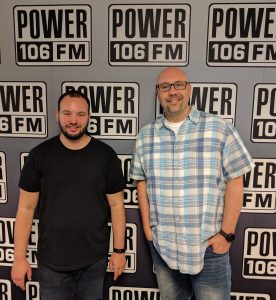 Andrew Berger is the Imaging Director at POWER 106 in Los Angeles, CA. Power is one of the longest running Hip Hop stations in America and one that has built genres and landscapes, waged battles and defined radio strategies for decades. It has certainly evolved in different ways but to say it isn't an EXTREMELY important station in the grand scheme of radio would be wrong.
Andrew is one of those people I think about when I keep doing this podcast.
Andrew consumes these interviews more than most people (more than anyone should). He analyzes everything that the pros with whom I speak have to say and applies them to his advancement. He reached out to EVERYONE and, by his own words, was really annoying and he knew he was. But he was determined and driven to be where he is so it was probably written this way all along. I first heard from Andrew when he was about 18...and now a few years later he has the gig at POWER in LA. We go into detail on his path and what he has done to get where he is. We do a little tech talk, day-to-day life at POWER, his influences and much more. If I can only achieve ONE thing with this one I hope it inspires you. Whether you are a producer, a DJ, a PD, a VO or in Sales I think his passion is infectious.
FYI: We conducted this interview about a week before the sale to Meruelo was announced. That sale won't seem to have much impact on the Brand or this interview at the time I am posting this.
ANDREW PICS!!
[gallery columns="4" link="file" ids="10333,10336,10335,10334"]
Andrew Berger is the Imaging Director at POWER 106 in Los Angeles, CA. Power is one of the longest running Hip Hop stations in America and one that has built genres and landscapes, waged battles and defined radio strategies for decades. It has certainly evolved in different ways but to say it isn't an EXTREMELY important station in the grand scheme of radio would be wrong.
Andrew is one of those people I think about when I keep doing this podcast.
Andrew consumes these interviews more than most people (more than anyone should). He analyzes everything that the pros with whom I speak have to say and applies them to his advancement. He reached out to EVERYONE and, by his own words, was really annoying and he knew he was. But he was determined and driven to be where he is so it was probably written this way all along. I first heard from Andrew when he was about 18...and now a few years later he has the gig at POWER in LA. We go into detail on his path and what he has done to get where he is. We do a little tech talk, day-to-day life at POWER, his influences and much more. If I can only achieve ONE thing with this one I hope it inspires you. Whether you are a producer, a DJ, a PD, a VO or in Sales I think his passion is infectious.
FYI: We conducted this interview about a week before the sale to Meruelo was announced. That sale won't seem to have much impact on the Brand or this interview at the time I am posting this.
ANDREW PICS!!
[gallery columns="4" link="file" ids="10333,10336,10335,10334"]Transcript
79 min read • 11,708 words
Announcer: The Producers, featuring the most respected international talent in the world of audio production and voiceover. Radio, TV, film, and online. In-depth interviews, industry insights, putting you on the inside. This is The Producers Podcast with Ryan Dreen.
Ryan: Hi there, podcast time. Try to keep the intros a little quicker. As I move through these shows, 'cause at the end of the day, people are tuning in for the interviews. So let me do 3 things. One, my frequency hasn't been ideal for a lot of different reasons. I'm going to try to push these episodes out a little quicker. There's a lot of people to talk to, and especially it, I don't know, makes me feel better about the show in general, inspires me maybe, when I go to a conference like the Worldwide Radio Summit and I talk to so many different people that are, you know, like, hey man, your podcast actually helps me, it's great, I like it, all that. Yeah. It makes me feel like it's worth doing. Then I'll go into my hole for 6 months and then I'll feel like it's a waste of— no, I'm just kidding. So I will try to increase the frequency here and we'll do good. You know, it's been about 3 weeks since the last one. I already have my next interview scheduled for about a week from now. So I'll try to get that pushed out before my trip in early June. So that leads me to point 2, my next guest, Chris Ward. Had him on a panel at the Imaging Days last year. I pretty much knew instantly that's a guy I gotta get on the podcast. He was kind enough to give me some time and actually, I went ahead and pulled up our little email conversation because I remembered we were going to conduct the interview a little bit quicker, but he said, you know what, we have something that I can't reveal yet, but it might be cool to wait on the interview until after he could. So I don't know what that something is, but we'll find out anyway. So that interview will be coming soon. Chris Ward, Bauer— what are they called? I was going to say Bauer Media. Bauer Media Group. That could be right. I think he images 1,000 stations now. No, he, he handled— he's group production director. he handles a lot there. So that will be a good one and that will be the next interview. And then finally, for the third point in this intro, I wanted to discuss my guest only to say that, we get into everything. This interview was, you know, a story. It was about how you go from literally not being in imaging at all or radio at all. You're 18 and you just hear, you know, this stuff. You have to learn what it is.
Andrew: Yeah.
Ryan: It's radio imaging, and then you got to learn how to do it. You do, you get a mentor, and you get arguably one of the largest imaging jobs on planet Earth. And all that happened pretty quick, but it happened with a ton of work. So, Andrew's just a heck of a guy. I've, like I said, I've known him since he emailed me the first time when he was about 18. That was years ago, but he's still young, and he just, you know, had really too many nice things to say about the podcast. so it made me feel good, of course. So it's just a selfish thing. But also, I just feel like anybody who's young, if you're in radio in general, not even just imaging, but, but you know, you want to do this, you have the bug, whatever, for whatever reason, whatever terrible, terrible reason you still want to be in radio. I'm just kidding. You listen to this episode. It has to inspire you. If it doesn't, I think you might be without a soul. I'm kidding. Also, Kind of. but seriously, epic imaging work, a great, great story, an extremely nice individual, and, you know, just talent that you're gonna watch rise over the next few years. So I'm really privileged to have him. here's first some imaging from the Power 106 Los Angeles, and then my guest, Andrew Berger. Hold up, hold up, wait a sec, wait a sec. This is Power 106. What's going on? This is Drake. Number 1 for hip-hop. I'm riding through the city with Power 106. Greatest ever. You know I'm up here, man, representing Power 106 LA. Number one for hip-hop. Microphone check. Let's hear it for New York. You and me together. What goes on must come. Everything's gonna be all right. This girl is on fire. Oh, baby. Check it out, it's Notorious B.I.G. Everybody's booming. Power 106, where hip-hop lives. B-I-double-G-I-E. From New York, Brooklyn, NY, to LA, 818, 213, LA. Power 106 remembers Christopher The Notorious B.I.G. Wallace. Power 106, where hip-hop lives. Oh, I've done it all. The hottest concerts to the biggest tours. Every major city across the globe. But this stage is one of the biggest stages in the world. It's the outdoor hip-hop festival of the year. 25,000+ fans and me, DJ Khaled. I'll be performing the major keys like this. This so, so good, I shouldn't ever do it for free. You better call in to win your Powerhouse tickets. We'll see you at the show. This is Jay-Z, Jay-Z, Jay-Z, Power 106, the biggest hip-hop station in the world. Your favorite hip-hop songs. Yes sir, Power 106, number one for hip-hop. Now tuned into the greatest. Trick or treat! Who is it now? It's the Irish. We love the Irish. Go ahead, give them the Guinness, they'll love it. Believe me. Now who? Looks like Mexicans. Don't answer. You have the power. Vote this November. Turn the lights off. This is Kanye West, and when I think of LA, I think of Power 106, where hip-hop lives. Number one, number one, number one for hip-hop. Power 106, now and forever, ever. I'm just saying how I feel, man.
Ryan: All right, here we are. This is a producer's podcast live on location, and I think it might be the second or third I've ever done. I am lucky enough to be sitting in the studios at Power 106 in Los Angeles. I'm sitting across from the still relatively new imaging director at Power, Andrew Berger, or DJ A-Smooth, but we'll just call him Andrew.
Andrew: That's perfect.
Ryan: Hey, thanks for having me.
Andrew: Well, thank you. I mean, I've told you many times, this podcast changed my life. I mean, yeah, that's weird. It's weird, right? Like I told you yesterday, I would— I stayed in college for 2 extra weeks just to Listen.
Ryan: Oh, I was gonna— yeah, I was gonna get to that.
Andrew: We'll get to it.
Ryan: I was gonna ask you about that though. That's funny. So let me start off a little different than I normally would. The interview for this job and Jimmy Steele, what was that like?
Andrew: Well, I found out about the job was gonna open July 4th, which was just because it was the holiday, and I was like, nothing's gonna happen today. And My buddy at Hot 97 texted me, Dom Narrow. Dom Narrow.
Ryan: Oh yeah, everyone knows Dom.
Andrew: We'll get in. He was like, give me a shout out. I'm like, we might give you a segment.
Ryan: Oh yeah, shout out. Yeah.
Andrew: And he was like, get ready. I think their imaging guy's gonna leave. So I'm all like, he's like, get your demo together. I'm like, oh my God, like this is my— this might happen. And so I found out about July 4th, and then August—I didn't get a call until like August 12th. I do remember the date. Actually, remember the time that I got the phone call too. So I'm—I have weird things like that that I know. And but it was about a month and a half that I waited, and I was hitting up Dom like every two days. Like, did you hear from Jimmy? Like, I need to know what's going on. I was like going nuts.
Ryan: Dom regrets ever knowing you.
Andrew: Oh, we'll get into that. Yeah. So.
Ryan: Wait, had you already sent in materials, or you had?
Andrew: No, there there was no job posting. There was nothing. Got it. There was nothing at all.
Ryan: So it's sometime in August.
Andrew: Right.
Ryan: What do you you hear from?
Andrew: What happens? I get a call. I think it was a Wednesday, I think, and just an afternoon, and I see a number pop up that said eight one eight. Then so my first reaction was I didn't pick up and said. Hello. I said, hey Jimmy. Nah, 100%. That's funny. And he goes, how did you know it was me? I was like, well, that's the only 818 number I've been looking for for— Right, if it ain't you, I don't care who it is. And he started laughing and it was about almost a month process. I mean, not just like a month on and off, it was a month like every day we were talking and—
Ryan: Did you do the flyout for the interview?
Andrew: I did for 2 days. Cool. And that's actually another story. One of the jocks here, Felly Fell, who's been on the, air now for like 16 years. We met once and I know him from a DJ thing and he was like, I do kind of remember you. I was like, yeah, when you told me I was first— when I first come out to LA, I'm gonna take you to a Dodger game. And he was like, wow, you remember all that? And it was his birthday weekend and he was like, you're staying, right? I was like, I gotta go back and gotta go back home. He's like, no, no, no, no, no, I'm paying for your flight. And canceled my flight and I was like, Fel, it's $375. He goes, I told you I'm paying for it.
Ryan: Right.
Andrew: That's cool. Big sign, like, I— it was the place you wanted to be. Oh, I knew right then and there he was.
Ryan: So what was Jimmy like, Jimmy Steele? you know, when you first talked to him or over the interview process?
Andrew: Oh, I was honestly— I was— the first time I ever spoke to him, I was scared. Yeah, I was. I don't know why. And he will laugh about it now. And, you know, I know he'll be listening to this podcast, so— but, I was scared. I was like, this is, you know, one of the most respected programmers in the world.
Ryan: Oh, without a doubt.
Andrew: And I'm like, and I interned at Hot and he's like, did you actually ever work at Hot? I was like, no, but I was in the building. He goes, why didn't you ever ask me for a job? I was like, if it was that easy, we would've been in a different conversation right now.
Ryan: So that's all you gotta do? Just call Jimmy Steele and ask for a job?
Andrew: He's like, you should've asked me for a job. I'm like, okay, thanks, man. 5 years too late.
Ryan: Right. Well, now you're like, I am now.
Andrew: Yeah, that too. I didn't know.
Ryan: That's cool. So about a month process and then you get the job. And then do you just immediately start? You take, you know, jump on a plane, come out here?
Andrew: It was—
Ryan: Or drive your car? Or you don't know, you don't drive a car.
Andrew: I— well, I do now.
Ryan: You do now? Cool.
Andrew: And I remember I got the call to get the job, and then I literally called my parents. It was like midnight, and I was like, I have good news and bad news. Bad news is you're gonna miss me.
Ryan: Yeah.
Andrew: The good news is I'm going to LA. Yeah, I'm taking the job. Like, you got it? Like, because it was a month process. It was at the point that I was like, there's no way. They moved on. Yeah, I wasn't getting it. I didn't hear from Jimmy for 3 days at one point. I'm sweating at every— I'm thinking about this all the time, and I was like, I'm done. I didn't get it. Got the call that— on a Monday at 10 o'clock at night.
Ryan: And one good thing about jobs like this though is if they do offer it, you know it's real.
Andrew: Oh yeah, because these—
Ryan: this size, they're not gonna screw around with it. They're gonna make sure they've, they've made the right choice.
Andrew: Which was why— and I talked to Jimmy about it today, and I was like, that's why I respected the process, right? Because he, he actually said that wasn't one of the longest interview processes. I mean, we actually have a guy that they're trying out on air right now. It's been like 2 months, and they haven't told him anything yet. And it's because Jimmy wants to find the best fit.
Ryan: Right.
Andrew: You know, and I totally love that.
Ryan: And I got to meet a few people around here today, and it's clear that they don't bring people in on a whim and then get rid of them in a few months or a year. People here have been here a long time.
Andrew: I think the, like, the average time is 10 years.
Ryan: Yeah. Wow. Maybe we don't talk about the morning show.
Andrew: Yeah, right.
Ryan: That'd be the one area that—
Andrew: That was 8— that was 17 years. So yeah.
Ryan: No, for sure. Yeah. The guy who maybe whose name we won't mention today.
Andrew: Yeah. You won't mention it. No, it's okay. Yeah.
Ryan: No, I mean, he's a legend for sure.
Andrew: Legend. I think we would all say that here.
Ryan: But yeah, it's a shame. It's a shame.
Andrew: It is. And that's now— and that's part of radio. And yeah, you know, I mean, we've seen it all across the country.
Ryan: So, so now let's take a step backward. I mean, we've hung out now for a day and a half here. I know.
Andrew: It's so funny. We never saw each other ever. And then it's been like 7 hours of just nonstop seeing you.
Ryan: I'll say this to people who go to a conference or, you know, we have so many, like, online friends, you know, we email and we talk on the phone, but—
Andrew: It's like the AOL chat rooms, right?
Ryan: But then you meet someone in real life and you're like, wait a minute, that— I feel like I've known you my whole life and I've never seen you. And you only realize it, you know, technology, it's odd. So tell us about where you started out. I mean, I've known of you, and at this point, because I know you're still pretty young, so you must have been about maybe 18.
Andrew: I was 18 when I— yeah, so, it's really weird how I got into this. I was always— and I loved hearing Eric's— Eric Edwards, our voice guy at Power. Actually, I think he was at Power first before Hot had him. And, I remember just hearing his voice and being like, wow, like, that's such— like, that's so cool. I never knew there was such a thing called imaging. So As a DJ, I remember I had a few friends that wanted drops. I actually made like him like $2,000 in a session, or, you know, some amount of money, I don't remember. And it was like, it was about 50 people deep in this session, and I get his drops back. I was like, wow, like he doesn't really sound like the one on Hot 97. And I was like, what are they doing to him? So I said like, who does the imaging at Hot? Could you put me Like, who does this? Who makes your voice like that at Hot? And he's like, oh, this guy Dom Nero. Mind you, I was in the building on Saturdays at Hot 97, but I had no idea what imaging was or who did it. I had no idea who made that. And he's like, oh, I should put you in touch with Dom Nero. That's what Double E said, and that's what he goes by also. And I went to his studio and I never looked back. It was just— I thought Dom knew Chinese, the way he moved on Pro Tools. And I was just so— I went out the next day and bought an M-Box too.
Ryan: Oh yeah, there you go.
Andrew: I called Dom every day for about the entire summer, for about 3 months.
Ryan: So he really did wanna get rid of you then.
Andrew: Oh, he knew it. I was so, I admit it now, I was so annoying. I was so annoying, but he was like, you should get into production. I was so, I loved DJing. I was like, nah, never, never, never, never, never, and I'm here now.
Ryan: Right, so what was your first job where they paid you money to do imaging?
Andrew: Did some— I think I've— on the Radio Imaging Production Group, actually, there was somebody who needed work done and I was like, all right, cool. And I did it. And they paid you? Yeah, it was something. I don't know what it was. I don't remember what exactly what it was, but— and that was around 2013.
Ryan: Okay, so that was— that's crazy. So think about this, folks. 2013, the first time he ever produces something that he gets paid for. 2017, he's in the imaging chair at Power in LA. So that's— so let's go back to that bit you kind of brought up there. You were in college, and one of the reasons why you got good at this fast was what? Tell that story.
Andrew: Well, I remember I— you didn't— I didn't know how to get involved, but there was this one podcast, and— oh, we're talking about it right now. Yeah, I must have— I started just Honestly, it was— it made time go by so fast. I mean, you know, the conversations were just— I must have listened to 40 episodes in a month. And yeah, I remember making my college end class. It was like called a capstone class, and I made it on imaging. And my study materials, there wasn't a lot out there at that time. There's a lot more now. There was no Imaging Days. There was no conferences at all.
Ryan: And it actually was in a lull too, because there used to be More things. Yeah, like Daniel Day-Lewis.
Andrew: I remember like learning that, and actually I was trying to go to that, but that was— that last year happened right before I got into it. So, the only way I could find out anything was on Dave Fox's YouTube, your podcast, and talking to Dom. And yep, Ben Sounds blog, maybe check that out. Huge part of— please, I forgot to mention that, like, they do an amazing job on there, just Mm-hmm. The tricks and tips. And I had no idea really how to use Pro Tools. I must have spent— I watched like an 8-part video series, took me like 2 weeks to complete it, because, you know, if you watch something for more than an hour, you're like, you lost all that, right? Exactly. Anyway, so you got it.
Ryan: But talk about— I mean, that's really nice you'd say about the podcast. Oh yeah, I'm glad somebody—
Andrew: Well, it's funny because I remember, like, I remember when I first met Stacks from Scene 100, I was like, hey, nice to meet you. It was like You actually really helped me on my interview for Power. You said something about interviewing, you were like, each interview that you take is your next step in life or something like that. And he was like, wow, no one's ever really said that, they heard anything. And I was like, well, I'm a P1 listener.
Ryan: Right, yeah you are, you're my podcast P1. I think I had a couple P1s actually.
Andrew: Yeah, I'm glad.
Ryan: But you said you had a break there. School ended, but you still had the apartment or something for a while.
Andrew: Oh, I had an apartment for 3 weeks and everyone moved out. And I just remember I was practicing imaging, would take a break by listening to podcast, go back to— go back. I— it was like I drilled myself because I just wanted to be good. And I heard so— there's so much good work out there too. Like, you know, there's obviously like some stuff that needs to be improved by other people, you know, all of us included, even the best. But there's a lot of good work out there, and I just wanted to be that. I wanted to be as good as I could get as quickly as possible. I mean, I used to send you demos I think once a month. I was just—
Ryan: It was true. It's pretty cool because when you When you hear someone and you're like, the first thing they send you is like, "Whoo, all right." You know, yeah, he's young. He's got some, and then suddenly, like within months, it was like, man. And I think you applied for a job in Boston or something.
Andrew: I did at the time. Yeah.
Ryan: And I'm like, I mean, he could get this with no experience. It depends if they want to take a chance, but you could get that. But you know, you didn't, so it all works out the way it's supposed to.
Andrew: They didn't even hire. They ended up not hiring an imaging guy at the time. So it was, you know, but it was.
Ryan: But just in months, and I just was thinking, you know, we were talking last night and you said, you know, for 3 solid weeks you kept yourself locked in. You listened, you practiced, you listened, you practiced.
Andrew: And I bought pizza in the middle of it.
Ryan: Right. Every day you'd bring some pizza in. Yes, you did. Yeah. But I mean, that's kind of— sometimes people wonder, you know, what does it take to get to there, whatever there is? That's for you part of what it took. Yeah.
Andrew: Yeah, it was amazing. I mean, it just— I would, I would air check stations. I remember listening to the Michael Horn podcast with you, and, and he would air check stations. Like, what the hell does that even mean? And so I would just start listening to radio stations, see what other guys were doing. And it was, I actually met— I got to go to Chicago to see my buddy graduate. And because of you, again, your podcast has shed more light. I, I emailed Mike. I said, "I'm going to be in Chicago. I would love to see your studio." He brought me in. So, and yeah, I got to see Mike at work when he was at B96. Yep. And that was just, you know.
Ryan: Yeah, radio guys tend to not mind having visitors because it's pretty rare.
Andrew: Yeah, we never do. Like the on-air people today were just like, "Wow, that's two in one week." I'm like, "Yeah, I actually have two friends." Exactly. Yeah.
Ryan: Now yesterday you had like a group of three friends. Yeah, it was awesome, right? Yeah, it's crazy. Of course they all were Britishy. They all had some weird accents.
Andrew: Oh yeah, they're just buying t-shirts at random restaurants because they had the food there.
Ryan: Yeah, yeah, that's, that's hilarious. I've done it. Okay, so now that you've, you know, you've been doing this a little while, you're getting paid, you got the big job, what are you doing? I don't want to put like ideas into your mind, but what are you doing to keep up with it all, to keep staying fresh, to learn more?
Andrew: Eventually I started listening to demos to the point that I wherever I could find something, I was— I would walk miles just to listen, like in New York, just to hear imaging, like a different state. I would air check stations in Miami, all over the country, just to stay on top of things. Because it wasn't— again, at that time too, there was no sound— like now SoundCloud has all these imaging pages. There was none of that.
Ryan: Yeah.
Andrew: There was, there was really nothing at this time. And it was just really hard to get involved. I had no idea you know, really find people. So it's a lot of listening to other people's work through radio stations.
Ryan: And when you listen to imaging though, were you able to break it down in your mind? Like, I guess there was a certain point for me where, like you were kind of joking, I didn't know how they made the CHR voiceover person sound the way they do.
Andrew: No idea. I like—
Ryan: Yes, how'd you get there? Was that a lot of maybe hanging out with Dom?
Andrew: Dom, I hung out with him a lot. Like I mean, I used to— he would make a move on the keyboard and I would stop him in the middle of work. I'd be like, what the hell did you just do?
Ryan: Yeah.
Andrew: And he really molded me to become somebody, like, to understand it. I remember when I first— he was the first episode I ever listened to because I remember I was going to meet with him, like, going— I was going to his studio for the first time and I looked up his name and, you know, that was the link that came up.
Ryan: Well, we joked last night. Dom doesn't exactly have a large social media presence.
Andrew: Oh, he just got on social media.
Ryan: He's like a ghost though.
Andrew: Yeah, it's so funny. Yeah. And I remember at that time it was like it was like that was the only link in another demo, and it was like Dom Nero, somebody working at McDonald's. It was like diff not the same. Different Dom. Yeah, totally different Dom. And I remember he was talking about like, oh yeah, like I rolled the the EQ off at this. I'm sitting there like, what the hell is a roll off?
Ryan: Roll off.
Andrew: What do you mean? Like I hadn't. And yeah, I had no idea about anything. I read books on it eventually, and— but it was, it was, it was a lonely beginning.
Ryan: And you were kind of saying that, you were just really looking for anyone to give you a chance.
Andrew: That's it.
Ryan: And you were kind of talking about how PDs should be a little bit more—
Andrew: PDs, even, I mean, imaging services, like— and, and I did get that break with a company, the Mix Group. like there should be more guys that want to help. And even if you're not the best, like I would have shadowed anybody. Like I would. And that like if there was a little bit, at least just a little, I just needed to survive. And I know it's like, yeah, we do need to sacrifice and money is not everything. But like I was so committed. I felt like I, I definitely should have gotten $10, like $10 an hour just to walk, like, you know, to help even if I had to do some I would have done it, right? Because I just wanted to learn and there just wasn't enough material.
Ryan: There's a lot of young people out there and, you know, there's not nearly as many in the imaging world as there used to be, but you hear, at least I hear, having the podcast out there, I hear often from people that are in the 18 to 25 range, how do I break in? How do I, you know, and I mean, this is kind of what I wanted to talk about. This is what you do.
Andrew: No, this is, yeah, I mean, you don't stop. And then other guys, I remember Everyone at the end of your show would say, you know, don't be afraid to email me. And coming from the DJ side, no one wants to help on the DJ side because everyone thinks they're in a competition. They're all bigger than each other and you're not a real DJ. And this is an industry that people want to help but just didn't know how to help.
Ryan: Yeah.
Andrew: So I mean, I emailed anybody and everybody in any format and anything. I was emailing them too, like, hey, could I send you something? Of course. Here's my, you know, take you know, whatever you need, that people give me pointers. And it was a very welcoming community once I got in.
Ryan: But yeah, I wanted to point that out, that you did, you know, listen and then reach out. And you said you had probably like a 95% success rate on people getting back to you. And what kind of stuff did you ask? I mean, did you throw demos at them and say, you know, make me better, how do I get better? Or did you get specific with people? What'd you find was really effective to get feedback?
Andrew: That's interesting. I think the one thing that whenever I finish something, I always start again. I would always re-practice. So that was, I mean, but the one thing I got was if I had a, it was not many times I had a real technical question. Dom was really on the tech for me technically. Like I would ask him like, what, like what is this and what is that? And you do it so much that it's, you just start to get it. But I mostly was like, here, here's my demo. Tell me what the hell I'm doing wrong. 'Cause I have no idea. And if I knew, I would be doing it.
Ryan: Right.
Andrew: So mostly it was, to make a long story short and get this right to the chase, now that I figured out, it was what am I doing wrong? What could I do better? Why?
Ryan: Yeah, which is what I wanted to put a light on. People, you can't ask for feedback and hope that all you get is positive response.
Andrew: I knew I was— I wanted, like, I was like, like, here's a lube. Like, I was ready. Like, I was like, What do I— like, I was— I knew I wasn't good. Like, I was okay with that.
Ryan: Well, even when you got good though, even when you were sending out good demos, the point is you still need to be saying, all right, I'm sure you're gonna tell me I'm cool and I'm nice and it's good, but don't waste your time with that. Yeah, tell me what the bad parts are.
Andrew: And it's also— I knew that it couldn't be that good if I wasn't getting a job. So I knew that if it was that good, Well, hire me. But I knew that's why. And also, like, as a young— I started DJing when I was 14, so I used to put my mixes up the same way. And that's why it was so easy for me, because I was like, oh, I've done this before with DJing and I can just do it again with imaging. I'll learn through that way. And right, you know.
Ryan: So you worked with Mix Group. You already brought that up. And you had— so then basically your first in-house station job is— yeah, we're sitting here.
Andrew: Right, sitting right here. Power 106 LA. Yeah, I also want to shout out a few people at the mix group that also helped me out. Like, Juan over there is—
Ryan: yeah, I know you brought him up. I've met Juan. I've met all them.
Andrew: Yeah, Juan is amazing and really helped me a lot too as well on the way. And there's some great guys over there like that you might have never heard, like AK, and great urban guy and rhythmic guy, and Lito, great CHR guy. So, you know, Nice. They also— we would talk every day. I would send them work and they would like, oh, you know, you can do this and you can do that. And that helped as well from them. So nice.
Ryan: And just out of curiosity, since this is your first in-house station job, you're starting in L.A. Power. So, I mean, so you've only been here like 7 months, I think. Yeah. So what, like, are you going to just stay here for the rest of your life? I mean, like, where would you think you— just right now, just so you have it on record, where do you think you'll eventually go from here?
Andrew: I don't know how to answer that. I'm so happy here. I'm just right, like a dream come true that I don't. Most people ask that question looking for like yeah, you know I can do this, I can do that, but like they want to hear five-year plan, ten-year plan. And guess what? Like this was my five-year. Like it, I'm here.
Ryan: Yeah. So yeah, just happened early.
Andrew: It just happened earlier than you know I might have imagined or whatever, and I love it here. Like this is a dream. come true and this being the heritage station. So you're— I can't answer that question.
Ryan: That's fine. Part 2. Yeah, yeah. Next question. On to Kansas City or whatever.
Andrew: So I hope not. Sorry, no disrespect. No, not in that way.
Ryan: I was trying to do a Belichick. Anyway, so you came to Power. Obviously you had listened to the station for however long, but constantly.
Andrew: I used to be actually a really like I used to listen on the East Coast a lot. Like, a lot, a lot. I just liked— they were breaking barriers before, like, that was a thing. I mean—
Ryan: So what I was curious about is I know that your predecessor is actually still in the building.
Andrew: Yeah, he's on air.
Ryan: He's on air and he's gonna do full-time nights.
Andrew: Yeah, and he's a big, big DJ. Like, just every big club in this— big, big time. Like, one of the biggest in the city, which is—
Ryan: So, you know, I absolutely don't want you to think you got to disparage him. But the question is, when you came here, what were you hearing and what did you think you would bring to the table to make it better?
Andrew: I wanted to make the station more aggressive. I like— I— that was the one thing.
Ryan: And what does that mean?
Andrew: Like, just harsher. Like, honestly, probably rules that I shouldn't be doing. Yeah, in audio sense. Like, I'm— I compressed the hell out of Eric's voice. I I'm big, like, I'm really like, make his processing is super harsh, but not harsh enough that you can't listen. Just harsh that it's just more, I don't know, it's just more in your face and a lot more different drops. And I like, I'm huge on, on, on certain drops and things like that.
Ryan: Mm-hmm.
Andrew: So in that sense, and just I don't— I was, you know, obviously I think you'll hear in my work too that I'm very influenced by Dom. Like, I would say Dom's a little cinematic.
Ryan: That was one thing that—
Andrew: yeah, I— and then I, I love that. I, I love trailers too. Like, I guess if I was to do anything else after this would be trailers. I just love— I love sound design type of stuff and cinematic stuff. And I, I would say I've been doing that for a little while too now.
Ryan: Did you meet Rick Allen?
Andrew: I met him. I just said I met him last night. Yeah. Okay. I said Godfather. Yeah.
Ryan: I was gonna say, because he's got a trajectory that you might want to pay attention to. Yeah. Yeah. You know, he was hot way back when. He was the first. And then, yeah. And then he ended up kind of doing what you're saying.
Andrew: Yeah. Expanded.
Ryan: And, you know, to him, radio— we were joking— radio is like couch cushion change for him now.
Andrew: Yeah. He's doing all kinds of Disney stuff, like Tascam, I think it is.
Ryan: Yeah. He's like one of their— I think he's like in their magazine articles. It's like he's—
Andrew: yeah, right. It's like in the back of like Sound on Sound, like, hey, that was the imaging guy.
Ryan: Yeah, but I mean, I'm just seeing a trajectory here.
Andrew: Yeah, yeah, no, because I think the cinematic stuff, I think that stuff is, it's really like, futuristic sounding. Like, it's, it's just the quality.
Ryan: And so if we, if we can hear the, the station and the imaging, you know, the demo you gave me, which is a lot of really recent stuff, and then, but if you want people to take like an overarching look at everything that's happening on the air here, Maybe put it into a couple words, but what do you want them to feel when they are, you know, because you feel a certain way with every radio station, you know, and that's what the branding should do.
Andrew: Some of it, I want you to get goosebumps. I mean, when we do announcement stuff, my first thing is like, like, I'm like, we're going to announce this concert. Like, the first thing I do is like, I imagine like, like my heart beating really fast. So I do want that. I mean, What about the cool factor?
Ryan: I mean, what about—
Andrew: The cool factor is a huge part. Like, using really current stuff in the imaging is super important. I think right now, and this is not— I don't want anyone to take this the wrong way, and it's not the imaging guy's fault most of the time. It's— we're doing a lot of stuff that's just voiceover in this, and I get it why, because our attention spans are not as high. And but I do want the station to bleed hip-hop. Mm-hmm. We are a heritage hip-hop station. So the first thing I want you to do is if we're not playing such a— if we're not playing the most hip-hop song at the time and an imaging piece comes in, I want to bring us right back to hip-hop and I want us to be high energy every time. Even if you go into a slower song, I want us to be high energy when the imaging has to be high energy, in my opinion. Like, that's my—
Ryan: That's the way you look at it.
Andrew: That's how I look at it.
Ryan: Did you and Jimmy have conversations like this in specificity, or did he kind of go, all right, what are you gonna do with us? And you did your stuff and he went, cool, I like it.
Andrew: He told me that he wants the station to bleed hip-hop. Okay. I just said, all right. And I got to work and I would show him pieces and he would just— he's like, awesome, cool. And, or he would give me some suggestions and I would—
Ryan: How much, how much attention do you think, well, not do you think, does Does Jimmy steal the PD here so much to your okay?
Andrew: And it's amazing. The first time he ever started critiquing me, I said, "How the hell do you know this?" Yeah, I couldn't believe like he's forgotten more about radio than you'll ever know. Yeah, no, right? I was like, "How do you know all this?" He's like, "Well, I've been here for a little while," and I was like, "Yeah." But it was like kind of he was like he his his way of thinking just made me. I couldn't believe it. So he's— and he's very in tune. He— I think he loves imaging. Yeah, he loves it.
Ryan: That's always nice. It's— there's nothing worse for a really talented imaging person to have a PD that just doesn't care about it.
Andrew: Yeah, he cares.
Ryan: Did you make that promo? Yeah. Great. Do you want to hear it? No. Okay, great.
Andrew: Yeah. No, it's— that's never like— Jimmy's always like, oh yeah, I'll come hear it. I can't wait.
Ryan: Yeah. Yeah. You want your PD to walk down the hall and storm in.
Andrew: He's really big on imaging. It's— yeah, it's cool. Pretty neat.
Ryan: What about target demo? Do you guys have specific conversations about who you're targeting?
Andrew: Yeah, we do have conversations about it. And but hip-hop, like, I just know what's new. Like, I'm very— I try to be as— I try to know what's going on as much as possible every single day. So like, it's not really a conversation that we have to have a lot. I just know what I need to do.
Ryan: Well, since as far as the listener, sometimes I know Dave Fox is one of the first ones I heard to say this. I don't know that he made it up. But they broke the Z100 listener down to one individual human being. You know, it was like a 20-something female. They named her Mika. Yeah, yeah, Mika. So do you guys do stuff like that here?
Andrew: No.
Ryan: But, and are you, are you directly communicating to sort of like one type of person, or is it— it sounds to me, and tell me if I'm wrong, that it's more about this is the product and we're gonna present it as awesome as we can, and then whoever comes to the party, that's great.
Andrew: Well, sort of. I mean, I think our demographic is very Mexican heavy, Spanish and more leaning on the Mexican side of things. So I always keep that in mind. And whenever I could do things like that, it brings in Spanish culture, get a little bilingual in it. Yeah, sometimes I do. I'll have, you know, I'll have them say, you know, uno cero seis.
Ryan: Is that right?
Andrew: Yeah, sometimes I'll do.
Ryan: Do you ever have double E? Do any Spanish?
Andrew: I don't. I'm scared to break that barrier.
Ryan: Yeah, no, no.
Andrew: Like I'll do it with someone who is Spanish. Yeah, but not with him.
Ryan: So when you're using a lot of custom drops and stuff in your in your imaging, I mean some of it clearly can be a little more generic and you go and yeah, like double E.
Andrew: I'll use as the generic. I want him to be like the stand. of the station. So when I use him, I try not to have him say too much, too many words. I just want him— I always want him saying Power 106, number one for hip-hop, right?
Ryan: That's— I'll say, even in the Uber coming over here, the guy already had Power on. I didn't have to tell him to change it, but I just wanted to hear, you know, immediately before I showed up. And I noticed the top of hour, and yeah, it's very clean.
Andrew: Yeah, I would like him to— like, I— for a long time he wasn't on the station. I don't know if you know that. So for about 4 years—
Ryan: I didn't know that.
Andrew: Yeah, we just brought him back about— maybe I did know, maybe now a year, but 7 months.
Ryan: Oh, did they have someone else or did they go with no—
Andrew: They went with just listeners.
Ryan: Okay.
Andrew: And it was cool, but I understand there's part— yeah, right now there's— now that there's competition in the market, right, it made sense to bring back a voice.
Ryan: I mean, you guys had competition before, but now you got Competition.
Andrew: Yeah, yeah, yeah. So he brings back the, the days of like the older days of Power, just to bring back that familiarity, that heritage, heritage, and being what we make people remember why they were tuning in in the first place.
Ryan: Exactly. Maybe not necessarily the person that was on the air in the morning, right? Everything else that was around them.
Andrew: Yeah, right, right. So I always said I mean, I got into this because of Double E. I heard his voice and I was like, this is like— I love this guy. And then I just— oh well, actually it's the guy that also produces his voice. It's like, figure that part out.
Ryan: No, yeah, right.
Andrew: So, but be him being the— I— he's a stamp of the radio station. Like, he need— when you hear his voice, you know you're listening to Power.
Ryan: Yeah, that's true. You know, what about, back to the drops and, and just the content you use? I mean, are you out there gathering street audio? Are you just farming it from sources you have in-house?
Andrew: No, most of it I try to get out, like I try to get from, like listener drops. I have— I actually have street team guys doing it.
Ryan: Okay.
Andrew: I do, I do some stuff too.
Ryan: Do you get out there with a mic and a recorder?
Andrew: Yes, like I have done it myself, but also like the street team guys, they want to be around a mic and they— they're— I've tried them out and they're super.
Ryan: And these are more like promotion team people, the street team, and They're doing little quick ticket hits or whatever.
Andrew: Yeah, they're going out to T-Mobile, you know, stuff like that, and going to on-site client stuff and they have listeners coming through.
Ryan: And do you have any tips for how you gather good quality drops?
Andrew: Make the people seem like, sound comfortable. Like, don't worry about it. We could sit, you know, we can take all day. Like, yeah, screw it up. They're going to be on the air. Like, it's going to be kind of cool for you. And they'll be like, oh, that's really cool. Like, I've always wanted to do that. And I was like, what's your name? And you just— if you ask, I think if you ask them questions, you know, you can kind of get good reactions.
Ryan: So don't put a script in front of their face and say read. Oh God, you don't do that one.
Andrew: I mean, it's almost as bad with artists. It's like you gotta give them a script and it's like—
Ryan: What about, I don't know the right word, parroting or mimicking or whatever, but if you say what you want them to say and then have them repeat it?
Andrew: I do that too. Like, just say it like this. Okay. And they'll be like— and then they'll put their twist to it. And yeah, you know, it's all— I think it's always hit or miss. Like, you might you're never going to go out and get 20 amazing drops. And if you do, like, I would like to hire you.
Ryan: Yeah, right.
Andrew: But, you know, you'll get, you're gonna get some hit or miss ones. I tell the guys, like, don't worry if you don't get any good ones, at least you tried. I'm okay with that. You know, I would like you to get great stuff all the time, but I understand that sometimes you go to a— you know, we do a lot of stuff at schools, so I'm like, if you go to a school and they don't have energy at this basketball game, like They got— we'll go again. Mm-hmm. I'm not against it.
Ryan: And, you know, I want to get into the tech talk here because, you know, we could probably— we could probably do like a 3-hour show.
Andrew: We did a 3-hour show if you count the hour and a half.
Ryan: Yeah, right, exactly. That's some good Mexican food. You got a very unique situation, which is one massive station by itself in a great facility, and you know, in market too. It just doesn't happen anymore. Everything's 6 or 7, 8 station clusters. You know, you've got regions of, you know, so the vibe around here, what's it like when just day to day around here? Party all the time, like super professional people, you know, it's some celebrities.
Andrew: Yeah. Well, celeb— I mean, I've met more celebrities in 7 months here than I could shake a stick at. Yes. Like Like, ever you just turn your head and then, oh, we gotta get you for drops. Like, yeah.
Ryan: And so I like it's so so many artists come in here, which is I was just saying make the other the folks that work at the smaller markets jealous.
Andrew: It's it's because I mean it's it's the way it is. Unfortunately, like I I mean there was a time that I would never leave my apartment. So it's like to have this now is kind of you know is a blessing.
Ryan: But yeah, not not that you were a bad person. You had like fourteen hours a day work to do, and you worked from your home.
Andrew: Oh, I know. So I know what it is. But I mean, it's like when a concert happens or whatever, it's just— I mean, I had— I literally just had DJ Khaled in here recording 24 minutes of drops for me.
Ryan: That was awesome. Like, how do you handle artist drops? Do you put a printed sheet and have them read?
Andrew: I do. And I tell them— I see how they do like the first one or two, and I tell them, all right, you know what, make it your own. Yeah.
Ryan: And then they'll do their own thing and And some artists are always going to be a lot better at that than others. Yeah, there's nothing you can do.
Andrew: Younger artists have trouble. Yeah, and I can imagine when these guys were younger, they had trouble, right? You get used to it when you do your 15th radio run for an album or concert, you get good at it. So like Khaled, I just gave him the sheet and he just killed it. Oh, it was just like, could we do another 30 minutes?
Ryan: Yeah, like, can you never leave?
Andrew: Can I have you as a second station voice?
Ryan: Man, so many topics. I was just gonna say you brought that up. Celebrity station voices. You have any opinions on that? That happens from time to time.
Andrew: Like, you know, select like for art, for like an art, like an artist.
Ryan: Yeah, you know, or they'll use an actor as a voice. Like, oh yeah, Jack Ingram is voicing a bunch of stations. But then you had— we brought it up earlier in New York. They launched a station. They had Kiefer Sutherland voice it. I never really knew about that. Yeah, it's like It happens from time to time, but that's— I don't put words in your mouth, but it sounds like you're kind of like Eric Edwards is the brand. We wouldn't stray from that.
Andrew: No, we— well, he is the brand, but it's art. I want to— I'm trying to make the station more artist-heavy as I go and collect things. Okay. So I'm more on the artist side. Like, I would— okay. But Double E's Place in this is is super important. Like Eric, Eric Edwards's voice is so important, and I send him copy all the time. Sometimes I use it, sometimes I don't, and it depends how I. I never really know what I'm going to use until I produce the promo. Honestly, sometimes I'm like, oh, you know what? I'm going to take out this whole line, replace it. Yeah. So, but he he is this. I mean, he's been on the station enough, like. 30 years, like 27 years. I mean, he is the— he's almost an artist himself. Yeah, you know, in a way.
Ryan: I think for voice people too, one of the advice that I've been given many times above all else is, you know, be unique, be who you are. And Eric Edwards definitely has a unique sound. Oh yeah, nobody else is really emulating. Yeah, no, there's no other Eric Edwards out there.
Andrew: No, there isn't. There's no other Dave Fox who's right You know, a great friend of mine. And there's a lot of great talent out there. I mean, that Corley and things like that.
Ryan: So I think it's funny when, KISS FM in Denver— or Denver-Dallas, you know, had Corley at the top of the hour saying, oh, I can't remember what the word is, but they had him say y'all. So it's like, you know, today's greatest, today's best music, y'all, whatever the hell he said. It was just a little bit back to that where you could have Eric Edwards say something in Spanish.
Andrew: Oh, I mean, and Double E will read anything. Yeah, he'll read anything you tell him to say. Say this. I mean, he'll do it and it's his voice. Like, that's the thing with Double E, you're getting his classic sound and that's what he's best at. And, you know, yeah, you know, you won't get like a, like a character read from him. And if you want that, you know, you're not going to get that. But that's why I use him the way I use him, because he's Power 106, number 1 for hip-hop. Like, he's— that's him. Like, yeah, we can talk a little tech over here.
Ryan: I know you're on Pro Tools. You're about to get your fancy new rig at some point.
Andrew: Can't wait. Yeah, June can't— whenever, whenever can't come soon enough at this point.
Ryan: Yeah, because I was laughing at you. I saw you're still on Pro Tools 10. I know, nothing to laugh at. There's plenty of people at home—
Andrew: I am on 12 with the latest this, that Waves bundle.
Ryan: And so here though, just so people know, we got Again, Power 106 in LA, pretty big deal. And you have— how many hundreds of plugins do you have installed over there?
Andrew: I think I use 3 plugins here. I use EQ7. Yeah. And my limiter's Maxim.
Ryan: Really? That's old school. So, but the point is you have no third-party plugins, right?
Andrew: None at all.
Ryan: So in case people were curious, like, you know, they'll hear people say it you don't need thousands of dollars in compressors and EQs to make that sound. And they're like, well, great, you're saying that, but I— no, that's true.
Andrew: Well, it is. I mean, I wish I had other things and hopefully, you know, but yeah, you work with what you got and you learn to your best of your abilities. And when you're stuck in this other situation like this down the road, you know what you got to do.
Ryan: It doesn't sound like you're being held back by what I'm hearing on air.
Andrew: Well, I appreciate that. Yeah. You know, But I mean, I know some guys would be like, well, you know, like it would probably benefit of using the Renaissance EQ on this one. And sure, I know, exactly. But at the end of the day, it's all getting squashed. It's all, it's all relative. It's, it's, we're doing, have fun doing this. Right. Like, so like I wasn't going to be like, oh, I don't have my Waves plugins. Like I can't work.
Ryan: Right, exactly. Right. Or, you know, you came in here, you might've been an Audition guy. Yeah. You'd be like, what? I can't work on Pro Tools.
Andrew: Yeah. Yeah. Well, they have— we have Audition here. I think we have Saw on that computer as well.
Ryan: Is that right? Oh, it's got some past guests on the old podcast. I'd be happy about that.
Andrew: I haven't— I don't have it on my account, but I know it's on somebody's account here, and I'm gonna get into that and just see.
Ryan: That's funny.
Andrew: What's going on.
Ryan: So you got Pro Tools, you got your Mac. It's cool. I'm actually in the studio of the guest, so I can just look around and see. But by the way, you have like a 2,000-square-foot studio.
Andrew: It's so ridiculous.
Ryan: We could do an 8-person talk show in here if we wanted to. It's a backup on studio as well.
Andrew: So yeah, it's never been used as a backup since I've been here. So right, so you're fine, right? You're good. And the mountains, you know.
Ryan: Yeah, I'm looking— see, I positioned myself over here so I see it every day.
Andrew: So I'll let you take—
Ryan: right, exactly. So I could have the view. But I mean, can you— can you see Hollywood sign from here? No, no, no, no, because that would just—
Andrew: you see my apartment.
Ryan: I can see some multi-million dollar apartments, buildings over there.
Andrew: That's Disney.
Ryan: Oh, is that Disney I'm looking at?
Andrew: Yeah, it's Disney.
Ryan: Oh great. All right, so anything else technologically that you like to use that maybe people would be surprised by, or just things that make you get your sound?
Andrew: The DAT machine.
Ryan: The DAT machine?
Andrew: I don't use it like that. I just actually rip stuff off of it. Like, we have some— we had stuff that was on DAT, and I go—
Ryan: Like what?
Andrew: Drops.
Ryan: Really?
Andrew: Back in the day.
Ryan: Like old-school drops?
Andrew: Yeah, Snoop. I had like a 20-minute session with him on— Really?
Ryan: Yeah, that's pretty cool.
Andrew: Yeah, I think I have Tupac drops on there.
Ryan: So this is a question I never ask, but since where we are and the kind of station you're at, who's the coolest or the best, the biggest, your favorite celebrity type that's been in here to do some drops for you?
Andrew: Khaled was cool because his energy is, yeah, so amazing. But honestly, I'm more just excited to be working Like, I just like we're these these guys come in and it's cool and it's like wow, like I'm literally doing a session with him or him. But to me, it's like the the most the the the most exciting sessions are the ones that I can get the most out of them. Right. So if it's like someone like if it's a big artist that came in and I was like he was like wow that guy kind of sucked. It wasn't worth it.
Ryan: But it would be pretty cool to stumble into like an hour Biggie session or something.
Andrew: Oh, I don't know who I think actually our the head of the morning show the morning show producer he. Recorded Biggie. Is that right? I'm just like, wow.
Ryan: Yeah, I mean, I'm just saying, if you were to look back in like 20 years, yeah, I'd be able to say, oh, I had, you know, that guy in here. Yeah, it's pretty cool stuff. Half hour, right? It's like, let me, let me ask you this because we'll get wrapped up here. We all got to work and I'm supposed to be in like panels and stuff. Yeah, sorry, you know, that happens. So something that surprised you, I'm gonna throw this like weird question at you, but But having worked here now for 7 months or so, something that's really surprised you, didn't expect to be the case when you came here?
Andrew: Well, definitely the Pro Tools thing with the plugins. I was honestly—
Ryan: Oh, that's surprising.
Andrew: I was really surprised. that, that was big. I didn't know— I knew I was only doing one station, so I didn't think I would be— every day is busy.
Ryan: I mean, I actually busier than maybe you thought you would be. Yeah, you were worried that having only one station you might be right. I would be like thumbs sometimes.
Andrew: Yeah, sometimes I thought, and it's never that. Like if it's if I'm not that busy, there's some new song that just dropped, and I make sure it's super clean. If not, I clean it again.
Ryan: Oh yeah, we didn't talk about that. You clean the music. I clean the music. You said I clean the music, and I went wait, I don't understand what that means.
Andrew: Yeah, like I just make sure that everything is super clean, and and that literally means to take out the curse words. Yeah, and but that's fun for me too because I'm sitting there like on. And trying to make edits out of things I don't have any stems for, right? Like any working acapellas or instrumentals.
Ryan: So what's your mode of choice to like do a reverse or to find an instrumental bit and then lift it out and cover it up?
Andrew: I try to do rhythmic stuff. Like I'll try to take a word and replace it and—
Ryan: Oh, so you'll find another bit of the song?
Andrew: It takes me a lot longer to do, but yeah, I like— my goal is to make sure that I even sound better than the clean versions the labels put out. Yeah, that's what I was gonna say. And that's really hard when you don't have nothing, but I like— Right, and they're using the studio stems. Oh, they're like they can they can have literally have the artist come in and rewrite. Hey, redo the verse. Yeah, redo the chorus. Take out that word and change it to that. And I can't. I just think that's so fun. So yeah, and it keeps me very on top of the music as well.
Ryan: And so I was surprised by this. I said, "Well, wait, why? I thought maybe you were cleaning them less than the version the label would provide." No, you actually make them cleaner because the labels.
Andrew: screw up.
Ryan: That's funny.
Andrew: Yeah, like I've heard words that they sent to clean, like, this is super clean, and I listen to it and it's like shit. I'm like, oh no, it's not really super— sorry, man, not really clean. Now write back to them, I'll be like, hey, you guys messed up. Yeah, I'm the first to tell them because they should know. They're sending out to so many people to play on the air that are not gonna do what we do and double-check things.
Ryan: Oh, for sure. And I mean, worst-case scenario, it hits some sort of a network and gets fired off on 200 stations, or, you know.
Andrew: I just imagine the phone calls.
Ryan: Yeah, I mean, yeah, you got to pay attention to that. So you clean the music here too? Can you talk about the setup for the mix shows?
Andrew: What do you mean?
Ryan: The laptop?
Andrew: Oh yeah, we have one laptop. So like each— like most DJs in a radio station come and they set their laptop, plug in with their music and everything else. Here we have one laptop and with, I think it's like 15 accounts, and then they sign in and they go into a server where I put like where the music is actually in and they grab it and they play off of one computer and it's worked for 7 years.
Ryan: Yeah, that's cool.
Andrew: Yeah, I think we're the only station in the country that does that.
Ryan: Yeah, it really keeps control of the content.
Andrew: Well, that too. And I think it's what's great about it is that they're playing only one version.
Ryan: Oh, you brought that up.
Andrew: Yeah, like, so it's not like one DJ has one version, one DJ, one maybe have a higher quality or lower quality. I make sure it's always a wave.
Ryan: And a lot of times when a song gets big enough, it'll get remixed like 7 different times, right?
Andrew: Yeah.
Ryan: So you'll have this guy playing the John Smith remix.
Andrew: Yeah, if we do that, we'll decide on one remix that we all— exactly. So it's a— it's— I love it because it brings the station a very uniform process.
Ryan: Sure.
Andrew: What else do you do around here when Jimmy's out on the Pete? No, no. Okay. All right. All right. Honestly, I try to do as much as I try. I'm trying to learn as much as I can every single day, and every day I come in here, I try to be better than I was the next day. Yeah. It's my goal. If there's if I don't even produce a piece in that day, which is pretty rare. Yeah. Like I'm producing every day, but if I'm I always am trying to get better at something. Yeah, if I'm learning somebody, or how do you do this better, or if I— something I just had no idea of. And, you know, I do value that. I want to get better every single day. Yeah, I did not fly 3,000 miles to be mediocre.
Ryan: Well, you certainly didn't drive 3,000 miles. Yeah, thanks, New York guy. Let's, let's wrap it up, and I'd be interested to hear your answer to my final question. Yeah. you know, you know what it is. One key piece of advice for the youngsters out there. How do they get to— how do they steal your job?
Andrew: Well, I think— good question. you don't be afraid to be yourself and bother people. If you really want this, show them that. I knew I was annoying, but I was okay with that because I was— you preach that the younger generation doesn't There's not as many people as we would like to be getting into it. So I was like, well, I really want to get into it, so I'm going to show people I'm going to get into it. Don't be afraid to be yourself. hit up anybody that is willing to help you. Like, if you want to hit me up, you can hit me up anytime at, A Burger at Power 106. You can put that on the website. I will. A Burger, B-E-R-G-E-R. You know, like a hamburger, almost a hamburger, but yeah, exactly. I'm willing to help anybody because Dave Fox preaches on paying it forward, and I had help. I'm willing to help any, like, anybody who's serious. And, you know, well, cool, great advice.
Ryan: I kind of knew.
Andrew: Yeah, I mean, it would— if I didn't say that, it would be like, yeah, exactly. Yeah. And practice every day. It's okay if your parents hate you for it. Yeah, like, they're like, what are you doing? Like, this stupid stuff, right? At first, but then I remember when you know you can make your dream a reality.
Ryan: Yeah, and then when you give them a call at midnight saying I got the job at Power in LA. Yeah, in your face, mom and dad.
Andrew: Yeah, yeah, that was kind of how it went.
Ryan: What about where else can people reach out to you? You got your email address. Yeah, my Twitter.
Andrew: Yeah, my email, and on social media like Facebook, Instagram, and Twitter, it's @DJASMOOTH.
Ryan: Yeah, there's the A smooth. That's the A smooth.
Andrew: That's the last bit of it. I'm honestly, I'm transitioning out. Like, I'm pretty much done with DJing. Yeah, I was gonna say, because I just love what I love what I do here. Yeah, and I love imaging so much that I had that. I did that in college. I did it for because I was 14 and until I was 20 until last year, honestly. And it ran its course, and it gave me a lot of experience and great. It got me better at speaking in front of crowds. Yeah. But I think this is the new role.
Ryan: Well, and we've talked about the musicality you should have as a producer, but obviously having a sense of rhythm.
Andrew: Yeah, I mean, DJing gave me the rhythm. I remember the first time I ever sent a demo out to Dave Foxx, he goes, wow, your rhythm is, you know, you get it.
Ryan: Yeah, yeah, yeah. And making the snares match up. Yeah, yeah.
Andrew: Which is, I mean, I understand why people have trouble Yeah, but I—
Ryan: or they don't think about it, right?
Andrew: That too. It's, you know, I didn't think about it down. I remember when I first tried a beat match, I started on turntables, I started crying. This is too hard.
Ryan: Yeah. Oh, I never even tried.
Andrew: Yeah, we'll get you right now on the next one.
Ryan: Oh sure, that would go over well here. Hey, it's DJ Ryan. Cool, man.
Andrew: The first time and the last time.
Ryan: Yeah, for the last time for sure. Great. So there it is. My third I think it's my 3rd in-person interview, but it's really ironic that the last one, New York City, Dom Nero at Hot 97, where you didn't exist to me yet. And now we get to 2017 and we're at Power in LA.
Andrew: It's— yeah.
Ryan: And there it is.
Andrew: It's just funny how it came full circle. Like, I learned so much from Dom and just sitting in that studio.
Ryan: Yeah, cool.
Andrew: And you did it. So, and I also— don't be afraid to listen to like 90 episodes in a row.
Ryan: I would say be afraid. I would say don't do that to yourself. But sure. Hey, thanks a lot, man.
Andrew: Thank you. Thank you so much.
Announcer: Contact the show, contribute your opinions, see additional content, or simply stay connected at producerspodcast.com.