Episode 106: Justin Spencer Dove
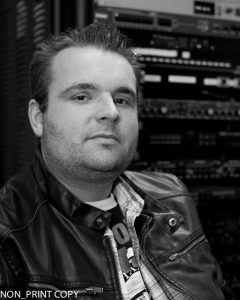 Justin Spencer Dove is a rising star and has been for a solid decade or more. I always know that if a guy's name comes up many times, by many independent people consistently, I want to get him on my show. AND he has one of the real nifty Imaging gigs out there too! He's the GUY at 90.3 AMP (huge) and XL 103 in Calgary on top of being the National Imaging Director for ALL of NEWCAP RADIO. On top of handling imaging in neighboring markets, and across the company, he's also producing some really cutting edge sound design. Look on his website under INFO to hear and buy JD2 and JD3.
We had a great chat - his background, day-to-day at Newcap, some tools he loves, picking imaging voices, how he works creatively, sound design and why us producer types are sort of mental - all topics of discussion.
Links:
Soundcloud - https://soundcloud.com/justin-spencer-dove
Facebook - @JustinSpencerDove
Twitter - @coreimagejd2
Website - CoreImageStudio.com
Justin Spencer Dove is a rising star and has been for a solid decade or more. I always know that if a guy's name comes up many times, by many independent people consistently, I want to get him on my show. AND he has one of the real nifty Imaging gigs out there too! He's the GUY at 90.3 AMP (huge) and XL 103 in Calgary on top of being the National Imaging Director for ALL of NEWCAP RADIO. On top of handling imaging in neighboring markets, and across the company, he's also producing some really cutting edge sound design. Look on his website under INFO to hear and buy JD2 and JD3.
We had a great chat - his background, day-to-day at Newcap, some tools he loves, picking imaging voices, how he works creatively, sound design and why us producer types are sort of mental - all topics of discussion.
Links:
Soundcloud - https://soundcloud.com/justin-spencer-dove
Facebook - @JustinSpencerDove
Twitter - @coreimagejd2
Website - CoreImageStudio.com
Transcript
76 min read • 11,329 words
Announcer: The Producers, featuring the most respected international talent in the world of audio production and voiceover. Radio, TV, film, and online. In-depth interviews and industry insights, putting you on the inside. This is The Producers Podcast with Ryan Dream.
Ryan: Hello again, Producers Podcast, we is back. I am a little delayed, I apologize. People even called me out on the internet. Nets, which is well deserved. I really try to stick to a 3-week separation, you know, less than a month. I think I went a day over a month this time. You know, I've got some stellar people getting lined up. I thought I was gonna have about 3 episodes going at the same time, and it's just, you know, these are happening folks. So a guy I've been wanting to talk to for quite some time, he jumped in early for me. Let me give you the bullets on what he is. AMP Radio in Calgary, a highly respected CHR station, obviously in Canada. He works for NewCap and he's the National Imaging Director of NewCap, and they have about 100 stations, as we'll learn in the show here. So pretty big gig up there in Canada. Justin Spencer Dove, Justin Dove, JD, I just call him Justin. we, we really— it was a great chat. literally just found ourselves chatting more than me interviewing him, throughout what is about an hour here. Justin Spencer Dove on Facebook, Core Image JD 2 on Twitter. That's a number 2. CoreImageStudio.com, go there. And then he definitely wanted me to point out the SoundCloud. It sounds like he's updating his SoundCloud, more than anything else, so check that out. SoundCloud.com/Justin-Spencer-Dove. But again, as I say later on at the show, Just start typing in the search bar, you'll find him. And let me make another mention up front here. He, he is a guy who produces sound design packages for buyout at very reasonable prices, unless you're Canadian, then no. Well, you, you'll understand why later. JD2 and JD3 available now. I actually had to kind of find it, but if you go on his website and hit the info, menu item, it's found in there. All right, what can I set up before I jump into the interview? Well, jump into the Demo audio. let's see here. I've got a producer from not in America and also not in Canada. What else can I say? Still working on my pal Andrew at Power. He got pretty busy with the new gig. Can't, can't wait to hear how that's going for him. the team at Capitol, it's another one that will happen. Now that one I haven't actually set up yet, but I want to give a lot of hype to that because that'll be a really fun episode. Big group of producers will get together and it'll be a bit of a revisit as I did the Capitol team a while back, but Stellar work comes out of there. A lot of winners over there and their brands. That should do it. Here we go. Some fantastic demo audio from all over the scope of radio imaging and more from the one, the only JD. Justin. Justin Dove. Justin Spencer Dove. Justin Dove presents JD3. Calgary's better hit music station. Amp Radio. Amp Radio. There's a spider in our house. A killer tarantula. KD lives here. We are the new home of Warriors basketball. 95.7 The Game, your new home for Warriors basketball. 95.7 The Game. The Leafs are playoff-bound. Get on the ride. The line starts behind us. Your Leafs leader is Sportsnet 5. Igniting the fan. This is where blue bloods are born. This is Toronto Maple Leafs hockey on the Leafs Radio Network. The NHL's biggest team. This is Toronto Maple Leafs hockey on the Leafs Radio Network. The better music playlist. 90 minutes nonstop. Okay. Calgary's better hit music station. Amp Radio, it's just better. This is where the Leafs play. Sportsnet 590, the fan.
Ryan: All right, there's some of the brilliant work from the one and only, Justin Spencer Dove. Now Justin, before I get into all these like awesome titles you have, Am I just calling you like Justin Dove, or do I got to say the Spencer, or just maybe JD?
Justin: No, honestly, my family calls me either Justin, Just, or JD. Either or, you go whatever you want.
Ryan: Yeah, that's what I kind of thought. So I'll go with Justin, you know, whatever. But National Imaging Director, NewCap Media, obviously up there in the great nation of Canada, but his work is heard everywhere. Primarily though out of Calgary at AMP Radio, a stellar station there, but you're also doing XL 103. You know what, why don't you tell me just right out of the gate, bullet point some of the many daily duties you have with NewCap.
Justin: Oh my God, well, I come in here, I live about 20 minutes probably outside the center of the city, so I try to get in here pretty early every morning, probably around 7 AM, start my day, boot the email up. My day-to-day pretty much with NewCap is Calgary, which is a classic hit station and the CHR station. So very different worlds. And then in Edmonton as well, I've just taken on a lot of the daily duties up there. That's just about 3 hours north of here of a classic rock station, K97, and Capital 96.3, which is a classic hit station. So those are my day-to-day with NewCap.
Ryan: And as National Imaging Director with NewCap, so I mean, you just listed off sort of the day-to-day, you're basically a multimillion market imaging director for 4 or 5 main stations there, but national imaging director, does that have you taking on special projects around the country? Explain more about what that means.
Justin: Well, the national imaging director role for NewCap is pretty simple. The guys were, Steve Jones, who's the VP of Brands and Content for NewCap, which I think you might've seen speak at the Imaging Days, the first Imaging Days. I sure did, absolutely. Steve is amazing. Steve is an awesome VP. So, and I'm not trying to suck up because I wanna keep my job or anything.
Ryan: But it doesn't hurt. It's always good, man. It doesn't hurt.
Justin: But no, so the national role for NewCap is basically like if we introduce, say, a new voice on a station and then I relaunch that brand, or if we launch a new brand like flip formats, as well as any imagers sometimes that go on vacation across the country. A lot of them tend to work ahead, But if there's anything last minute that pops up, I will hang in there and do stuff for them as well. And honestly, that can be anywhere from Newfoundland to Vancouver to Ottawa to Toronto. It's pretty much all over the place.
Ryan: Let me ask you this. This is something I might discuss later, but since we're sort of there, and there's a lot of imaging voices that listen to this and they would be interested. When you're gonna rebrand something or relaunch, how's the process go there when you're choosing voices? Do you have a pool you have to stick to? Do you have, you know, wide open autonomy? Tell us about that process.
Justin: I mean, pretty much for me, like, we sit down, we talk about what the format is going to be. And like, for example, if we were launching a CHR, like, it's a pretty good chance now that I would probably pick Steve Stone because he does such a good job here at AMP. I would— and then I would try to mimic that sound and then, you know, try to put it across all of our CHRs sort of thing if they were using Steve, for example. But for the most part, man, like, stuff is pretty open. Obviously, if we're going to launch formats, like, say if we launch the Boom in another market or whatever the case may be, if we're using Joe Cipriano in Toronto, well, obviously we want that sound in another market or something like that. So that's, you know, pretty much the way we would go for the most part.
Ryan: So, so it sounds like you guys find something that works for you and you're more apt to stick with it in other markets, then go all over the map and then choose different sounds all over, you know, a Chad Erickson here, a Steve Stone here, a Corley here, a Dave Fox there. You're more apt to stick with the sound you guys feel wins.
Justin: I mean, we try to. I mean, it depends, obviously, you know, in the radio business, a lot of it depends on, you know, budget and stuff like that.
Ryan: Well, who's available.
Justin: Yeah, who's available too, right? I mean, sometimes when you flex like a national brand, like you may be able to get a voice guy to, you know, say that Oh, you do a station in that market, but we're gonna give you 10 stations sort of thing.
Ryan: Yeah.
Justin: So that's the flex, that's the advantage of having a national brand or a national sound where you go to a guy in a smaller market and I'm just spitballing here. Like for example, Kelowna, and the guy was already in Kelowna, British Columbia. And I go to him and go like, hey man, I can get you on 10 stations. There's a good chance that he may go to that client and go like, hey man, I got these guys that wanna do a multi, a country deal. And it's kind of hard to turn down that money, especially in these economic times.
Ryan: Yeah, absolutely. No, without a doubt. It's interesting. I try to stretch this out here and get a lot of perspectives. I think it's good for people to hear. Let's take a step back. I'm just curious. I can hear your accent. Were you born and raised right there in that area?
Justin: No, man. I was born, and I'm sure you can hear, I was born way on the East Coast of Canada in Newfoundland.
Ryan: Yeah.
Justin: So I'm like a mix of Irish, English. Like, I've been told I sound like all kinds of stuff. So yeah.
Ryan: Well, I was gonna say, I can hear a tinge, especially having spent some good time with my pal Denzel Lacey up there. Yeah, I can hear a tinge of the Irish accent.
Justin: I'm just—
Ryan: I'm kind of an accent guy. They're fun. But I could tell you, you had a Canadian accent that wasn't sort of stereotypical.
Justin: You know, it's, it's, it's pretty unique, and you'll know anyone that comes from Newfoundland, you'll know them right away as soon as you hear them.
Ryan: That's cool. So born and raised over there. When did you get the radio bug? What was the first job or what got you into this industry?
Justin: Honestly, man, the first radio bug I had ever was, it wasn't FM or AM. Can you remember when RealAudio came out? Or was it, what was that, like '96, '97?
Ryan: I would say so, right in there. Yep.
Justin: Yeah. So we had the, you know, the dial-up internet thing going and myself and my brother at the time were big fans of WCW, WWF, and ECW. So we decided at the time as teenagers to come up with our own wrestling show. And I actually missed, I think it was my grade 12 graduation, because I wanted to interview someone for this wrestling show that we were doing.
Ryan: Wow.
Justin: My mother was not impressed. But that was my first bug of doing things related to broadcasting sort of deal.
Ryan: You would've been pretty young at that point. So were you a guy who got into radio at a really young age and just jumped past college or any of that stuff, or did you come into it later?
Justin: No, I did that with my brother for numerous years as we were teenagers. Then I started an internship with a public broadcaster in Gander, Newfoundland. And I'm pretty sure people should be familiar with CBC. The CBC radio network. I started doing stuff in Gander, Newfoundland, and that town I think is what, population 7,000, 8,000 people. And to this day, man, it's still one of the nicest studios I ever worked in. Like they had T1 lines in that place and I had no idea what a T1 line was at the time.
Ryan: Yeah.
Justin: Like it was, so that was where I got my first on-air and that was an internship through through high school, actually grade 11 and 12. And I, you know, did weather reports. I did like streeter, like, you know, like news reports on the street and, you know, that sort of thing. So again, not imaging, you know, none of that music radio stuff.
Ryan: Yeah, it's cool though. It's funny, we all probably, especially those of us that have been in the business and had a few different jobs, look back at that first job and think of how great it was, really, no matter what we were doing.
Justin: But it actually, man, like it, and it paid pretty well too. A public broadcaster was federally funded. So I'm just like, man, this is great.
Ryan: Yeah, nah, that's, that's cool. so, maybe we should just jump because I would say most people that know you, know you as an imaging producer. so what got you started in that world?
Justin: it was, I went to college in Halifax, Nova Scotia. The college doesn't exist anymore. It was a small broadcasting college. And when I came back from there, I came to work with, Steel Communications at the time in Newfoundland, back to Gander, but it was commercial radio. Steel Communications is a subsidiary of NewCap, which I work with now. And I started doing like, just, I was just like, man, who's this voice guy? Like, what is this stuff between music? This is, this is pretty cool. And I, I think we had Audition 1.5 or something like that in that studio, or Cool Edit even.
Ryan: Wow.
Justin: And I just started playing with stuff, and that's when I first got into imaging. And I think I realized pretty quickly in my career that I wasn't gonna be an on-air guy. It just it wasn't happening.
Ryan: Yeah, I hear you.
Justin: So that's when I decided to, you know, started messing with imaging, and it, you know, it sort of grew and went from there.
Ryan: So what was the first, I don't know, gig or whatever where you went, okay, finally, you know, yes, this is what I'll be doing? Because maybe it was a Steve Jones type that said, hey, that sounds great, you're now the imaging director of this.
Justin: Or— So it's— I left Steel and went to work at a company in Ontario, Inner Ontario, inland, called Halliburton Broadcasting, which again no longer exists. It was bought out by another company. And I think I went into a production department there that was doing, you know, commercials and imaging for like, I wanna say it was 15 or 20 radio stations at the time, a network of all sorts of stuff. And that was my, like, I wanna say my full-time production slash like doing imaging gig. And I'm just like, oh cool, like this is something that I can do.
Ryan: Yeah.
Justin: And I looked at it too, man, from a safety net point as well at the time. It was just like, on-air people, like, if I'm not that great or they flip format, I'm gonna lose my gig probably. So maybe I should start doing imaging.
Ryan: I did the same thing.
Justin: It's funny how that works, eh?
Ryan: Yeah, yeah. I remember when I got brought to Dallas, you know, just so exciting. And, you know, they're gonna figure out I'm a I'm a fool. They've made a terrible error. But I kind of said, hey, I've been on the air for a long time and I'm on 3 different stations here. Is it possible to stay? In my mind, I'm like, look, if I can just stay on the air, then it'd be less— it'd be more difficult for them to fire me. That's kind of in the mind. If they got me in 2 or 3 different places, then it's like, well, if we fire that guy, it's like— So that's how stupid our creative minds are. No, I digress.
Justin: It's what, you know, it's what you do. So I had to look at it from that advantage. I mean, I knew on-air people for the most part probably made more than me at the time, depending on what you were doing and stuff like that. But I'm just like, I knew that if I work really hard at production and imaging, there was a chance that, you know, I would always have that safety net and sort of always have that job. With on-air, I was unsure. I wasn't really that great. The Newfoundland accent didn't go over well in Central Ontario.
Ryan: Okay, yeah, I could see that. All right, so you are now an official imaging producer. You've, you got the gig. I'm assuming there might've been a couple of different jobs or did you go to NewCap pretty quickly?
Justin: No, after Halliburton, I took a morning show imaging slash production slash job of all trades in Toronto. So I went from a market of, you know, 10,000 people to a market of 5 or 6 million.
Ryan: Yeah.
Justin: So that was a— it was a big culture shock, man, especially from a guy from— I mean, we traveled a lot as kids, you know, my parents. I was lucky that way. We got to go a lot of interesting places. So I was fairly worldly, but I've never lived in a place like that for so long. So I went to produce a show. I came in to replace Trevor Shan, believe it or not.
Ryan: Oh, hey, cool.
Justin: And that was scary as shit, man, because even Trevor back in the day, you know, the guy is like super talented. But, back in the day, even then when he first started in, the guy, you know, he had a different gear. So trying to come in and do the imaging that he was doing for the morning show and stuff like that was, was very— it was difficult to replicate. And after about a, I want to say a year of being at KISS and waking up at, you know, waking up at 1:30 or 2 AM in the morning and staying there till, you know, 11 or 12 the next day, I, I, after a year, I just couldn't do it anymore.
Ryan: Wow.
Justin: I didn't get the job, believe it or not.
Ryan: Oh, wow. I was just gonna say quick about Trevor, it's hard to fill his shoes regardless on the skill side, but I feel like he finds a way to work 25 hours a day, just having talked to him a while back now.
Justin: Yeah, I'm pretty sure 25 or 28 or 29 hours a day is what he's doing now. It's weird.
Ryan: It's crazy. But so, okay, so you quit the big gig in Toronto. So what, what does that mean? Then what?
Justin: So I put my tail between my legs, went back to Newfoundland, shacked up with my parents and wondering what I was going to do with my life. Yeah. Wow. Yeah. So I went back and decided that, hey, like I have some tools here. Maybe I could start doing some freelance, you know, still keep my feet in the biz, do some part-time announcing and stuff like that in Gander. So that's pretty much what I did. a decent clientele base of small markets across Canada. And Halliburton Broadcasting, again, that I worked with before KISS, was actually one of my bigger clients at the time that I was doing freelance for at home in Newfoundland. So I was home in Newfoundland probably for about 4 years, and then I moved to Halifax. A PD there hit me up, just like, hey man, you want to move to Halifax and, you know, do imaging for like 25 radio stations, and you'll be based in the Halifax is a beautiful city. You want to come? I'm just like, sure. And, you know, and not to make the story too long, but about 3 or 4 years after that, I was— I moved on to— I moved back to Rogers and Toronto once again, but it was for a different gig. It wasn't for a morning show production imaging gig. It was actually for like imaging a CHR, a sports station, and doing some commercials when they needed help and stuff like that. So—
Ryan: Mm-hmm.
Justin: I was thinking I was in Halifax for about 3 or 4 years and then went to Toronto after that. And in between Toronto and Halifax, I think I was still— I was doing freelance for KISS in Toronto for about, I want to say, 3 or 4 months. And just, I did stuff for Virgin in Vancouver when John Mascare, a legendary Canadian producer and a guy I look up to a lot, he was launching Boom in Toronto. So when he went to Toronto to do that project, he was probably gone for a couple months.
Ryan: Yeah.
Justin: Maybe 2 months. It was just before Christmas, I think. I was doing Virgin Radio Vancouver, taking over for John, but I was doing it from Halifax. So that was, again, another intimidating situation where you're filling in for what I consider a production god in Canada, and one of the best in the world, and you gotta fill in for that guy. So it was scary.
Ryan: So you keep putting yourselves in these really neat positions then.
Justin: Yeah, and you learn really quick, man.
Ryan: Yeah.
Justin: Like Toronto, like Julie Adam, the VP now of programming or a VP now for all of Rogers Radio in Toronto. Like she took a chance on me at a young age. So like, those are the things that you never forget. Like it's probably positions that when I look back at like, what the hell was I doing there? Like I didn't really, you know, with my experience, I'm just like, maybe I shouldn't be in these positions, but you know, I guess I did a good interview and a decent demo that they, you know, let me go in there and, you know, mess stuff up for a bit.
Ryan: And so at what point do you— do we get to Calgary and AM radio and then everything else you're doing?
Justin: Well, first I was in Toronto for about close to 4 years, and, you know, I was sort of getting ready maybe to settle down for a little bit, and I realized in Toronto there's no way on a producer's salary that I was going to be able to afford to buy a house unless I moved like, you know, felt like 10 years traffic-wise outside of the city.
Ryan: Yeah, I was just saying like at least an hour away probably. Oh man, if not more maybe.
Justin: I mean, it depends on if you take a GO train in Toronto, you'll get downtown a little bit quicker. But again, myself and my fiancée, Carla, we come from small town Newfoundland. So we wanted to sort of settle down a bit, finally purchase a place, a standalone house that we could live in and have a backyard. So that's when Calgary came around and I came out to work with the Jim Pattison Group and launch the It was like a AAA/alternative station here in Calgary that lasted for, I want to say, a year and— was it a year and a half? A year and a bit, maybe? Something like that. Yeah. So I was only at that cluster for about 3 months.
Ryan: All right.
Justin: Yeah. So I get there, they move me out here, and then after a little while, the gig— and again, I don't want to bash anyone or say anything negative for it, but I realized that it wasn't gonna be the type of station for me that I was gonna enjoy producing because it was very AAA. So it was like, it was almost like AC but for rock sort of thing.
Ryan: Sure.
Justin: Like, you know, you had listeners between the songs saying, you know, world-class rock, peak, and, you know, stuff with a little whooshing under it. And I'm just like, you know what, man, this is like, I can do this for a bit, but it's not quite—
Ryan: You need to flex your muscles a little.
Justin: Yeah. And I'm just like, so Paul Kaye, who was the programmer here at the time at NewCap, and Al Thompson, who I think you met in Dallas during a jingle session, I think.
Ryan: Oh, Al!
Justin: Yeah! Yeah, yeah!
Ryan: Yeah, that was one. I told you before, there's a number of times that your name has come up, which is what solidified, you know, hey, I gotta get that guy on the show. That was one of the times.
Justin: Yeah, he went down to listen to the jingles that you guys were recording with Dave Bethel, who—
Ryan: Well, I got to give Dave Bethel all the credit. That was his product, and he was just using our studio.
Justin: But yeah, man, that guy is— and not to go on a tangent, like, he's one of those guys, like one of those European triple threats. He produces music, he has an amazing voice. Like, I'm just like, damn, man, I want— you know.
Ryan: Yeah, without a doubt. Cool. So yeah, there's Al. I was hoping Al's name would pop up. You took me by surprise.
Justin: No. So, and I've been here now for going on 3 and a bit years. And about a year ago now in June is coming up, Steve Jones came to me. He's just like, man, you're doing all this stuff across the country anyways. Like maybe you should be National Imaging Director. And I'm just like, that sounds good. So here we are.
Ryan: Cool. So tell us a little bit more about the structure then. Are you at, you know, the, the NUCAP facility in Calgary? Are there many producers there? Just you? Are you collaborating with lots of other producers within the company?
Justin: For here, there's one other guy and he's the commercial producer here. It's like a creative hub that they have in Calgary. So he's doing commercials and stuff for, you know, other stations within this province. I'm the only imaging producer here. I'm now the only imaging producer pretty much that NewCap has. in Alberta, with the exception of a few smaller markets where some guys and girls are doing stuff. But for the most part, it's just me here in the province. And then it's, you know, talking to the guys across the country and seeing what they're up to and, you know, getting them, you know, to send me stuff and I'm sending them stuff. Maybe, you know, if it's a CHR station, a shell that they could use maybe in Ottawa or Sudbury or St. John's, you know, whatever it may be. So I always say that I never force myself upon anyone. I'm just like, I'm here to help. I'm a resource. If you want to pick my brain and come chat, that's great. And, you know, if you want to do your own thing for a couple months and not speak to me, well, that's fine too.
Ryan: What about the general team at NewCap? Would you say— I mean, can you ballpark the amount of imaging producers? And then I know So there's, is it like 100 stations or?
Justin: It's about like, I think it's now, it's close to about 100, but some of those are repeaters. They have hubs in Atlantic Canada out of Halifax and Fredericton and Moncton. So those places, they have their own imaging producers. Vancouver has their own imaging producer. Toronto and Ottawa as well have their own imaging producers. So there's not a ton of us within the company, which is cool. You know, you know, if it's better to have 5 or 6 to talk to instead of 50 or 60.
Ryan: So yeah, absolutely. Plus it's better to feel busy. you know, I— to me there's nothing worse than running into lulls where you're like, uh-oh, I have not much to do right now.
Justin: Yeah, no. And, and you, you're always wondering that in radio. It's just like, oh, it's, wow, I've got like only one promo to do today. Like, am I gonna lose my job soon or something like that? You know what I mean?
Ryan: So yeah, are they, are they not selling this brand anymore? Is a flip coming? Should I be looking? Should I look in the real estate market? Yeah, no, let's move it. Let me switch gears, completely switch gears. Talk more about your style and what you do. If I asked you kind of your sound, your imaging sound, what would you say your trademark is, or your bread and butter, or what you are the pinnacle of?
Justin: I mean, like, I, I mean, I can— I'm not sure what I'm really the pinnacle of my bread and butter, but I love CHR and I love sports radio. CHR because it's always— it's so fun and upbeat, especially with a lot of these EDM tracks that come out now, and, you know, the manipulating that you can Yeah. And what you can do with that sort of stuff in production is always fun and is never boring. And it's the same thing with sports radio, man. Like, especially with sports radio, you can— possibilities are endless with that stuff. Like, you can use a Katy Perry bed, you can use a Deftones bed, like, you know, a hip-hop bed. It, you know, the possibilities I find are endless pretty much with sports radio. And I think, you know, between CHR and sports radio, those were a beat or two that I would say that I probably would excel at the most, or if people were to know my sound, that's probably what they would talk about. I'm guessing. I hope so.
Ryan: Yeah, absolutely. I can tell you're kind of humble. It's hard to ask humble people to say good things about themselves, but I know, I get that. how about this creatively? because everybody listening is in some kind of a creative element. They have a creative element. They're in some kind of a creative field. Coming up with new ideas, what are some of the ways that you like to, you know, instead of just doing yet another Katy Perry promo, what are some avenues you might take to come up with a creative way to do another Katy Perry promo?
Justin: Avenues, I mean, for me it's just I find if I listen to other people's work, I get inspired to do better things or take something more, take something in the avenue that I I've never thought possible. The thing that I do, and this is very nerdy, I'll Bluetooth my phone through my car on the way home in traffic, and I'll just hit up my SoundCloud homepage with a bunch of guys retweeting stuff, and I'll just let it roll through.
Ryan: That's dope.
Justin: Stuff from Image Era will pop up there, Prod Vault, stuff that guys are doing over in the UK. And I'm just listening, and I listen and listen, and I want to say, like, man, that's where I grab— I want to say, like, 99% of my inspiration. Like, I don't know what I, I did without SoundCloud or the, or, you know, or the internet back in the day, but it's, it's a place that I go to to listen for a lot of stuff and, you know, see the techniques that guys are using. And if I hear someone present, like, a cool power intro for Katy Perry's Chained to the Rhythm, And I'll go, oh man, like, I wish I thought about that. And then maybe I'll be able to incorporate that idea in a promo if I want to transition from a song to another Katy Perry song, like the way they did it in that Power intro. Just, and so that's where I look to get creative inspiration from, I think.
Ryan: I like that. You know, just literally on your drive, just let SoundCloud go. That's cool.
Justin: Yeah. And usually my fiancée is never in the car with me, or I wouldn't be able to do that.
Ryan: Yeah, that's— these are especially imaging people. It's a tough one to explain how we listen to things. It's just, there's no sense in doing it.
Justin: Oh, I drive Carla, my fiancée, nuts. Like, she'll come in, it's just like, why are you playing this 3 seconds over and over? Well, the key of this vocal is not right.
Ryan: Is it a half step? Am I a semitone? What is wrong? It's wrong. I know it's wrong, but I don't know why it's That's wrong. Yeah. Speaking of that, would you consider yourself a very musical guy? Are you a musician? Do you like to get musical in your production?
Justin: I try. It's something I've been trying to build towards, and I try to preach now if I'm talking to anyone across NewCap, or, you know, I try to make things as— especially when it comes to CHR, even rock, or even classic hits sometimes— yeah, I try to make everything as rhythmic as possible and go on, you know, the proper beats and proper beats per minute, like maybe add a beat bid to transition from a U2 song into another U2 song just to make the transition not as jarring, so everything just flows a little bit more. That's pretty much the, the way I approach everything now. I'm not a musician. Like, when I'm— when I decide to create my sound design packages, again going off on another tangent, I'm just— I'm hauling up Pro Tools I'm bringing in the MIDI instrument tracks, and I'm drawing in and pinpointing stuff to see what works. And it's all experimentation to me. My brother is very musical. All of my mother's side is super musical. Like, my uncle can play the— he can play— that guy can play anything. The fiddle, the harmonica, like, banjo. Like, you know, my mother's side is so musical. I, I never really seemed to pick up on that, and I always blamed my mother for never, never letting me buy a set of drums. I wanted a set of drums and she would never let me. And I'm just like, maybe I would have been musical, Mom, but you didn't let me buy a set of drums.
Ryan: Great. All right, Justin isn't as good as he can be, it's his mom's fault. Thanks for coming on the show. It was great talking to you.
Justin: Oh, my poor mother. I bet you she's gonna be listening to this too, and she's gonna, she's gonna, you know, I love my mother, I love my, you know, my family to death sort of thing. But yeah, the musical influence from that side, it certainly influenced me and my creative and production day-to-day, no doubt.
Ryan: you're doing some good segues for me though. You're making my life easy. I, I wanted to bring up, on your website at least, I saw you have, officially for sale JD-2 and JD-3. You have your own sound design products. You brought up the fact that you make that. In your production, do you like to use lots of different sources, or do you find yourself kind of creating everything you— everything you use, do you create?
Justin: I mean, there's certainly buyout packages that I've purchased. John Kerber from Blue Sound Design, I've used some of his stuff. When I was over at The Peak, I actually purchased an iD2 from a band, again, one of a huge influence on me. I don't know if the guy knows that or not, but like, I think I've told him before in an email. So there's certainly things that I have purchased, but for the most part now, I find that I'm just— I'm using a lot of my own stuff. And I'm not sure if that's really like— if I'm really like trying to choose that, because if there's something that's going to work better from another package, I'd I, you know, I want to, you know, use it sort of thing and be on that sort of thing, but I just find the stuff that I'm creating like day to day, like it just sort of works for me and what I'm doing. So I tend to, I tend, you know, tend to just dive into that stuff sort of thing, and no one, you know, no one in the company has called me on it yet.
Ryan: So now, do you, do you find yourself producing your sound design and sort of, how do I I say this, giving it to the people within Nucap to use there, or is it if they come to you and ask about it, great, but you sort of just keep it to yourself until somebody asks?
Justin: No, like, I think I've been pretty good at sharing. I'm trying to get better at sharing some of, you know, the shells and the stuff I create from sound design. You know, for example, JD-3 can't be used in Canada because Nucap has exclusive rights to that.
Ryan: That's what I was getting at. Yeah, that's where I was going towards.
Justin: Exactly. And part of my deal with Nucap too is I actually have, I have another sound design package I have to create for them coming up very soon. I've got— I'm getting close to my due date on another one. So, I got to, get on top of that and start working on it a little bit more and compiling stuff. And because part of my deal with the company is, is I have to deliver on, on unique sound design for the company that no one else has, at least in Canada.
Ryan: Yeah, well, I'm the— my point, as I was trying to lead this way, is you make yourself that much more valuable by giving them something proprietary in, you know, literally the world in which we live, you know, instead of being yet another subscriber to insert buyout— or not buyout, but, you know, barter package or buyout package here. Anyway, so it's a great resource and your stuff sounds great. I'd like to hear a little more about how you produce your sound design. How do you start? I know the one rule I've heard from everybody who I've talked to, and there's lots of rules, but the one that seems to be consistent is layering. Tons and tons of layers. Keep layering, keep layering. But yeah, so, so what's your process for how you make the really cool sounding, you know, boops and beeps and hits?
Justin: I mean, I'm just sitting down and trying to, you know, is it stuff that I'm gonna use or it's stuff gonna be useful? Like, you know, and again, not to knock anyone out there doing sound design, I mean, everyone has their own ability and stuff like that, but I just find that like, don't produce a glitchy sound unless it's gonna be useful. So the stuff I make or the short-form beds I try to make, like, I look at it in a way, it's just like, am I going to be able to use this? Like, I'm hoping when most people would use my sound design, that they would find everything useful. You know what I mean?
Ryan: Yeah.
Justin: And I find in some things that I've purchased and bought or used in the past or whatever the case may be, that not all of it is useful, or there could be 70 glitches. And, you know, once I've used 10, they all sound the same to me sort of thing. You know what I mean? So I just try to, I just try to start it from a standpoint. Is it, is it going to be useful? Am I going to be able to use this? And if I find myself, I'm putting something together and I just like, man, this is crap. Like this, no one's going to use this. I'll just scrap it.
Ryan: Yeah. You can't be afraid to throw stuff away.
Justin: Yeah. And I do a lot of that.
Ryan: That's cool. What about the tools you use? And, you know, I'm never asking you to divulge some crazy secrets, but I just suspect at this point, again, as I've said talking to a lot of different sound designers, the tools you use aren't really the secret at this point. It's how you use them. So I'd be curious.
Justin: Yeah, I don't think I'm using anything out there now that, you know, other guys, you know, wouldn't be using for the most part, like Native Instruments. I've become— myself and a buddy of mine, a voiceover guy, George Robinson, we always joke that we think every time they make a release, we're the first 2 people to buy it. And they see George Robinson and Justin Dove come up on their accounts and they're like, man, these guys are addicted to this stuff. Like, we could put out nothing and they would still buy it, sort of thing.
Ryan: Hey, look, it's a plugin that produces perfect silence. Enjoy, it's only $300. All right, I've bought it already. Yeah, yeah, so like complete, you buy complete, I'm assuming?
Justin: Yeah, complete. I think it is— is it 11 now?
Ryan: Yeah, they're on 11.
Justin: There's some also— Sound Morph out of Montreal, a Canadian company, does a lot of cool little plugins for manipulating sounds that I've just discovered, I want to say within the last year or so, and started playing with that. and, you know, manipulating some stuff with that. And, you know, and then if I want to do some weird auto-tuning or whatever the case may be, I may bring in a plugin like an Alter Boy or like even, you know, Sugar Bites if I want to add some weird stuttering or something different into the mix.
Ryan: Yeah.
Justin: Again, this is not all stuff that, you know, most of you guys have already talked about on, you know, previous shows, but it's, it's pretty much the stuff I've use another program I purchased not too long ago. It was actually Ben Nito at Noise Fusion that told me long ago that he used it. It was Omnisphere, I think it is.
Ryan: Yeah, Omnisphere.
Justin: Spectrasonics. Yeah, it's, it's an interesting tool. It's super complicated, and I'm still trying to learn it. And that's the fine— what I find with a lot of these sample packs or programs, Polyplex The Big Whoosh, I think it is, or the Whoosh program that I've used. Rise and Hit from Native Instruments as well is another. I mean, there are so many of them out there, man, and they're coming out like every day. Like, I wish I had access to this stuff like 15 years ago.
Ryan: Oh, absolutely. I'd be interested to hear— I haven't been able to write anything about it on my blog yet, and I won't before I put this show out, but it's something called Riff Generation In-Session Audio. They're actually based in Nashville.
Justin: Okay.
Ryan: I'd be interested for someone like you or somebody who does sound design to hear that and just kind of get your take on it. But that's— I want to give that guy a plug because, like I said, I—
Justin: No, I just want to hear more about it.
Ryan: Yeah, Riff Generation. It'll, it'll come right up in Google. But you kind of got to watch their demo to see what's happening there.
Justin: Okay. No, I will.
Ryan: My opinion is it allows very non-musical people to get pretty musical, but it's just generating simple riffs, you know, and you can do it based on time or different types of sounds. So it's a sequencer, but you're literally just hitting the generate button. It's as simple as that if you want it to be that simple.
Justin: Oh, another super simple program that I use is from iZotope called— is it— what is it— BreakTwerker?
Ryan: Break Tweaker.
Justin: Tweaker, there you go. Yeah, sorry, I got that wrong. Sorry, Isotope.
Ryan: Sorry, BT.
Justin: BT, yeah. But, I find that program awesome for creating like quick little— I mean, I know they're simple, they're not like super complex, but if I want to randomly generate a really quick beat pad so I can transition into something else or layer it under something, man, that thing is quick and And I love using that program. It's super simple and easy. Again, if you just wanna create a, you know, you're in a promo and you're just like, oh man, I need this beat bed at 123 beats per minute. Boom, I go in there and make it and it's done. And I have like many different samples and, you know, things to choose from within that program to make a cool little unique piece and very quickly.
Ryan: Yeah.
Justin: I think it's cool, really cool.
Ryan: I have it too. I got it right when it came out. Yeah, you need 4 bars of something at 160. I totally agree.
Justin: It makes life— and again, you've just generated, you know, I know very subtle for a guy listening or whatever, but for, you know, the imaging nerds out there, boom, you've created something pretty unique and quick right away. I mean, again, I know very simple, but adds that extra little flavor, a little undertones to your production or whatever you're Yeah, without a doubt.
Ryan: Let me ask you one more thing since you are, well, not— it's your mom's fault, but not as musical as you should have been, but clearly a guy who's out there making some music. And anyway, are you familiar with like Serum from Xfer? Is that how you say it?
Justin: No, I'm not at all, actually.
Ryan: EDM dubstep artist, Skrillex.
Justin: Oh, really? Okay.
Ryan: Anyway, on their site, I stumbled into another plugin they have. It has a weird spelling. It's like Chitooli or Chihooli or something odd. It's this thing that generates arpeggiators and chords. I just found— it's been out forever, and I'm so behind on this crap. I just found it a few days ago, so I grabbed the demo. It's a free demo you can check out full usage.
Justin: Really? Okay, no, it sounds fascinating. I, again, because I'm, I'm not the most musical guy out there in the world. Like, I feel myself, I feel around it and figure it out, but like, I'm sure there would be guys that would come to me and go like, man, like, why is it taking you so long to do this sort of thing? I could have done that like, you know, 2 hours ago and been on to another thing sort of thing.
Ryan: yeah, yeah, that's funny. I, I feel the same way on site. Well, especially working in a jingle house now, anything musical, I, I really just I feel like a 5-year-old all the time around here, you know, when I'm trying to do something musical.
Justin: It would be like talking to a Newfoundlander with a much more thicker accent than me, and you would be like, what the hell is this guy saying? You know what I mean? I have no idea.
Ryan: Yeah. So those are some of the nerd tools you can use to make noise. But that's cool. So let me stay on the gear and the nerd speak, the tech. What else besides when you're doing sound design, but when you're actually producing imaging, etc., you know, are you a Mac guy, Pro Tools guy? What plugins do you love to use?
Justin: Honestly, and I know this is— people are gonna gasp when I say this, I'm a PC guy. Okay, and I know that people find that hard to wrap their head around. Basically, I have 2 fully loaded gaming machines, like I can't even remember the processor speed on this thing here now, but it just felt like I, you know, gave away, you know, a couple of months' worth of mortgage to buy it sort of thing.
Ryan: Yeah.
Justin: But it's— but it's, I find, man, for me, I've never had an issue running Pro Tools on Republic of Gamer machines, especially when you load them to the tits with processing and RAM. It never crashes, man. And I stand by it, like 100%. I stand by Republica Gamer machines when producing, you know, in Pro Tools. It's— it hardly ever crashes. It, you know, unless I load a million plugins with reverb on at the same time, it may stutter or sit there for a bit. But very rarely do I get like, your CPU is running out of power.
Ryan: Well, I was gonna say, you know, it used to be the whole Pro Tools, you know, which DAW you're using And again, it's whatever DAW makes you— lets you make great sound is all that matters, you know. It doesn't matter. But PC, Mac, it used to be a much bigger deal, right? Pro Tools would work pretty terribly on a PC.
Justin: Oh yeah.
Ryan: Like 6 or 8 or 9 years ago. But with— since like after Windows 7, it's just not the same anymore, you know. You're able to run Pro Tools on a PC very cleanly now. So I don't think people should be apologetic about not using a Mac, you know?
Justin: Yeah, no, exactly. But when it always seems that people will look at you and go, yeah, oh yeah, you got like this big fat Mac, like you're really serious. Or you're using a PC, well man, obviously you're not serious about your, your music or your sound design, you know what I mean? You need to be using a Mac.
Ryan: Yeah, and I think, you know, the bedroom producer wave, when all of those kids started producing regularly and actually started making money off their work and all of them had a crappy little PC laptop, all of the software developers were like, so wait a minute, these are the people that are going to start buying our software, maybe we should make it run well on a PC.
Justin: And well, just look at all the, you know, for example, like all the programs that have been developed since everything is becoming a more mainstream way of using PC for producing sound design. Like look at all the apps and the cool little plugins that have been developed. Like, seems like they come out overnight, man. There's another thing to do something, you know what I mean? I'm just like, you know, you know, every time I get on Facebook, there's another advertisement for some plugin that I've never heard of, you know what I mean?
Ryan: Yeah, I see that. Oh man, I've been caught by a few of them. I spend way too much money on plugins. I've got a couple that I might have opened once, and then I went, oh yeah, that's really cool, can't wait to use that more. And a year later, I never opened it again.
Justin: I remember sitting down, you know, at the end of the year, you're doing your taxes and coming up with your business expenses and stuff like that. And I'm going through and I'm just like, my fiancée Carla's looking at me, she's like, how much did you spend on plugins? I'm just like—
Ryan: It's better if you don't know.
Justin: It's better if you don't know. Well, here's the figure. You did what?
Ryan: Like, yeah, yeah, that is it. That's a toughie. And it's a tough one to explain to non-producers why, you know, Riff Generation was something I needed to have.
Justin: It's pretty much It's pretty much because here at NewCap, I use my own machine every day.
Ryan: Yeah.
Justin: And the engineers and the general manager and, you know, guys were asking me why. I was just like, because I don't want to have to come to you every 3 days with another plugin I want to buy or install, and you have to go through, you know, corporate security and get the thing installed. I'm just like, I just want to buy it and get it done with sort of thing. And I may use it once, I may use it twice. I could use it on every session, or I may open it once and figure out that, nah, man, this thing is not that great after all.
Ryan: I've been there. So, and man, I just looked up, we've been chatting this— yeah, we could probably go on for like, we do a 3-hour show. But keeping with the hardware, so does that mean your audio machine is actually a laptop that you carry back and forth, or Yeah, I have 2 pretty similar massive Republic of Gamers laptops.
Justin: One of them I keep here in the downtown studio, and one of them I keep home. And it's pretty much the same operating system, the same everything.
Ryan: Yeah.
Justin: You know, everything now is cloud, or, you know, I put it on a hard drive and bring it home. If I need to grab a session from home, I'll go on the TeamViewer, grab the session, bring it in right here. Like, it's pretty quick, man, with today's technology.
Ryan: Yeah, I use Splashtop for that, by the way. It works great for me, but same type of deal. but everybody should have something like that, I think, if you're producing at home and you also have a day gig that you're producing at. you need to be able to access. But let me ask you how you deal with this, because I've sort of fine-tuned my system over the years. You have lots of content that you want to always have access to, especially all of your sounds, you know, your music, your beds, your sound design, your clips, your sessions even. Are you carrying hard drives back and forth?
Justin: I have, I have a solid state that I bring back and forth, and those things are still, they're still too a little, they're still kind of expensive for what they are. I mean, I'm sure they're going to go down in price and get bigger as time goes on. And I have, I think it is like a 4 terabyte drive there. And I have 2 of them that I, you know, bring back and forth and store stuff on. And I have a USB hub that I'll just swap them out of and stuff like that. Like, I feel naked if I come to work every morning with 2 things. I come with, A, an iLock key, and don't ever leave that at home because I have and it's not fun.
Ryan: You got to go back home.
Justin: I got to go back home. And, and never leave without your hard drives, and every morning when I go, I boot up my machine at home. I take a picture of my TeamViewer password and username, so when I come into work here, right away, I log into it, and boom, I have 2 machines mirrored and ready to go if I need to grab sort of things. So if I— yeah, every day—
Ryan: As far as sessions you're working on, though, is that a lot of what's on the SSD you're bringing with you?
Justin: Yeah, pretty much. That would be like the day-to-day stuff. When I've moved on to, like, for example, we're doing on our CHR station this Amp Around the World, where we— 10 trips, 10 weeks, Las Vegas, see Bieber, and Miami, that sort of thing. I'll keep those sessions on the day-to-day drive.
Ryan: Yeah.
Justin: Then once that's over, I'll move it over into those terabyte drives, or store it at home on the machine, or store it here at work on the server. I try to have multiple copies of everything. So, I mean, I've heard the horror stories before where guys have had their vehicles broken into and had their hard drives stolen.
Ryan: Yeah.
Justin: And after hearing those stories, I don't want to be that guy. So I make sure I quadruple everything. And there's a lot of redundancies and stuff like that. But I mean, in our world, man, I can't afford to be down for 1 minute. When I come in, I need to start working. And if something's off or if I forget something or I forget a session or there's a Like, I don't want to be that guy that's going around for, you know, half the day trying to get things back up and running, because that, that just scares the hell out of me.
Ryan: Without a doubt. Yeah, I've had people say, hey, I need help getting this. I'm like, wow, I'm not a guy that can do that, but sorry, you know what I mean? Your hard drive melted. There's, you know, yeah, triplicate, at least triplicate. You want 2 local copies and then 1 offsite copy.
Justin: That's pretty much— You know, the— because we work in an older building, building here in the downtown studio. So if the building ever, you know, burns down or whatever the case may be, well, I can still go home and grab my sessions and continue to work, you know what I mean?
Ryan: So, yep.
Justin: Yeah.
Ryan: Well, yeah, for sure. Last couple of things here. As far as software, people always like to hear. Now we've talked about the cool sort of noisemakers and tweakers, etc., but are you a Waves guy? Do you have other compressors and EQs and verbs and delays that you love to use?
Justin: I'm very much a Waves person. The Horizon bundle is what I've been using for a while, and I find it works, it works well for me. There's— and I'm big into distortion pedals and stuff like that as well.
Ryan: Oh yeah.
Justin: And Ben Needle did quite a bit of that during his XFM days, and another guy that was always really good at using neat ways of distortion but still making it cut was like listening to a lot of John Kerber stuff for Howard, Howard 100 and 101 and stuff like that. And hearing some of that stuff cut through in your car, and it's just like, man, like, I want my stuff to sound like that. So another plugin, you know, that I use a lot is the GTR Tool Rack.
Ryan: Yep.
Justin: Yeah, that's those distortion pedals in there, and you can get lost in those pedals. There's so many of them.
Ryan: And you're talking a So you're literally putting it on voice. I mean, you put it on everything, but—
Justin: Oh yeah, I put it on voice. Sometimes I may reverb out with distortion. It could be anything, and it depends on what sort of format you're doing. Obviously, if you're doing AC, you're not going to do that sort of thing, obviously. But, you know, CHR, I'll layer voices with just that little bit of hint of that distortion pedal, and depending on what I'm using in the day. that it makes it cut just a little bit more. Again, some people may disagree, think it's dirty sounding. I just think it's kind of cool. Like, I like that sound. So it's stuff that I—
Ryan: Yeah.
Justin: And you'll hear it in my demos all over the place, pretty much, especially when it comes to CHR, sports, rock, you know, that sort of thing. Like, that's something I— that's a plugin that I really like to use. Another one I think that comes with Pro Tools is a SansAmp. Is that— is that built? Yeah. And there's all kinds of little— it's a very basic, you know, distortion, but there are a lot of cool little things. And that comes with Pro Tools that I've used that a ton, a ton for creating distortion.
Ryan: Yeah, you know, I don't know how often it gets said on this show, but don't be afraid to really dive into the stock plugins with any DAW. I know Audition comes with a lot of great plugins that people use often— Pro Tools, Avid— yeah, every time they release a new version, they seem to be adding more plugins that come with it. And I mean, I'm basically—
Justin: go ahead.
Ryan: I was gonna say that the basic EQs are great EQs. They're really simple to use and they get the job done, and you can instantiate them, you know, 5 or 6 different times if needed.
Justin: No, and that's what I always say. Like, I've been talking to a girl now within the company, and it's just like, you know, She wants to get on Pro Tools and learn Pro Tools, and, you know, what Waves bundle are you using? I'm just like, well, you know, maybe if you purchase Pro Tools, like, just stick to the stock plugins for a bit before you go out and spend— you know, I'm— and, you know, again, pardon my language— I'm a, you know, I'm a plugin whore, so everything I see I want to buy.
Ryan: Yep.
Justin: So I don't recommend everyone to go that way. sort of thing, because you'll find that you will not be— maybe be able to pay your mortgage or eat at the end of the day. But just stick to the stock stuff for a bit and figure out what's in that. And then if you want to expand further and go out and spend, you know, $100, you know, a couple thousand dollars on a huge set of plugins that you think is going to take your sound even further, you know, go do it. But learn the stock stuff first is what I say.
Ryan: So, let me try this one. I've got 2 more. This is a simple one, see how it works. name something non-audio related— anything else is, is, acceptable— that you can't live a day without.
Justin: Anything, I— coffee. I drink, I cannot live without coffee in the morning, in the afternoon, usually in the afternoon. I can't live I can't live without my— I have like a black licorice herbal tea. Sounds disgusting, but smells delicious.
Ryan: But you like it? If you like it, then it's yet again.
Justin: That's the kind of stuff that I can't live without in a day. It would be something like that.
Ryan: That's great. Let me, let me get the last one out here. I want to hear what you have to say about this, because actually I don't think we got too far into this during the interview. One key piece of advice Anyone young that's coming up in the world, especially an imaging producer, key piece of advice to be successful?
Justin: Oh man, be successful. I say just like keep pushing the envelope on what you're doing. Like, you know, just keep trying new things. Never settle for the, you know, the same old sound or the same old sort of thing. Like, just try to explore new avenues to, you know, produce a promo or to produce a liner, you know, or whatever the case may be. And another thing, you know, you talked about that, you know, I sound humble and, you know, you should be confident in your work. But I think at the same time in this business, man, there is a lot of ego. And I've been— I've been the blunt— I've been, you know, I've been at the end of the bad end of some of those egos. And you know what? I learned from that. And I looked at it just like, I never want to be that guy that yells at that dude. Or comes off as this arrogant, you know, idiot sort of thing. Like, just be humble. We're all doing the same thing. Obviously, some of us have more skills than others, but honestly, man, it's radio. It's not rocket science. We're all having fun. So just be humble, man, and laugh. You know, we're all here to have fun. So just remain humble is the biggest thing that I could say that anyone, you know, should do and learn to be. If you're not that, just be humble. Yeah.
Ryan: Yeah, that's cool, man. That's great advice. and I've— I know quite a few Canadians, and I feel like, you guys have a, a bit of a leg up on, you know, maybe just Americans when it comes to that. So that's— I mean, you guys like to say you're the nicest people in the world. I've seen some Canadians be real dicks. So—
Justin: Oh, you wait. When we stop this podcast now, I'm just going to start trashing people. That's That's why I want to start at that one.
Ryan: Yeah, that's cool. let me reiterate, I mentioned all this in the intro, but, let's see here. They can get at you on Facebook, Justin Spencer Dove, Core Image JD 2 on Twitter, @CoreImageJD2 on Twitter.
Justin: Yep.
Ryan: they can hit your website, coreimagestudio.com, and then, it's a pretty simple site, but it's got a few different things they can check out, including the thing that—
Justin: the SoundCloud page. Yeah, in particular, for sure.
Ryan: Yeah, yeah. And then the SoundCloud, I'll end with that. I just want to make sure I reiterated, JD2 and JD3, they can definitely get those buyout packages from you unless they're in Canada. Then go screw yourself.
Justin: Then—
Ryan: but, planet Earth minus Canada, buy, yeah, buy Justin's sounds.
Justin: Steve Jones, Steve Jones, the VP of programming, approves that, approves that, that language.
Ryan: Yeah, I had Steve in my mind there when I, when I I did that tagline when I knocked out that strapline for JD2 and JD3. Go screw yourself, Canada. That's the slap.
Justin: Yeah, pretty much. Yeah, no, I'm— you can't, you can't have me up here. Anywhere else, I'm all ears.
Ryan: But, yeah, and then soundcloud.com/justin-spencer-dove. But obviously everybody's search fields work pretty well, so start typing Justin Spencer or Justin Dove, it'll, it'll come up. All right, that's it, man. We did it. We did an interview.
Justin: Wow, that's— I'm not near as nervous because I've seen all the guys that you've had on this show. I'm just like, wow. And I gotta stack up against some of these guys. It's gonna be really difficult.
Ryan: Yeah, you fit in. So let me just end by saying thank you very much for your time, Justin. I appreciate it. There'll be links on my website, but you know, that's it. Thanks for coming on.
Justin: Thanks, and go Leafs go!
Announcer: Contact the show, contribute your opinions, see additional content, or simply stay connected at producerspodcast.com.