Episode 108: Chris Ward
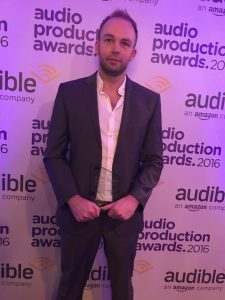 Chris Ward's official title: Content Operations Director / Group Production Director for the Bauer City Network , Northern England & Scotland.
That means he has his hands in dozens of stations and networks across the UK. He is also part of the larger Bauer Media Group which, as I learned in the interview, is REALLY HUGE in Europe. I had the pleasure of meeting Chris in Amsterdam in 2016 and he joined me on a Jingle Related panel at The Imaging Days. It was clear to me then that I had to extend our chat to this podcast. He has a very well rounded skill-set bringing much to the table in the world of radio brands from managing talent, creating focused messaging and of course the actual Production of IMAGING. He brings a nice balance of creative and science to the work. AND you will hear his Imaging Voiceover skills on display as well. We cover it all - all we could cover in about an hour! Enjoy!
Contact Chris:
Chris.Ward@bauermedia.co.uk
LinkedIn: https://www.linkedin.com/in/chris-ward-96166953/
Instagram: Chris_j_ward
Soundcloud: https://soundcloud.com/chriswardproduction
Chris Ward's official title: Content Operations Director / Group Production Director for the Bauer City Network , Northern England & Scotland.
That means he has his hands in dozens of stations and networks across the UK. He is also part of the larger Bauer Media Group which, as I learned in the interview, is REALLY HUGE in Europe. I had the pleasure of meeting Chris in Amsterdam in 2016 and he joined me on a Jingle Related panel at The Imaging Days. It was clear to me then that I had to extend our chat to this podcast. He has a very well rounded skill-set bringing much to the table in the world of radio brands from managing talent, creating focused messaging and of course the actual Production of IMAGING. He brings a nice balance of creative and science to the work. AND you will hear his Imaging Voiceover skills on display as well. We cover it all - all we could cover in about an hour! Enjoy!
Contact Chris:
Chris.Ward@bauermedia.co.uk
LinkedIn: https://www.linkedin.com/in/chris-ward-96166953/
Instagram: Chris_j_ward
Soundcloud: https://soundcloud.com/chriswardproductionTranscript
77 min read • 11,435 words
Announcer: The Producers, featuring the most respected international talent in the world of audio production and voiceover. Radio, TV, film, and online. In-depth interviews and industry insights, putting you on the inside. This is The Producers Podcast with Ryan Dreen.
Ryan: Hello, podcast is here. Chris Ward's the guest, Chris Ward at Bauer Media. I will, I'll be honest, I didn't know as much about the massive conglomerate, everything they had, all the places they were, all the stations they have. Anyway, I learned about that. And, if you don't, then you will as well, but we'll get into all of that in the interview. Let me bring up just a couple of things and we'll dive right in. I won't waste a lot of time in the intro. I will make a mention that, we had this actually scheduled A couple weeks ago, then, tragic bombing at the Ariana Grande show in Manchester. And Chris is in Manchester and the studios are there. we talk about that. So it now, you know, it's a little delayed. It's, it happened a little while ago, but of course I left it in there. And, at the bare minimum, it'll be kind of like a historical reference when people stumble into this podcast. Years and years after they come out. It still happens. I have people telling me about a show, you know, so long ago I almost forgot it happened. Or maybe I should forget it happened. Anyway, so we do make reference to that. I don't know, fair warning. It's not like we talk bad, obviously. and then, the audio we're gonna hear, we're gonna hear some, you know, cool stuff right up front like I always do. And I wanted it, you know, it's all Chris Ward stuff right up front. I think we hear him voicing At least the back half should be pretty clear when you're gonna hear Chris. Anyway, in the middle though, I'm gonna play some other stuff. I don't often do that, and I'll explain why and what it is. But, so an extra special bonus audio treat in the middle of this episode as well. finally, I wanted to make mention, all the information on Chris will be on the website, the podcast page for this show, ryandreen.com. Should be pretty easy to find. Chris, gives, you know, email, social links, all that stuff. It's all posted right there. Easiest way to get at him if you want to. I think that's, that's fine. Let's start it off with some great imaging audio from the one and the only Chris Ward. Ooh, the biggest hits. Hits. All day long. Key 103. I got a condo in Manhattan. Ooh, the biggest hits. All day long. Key 103. There has been an awakening. Have you felt it? The Force is strong in these folk. C-3PO, a loyal droid. Thank you, sir. Yoda, the true Jedi Master. Good relations with the Wookiees I have. And Mike. You need a shave. you can shove your lightsaber up your— This is Key 103. The Force is strong in Manchester. Key 103. All the biggest hits all day long. Hallam FM. Key 3. When his Snapchat story lasts longer than he does, you should just block him. This is Key 3. Nelly the elephant packs her trunk and then suffocated to death Death, because that's not how elephants work. T3. Online shopping. Add to cart. Add to cart. Check the subtotal. Ha! Close the tab. T3. Who's that? Dan? Dale? No, Domino's again. Carly the Mom said the— T3. How many clickbait articles does it take to change a light bulb? Visit our website to find out. The answers may shock you. Girl, put your love on me, 'cause I won't let you go.
Ryan: All right, and, again, the pleasure usually mine, it is again today. Chris Ward joins me, Content Operations Director slash Group Production Director slash— no, big enough title right there. Bower City Network, that's the UK and beyond. hi Chris, how are you? Thank you so much for joining me.
Chris Ward: Hey Ryan, great to hear from you.
Ryan: so I've been looking forward to getting you on the podcast. I got to meet you in person and then you were kind enough to join me on a panel last year at the Imaging Days. And I'm like, whoa, this dude knows his stuff. And, I think Bower City, how do I, you know, let me start here. How do I refer to the company? Because I don't want to slaughter that this entire interview.
Chris Ward: So we're part of Bauer Media. Bauer Media, it's Europe's biggest media company. I think that's right. It's a mixture of sort of magazines and radio. It was mainly a magazine business and it's bought into radio. It's bought more and more radio stations in Europe. We are the biggest radio operator in Europe at the moment. In the UK, we own Magic, Kiss, Absolute, Kerrang!, Planet Rock, Heat Radio, all of those those sorts of brands. And I'm responsible for the Bauer City Network, which is basically everything sort of outside of London. So there are 52 radio stations that currently sit under me in the UK.
Ryan: So as I was about to say, yeah, so Bauer Media has decided you are the guy. I guess as far as imaging, if we use the word imaging, you are kind of the top imaging guy For the stations that are not in London, is that a way to say it?
Chris Ward: Yeah, I think certainly 6 months ago or so, that would definitely have been the case. I think now I took a new role as content operations director. I'm still overseeing all the production on BCN, but I'm certainly taking a step back from doing the day-to-day making of stuff, which is challenging. It's sometimes a little bit tough to let go. You kind of want to get in there and make stuff everything yourself, but you can't really do that. And that's not with a network this size. So I'm sort of stepping back a little bit. I still do a couple of days a week production, but, but there's more management stuff now.
Ryan: Yeah, I was gonna say, so this sounds a whole lot like the word management. what did— let me, let me start here just because I'm curious, and then we'll really get more into what you do. But as far as the structure there, I mean, I actually did not know that. So Bauer Media is, you said, the largest owner of radio stations in the UK and Europe?
Chris Ward: largest owner of radio stations in Europe. Yeah.
Ryan: Not the UK?
Chris Ward: Not in the UK, but in Europe. Yeah.
Ryan: So give me a feel for the landscape. Where do they reside just in the UK? You know, who owns the most or where are they like second, third, fourth company? Just give me a feel for that.
Chris Ward: In the UK, in commercial radio, so if you look away from the BBC, in commercial radio, there are really 2 massive players in UK commercial radio. There's Global Radio, who own Capital Heart, Smooth Radio, LBC, those sorts of really big national footprint brands. And there's Bauer Media, who are a very close second in terms of size, who own KISS and Magic and Kerrang! and Planet Rock. And then they own the Bauer City Network as well, which are the local and regional stations outside of London. So they're not the national footprint stations, which would be on a national FM or national AM or digital licenses.
Ryan: Okay, cool. And then, but as far as Europe is concerned, they actually quite literally own the most stations.
Chris Ward: Yes, yeah, they are. I'm pretty sure that's right. I'll double-check that, but I'm pretty sure.
Ryan: Ballpark, yeah. Cool, cool. As I learn more about different companies that years ago I didn't know existed and now I realize how massive they are, just hearing people kind of talk about you and what you do and the footprint, as you say, over there, I realized that Bauer was a major player, clearly. Okay, put that aside, especially for all the people that are actually listening in the UK thinking, hey, idiot Ryan, we already know this stuff, let's move on. you and your background, I actually don't— I know a bit about what you're doing now, but I don't really know a lot about where you came from. So, you know, give me the elevator type pitch or the elevator background of where— what got you to where you are now.
Chris Ward: So I grew up in a county in the south of the UK called Devon. which is on the south coast. And it's basically a lot of farmers there, really. It's quite rural. It's very relaxing. And I never really had any interest in radio. I wanted to be a vet, possibly a doctor. Was sort of toying with those ideas. Then I got sort of sucked into student radio. Thought, this is amazing. Still thought, you know what, should be a grown-up and go off. And I thought I'd probably go into medicine or maybe veterinary. I wasn't entirely sure. And then decided I didn't really want to grow up and carry on doing radio because it's great fun. so I did a degree in Bristol and then, I, I got into presenting and I was doing sort of weekends on the radio stations and then, ended up doing a breakfast shift. And I, did breakfast on a local station for about 9 months or 10 months or so. And then I, I started to realize that while I kind of liked being on air, I, I was really looking forward to making stuff.
Ryan: Yeah.
Chris Ward: I was really looking forward to, to making bits of production. and actually the on-air shift was starting to get in the way of me making stuff.
Ryan: Well, and who wants to wake up at what, 3, 4 in the morning every day?
Chris Ward: I'm not gonna lie as well. I mean, waking up at 4 AM every morning, that— I'm not a morning person. So I struggled with that. But yeah, so I went into production. I went, worked for a company called Peutonic Media briefly, which is run by Steve Pygott.
Ryan: For sure.
Chris Ward: Did some stuff for them, really enjoyed that. Ended up going to Seven Sound in Gloucester. as a station sound producer, which used to be part of GCAP Media. I then went to Real Radio Wales as a station sound producer and went from there to being head of production for Real Radio Wales and then went to being group head of production for Real Radio UK. So it looks after all the stations in the UK. Then I moved to Bauer about 3 and a half years ago to be group head of production for the Bauer Place network, as it was then. There were 16 stations in it at that point. And since then, It's grown to being just over 50 stations. And then at the start of this year, I was given a promotion to Content Operations Director and Production Director. So still sort of overseeing the production, but a lot less hands-on, more strategic stuff these days.
Ryan: So I'm just taking a swing here, but your, your job is a lot more meetings and sort of shaping the branding and then, you know, disseminating this out to your producer or your production team. around the country a little bit more, or that your job is a little bit more of that stuff now?
Chris Ward: Yeah, a bit more sort of direction and strategic planning of stuff. I'm incredibly good now at conference calls. That's my special subject.
Ryan: Yes.
Chris Ward: But yeah, yeah, it's less the sort of hands-on making stuff every single day. I still do a fair bit of coaching and a fair amount of work with the team. However, it's less of that sort of daily I'm going to make a sweep, I'm gonna make a power intro, I'm gonna make a top of hour.
Ryan: I'm gonna try to get this information interspersed throughout the interview today instead of kind of waiting till the end or whatnot, but you clearly were hired for a job and then impressed some people, so they brought you up the ranks, as it were. Tell me a little bit about, you know, what do you think it is you were good at that made them take notice and promote you and kind of put you where you are now?
Chris Ward: That's a really good question. I think you'd probably really have to ask my boss as to what he saw in me. I think one of the things that was a real challenge. When I came here, the network was, was very disparate. Everybody was doing their own thing, and the brief was bring everyone together, get it one sound, one consistency across quite a large network of radio stations in very diverse geographic locations. And we did that. We did that quite well. We've won awards for it. We pulled them together. We gave Bauer City one sound for the first time in its history, really. And I think I managed to do it without upsetting too many people, without getting anyone too angry.
Ryan: Who would get angry?
Chris Ward: I think the challenge you always have is when you're trying to pull together a big network, is I'm just a bloke in Manchester telling someone in Aberdeen what to do. And up to this point, they've always done whatever they wanted to do. They've had their own way. And it's not necessarily that my way is better than theirs or their way is better than mine. It's that we need to have one way of doing things rather than acting as all independent stations doing your own thing. It's coming together as a group. And I think that can be tough. I would find if it was me, I would find that very tough if I've always been doing my, my own thing here and then somebody who I may well have never even met hundreds of miles away is now telling me, well, no, you're not going to have that jingle. You're going to have this type of jingle and you're going to have it done like this. That's, that's a tough thing to have, particularly if you've had it your own way for quite a while. And, you know, a lot of the Bow City stations, or the vast majority, were very, very successful and still are very successful. So to tell them we're not going to do it like this anymore, we're going to do it like this, you really do have to give them benefits. And fortunately, there are some pretty massive benefits when you operate as a group. You get economies of scale. So, for example, last year the production team here churned through about £8 million worth of sponsorship and promotions production.
Ryan: Ah.
Chris Ward: So that's, that's a fair amount of production that was there that we, that we went through. And it might take a producer, say, 15 minutes to make a weather sponsorship. But to make 20 weather sponsorships is probably only going to take about half an hour because once you've got the Pro Tools session open and you've got everything there, it's just a case of chopping it together and flying it off. And suddenly you've gone from lots of producers doing 15 minutes each to do 20 weather sponsor credits, or one producer doing all of them in half an hour. It suddenly becomes a lot more efficient.
Ryan: Right.
Chris Ward: And you can get the absolute best quality production on stations because you're syndicating it across, across large networks.
Ryan: I definitely want to talk about the structure of your team. I want to know kind of where people are, but it's making me think about localization. And I know, you know, in the States there's always a big argument, oh, radio's best if it's super local. All this national programming, you know, tears it apart and, you know, it's, it's no good. I personally believe the opposite. I think you put the best entertainment on the stick and that will draw the most listeners. But anyway, Did you guys have to focus a lot on keeping some amount of localization? You know, how did you deal with that or contend with that?
Chris Ward: It's a really good question. Local is really, really important to Bauer, which is why we have kept our local radio station names. We have Key 103 in Manchester, we have Clyde 1 in Glasgow, we have Forth 1 in Edinburgh, we have Metro Radio in Newcastle. The route that our main competitor Global Radio has gone down is they got rid of all the local names and they've got just Capital. or Heart or Smooth.
Ryan: Right, yep.
Chris Ward: And local is really, really important to us. We have local content controllers at each station, and having a good relationship with them so they can feed in stuff to you is really, really important. There are some things that are national, which everybody will be talking about whether you're in Aberdeen or you're in Manchester. And I heard a great phrase a little while ago of It's probably a little bit media-y, but local isn't what's going on at the end of the street. It's what you're talking about in your living room. And I think what they mean by that is if everybody's talking about, you know, The X Factor, then that can be talked about across the whole country. Everyone's talking about that. Equally, if there's something very local going on, you want to be able to react to that. And We are a centralized team based out of Manchester with— there's one guy in Glasgow, there's another guy in Birmingham, but basically most of the team is based here in Manchester. And the way we get around that is those good relationships with local content controllers who know those markets, who will say, this has happened here, we need to do something about it. And that requires you to build a good relationship with those programmers. Yeah.
Ryan: Now, I want to be sensitive and nice and not an idiot for the next minute or two, but we actually delayed this interview about a week because we were to record this the day or 2 days after the Ariana Grande concert in Manchester. And I, being completely insensitive, said, hey buddy, you ready for the interview? You said, oh, you know what? It's a little tough here right now. So, but to talk about that, if you could, First of all, you already told me everybody's okay as far as close to you. You know, you guys are all okay.
Chris Ward: Yeah, I think most people who work at the radio station knew somebody who was at the gig. The radio station does an awful lot of stuff with that particular venue. And it sounds really weird. I was chatting to a friend about it over the weekend. And terrorism always feels like something that happens somewhere else.
Ryan: Yes.
Chris Ward: I think it always feels like it's horrific and it's awful. It doesn't happen here though. It happens, you know, in London or in Paris or—
Ryan: New York.
Chris Ward: In New York or somewhere else. It doesn't happen here in Manchester. That's not— that doesn't happen. That's not a thing. And I mean, like I said, I grew up in Devon. I've never experienced this before. I've never been through anything like this before. And it does sort of shake you. a little bit, particularly when you know the people involved. And you know, people who were there on the night, and you think, I've been stood, you know, where that bomb went off. I've stood there, I've been there, I've been there several times. And I think it did have a fair knock onto the whole community of Manchester.
Ryan: Can you tell me from a broadcast standpoint, or from a professional standpoint, you know, was there an immediate meeting? You know, we got to figure out how to do this correctly. You know, you know, how do we handle this? Because again, like you just said, we are local stations that happen to have a big network arm helping us. How did you handle it?
Chris Ward: That is one of the advantages of being part of a network. You're able to call in huge amounts of resource from around the group to make sure that we can deliver the absolute best possible programming to the people in Manchester. This was such a big incident. this is not something where we would want to do— certainly when it immediately happened— anything different in Manchester to the rest of the country. It was such a big event, the whole country wanted to know about this.
Ryan: Right.
Chris Ward: It happens that the epicentre was in Manchester, which is where the team is based and where our lead station, Key 103, is based. However, it's something the entire country was talking about. We had a very quick reaction to it. We had, we dropped our ad breaks. We went to live news every 15 minutes. we put on an awful lot of speech content, overnight. we had a very clear plan put together of how we were going to deal with this. One of the things that is quite difficult, and I've, I've never really seen it before, I think this was my first sort of true experience of it, was there was so much information when it happened. trying to disseminate from that what is important, what isn't important, and most importantly, what is truth and what is fiction is actually very, very difficult. And I think you have a duty as a broadcaster to not scare people unnecessarily. You don't want to whip up a frenzy for no real particularly good reason.
Ryan: Mm-hmm.
Chris Ward: You, you have to get the balance right. And you may be hearing rumours a long time before there's an official release from the police. However, it would be wrong to go on social media or to go on air and say, we believe this is what's happened, just based on a rumour. You really do have to take all that information in. And, you know, we had— I think we had an excellent response to it. And Key 103, particularly the programming team at Key, have done an absolutely outstanding job at reflecting the mood in the city.
Ryan: Can you give us an idea? Key 103, your biggest— let me think here. It's the biggest station in Manchester, or?
Chris Ward: It's getting there. It's had a tough few years, Key 103, and it's certainly on the back foot, but it is very much the Manchester station.
Ryan: It's a big player. It certainly has a— okay. So, that might have been, at least immediately, the biggest focus as a company. You had to make sure you did it right there. I would assume. And then, but, you know, do you take all the music off the air? Let me, I'll just throw this anecdote out there. I went to iHeart, it was Clear Channel at the time, one year after the towers came down. So that was in New Jersey, you know, right outside the city. And I heard stories of how they instantly had to, like, there were things you don't think about, like there's songs you simply can't play. You know, a lot of songs that make references to airplanes and, you know, that they kind of sent a list out and said, hey, we need to start pulling this music off the air. And that's just one of the things that you, might not think about right away. Were there challenges like that? Did you guys stop playing music on that station for a while? Or—
Chris Ward: Yeah. Interestingly, we had been running through what we call our obit plan or our major story plan. Obituary is what obit stands for in the UK. And we had been running through that about 2 weeks previously. And I was sat in a conversation with my boss and his boss, and we were talking about this. And actually, it's the sort of thing You can't really— you can plan to a certain extent, but after that, you have to make decisions based at the time, based on the mood of the country, and based on exactly what's happened. Like you were saying, the exact same problem we had with music, where you would think, can we play this or can we not play this?
Ryan: Ariana Grande.
Chris Ward: Yeah, Ariana Grande.
Ryan: Are we playing her?
Chris Ward: Do we play her or not? There are songs like Taia Cruz, Dynamite, clearly inappropriate. We shouldn't be playing it. That needs to come out. Are there lyrics in songs that we just haven't thought about because it's happened so quickly? Is there an advert that we're running on air that we are—
Ryan: Yep.
Chris Ward: And then part of it as well is, as the country goes back to normal, at what point do you go back to normal? How long do you take? And I think a lot of that has to be based on the mood in that location. And there isn't a formula to it. You literally have to make decisions on an hour-by-hour basis of What are we going to do? What is the best thing to do here? Yeah.
Ryan: Well, I wanted to talk about that for a little bit. I thought it was important for us to talk about. And putting aside the tragedy, as broadcasters, it's interesting the challenges we have to contend with in these terrible situations. And it's crazy. You're right though. As you know, Americans have certainly lived through plenty of tragedies, just absurdities like this. And there's no learn— I mean, well, there's learning, I guess, but Not in these situations. You can't look back and go, okay, well, on September 11th, they did this in New York, so now we know in Manchester to do this. It doesn't work that way.
Chris Ward: No. There's none of that. I think there needs to be very clear communication. You do need to have a plan of who is going to be responsible for what and what are they going to do. And you need to be able to get a hold of people quickly. Unfortunately, from a broadcasting point of view, on the night that the bomb went off, We were able to respond to it really very, very quickly on air. And it's still— Manchester still feels like a slightly odd place at the moment. It still doesn't feel quite like it did maybe a couple of weeks ago, but it's getting back to normal.
Ryan: Yeah, well, I don't even— I don't know what the right thing to say is. So let's move on from there. Let's talk about your team. I mean, you already started to talk a little bit about the structure. You've got a big team there in Manchester. How many producers do you have and where are they located and what, you know, what type of collaborative work do you do? A little bit of that stuff.
Chris Ward: So, one of the things when I joined, really important, I wanted everybody on the same platform. So we're all running exactly the same version of Pro Tools. We're all on exactly the same computers. We're on the same Macs with the same spec, the same plugins, the same everything. we have an IT team here who are really supportive. and we've put in a, a super, super fast network drive and everybody runs their Pro Tools sessions off the same network drive.
Ryan: Oh, cool.
Chris Ward: We have a unified labeling system. We have a, a system where in essence tickets come in, they get assigned centrally to producers, whoever's free. You can look at their stack and go, you know, this person's working on 20 things, this one's working on 15, this person's working on— Mm-hmm. Nice. And what it means is when somebody's off sick, that's okay. I don't have to go rooting around on their hard drive or go, oh, good grief, where are they up to?
Ryan: What kind of a system? Actually, I'm interested in that cuz there's a couple over here, but anyway, what kind of a system is that for your digital orders and to see who's got what, when, and where?
Chris Ward: when I joined, we looked at a system called Kaiko, which is, it's fairly well used, I think. in the end, we sat down with the Bauer IT team and they've built us something bespoke out of SharePoint.
Ryan: Oh, very good.
Chris Ward: So it's an in-house bespoke system, which means we can control our own data. and, you know, security-wise, it's certainly a lot safer for us and more stable.
Ryan: For sure. Well, and it's super custom. What, how, how you want it to be, it will be. Yeah.
Chris Ward: Exactly. And the way that we've got everything on one central drive in one place with everyone with the same version of Pro Tools and the same plugins, it means that whoever is off, someone else can pick up their work and vice versa. It means that we're super flexible, and it really does make an absolutely massive difference. If I'm sat there on a Thursday afternoon at 4 PM going, my God, this guy is ridiculously busy, these 2 other people aren't so busy, I can move his work to them at a click of a mouse and they can pick up if he's halfway through something.
Ryan: It's fine.
Chris Ward: pick up immediately. They don't need him to send them any audio or do anything like that. Just pick it up and go.
Ryan: Interesting.
Chris Ward: It makes it really easy as well to track what people are working on and if there's a bottleneck.
Ryan: I'd be interested to know about the network drive setup you have. I guess the first question is, are people outside of the Manchester building accessing this as well? Is it that type of a cloud-based?
Chris Ward: Yeah, we've got incredibly fast lines between our major sites. So yeah, people outside of the Manchester area can still Pro Tools is able to access the drive quick enough over a network line, so long as you're in the company. If you're at home and you're connecting on a VPN link, it's, it's not fast enough to do that. but if you're within the company somewhere, you can access the drive and Pro Tools can access it in real time. So you, your session is on this network drive, so nobody has anything on their local machine in essence. It's all in essence on the cloud, in the cloud.
Ryan: Yeah. That's pretty cool. Okay. And, I've heard of these, scenarios, you know, you've got a lot of, you know, producers working collaboratively, et cetera. And you kind of said you were able to come in and say, I want Pro Tools for everybody, Macs for everybody. Is that, was that a bit of a hurdle for you or was that kind of a, whatever you want, Chris, you tell us, we'll do it?
Chris Ward: Yeah, I think it was more of a bit of a hurdle, to be honest.
Ryan: I was going to say, I mean, it's very rare that we get to demand our technology and it's like, Sure thing, we'll spend £100,000. Yeah, what do you need?
Chris Ward: Yeah, I think, when I joined it was 16 stations and we had a couple of producers. Now we've got sort of 7 or 8 producers now, so there's a— the demand has increased a lot, the kit required has increased a lot. And, and as you know, you know, it's not cheap when you start adding in, you know, sound cards and Pro Tools licenses and, you know, Waves bundles and all these sorts of things. Yeah, right, it gets quite expensive quite quickly.
Ryan: And another problem, I'm in a collaborative environment, so, and we have the exact same scenario. We want everybody to be mirrored, mainly because we are sharing sessions. And it's not so much— I guess what I'm trying to say is one plugin can screw everything up.
Chris Ward: Yes.
Ryan: So, you know, so if you want to update Auto-Tune and it's a cost, you got to do it 8 times. Yeah. And then do that with 1,000 plugins you own. I mean, it starts to get absurd.
Chris Ward: Yeah, I think that the counter, the bad side of the way that we have set it up is that if a producer really wants to use a plugin that no one else has, and it's not a case of just buying one copy of it, you're going to need to buy 7 copies of it. So suddenly from it going to being, you know, $100, you're now looking at $700.
Ryan: Yeah.
Chris Ward: And probably a day or two for the IT team to roll it out to all our machines. which, which does slow things down slightly. However, the fact that everyone can work on everyone else's sessions is critically important to making sure we can function properly.
Ryan: A little bit more about the team. I probably want to speak a little more in the tech, the audio geekery. That's always fun, but maybe I'll get to that a little bit later. Do you guys have— I think you just said 7 or 8 producers. Is that kind of the team and they're scattered about?
Chris Ward: Yeah, so in Manchester, I've got a guy called James Espley, who I used to work with at Real Radio years ago. Was it Team Rock recently. Joe Thomas has joined the team in Manchester. He's a fantastic scriptwriter, did an awful lot of stuff for Jack in the UK, has written some of the most offensive radio production I've ever heard in my life.
Ryan: Nice.
Chris Ward: And I loved it. We've got a girl here called Lydia who's brand new, a trainee, and doing fantastically. We've got Sophie King who's joined us recently and is a new trainee as well. I've got a guy called Regan Charles over from South Africa who's absolutely brilliant. and really, really talented. There's a guy called Gavin Pearson who's based at Clyde in Scotland. And I have a guy called James Lawson who is based at Free Radio in Birmingham, but will be joining the team in Manchester in the coming months. And we're currently recruiting for a replacement senior producer for a guy who left a couple of months ago.
Ryan: Cool. So there's a job opening?
Chris Ward: There is indeed.
Ryan: All right. Well, let the floodgates open.
Chris Ward: It's exciting, isn't it?
Ryan: Yes. Cool, great. you know, is this a good time to talk about— okay, so I played some demo work from you, a cool intro. In fact, the stuff that I played to start the podcast was mostly yours. I think, in fact, the intro and the Bower City 3, was that all you?
Chris Ward: Yeah, that's all me. okay, great. Bits in there which have been, scripted by other people, but, but that was all me.
Ryan: Yeah, and although now, I mean, these days, boy, you're barely even in Pro Tools anymore. You're a big-time manager.
Chris Ward: So, but anyway, what was slightly upsetting was when you emailed me, Ryan, and you said, you know, can you pull together some audio and I went through and thought, I've not made anything for weeks.
Ryan: I know.
Chris Ward: You know, you have this horrid moment where you're like, I used to make, you know, loads of pieces every day. And now it's like, I made this last week, didn't I? I did that one thing. That was it. Yeah. Yeah. And a lot of the audio is a little bit out of date now. Yeah.
Ryan: Well, the beauty of this podcast, I think, is I don't need to— not everybody has to be, you know, elbow deep into the production every single day. I like to talk to the people that manage the people or that have risen up. And so that's That's kind of a good thing. But I wanted to get to this, the Bower City BC1. Bower City 1. I mean, I'll play, I don't know, I can't remember how much audio. What'd you send me? A couple minutes? 3?
Chris Ward: Yeah, about 2 and a half minutes or so of it.
Ryan: 2 and a half minutes worth? Yeah, so I don't know, I could probably just play the whole thing here. How about I play this?
Chris Ward: Yeah.
Ryan: And then we'll talk about it.
Chris Ward: Go for it. Come on! Ooh, got the biggest hits all day long! Radio City!
Ryan: Don't act like you know me like you know. Yeah, yeah, yeah. Oh, the biggest hits all day long. We are Radio City. We were staying in Paris to get away from your parents, and I thought, oh, the biggest hits all day long. Radio City. You got that thing that I've been looking for.
Chris Ward: Radio City. All the biggest hits. All day long.
Ryan: When I was six years old, I broke my leg.
Chris Ward: Go! Oh! The biggest hits all day long.
Ryan: Radio City.
Chris Ward: I got this feeling inside my bones. All the biggest hits all day long.
Ryan: Radio City. Radio City.
Chris Ward: This is Hayley.
Ryan: You know just what to say.
Chris Ward: All the biggest hits, biggest all day long.
Ryan: You know just what to say.
Chris Ward: All the biggest hits, all day long. Radio City, are we crazy? Hit it! Come on, 2, 3!
Ryan: Hit it! All the biggest hits, all day long.
Chris Ward: Hey! Radio City. Come on now! Oh, the biggest hits all day long.
Ryan: Ah, Radio City. I say I'm too late.
Chris Ward: Radio City. Hey! All the biggest hits all day long. I love it strong as a lion.
Ryan: I hear Radio City.
Chris Ward: Oh, the biggest hits all day long. Let's go!
Ryan: I've been hearing symphonies. All right, great. So we talked before the interview and you said, you know, the Bower City One would be an interesting chat to have. Now that is not all you. In fact, I believe you mentioned a good pal of mine who I have a huge amount of respect for, George Taylor. I believe we heard some George Taylor in there as well, but tell me a little bit about that and why that is important audio we just heard.
Chris Ward: So at the end of last year, we did a huge amount of research into what do listeners want from the Bauer City One network? What, what are they interested in? And the thing that came back is, is surprisingly music. They want music. They want as much music as possible. That's what's most important to them. And then there are lots of other little things that are very important to them. But the most important thing by, by, you know, a huge margin is music. And we looked at the production And I'm a jingle geek. I love radio production. I love jingles. However, we shorten down the jingles and shorten down the production, we can get more music on air. And while I love production, I love jingles.
Ryan: Mm-hmm.
Chris Ward: It's really about getting away as much music as possible, not interrupting the flow and not getting in the way of the music that you're playing. So when we went back and we looked over the production, what we wanted to do was make it as short as possible. There's pretty much nothing on air now production-wise in terms of imaging that's over 7 or 8 seconds. It's so fast. It's in, out, done, gone on to the next thing. And in the past, you might have done— actually, we had Adam Burgess here for a training day end of last year from Imaging Blueprint.
Ryan: And you had Adam training people?
Chris Ward: Yeah.
Ryan: Oh man.
Chris Ward: And just kidding.
Ryan: I love Adam. Okay.
Chris Ward: It's the best we can get at short notice. Right.
Ryan: And the cheapest, I'm sure.
Chris Ward: Okay. And I see you've made him before. Yeah.
Ryan: Nice.
Chris Ward: And he came up and he played this amazing power intro from a radio station in the UK called Galaxy. And Galaxy used to be this really big dance and R&B station in the UK and was phenomenal. And this is probably about 12, 14 years ago. And one of the power intros he played was for a UK R&B group called Mystique. And they did a song called Scandalous. And it's a very UK R&B track. I can't imagine it would have ever made it over to the States. And if it did, we really do apologize. But the power intro for it was 1 minute 40 seconds long. And I mean, it's almost half the length of the song. And every time you thought the power intro had finished, no, no, it carried on again. And it was amazing. At the end of it, everybody was laughing. And it was beautifully produced. The guys who did it, and I think I know who made it, but the guys who did it did a brilliant job. It was really well done. It was very well produced. The problem was it was a minute, a minute and 40 seconds long. It's just too long. So everything we do is really fast. In, out, done, gone on to the next thing. It should never get in the way. Even if you don't like the production or it irritates you, you shouldn't be quick enough to get out and press the button on the radio to flick to another station because it should already be into the next song.
Ryan: Have you made a concerted effort? I can think of 2 things, trends that I've heard and ways to really make a station feel like it moves forward. Utilize the intros as much as possible, obviously. and not just for custom intros, but for doing anything, you know, and even, even an advert. And also, do you ever actually stop down? I mean, no, you said nothing's longer than about 7 or 8 seconds, but, you know, are you always sort of making it feel like the songs are continuing?
Chris Ward: Yeah, it should never feel like it stops. It should be constantly moving. We have edited intros of songs, we've got a lot of branded intros, we've got sweepers of every possible conceivable variety to get people into the songs that bit quicker. Where we have songs where the intros are too long, I mean, it's actually quite rare on a lot of the music we play that you will find songs with very long intros. But if they are long, we'll chop them off and make them shorter so we can get into the song quicker. We don't want to be waiting around. It's get into the song as quick as possible.
Ryan: What about promotionally? I'm not 100% familiar, but I mean, are you literally doing, you know, concert ticket giveaways? And normally we might make a promo for that, listen to win at this time, and that kind of a scenario?
Chris Ward: We will do, we will do giveaways and competitions and promotions and that sort of thing. However, we would only run promos for it, generally speaking, if it was sold. If it was something really big the station wants to get behind, we might make stuff for it. But if we were making stuff and it was purely programming, so there's, there's no sponsor attached to it, sure, we will make it very, very short to the point where we have some what we call blips that will say, you know, your chance to win tickets to see Katy Perry or whoever, and they will be 5 seconds long and they will go into an ad break at 5 seconds to get us through it and out on as quick as we can. So we're not filling up loads of time with a, with a massive long 40 or 50 or 60-second promo.
Ryan: Admittedly, I didn't listen to that entire, about the, the BC One demo yet. I, you know, I will have by the time I put this out. So for right now, I might be uninformed. But do you have specific techniques you guys use? Because you're still contending with commercial-free stations, and I've always thought that dynamic is interesting. But to get people to stick through commercial breaks or to stay with you, any techniques you use, theories, science you have? Yeah.
Chris Ward: We try to make them as short as possible. We structure our ad breaks in a way, the way you don't end up with what we would call clutter. But really what clutter boils down to is hearing the station name over and over again. So, you know, Key 103 presents this, Key 103 is giving you the chance to win this, Key 103's website, you can do this, Key 103, you can do— because that, that gets very repetitive and really burns very quickly. So we structure the ad break so anything that is station-led or station-branded is spread out. So it doesn't feel like it's all just thumping you for 1 minute at the start of the ad break. We, the presenters, are very skilled at teasing. So they will try and tease stuff that's coming up to try and get people through the ad break. Yeah. But we, you know, it is very, very tough when you're fighting against radio stations that don't have to run any commercials at all.
Ryan: I gotta be honest, I was surprised though, to hear how successful, you know, talking about the London market, How successful the commercial stations are against, you know, a Radio 1, the other CHR stations, you know, Capital, etc., that I, you know, to me it's surprising, but I guess there's a way to beat a commercial-free station.
Chris Ward: I think you have to win by being the best at what you do. Trying to go toe-to-toe with Radio 1 at what they do, you're never gonna win. You need to do something different, something unique. You need to give the listener something they are not gonna get from Radio 1. At that point, they will come to you. And actually, to a certain extent, people will tolerate ad breaks. It is, I think, when they get particularly long, or there's things in there they particularly don't like, that's when you start to hit problems.
Ryan: Can you give us an idea, this is just quick, how long is an ad break on BC, you know, a Bauer City One type of a station or the network?
Chris Ward: Between about 4 and 5 minutes. Largely. I mean, overnights it'll be a lot shorter. Yeah, peak hours are about 4 to 5 minutes.
Ryan: Okay. Yeah, and people can kind of consume that. It's— that's not, that's not a shocking number either way, on either side of the spectrum. So yeah, competition. I would like to get into this. And you know what, I'm gonna go ahead and say, you tell me when you got to punch out of this because I won't take too much of your time. But you know, I know it's later in the day for you, but is there, you know, okay, there's naming your competition, there's doing things to directly, you know, attack your competition, there's ignoring your competition. Do you have any philosophies or theories or things that you guys employ in regards to direct competition to your local stations or even, you know, network properties?
Chris Ward: I like to be aware of what's going on with the competition. I don't think it's— I think it's actually very important not to fixate on it. I think you need to do your own thing and not be— you need to be aware of what's going on, what are the other stations doing. However, I think if you fixate on it and you become obsessed by it, I think that's when it becomes unhealthy. And what you end up doing is just playing a catch-up game constantly. And actually, you want to be the best at what you can possibly do, as opposed to constantly trying to play catch-up to a competitor. So we do pay attention to what the competition are doing, but we certainly don't study them forensically.
Ryan: I'd like to hear kind of some of your thoughts, especially now that you're, you know, not just now, you have been, but you're kind of propped up above a range of radio properties and networks and local stations and producers. I don't know, I'm gonna ask this kind of generically, but dos and don'ts while producing imaging. Is there things you hear out there that make you cringe? Or things that you just— that just, you know, give you a huge smile? Anything pop into your head?
Chris Ward: Yeah, I think for me, I, I love Pro Tools. I'm a big Pro Tools geek. I love all my plugins and all that sort of stuff. However, the most important thing is the script. Scripting is so important to get it right, and you want to get a script with one clear USP in it, one clear unique selling proposition. You can have lots of things pointing at but just one message in there. And I think it's very easy to sit here on a podcast and say one clear USP, and I'm sure loads of producers are going, yes, I know that, but you know what, I've got a client over here who is being absolute.
Ryan: Right.
Chris Ward: So how do you deal with that? And I think that's one of the techniques I work with my guys a lot of, well, okay, if they've got 7 or 8 messages, they are desperate, that have to go in here, there's no way they need to mention all these things, maybe give them 7 or 8 promos. and run them in rotation. So you've still got one USP in each one. I think when things get really cluttered, no one wins. You don't get anything really good out of it. And I really do think the script is incredibly important. I did a talk a little while ago on radio production. I'm not gonna say where this has come from, but I played some really brilliant stuff that I thought was really great production at the end of the talk. And I went through a big archive of stuff I've got and picked out all the things I thought were brilliant. And I think there were 6 pieces there. Only one of them would I have said was well produced. The other ones were, generally speaking, pretty badly produced, but they all stood out because the script was incredible.
Ryan: Mm-hmm.
Chris Ward: And it had that— it hooked you in. And when it's like that, you sort of ignore some of the other little mistakes that might have been made in the production process.
Ryan: Yeah, so especially for younger people that are kind of curious, you know, where do I focus? Or, or, you know, there's always that, that deal where especially younger producers seem to produce for other producers. This has come up on this podcast many times. At the end of the day, start by focusing on your writing. Don't worry about knowing how to use compression and EQ all that well yet. That'll come to you, you know, that— let the game come to you on that side, I guess.
Chris Ward: And if you're applying for a job, you know, in a big network center like we'd have at Bauer or that they'd have other large radio groups, if you're going for that sort of first role or even second role or maybe even third role of your career, I'm not too fussed whether you're brilliant on Pro Tools or not. It doesn't really bother me. I can teach you Pro Tools. What I want to see is that great idea here. We had in Manchester last week, we had to write some adverts, in essence, for a dating website. And my team went away and they came back and they played me some audio. And it was 15 seconds of a duck quacking or 2 ducks quacking at a pond. And it just said, this is Steve and Mildred. They met at the pond because they're ducks, but you can meet other humans at insert website. And it was very funny. It was very funny at all. And it just ended on, you know, this website, not for ducks. And it— that would have stuck with me all day. If I heard that on the radio, that would have stuck with me. There wasn't any fancy Pro Tools tricks in there. There wasn't any tuned vocals. There wasn't any, you know, effect tricks going on in there or stutter edit or any of these clever things. It was 2 ducks quacking at a pond for 15 seconds. And even now, I'm smiling thinking about it. And I think that's the power of a brilliant script.
Ryan: I love that. Now, I don't know if I kind of fully got an answer to this before. Maybe I didn't ask it correctly, but do you guys ever get into a room and just brainstorm? Do you have those moments? Because I think people would get jealous of those situations.
Chris Ward: Yeah, one of the big advantages of having the team all in one place is that when you hit a wall— and I do this, and I know everyone else does this— you wander in and you go, you got a moment? And you sit down with them and you have a chat and you usually talk nonsense for about 10, 15 minutes. And then somebody says something like, what about if we had some ducks at a pond? And you go—
Ryan: Exactly.
Chris Ward: Oh, now I like that. And then before you know it, that's where the genius stuff happens. And I don't actually think you need other producers to do that. I think you can have those conversations with anyone who's a bit creative. You can go and have it with your programmer. You can go and have it with your your mates, you know, you can have those fun conversations. And that's how you get those great ideas.
Ryan: I told you I'd circle back to the technology because I know you, you know your way around a Pro Tools rig. And while you're not spending too much time with them these days, though, but we certainly heard a lot of harmonic mixing, a lot of very musical elements happening with spoken word. We heard also some sung you know, vocals being interspersed with spoken word that had then been, you know, tuned appropriately. Do you do a lot of that yourself? I'll start there. Do you do a lot of that yourself?
Chris Ward: Yeah, yeah, I do. I think on the imaging side of it, on that Bauer City 1 network, on the imaging, it is very quick, very fast, very harmonic, very rhythmic. With the promos and stuff like that, it's a lot more scripting-based. With our— we have a third network called Bauer City 3, and Bauer City 3 is almost an aggressive CHR network, and that has personality imaging on. So that has a lot of these sort of personality production and quirky liners. There, we do very little of it. It's all very personality-led. But on Bauer City One, yeah, we do do quite a lot of that tuning and that sort of stuff.
Ryan: And I've had multiple people for some reason ask me, you know, because I talk to people that are really good at this, it doesn't mean that I'm very good at this. But, you know, what are the tools that you use to do that? I think some people imagine it's like this trick. You're like, here's some spoken word, I instantiate this plugin and suddenly it's musical, you know, suddenly it's in key with the song. What are some of the ways that you get those sounds out of spoken vocals?
Chris Ward: Well, if there is a plugin that does it all by itself, then I'd love to know about it because that sounds brilliant. For me, it's a bit of— I think the key is layering. Take the main vocal that you've got, the main voice, Get that really clean, EQ it, compress it, put some light effects on it, then duplicate that track further down. And on that duplicated track, play around with huge amounts of Waves Tune or however you want to tune it. The reason I say that is because if you keep that top track clean, you can still understand what's being said. If you play around too much with, with Waves Tune or Effectrix or whatever it is you're going to use, or Auto-Tune and those sorts of things, you can lose a lot of the clarity in what's being said. And while in your studio, and you've heard it 300 times, and you've got really nice speakers, and you've got good ears, and you're paying attention, Right. It's clear what's going on. If you're thinking you've got a mum in a car with the windows slightly rolled down and 2 kids in the back making noise, and she's thinking about what you're gonna have for dinner that night, suddenly this tuned thing disappears because it's just too hard to hear. It still has to cut through. So I, I would always duplicate it. So you've got one really clear one, and then I layer it up with something that's got a bit more texture to it.
Ryan: Sure. And there, I guess even with, you know, we want our stuff to sound fancy and, you know, and contemporary. And I think making things a little more musical and a little more tempo-based does take it to another level. But we can always get too fancy. We can always go too far and lose the message.
Chris Ward: Yeah. And I think there's something to be said for, if you work in radio, you're probably sat in a studio with good speakers, you've got good ears, you're paying attention, you're listening to the music, you're listening to the The average person's probably not paying attention, probably got it on in the background. It really does have to cut through.
Ryan: Do you have any tricks to figuring out if— because that's something everybody deals with, especially— what's the right word— where if you're working with sound for too long, you know, 4 or 8 hours straight, ear fatigue, I think maybe.
Chris Ward: Yeah.
Ryan: You know, obviously it's nice to be able to put things away for a day or two and then come back to them, but we don't always have that luxury. When you monitor things or when you just decide if something is correct Ready for air? Any tricks you employ for that?
Chris Ward: Yeah, I mean, everybody says, you know, leave it for the weekend and then come back to it on Monday. And in real life, how many times are you ever able to genuinely in radio go, I'm gonna leave it for 2 days, I'm not really sure about the mastering, I'll come back to you in a few days' time, let you know if I'm happy with it? I think salespeople would just explode if you try to do that.
Ryan: Right. Oh, it's supposed to hit the air today? Nah, I'm gonna put it on on Thursday instead. Okay, great.
Chris Ward: Gets to Thursday, like, ah, still not, still not sure about it. Give me another 3 days and I'll let you know then. I, I will get somebody else in to have a quick listen. I have a PA in Manchester who is brilliant because she works in radio, but she's not a radio geek. So she'll just come in and go, what was that? You go, right, okay, we need to do that again then. I'll try and get another pair of ears on it. I do use things like the PAS analyzer to get an idea on the screen of what's going on.
Ryan: Yes.
Chris Ward: But I think actually, if you can get someone else in just to go, does this make sense? Can you hear everything that's going on? And if you're watching them and they're of really concentrating and straining, it's probably a sign that it needs to be a bit clearer.
Ryan: and real quick, just to keep the tech, theme going, you, you already mentioned Effectrix, you mentioned a Waves bundle. Any other plugins or, or cool tools that you really love? And even if people have heard of them, but things that you like to use often?
Chris Ward: we, we've got, the UAD Apollo Twin Duo, here as our sound card. And it comes with some built-in UAD plugins.
Ryan: Yeah. Everybody has those?
Chris Ward: Yeah, everybody has those.
Ryan: Oh, nice.
Chris Ward: And, and they're really good. The only issue you have is they do slow down your bounce down a fair bit, which might not sound a big deal, but we would bounce down— we did a promotion around, around Christmas time which ran across our network, and we bounced out about 1,700 promos, all of which were 30 seconds. So if you think you're taking a bounce down speed from something about 15 speed down to about 3 speed, suddenly.
Ryan: This is offline bounce you're talking about.
Chris Ward: Yeah, sorry, an offline bounce from Pro Tools.
Ryan: It still is slowing it down.
Chris Ward: Yeah, it does hurt it a lot because it's doing a lot of the outboard processing within the UAD kit.
Ryan: And people— yeah, I was gonna say, just so they— just a few people that might not understand why that is, because not all the processing is done in the box, some of it's done outside the box, and therefore it slows it down.
Chris Ward: Yeah, yeah, basically with the UAD kit, a lot of the processing is not entirely done outside the box, outside the computer, but a lot of it's done on the UAD box.
Ryan: Yeah.
Chris Ward: And, and as you start stacking those plugins up, it's interesting because some things which you think, like, you know, some of the reverbs, you think this should be using an awful lot of processor power and really slowing it down, doesn't seem to have an effect. And then some random EQ suddenly seems to knock it down to 1.5 speed.
Ryan: Yeah.
Chris Ward: You're going, oh, for crying out loud, I wasn't expecting that. So, so you have to be a little bit careful in what we do just because of the volume of things that we're, we're producing. But we've got the UAD boxes, we've got, iZotope Ozone 7, I think we're all on. we've got FabFilter Volcano, which you can get some, some quite cool effects out of. We've got Fectrix, which is, is quite fun. we've got a VPS filter made by Vengeance Audio, which is brilliant if you want that sort of, high-pass, low-pass, DJ sound where you get that sort of sound across, across the piece of audio.
Ryan: Yeah.
Chris Ward: and it is, is really, really good. and, there's a couple of the machines where we do musical stuff. and that is the only exception where machines, some machines aren't compatible with others where we'll do some musical stuff on a couple of the machines where we have things like, Nexus ReaFX 2 and, sure. Kontakt Ultimate and stuff like that. Yeah.
Ryan: What about, do you get into any of the Soundtoys plugins? Do you guys get into those?
Chris Ward: Yes, we got the Soundtoys bundle as well. I should have mentioned that. Yes.
Ryan: Yeah. I like, I like those. I, I like to recommend those cuz they're, they price them pretty well and, I am a sucker for really good presets. And a lot of times when a plugin will offer you presets, but really they're not that great. And, you know, sometimes in our world we need to move quick, so it's nice to have a ton of good presets.
Chris Ward: Yeah, the Soundtoys stuff's great fun to play with as well. You can create all sorts of things with that, and you just play around. And they've got this sort of effects rack thing you can do as well now, which is great fun. Little Alter Boy is one of my favorite ones that Yeah. They use, and that really does help you get that sort of very current Major Lazer kind of sound at the moment.
Ryan: Yeah, absolutely. That was cool because I believe it was free for the first month or something when it was out there. It was a great plugin, a simple but a great plugin for free. And it made me pay them to upgrade to the 5, to version 5, to get the rack, like you said.
Chris Ward: Yeah.
Ryan: But, you know, I just like the company. I think they do good stuff. I get nothing from them, but just sometimes I think—
Chris Ward: Yeah, the free plugin when they bring it out around Christmas time, it was great.
Ryan: Yeah, yeah, they've had a few of those for sure. Cool, you know, time is— we could talk forever. I think you're a smart guy. I'm glad you came on the show with me. You're just doing some great work over there. I do want to ask you my final question, but you know, I'll have links on the site and they can reach out to you. You got beef if somebody wants to shoot you an email Or contact you via one of the social networks and ask you some inside information?
Chris Ward: Yeah, yeah, I'd— if you want to get in touch, I'd love to hear from— email me, add me on Instagram or LinkedIn. It's always great to hear from other producers around the world and, you know, hear what other people are up to.
Ryan: Yeah, absolutely. Let me just ask you, I mean, let me take this answer away from you because we already talked about it significantly and I know it's important. So aside from learning to be a good writer or just writing in general, What is something that young people should be focused on to be successful in this crazy world?
Chris Ward: That's a good question.
Ryan: Yeah, you can't say writing. Yeah, that makes it hard.
Chris Ward: I think knowing what you want to achieve, knowing what it is you want to do, and then working out where you are right now and how you're gonna get from where you are right now to where you want to be. And I think, personally, I think that people who work in radio, we have to start thinking a bit broader than radio. Radio is, is changing incredibly fast, not just in the UK, around the world. And actually, the skills you have working in radio doing this kind of audio production can be applied to video games and can be applied to TV and can be applied to social media and can be applied to so, so many other things. And work out exactly what it is you want to do and how you're going to get from where you are to there. And, and with all of these things, I think actually having that really good creative idea, that's the most important thing.
Ryan: Yeah, that's great. That's a good answer. And not to keep on about that, but I have seen more and more people from sort of our side of the world, or the radio imaging side of the world, branching into more sound design and audio for picture in other realms. So it's really good advice. Well, I think, I think that'll do it. Chris Ward, Bauer Media, Bauer City Network, all the stations. Thank you. Thank you.
Chris Ward: Great to meet you, Ryan.
Ryan: Thanks for being on the show. I appreciate it. Thank you.
Chris Ward: Cheers, fella.
Announcer: Contact the show, contribute your opinions, see additional content, or simply stay connected at producerspodcast.com.