Episode 99: Staxx Williams
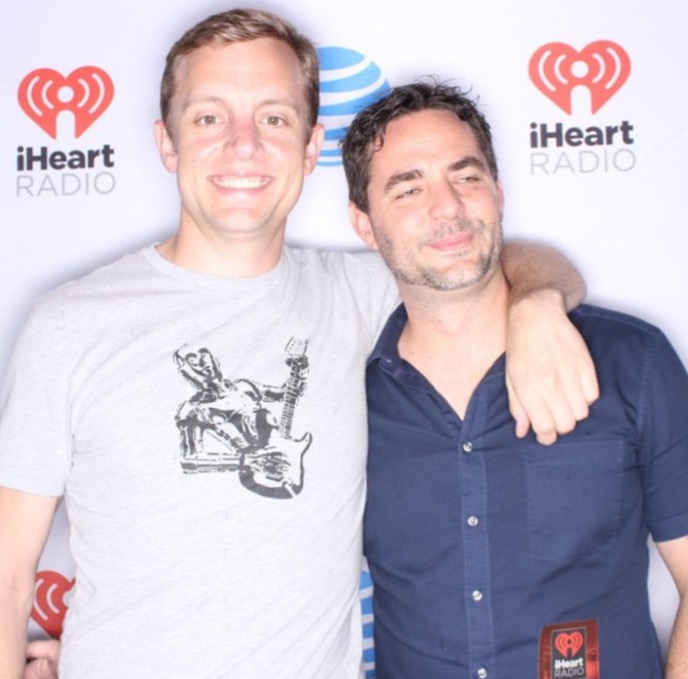 It was not quite ONE year ago today when one of the highest profile Imaging jobs on earth opened up. Dave Foxx left iHeart/NYC - Z100 and KTU - after almost (or more than??) 30 years on the job. I immediately started asking some friends on the inside (including Dave) who would, or could, take the gig. It was pretty quiet for a while. Turns out there were actually many solid names being tossed around. Then in about April of 2016 the news was made official. Staxx Williams was dubbed the new Imaging Dir. at iHeart NYC servicing Z100 and KTU. And now, finally, he gets to be on a podcast to talk about it!
But seriously he was nice enough to donate his time to my cause and discuss EVERYTHING that went into the move, the search and some of the obstacles to getting started. Plus we went into his radio career from the beginning, his upcoming session at The Imaging Days in Amsterdam and what else he possibly has time for!
Check out Staxx on Soundcloud: https://soundcloud.com/z1043-staxx
Check out Staxx on Twitter: https://twitter.com/z100staxx
BONUS: My old friend Ian Sturgeon has started a podcast! I just got the info so I'll discuss it a little on the next show but didn't want you to be left out. So go see what he has going on in the podcast land! It's called "Making Wavs" and it seems pretty cool! Link: http://makingwavs.libsyn.com/podcast
It was not quite ONE year ago today when one of the highest profile Imaging jobs on earth opened up. Dave Foxx left iHeart/NYC - Z100 and KTU - after almost (or more than??) 30 years on the job. I immediately started asking some friends on the inside (including Dave) who would, or could, take the gig. It was pretty quiet for a while. Turns out there were actually many solid names being tossed around. Then in about April of 2016 the news was made official. Staxx Williams was dubbed the new Imaging Dir. at iHeart NYC servicing Z100 and KTU. And now, finally, he gets to be on a podcast to talk about it!
But seriously he was nice enough to donate his time to my cause and discuss EVERYTHING that went into the move, the search and some of the obstacles to getting started. Plus we went into his radio career from the beginning, his upcoming session at The Imaging Days in Amsterdam and what else he possibly has time for!
Check out Staxx on Soundcloud: https://soundcloud.com/z1043-staxx
Check out Staxx on Twitter: https://twitter.com/z100staxx
BONUS: My old friend Ian Sturgeon has started a podcast! I just got the info so I'll discuss it a little on the next show but didn't want you to be left out. So go see what he has going on in the podcast land! It's called "Making Wavs" and it seems pretty cool! Link: http://makingwavs.libsyn.com/podcastTranscript
76 min read • 11,351 words
Announcer: The Producers, featuring the most respected international talent in the world of audio production and voiceover. Radio, TV, film, and online. In-depth interviews and industry insights, putting you on the inside. This is The Producers Podcast with Ryan Dreen.
Ryan: Hello, hello. Producers Podcast back again. And well, let's see here. I didn't come up with a great way to title the podcast. I'm just stubborn and I really wanted the 100th episode to be, you know, really special and big and just, you know, more than just one interview. I wanted a lot of people on it. And I know I'm going to be in Amsterdam at the Imaging Days soon. That'll be a great opportunity for me to gather tons of audio from a lot of really talented international producers. So what I pull out of that will become the century mark 100th episode of the podcast. And like I said, because apparently I'm not too clever, I just went ahead and skipped that for now. So that's why this episode— or the next episode, I'm sorry— will be called 101. Don't fear, 100 will exist. It's just going to come a little later. What, you know, am I a dumbass? Probably. But today— so anyway, let's get through the intro real quick here, as I had a really long chat with Stacks, worth every single second, but don't want to waste a lot of your time. Stacks Williams, the relatively new imaging director at Z100 and KTU in New York City for iHeart. He joins the show, filled some very, very large shoes there, but doing a heck of a job, as will be— well, just stream the stations and you'll hear how amazing they remain and how he's injected a ton of his own personality into the imaging while keeping a lot of the traditional elements of those powerhouse brands. But I'm gonna play a full 2-minute demo that he provided me, which does have a lot of very recent material. So we'll have that here in seconds. And let me just quickly preview the next episode, which I will put out in this month. So I'm gonna be blasting through a lot of episodes. Oh, by the way, Stax is traveling to the Imaging Days, so this will be the first Imaging Days preview episode. But the next guest I'll have is a bit of a younger powerhouse imaging producer out of Ireland, Denzel Lacey. Yeah. I've been listening to his stuff for quite a while. We've been, I guess, internet friends for a while. I'll be able to meet him as well early October, as his episode will be another Imaging Days preview episode. And then we'll find all about Denzil, et cetera. You can go to— he has a pretty cool website actually, if you want to check it out. Denzil Lacey, it's D-E-N-Z-I-L L-A-C-E-Y dot com. So, all right, I'd say that's plenty of an intro. We will now make with the shoe. Here's some great audio from the featured guest At Z100 and KTU, New York City, Stacks Williams. I'll show you the hits. Z100. Sunny and everyone's out. I just wanna stay in the sun. Living at night. Oh hey. Sounds better. On Z100. New York. It's too hot for commercials. Z100. We love you, New York! Oh, by the way, Z100's commercial-free right now for 2 hours. If it wasn't for all those issues, you'd probably be boring. Happy Father's Day, Z100. Baby, if you look over and don't see Lady Liberty, she's probably just taking a dip in the Hudson to cool off. She'll be right back. Z100. Once you get past the NYC stew smell, your ruined hair, and the fact that your organic deodorant doesn't stand a chance, it's actually kind of nice out. Z100. Almost there. There you go. Congratulations, Mrs. Ross. It's freedom. Happy birthday, America. Z100, New York's number one hit music station. Z100. Anyone know where we can get a used pommel horse? Asking for a friend. Z100. She's peeling off the backing. This could be her 3rd Z100 bill. She stuck it right on the rear windshield. Beautiful. The Z-Free Money sticker. Oh my God, it's back! Victory is in my veins. Spotters are in position all over the tri-state. When we see a Z-Free Money sticker, we'll drop a The $100 bill on the spot.
Ryan: All right, the man with one of the biggest, most prolific imaging jobs on planet Earth is now on the show. I've had your predecessor a few times. I've been aware of you for a while now, Stax, and you've been requested. But first, Stax Williams, creative director, creative services director at Z100 New York and other stuff. Thanks for joining the podcast.
Staxx Williams: I'm happy to be here, man. Thanks for asking me to be on.
Ryan: Yeah, and you know what, let's start with that. What is your official title? I wanted to get into these official titles real quick. What's the official title at Z100?
Staxx Williams: So, it's funny you say that because I was reading a blog that Dave Fox posted not too long ago about like what a real creative services director is, and that's what I call myself, but I don't know if that's true because I don't have a staff. As per SAG-AFTRA, the job is creative production designer, but most people know it as imaging director. For Z100, And KTU, our rhythmic CHR, also in this cluster. And then various other jobs within iHeart stations all around the country.
Ryan: Yeah, for sure. It's funny you say that about that blog, and it's something I've thought about for years now, that these titles have all just sort of— I mean, creative services director used to be the commercial guy, you know, it was the guy who did the commercial production. It's— I think the positions were merging elsewhere. And so anyway, the— on— if they hand you a business card at Z100, what again is the one they're gonna put on there?
Staxx Williams: I'd probably have them put imaging director. That's gonna be the most accurate.
Ryan: Good. And that's kind of what I think. I think, forcing ourselves— or I'm sorry, forcing these names other than that are us kind of wanting to sound cooler or something.
Staxx Williams: Yeah, absolutely. And sometimes it's ignorance, you know. I always thought that was just the job. When I got to DC, they're like, you're our new CSD, Creative Services Director. And I'm like, wow, yeah, I'm a director. That's awesome. Cool. Nice. Yeah, yeah.
Ryan: All right, so anyway, Stacks Williams, you've been, you've been around, man. You've had, some pretty solid gigs. how about I say this though? You went to high school in Pueblo, Colorado?
Staxx Williams: Yeah, the armpit of the state.
Ryan: Okay, I wasn't gonna say it. I went to Ponderosa in Parker, Colorado. But yeah, Pueblo, not exactly known as the lavish— How long were you in Pueblo? Or P-Town?
Staxx Williams: About 5 years. My dad got transferred— rather, he worked in D.C. for the railroad, and his company downsized, and this other company was gobbling up people in his position in Colorado and giving them huge raises. family of 6, you don't really have much of a choice when that happens. So we went out to Pueblo, Colorado, and I think it was like '98, '97. Mm-hmm. It was a big change. It was different. I grew up around DC, so you go to wide open spaces, people are different, they're nicer, which as an East Coaster is strange.
Ryan: Yeah, I was gonna say, that's not always something people— like, you hear that and not everybody thinks that's a good thing, you know, that Everybody's so nice. A lot of regions of the country, people are suspect of that. It's like, that's weird.
Staxx Williams: Yeah, it makes you feel incredulous when you're like, when you've been raised near the DC area or anywhere along the Eastern Seaboard. you expect people to be a little more gruff.
Ryan: so DC guy though, is that what you consider yourself? 'Cause it sounds like most of your raisin was done there.
Staxx Williams: Yeah, everyone says they're from DC, but most of them are from like Silver Spring or Virginia or Maryland.
Ryan: Sure.
Staxx Williams: It's, yeah. I mean, I'm from all over. I was definitely born and raised near D.C. in a town called Manassas. It's a lot smaller than D.C. Manassas.
Ryan: All right, great. Well, we don't have to spend all the time on your, you know, high school years, but I just thought that was funny. I've been to Pueblo. I had friends from there, and let me think. That's where the state fair is, and that's about it, right?
Staxx Williams: Oh yeah. The state fair is a real treat.
Ryan: And the state fair in Colorado, not what other state fairs might be. You know, so you get your first radio gig. Are you one of these guys that started out when you were 14, or did you go to college for a little while, or how did you get started?
Staxx Williams: I mean, I think just like everyone, my sisters and I would sit and do like fake radio bits with a tape recorder, and that always kind of stuck with me. I always loved the idea of entertaining people. I wanted to be a comedian when I was a kid, or I loved drawing cartoons. I loved creating stuff. and taking VCRs apart. I was into all kinds of weird stuff. when, I didn't really have a lot of direction when I left Colorado. my life was kind of going nowhere. and, my, my dad took a new job. My parents offered to let me go with them. I was like 19 or something. And, I went to Roanoke, Virginia, and kind of puttered around there for a while. Got back into school. I was waiting tables at a place called Logan Steakhouse. Peanuts on the floor, steaks hanging on the walls in the kitchen and stuff.
Ryan: Yeah.
Staxx Williams: And, all the girls hung out by the host stand. All the cute girls did. So I'd go over there and fake answer the phone as like a recording just to kinda make them laugh. So people would call Logan's, I'd be like, thank you for calling Logan's, home of hot, juicy, delicious steaks. Please mash the keypad now for medium rare. And so on and so forth. People would actually play along and do it, and they thought it was hilarious. And one of those girls worked part-time at K92, the heritage CHR in the market.
Ryan: Mm-hmm.
Staxx Williams: And she kept, you know, bugging me like, you gotta come and try, you know, try your hand at this gig. And I didn't really know if I believed in it, if I could do it or what. I might have been scared, I don't know. But eventually she convinced me and I went and met their night guy and we went and got drinks. And a couple days later, I'm doing stunts half-naked all over town, call-ins, walking into Waffle House with no pants on. You name it, I probably did it for that, you know, first year and a half. And that's how it started.
Ryan: You started out— I'm assuming you weren't paid for the first little bit, right? This was like, hey, meet this guy. Hey, come do some stuff for my show. Like, you weren't hired immediately in being the stunt guy. You were just doing it for free?
Staxx Williams: yes and no. They were— Leonard was very by the book, the owner of, Mel Wheeler Incorporated. He was like, look, we love your passion, but you can't be in the building every day. Like, we only have 5 hours a week marked for you. So I would have to like sneak in and hope that he wouldn't see me so that I could keep doing these bits. And occasionally he'd hear us and he'd get a phone call like, you gotta get out of the building, you're not allowed to work for free.
Ryan: Oh, interesting. Okay, so how long did that go until— or, or when and what was your first, I don't know, full-time job or job where radio was what you made your income from? You got to quit, you know, waiting tables.
Staxx Williams: So It's funny you say that. I worked at K92 for about a year doing part-time, like literally anything they let me put my hands on— imaging. I'd be out with the high schools, doing overnights, doing stunts in the night show. And, the night guy ended up leaving. At that point in time, I'd gotten pretty close with my PD, and he was doing a lot of coaching with me, and they offered me the full-time gig, to do nights.
Ryan: Mm-hmm.
Staxx Williams: But it was a huge pay cut. So when you say like full-time income, I think I probably was making half of what I was making waiting tables. So I had to move back in with my parents. Most of my days were spent, you know, crunching through air checks, listening to anything I could get my hands on to try to learn, like, how to get better and how to make sure people knew that I deserved this gig, because I felt like I got in a lot easier than some people do. You know, a year of working part-time doing overnights and at the same station, and a decent market to start in at a legendary heritage signal, I got to go full-time doing nights. So it was an interesting time.
Ryan: Just on that note, you say full-time doing nights, you had to give up, you know, your waiting tables job, obviously. But was this at a time where doing— I'm sorry, full-time nights meant you were doing a full-time job, or were you 4-in-the-door still? Was it that era of radio where you're kind of in there, do your show, and get out?
Staxx Williams: It was a full-time gig. I mean, they didn't have any hours set for me, but there was always stuff to do, like, you know, bring pizza to whoever signed up online at their office with one of the morning show guys. That's where I started doing imaging as well, bringing the K92 ice cream truck around town and giving it to kids. So there was always stuff happening.
Ryan: Cool.
Staxx Williams: Especially by the time that I left there, I remember talking to them like, hey, we got to talk about a raise or something because I'm working like 50 hours a week and going to school and I don't know how I can keep up this, this pace.
Ryan: Yeah, right, and you— not everybody wants to live with their parents forever, so.
Staxx Williams: No, let me tell you, it was a huge, huge nail in the coffin of the love life, 'cause, you know, girls would meet you and be like, oh, you're on K92? That's awesome! And you're like, yeah, you wanna get outta here? It's like, oh, my, my roommates are asleep. They're very sensitive to sound, so.
Ryan: Yeah.
Staxx Williams: Let's go to your place.
Ryan: you know, they live with me though. I don't live with them.
Staxx Williams: So it was a lonely time for sure.
Ryan: Yeah, I could, I could see that. and you know, don't get me wrong, nobody listening is thinking, what? No. Anyway, so Roanoke, sounds like things are great there. I love those first jobs that, you know, really teach you what the world is about and also give you a really good leg up. So, I know you had some pretty major call letters on your resume after that. So you, from there, do you go to Baltimore? Is that where we're going next?
Staxx Williams: Yeah, I got really lucky, man. I was ready to move on from move on. I don't know why I said like that. I was ready to move on from Roanoke. I loved my my teachers there, Danny Myers of the Morning Show and Kevin Scott, the PD. Like I was still learning a lot from them, but I needed to make more money, and you know school was getting to a point where I needed to transfer into something larger. And I had a girlfriend who was living in D.C. that I'd met in Roanoke that had moved away. So it's like. How do you stitch all this stuff together? And a friend of mine, Corey, who works at PXY up in Rochester, I think now, his friend Mick Lee had just gotten the program director job at Z104.3 in Baltimore and was like, yo, you gotta check out my buddy Mick. He's gonna be hiring for a night guy soon. So I reached out to Mick on Facebook, friended him, And then every day for the next 3 weeks was just constantly posting stuff on Facebook. Air checks, imaging pieces, every bit that I thought might be funny, I'd script it out and throw it on there, just hoping it might land in his feed. And it did. And, after a few weeks, I think it was like Easter Eve or something, I was at home with my folks and I got an email like, hi, I'm Mick Lee with Clear Channel, which we were at the time. and I'm looking for an imaging director. Would you send me a demo?
Ryan: Sure.
Staxx Williams: And that's kind of where it started. A few months later, I was in Baltimore doing nights and imaging.
Ryan: And I know you said you started doing some imaging in Roanoke. It sounds like that was more of a night guy job. But would you say that in Baltimore is where you became an imaging guy? Is that where that became really a large part of your career?
Staxx Williams: I think in Roanoke, I had a tough time finding my voice, like being me on the radio. I was kind of, you know, pitching my voice up and trying to sound really exciting and fast and hit the posts.
Ryan: Yeah.
Staxx Williams: It always felt weird and fake, but whenever I was in the studio and slowing it down and perfecting bits and stuff, I felt more comfortable, and I was doing much better work. So I learned a lot of chops there. In Baltimore, I got a lot better because I no longer had a safety net. So you start— find yourself— you find yourself working a lot harder when you realize what's at stake of wanting to continue doing what you love. So that's where I started to build networks and meet really awesome creative people. like Darren Marshall at Hot 95 in DC and others that really helped whittle more, more, or sharpen the edges of what I was doing. I still loved being on the air though, like nights was my primary job, and I learned how to, how to write and really think things through by doing Jack FM, which was also part of the job. So, okay, Jack with— it's also where I started learning how to write better via Howard Cogan, who It's great. You can send him lines and he'll just send it back like, hey, hey Brent, that one's not gonna work. Here's, let's just— I see how you're trying to be funny, but here's how it's gonna work better, like this. And I listened to him and found myself writing better and better. So that was probably a really long answer to your question. Multiple answers.
Ryan: No, no, no. Yeah, well, I covered a lot. You, you're just saving me effort. I don't know if you paid any attention to this podcast. There's no reason you should, but, Howard Cogan was my guest just 2 shows ago.
Staxx Williams: I heard that.
Ryan: so, okay, cool. So no, it was interesting though. You can kind of tell he's that guy that is way more invested in the brand than maybe some others are because it's, you know, it's his brand, you know what I mean? Like, that's him. He is just— anyway.
Staxx Williams: And he's almost always right too. I've sent him lines where he'd leave me a note in the session like, hey, yeah, you know what, dude? That just sucks. Let's, let's redo that. And I'd be like, ah, how does he know that? But then he was always right, always right. and it's made me a better writer. So thanks, Howard, if you're listening.
Ryan: that's cool. so it sounds like you're getting to stay, east of the, Mississippi. You're generally staying in this region now. But, you get the job in DC, DC 101, legendary radio station. I'm assuming that is, you know, you know a guy who, who was paying attention to you and said, well, And we've got the gig open now, let's bring him in. Was it a scenario like that, or how did that come about?
Staxx Williams: Yeah, pretty much exactly like that. It's like any big gig, you know, you know someone who's inside of there and you prove, you prove that you can do the job. and, and half of it is showing up on time and knowing to have people knowing that you're reliable is huge. So James Howard was the program director of Jack FM. We worked together for about a year and a half before Flounder left EC101. He came and offered me the job, and I actually declined at first because I didn't want to come off the air. I loved doing nights, or at least I loved being on the air. I was ready to move on to maybe afternoons or something. I just didn't—
Ryan: Yeah.
Staxx Williams: I didn't know if I was ready to go behind the scenes. And then like a day later, I called him back. I'm like, no, never mind, I want the job. And at that point, Dan Stone had already thrown his hat in the ring and they hired him. Which was fine, because I don't know if I was quite ready. Dan, when he took the job at DC 101— I don't know if you know Dan Stone, the guy's got amazing pipes.
Ryan: I don't, actually.
Staxx Williams: He works in Chicago now. He'd also applied for a gig in Chicago, and 6 months after he started in Washington, Chicago called him like, hey, we're ready for you. So he was like, I think I'm gonna take this. So basically, yeah, skipped up to Chicago, and I was the number 2 guy, so I basically just got slid in immediately.
Ryan: You kind of brought this up, and obviously we're working our way to Z100, which I think a lot of people listening are going to want to hear about. But you said, you know, you didn't want to come off the air. I know you still track at times. I'll let you talk about that in a minute. But there is that sense, you know, that at the end of the day, a lot of us got into radio to be on the radio and to entertain people, especially in such an intimate live format that radio does. You know, radio, nothing Nothing can connect with people like radio does. So the decision to take that job that sort of brought you out of that, what went through your mind about that? And even today, working in New York City, do you ever think, man, I kind of wish I was back there where I was doing some imaging but live, you know, entertaining?
Staxx Williams: You know, sometimes. When I first got to DC, it was really tough the first year because I didn't realize how used how used to I'd gotten. I don't know if that's proper English. I didn't realize—
Ryan: Good enough.
Staxx Williams: How comfortable I was with people. Everyone kind of loves you at work when you're on the air, and they treat you better, for, for almost no reason, even when you're not good at it. Because I've listened to airchecks back in Baltimore, it's like, lucky they kept me on that one. but, once I got over that and kind of got over myself and started learning, like, yeah, but now the station's your show. Now you have an opportunity to make a difference and create a surprise almost every single time the song ends. And it's not always your voice. You know, we had Brian Cooney, who I understand opens this podcast, as the legendary voice of DC-101.
Ryan: Oh yeah.
Staxx Williams: We had Malcolm Riker for a while. We also had Jon Frost. So it's like, I know some guys like to come in and start messing with the VO talent, and sometimes you kind of need to, but there it was like, these guys are amazing. I'm not gonna, I'm not gonna budge them. But you do get to guide the ship, and it takes some learning to really make it your own and figure out, like, how would I attack this like a break? And then I need to cut the timing of that down by a third, so how do I make my writing even more clever?
Ryan: Yeah.
Staxx Williams: And I learned a lot about how to be a way better imager through doing that. Adding words with production by layers of sounds, things that make it real, that kind of trick your mind into being there without telling you, like, you're inside of a store. So yeah, that was tough to walk away from, but once I learned to make that a part of my job as an imaging director, I began really loving imaging. And to answer your question a second way, yes, I still do weekends on DC101. I still love hosting. you know, as gigs open to fill and help out, I'll probably always have my foot in that door.
Ryan: And the— so okay, we're gonna take ourselves to the Z100 one job because, you've seen how this goes. We've been talking for like— excuse me— almost 20 minutes, and, I think I've gone through a quarter of my, my topics. It's the way it goes. Z100, obviously the job opens up. Were you aware of the upcoming opening before it happened, or did it take a while for them to get to you? Tell me, tell me anything you can about how that process worked out where you got the job there in New York.
Staxx Williams: So I knew Mark from DC when he was running Hot 99.5, and, Darren Marshall was his imaging director there, who was also a long-term mentor of mine. And the day that Dave resigned, Mark sent me a text and was like, hey, how do you like being in DC? And I'd obviously already seen Dave's post on Facebook. And I'm like, oh my God, is this— this isn't coincidence. it's not like Mark and I never talked, but we didn't really speak via text that frequently. My response was, who is this? He's like, oh, Mark Medina, Z100 New York. and I was actually on an exercise bike.
Ryan: Wow.
Staxx Williams: I had just gotten home and I was working out. And I'm like, you know, you stop your pedals and the thing's still spinning and you're like, oh crap. so you kind of, you kind of freak out a little bit. Like, do I want to do this? am I ready for that? I don't think the answer for that is ever truly yes. So, a couple days went by, I thought about it, I reached back out to Mark, and I was like, let's, let's move forward. So it happened really quick. I think Dave announced that he was leaving sometime in November. I know he stayed on for a month or so, helping with Jingle Ball.
Ryan: Yep.
Staxx Williams: And, I was quietly producing some stuff here and there as demos. And then when Dave left, I took over doing a lot of the imaging along with a few other applicants. and, and that was just a crazy time because, you know, you're doing Z100 New York, which is insane. And then you're also helping with KTU, which is part of the job, 103.5 KTU. And then you're also taking care of DC 101, Jack FM, and your commercial production at home and your other various stations. So it was like, well, I hope this all comes together. And it did. It was— this probably isn't a great story. It just got really blurry for a couple months of—
Ryan: Well, yeah, if you'll permit me, let me get a little into the mud on this. So they obviously— it was huge news, one of the biggest retirements or, you know, departures that anybody's, you know, talked about. Dave leaving. I've had him on the show a few times. I respect him. Everybody does. you know, it's not a huge surprise. He had to leave at some point. But you say you had a few other applicants doing imaging for the job. I'm not interested in you, you know, putting any names out there, but what about that period of time? Were you aware that it was like, you know, a few of you doing piecemeal stuff for both of those stations? Or do you— did they lead you to believe that you were the only guy? How was that period of time?
Staxx Williams: I mean, Mark handled it all pretty professionally. As far as not being like, hey, you're my guy right away, or like, hey, better turn it up. There's other guys hunting for this. You just know. And a lot of the guys were in the company, so you hear stuff and obviously you hear it on the air. And some people, you know, everyone kind of throws their voice on it because you want to be a part of Z100. So you'd hear something, be like, I know who that is. And it was— Yeah, honestly, it was really friendly. I knew the other guys doing it and I didn't reach out because I thought that'd be weird. Like, hey, heard you going for this. I am too. Good luck. Yeah, outside of that, you know, I wouldn't know what to say, so I didn't really say anything.
Ryan: If you could—
Staxx Williams: because I don't want to come across as rude or sounding overly competitive. But yeah, obviously tons of people threw their hats in for that gig.
Ryan: If it's possible for you to be completely honest about this, this question, at the time, you know, now obviously you had a bit of a connection to the PD and You know, you know that there's other guys producing for the station, but in your mind, where did you think you sat as far as the gig went? Did you think you were at the top of a list? Did you think you were at the bottom, in the middle? Did you have a 50% chance of getting it? In your mind, where did you legitimately think you were?
Staxx Williams: I thought I was pretty close, over the halfway mark for sure, after a few, after a few like weeks or so, because at that point I was producing pretty regularly for the radio station. and then, after coming up for an interview and meeting everyone, I, I felt pretty good about it. But to be honest, like, yeah, I felt great, but you never really know. You know, once you get a certain level of experience, you start to realize, like, you don't really know until you know. And even if, even if you think you're the guy, until you've seen a contract or know what, the actual job is, you gotta have the mindset of, I want this, but I still need to know more. and just kind of live in the moment. So that's honestly how I felt.
Ryan: Yeah, that's great. All right, so what was the first day? What was your day one? I mean, you didn't do any kind of commuting or anything. Did you get yourself an apartment in Queens or something? I mean, but, you know, day one, when was that?
Staxx Williams: so there were 2 day ones. day one, one was after they had offered me the job, and, my lease wasn't up in D.C. for a few more months, so they allowed me to stay in D.C. DC for an extra month or two to settle that out. So that was in like March. And that was just crazy because like before, you're still handling multiple markets. You're trying to make sure you're doing the best job possible when you're not in the building meeting people. So it was almost like living in limbo of, you know, you're ready to start, but you're not quite there yet. And that carried on for a few months. And obviously, James at DC 101 and the guys in the building were really cool about kind of taking a backseat, letting the applicants of that job start handling that heavy lifting. And then day 1 too was in May when I moved up officially. And, you know, I got a hotel for a month in Times Square, which was really cool for about a week. And you ask anyone that lives in New York, like, Times Square is not a place you want to live.
Ryan: It's—
Staxx Williams: No. It's cool for a couple nights and then you're like, oh man, it smells so bad everywhere. Wow.
Ryan: You stayed in a Times Square hotel for a month? Did you stay the full month?
Staxx Williams: Yeah. I mean, it was— I wasn't gonna waste— I was gonna get taxed on it anyway, so I'm gonna stay. Trust me, it was much nicer than what I was gonna end up affording in the city anyway. But it was a crazy time. It was awesome. It was overwhelming. Really, really fortunate to have someone like Dave Fox in your corner, someone that you can reach out and text and be like, hey, what was your experience with this? And you know, everyone knows, Dave is such a gracious and forthcoming guy if you ask him. him anything, he'll always give you an honest, thoughtful answer. And that was really excellent when you're feeling overwhelmed or you're trying to do the best job possible to get also honest feedback from someone who has been a pillar of a legendary worldwide brand and having access and having him be honest like, hey, that's great, or, hey, that's pretty good, but you could try this. That made it really awesome to kind of hit the ground running.
Ryan: You kind of mentioned it. Did you actually get an apartment in Manhattan, or did you go out to one of the boroughs, outer boroughs?
Staxx Williams: Yeah, yeah, I got an apartment in Manhattan. We're in the East Village, which, if you ever move to New York, don't use a broker unless you're getting a job making a ton of money, because you're looking at a ton of money up front just to have someone do the searching for you, which is the same as you going to a website and picking something out and going on foot and looking at it. And that's what we did.
Ryan: Right.
Staxx Williams: and I would recommend doing that to anyone that moves to New York. Like, you'll kill yourself doing it, every day trying to find the right apartment, 'cause they're all so pricey, and most of them you're like, I could never live in this box. you know, you'd stand on some rats and they walk you around the building for you.
Ryan: Yeah.
Staxx Williams: But eventually we found a spot, and, and I love it. I mean, it's tight. I had to throw out almost everything I own. I'm in my studio now, and half my couch is in here, my snowboard's in here, so are my guitars. anything that I'd ever use for production at home is now in this studio because I basically live in a place the size of a small at-home above-ground swimming pool.
Ryan: Yeah, that's classic. Yeah, there was a time— I mean, I believe you're younger than me. There was a time in my life where I would have loved to have lived in the city there because I worked in Jersey, just outside the city. But yeah, I'm at a point now where I don't want to. I don't think— so that's great though.
Staxx Williams: I love to hear that.
Ryan: Okay, again, I know your time is gonna get slim here, so I wanted to blast through a few of these just sort of top-of-mind things that happened when you got there. Tell me something that since you've taken the job at Z100, it's been, you know, a few— it's been months now, is exactly as you expected it. Something that has been exactly as you expected it would be.
Staxx Williams: Elvis Duran. Everyone talks about how much of a super nice guy he is and how positive his show's atmosphere is, and he really is. I've worked with a lot of talent and I've worked with some really great ones, I've worked with some great ones that aren't that nice, and vice versa. Like, you know, once you've gone through a few markets, you kind of start to taste the rainbow of who's, who's doing this job. And you get to a place like New York and you walk through the studio while they're on the air, afterwards, and everyone's just super, super nice and they get it.
Ryan: Yeah.
Staxx Williams: And they're all really approachable and they listen, they talk, they want to be a part of it. Like, I I open writing up to everyone. I'll always in meetings be like, hey, here's some bullet points that I have. I'm new to the city. What do you guys have for this? Like, how can we localize this more? And they're always putting opinions in. So that was exactly how I imagined it and very relieved. So like, wow, this— it's really awesome to have that kind of positivity on the vanguard of your listening front.
Ryan: And I don't mean to be blowing off KTU either. I just realized I haven't really said it. You've said it a couple of times. I loved KTU when I was out there. It's legendary call letters. What's, what's the deal? Because KTU, I can't remember the setup. The whole deal has moved actually a couple times since I was out there. Are you guys all together in the same building?
Staxx Williams: One big happy family. We're all in the same building now. KTU's down the hall from, from our studios at— they, they've got a pretty legendary staff as well. I mean, most of them are Z101 alumni. Yeah, oh, without a doubt. Cubby and Carolina are awesome. Everyone there is awesome too. Everyone here is super, super nice. Which is, which is amazing.
Ryan: Okay, you've said it twice now, so please feel free to disagree with me. I'm not saying this so that you go, yeah, man, you're right. But I've now worked in market, you know, 240 and 5, you know, all of the— and in between.
Staxx Williams: The—
Ryan: once you get like north of 25 or 20 or 15 or 10, somewhere in there, everybody suddenly becomes nice, loses any ounce of ego, and just simply is the best at what they do. But you go sub-25, you seem to have all that ego. Now, agree or disagree with me, am I crazy or is this just the way the radio world seems to work?
Staxx Williams: I think it's kind of like that, yeah. I think you can find anything wherever you go, but definitely the higher market size I've climbed, the more truly awesome people I've met that are just gracious. And I've learned a lot from not just people that come out, come over and go like, hey Stacks, come here, I want to show you this. You start to watch them, and I've met some people that I've been in complete awe of, and just being able to work around them has enhanced my ability in ways I never knew that it could.
Ryan: Something since you moved there, or started working there, I should say, professionally related, that has completely surprised you and blown you away?
Staxx Williams: I think the amount of available promotions here is insane.
Ryan: Hmm.
Staxx Williams: You know, in DC, we had— we'd have stuff laid out, you know, months in advance because that was the only stuff coming through. And DC is not a small market. But Justin Bieber comes here, he sells out 3 nights in a row, and then the night before it's Selena Gomez, and then the night after that it's Justin Timberlake or Adele. And it's crazy. It's nuts sitting in a promotions meeting and being like, what do we do this weekend? Because whatever we do is a marketing decision for the radio station. And I've never been in that kind of environment where it's like we have to carefully choose what we're promoting that weekend to make sure that we're carrying our brand and also pleasing the listeners in the best way. And everyone tells you like, yeah, New York's the biggest, it's like the greatest city ever. until you actually are here for a while, you don't really realize the depth of that statement of how much stuff goes on here. And that's crazy. It's awesome. It's overwhelming sometimes, but it's— it definitely blew me away. I thought for sure it'd just be like everywhere else. The pressure would be higher and there'd be more work, but the amount of— the amount of promotional opportunities is just nuts.
Ryan: We heard a big chunk of the demo work, some of the latest stuff especially you sent me. I loved how you incorporated In a really creative way, the Olympics. Now, I'm gonna say this, and you tell me if I'm right or wrong or somewhere in the middle. I feel like you've injected a lot of your style and sound into the branding of Z100. And I'm curious if there was any limits placed on you, or if they said, well, you know, Mark maybe, or whoever said, yeah, I hired him, I know he's good, do what you want to do. You know, or were there any walls put up?
Staxx Williams: Not, not really. The only walls that I kind of have are self-imposed, and that's because this is such a legendary brand. There are certain things that I think you have to respect. And so where I see opportunity to push it as hard as possible without changing what the station is, I'll do that. In other places, I won't because You know, we don't need to change the jingle tones or stuff like that. So I've had this philosophy for a while now, which is you handle the legendary tried and slamming identification of who you are, and Z100 has such a wealth of ways to do that. We have so many amazing tools here. Actually, I want to back up part of your question from before. One of the most surprising things was—
Ryan: Yeah.
Staxx Williams: The amount of resources tool-wise for production here are insane. How incredible it is to be wielding some of these. That wasn't at first until I learned how to use some of them.
Ryan: Yeah.
Staxx Williams: And I'm going to tie that back to this thing. Give me an example. Like opening up ProdVault and really using the data they provide to mix your BPMs and your keynotes properly so that you have real cohesive pieces that not only sound great as imaging pieces, but go into the right song that's keyed up properly. Or having Robert Dudzik come in.
Ryan: How do you make sure that if you, if you're producing something that's in the key of A, because I get that you want to be harmonically mixing and editing and making stuff feel correct, how do you make sure that your imaging goes into a song that's in the key of A?
Staxx Williams: Dude, I go through every day and I hand-play stuff.
Ryan: Wow.
Staxx Williams: 'Cause I want— if we've got a topical piece that's really funny, I feel like it should go up into an upbeat song, not Adele, you know, Hello, 'cause I guess that's just my style. I don't know if that's right or wrong, but I think that sometimes it's good to juxtapose feelings. But if it's a really funny sweeper, or like, you know, we had the whole Pokémon phenomenon. This is actually a liner I took from Darren in Hot 95 where We had someone bust into the room and interrupt Kelly as she's like, New York's number— what? Oh, what's that? And someone's like, is there a Jigglypuff in here? that's funny, and I think it should go into a funny sounding track to carry that momentum. So Linker or Selector is not always going to do that. So it's usually best if you've got the time to, which I don't always, and there's not always topical stuff going on, but when there is, I'll go through and make sure it's sounding right before it hits the air. Yeah.
Ryan: But on that, this is interesting. I mean, yeah, you just said, I don't know if it's the right way. I think it's clearly the right way. You have the ability though, after logs are put in, to then go in and hand schedule imaging. I'm not sure everybody has that ability, but is that how you do it? The logs get put in for the day and then you go in and manually place the imaging elements?
Staxx Williams: Yeah, yeah. If there's— I started doing that in DC just 'cause we produced these awesome pieces, but they'd only, you know, you'd spend all day working on this campaign and then it only airs 2 or 3 times. And that's not— I don't think it's worth it. So with, you know, obviously Mark's permission, I go through daily and just kind of comb through stuff. And then on weekends, if there's a lot of topical stuff hanging, like, you know, we had the Olympics, we had Pokémon, and we had stuff about how hot it was because we had this major heat wave. So I would wake up on Saturday and Sunday when the logs pop in and just slide a few sweepers in where they make sense. just to make sure that they kind of hit. And I think that's, that's my two-pronged approach is you have the automatically scheduled legendary Z100 pieces that—
Ryan: Yep.
Staxx Williams: You know, it's a freighter. You don't grab the wheel and start spinning it to the left or right. Just every once in a while, it makes sense to tick it in a couple directions. And then the topical stuff, when it makes sense, I'll put in a lot of it. And when it doesn't, then I'll use our regular branding and try to perfect that as much as possible too.
Ryan: That's excellent.
Staxx Williams: I think that the living sound of the station, when it can be topical and awesome, I'll do that as much as possible. But I also don't want to— I don't want to force it either. My first program director told me something really profound when I first started, which was, when you try too hard, dude, you really suck. You fail. So don't try, just be. Do it. And that's how I kind of try to do things.
Ryan: I liked— I think it was Bannister. I used to do stringing work for baseball. And it was the— so that was— it was a long, long time ago, the first time I heard somebody say the enemy of good is great. And you got to always keep that in your mind, that if you're constantly trying to be just great, you know, you won't ever be good. And I think what you said is a clear example of that. If I can rocket through a few more issues here, because now you've got— well, I've still got a few things, but what's your day like? I know Dave was a big fan of getting in there, you know, 5 in the morning or something like that, and then working till maybe 2 o'clock.
Staxx Williams: Yeah.
Ryan: Are you that guy? Are you a later guy? And then how many hours in a day do you need to be working at Z100 to get all the work done?
Staxx Williams: You know, it depends on the day. I was listening to your podcast with Miles, and he and I had actually had the same talk before I got here because we had kind of a similar, like, shift of, you know, full-time alt guy to full-time pop guy.
Ryan: Yeah.
Staxx Williams: And most of my career was in pop before I got into rock anyway. But, you know, he said the exact same thing to me that he said in your podcast, which was some days you're gonna be there for 12, 16 hours to get it done. And those days happen, but a lot of that's just the at-first getting in, getting a grip on stuff, pouring, pouring yourself into the work that needs to get done immediately, and then taking the time when you can to make sure that other things are as perfect as they can be. So I don't really have a solid answer to your question. Some days I love getting up early and grabbing a bike and riding it through the city when it's, when it's nice and cool outside, the roads aren't really packed. getting into work early, grabbing a coffee, and just burning through stuff before anyone gets here. I shut my email off so I don't get distracted by that. That's an old trick I learned from Dave Fox's old instructional YouTube videos of like, shut everything off, close your door, don't make yourself available if you can do that, and really get creative for a really red-hot period of time. And once that hard stuff's out of the way, You can crunch production for another 8 or 9 hours and get ahead. It depends on the day. Some days I'll do that.
Ryan: Absolutely.
Staxx Williams: And I'll be in at 7 and out at 9. And it's like, that was a long one. And then other days, if I'm ahead because I've done that previous day before then, you know, I'll do a 9 to 5 day, which is great because I naturally get up at like 7 or 8-ish, eat something, and then Listen to some music and come in.
Ryan: Yeah, that's cool. again, I know your time runs slim, so let me go through a few of these last things, I want to know about. I'm assuming people listening would want to know about, what is something— now that you've been around the block, you've got the job. I mean, I think I can safely say that, imaging director for Z100 KTU would be by many considered the job. Did I say congrats yet, by the way? I mean, it's been months, but hey, congrats on that, by the way.
Staxx Williams: Thank you. Thank you very much.
Ryan: What is something non-radio or audio or technical that you cannot live without?
Staxx Williams: Ooh, good question.
Ryan: Yeah, I'm gonna nail you with a couple of these to end.
Staxx Williams: Yeah, no, those are great questions because I think that that helps me. Whenever people used to ask me to like air check them when I was working in Baltimore, I'd always listen to them and be like, hey, I don't feel like I know you by this air check, so get to know yourself better and learn what makes you special and then try to highlight that in your work. So that's why I think that's a great question for you to ask. I love snowboarding. I will pour every penny I have into trying to get out for at least a couple weekends in the winter to the Midwest and just totally clear my head. You know, when the other—
Ryan: I lived in, I lived in Jersey and I know the quality of skiing and snowboarding that is out there. So I'm like, where are you going, man? But okay, gotcha. You're going to the Midwest. Okay. Yeah.
Staxx Williams: I mean, I'll go out here just to kind of get my legs ready for the season, but nothing beats looking out over the mountains and then sliding down it. And all you hear is, you know, your breath, your heart pounding, and the blades of your board kind of cutting through the snow. And nothing, nothing gives me peace like that.
Ryan: Cool.
Staxx Williams: I love doing that. I don't know, man. I love a lot of stuff outside of like actually producing. I love listening to music, all kinds of music. I get really into it. I can shut my eyes and get chills through listening to almost anything because the more I get into production, the more I start to actually listen to music and kind of pull it apart in my head and figure out how they did that and learn tricks on how I can maybe do that with my next imaging piece for Z or for KTU or for one of the other stations that I'm doing that maybe doesn't fit one of these two. Or movies. Like, I love all kinds of artsy stuff. I think that I learn a lot more about how I can do my job better by looking at how other people create almost anything. I've gotten really into that over the last few years.
Ryan: I think based on the demo, and I just left that exact 2-minute piece that you gave me, which has a lot of recent stuff from Z100 there, up front of this podcast, I think people can hear that you're paying a lot of attention to music, not just the music Z100 plays, but the musicality of your imaging. And I know that's something that Dave preached a lot as well. that was, I guess, just a statement. I don't really have a question mark at the end of that. let's move on.
Staxx Williams: Yes.
Ryan: I have a little deal here. so, you know, there you go, have that. I'm just going to simply just— I don't even know if this is clever or cool. I don't think it is. I'm just going to say it. from now on, I'm just simply going to ask DCP, and what that means is your DAW, your comp, your computer, your platform, or— and your plugins. So your DCP, give me the stats on those for you.
Staxx Williams: dude, I'm all over the place. I learned everything that I know on Adobe Audition. I use Pro Tools because the studio here is a Pro Tools HD setup with a control surface. and I've learned a tremendous amount about producing, Adobe through learning Pro Tools because There's so many tricks that I didn't know Adobe could do. so I use them both now. and I'm probably gonna start to learn to use more stuff as well. you know, I met with Robert Dudzik. he does Trinity HD Effects and a variety of movie trailers and stuff. Really talented producer, and he uses, Cubase? Is that what it is?
Ryan: Yeah, yeah.
Staxx Williams: I wanna learn how to use that now. Like, there's so many limitless things, and the more DAWs that I start to learn, the more I get better at the ones I already know. So, Pro Tools is awesome for saving time. Once I figured out how the sessions worked and, using the plugins, they're great. We have Waves here. I think iZotope is the real cream on anything. I've— they've got a multiband compressor that came stock in Adobe 3.0 that I still fall back on frequently because it's just— it sounds great. You don't have to do a whole lot to it. yeah, I got the pleasure of watching—
Ryan: You put that on your master? Is that for your master? Do you generally put that on your master?
Staxx Williams: Yeah, yeah, like I'll even things out and, you know, I'll pull the low end where it's got to come out of the VO, and I'll mess with music like when it's like a beat mix or something. But a lot of stuff nowadays from production companies, a lot of it's coming so high-end you don't really need to mess with it too much. I got to watch Dave produce a promo in here when he swung through on his way to, I think, like the Dominican Republican or something, and I think I just said Dominican Republican. I meant to say Dominican Republic. the island's huge. he, he came in and just to say hi and asked if he could produce a promo, and I'm like, yeah, of course, I'd love to watch you do it. and it was cool watching him be like, yeah, you know, it's not really— I've never been really complicated on stuff. I have a few sins here and there. And, so I guess, I guess I'm kind of rambling, but I like— I'll cut out low ends on VO. I'll use multiband compression on finished products. And it's not overly complicated.
Ryan: Yeah.
Staxx Williams: Especially when your imaging hits the air, a lot of it's getting crunched anyway. And I'm not saying that that's an excuse to mail in your production, because you shouldn't. You should put a lot of love into it, and I do. But yeah, iZotope's multiband compressors are amazing. Pro Tools has a great suite set up. and Waves has good stuff too. I think it's all in how you like it to sound, man. I don't think there is any one way to grab a plugin set. I use Windows and I use a Mac.
Ryan: what do you run Pro Tools on, Windows or Mac?
Staxx Williams: Pro Tools is on a Mac. I have one at home and then I have one here in the studio, like a, an older Mac Pro with a bunch of new gear inside of it. But then I also have a PC next to it with Adobe in it, and then at home I have a MacBook Pro with Pro Tools 12. Which I prefer because it's much more— it's got a lot more tools right at your fingertips. You don't have to pull dropdown menus from—
Ryan: Yeah, yeah. And Pro Tools 12, I don't know if you've noticed, I learn a little more about it every day as I use it, but it, it's felt a lot lightweight, a lighter weight than previous versions. I think they've stripped out a lot of the junk. So the point is, I think people that may have been reticent about Pro Tools in the past, it's so bulky and it kind of feels heavy in your system and You might want to give it a whirl again, and I think it probably— I think it works better on PC now than it used to.
Staxx Williams: Yeah, I can't speak to that, but I know that I was intimidated by it at first because I was like, man, I gotta redo everything. I've been using this DAW for 10 years, and it's great. I'm still learning more from it, and there's a lot of great people that have helped me along the way with little tips and tricks that I didn't know existed within the system that make my job a lot easier.
Ryan: Yeah, for sure. Let me, let me go, 2 more, 2 more main things, but real quick, have you gotten into the Soundtoys plugins? Just seems like a bundle that you might enjoy, especially in your formats.
Staxx Williams: That sounds like a bundle of joy. no, no, I'm gonna write that down. What's it called again? Soundtoys?
Ryan: Soundtoys. They have their, various plugins, but the bundle is absolutely worth it. You probably could wait. I mean, you're, you're a kajillionaire now as the Z and KTU imaging director, so just buy them now for full price, but But they have sales often, so you can wait. But I know people that like to really screw with audio and do some interesting things really enjoy the Soundtoys bundle. I've had it a long time and love it.
Staxx Williams: I'll check that out.
Ryan: 2 more major questions. The Imaging Days is coming up, and I wanted to make sure that I got an opportunity to talk to you about it and to make sure— I'm sorry, to find out what you are going to be doing there. What is your panel about? What is your session about?
Staxx Williams: Well, we're at 53 minutes and my panel's 45, so I'm probably just going to hit play on this podcast and eat a waffle and sip on some, some Amsterdamian coffee.
Ryan: You know, I've been there for— this will be my 3rd year. I did, play back about a 2 or 3 minute bit of my podcast one time in, in my session, so, it wouldn't be the first time. Anyway, sorry, go ahead.
Staxx Williams: I was hoping you'd join me on stage for a quick dance number. I, you know, I wouldn't say I don't know because it's not true. I've been, I've been planning on some stuff, but, For sure. I'm going to talk about some stuff we've talked on here. I'm going to expound on what I do to try to be more creative. I'm going to talk about Z100. I think people want to hear about that. I'm going to talk about DC 101. I don't know if people want to hear about that, but I learned a tremendous amount about how to get better in Washington, lessons that I'm going to take with me everywhere I go. To be honest, a lot of the things that I practice now are things I learned in Roanoke, Virginia, from my morning guy there, who was a good friend and a great merciless teacher who never really let me take an inch without earning it. So I'll throw that in there. I'll play some stuff. I'm open to questions.
Ryan: Are you gonna bring sessions and open up sessions and show us how you work?
Staxx Williams: I will, absolutely. I'm gonna rebuild some of what I think are probably my best, like, Adobe sessions and Pro Tools. I think there are probably some really talented producers that'll blow my sessions out of the water in there, so I love building stuff, like writing it as I'm producing it. Like, I'll voice stuff in my sessions, and then, you know, have Dave cut it and replace it with his VO once it's ready for Z. because sometimes I write better that way. So I'll probably talk about that. I'll definitely open up a Q&A because sometimes I think of great things to say after someone's asked the right question. So, yeah, you know, it's, it's still in formulation. I'll probably reach out to Miles or Frost and ask them to send me audio so I can be like, look at these guys, they're great.
Ryan: Yeah, without a doubt. Everybody's looking forward to it. I cannot wait to see your panel. It'll be nice to have, you know, Americans, other Americans over there with me.
Staxx Williams: Yeah.
Ryan: Meet you in person. So that's cool, man. Well, everybody's looking forward to that. Let's see here. If you had one key piece of advice, you know, to the up-and-comers I've asked this of almost 95-ish people now, but what would be your key piece of advice to achieve success in this crazy business?
Staxx Williams: Everything that you do is part of an ongoing interview for the next gig. Every person you communicate and how you choose to communicate with them, even the difficult ones, and every piece that you forward out, you're— every day is a demo. Everything that you're producing and sending out there is Is your current running demo. And that's not just your audio, that's how you're treating people, that's how available you're making yourself. And it's also about sharing. You know, imagine if you were in, in an office with, with Tom Pullman or John Ivy and they asked you to share your creative process. You should share that like it was one of them with anyone. Don't be afraid because you might learn something that they can help pick that up. And when that person, whoever it is that you're speaking with, ends up getting that next gig, and they might be the one holding the door open for you. So that would be my biggest piece of advice, is that every day is the next interview.
Ryan: That's great, man.
Staxx Williams: That's how I look at it.
Ryan: Last thing though, I think Dave took the gig in the late '80s. I'm trying to remember. I want to say '87, and you might know the exact date. But he was at Z100 almost 30 years, if I'm correct. I might be way off, but I think he was in the ballpark of 30 years.
Staxx Williams: Yeah, just under, I believe.
Ryan: Yeah, just under. 29, 28, somewhere in there. Where are you going to be? I wonder if anybody asked Dave this at the time, because I don't think anybody could have known what he became. Where are you going to be in 30 years? How's that to wrap it up?
Staxx Williams: I don't know. In a time machine shaking hands with zombie Lincoln. I have no idea. I hope I'm still here.
Ryan: So you do, though. But seriously, in all seriousness, if you were still at Z100 New York City in 30 years, you think you would be happy?
Staxx Williams: I do. I think that if you can make a gig work for that long, it's working because you're happy. So, so yeah, that'd be amazing. Anything you do for that period of time, you're not just holding on because it's like, well, it's good enough. You know, so, if I'm here for 30 years, that's a major achievement. doing any job for that long is incredible. So yeah, I hope I'm here, but who knows? that's a hard question to really answer honestly because you don't know what happens year to year. If you asked me a year ago if I was gonna be working at Z100, I'd have been like, what? Who is this?
Ryan: What happened? Oh yeah, who's calling me?
Staxx Williams: Yeah.
Ryan: Well, cool. All right, Stacks, Stacks Williams, @Z100Stacks on Twitter. You have a SoundCloud account. I don't know if I figured out the URL for it, but it should be pretty easy to find if they just search for Stacks.
Staxx Williams: Yeah, it's my URL. It's just soundcloud.com slash— hang on, I'm gonna type it in now, make sure it's right. I think it's soundcloud.com/Z1043. Oops, this is like the worst printing. name ever, /z1043-stacks. It's my old Baltimore one. I don't know how to change it, so—
Ryan: No, that's fine. You're keeping it old school with the SoundCloud.
Staxx Williams: Keeping it real.
Ryan: Okay, great. Well, hey, I think we can wrap it up. We almost hit the damned hour mark. I told you this would go, and I— well, let me just say thank you so much. Congratulations months after the fact on achieving one of the largest imaging gigs on planet Earth. I know you're doing amazing work there. I'm looking forward to seeing you in Amsterdam. And finally, Stacks Williams, thank you so much for being on the podcast.
Staxx Williams: Dude, thank you so much. Having me on is the best congratulations you could give me. So thank you.
Announcer: Contact the show, contribute your opinions, see additional content, or simply stay connected at producerspodcast.com.