Episode 94: Steven Lemmens
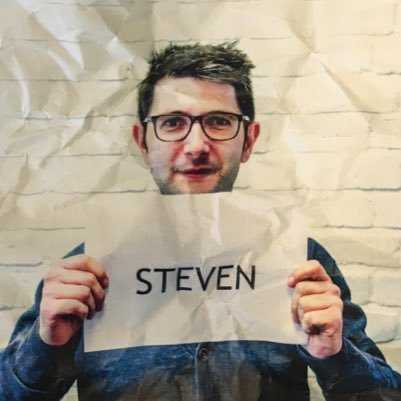 Creative Director at Studio Brussel in Belgium, part of VRT, Steven Lemmens has an outstanding mindset and skillsetfor radio creative and station branding. He specifically crafts the sound of Studio Brussel but works as part of a large team within the company where everyone is encouraged to wear many hats. Heck he is also the "tech guy!" Studio Brussel is one of the more popular music stations which super-serves its audience beyond "just music" while always putting the music first. We get into what that means, what they do well and some key social/video elements they carry out which are a big reason they are able to prosper in a crowded radio space.
Follow him on Twitter: https://twitter.com/stvn
Some simple yet important advice for the newcomers in radio: "If you want to work for one station, listen to all the stations."
Creative Director at Studio Brussel in Belgium, part of VRT, Steven Lemmens has an outstanding mindset and skillsetfor radio creative and station branding. He specifically crafts the sound of Studio Brussel but works as part of a large team within the company where everyone is encouraged to wear many hats. Heck he is also the "tech guy!" Studio Brussel is one of the more popular music stations which super-serves its audience beyond "just music" while always putting the music first. We get into what that means, what they do well and some key social/video elements they carry out which are a big reason they are able to prosper in a crowded radio space.
Follow him on Twitter: https://twitter.com/stvn
Some simple yet important advice for the newcomers in radio: "If you want to work for one station, listen to all the stations."Transcript
58 min read • 8,622 words
Announcer: The Producers, featuring the most respected international talent in the world of audio production and voiceover. Radio, TV, film, and online. In-depth interviews, industry insights, putting you on the inside. This is The Producers Podcast with Ryan Dreen.
Ryan: Hello again, Producers Podcast. We are here, episode 94, which means we're getting closer to episode 100. Kind of an arbitrary milestone, I guess, but I was doing a bit of very, for me, complicated math. I think, 100 will come out right about the end of this year, actually, so for whatever that's worth. Still trying to figure out something extra cool for the 100th episode. I've had a few suggestions, most of which are just too grand for me to pull off on my own, but if you have anything to suggest, love to hear it, of course. but I'll try and work out something a little extra special for that. speaking of upcoming, All I'm really gonna say, just so that I don't waste everybody's time and so that I don't announce things that aren't happening— 1, 2— I have about 5 email exchanges with various people that will be on the show at some point, but, you know, still working out dates and times. So like I said, I don't want to throw out names of people like I've done in the past a little prematurely. So be aware that we will have possibly a big-time voice talent, another big-time, at least for me, international producer, an American producer who is working outside the States, a few others. Anyway, that will cover the upcoming. How about a quick plug? My good buddy Jeff Schmidt, one of my favorite producers, also the purveyor of one of my favorite sound design companies, Alien Imaging— we worked out a little deal. He's got a cool free pack of sounds for you. You can go to my website, you know, Ryan on the Radio is still there, it's, it's the site, producerspodcast.com, takes you directly to this. Ryan Dream ryan-dreen.com is what I'm slowly just morphing everything into. So however you want to get there, ryan-dreen.com, probably the easiest. You'll see a big humongous banner, click that, it'll tell you everything you need to know. I'm not positive how much longer that'll be up. It's not going down instantly, don't get me wrong, but you might want to take advantage of the free sounds and also buy everything Alien Imaging has to sell. I have everything Alien Imaging has to sell and I love it. Okay, today's interview, Steven Lemme. VRT in Belgium. Now, I don't know all of the intricacies, but it's effectively the public media outlet for the country. So he works there in Belgium. I'm given to understand it's a very, very successful and popular arm of media. Their radio stations are highly rated. They have TV, lots of talent working there. Steven Lemons is primarily in charge of the creative at Radio Brussels— excuse me, Studio Brussels. And we get into all of that. We get into Steven's background. And I just wanted to say that I had only met and even really heard of Stephen basically like October of 2015, and I was instantly impressed. I actually had him on a panel that I was hosting, and I knew that he would be a great person to have on the show. Very, you know, measured direction, very good at keeping a well— a finely tuned brand pointed forward, and just, just Super serving the demo that they are meant to serve. We get into all that. What I do want to say is to start off, you'll hear some very cool power intros that they create specifically for their station. We talk about that in the episode actually. But first, he actually he sent me the original launch audio of Studio Brussels 1983. So that'll be fun to hear. You know, a lot of people listening won't. You know, understand the words. But it's some cool old school station launch of what has become a monumental radio brand over there in Europe. And so, without further ado, we'll hear the audio and then the one and the only Stephen Lemons. Een goeiemorgen, vrijdag 1 april, en dit is de eerste ochtendspits van Studio Brussel. Via FM 102.8 en Middenhof 1512. Tot tien uur alle informatie onderweg naar of in de hoofdstad. Studio Brazil, life is music. Studio Brazil, Brazil. Happiest. Studio Brazil. Studio, Studio Brazil. Brazil. Life is music. Studio Brazil. Do you recall? Studio Brazil. What? It is. It's a bittersweet symphony that's life.
Ryan: And, very happy to be joined by Steven Lemons, VRT. He specifically works at Studio Brussels. We're talking Belgium, folks. And, well, before I get into all the details, Steven, thank you so much for joining me on the show. I really appreciate it.
Lemmens: It's my pleasure, Ryan. It's nice to be here.
Ryan: Yeah, I met you in Amsterdam, and, to be quite honest, I was trying to set up a panel there, and I wanted, you know, I didn't want to just go with comfort zone, you know, people I already knew. So I reached out and said, who's awesome and smart that I need to have on? And your name came up a lot. And I was really impressed with you there. You know your way around the radio world and especially the imaging world.
Lemmens: Thank you. Thank you very much. That's so nice to hear. It was a very nice panel to do because it was one of the first times I did that. But it was so nice to meet all the other people that are also so obsessed with radio and imaging. So it was very nice to find out that I'm not the only crazy one, I guess.
Ryan: It is weird, right? it's— yeah, well, anyway, we will get into some of the obsession angle of this. I, I wanted to kind of start, I guess, on the personal side, you know, your background, then move into the business just in general. I want to— for those that are not familiar with the radio landscape in Brussels or Belgium or the area, you know, we'll kind of talk about the landscape, and then we'll get a little bit more in the geekery, a little bit more into the, the daily imaging grind, or maybe you call it studio sound there. We'll find all that out. So let's go backwards. Background. Where did you start? Why are you doing radio?
Lemmens: That's a very good question to start with because I just became 33 2 days ago. And the previous summer I worked at Studio Brussels for 10 years. So just after I quit school, I started working here and I was really I quit high school and I didn't really know what to do. And one of the things I wanted to do was maybe acting or directing. So I went to a school that's called RITCS. It's now called RITCS. It's an art school in Brussels.
Ryan: Okay.
Lemmens: To visit the drama part of the school, but it didn't really get to me. I didn't really like it at first sight. And then when I walked out of the building, which is really in the heart of Brussels, I really walked out of the door, took a right turn, and just saw next to the school was a radio station that had the radio studio with a window facing the street. So I entered the building and found out that the school also had a radio division.
Ryan: Oh.
Lemmens: And I had no idea that that was something you could study. And the people I met there and the people there who told me about what you could learn there and the wide range, because it's really an art school. So it really ranges from soundscapes to documentaries to pop radio, news broadcasts, journalism. It really— I was flabbergasted that you could do that. So I immediately, that moment, decided that that was what I wanted to do. And I didn't regret that one second. It was a 4-year a 4-year school.
Ryan: Yeah, program.
Lemmens: A 4-year program. And after that 4 years, the final thing we had to do was to make our own radio show. And in the jury, is that what you say in English? The people that give you marks?
Ryan: Yeah, yeah, it could be. Sure, we'll go with that. Teachers, professors, the panel. Yeah.
Lemmens: One of them is my current boss who saw me there and like 1 or 2 weeks after it, just gave me a call and said, hey, we do have an opening. And could you be presenting our Saturday morning show starting like in 2 weeks? So it all went really fast. And I started at Studio Brussels as a DJ, as a host for the weekend morning shows, the hit radio shows, the hit lists. And then after a year or 2, I became working here with a contract, like 9 to 5. And I started doing producing programs. I started to work on the morning show together with Thomas, who was the host back then, who is now a television presenter. And that's how I came in as a DJ, then as a producer.
Ryan: Yeah.
Lemmens: And then I got interested in the first thing, what was a bit of imaging, was that I got interested in how the promos worked, in how we promoted our own stories, our contests we did, how we promoted, yeah, all the things we did for the station ourselves. And I just hopped into the studio of the guy who works on it a lot. And that's how I rolled in. And a few years after that, I became responsible for all the imaging on Studio Brussels and not only the promos, but also every jingle we do and all the style and imaging of what we do on Studio Brussels. And that's what I mainly do today.
Ryan: Nice.
Lemmens: Next to, I also have the total responsibility on everything technical. So the studios, if we have broadcasts outside of the studio, if we go to festivals, and those are the 2 things I do, everything technical and then everything that's imaging.
Ryan: That's great. You know, we'll probably actually bounce around here a little bit. We'll come back to this, you know, to the you part of this, to the Steven part of this. But you say you go to, basically you go to radio school. You come out of radio school and almost instantly are offered a job at what would be a very exciting company. It's VRT, right? Public radio in Belgium, which I'm given to understand might be the opposite of the United States and more like the UK, where the public arm of broadcasting is strong and you want to work there, right?
Lemmens: Yeah, we do have an interesting landscape in Belgium. You have the public broadcaster and then you have also a lot of commercial radio and television stations. who also do very interesting things and also have very good numbers and ratings. But I think working for VRT and then specifically for Studio Brussels was always a dream for me because for Studio Brussels, I was a listener since I was young. So it was really cool to get in here so soon. But I think that working for VRT, because it's a public broadcaster, is also something I'd love to do because we're We do lots of amazing stuff that's something you can't do on commercial radio. Things like documentaries, the stories we bring. We also have a charity week we do. So yeah, it was very cool to come out of school and immediately get to start part-time at that time in such an environment. But it was also the school I went to had lots of professors and people teaching there. who are really professionals. So, not only can you learn how you must do your job later, but you also have the connections. You get to know people. And the network you build there is extremely important for what you can do later in life. There are colleagues of mine now who used to teach me, which is crazy. I just work with them now.
Ryan: Yeah.
Lemmens: But in fact, they taught me how to do it.
Ryan: So just to keep kind of with the landscape and give people a better idea of what it is like there, you say VRT, public broadcasting company. I know we discussed this real quick. I got the idea, but 3 TV, 5 radio stations commercially, and the rest— okay, is this exclusively in Brussels or are these also networks that spread throughout the country? And then also commercially what exists as well?
Lemmens: Yeah. I'll have to explain Belgium to you first, but—
Ryan: Yeah.
Lemmens: There are 3 languages spoken in Belgium. One is— the smallest is German. That is after the Second World War, a piece of territory was given to Belgium with some German people living there. So German is the 3rd language of Belgium. Then you have a French-speaking part that's closest to France and a Flemish-speaking part. That's the upper side of Belgium that's closest to the Netherlands. So we have really a language barrier in between. The French-speaking part has its own radios in French, and they really connect more with France because they have the language and like a bit of the same cultural interests. And then you have a landscape in Belgium, in Flanders, with the VRT as a public broadcaster, 3 television stations, one main family-oriented entertainment channel, one more in-depth culture, sports channel, and a children's channel. And then on the radio side, we have Radio 1, which is the news broadcaster. Radio 2, which is the biggest radio in Flanders, they have a 30% market share, which is huge, was really the family station.
Ryan: Okay.
Lemmens: Radio 3, Clara, they called it, is classical radio. Then you have M&M, which is really the youth station. And then you have Studio Brussels, which people often refer to as like the alternative youth station. But in fact, we're just, yeah, mainly an office radio for people who feel young because at the moment we're market leader in the 18 to 54 age group.
Ryan: Yeah.
Lemmens: But yeah, also people who are 54 or older, they like to listen to us because we're just people who feel young and feel adventurous.
Ryan: The perpetually 29-year-old?
Lemmens: Yeah, that's it. And then on the commercial side, you have the biggest group is the Medialand Group, and they have Q Music, which is a commercial hit station, and Jo FM, which is just a little older. If you like move from Q, you often go to Jo FM. And then there are some other smaller stations who complete the landscape.
Ryan: As far as Brussels goes, What is the— well, you said Radio 2, I guess, that would be the king of Brussels. What are the other top 5 radio stations in Brussels and who owns them, commercial or public?
Lemmens: Yeah, really, you have to see Brussels as the capital of Belgium. It's in the center of the country. It's both French, Flemish, English, tons of other languages. But we really do have only— we only have numbers for the French-speaking side and then the numbers for the the Dutch-speaking side. Everything you can listen to in Flanders, you can also listen to in Brussels. So if you go to the numbers in Flanders, you have the number— I'll check this after I said this. You have the number 1 is Radio 2, which is the biggest station in Belgium, 30%. And then there is a huge gap between the numbers 2, 3, and 4. And every other month that switches in between Studio Brussels and Q Music. We hop over each other all the time. Then you have M&M and Radio 1 underneath that. Those are like the biggest stations.
Ryan: Okay. You know, I've been through there on a train, but my knowledge of your media landscape is lacking, so hopefully this was interesting to other people as well, just to kind of get a feel for it. Radio in general, before we get specifically into imaging, I just know that you're very knowledgeable on the media industry there. So would you say radio is very powerful there? Would you say it's on a decline, an incline? Just what's the perception of what radio is and its power in Belgium in general?
Lemmens: I still think radio has a lot of power in Belgium. Of course, there is like this mastodon of television, but if you just look at the number of people that are still listening to radio day in and day out, I would not dare to say that it's declining. There are still thousands, hundreds of thousands of people who listen to radio every day in the car, in the bathroom, in the kitchen.
Ryan: Yeah.
Lemmens: We still have the FM broadcast in Belgium. We're starting to work on DAB and DAB+, but that's really marginal. But the FM is really still going strong. So for me, radio is one of— for me, it's the most powerful medium Because it's so quick and so instant. And I would really say it's really strong, still strong in Belgium.
Ryan: Now, as a radio group or programmers or people who are actually competing for the ears of listeners, putting aside television, because that does a different kind of competition, and putting aside actual radio competitors, who do you guys consider you're competing against? And what are your concerns out there in the radio world there?
Lemmens: I speak as working for Studio Brussels and what we do now. We do not compete against anyone. We're a public broadcaster and we try to make the best program possible for the people that want to listen to us. And we're not counter-programming or trying to hurt other stations. That's just not in our DNA in what we want to do. We just want to bring the people that listen to us the best possible radio, the best possible companion, to be the best possible companion through the day, through the night. And we're not looking at it as we want to hurt other radios or other companies with what we're doing. And I think maybe that is one of the strengths of what we do.
Ryan: Yeah.
Lemmens: Because we're looking at ourselves, Of course, we know what other people are doing, but what we try to do is try to innovate, always be innovative, always to try new things, to be on top of things, and not to look at other people. Yeah, we're not competing against anyone. We're just competing against ourselves to reinvent ourselves day in, day out.
Ryan: That actually brought— this happens to me many times. Now I have 5 questions that flooded my brain, but you've worked at a public broadcasting company your entire career. I'm curious, have you ever— I mean, not that you are going to make any moves, but this mentality wouldn't be true, I assume at least, there in a commercial side of things. Have you thought about this from that side? Would you ever— would you want to, you know, be in media on that side of the coin? And have you thought about how it would be different?
Lemmens: I think I'd even love to do I'd love to do so many things. I'd love to work at every other radio station in Belgium for the rest of my life and just to try it all.
Ryan: Yeah.
Lemmens: So I could really imagine doing that. But at the moment, I just feel so good at what I'm doing right now that I wouldn't want to quit that. I'm eager to try something else, but it's not just the time right now to do such a thing. But I could imagine being on the other side. Yeah.
Ryan: And my question actually was pretty awful now that I replayed it back in my head. I guess on the commercial side of things, do you think that you could be successful employing kind of everything you just discussed about Studio Brussels? Could you be successful with that mentality on the commercial side of radio?
Lemmens: That's a difficult question because I didn't— that's a too difficult question to answer, I think.
Ryan: You know what I'm asking though, like the idea, because I love that. I think that's a great mentality. That let's just be the best we can be for the people who want to take us along in their day, as opposed to, all right, let's go to war. Let's see who's out there, who can we go and topple today, and we need to be the best. Obviously, 2 very different mentalities.
Lemmens: Yeah. But maybe I'd love to do that once. Just indeed, just go to war and try to take in everybody. It seems like something I would like to do one day. Yeah, yeah.
Ryan: No, that—
Lemmens: okay.
Ryan: I finally got us there. Sometimes, you know, I'm not so good at this, but I had a feeling you wouldn't mind the competition in a different way. Okay, great.
Lemmens: Right.
Ryan: Imaging now, and we'll kind of come back to radio in general as well, but I really wanted to make sure I got to talk to you about your imaging techniques and your philosophies and what drives you. But tell us, I guess, in general, what is the emphasis there at Studio Brussels, at least first? And how do you go about forming the image of that station and that brand?
Lemmens: Yeah, in fact, I didn't mention our baseline. The station is called Studio Brussels, Studio Brussels, and our baseline is life is music, because music is, in fact, the thing that we do. It's the most important thing that we do, and that sounds a bit obvious maybe for a music radio station, but music is really the heart of everything we do. We have a giant heart for every artist we play. And that's really the basis of everything we do. If there is no connection to music, we don't do it. And if we want to do something else, we always try to connect it to music because that's so important to us and to the people that listen to us. So we just want to bring the best music in the best possible way. And with the imaging, we try to even enhance that. that idea and labeling the music with the brand. And it works in 2 ways. We want really artists and music to identify with what Studio Brussels is.
Ryan: I remember this from Amsterdam, and you just sort of hinted at it there, but you guys do a great job of embedding your brand into the music. As you just said there, you love music, music is life, whatever. But anyway, discuss that. I played some of that audio to begin the interview here. Discuss how you do that, why you do it, and why it works.
Lemmens: Yeah, maybe I'll take just one extra step back because when I really started working on imaging, the most of what I did was to really just create jingles, create a composition with music, make some edits off of it, put some acapellas on top of it, and I had like separate jingles Brussels, piece of music, a cappella singing, Studio Brussels, life is music. And then that was that. And for that composition, we just looked for sounds that fitted the station and fitted the music that we were playing. But I didn't think that was enough just to really also brand the music that we were playing. And at the time, we were like maybe just a bit more an alternative station than we were now. So to bring something new into the imaging that might a hint at something commercial was kind of difficult. And the idea of the branded intro, which was already used on other stations, on other hit radio stations, yeah, some people were a bit afraid of it because wouldn't that be too commercial? Do we still have enough respect for the music? But then I turned that around and I said, of course we could do branded intros and have a huge amount of respect for the music because the fact that we want to Brand the music with our sound and our logo. That's like the best thing you can do if you could. If if you put yourself on the same level as as the artist or as the music, and you try to incorporate the the brand into the music because that that's what we did. We created the sonic five note logo that is just typically saying Studio Brussel in Dutch, which is te te te te. And you could do that in all different tempos and melodies. And we work with Pure Jingles also in Amsterdam, who are— we're already working with them for like 12 or 13 years. And I just called them a couple of years ago and said, all right, I want to try the branded intro, make me some demos. And they took 2 really more alternative songs that we were playing now because we have a musical playlist with also a big amount of hits that are also heard on other stations. And then we have certain songs that are really only popular at our station. So at the time we had, what's it called? Alabama Shakes.
Ryan: Okay, yeah.
Lemmens: We were like one of the only radio stations at the moment that was playing Alabama Shakes. So I just asked them to try to incorporate the brand into that song. And if it works with a song that is maybe so alternative, it will work for all of them. And they tried it and it was really amazing. They just took the logo, played it in, like, the sounds of the song, and then put the a cappellas on top of it and, like, tuned it to the logo.
Ryan: Sure.
Lemmens: Because one thing that we can't do, and that we will probably never do, is sung imaging, because that is really one step too far to that really commercial-sounding imaging. So the solution that we came with there was to really take 2 of our station voices and let them do a wide range of a cappella takes that then are tuned in Pro Tools just to match the logo. I'll just play one now to get the feel.
Ryan: Studio Brussels.
Lemmens: Hi, we're the Alabama Shakes. Bless my heart. This was the first branded intro we made, and we didn't stop since then.
Ryan: Are you saying, wait, that was the first one of this series, of this new idea? That was literally the first one?
Lemmens: That was literally the first one we ever made. Yeah.
Ryan: Great.
Lemmens: I remember walking— Pure Jingles has an office in Hilversum, which is a big villa, and in every room other people are composing or editing And I just remember walking past this, walking past the studio and hearing a guy working on this. And I was really astonished on what it became because it's so powerful, but yet short and musical.
Ryan: Yeah.
Lemmens: And it has the logo in it. It has the station name in it. And it is the song. It's not a jingle. It is the song that is branded with the Studio Brussels logo. We rarely play separate jingles at this moment. People just use Power Intros all of the time. We have news, weather, commercial in and out. But when people see that there is a branded intro for a song they will play and they want to put a jingle before it, they will always take the branded intro. Yeah.
Ryan: Yeah, yeah. Momentum, like you said, kind of married. It's not that you guys play the music, it's you're married to the music. The music and you are one. Yeah. And that's a lot more powerful.
Lemmens: Yeah. I think being married to the music is maybe one of the best descriptions I ever heard of what we're doing, because that's really what we are. We like to see ourselves as the music station. So being married to the music is really a very nice description, right?
Ryan: All right, that one's free. You can have it.
Lemmens: Thanks.
Ryan: You'll have to translate it though, because— no, I actually, I did want to get to that a little bit. Now, you obviously speak impeccable English. I know that English is spoken in Belgium, but it's what, like the 4th or 5th language? It's not exactly the dominant language. But still, a lot of people, majority of the people understands it and can speak some So I guess what I'm leading to, you know, you play a lot of US or American or English content as far as music goes. What percentage would a Studio Brussels play as far as, you know, English music versus everything else? And then what percentage of the other languages there? How mixed is it?
Lemmens: At the moment, like roughly 1 in 3 songs we play is a Belgian production.
Ryan: Okay.
Lemmens: Which doesn't mean it's in Flemish, because we don't— we do play Flemish spoken music, but in the genres we play, there isn't a lot of music made. But we really try as hard as we can to support everyone who's singing in Dutch or in Flemish. So 1 in 3 is Belgium, but the numbers of how much of that 1 in 3 is in Dutch, I don't know. The other third would be English and then some small things in French probably.
Ryan: And so Studio Brussels would play all that. Is there mandatory amounts of local artists that you guys have to play being a public company or that your commercial stations have to play there? Or does that not— those limits don't exist like they do in Canada and other, I think Australia and other places?
Lemmens: There is a limit and we put that limit higher for ourselves.
Ryan: Okay, so you go above what the state would require, I guess?
Lemmens: Yeah, without a problem, without really— we don't have to push ourselves to get to that specific number. We just— it's just higher. We play lots of Belgian music. Belgium has a very vivid music scene with lots of great artists who also have hits internationally across Europe, some even in America.
Ryan: Sure.
Lemmens: So it's not really difficult to get to the amount of local productions we have to play.
Ryan: Yeah, awesome. I had never really heard that it was. In fact, I didn't even know. So that means, you know, in Canada, for example, we'll hear down here that they have those limits and they can be sort of stressful. You'll have like one artist that'll get so many more plays than they should just because they're trying to meet their limits up there. And then they start playing the American artists, you know.
Lemmens: Okay.
Ryan: Odd stories like that. Anyway, that doesn't matter. Let's move on because I have limited time with you. Take your time, Ryan.
Lemmens: Take your time.
Ryan: We got some time? Great.
Lemmens: Yeah, we got some time, of course.
Ryan: I wanted to hear a little bit about what your team is like there. I know that you are with Studio Brussels. I'm sure there are other people that will contribute, and then you said you work on the technical side, but do you collaborate with other station producers there? Do they do work for Studio Brussels and vice versa? Just tell me a little bit about the dynamic between the team there.
Lemmens: Well, we have, as I told you, we have 5 radio stations in this building. And they, on the output, they all work separately. But some years ago, inside the VRT, we started with a project where all the imaging guys who were working with the radio stations just moved to like an internal production house where they just worked together, learned from each other, and they just all left the radio stations and went to work together in another part of the building as like— our own production company.
Ryan: Yeah.
Lemmens: And how it works now is that I work for Studio Brussels, and if I need a piece of imaging or a promo or something else that needs really advanced editing, there are 2 people who specifically work for us in that production team, and they work for us 6 days a week, and I order what I need. We talk to them, and they create it for us. But from time to time, they also work for other stations. So that's a way to keep it fresh, to learn from each other, and to not stay focused on your own station all the time. And I think that's very refreshing if you not only work on things for one specific station, but that you can also broaden your horizon and see what other people are doing.
Ryan: Sure.
Lemmens: That's what we're doing in-house. And then we work with Pure Jingles to make the basic jingle package. We like to renew it like every every other year, but we're constantly adding new stuff. They also make branded intros for us. We make some with Pure, some other branded intros we make in-house. That are mainly the 2 things we work with. And then we also have some people who are just working for the station that are working on programs, but that can also do some editing, that if something needs to happen really quickly or something that has only— has to go on air like 1 or 2 times, that's just made here on the floor. If we like a compilation of an artist that is playing this evening in Belgium, that's just a thing we edit here on the floor. Everything we do that goes on air multiple times is made by the production team.
Ryan: The production team, how many people are on? Are there men and women, or is it all dudes? You know, it's hard to find women who are interested in this business sometimes, but anyway, tell me about them. It's all dudes, man.
Lemmens: All dudes?
Ryan: All dudes. You know, how large is that? What do you got, 5 dudes, 2, 10?
Lemmens: 2, I don't know exactly, but like 2, 4, say like 8 to 10 people.
Ryan: Okay. Wow.
Lemmens: Yeah, but they work for all the radio stations. And the team consists of a number of people who really write, who make the copy, who make the ideas. And then another part of the team who is really specialized in really recording and editing. And there used to be a really barrier between the two. One part of the team team makes the copy, the other part does the editing. But for some years now, it really flows into each other. The guys who did the copy also have basic skills of recording and editing. Guys who are editing started really collaborating on copy, on texts. So really, they're really working together right now. But if you see that they make with like 8 people, they make an enormous amount of output because they make make every promo that is for the radio stations or for television stations and a whole lot of imaging for 5 radio stations. And one of the radio stations also has 5 local branches who have a separate broadcast 3 hours a day. So that's really a lot of hours of broadcast. And to do that with— it's not a small team, but they really do amazing work and they work extremely hard and The output they make is extremely, extremely good, and the quality of that is extremely high.
Ryan: That sounds cool though. I love when you hear the stories of those collaborative teams. Those are various different levels around the world. But anyway, just a great story there. What about yourself? Now, I don't know how— do you get your hands dirty in mixing and editing production, and how much of it do you do? Or have you ever had to do too much of that?
Lemmens: I'm not— I know— how will I put this? I know what I want, and I know what I want it to sound, but I can't do it myself.
Ryan: Gotcha. I know, I figured you were more of a director versus actually in there putting the sounds together, right?
Lemmens: Yeah, I have some amazing people who are really magicians at the knobs and with Pro Tools and with Nuendo. And since we worked with each other for so many we understand each other really well. So what I really do is try to create the vision on what we do and to get it all in line. And then those guys are really producing it. Of course, I can record something and I can make some basic cutting. What I sometimes do is like we have in the broadcast studio, we work with Dalet+, that I make a really rough edit of some songs or some quotes just to get the feel and the sound of what I want it to be. But yeah, they're so much better at doing it. So, they're the guys who make the magic happen.
Ryan: Yeah, yeah, yeah. That's great. It's a cool— it's not often that I talk to somebody that's in this dynamic. And I'd say in the States, it's a lot more of the person who conceives and basically directs also produces and also gets approvals. And it's just a little different structure. On the programming side, which is obviously where you reside, can you tell me a little bit about that structure there? So Studio Brussels, a very successful station there. It's on the public side of the spectrum, but is there a program director? Is there a music director? Where do you fall on the chain of command? That kind of a thing.
Lemmens: We try to really organize ourselves as like a 360 team where everyone is Not that everyone has its own specific task and only does that one specific thing, but we try to be involved in everything and to have an opinion about everything, to talk about everything. But of course, we do have one program director. Then we have someone who— a music director, an imaging director, an online director, and Those are like the people who are constantly working on the continuity of the station and who are constantly in a conversation with each other on what we should be doing, what we're doing, how we can do it better. And then there's a whole team of people that's really working on the floor on making the radio day in and day out. But we're trying to really make everyone as versatile as possible.
Ryan: Yeah.
Lemmens: You're not only the DJ. You have to think about what we can do with it online, or what can— if there is a piece of imaging that can make your show better, that's also something you have to think about. People who are working online also have ideas about how we do things on air. So we're trying really hard to smash the boundaries between all these—
Ryan: Yeah.
Lemmens: different parts that there used to be with all the people working on radio, which is a difficult task, but I think we're doing very well. We also have a big online output on the website and a lot of video content. And I think we're doing great there by just trying to work together and to really feedback each other and listen to each other and try to do everything I'm glad you went there.
Ryan: In the intro, I mentioned how I love your Twitter name, @STVN, one of those classic 4-character Twitter handles. Anyway, I say that now because I was curious about what you guys do socially. You know, a radio station these days, I think most people agree, to be successful, you need to connect with your listeners in different ways. You just brought up the fact that you guys are focused on social and video.
Lemmens: Yeah.
Ryan: You know, who does what? What kinds of cool things are you doing as a radio station off air?
Lemmens: I think one of the things that we did last year, we have a lot of fantastic radio DJs, and one of them is called Linda, and she's a great personality on radio. But a year ago, we decided to— she's really popular. She's one of the popular DJs of Studio Brussels.
Ryan: Yeah.
Lemmens: We decided to take her off air, to not put her on the radio anymore, and to just let her make content for the website. So what she did was a year ago, together with a camera guy, they just came to the floor every day at 7 and thought, yeah, what will we do today? And we created an online feature called At Your Service. service, where Linda is at your service, at the service of the listener. And every day they make something, maybe a movie, a video, maybe some audio, photo, something that is put on the website. And she has still a 2-hour radio show on Friday. But the move of taking one of your lead DJs off air and push her online is at the time—
Ryan: That's strong.
Lemmens: It seemed a crazy thing to do. But what she is creating now for the online part of Studio Brussels is really amazing. It's funny. It's sometimes really emotional. She makes a lot of funny stuff. But like with the refugee crisis and refugees coming to Belgium, she went to one of the refugee parks, which was in the center of Brussels, and talked to the people. And I said our baseline is life is music. She just went there with a radio and she played the songs that the people there wanted to hear. And just, she let them tell the stories they wanted to tell that were connected to the music. That's something we couldn't have done on air, but we did it online. And then when the video was finished, we could mention it on air. We could use snippets of that on the radio.
Ryan: Yeah.
Lemmens: And send people to the website to watch a really— that was a really powerful video of what she did there. And I think that maybe that is one of the best examples of how we're trying to do it. Not just following the radio with the website, not just putting online what we did on the radio, just take the piece of radio, cut it, and put it online, but just make really genuine, unique content.
Ryan: Yeah.
Lemmens: content, especially for online, and that makes the online brand extremely strong.
Ryan: I think that's a huge takeaway. I also think that in paying attention to other radio brands, some are doing it well, some are a little afraid of that, to take one of your most popular talents and literally take them off the air and put them on the other mediums. Also, to make content that you're not going to be solely using on the air.
Lemmens: Yeah, that's true. And yeah, what you need are really the people that are capable of making things that are interesting to that kind of audience because the online audience is a different audience than the people that are listening to the radio. There are even people who only follow us online and who don't listen to the radio.
Ryan: Yeah.
Lemmens: So you really need the right people to make the right content. to do that. At the moment, maybe a little later than in the US, Snapchat is really coming through in Belgium. I was one of the first people with a Twitter account here on the floor. But with Snapchat—
Ryan: That's obvious.
Lemmens: Even I, I'm too old to do it. I almost don't get what it is and how to use it. So we have some people on the floor now who are like 21, 22, 23 years old who are really specialists in that. They know a lot more about social media nowadays than I do. So I can understand that people are afraid of making that move, but I think the key is finding the right people and give them the confidence of making things for that specific, a bit younger audience, that is, I think.
Ryan: Yeah, absolutely. Absolutely. Hey, Steven, this has been great. I'm gonna ask you just really 2 more questions, but really appreciate your time here, your insight. I knew you'd be a great guest. Looking at radio in general now, as we kind of look to the future, I think you're just pretty savvy. I think you got your finger on the pulse, if you will, of the industry. So you can talk about it as far as Belgium goes, Brussels, or the world, I don't care. Where do you see radio? What do you see happening to the, literally, radio in the next 5 to 10 years?
Lemmens: It'll never disappear to begin with. There are always people who declare the end of radio with streaming coming on Spotify, YouTube. I think that the carrier of what we do might disappear, like FM can turn into DAB or can turn into online, but I think that people will always always be looking for 2 things, for a companion, for someone to get them through the day, to get them through work, to listen to in the car, to listen to in the shower, and that it is someone who gets them through the day. That's one thing. And yeah, the other thing is that people will— there is streaming, you can have all the music you want at your fingertips, but if there is someone who can just, out of that massive amount of music and content out there, that can pick the right things for you, that's like a curator of everything that's out there, and people will always come to you. Because of course, people— we encourage people to go to Spotify, to listen to new things, to find new music. But people also know that if they listen to Studio They will find new music. And that if you— like someone told me this thing that I will never forget, and that I'll try to put it in English. If you send people away from you and put them in the right direction to find new things, they will always come back to you because they know when they come back to you, you'll send them in new directions and give them new things to explore. So send them away and they'll come back to you.
Ryan: That's cool. That's a pretty good way, interesting way to look at it. Finally, you might be a terrible person to ask this question to because you went to school and you walked out of the school and somebody gave you a job, or you might be a great person to ask this of, but I'm going to ask it anyway. Out of everything you could possibly think of, what's the number one thing that youth, young people who want or should want to get into I think they should focus on as much things as possible.
Lemmens: And by what I mean, not focus— if you want to work for radio, don't listen to one radio. Listen to all the radios. Skip through all the stations that you can hear all the time. Don't focus on if you like to want to work for one station or if you like one specific kind of music. Don't put your focus only on that. on that. Try to absorb as many things as possible. When I'm in the car, I'm constantly switching channels. When the music starts, I try to find a station where someone is speaking, just to know what they are doing, how they are doing it, what they are telling, what imaging they're using, what they're saying at that specific time of the day. So try to really absorb it all, and by listening to as much different stations, as much different music as you can, building your own style. But really, don't be too focused. Listen to everything.
Ryan: Yeah, that's great, great advice. Thank you, Steven. It's been so great. Oh, wait a minute. Hold on just a second. If I come to Brussels again and I get off the train this time, or how about this? You know, not the tourist type of a thing, but something really cool in Brussels that a local might like to do? Maybe a restaurant, maybe something to see, whatever it is. Give me something.
Lemmens: I think that Brussels is really a state of mind. I think if you should— if you go there now, I think one thing you would have to do is just go to the city center. You know, we had the attacks a couple of weeks ago, and in the city center at the Beurs, La Bourse, it's really the heart of Brussels. There is now— it's really a flower carpet where people are still meeting just to grieve and to talk to each other about what what happened. And I think that the atmosphere that's hanging there of people that are living in Brussels and that are still believing in Brussels as a fantastic city, I think the atmosphere that is there, that is just amazing. If you would come here now, I'd just take you there just to experience that. And there are so many fine restaurants and local pubs. But most of all, just come to a Belgian festival. I could advise that. In the summer, we have so much great music festivals. a lot of international bands, but also a lot of great Belgian bands. We have Rockvester, we have Tomorrowland, we have Pukkelpop, which are really amazing festivals. So if someone in America wants to take like a huge European summer vacation, just try to pick a European festival. They're super nice things to do.
Ryan: Awesome. Yeah, obviously I didn't want to, well, bring it up or harp on it, but I know that, you know, in email we talked about the attack there and everybody's healing and you said Things are starting to get a little better. You know, people are starting to feel a little better there, I guess.
Lemmens: Yeah, since like yesterday morning, the subway is riding at its normal hours again.
Ryan: Okay, great.
Lemmens: Yeah, things have changed. It's come so close. Paris was already close, but in a way, it's still a different country and a little further away, but it came so close now. But I think that we're kind of getting over it. but it has changed everything forever.
Ryan: Yeah, well, you guys seem like a resilient people, but you are an amazing talent, Stephen. Again, I can't thank you enough. Always love chatting with international, you know, not just producers as I do, but also the minds behind these great, great brands. And so, well, with that, I'll simply say thank you very much for joining the show, Stephen Lemons.
Lemmens: It's been a pleasure, Ryan.
Ryan: Thank you very much.
Announcer: Content, or simply stay connected at producerspodcast.com.