Episode 90: Scott Fisher
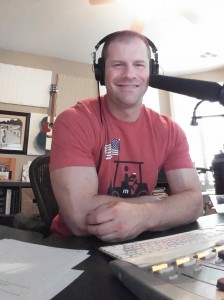 90th episode?? Damn. Scott Fisher is one of the leading Radio Imaging Voice Talents in America. He is heard on some of the largest stations in the largest markets. He is BIG-TIME. It's a shame that it's taken me this long to have him on but I had to save some of the best...
Scott is from a radio family. In fact one his family owned stations subscribing to a country service I operate is the reason we met! Small world. Scott has been #2 on Benztowns Top 50 Imaging Voice list for all of its existence. That should give you an idea of his scope. For seasoned Imaging VO's and/or those looking to break in, I believe you will find this show very insightful and useful. Hope you enjoy!
Here is a link to his full demo mentioned in the show
90th episode?? Damn. Scott Fisher is one of the leading Radio Imaging Voice Talents in America. He is heard on some of the largest stations in the largest markets. He is BIG-TIME. It's a shame that it's taken me this long to have him on but I had to save some of the best...
Scott is from a radio family. In fact one his family owned stations subscribing to a country service I operate is the reason we met! Small world. Scott has been #2 on Benztowns Top 50 Imaging Voice list for all of its existence. That should give you an idea of his scope. For seasoned Imaging VO's and/or those looking to break in, I believe you will find this show very insightful and useful. Hope you enjoy!
Here is a link to his full demo mentioned in the showTranscript
50 min read • 7,497 words
Announcer: The Producers, featuring the most respected international talent in the world of audio production and voiceover. Radio, TV, film, and online. In-depth interviews, industry insights, putting you on the inside. This is The Producers Podcast with Ryan Dreen.
Ryan: All right, welcome to another episode. This one's going to be good. I was just chatting with my upcoming guest about how small the radio world is and about how you can kind of know of people for a really long time and then suddenly you get the name and you— now you know of them from 5 different perspectives. And so this will be a fun one. But first, let me let you know that Mark Vickers is coming up very soon. he's been scheduled to be on the show, but he went and had a baby, so we had to push that back a little bit. But I let him have his holiday with his new child. And then, from Wise Buddha, Mark Vickers will be coming up soon.
Ryan: Awesome.
Ryan: Also, AJ, a new buddy of mine that I met over in Amsterdam, he works in Dubai at the Arabian Radio Network. He's gonna set up a podcast where we're gonna have 3 different producers from the Arabian Radio Network, and we'll all chat radio imaging and such, and we'll do that one coming up soon as well. But now for today's guest. Scott Fisher is heard pretty much everywhere. We could rattle off market after market, but he also does— Okay, I think, Scott, I'm gonna officially introduce you in a minute, but I think Scott started in radio at the age of 3. So, all right, so Scott Fisher, everybody. Scott, when did you actually get into radio?
Scott Fisher: I think 3.
Ryan: Okay.
Scott Fisher: Something like that.
Ryan: Good guess. You're a family radio— I'm sorry, a radio family, right?
Scott Fisher: Yeah, yeah. My grandfather was in radio and my dad's in radio, and so boy, I'd be stupid if I weren't in radio, huh?
Ryan: Yeah, well, would it No, you're doing just fine.
Scott Fisher: That's true.
Ryan: Are your parents, dad, grandfather, whoever is still around and available, are they all happy that you chose the family business or are they like, oh, could have been law school?
Scott Fisher: No, I think we all hold radio at— maybe not law school, but radio's pretty awesome. And I think most everybody who is a part of it feels the same way. And there's so many people who wanna be a part of it, and yet it's very competitive and tough, and sometimes when you're in it, you're like, what the heck am I doing here? But most days it's a blast.
Ryan: Well, we're gonna get more into the radio family, the many, many, many, many, for many things that you do as it relates to radio. Let's hear a pretty stellar demo. I think you might've actually updated this just a bit for me, right? Can I feel special that way, or?
Scott Fisher: Oh geez, you kind of, yeah, you forced my hand. It's been a long time coming, but thank you for doing that. Great.
Ryan: So I'm gonna give you about a minute or so of this, but I'm gonna put the entire demo on the website. But let's hear some of the brilliance that is Scott Fisher.
Scott Fisher: Scott Fisher.
Ryan: Scott Fisher.
Scott Fisher: We're working hard for the weekend, and that's about it. Big 105.9. This is WTOP, Washington's top news. WTOP FM Washington, and online at wtop.com. 93.9 WLIT is the soundtrack for Chicago's weekend. WNSH, Newark, New York. A Cumulus station powered by Nash. Country for life. 9 out of 10 experts agree listening to Mike Broomhead's show will make you smarter, better informed, and even more attractive. Not sure what the deal is with that 10th expert. What's his problem? Playing all the hits. All the hits. 107.9 Mix FM. When life throws you a curve, it's music that helps you make sense of it all. In our 89th year entertaining Chicago, this is the year of '89, WLS.
Ryan: There it is. I left on Chicago there, but the whole demo is about 3 minutes of pure gold, and it's on the website ryanontheradio.com. Any bright spot stations before I really get in depth on you? You know, ones that maybe you signed early and you've been with a real long time, or Or some monsters that you just love being a part of?
Scott Fisher: Well, I love all my stations.
Ryan: Of course.
Scott Fisher: I gotta say that, of course. But I think one that has been so much fun over the years is KKBQ in Houston. And it's really cool, they still call themselves the new 93Q, even though they've been around for, you know, 10, 11, 12 years. And that's been a blast. Nash FM in New York, when they relaunched country, that's been really cool. And geez, one of my, biggest feathers in my cap is WLS in Chicago. It's like, wow, can I, can I really be a part of that? Okay, that's good.
Ryan: Yeah, I decided to cut your demo there because exactly, that is a wow station. But you've got a lot of big ones on your roster, and I know, you know, while I am a minuscule flea compared to you, everybody loves all of the stations that gives them a chance to, you know, be a part of it.
Scott Fisher: Yeah, for sure.
Ryan: All that. So let's go back in time a bit. Now, as we already established, you were barely able to walk and you got into radio, radio family. But how did your, you know, journey, as it were, go? You know, DJ first, sweep the floors? Take us through the steps of your radio journey.
Scott Fisher: Well, fortunately, my dad has owned radio stations, and so I grew up in a radio station. So I knew what that meant to work there. But it's way different when you're working for your dad and when you go out and try to do do it on your own. So I was a DJ first. That's, that's what I thought I was wanting to do, but I felt boxed in, literally sitting in a control room for 4 or 5 hour shifts. It's like, man, this is, this is definitely not what I want to be doing, even though I grew up listening to, you know, all, all of my favorite DJs and, and just the showbiz of radio really caught my eye and my ear. But then moved on to production and got my first big production job at KNIX in Phoenix.
Ryan: Oh wow.
Scott Fisher: And was with them for 18 years. and did voiceover stuff on the side and still was production director, did imaging all over the world and things. So I definitely have that radio background and it's still in me. And today, actually, I still do some work for my dad who owns a bunch of radio stations in northern Arizona. So I get to still play radio and I am super lucky to be able to have that.
Ryan: Yeah, we've talked about that a little bit. That's a lot of fun to almost go full circle, but along the way become a, you know, a quote-unquote big-time pro on one facet of it. Although, let me go back. Did you actually grow up in Arizona? I mean, I know you're there now.
Scott Fisher: Nope, I grew up in Colorado.
Ryan: Okay.
Scott Fisher: And just came to Arizona because I was sick of the cold, and so I got the super hot, and it's not too bad. I'll stay here.
Ryan: Where in Colorado are you from?
Scott Fisher: I grew up in Denver.
Ryan: Okay, yeah, I was in— well, I grew up in LA, but then we went to Parker.
Scott Fisher: Oh, cool, yeah.
Ryan: I was there for a year, then went to Colorado State, and so I got my start jobs in, in Colorado.
Scott Fisher: Excellent. Yeah, it's great radio. Denver is a great radio market. And so, you know, I grew up listening to, you know, KOA in Denver and all those legendary stations there. So that's, that's kind of where it started for me.
Ryan: And so now you're one of the premier, you know, radio imaging voices, a promo voice for radio. Yeah. Oh, for sure. You know, I think I forgot to mention it in the beginning. I, I think we talked about it, but the Benztown 50 Number 2, 2 years running, buddy.
Scott Fisher: I'm number 1 at being number 2.
Ryan: Number 1 at being number 2. I like that.
Scott Fisher: That's right.
Ryan: That's not too shabby. So I would say that safely puts you in the big-time voiceover guy category.
Scott Fisher: Thanks. It's cool to be part of that. There's a lot of awesome pros on that list, and there's a lot of awesome pros that aren't on that list. But it's so cool to be a part of the Benztown family. Being number 2.
Ryan: Yeah, yeah. you know, are you gonna have to make a hit to get, to get to the number 1 spot?
Scott Fisher: 'Cause I don't know, I think Pat Garrett has to go somewhere.
Ryan: He's got a lot of— he's got a lot of stations. I gotta be honest, dude's got a lot of stations. So, anyway, but no, Pat Garrett's been on the show. Everybody loves Pat. back to it though. So you made your way to Arizona. I actually did not know KNIX for 18 years. So you know your way around, the production studio and, and the gear and whatnot.
Scott Fisher: Yeah. Yeah, I do. I've, I've, you know, I've done the 8-track reel-to-reels. I've done, the 4-track Pro Tools, now the whatever, however many tracks Pro Tools. And, I've seen it all and, and, yeah, still stuck on Pro Tools though.
Ryan: Yeah. Yeah. I was going to actually do some tech talk later. Well, let's get it out of the way now. And then we're, I'm going to really dive in with you on the voiceover industry, getting into it, succeeding and all that for those that came to this episode for that stuff. But, on the tech side, you know your way around Pro Tools, which not all VOs do. It's not important for voiceover talent though, right? You would say that? No.
Scott Fisher: Yeah. No, it's just a comfy thing.
Ryan: Yeah.
Scott Fisher: Started in it and just realized that it's very powerful and maybe too powerful. And you get your plugins and there you are off and running and there's no reason to look back, but there's so many other ways to do it these days. So many cheaper ways to do it.
Ryan: Yeah, right. Although, you know, the Pro Tools, they keep dropping their price slowly but surely over time. So that's good. Do you— not to use too much jargon, especially like for the VO people that have come and don't know all the vernacular, but are you processing yourself in the box? And what kind of processing do you do on your voice?
Scott Fisher: I— over the years, I found that less is more. Yeah, man, I've spent so much time and probably way too much money trying to find the perfect mic chain and the perfect plugin, but nowadays it's pretty much just mic right into Pro Tools, and I'd let the awesome producers who work with my voice do what they want to do. So it's much easier to, you know, work with flat audio than if I'm sending them something overprocessed.
Ryan: Yeah, I think so. So then, I mean, are you literally putting nothing on it? As we hear you now, do you have some sort of EQ? I feel like I'm hearing an EQ on your voice.
Scott Fisher: I'm just guessing. No, no, there's no EQ. That's just the Sennheiser 416. Yeah, the only thing I do use is a gate.
Ryan: Yeah.
Scott Fisher: Because my studio's in a house and, you know, airplanes, trucks, all that stuff. It's in a Wheatstone M2, and it's the fastest, quietest gate I've ever heard. So I'm lucky I found that. But it's, you know, over the years it's like, geez, how much money can you spend? And then after a while you figure out, well, I didn't need to spend a whole lot to get where I got very comfortable. And, and, you know, along the way I got a lot of advice from amazing people. the late Brian James, he, he kind of guided me on some stuff and got me to spend a whole bunch of money. And, it was fun, knowing what he used and trying to use it as well as he did for a while and then giving up on that. But, I think, Jeff Berlin said he's, with a Sennheiser 416. At one point he picked up a ton of clients when he switched to it. So I was like, hmm. Well, let's give it a shot. So here we are still today.
Ryan: Great. Yeah. It's kind of the ubiquitous mic now for promo and imaging. It sounds like, it seems like just about everybody's got one now. So good for them. That's cool though. I think that's good to hear. I think it's important to hear that, you know, someone with a vocal quality as yours and what we're hearing right now is almost colorless, is well, essentially colorless. So. Yeah.
Scott Fisher: Yeah. I, you know, that's just working with different producers. Everybody has a different want and need. So I let them do what they want to do. Sometimes when I hear my stuff and it comes out flat, it's like, oh man, maybe I should have put something on it. But then most times it's— everybody does a really good job, and I'm amazed at the talent out there and the producers and how they make me sound. It's like, wow, that— I guess I don't sound too bad.
Ryan: I think we can hear from your demo that while the producers are doing great, that's, that's a fact, you have a pretty good range in your reads. before I get into that technical side of the actual voiceover biz though, I would be interested to know about some kind of a big break moment or some scenario where you realized, wait a minute, I'm a real professional voiceover artist now.
Scott Fisher: Hmm, that's a good question. I, you know, everybody— I think everybody kind of wants to have an agent. at least a lot of people still ask me that question, how do you get your agent?
Ryan: Yeah, you'd be surprised actually. I've had— I've interviewed a few that are— they have no agent and they don't want one. Yeah, sure.
Scott Fisher: Well, and I can understand why, but if you find the right one and the relationship works out as it does with mine, Nate Zeitz at CESD, I don't know where I would be without him. So that it— when— it's funny because I'd hounded him for a few years and we had drinks last year And I told him this story and he didn't remember it, of course, because he's a jerk. But, you know, I'd—
Ryan: All right, I'll make our CC Nate on this. Okay, go ahead.
Scott Fisher: I'd been hammering him for a while. I was like, hey, you know, I'm in the business, I've got a few radio stations, I'd, you know, what, what's it like to have an agent? I, you know, kind of putting that out there. Maybe he'd be like, well, I would like to show you what it's like to have an agent, so why don't you come on board? But no, he's like, ah, get some more experience and talk to me in a couple years. So I did, and he signed me, and that was really cool. It's like, okay, well, maybe, maybe this is where I need to be, and maybe I'm gonna do something. So Nate and I've been together, geez, I don't know, 6 or 7 years now. So, and we still have not had our first fight.
Ryan: Good. I'd say good. Yeah. Yeah.
Scott Fisher: Yeah, really good.
Ryan: Cool. What about a big, big station signing that you look back on? I mean, you already rattled off a few, and we know you're on a lot of big ones, but maybe early on in your career, career, I don't know, a station that was like, yep, oh wow, that means I'm, I'm for real?
Scott Fisher: Yeah, well, I was working there, but they let me do VO on KNIX, and that, that was really fun. And I'm still on KNIX, so thanks, guys. and also Q in Houston, I think that was my first major, and to still be working with them is just really, really fun. So yeah, but there's so many others. There's so many important people that you meet along the way that help you so much. And, you know, radio is such a funky business. You jump on board with one person and they tell someone and they like you, and then they tell someone they like you. And then, you know, the first person who told someone about you gets fired and goes somewhere else. So they bring you in.
Ryan: Yeah.
Scott Fisher: Then it's, you know, it's just, it's so weird. It's very volatile. But I'm— I've I've been very fortunate that it's volatile.
Ryan: Yeah, it can work out that way for voice talent. I've noticed the more PDs get fired, the more gigs VOs can get, because if you get, you know, if you become the favorite, you know, being able to produce a station and then become the voice of that station is something I know a lot of people are still, you know, they would still look to do. Any tips on that? Obviously you were in-house and they had to have heard you'd do things, but, you know, did you create some demos and just hammer the PD with them at the time, or—
Scott Fisher: I don't know. I can't remember exactly how it happened. It was probably that the voice guy was sick or he was on vacation, so they needed some copy read. So I did it and it's like, oh, well, that might work. And then, you know, a little bit down the road, the voice guy's sick again. And so you read it again and then, you know, get fortunate there. But yeah, there's just so many ways to get in. Again, it's just a funky business. So you always have to be on your toes and ready to Ready to jump and present yourself the way you want to present yourself, and hopefully you get lucky like I have.
Ryan: Yeah, well, cool. Well, anyway, good on that. I like KNIX. I respect that station.
Scott Fisher: It's awesome.
Ryan: What percentage— what's your work percentage, your workload looking like? I know mostly imaging, or do you do a lot of commercial, any commercial? Do you do promo, any trailer work, narration, industrial?
Scott Fisher: I do zero commercial. Okay.
Ryan: Okay, why?
Scott Fisher: Well, I don't know. I, I, well, it's hard for me to sound like a normal person, I guess. So like we're talking right now.
Ryan: Yeah.
Scott Fisher: But as soon as I get a piece of station copy, I just, it's, it's something that I need to get better at. And commercial will probably be a way to practice that. Sound like a normal person, that's difficult for me. And I guess I don't do that very well. So, okay. Promo, I do a little bit of promo. I have a promo agent and she sends me stuff all the time. And every once in a while I'll win one of those jobs and that's always fun, but it's mostly radio. And I think that's probably the way it should be just because, you know, pretty much my whole heart is in radio.
Ryan: Yeah, it's in your DNA also.
Scott Fisher: Yeah, it is.
Ryan: Best resource that a voiceover talent should invest in and why?
Scott Fisher: Best resource, like what do you mean resource?
Ryan: Yeah, I left it open like that so that you could, you know, we're talking, you know, starting a career Or, you know, 10 years deep into a career, something you believe is paramount to success that they should invest in themselves or tools?
Scott Fisher: I don't know if they need to spend money on it, but I guess time would be an investment, right?
Ryan: Sure.
Scott Fisher: Just listening to other voiceover professionals. Just yesterday I was chilling and listening to Anne DeWig. Whenever I feel like I need to be enlightened, I go to Anne's website and just listen to her demos. She is so freaking good.
Ryan: Yep.
Scott Fisher: And, you know, one thing when people ask me, how did you get to where you are now and what's your style? Or, you know, that question that comes up, you always have people that you want to be and you try and emulate them, but it's not a good idea to be them. So definitely I could never be Anne de Wig for various reasons, but just listening to her read copy and interpret Just, it's, it's a good investment in time. Do you see how I wrap that around there? Yep.
Ryan: Yep. I like it.
Scott Fisher: So spending time listening to other people probably is something that we should all be doing 1 year in or 10 years in, just to hear what's out there and, and seeing if you could develop a new sound or a new way of interpreting copy.
Ryan: Yeah, I like how you kind of took that around. I think it's a good piece of advice to make sure people don't try to be the other guy. And this has come up on this podcast a lot, but, you know, you are the best at being Scott Fisher. I will never be better than you at being Scott Fisher, so I should not try.
Scott Fisher: That's good to know.
Ryan: So, that goes the same for everybody who's listening to others, you know, still be the best you. Okay, moving on. So, conversely, something you think that people in your business actually waste their time or resources on and should not?
Scott Fisher: Probably like I did, just spending too much money and trying to get the best microphone, the best processor. There's just so many ways that you can make cheap stuff sound really good, I guess. There was— I came upon a microphone made in China that was sold here in the US for $99, and I used it for, I don't know, 4 or 5 years. and told a bunch of people about it. And so, there's a bunch of them out there, not just because of me, but because they sound incredible. It's an MXL V63M.
Ryan: Okay.
Scott Fisher: And it basically sounds the same as a TLM 103, but it's $900 cheaper. And it actually— I know you don't want a microphone to color your audio, but this one does it a little bit in the right way.
Ryan: Yeah.
Scott Fisher: So, that's another thing. You just have to find what works best for your voice, but you don't always have to go out and spend thousands and thousands of dollars to sound good.
Ryan: So you've got to know Rick Allen, right?
Scott Fisher: Absolutely.
Ryan: Yeah, so he told me about the— I'm speaking on it now— the Audio-Technica AT2020. Yeah, I think he's the one that turned me on to that as a really good choice for an inexpensive mic that sounds great.
Scott Fisher: And speaking of a guy who spent a lot of money on microphones, geez.
Ryan: Have you been to his lair by chance?
Scott Fisher: I haven't, because if I go, I'm gonna, you know, my heart will be broken.
Ryan: Yeah.
Scott Fisher: It's like, look at all this stuff. I see it on Facebook and Instagram. It's like, dude. I love it.
Ryan: I love it. I mean, you know, and you're very passionate about what you do. I believe that I am as well, but that dude is passionate about what he does. I love it.
Scott Fisher: He's been pretty successful at it. Yeah.
Ryan: Yeah. He's done all right for himself. I think his episode ended up being my first 3-parter on this podcast.
Scott Fisher: Oh, geez. Yeah, that's funny. First, let me just stop here and say, Ryan, you're a superstar. And it is so cool to be a part of this because I've listened to a billion of these and I've noticed the 2-parters. I guess I didn't know that Rick was 3-parters. So, just to be a parter of this, it means a lot to me. So, thanks.
Ryan: Yeah, well, and let's be clear. I kind of reconfigured the website and learned a little more about podcasting and what has and has not to be done. And I'm making each part just a lot longer. So I'm sure, Scott, that you would be—
Scott Fisher: I would've been a 4-parter.
Ryan: Yeah, you would've been a 4-parter.
Scott Fisher: Eat that, Rick.
Ryan: Take it. Yeah, there, there. Dave Fox, 3.5-parter. Scott Fisher, 4-parter. Anyway, okay, I wanted to ask you about voiceover communities and networking and that kind of thing, because a question that comes up, and I'll get into this a little more in a minute too, but a question that comes up with me, maybe just because of who I've spoken to, you know, the talented voiceover, but they want to find their way into imaging.
Scott Fisher: Right.
Ryan: So, you know, whether it be networking or communities or just tips or tricks or anything in that realm, Are you a part of any of that, or do you just— are you just on your own, you know, in a cave by yourself and it just comes to you?
Scott Fisher: Exactly. Yeah, I'm on my own. I talk to myself a lot. I sit in this room. I don't know. I'm not really— I don't really go out and look for that stuff. Facebook is probably the extent of it. You know, all of us voiceover people are kind of weird in some way, and I don't know if we wanna hang out with each other that much. But when you do, you find out that everyone's really nice and we all love what we do and it's just fun to be a part of this world. So I guess I could probably spend more time hanging out with people and getting to know 'em, but I don't.
Ryan: That's all right.
Scott Fisher: Facebook, Facebook's about it.
Ryan: As far as, you know, not necessarily voiceover communities, but coaching, I know there's, you know, there's group sessions, there's, you know, those kinds of things, or on the phone coaching, Skype session coaching. Do you get into any of that, or have you found you haven't really found a need for it?
Scott Fisher: No, I definitely— I think everybody needs that. Nate, my agent, he coaches me. That's good. You know, if I'll send him a god-awful demo, he'll be like, dude, that's not gonna cut it. So that's good. Coaching every day from your producers and the PDs that I work for is important to me. But, you know, everybody's heard of Maurice Tobias. I went and did a session with her in Los Angeles. I did a weekend and it just blew my mind.
Ryan: As primarily a radio imaging voice, did you find that a session with Maryse was very useful to you though? 'Cause typically, you know, you'd consider her for commercial and promo, I think.
Scott Fisher: Yeah. Well, it kind of— no offense, I learned a lot, but it kind of messed me up for a while.
Ryan: Yeah?
Scott Fisher: Because I went in there with the radio guy thing and she blew me up.
Ryan: Yeah.
Scott Fisher: Which was definitely necessary. But I think I got better at promo, and so I definitely got some business out of that experience. And I still think a lot about some of the tips and tricks that she gave me that weekend.
Ryan: But as far as for radio, I think learning from your PDs and, and your, your producers is as good as you could probably get, at least as far as what I've Starting out, you know, like I said, if you've got a talent who knows their way around a microphone, they can deliver, they can break down copy and deliver copy, but they've just never been in the imaging world. I don't, you know, since you haven't actually had a ton of experience in, you know, commercial or outside imaging, it might be hard to answer, but any tips, I hate using that word, but suggestions on things they should do to kind of start their business over into this side?
Scott Fisher: A push for imaging. Yeah, I guess. Well, I'm not sure I can say exactly how to do it. Maybe just the mindset of being really, really patient when you do it, because there's a lot of us out there and there's a lot of us going for that gig that you want.
Ryan: Yeah.
Scott Fisher: And who's to say that I'm better than you are at it? It's just whatever the mood that the PD is when he's listening to all the different people he's gonna choose, whether I said WNBC right and said it better than the other person, I, I don't know. That's, that's just really tough. So there's so many factors and so many things that can happen. You just have to be really patient and not get down on yourself because—
Ryan: Yeah.
Scott Fisher: I've been turned down a bazillion times more than, than I've won jobs. So I don't know if that answers your question or not. That was really a sucky answer.
Ryan: I don't think it was. I think it was a good answer. I know that I had to, and I even— well, I'm no Scott Fisher, as I hope I've made clear, but I, I still have to say, wow, it's been a rough few months. No new clients, and I lost 2. Yeah, you know, that's definitely happened to me a couple different times, and yeah, Yep, that happens.
Scott Fisher: That, in fact, I went through a little nice stretch like that recently, thank you very much. Glad you brought it up. Yeah, I mean, it seems to happen at the end of every year, but that's just the way it is. And you, you feel like you've broken up with your girlfriend and, and you're sad, but there's other stations that still need you to do what you do, so you just got to pick it up and keep moving on. And, and And you'll get another market soon. That's kind of how it is.
Ryan: Yeah. Any strategy on how it's— I mean, you say it's like, for you, it's like breaking up with one of your 100 girlfriends, I would guess. But still, any way to— there's people that take it a lot harder than others. How do we deal with that easier, better, so that we don't let it affect us?
Scott Fisher: That's tough. I mean, if it affects you, that means that you're passionate and you love what you do. I would never say don't let it affect you because it's going to no matter what. Just don't, don't let it— maybe just let it affect that relationship that, that just ended.
Ryan: Mm-hmm.
Scott Fisher: Don't let it affect those other relationships that are still going strong and you're having the best time of your life. Because if, if you allow that, then, uh-oh, you're gonna have some issues down the road. So Just, just keep looking ahead and keep loving what you're doing.
Ryan: But I think the great advice that really you, you just provided in general was patience. And, you know, just because you don't book something quickly or a lot early does not mean you don't belong in the world, you know? Yeah, yeah, yeah.
Scott Fisher: As much as sometimes you feel exactly that. Yeah, it's, it's very true.
Ryan: You know, I pushed this one back a bit. I'd sort of teased it earlier, but I think that you're great at breaking down copy and then delivering You have a lot of varied deliveries. Is it just because it's what you do, and you can do the AC read, you can do the news read, you can do that really gritty CHR, and then you can also do that bright pop read? Or is there a skill that you can teach, a strategy?
Scott Fisher: There's no skill involved in any of this, Ryan.
Ryan: It's just guesswork?
Scott Fisher: It's lucky? It's just lucky, and if you got up on the right side of the bed, you might read something good that day.
Ryan: Yeah.
Scott Fisher: I don't know, it— there's— it really just depends on who you're working with. You, you get to know your radio stations that, that you're on, and you try and match what they do. And it's just— I guess I said it earlier— just listening and making sure you expand your horizons and try to be better at what you're doing every day. So it's funny, when I listen to my old stuff, I think I really suck, and And I think that I'm okay now, so I always want to get better. And maybe that's, that's another piece of advice that you shouldn't just get comfortable with. Well, I've got this many radio stations, I sound pretty darn good.
Ryan: I'm done.
Scott Fisher: It should— yeah, it should always be, I want more. I want to be able to do that read. I want to do that read. And gosh darn it, how does Anne DeWig do that? So yeah, that's what you— that's, that's what you need to do.
Ryan: Maybe, in fact, I should ask you this. Can you just define breaking down copy? What it means to you, obviously.
Scott Fisher: No. Next question.
Ryan: Okay.
Scott Fisher: No, I think you just have to— I mean, if it's a promo for, say, it's a classic rock station and they're trying to get a new rock girl that's gonna be part of the calendar, you know, that's gonna be a gritty, maybe sarcastic thing because the guys are gonna want to go see a girl in a bikini. We're going to talk like this and we're going to get into the copy a little bit more and we're going to be sarcastic. So you just have to understand where you're at at that moment. And, you know, the great thing about technology today is I'm recording on my computer. I could spend 10 minutes saying one line and I'm not going to burn through a bunch of tape that I have to FedEx out today. So give it as many different takes as you want or can or can think up. Right there at that moment. So no one, you know, no one's saying, hey, excuse me, Scott, you give us too many takes.
Ryan: Hmm.
Scott Fisher: I've never heard that before.
Ryan: Hmm.
Scott Fisher: Now producers might say, oh geez, this guy gives me 10 different freaking takes on one line, so it takes me forever to get through it. But your program director is never going to hate that, that you're trying to give them a bunch of options.
Ryan: That's a great place to go here as we get close to wrapping up, because I know you are a busy guy and you still have half a day left. But, how is it that— I wanted to talk more about the delivery and how do you approach. So I don't know, you get a page of copy for, K, A, whatever, XYZ. do you always make sure that for everyone you just give as many takes as you feel like you need to give, or do you try and limit it? Do you give them, I don't know, multiple versions of things, or do you generally know, well, this station gets this read, so I'm gonna do— you know, how do you approach each literal job?
Scott Fisher: It's probably the last thing that you said, you know, that each station gets this kind of read, because you've spent a lot of time up front with that station giving them what they want. So that's, that's another thing is you need to be consistent, but, but give them that read, but just different ways. if you can, or say, hey, I'm just going to— we're going to go down a different road here on this one. Hey, let's try it this way. But it also depends on how you're feeling each day, too, because some days you don't feel like giving extra reads because, you know, they won't be any good. So that's probably a wise thing. But most often, you know, this station gets this read and I'm going to try and put the emphasis on a different syllable and do it one way or do it the other way. But But still stay within what they expect from Scott Fisher on their radio station.
Ryan: Yeah, yeah. I like the third-person reference there, Tipa. Just kidding. You made me forget what I was gonna say. Sorry, I tried to be a smartass and I've shot myself in the foot now, haven't I? Oh man, oh yeah, there we go. So do you find, because back in the day I think there were a lot more directed sessions and the trend is going less and less and less. Do you still have directed sessions or is that pretty much done these days.
Scott Fisher: It's very infrequent, and I— maybe that's a, that's a good thing because they trust me to give them what they, yeah, deserve or expect. Because yeah, it wouldn't be good if you were constantly saying, hey, you know what, I need to be on and listen while you do that. And then the next time, you know, it's probably good that I'm with you every time you say our call letters. That might be a That might be, you know, you might be breaking up with a girlfriend right there.
Ryan: Yeah, that's the first date.
Scott Fisher: You never know.
Ryan: That's a separation.
Scott Fisher: Yeah. It's a slow pain.
Ryan: Yeah, it would take some time.
Scott Fisher: But it's eventually gonna happen.
Ryan: All right, Scott, so great. I'm gonna ask you my final question. Of course, I wanna tell you thank you for your time, but you might have already answered this. Often that happens. You can just sort of reiterate, but, you know, the question I like to ask, especially from talent that have been around a really long time, To the up-and-comer or to the new person who wants to still get into this game, what is the one piece of advice you would give them?
Scott Fisher: To be patient and to try and just be nice. Sometimes the up-and-comers or even today, they'll be a real stickler on how much money they're gonna get for reading a piece of copy. That's not a great business model. When you start off, I kind of prided myself on— and then my agent's going to kill me. Nate's going to be like, what?
Ryan: Stop it, Scott.
Scott Fisher: No! At the beginning, I was doing a lot of stuff for free. And, you know, I don't think the adage of you get what you pay for really applies to this. If you're, if you're just doing favors for people, they'll remember that and they will tend to come back to you. And so a lot of stuff up front for me was, hey, I'd be happy to do that for you. And then after the third time, it's like, well, maybe we could make this official and you could start paying me for, for doing this. And, you know, ask very nicely. But these people are your potential bosses and you need to impress them. You need to be nice to them. I've had so many influential people who have helped me along the way, and it would take me forever to name them, like Alan First, Alan Sledge, Tony Coles, Jan Jeffries, Mike McVey. I mean, these people entrusted me to help them with their radio stations, and I hope that they would say I was nice to them.
Ryan: Mm-hmm.
Scott Fisher: Because they were sure nice to me. And just over the years, I've I've gone back to their well so many times and they've— gosh, I would be nothing without all of these people who have helped me do exactly what I want to do every single day when I wake up. So just be nice.
Ryan: That's good. You know, it's possible such a simplistic and powerful piece of advice has not been given on this podcast before.
Scott Fisher: Really?
Ryan: It's possible it hasn't.
Scott Fisher: I'm really in trouble now.
Ryan: There's a lot of shows, and my brain don't work so good. So, you know, anyway.
Scott Fisher: I don't know, but doesn't that make sense? You just— you gotta be nice, and you've gotta do whatever it takes to win that job. And sometimes that means you gotta do a freebie every once in a while.
Ryan: Yeah. Look, if it works for the heroin industry, there's no reason it shouldn't work for the voiceover industry.
Scott Fisher: See, that's what we didn't talk about, Ryan, is that's what my whole business is. is modeled after is the heroin industry. Right.
Ryan: And it makes sense. It does. I don't see anything wrong with that. But seriously, you know, sometimes I see the people that get really fired up, and they're pissed because, you know, oh, he's giving something for free, and I'm angry. And it's like, man, it's taking you so much more energy to be mad at that thing. You could just be nice.
Scott Fisher: Well, and, and I'm not bringing down the overall value of what we do because I've, I've been very fortunate to make a pretty darn good living in what I do. So I've just— I feel like maybe I've, been a little more easy to work with. More easy, that's a good way to speak.
Ryan: Yeah, yeah.
Scott Fisher: So I, I'm, I'm going for that job too. So guess what? I'm gonna do whatever I can to not totally undercut you because I'm gonna get paid. But if I need to do that first thing for free, gosh darn it, I'm doing it.
Ryan: Yeah, watch out. No, and there's nothing wrong with that. Great, great stuff here, Scott. I appreciate it. I know you've got pages and pages piling up over there. You know, I guess people can look for you on Facebook and any other way that you would like people to reach out to you or find your stuff or see you or You know, I'm in a hoodie on the corner. Okay.
Scott Fisher: Selling heroin. No.
Ryan: Excellent.
Scott Fisher: Yeah, I guess. Yeah, Facebook's fine and the website, which has been under construction for 7 years now.
Ryan: Well, all right, you brought it up first. I didn't bring it up because I noticed it wasn't quite up to function, so I didn't bring it up.
Scott Fisher: I know. I guess it means that I'm busy and I need to get a web guy to help me out because I don't know how to do that stuff.
Ryan: That's great. No, anyway, it doesn't matter. The people know how to find you.
Scott Fisher: That's another thing. Hey, I've done pretty good and I haven't had a functioning website for 7 years. Who can say that? Maybe that's a new one on the podcast, right?
Ryan: Absolutely. Well, yes. There's others that have certainly said, you know, I gotta get around to my website. And it's these people, you're literally talking to 7-figure guys that are like, man, website, yeah, I gotta do one of those. It's like, I don't know, do you?
Scott Fisher: I don't know.
Ryan: Anyway, well, great. So anyway, Scott Fisher, say the website because then someday you'll actually fix it and then—
Scott Fisher: Well, see, you forced my hand on a new demo, so now I'm gonna have to go get something on the website. It's www— do I need the HTTP?
Ryan: No, we're gonna assume the HTTP. Okay.
Scott Fisher: Yeah, it's www.scottfisher.com, and F-I-S-H-E-R is how I spell my last name.
Ryan: No C, because there's another Scott Fisher and he spells Yeah, I mean, I was gonna make a joke about how do you spell Scott without a C, but no, never mind. I understand what you mean.
Scott Fisher: And you're on fire today, man.
Ryan: Sorry, never mind. That was like a dad joke. That was dumb. Okay, Scott Fisher, thank you, thank you, thank you. Until next time, talk to you later, man.
Scott Fisher: Thank you, Ryan. I really appreciate it. It's really an honor to be part of this.
Announcer: Contact the show, contribute your opinions, see additional content. Or simply stay connected at producerspodcast.com.