Episode 136: Pete Gustin
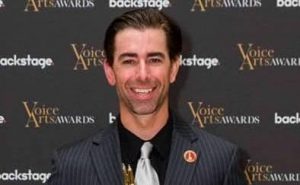 Pete Gustin is the voice of many Radio and TV stations, Movie Trailers, national commercial campaigns and perhaps most notably, the signature voice of The Fox News Channel. Pete also has a background in radio production starting his career at WEEI, one the more powerful stations in one the largest American Radio Markets, Boston, Mass. In fact, he started at WEEI and its sister stations during college and remained there for 18 years, taking short time away to work at Sirius Radio in its infancy. After interviewing Pete I can say that rarely do I run into someone with more drive and hustle in their bones...and I talk to a lot of very driven people. Pete has stories for days and so much great advice.
If you know Pete's FULL story, don't worry, I certainly cover every aspect. If you are not fully aware, then please don't do TOO much research and just listen start to finish. I promise - you will be greeted by a powerful surprise.
**BONUS: Pete published his new Novel, WISH. Check it out!
Pete Gustin is the voice of many Radio and TV stations, Movie Trailers, national commercial campaigns and perhaps most notably, the signature voice of The Fox News Channel. Pete also has a background in radio production starting his career at WEEI, one the more powerful stations in one the largest American Radio Markets, Boston, Mass. In fact, he started at WEEI and its sister stations during college and remained there for 18 years, taking short time away to work at Sirius Radio in its infancy. After interviewing Pete I can say that rarely do I run into someone with more drive and hustle in their bones...and I talk to a lot of very driven people. Pete has stories for days and so much great advice.
If you know Pete's FULL story, don't worry, I certainly cover every aspect. If you are not fully aware, then please don't do TOO much research and just listen start to finish. I promise - you will be greeted by a powerful surprise.
**BONUS: Pete published his new Novel, WISH. Check it out!
-Links-
Pete's Website: https://petegustin.com/ Facebook: https://www.facebook.com/petegustin Twitter: https://twitter.com/petegustin-Watch on Youtube-
Transcript
120 min read • 17,886 words
PETE: This is The Producers Podcast. Featuring the most respected international talent in the world of audio production and voiceover. TV, radio, film, and more. In-depth interviews and industry insights, putting you on the inside. Learn more at ryandreen.com. The Producers Podcast. With Ryan Dreen.
RYAN: All right, welcome to it. Podcast time. Thank you so much for the time you take to listen, download, to feedback actually. That's always great, especially when the guests come back to me and say, hey, wow, that was pretty cool. I had all kinds of people reach out to me and almost none of them told me I was evil. No, you're always very kind to everybody that's on. If you would take the time to rate or review this podcast, that would be greatly appreciated. It helps the exposure and all that and lets me know that I'm not just completely wasting my time every month. But here we are again. Pete Gustin is the guest. Pete is a rather prolific voice talent, most well-known at this point as the voice of the Fox News Channel here in the States. Yes. But he is on many— the voice of many radio stations, does TV affiliate work, trailers, network promo, commercial campaigns, and more, much more. His website, petegustin.com, he clearly is putting a lot of effort into his website, so definitely worth going to check out. On the social medias, the Facebook Pete Gustin, Twitter Pete Gustin, surprisingly enough. Another thing about Pete, he is one of the Benztown 50 Voices, which is a very good barometer of all the radio imaging voices. The top 50 there really does mean you are in the top 50 voices, and Pete is one of those. And finally, he has a book out. I'm not going to go into too much detail here. I've linked it on the podcast page. It's a fiction book. It's got a great sci-fi element. I have not had the chance to read it yet, but I have it, and I am going to read it because when I read, it is fiction, and it's usually something like what Pete has written. So I'm pretty stoked. I would probably read it even if I didn't know the guy who wrote it, but that makes it that much better. Anyway, it's called Wish by Pete Gustin. You can read the synopsis on the link, but go check it out and support the guy and grab his book. Anyway, I would say that's a good intro. I have nothing else to report as of right now, so I'll play a well-rounded sampling of Pete's work, and then we'll get to the interview with the one and the only Pete Gustin. When their world is in chaos— based on the best-selling novel called brilliant by the New The New York Times. The ones who changed will change everything. When it comes to great American families, they're not it. Pete Gustin. Pete Gustin.
PETE: Pete Gustin. The voice is golden. Previewing the Russia hearing, Peter King tells Maria what we should expect. Then, were Trump's tax returns fake news? She's the best news producer on TV. He's an infamous lawyer. Tune in tonight to Monday Night Countdown for a special look at Tom Hanks in Bridge of Spies. It's a soul-crushing— He betrayed me again. Epic Super Bowl week. The toughest tournament in sports has arrived. It's make-or-break time. Tuesday, Mr. Finch and Mr. Reese's worst enemy has taken their best ally. This is the never-told story of our incredible journey to the ends of the earth and beyond.
RYAN: This guy is becoming a titan in the voiceover world. Thank you for joining the podcast, Pete Gustin. I appreciate it.
PETE: Thanks for having me. Excited to be here.
RYAN: Excellent. You know what? And I didn't put it into the official intro there. Surfer also. You have a surf story for me, or do we not want to podcast that recent story?
PETE: I guess we can get into it. It's anytime you get a, you get a story worth telling, you might as well repeat it to as many people that will listen as possible before your girlfriend gets tired of saying, all right, I've heard this story enough. I haven't gotten there yet, but yeah, it was— It was just a little less than— well, it was actually a little more than 2 weeks ago. I was surfing a really calm day. There weren't any big waves, so I grabbed a big fat foam board and was just kind of riding them all the way into the shore. And I'd heard about stingrays, spoiler alert. And, you know, people say do the stingray shuffle. That's for people that don't hang out in the water a lot. That's you kind of shuffle your feet as you're walking out to let the stingrays know, hey, I'm coming, move please. Except for me, I was just stepping off of the board. I rode a wave all the way in almost to the The water was about a foot deep. I stepped off the board, and again, for people that don't know stingrays, they're— picture a water scorpion, because their tails come up and around and go, fwap! Right into your foot. And it's a barbed tail. It rips your foot apart. They stick poison into your foot, and it's like pretty much the least exciting experience that you could ever want to have in the water. Man.
RYAN: And that, that happened like 2 weeks ago, and you said you've been in the like 3 times?
PETE: Yeah, well, you know, I went, I went once just to have it taken care of, and everybody's telling me, oh, just, you know, put it under hot water, get some, get some hot water on it, and that supposedly, neutralizes their protein-based venom or poison, whatever.
RYAN: Yeah.
PETE: I've been reading up on it ever since. But then no one really bothered to tell me, you know, get in there with some Soft Scrub and clean it out. I mean, I didn't clean it out at all. They just said put the hot water on it, so I put the damn hot water on it. Next thing I know, 6 days later, my foot's the size of a football because the stingray left me with a nice infection. in my foot, and yeah. Yeah. Took a fun little hobby, a fun little wave, and turned it into 2 weeks of hobbling around from studio to kitchen to bedroom, and that was about it. 2 weeks of that.
RYAN: Man. When you record, do you tend to— do you like to stand, or are you generally sitting?
PETE: I literally just— it's ironic. Just 3 weeks ago, I'm doing so much time in the studio these days, upwards of 10 hours a day, 12 hours a day, and I was just on my ass for so much time that I finally finally just totally retrofitted my entire studio. I got a stand-up setup now. I moved the microphone up. I got a high monitor, and it's all kind of fixed in place. I didn't want to let myself be lazy and go sitting again. So I set it up, it was done. And then about 3 weeks after that. Yeah. So for, for 2 weeks straight, I'm standing, I've got one foot like in the air or leaning on an ottoman that I dragged into the studio. And I'm leaning off to the side. I got my elbow on the Auralex, the sound padding, and I'm just kind of like doing the lean and staying off the foot. It's good times. Yeah.
RYAN: Yeah, man. Yeah, it's funny. That is ironic because I went to the full-blown stand-up setup as well, but I ended up turning my room— you know, I've got a booth, but I actually treated the room real well now. So I happen to be sitting now. So maybe we're— anyway, it's funny how that works out in life, I guess.
PETE: Yeah. Yeah. Good timing.
RYAN: Yeah. Great. All right, let's go back. Let's find out. Obviously, I gave some of your credits, but, you know, you're into a lot. And you just said you can be reading for 10 hours Go back to the beginning. And again, I don't like to get the entire list of life, but maybe what got you into media or your radio background? I don't know where you want to start, but take us back.
PETE: I guess it all started at puberty.
RYAN: Okay, great.
PETE: When I— I didn't go through the whole voice-changing issues. I wasn't the cracking Peter Brady. Hi, Mom! None of that stuff. I just— I woke up one morning and my family My family used to tease me, actually. They told me I had a little girl's voice growing up. And when I'd call my cousins or someone else in the family on the phone, they'd be like, it's either a girl or Peter calling you. And I'm like, cut it out! I just— I had the girliest little kid voice. Then all of a sudden, one day, and I always forget, it was either 7th or 8th grade, I think 8th grade, and I just— I woke up one morning and I walked downstairs and I was like, what's for breakfast? And my mom literally dropped the spatula because she just didn't know where that voice was coming from. And I kind of like— You know, I said something else to myself. I'm like, hey, cool. All of a sudden I had a voice. And I think it started— I probably started doing the morning announcements in school. And you hear it a lot when you're a kid. I mean, I was a skinny kid growing up. I hadn't hit a growth spurt or anything. And I was this skinny little kid with this big, deep voice. And so everybody just automatically was like, you should go into radio.
RYAN: Yeah.
PETE: And I guess that kind of stuck with me. I got to Boston University is where I went to college. And I'd had a couple friends, my parents had a couple friends that worked in radio, and I decided I wanted to take an internship and give it a shot. And they put me in promotions at first, and I was like, but what about my radio voice?
RYAN: Have you heard me speak?
PETE: Yeah, exactly. So I was out on the streets handing out Dunkin' Donuts gift cards for about a month or so, and finally someone dragged me into a booth and they're like, this is where you want to be, right? I'm like, yeah, this is what I want to do. I mean, you know, it didn't take off. It takes years and years and years and years. But that got me on the path. They set me in front of a microphone and I tried puking into it a few times and trying to make some— something that sounded like radio commercial demo work. But I got there eventually.
RYAN: And you were in radio. So, I mean, you went to college, you went to BU, but— or wait, BC? Wait, Boston University?
PETE: Yeah, Boston University.
RYAN: Sorry, I know I don't want to offend. You know, I want to get it right because I understand that, you know, one is not—
PETE: A little bit of a rivalry there.
RYAN: Yeah.
PETE: It sucks too. BU, heard that one before.
RYAN: Yeah. Yeah, I got all tongue twisted because I know how these rivalries are. Or even just, even if it's not a real rivalry, you know, still, you don't want to get it wrong.
PETE: Nope, that's all right. BU is where I was at.
RYAN: Excellent. So then you went right into radio. I mean, did you even finish college? You just get the bug and just go boom, radio now, let's go.
PETE: I finished fast. I got my degree in 3 and a half years because I knew what I wanted to do, but I also wanted to just finish up the degree, get it done. You know, my parents were paying a bunch of money. I'd taken out loans. I was like, I've come this far, I might as well get the thing.
RYAN: Right.
PETE: And so I did it fast. I took some extra summer classes, doubled up one year, and got out of there. And I finished in December of 1999. And then I took a little break for Christmas, and I guess January 2nd, 2000, I was hired as the imaging director for WEEI and WRKO in Boston. The job was— if I hadn't hurried up, it wouldn't have been there. I kind of hurried up knowing it was going to be there. Like, I want to hurry up and get this degree and get this job. You know, they couldn't hold it forever. Someone needed to image the station. So I literally took about 5 days off between graduating college and starting full-time in radio. But I've been working While I was going to college, I was interning for a bunch of shows. I was doing production for a couple of shows. I was a traffic reporter for WBZ, the big news talker station. I had my own— I was DJing a rock radio show down in Cape Cod called the Pixie Saturday Night Party with Pete. I was doing everything I could in radio trying to just get my voice on air any way I could. But as soon as I graduated, it was into the imaging director job.
RYAN: So I'm curious about that because that is quick to have. I mean, that is not a small station. That is— it's a pretty big outfit there.
PETE: Yeah.
RYAN: The WEEI. So you are almost instantly the imaging director of a pretty epic station. So what was your imaging background? Did you shadow somebody? Are you self-taught? And what were you working on at the time, you know, software-wise or even hardware?
PETE: I'd been— I'd been doing production at those stations at the time. It's changed a few times. It was WEEI and WRKO on one side of the building. That was the AMs. And the other side was Mix 98.5, and then a 93.7 frequency, which flipped a bunch of times. It was Star, it was a rock station. They just kept flipping every couple of years. And actually, that was one of the reasons that made me want to go into production as opposed to on air, because I watched 93.7's frequency flip like 3 times while I was in college. And the one person that didn't get fired every time—
RYAN: Yeah.
PETE: was the production director. Her name was Patty Fox. She was a very talented voice woman and production person. And they'd fire the whole staff, all the on-air people, and they'd get rid of the program director and the APD and the music person. And I'd walk down there and there's Patty. She's still got her job. I was like, well, that looks stable. I kind of like that.
RYAN: Yeah.
PETE: You get to be on air, you get to put your voice on air. But I was working anytime that one of the other production people took vacation, I'd fill in. And I was working in an evening show called Two Chicks Dishing, and I was making production intros for them, intros for special guests and comedy bits. And we— my first year there was '95. I started in October of 1995 in radio. And I remember the production coordinator there, Dee Simpson, this guy sat me down and started showing me how to, like, cut and splice tape. And he's like, you're going to need to know this. And I'm like, oh, this is horrible. I didn't know how this was made.
RYAN: Yeah.
PETE: And fortunately, someone started rolling in some giant computer box, like, 2 weeks later. The timing was pretty cool. I mean, it was literally just getting that pen and the razor blade and putting all that stuff together. And they wheeled in this thing called the DSE-7000FX. Did you ever work with one of those?
RYAN: No, no. But this is hilarious because we started the exact same time. I had all these experiences. Yeah.
PETE: Yeah, yeah, same thing. Yeah, they wheeled this big beast of a box in and it was— I think it was 8 tracks, 8 tracks of digital editing. It was not— It was not— I mean, it worked. It was digital editing. It was multitrack digital editing. And I worked on that thing pretty much all the way through my time interning and having the job. And then it wasn't until I took a job in New York in 2000, where I got hired to be a production person for Sirius Satellite Radio, before it was SiriusXM, and they just threw a Pro Tools in front of me. They're like, you know how to use this, right? I was like, oh, no. But I'll learn.
RYAN: I'll figure it out.
PETE: Yeah, yeah. But I worked— there was a huge— of really, really— or not a huge group, there was a small group of hugely helpful people at those radio stations.
RYAN: Yeah.
PETE: The guy at WRKO was Bill Smith, who's actually the exact same age as my dad, and really kind of guided me along, and really held me by the hand, kind of showing me all the software, and where all the CDs were, and the sound effects libraries, and everything, and the music, and the basics of production. And then there was another really talented guy at the other end of the building working for Mix 98.5, a Boston guy by the name of Willie B. And I mean, he was larger than life at the time as a production guy. I mean, he was doing stuff that no one else was doing in the Boston market. And he actually negotiated a contract with Don LaFontaine in 1996 or '97, I forget. So, you're talking like the height of Don LaFontaine's megastardom.
RYAN: Yeah.
PETE: And Willie negotiated a contract with him to do voice work for Mix 98.5. And it was— I mean, he was doing groundbreaking stuff, and that I got to sit over his shoulder and watch him and see what he was doing and just kind of learn in his shadows was really big for me in terms of learning my production.
RYAN: So, just to keep the timeline straight, from the day you graduated college, and then you said it was like 5 days later you're full-time at EEI, how long were you there? And then you went to New York?
PETE: I was— so, I took the job in, like, the first day of the year 2000, and I went to New York I guess I went about a year later. I only lasted about a year with that job. Is that right? Yeah.
RYAN: Yeah, that's what I'm thinking. It seems like a short time. Like, you're already in a massive market right out of the gate, and then a year later— Now, granted, Sirius was still basically an upstart at that time, but still, it's a big operation.
PETE: It was New York. And I mean, it really— Yeah, I took the job right after college officially, but I'd been there for years. I'd been there as an intern, and production assistant, production coordinator, fill-in guy.
RYAN: I mean, I'd been there basically from '95 to 2000.
PETE: I just happened to have the title for a year. And I always knew— back then, it was a little different. Now, if you want to make it in production or voiceovers especially, they'll still tell you, you got to go to New York, you got to go to LA, you got to show your face. It's not as important these days. I mean, I'm not starting over, so I don't know. I just know my timeline. But back then, you had to. You had to be in New York. You had to go down there and show the agents your face, and you had to go on some in-person auditions.
RYAN: Yeah.
PETE: After a while, if you built up your repertoire, then maybe you could go somewhere else. But I knew that path, so I knew I wanted to go to New York, and that's why when the opportunity for Sirius came up, I mean, they were right in the McGraw-Hill building on— what was it? 6th and 42nd? I mean, they're right there on the corner of Times Square. And I knew I wanted to be there.
RYAN: So—
PETE: So I didn't hesitate. And both of my program directors at EEI and RKO, they knew what I wanted to do, and they were both very cool with me leaving. But I did only spend a little less than 2 years at Sirius. And it's not that I was a job jumper per se, but I was there for 9/11.
RYAN: Oh, wow.
PETE: And that was kind of a terrible time to be in New York. And I moved down there on my own. I didn't go with any friends, no family. And I made friends while I was there, but my family and friends base was back in Boston. And in the wake of 9/11, talking just a couple of weeks afterwards, A lot of the people in the apartment building I lived in died. Like, a lot of them. More than half.
RYAN: Wow.
PETE: Yeah. A lot of them were commuting down to the Trade Center. And I just kind of looked around, and I'd done the New York thing. I'd met all the agents I wanted to meet. I'd met some good friends. Sirius, at the time, was kind of teetering. I wasn't sure if they were gonna take off or not take off. And it seemed like a good time for me to get back into radio. So, I made a call up to EEI, asked if they were interested in having me back. And I actually— I had been freelancing, I never really left. I'd been doing some stuff as needed for them. And I said, hey, can I come back? And they said, we'd love to have you. So it was 2 years in New York and then right back up to Boston.
RYAN: So if I can just real quick, because I think you basically covered it, but it sounds like you were aiming for a career more in voiceover than anything else right out of the gate. Like, you knew your trajectory was going to take you to New York. Is that because of voiceover? Is that what you meant there?
PETE: I hoped. I didn't know. It's the same reason when I went to Boston University, I majored in advertising as well as neuropsychology. I just needed something else to throw in there, but I did advertising. Oh, you chose that? Okay. Well, you're spending $120,000 on education, which is a lot in the '90s. I wanted it to be something cool. Something to make my parents feel like the money was decently well spent.
RYAN: So not just like philosophy?
PETE: Got it. Yeah, no, no. But I did— the main focus was advertising because, I mean, I always thought, you know, like I said, from the moment my My— can I say? My nuts dropped when I was a kid. I thought I wanted to be a voice guy, but it's a pipe dream. You know, you walk into the convenience store and you say you want to hit the damn lottery.
RYAN: Yeah.
PETE: You know, you'd like to, and you got to buy the ticket or else you won't win. And that's why I, you know, did go to New York. I wasn't going to be a voiceover guy. I wasn't going to make a mark down there unless I tried. So I was always making the decisions and taking the steps that I needed in order to maybe be able to follow that path. simultaneously was pursuing a production career and doing everything that I could to keep a regular day job at the radio station because you just never know. It's a tough, tough industry to break into.
RYAN: Yeah. And only because I know our time is a little finite tonight because you are such a busy MFer, for the love of God. So where— when, when did the moment happen or when did you know, all right, your career was switching and voiceover was going to be your focus? Was it one big job? Was it a— a slow change, a sea change? When did that happen for you?
PETE: I guess it was more of a slow build. I mean, I got myself on air at WEEI doing some of their promos and comedy bits, but Jim Cutler had always been the voice of the station. I'd put myself out there as wanting to do voiceover work. I got hired by a tiny little station in St. Cloud, Minnesota. I think they were the first station that ever took a shot at me. And they hired me, and that was cool. And when I went down to New York, I made myself the voice of a number of Sirius' O&Os, owned and operated stations, and I was doing voice work there. I'd actually, ironically, you know, this was a weird one. I got to do the voice of a Super Bowl commercial for Reebok, like, way early on. I mean, I think I only had those 2 credits as voice work, but they just happened. They're based in the Boston area and like WEEI and heard my voice. They're like, let's put him on the Super Bowl commercial.
RYAN: Yeah.
PETE: And that was a huge thing. credit to get early on. I think the next big credit after that was Dan Patrick's show was launching, and I had some connections there, and they brought me down to Connecticut. I got to meet Dan, and I did all the production for his show, and I voiced all of his imaging as well. And it was really— it was kind of slow after that. I mean, I had kind of a neat resume. I had Dan Patrick's show, some work at WEEI, had the Super Bowl commercial, and I So, I played that for whatever it was worth and started putting some more advertising and feelers out there. But it was always one station here, one station there. I think maybe if there was a critical point, it was probably— and I wish I could tell you the year, I don't remember, but I got hired to be the voice of WRIF in Detroit. And that was my first big major station that I was the exclusive, top major market.
RYAN: Yeah.
PETE: I believe their heritage call letters are at least pretty well known. And they made the switch to me. And after that, if not to everybody else, at least to myself, I was like, hey, this feels real. I feel like a real voiceover guy now. I got a real station that is relying on me to do this. And still, you know, I kept going into work every day doing the production thing, figuring that was going to be my job for the next 30, 40 years. But at least I had a toehold into— or, you know, there was light at the end of the tunnel. I was like, hmm, maybe I can do this. That's a big— if I can get one big station to say yes, maybe there's more that'll say yes.
RYAN: Yeah. So, I guess, and you can maybe captain this little boat conversation, part of the boat here, but how long were you at EEI? Or was there a moment then that had a big light bulb, okay, I'm gonna do this full-time? Was there a gradual change there? Or again, was it a moment?
PETE: I was at EEI. So, I was at EEI forever. Even when I went to New York, I was still working there. I started interning at '95. And I honestly didn't leave, like full-time leave EEI, until 2013. So, you're talking 18 years. Okay. Yeah. I did 2 of those years in New York, and the last 4 years there, I was working from home. The station was always a mega beast. I mean, number 1 sports station in the country. You know, killed in the market. They started losing ground a little bit to another station called The Sports Hub that came into town as an FM. EEI was an AM. Started getting their butts kicked a little bit, and it— it started giving me an inkling to, hmm, we might not be the number one station forever. This might not be a forever job. I'm always looking into the future. I don't know why. You talk about the people that grew up in the Depression and they're like cheap and they hold on to their money and stuff. Like, I feel like I got some somehow Depression mentality in me even though I was born way after the fact. But I'm always like, uh-oh mentality.
RYAN: Yeah.
PETE: And like the moment the station started to slip and they were changing a host here and there, and then they changed the program director, and then they brought in another GM. It scared me, and I started sinking more money into advertising. I put up an ad on All Access, and then I started doing direct emails, and I literally started spending time every day. I made it part of my workday. I'd spend 2 hours a day every day, either before work or after work, kicking around on the internet, finding program directors, getting their emails, making custom demos off the bat. I would spend you know, 10 to 15 hours a week making custom demos and sending them off because I just started to get a little worried that I thought the job that was gonna be forever wasn't forever. And I figured if I could diversify— because that's the thing, production, you can only do so much. It's, it's a hard— it takes a lot of— what is it, like 1 minute of voicing is 20 minutes of production or more?
RYAN: Sure.
PETE: And I started realizing, you know, I've wanted to do voiceovers. This is where I'd like to go. And it seems like it has a diversified portfolio if you can get enough people to hire you, and that seems a little— it seemed a little safer to me at the time. It's funny that to say I went into voiceovers because it seemed safer, but I think that was my mentality.
RYAN: So in 2013, when you did go fully on your own, I actually don't know your history as it regards to this. Like, were you laid off, or did you walk in one day and say, okay, it's time, you know, I resign, I'm going full-time voiceover?
PETE: I was being pushed. I was one of the remaining people that had been there for a while, and as a result, I had a pretty high salary. They'd been replacing all the high-salary people and putting them in— replacing them with cheaper people. And, you know, maybe— I shouldn't say that. That's rude to the people that came in afterwards. New blood, new sound. But I did know, at least in my mind, before it happened, I knew that there was a target on me because of the salary. So, I'd been getting ready. I'd been getting ready for a while. Yeah. I'd landed a decent number of radio stations at that point. I started doing production for a couple of non-broadcast per se companies, and I was ready so that when the program director called me, I was like, yep, I know, we're good, I'm gonna move on.
RYAN: Okay.
PETE: And we severed the ties, and then it was, you know, instead of spending 2 hours a day making custom demos and marketing, my job became 2 hours a day of doing voiceovers and 8 or 9 hours a day of marketing myself. It was full-time. Wake up, get into the booth at 6 o'clock in the morning, start cutting demos, reaching out to program directors. I was reaching out to radio stations, sports stations to this day, or sports franchises to this day. I do a lot of work with a lot of pro and NCAA franchises that I made connections with back then. Basically anybody that I knew had high demand for voiceover work, I mean, financial advisors that were doing radio shows, anybody that would hire a voiceover person, I was making it my 8, 9, 10-hour day job to get my voice, my demo, my sound, my resume in front of them.
RYAN: Yeah, that's great. I mean, that's just hustle. That's just tons of hustle.
PETE: Yeah. I mean, that's the— 'cause there's a million people doing this, and I knew that then. You know, they're not gonna— they're not gonna— in the beginning, honestly, I was emailing so many people, And you will get out of every— they say if you get a 1% return on a marketing campaign, that's great. You know, 1 out of every 100, if they write back and if you close it, that's amazing. But what they don't tell you is maybe 3%, 4%, or 5%, you know, say, hey, get out of my inbox, a-hole, or, you know, you sound like crap. The guy I've got is way better. Don't bother me. And in the beginning, when I didn't have the confidence— I mean, even now, I guess I can say I'm confident, but you can still knock me down pretty quickly with a bad word.
RYAN: Yeah.
PETE: It's a subjective business and it's hard to keep your confidence going. And during that time when I'd committed to being a full-time voiceover guy, and I would, I'd get an email every now and then, someone just basically telling me, you suck, get out of my email. I mean, those were hard days. Those were like, oh no, I've made a huge mistake. I need to—
RYAN: Yeah.
PETE: Instead of building this voiceover business, I need to go find another radio station that needs a full-time production guy. I mean, there were days when it was really hard and you could go 2, 3, 4, 5 weeks without anybody contacting you at all. Or 2, 3, 4, or 5 weeks when all you get is negative feedback. And those were, those were tough times. It was not easy going.
RYAN: Not, not to stay on the negative side, because we're gonna get to a lot more positive, but since you've brought it up and I had this question lost, and I mean, I had this question written down and it's something that everybody has to deal with. I know, I remember when I had to deal with it, but do you remember when you had like your first big lost clients? 'Cause I know that's a big moment that people have to overcome as well.
PETE: I do remember the—
RYAN: Maybe not first, but a big one. You know, it's something that people have to deal with when you're on your own, especially.
PETE: The first big lost client, I was actually doing a— it wasn't a voiceover job, but I was hosting a radio show for Sirius, and they let me continue doing it while I was up in Boston. And that was— it was a daily show. Every day I was doing it, they were paying me some pretty good money. And Howard Stern came in, and his buddy wanted to do a show on the station that I was on. And they called me up, and they're like, hey, Howard's guy wants your shift. It's gone. I was like, oh! What do you mean? And it was just gone. And I do remember the first time I got replaced in a radio station. It was at a— it was as a voice.
RYAN: Yeah.
PETE: It wasn't a big station, and it didn't need to be. It was in Milwaukee, and I remember they called me up, up and program director just kind of very matter-of-factly, we had mostly an email relationship and he just kind of called me up, courteous enough to pick up the phone and said that they were going a different direction. And he said it wasn't personal or anything like that, but that was another— again, when it's the first time that happens—
RYAN: Yep.
PETE: There was a lot of times when my confidence was shaken. I mean, even now, this is my full-time job. I got over 100 regular clients and I'm still— anytime something isn't quite right, or if I lose a client for any reason, I'm always like, oh, no, I suck. You know, it's easy to— I don't know, maybe I'm a little more paranoid than most people, but—
RYAN: But how do you deal with it, though? Because clearly you've dealt with it. I mean, everybody goes through that. I've talked to the biggest names in this business. They've all lost major clients, and you get over it, and you move on. But, you know, do you have any way that you can kind of get your brain right again? You know, get your confidence back, throw that negative stuff away?
PETE: The hardest thing, I think, trying to keep your confidence up is really starting to realize that they're not judging you as a person. I mean, I really did in the beginning. I would— I remember telling my girlfriend and my mom at the time, I'm like, I'm putting myself out there. It's my voice, and they're rejecting me. It's like a personal rejection. And in a sense, yes, that's true. I mean, you really do have to put a lot of yourself into your voiceovers. I mean, not a lot. You have to put all of yourself into your voiceovers. But it is not. It's not a personal rejection. Just because they need to switch from you or change from you or you didn't work for something or someone else even worked better, you know, this guy fit better, it didn't mean that guy's a better guy. Didn't mean they'd rather have a beer with him. Doesn't mean that you suck or your feet smell and, you know, you're not conversational or you're stupid. Doesn't mean anything like that. Just means that your voice didn't fit. And I actually didn't start getting that until I started making friends in management. All of my friends growing up in this career were other production people, other voiceover people, and we're all very sensitive, creative people. And it was my college roommate that I lived with for a while. We lost track of each other, and then when I got back in touch with him, he was running Bloomberg. He was in charge of Bloomberg, and he had a totally different perspective on it. And he was one of the first people that really kind of made me understand how not personal this business is. And once you start getting it through your head that you're either right for something or you're not right for something. And that's really all they care about. It's a little easier to take. I mean, it sucks because, you know, you're getting hit in the wallet, but you can take a hit in the wallet and hopefully move on. At least I can, a little easier than I can take a hit in the confidence, which felt like more of a gut punch. I just had to rewire myself to understand that it wasn't personal.
RYAN: Yeah, I think that's very key advice, actually. A great way to answer that question. Let's flip it then the other way. Now, you already mentioned booking the station in Detroit. But when you're out on your own, any other major gigs that also reemphasized that you did make the right decision, that your career choice was correct, being on your own was correct? Any other stories like that?
PETE: I mean, my career was really built on, like we were discussing a while ago, the hustle of the little state. It was building a base of a large number of radio stations and clients and people that relied on me, really almost on purpose in the beginning, because like I said, I left the radio station for fear of having one person come in and go, we don't like your sound anymore, and then you're out of work. For me, having, you know, 30, 40, 50 little radio stations that were all paying me a little bit felt safer than having one big one. And that's what I was focused on in the beginning. Those are easier targets.
RYAN: Yeah.
PETE: as well. You know, you fish the easier fish. You don't go big whale hunting your first time out. So, I really built the base very slowly. I guess early on in the career, I did get a call from Sports USA, who had rights— still has rights for the NFL and NCAA football. And that was another one of my big name clients. You know, as opposed to calling up my mom being like, I got, you know, W nobody, nobody, nobody in the middle of nowhere.
RYAN: Yeah.
PETE: And she's like, good for you, honey. You know, I finally got something, and I was like, it's the NFL! She's like, ooh, that sounds big. You know, I was always bragging to my mom. She's the only one who wants to hear me brag, basically. But it was a lot of little radio stations, and the bigger ones didn't come until about 3 years after I left the radio station. I mean, 3 years, when you think about the span of a life or the span of a whole career, it doesn't sound like a lot, but 3 years of getting little stations, you start to wonder, am I major market quality? Am I gonna get a big gig? And, you know, even if you're not, there's a lot of people out there that have 30, 40, 50 little radio stations all paying them a couple hundred bucks a month, and that's an okay living. That's fine. That's great. You get anybody to pay you to talk, it's pretty awesome.
RYAN: Yep.
PETE: But I'd started to get into that mindset of, hmm, am I gonna be a middle to small market guy? And I didn't know the answer, and I don't think that answer was written at that point, which allowed me to keep keep striving. Just the same reason that I went to New York in the first place, just because I wouldn't know until I did. That's when I started reaching out to the bigger radio stations and trying to get those big fish that maybe in the beginning I was like, I'm not going to reach out to New York or LA or Chicago or any of those, you know, big markets. They wouldn't want me. But I needed to shed that fear and start going after them. And it was actually, I think, the biggest single thing I got might not have been a radio station, but it was a movie trailer, which is an even smaller pool to be fishing in, as you know.
RYAN: Oh yeah.
PETE: I ended up being— and it was really, it was at a moment when I was really in that kind of crisis, like, am I just gonna be a smaller market guy? Again, totally fine. I would have been fine with that, but I just wanted to know where I stood.
RYAN: Yeah.
PETE: And so I was getting ready to adjust my life expectations, and then out of nowhere, where I did an audition for SpongeBob: Sponge Out of Water, and I landed that. And I'm like, ooh, that's a movie trailer. That's big. And again, you get that one person said yes. We got one person— well, actually, in a movie trailer, it's not one, it's like 90 people.
RYAN: Yeah, right.
PETE: You got the people making the thing, and the people writing the thing, and people that own the company, and then the director, and maybe someone in the movie itself has rights to review the trailer. I mean, it's— you got to get a lot of people to say yes to get onto a movie trailer. And I did, and it gave me all the confidence in the world to go back and start going after some of those bigger radio stations and trying to contact TV affiliate stations and stuff like that. And it was really— it was just such a slow, slow, slow build of both my career and my confidence that I never really thought about it until you asked. No one asked me that, and I never really thought about it. But I do hear stories, some of those other big movie trailer voiceover guys, and I feel like a lot of them have stories where, boom, and then I was the voice of this huge movie campaign.
RYAN: Yeah, right.
PETE: I mean, yeah, I did get SpongeBob, but then it was another— I think it was another 2 years until I got another one. For me, it's really been sticking with it, practicing, practicing, practicing. I mean, I've spent, in those first 2 to 3 years where I was on my own, I probably spent just as much money on coaches and advertising as I did on— as I made that year. I mean, I made enough to buy my food and pay my mortgage, but everything else got reinvested into the career.
RYAN: Sure.
PETE: I mean, coaching, especially coming from radio, and I hate to say this because a lot of radio listeners you have, but like, you got to get out of radio mindset if you're going to be expanding beyond radio. It's a very different voicing style. to do television promos or trailers or narration or a commercial that's not on the radio. I mean, very different. And it was pretty hard for me to make that transition.
RYAN: We've talked about that on this show often. There's a radio stench that if you want to be doing professional voiceover, you need to get rid of it. Yeah, that's come up a lot. And so speaking of, you know, maybe the less-than-announcer stuff, or at least the non-radio imaging work, I'm getting the impression that we are talking really only about 3 to— somewhere between 3 and 6 years ago that you even attempted to get work like that. And I'm also getting the impression that it's really been in the last 3 years, since 2016, that you have blown up in other areas of voiceover.
PETE: Yeah, I always— my first manager was Phil Sutphin with ACM, and I remember him talking to me, he said, you know, people There's people that do radio, then there's people that do promo trailer, and then there's people that do narration. He's like, you need to find a focus. I'm like, do I?
RYAN: Yeah, but you didn't want to do that, right? Yeah, I wasn't sure. Exactly.
PETE: I wasn't sure why that was a thing. I wanted to be well-rounded, and, you know, maybe it hurt me in the beginning. Maybe that's why my burn was kind of slow in the beginning, because I was just kind of throwing myself at everything. But I did take the time, lots and lots of different coaches for different things. I had people coaching me on trailer, people coaching me on— I had Maurice Tobias. I worked with Art Butler. I worked with David Lyerly. I ended up on Paul Wintner's roster, and he'd take the time every once in a while to work with me. And then I ended up on Jason Helsner's roster, who was literally taking me by the hand and coaching me in movie trailers. I ended up with Solid Talent, and Mike Soliday and Michaela working there would coach me.
RYAN: Mm-hmm.
PETE: I think a lot of people— that's another thing, I guess, is a good point. A lot of people went into this. A lot of people believed in me and felt like I could get there and were willing to take the time, and I was willing to take the coaching so that I could work. I mean, I've done national— lots of— I've done lots of national ad campaigns. Then I've got a ton of radio stations, obviously. I've been doing network TV promos, and I got the job, the big job. I mean, this one seemed too obvious. I mean, the big job is when I became the voice of Fox News. Right. And that would be where I wanted to go next. Yeah. Okay. Yeah.
RYAN: That's—
PETE: Leading up to that, everything— so everything I had done up to that point when they were throwing auditions at me, I'm telling you, if they had given me the opportunity to audition for that even 6 months earlier, let alone a year, 2, 3, 4 years, I would've blown it. I would've blown it badly.
RYAN: Yeah.
PETE: Because I wasn't ready for it. Every little thing that they do, you know, 70% of all the promos you see on Fox News are similar. But there's a lot of— there's heartfelt stories, there's impactful stories, there's dangerous stories. And that's what they wanted to see. They wanted to see, you know, can you do that standard voice that we need 70% of the time? Yes. Cool. That's great. But when we need to change gears, can you do it?
RYAN: Yeah.
PETE: And they threw me lots of curveballs in the audition. Even, I remember one in particular. There was one script, they're like, we need you to read this 6 different ways. One script that totally didn't read like a drama. It was like an upbeat, like, Fox and Friends, this morning we're going to be talking about how to make cupcakes, or, you know, something like that. They're like, read that like it's a drama, or like it's a terrorist attack, I'm like, okay. And, you know, not rocket science, but what it is in order to perform that. And again, this wasn't sit in my studio and do it at my leisure and send them back the perfect take once I got it. This is, I'm on the phone with the executive producers, and they need to hear if I can do it right now. And that's why it took years and years of practice of being in front of the microphone and studying in all those different genres and all those different ways and mediums that allowed me to get through that audition and eventually get that job. I mean, that one was— That one was the shot in the arm. It's gonna be hard to knock my confidence after I get that job and allow me to kind of move forward with the rest of my career feeling good about myself. So it was a big, huge hurdle to jump over. It was the toughest audition. It was a number of them. I mean, it was like 7, 8 auditions.
RYAN: Let me go in depth on that because I think there are people that want to know more about the details of a process like that. First of all, how long have you been the I know they don't just use you, right? There are— admittedly, I don't watch a lot of Fox News. I'll just leave it there.
PETE: How dare you?
RYAN: But I've definitely watched Fox News and I've heard you. I don't know if they use other voices. I'm just kidding.
PETE: I'm the exclusive voice of Fox News.
RYAN: Okay. How long have you been the exclusive voice of Fox News?
PETE: I took over on— and I apologize, there might be other people that get used for special projects. Maybe. I haven't sat there and watched for 24 hours.
RYAN: But the bulk of it is you.
PETE: As far as I know, I do everything for— There's a guy that does Fox Nation, which is their pay-subscribe app channel thing. But Fox News, the Sirius channels, the radio, that's all me. And I took over on St. Patrick's Day. It hasn't even been that long. I took over St. Patrick's Day, 2016. So it's been about 2 and a half years.
RYAN: Actually, that's longer than I thought. I mean, but you've been very familiar to me for that reason. for a while, but no, that's a, that's a good run. So, how long did it take?
PETE: Good run? You're making it sound like it was a good run, it's over.
RYAN: No, no, I'm sorry. I did mean though that, it, it continues to be a good run, but, but longer than I even thought. And I knew it had been a while, so that's— I meant that in the most positive way possible. So now let's move on.
PETE: You know something I don't know? See what I'm talking about with my confidence here? One word.
RYAN: Yeah, I know.
PETE: I'm scared I'm getting fired. What are you—
RYAN: there's no part of you that should think I know anything about your Fox News gig. I, I don't, by the way.
PETE: Okay, good.
RYAN: So the first minute that you even had an opportunity to think about that gig, how long was it until they actually said, okay, it's you? And then I want to go back through the process, but how long was that?
PETE: 6 months.
RYAN: Okay, okay. So 6 months is how long— that, that seems reasonable because they're not looking to make a full brand alteration like that every 6 months. So they want to hopefully get something that's locked in.
PETE: Yeah.
RYAN: How many sessions did you do in the audition process?
PETE: It was— the first moment I was contacted wasn't an audition. It was the guy that was the voice of Fox News at the time. I think the poor guy wanted to take a vacation, which is why I never take them. I think the guy just wanted a couple days to do something.
RYAN: Yeah.
PETE: And they needed someone to fill in. So I did. I filled in. And there was no audition. I just got a call from my agent. They're like, you're filling in for Fox News. I was like, okay.
RYAN: Wow.
PETE: Okay, sure. So, it was a Saturday, Sunday, Monday gig. And they called me maybe, I don't remember, 4 or 5, 6 times. Not much. And I did my thing, and my agent was very, very clear. That was not an audition. That wasn't anything. It's not going to lead to anything. They have a voice. He's under contract. And you just needed to be the guy that was available on a weekend. I was like, all right, that's cool. You know, I understand. And, you know, the opportunity, again, you grab those clips and you say, you know, featured on Fox News!
RYAN: Sure.
PETE: You know, I did that. That was something I did, and I was very proud of it. And I really did— I could lie and tell you I didn't think of the possibility, but I tried my damnedest not to think about the possibility 'cause I didn't want to drive myself crazy. But it was about a month and a half later where they just sent me a couple more things just to read on my own. And then another month and a half later, and they were asking about my studio setup and how available I was. every day, hey, are you a full-time voiceover guy? Is this— you know, they didn't know a lot about me and they just need to ask some questions. And then at about 3 months after that first weekend fill-in job, that was the, hey, can you get on the phone and read a couple scripts with us? And again, my agent was super clear with me. It was Michaela at the time. She's like, this is not a job. This is not an opportunity that is out there. They aren't looking to fill anything. She's like, just, you know, impress who you're gonna impress.
RYAN: Right.
PETE: And I was wondering, you know, I mean, Fox Networks is massive. And I was wondering maybe if the people at Fox News were just spearheading the search for someone—
RYAN: Fox Business.
PETE: Yeah. Something, anything, anything that they own. I mean, they own tons of stuff. And so, I was reading their scripts, but just keeping in my mind, this could be for anything, or it could be for nothing. But it did all hit really high gear at about that 5-and-a-half-month period. That's when I started getting on the phone for different audition after different audition. And then once we started nailing the auditions, it was all about availability. You know, go in your studio and read this. Okay, cool. Grab your portable rig, go outside of the house, read this, and let us hear how it sounds. Ooh, that doesn't sound quite right. Can you make that sound better? Is it the EQ or is it the room? It just doesn't sound right. Can you fix it? And I mean, I had a petrifying audition with them where they're like, yeah, your portable rig doesn't sound good. I'm like, I'll buy another one. Like, whatever you need me to do. Man, yeah. And I did. I went and bought a whole nother rig. portable rig and I just needed to be ready. And again, it was— the whole thing was, this isn't really a job. They're just checking their opera— the opportunities out there or the options out there. And then I got a call, like it was the day before St. Patrick's Day 2016. And as much as I'd been trying not to think about it, I was, I was kind of obsessing at that point.
RYAN: Sure.
PETE: And I got the call. They're like, that's it. They're sending over the paperwork and you're going to be the voice and you start tomorrow. I was like, holy crap!
RYAN: Yeah, right.
PETE: That was the most like, holy crap! I mean, every other— the movie trailer, the first movie trailer I ever got was probably really close, but that was so out of the blue, I didn't have the time to work up to the excitement. This was like 6 months of, maybe? Maybe? You know, it was pretty amazing when I finally got it.
RYAN: It's hard not to let yourself get excited, but, you know, also you're a professional and you understand that they could very well Well, just need you to read some stuff and go away and you'll never, you know. But so when the job starts then, and again, there's a lot of people listening that are very well versed in the way this works, but for those that aren't, you're effectively on call for them, but you're also working all of your many, many other clients, but lots of hours of every day, right?
PETE: Yeah, because also in the beginning, as I said, I wasn't looking at just opportunities in radio or just broadcast, but I was looking all over the world. And so I voice stuff for production houses and radio stations in England. I work in the south of France. I work in different parts of Africa, pretty much South America. Anybody that speaks a little bit of English.
RYAN: Mm-hmm.
PETE: I work everywhere. Sri Lanka, I've got stations— a station there. The Seychelles, I work there. I mean, New Zealand, Australia, everywhere, everywhere, everywhere. And there's, you know, different time zones, and a lot of people don't necessarily care what time zone their voice guy is in. So I get stuff at weird times, you know, 2, 3 in the morning. Hey, we just added this sponsor and the live broadcast is about to go on right now. Can you get into the studio? I'm like, yes, I can go into the studio at 3 in the morning.
RYAN: How do they get you at 3 in the morning? I mean, I'm assuming you're not up 24 hours a day. I'm assuming you sleep. At some point each day.
PETE: I— so I have 3 Apple Watches. One I wear throughout the day is set to normal volume, normal vibrate, and when I get a script, you know, when I'm wearing this one, I'm basically up and within running distance of my studio. I also have one that I wear when I'm surfing because surfing is not an excuse to say no for reading copy. It's just not. You know, Fox isn't gonna call and be like, something major just happened in the world. You don't happen to be surfing and are too busy right now? Like, that's not a thing. They're like, something major happened, get to the studio.
RYAN: Yeah.
PETE: So I have another Apple Watch. That one I put into a waterproof case. I know they're waterproof, but there's reasons I won't go into. And I keep the volume super, super high so that if something happens while I'm out on the water, I get notified. And then I have another Apple Watch that I wear set to super low volume. It's only on 2% and vibrate. And that one I wear when I go to bed so that I'll feel it vibrate, and I get to check the notification, and I don't have to wake my girlfriend up. So, yes, I am on call 24 hours a day.
RYAN: Wow, that's amazing. So, you know, some people listening are thinking that's insane, and nobody should work like that. What do you say to them?
PETE: You mean my girlfriend?
RYAN: Oh, does she listen to my podcast? I wasn't sure. I wasn't gonna bring that up. Could've been awkward. But no.
PETE: Yeah. It's just the way the business is because if I'm not available at 3 o'clock in the morning, somebody else will be. I will never— you'll never catch me saying, well, they'll wait for me. They're not gonna wait for me. I don't— I'm never gonna get an ego. I barely think I'm good enough to do what I do. And that's why being available is my big trump card. Being there is half the damn job once you get to a certain point. I think.
RYAN: Do you have a constant— and I'm actually asking this more real than facetiously, but do you have a constant fear that you could basically lose any gig at any given moment?
PETE: Yeah. And it's not unfounded.
RYAN: For real?
PETE: Yeah. I mean, it could— any little station could flip formats, decide that I've gotten stale. A big station could get a new CEO. Fox News could undergo some big— anybody, anybody at any And like I said earlier, once I learned— it was a double-edged sword. Once I learned not to take it personally, I didn't take it so hard. But I also realized that it could happen at any time. Because no matter how much someone likes me, how much of a great relationship I think I have with a program director, or executive producer, or casting director, no matter how great our relationship is, eventually it will end because something's gonna change. And it literally can happen at any minute.
RYAN: Yeah, it's crazy. Man, I'm loving this chat, and I've got more. But I think now is a good time to bring something up. Anyone that knows you might even be wondering, is this idiot that's interviewing you unaware of this element? And the answer is no.
PETE: I—
RYAN: or the answer is, I am very aware, but I didn't want to make it front and center, obviously, because your career is, is great, and, you're, you're a great talent first, second, and third. But there's something about you How about I just ask it like this? So, how blind are you?
PETE: Well, it's, it's, not really awesome at this point. I, I used to be able to see my face in the mirror, and that's when I was, like, in my late 20s. And so when I look these days, I just imagine that. I haven't aged a day since my late 20s. That's great!
RYAN: Hey, you are suspended at 27. I mean, come on.
PETE: Yeah, every once in a while, I— it has been a little over a decade since the late 20s, and every once in a while, I'll get in real close to the mirror and I'll go, who's that guy? It's a little shocking. But yeah, it's—
RYAN: Yeah, so obviously I asked that because you are visually impaired, but— and I asked it like a dick because I'm a dick, but how blind are you?
PETE: I guess I've got— I mean, really, I don't read copy like other people. I have an audio prompter system that I've developed, so when someone writes something on a screen and sends it to me, I'm not reading it. I am putting it into a computer program, throwing an earbud in my left ear, and then listening to the copy being spit back to me via computer voice. And that's how I—
RYAN: That's amazing.
PETE: —hear the copy.
RYAN: That's— I mean, I already knew this, obviously. And again, there's lots of people that know you and already know this about you because there's actually been some really cool stories out there about you, but I wanted to talk about it. So just to give us a baseline though, like, you can't legally drive. I mean—
PETE: Oh no. Well, no, I can't legally drive. Not legally drive. Yeah, I get behind the wheel and be the safest guy in town. It's everybody else you'd have to look out for.
RYAN: Exactly. You're fine. You don't know.
PETE: Yeah.
RYAN: Okay. So I don't have to go through all of your entire life about being visually impaired like this, but it's always— I just think people are— you're just brave. I especially— I see you out there like at the beach Just, just go. I mean, I don't know. I just think— I think you're brave. Is that dumb? I don't know.
PETE: I mean, it happens slowly. I would even say if I— I mean, my eyesight now is horrible. I mean, I, I could walk into a, a tiny room and my girlfriend could be at the other side and I wouldn't know it was her.
RYAN: If you're walking through a room though, can you at least sense when like an object is— you're about to hit your face on it?
PETE: Do you have at least that much Most of the time I have blind spots that are like fully, fully blind spots that are now like floating and moving. And if you'd asked me 3 years ago, I'd be like, yeah, I can walk. I mean, just— I'm talking literally just 3 years ago, I could walk down the sidewalk, no problem. Yeah, these days it's, it's getting pretty rough. things will kind of just appear out of nowhere. I was like, whoa, where'd that come from?
RYAN: Wow.
PETE: but it's, it's actually the reason I took up surfing. I mean, because I wasn't going Tennis, baseball, basketball, golf, anything like a Frisbee. I don't want things flying at me. I'm not gonna catch them. They're just gonna hit me in the head. But I thought surfing would be perfect for me because it's the ocean. I mean, the ocean's pretty huge.
RYAN: It's pretty vast. It is.
PETE: Yeah. I just— I look out and I see 2 things. I see light and I see dark. And the light is the sky and the dark is the waves. And when the dark comes up a little bit, like, that's probably a wave or, you know, a shark coming at me, but hopefully a wave. And so I turn around and I start paddling, and I've got a good sense of feeling where I am. And so when I start to feel that wave come up underneath me, I take 1 or 2 last strokes, and then I pop up and I'm riding the wave. You know, that's— that was the sport I thought was gonna be perfect for me.
RYAN: Has it been? I mean, I feel like it has. Yeah. So how good are you compared to just, you know, your average Joe?
PETE: You know, I mean, I've only been at it for 3 years, but I went at it with vigor, like I do with everything that I want to accomplish.
RYAN: It appears that way. Yeah, I can tell that about you.
PETE: Yeah, I didn't want to just go out there and be okay. I guess I've never been comfortable with that. So, I went out and made damn sure to practice every weekend, weekdays as I could. And I think— I mean, I'm in Southern California and there's kids here that have been surfing since they were 3. So, am I as good as them? No. Like, these kids will run circles around me. But in the matter of 3 years, I went from a beginner learning practice board to what they call a potato chip board. I ride a little 5'5 board, which is much shorter than I am. And I'm riding, you know, tough waves on hard days and making good turns and getting in the pocket, as they say. And I feel like when I'm out there, I can hang with most people. It's hard to say. I mean, because I can't see what everybody else is doing, but I don't feel like I suck. I feel like I got pretty darn good performance. No, you know.
RYAN: You know. that's cool, man. All right, so let's get— because people are going to want to know obviously about your setup again, and you already said it, but tell me how— I'm interested only because I think the computer voice, you know, the pacing of it, and it probably being a rather monotone voice, I'm assuming, does that not mess with your pacing and your delivery? You had to adapt to it? How does that work?
PETE: I tried a real voice, one of those like, real sounds like a human voices in the beginning, and that was because I started following the inflection of that voice, and that's bad. You don't want to be following the inflection of a voice pretending to be human. Like, that sounds horrible.
RYAN: Yeah.
PETE: So eventually I just picked this crap voice, like, from the first text-to-speech program, and I had that in my head, and that was difficult too, but not in the way I was following the inflection. I mean, the thing was coming at me, you know, you're listening to the Dennis and Callahan Morning Show on sports radio, WEEI.
RYAN: No punctuation.
PETE: Yeah. I mean, it'll stop for a second for a period, but it's just droning, droning, droning. And that was another thing that was— it was another one of those like, God, am I going to be able to do this? There's a lot of times in my life when I was like, I don't know if this is going to be possible. Because listening to that thing and then trying to act, not just blowing out the words, not just getting through the copy, but to really act and emote and tell the story and all that good stuff you need to do be a— I hear people say little v, big A, voice actor. It's really hard to do when you got a robot in your ear. But again, it was repetition and practice. I mean, 10 hours in the studio every day. In the beginning, I was developing this at the same time that I had decided to be a voice actor. My eyesight kind of crapped out right when I decided I was gonna be a voice actor, and I was like, huh, good timing. Yeah, right. But I realized also that I needed to find a faster way to do it. I mean, before Before that, I'd blow the font up to like 48, 72, and I'd kind of try and read a sentence and pause and then do another sentence and splice it together. And like, that doesn't work. I'm never going to read more than— I would—
RYAN: sorry, I didn't mean to interrupt, but I would think getting into some kind of a memorization setup would be best.
PETE: I mean, but you have to get the material somehow to be able to memorize it.
RYAN: Yeah, use robot voice, but robot voice spits out maybe enough that you know you can memorize. and then you spit it out 3 or 4 times wild and then repeat them. But that's no good. You know what you're doing. I'm just saying that's how I would have thought maybe a good way to do it would be.
PETE: Well, there's so much— I mean, I do so much copy these days that it really had to be a real-time process, just like everybody else picks up the page and reads it. I didn't have time to memorize a couple lines here, a couple lines there, because, I mean, most of my work is short promo stuff, but I also do a a lot of long-form commercials, and I do narration, and I will be narrating my own audiobook later this year.
RYAN: I'm gonna ask you about that. That's— okay, got it.
PETE: That would be hard to memorize from piece to piece. So over the years, I mean, I put the 9 hours a day into marketing and cutting whatever I had to cut, but then I'd stay in the booth. I mean, I was ghostly white, and I was never leaving the house. I'm talking these 3 years from 2013 to '16 when I was getting things going. And so at night, I'd eat my dinner, and then I would just sit there and listen to that robot talk. And then I would try and repeat back after it, till eventually, after a long, long, long period of practice, that— and again, this is— I try and— a lot of times when you're doing an interview and you're talking about yourself, I start feeling like, me! Look at me! Like— but this isn't me. This is— I like to point out, and I like trying to explain that this is just the human brain.
RYAN: Yeah.
PETE: You have to have— yeah, there's one thing that has to be me. Me had to make the decision to want to do this. But once me did that, my brain and the human evolution that made my brain allowed it to make the compensations that I needed to listen to a voice, let that voice become input. Just like you looking at words on a page that doesn't—
RYAN: Mm-hmm.
PETE: You know, if you look at words on a page and it's italicized, you may decide to give it a little emphasis, or you may not. And just because someone writes in Times New Roman as opposed to Arial doesn't mean that you're gonna read it all differently. And so, I had to learn to take those audio inputs and just make them just another piece of information that I was getting. Forget about how it was coming to me, and just, okay, these are the words that I need to say. Now I need to say them.
RYAN: That's amazing. So, when you have the robot coming into your head, Can you change the tempo, the rate?
PETE: So I actually— I'm standing at the rig right now. I have a gaming mouse, Logitech 600 gaming mouse with a bajillion buttons on it.
RYAN: Sure.
PETE: And I've programmed them all to change speeds or to shuttle back or forward a couple words or back. That's the— there is a drawback to it. I mean, there's a million drawbacks trying to learn to do it this way. One is it's really hard. But that's the pacing is the hardest one because—
RYAN: That's what I'm thinking.
PETE: Yeah, sometimes you need to stop and give something a little big. So the robot's reading 4 or 5 seconds ahead of me. It's 4 or 5 seconds ahead and I realize, okay, this sentence is about to be big. And so I'll stop and give it big emphasis. And now the damn thing's 6, 7 seconds ahead of me. So that's why I keep a mouse in my right hand for the quick pause. I give it a pause as I'm reading that line. And then as I'm catching up to it, I fire it up again. And if I need to speed up, then I'll, I can, I can jump the thing forward a little bit or speed up the pace. It's, it all works in tandem. It's basically just the right-hand mouse is all for pacing purposes.
RYAN: For sure. and I'm assuming you just said it, but I mean, some copy you're going to want to have a slower pace. So you're going gonna want to take the tempo down on robot. Other copy, you need to read it rapidly, you need robot to go faster, and you can do that. And now, this, this rig, is this proprietary, the entire thing, or are you piecemealing, you know, some software that already existed and some hardware that already existed and put it all together for you?
PETE: A little of both. I mean, every— I didn't, I didn't build a mouse or create the software or anything, but I'm using them in a way that I don't think a lot of people do.
RYAN: Yeah.
PETE: I get, as you can imagine, a lot of people— I used to do a lot of speaking engagements, and I'd speak to blind people, legally blind people, and also wounded warriors with disabilities. And the— I want to phrase this properly— not the problem, but a common thing that would happen is that I'd speak to a group of blind people, and they'd be like, oh, so how do I get the rig to work for me? You know, what software do you use? And I'm like, my point was not to be, I'm legally blind, you're legally blind, you should be a voice actor. The point was, I'm legally blind, this is what I wanted to do, and this is how I did it.
RYAN: Overcome challenges.
PETE: Yeah. What do you want to do? I'm not saying that all blind people should be voiceover people. One, I don't want the competition, and two, it might not be good for you. But, you know, since I didn't have anybody else that I was looking at at the time, what I'm saying is a lot of these people look at me and they're like, oh, I want to build that exact system. And I could tell them what they needed to do. But for me, I tried a handful of different softwares and different hardware configurations and different mice and different voices and different speeds. And it took me a while to find what worked for me. I mean, this is definitely not an off-the-rack solution, but it is a combination of a number of off-the-rack things I put together.
RYAN: What do you record into? Are you using a standard DAW like Audition or something?
PETE: Yeah. Now I was talking about how I went to New York and they threw Pro Tools in front of me. I mean, I did, I did learn it. And so I do have a Pro Tools system. And I don't like watching— I don't like having people watch me work. I'm still self-conscious and embarrassed about it.
RYAN: That's understandable.
PETE: I mean, I'm very proficient with the software. I also have a left-handed mouse that has 24 buttons on it that I've programmed for shortcuts for Pro Tools. So if you were to watch me on Pro Tools and do not mind the fact that my nose is buried in the screen so I can see the waveform, But I've macroed everything from cut, copy, paste, slip, shuffle, zoom in, zoom out, shuttle shift. I have a button for left so I can shoot back to the beginning of a file that I've highlighted. I mean, I do work with Pro Tools almost like someone would play a piano. I've got a left-handed mouse with 24 macros and a right-handed mouse with 20 macros, and I kind of just fly through my file doing my editing that way, never touching a keyboard.
RYAN: That's amazing. So, but you're actually using 2 mice because I have a Stream Deck, for example, that my left hand uses. And then I have a mouse in my right hand. I don't know if you've ever considered putting a Stream Deck into your workflow. I'm not trying to change your life, but they're pretty great too for, programming macros and everything.
PETE: I say mouse, and maybe it's kind of the same. It is a, more of a hotkey type setup. It's a Shuttle Contour Pro is what's in my left hand.
RYAN: Okay, that's great. and but you're still using Pro Tools after all these years? You stayed on Pro Tools?
PETE: Yeah, I did. And I think, I think I got a— I think I stayed at 11. I was comfortable with it. I'm always afraid when, when Windows changes their operating system, like I don't really look at the screen. I mean, it doesn't do me much good. I mean, I know where the file button is. I know where my audio suite is. I know where the plugins are. I mean, for me, it's more of like a grid. Like I kind of go, you know, 5 grids right and 6 down. That's where I'm going to find the, the plugin for the Renaissance compressor.
RYAN: Yeah.
PETE: And then I can stick my face in it and find the presets or use a magnifier or the magnifying tool. And, but mostly for me, it's just everything's in the same place all the time. I'm still working on Windows 7 with the Pro Tools 11, and I'm super comfortable with it. And I hope the computer never dies because I'm afraid I'm going to have to like learn all new grids all over again. I just don't, I don't want to slow down to do that right now.
RYAN: I know it's, it's dangerous when you, when you have such, you know, you need to do such high output every single day. day, a computer going down for you is catastrophic.
PETE: It is. I have backups upon backups upon backups, but I mean, someday— I mean, they've already warned me Windows 7 isn't going to be supported anymore. I'll have to upgrade to 10, and then I'll just have to learn. But yeah, it's tough to sit down, and it's just so different. People don't— and this is not me looking for sympathy, and nor should anybody ever spend any time of their day going, what's it like to be legally blind, but like everything is so much more time-consuming. I mean, you go to a restaurant, I can't read the menu, you know, so someone's got to read the menu to me. Or the new Windows machine shows up and it's not set up in VoiceOver mode, so I'm sitting there with like 2 magnifiers stacked on top of it trying to find the OK button just to get past the wake-up screen. I mean, yeah, it sucks.
RYAN: And then to do a search to get to that control panel setting to turn the damn thing on you need just to get the computer to work. Yeah.
PETE: Yeah.
RYAN: Damn.
PETE: Yeah, it's— I mean, it's just— so what it is, is in order to get by with what I've got and what I deal with, it's just more time and more preparation and more willpower, which I guess, again, I never really thought about it, but maybe just the willpower that I need to get through the day, just to turn on a new computer or to order off the menu or to find my way through a room and not bump into people, maybe that's why, you know, it's extended to the rest of my life, you know, extending my will a little stronger to do things that I wasn't really that much of a stretch, 'cause everything I do is a little harder, and I have to get through it.
RYAN: Yeah. But do you think— I mean, first of all, I don't believe anybody listening would think that you were, like, looking for empathy. You're just not that guy. I can tell. You're just not the guy who's like, oh, you know, woe is me. You know? But you're also extremely driven, and you talked about your hustle and the ridiculous hours. If somebody was more— I mean, I'm pretty driven, but I'm not like you. Do you think I could even do what you do? I mean, what type of person does it take to have done all of this work you've done, to continue to do it like you're doing it?
PETE: A desperate one, I guess.
RYAN: Desperate?
PETE: Yeah. I mean, it's not to say—
RYAN: You gotta be a little— I'm gonna use this nicely, but you gotta be a little wacko, right? To put all the effort you put into it to get where you are.
PETE: I feel like I've always needed to prove something to the world because there is that tendency. I mean, I do it. I do it when I meet other blind people. Like, I'm like, hmm, how capable is this person? It's just kind of natural human instinct. And I guess I've never wanted to be looked at as just the blind guy, which is kind of sweet why we did this interview.
RYAN: Yeah, that's why I didn't mention it till we were 45 minutes deep or whatever.
PETE: Yeah. I mean, I guess for me, I've always wanted to— I mean, yeah, it's the classic, you know, 50-year-old driving the Porsche, I guess. Like, it might be. I mean, it might be you could just sit here saying I was overcompensating and I I very well may be. I feel like I need to achieve at a high level just to be on even ground with everybody else, lest anybody looks down at me.
RYAN: I mean, I don't need to explain you— So you think about that? That's in your head?
PETE: It's just— I mean, now it's just who I am. And I don't need to turn you into my Freud here, but I guess, yeah, growing up, it was probably a big part of why I I mean, everything I did, you know, I wanted to learn to sail as a kid, and I became a champion competitive sailor. And I wanted to play on the football team, and I obviously couldn't see the ball, so I became a lineman. I started my senior year as a pulling guard in the triple option offense. And, you know, everything I've done, like, I don't want to just try or do.
RYAN: Yeah.
PETE: Same thing with surfing. I want to be good. And it is a little bit of like, I don't want people going, oh, look at that blind kid trying to, you know, sail, be a voiceover guy, surf. I don't want people looking at me giving— people will, they'll give you pity automatically. I mean, when I was diagnosed with this, the state steps right in. They're like, we'll give you funds, we'll give you Social Security, we'll help you out, we'll, you know, give you checks to sit at home and be disabled. And I was like, God, you know, like sympathy's built into this damn disease and I don't want it.
RYAN: Yeah. Did you ever Maybe originally, did you take some assistance to get yourself going in the voiceover world? Like, did you have to do that?
PETE: No, no, I actually hid it for years as best I could. I did have some eyesight, and I would— I'd show up to auditions. I'm talking when I was 18, 19, 20, 21, I still had some eyeballs. I'd get to the auditions early. I'd take the script, excuse myself, say I had to go to the bathroom, lock myself in a stall.
RYAN: Oh, cool.
PETE: And grab a magnifying glass. and memorize the script. And then furthermore, I would pretend— I would hold the paper up in front of me and pretend to be reading it. I didn't want anybody to know. I think I futzed through the business, at least the voiceover end, for probably— I mean, I wasn't making any money, but I'm talking about from the first time I went to an audition until the time I think the first person knew was probably like 7 or 8 years.
RYAN: Wow.
PETE: I never went in saying, I'm blind. And I don't have any central vision, so when I look directly at you, you're not there. I only see people using my peripheral vision, and I would make damn sure to look directly at people when I was doing the auditions or meeting producers.
RYAN: That's amazing.
PETE: So I wouldn't be able to see them. They were in my blind spot, but to them I was making eye contact.
RYAN: Right, because it would be kind of ridiculous if you just kept them in your periphery, and then you look weird, and then they, you know—
PETE: Yeah, and this is, again, this is a We're talking a different time. The first audition I went on was 1995, and, you know, the world was different. I think maybe these days, you know, your first time out if you're a blind voice actor, people might be like, hey, you know, good for you, and they might point at me. I've been randomly tagged on Twitter before. I'm like, who's this person? You know, someone might have heard about me, like, oh, Pete Gustin does it, and I'm like, oh, cool.
RYAN: Yeah.
PETE: other people to look at that are doing it. And these days, everybody's far more sensitive, which is good and bad, I think. We could do a whole nother podcast on that. Yeah, I was gonna say. But when I was coming up and when I was getting my start, you didn't want to be the different guy. So I really did. I did my best to hide it.
RYAN: I know what you mean.
PETE: Yeah.
RYAN: Yeah, yeah. I know the struggle. I have slightly poor vision. No. But I do have crap vision. I cheated on my driver's test. to not have to have vision impaired on my license.
PETE: Oh yeah?
RYAN: I quick— I have a good left eye and a bad right eye, so I quickly, I quickly look over into the right side with my left eye and then memorize it and then tell them what they want to hear. Yeah, it's just a little trick.
PETE: Separation compensation, that's all it takes.
RYAN: Yeah, so people— yeah, so we're the same basically is what I'm saying.
PETE: There you go.
RYAN: Yeah, no, okay, look, you've got to do a session here quick, and I mean, this is gonna be one of my longest episodes, and I'm damn proud of it. But the— okay, the book. I want to talk about 2 more things, but the book. This book looks like you wrote it for me. It is just like— I've only read the synopsis yet, but I will get my hands on it. But anyway, tell me about this. Is this your first fiction novel?
PETE: I wrote a fiction novel over a decade ago. Always enjoyed writing, but as anybody who's made it this far in the podcast will know, I've been very busy for the past decade. So, I did it once. I proved to myself that I could string together 86,000 words. It had a couple twists and a couple turns. And I read it again a few years later and I realized it wasn't awesome, but it was practice. Just like that first time I sat down in front of the microphone and learned how to not puke into it. You know, it took practice. And I have since become a very, very avid listener to audiobooks.
RYAN: Yeah.
PETE: Whenever I take the dog for a walk, when I'm working out, When I'm folding laundry, I'm always listening to audiobooks, and I fell in love with the genre of fantasy sci-fi. And so it sounds funny that I'm in the studio for 12 hours a day, but I wasn't busy enough. This is why it sounds funny, because I'm in here for 12 hours a day because— or 10 hours a day, I shouldn't exaggerate. It's usually about 10. And it's not that I'm reading every damn minute. I mean, there are periods when I'll be reading for an hour and a half straight, like clients will just back off.
RYAN: Yeah.
PETE: and you get tons of copy and you're cranking for an hour and a half, 2 hours. But there's also periods when there's like 30, 40 minutes and you're like, what are you going to do? Sit there and stare at Facebook?
RYAN: Yeah.
PETE: And I decided in those 30 to 40-minute periods, I want to be productive. And I've been enjoying the books that I was listening to. And I said, you know what? I got a couple ideas. I'm going to write one. And I actually— this first book, it's out now called Wish. I did 96,000 words in a month, and then I took 2 weeks to review it, 1 more week to review it again, and then I got it—
RYAN: That's pretty amazing. That's 7 weeks.
PETE: For almost 100,000 words.
RYAN: That's amazing. That's, I mean, yeah, that's fast.
PETE: Yeah. I mean, so I really am, I'm into, if I'm going to be in this, I consider the booth and the office, this is my work time. And if I'm going to be in here for 10 hours, I want all of that time to be well spent. So, you know, voiceovers is obviously the main priority. Marketing is number 2. Those are, you know, like 50/50 basically. You're always having to market and get yourself out there. But when there's really free time, when everybody's been contacted, when every piece of marketing material has gone out, when every demo is updated and I have free time, I will sit down and I'll write. And fortunately it comes out very naturally for me. So I did. I got through, got through that book in 7 weeks. And I actually, there's another one that's already done and written. I wrote that one at the same speed, and I'm just waiting for that to go through my editor, and that one's gonna be coming out in December called The Skill Conspiracy.
RYAN: So that's not gonna be a book 2 in this Wish series?
PETE: No, I didn't want to. I met a local author in San Diego. His name is Douglas E. Richards, very, very well-read author, and he actually gave me the advice. He said, don't go— don't just do your series as your first thing because people think it's the only idea you've got. So, The Skill Conspiracy is a completely separate book. That'll be out December. I'm already halfway through my third book, which I'm temporarily calling I Talk to Atoms. That's another fantasy series book. After that, the fourth book will be the sequel to Wish. I envision this as being a 3-part series, and this will be the second part of it. It'll come out probably middle of next year, I think.
RYAN: That's great. And you're going to do the audiobook?
PETE: The first book, I just— I didn't think it through. I just had a really good idea. I love the idea of the world of Wish. Just super quickly, is everybody's wish, deepest, darkest, not like, let me sit around and think what would be awesome. It's literally your deepest, darkest, what you really wish for was granted all at once. And the world is full of people that their wish was executed to be evil and get things for themselves.
RYAN: Right.
PETE: And there were some people that were good, and it was a really fun concept in my head. But the book is based on an 18-year-old girl who was shot by a criminal. It's based in Boston, and she's paralyzed in a wheelchair as the book starts. So the book is first-person from an 18-year-old girl, and while I like to think I have a pretty good range with voiceover, I couldn't pull that one off.
RYAN: Hmm.
PETE: But the next book I wrote very specifically knowing that I wanted to narrate it. the character. There's a lot of me in it, and I'm super excited to get it back from the editor so I can start reading it.
RYAN: That's great. Are you— have you done an audiobook before?
PETE: Never have. Never have.
RYAN: All right. I've done like 15 of them at this point.
PETE: Yeah, I've seen.
RYAN: Yeah, like, you know, go into it— I mean, it's your book, for God's sake, so you're gonna enjoy it. But I— it can be like a passion, you know? I mean, it's, it's great. And luckily I'm doing it as more of a hobby for me, because I enjoy it and it's kind of, you know, cleansing. But yeah, so if you don't have to focus on the money, which I suspect authoring these books for you is that as well at this point.
PETE: It doesn't hurt if people want to buy them. Hey, buy my book. Let me throw that— buy my book.
RYAN: No, buy the book, for God's sakes, buy the book. But it's just nice when you can just be passionate about these things and not have to be, you know, like, oh my God, if 100 people don't buy my book this week, I won't Yeah, no, it's not a must.
PETE: And I really did get to focus on the— and I wasn't trying to pander to a certain audience, which I think this works well for voiceovers too. The more you, you are, which I put— I really did this book for me. And that was one of the early lessons that I had to learn from Maurice Tobias about voiceovers was, don't try and be Ashton. Don't try and be Scott Rummell. Don't try and be Ben Patrick Jones.
RYAN: Right.
PETE: You know, yes, you might have similar tone and timbre to your voice, but they're not buying their tone and timbre. They're buying them. And so the more you get to be you, the more you do the art for yourself, as opposed to trying to impress other people, really, the much better the end product is. And that's same for writing as it is for voiceovers.
RYAN: Let me ask you 2 quick things really quickly, because I know you have to go. People do want to know about tech. I know— I'm pretty sure you're speaking on your normal mic chain, as we speak. speak. What is your mic chain?
PETE: My mic chain is a Sennheiser 416T shotgun mic. I believe that's what they call it. I switched from— I used to use a Neumann U87. I felt like in order to get the punch, it's clean, it's super clean. And I think I would use it for animation. And I might even, if I still had it, I might even use it for the audiobook.
RYAN: You should use it for the audiobook.
PETE: Yeah, it's a very clean microphone, but especially with the genres that I work, you know, it's just the voice that I've got, they expect me to be a little bigger, a little punchier. So I switched to the, the Sennheiser 416T, and I found that there were too many plugins or too much that I needed to do to the U87 to make it sound as big as I wanted. This is basically pretty clean. I run it through a— this is something actually a lot of people don't use— I use a Prism Live 2 as my D/A and preamp. Most people these days are using the Apollo. This is a piece that comes out of England and it is the cleanest D/A digital analog. I mean, and the preamp, it's just crystal clear. I actually, as soon as I made the transition, I was working with a trailer house in LA that I was getting some auditions and scratches with. I didn't even tell them that I switched to this thing, and they were like, what did you do to your process? How come it's punching through? As I choke— choked to death. Pardon me.
RYAN: I made you talk way too long. That's my fault.
PETE: I'm only doing usually 15 seconds at a time. You're killing me. No, but so I switched to the Prism Lyra II, and I've convinced myself it's a real nice piece. Other people might hear the chain and go, oh, it sounds different. Different good? Different bad? I mean, everybody's got an opinion, but for me, it's really clean. And then I go into Pro Tools and I use— I've got a beautiful soundproof studio that was built for me by Soundproof San Diego here in the San Diego area. So the room, I don't need a gate, but I put on a little, little gate just in case if there's any background noise.
RYAN: Yeah.
PETE: I put a tiny bit of EQ. I like to kill a little bit of the bass. It gets too rumbly. Tweak a little bit of the high. And then I use something called the Black Box. It's a— it's an emulated plug-in. And that just adds a little bit of sparkle to the voice, just, just so it cuts through.
RYAN: on your EQ, you roll off like 80 or so?
PETE: I'd love to be able to tell you what it says, but the writing's too small. I rolled off as far as I needed to for it to sound good.
RYAN: You just— you try to understand. You just, you turned a knob till it sounded right. I gotcha.
PETE: Yeah, when I look at the parametric EQ, the, the, the— it's, it's— there's like a little, a little finger— fingernail down on the left, a little fingernail up on the right, because With a boomy voice, you got to get that. You don't want to get lost in the mud.
RYAN: A little sizzle on the top, a little shelf on the top, and then likely you're rolling off somewhere 100 to 80. Just people will be curious if they're not totally tech savvy. Just because a guy sounds big and beefy doesn't mean they've upped the low end. It means they're rolling off some low end. And anyway, that's—
PETE: Yeah, I learned that early too. I thought, I thought listening to Don LaFontaine in some of my early people that I wanted to emulate, I was like, they've got a bit— let me put this bass all the way. And then you listen to it alone, you're like, oh my God, I'm rumbling, I sound like a dragon. Yeah. And then you, then you put it into the mix, you're like, where did I just go? Yeah, yeah, yeah.
RYAN: It's just a misconception I try to get out there whenever possible, you know. Go ahead and— everybody, everybody in humanity needs to roll off probably 80 and below. Start there and then move on. Anyway, I think you already did it, but I want to give you one last opportunity. Do you have any, any final keys Any words of advice to the youths starting off in this industry?
PETE: Well, be patient is really what I— the biggest message I try and get to people, especially the younger generation that is used to things. Like, man, like old man, these young whippersnappers and their cellular devices. But everything is available. It's not that they think it's available faster. It is. Everything is available faster these days. But that doesn't mean that careers are gonna take off very quickly. And just because your mom or dad buys you an awesome rig and you've got the same microphone as Scott Rummell, and because you've got the same processor as Brian Lee, that you're gonna be getting movie trailers. It just means that you have spent a lot of money that you don't know how to use the equipment for yet.
RYAN: Yeah.
PETE: It takes time, it takes practice, and there's a lot of people putting a lot of themselves into this. The competition these days is huge. I mean, huge. When you are submitting, I mean, there's so many other people that are submitting that are just as good as you, and they've put in just as much time, and their rig is just as good, and they've had just as much coaching. And to fight through doesn't just take practice, but it takes a lot of time and a lot of patience. And that's why I get people, you know, I want to be a voiceover actor. And I say, okay, you know, it's going to be about 3 to 5 years of— I mean, when you're starting from scratch, you're talking 3 to 5 years.
RYAN: Yeah.
PETE: years of practice. You know, don't send out a demo. Don't send out a demo until it's been 3 years at least. Because if you send out a demo after your first year, everybody's gonna attach your name to that demo. And I'll tell you right now, your first demo's gonna suck. Yeah. So take a lot of time, refine your art, and, and, and understand that this is a long-term career. There's not a lot of 21-year-olds right out of college that are full-time voiceover guys. It's a long-term business.
RYAN: Yeah, that's great, man. That's great advice. so I had such a good time talking to you. I hope I covered everything that was important, but you're doing great work. And you know what, I have nothing else to say, except for petegustin.com. And, Pete Gustin, thank you so much for joining me on the podcast.
PETE: It's a pleasure. Thanks for listening to me yammer on. I appreciate it.
RYAN: Anytime.
ANNC: Visit ryandreen.com to subscribe. contact the show, and listen to every episode. Please rate and review The Producers Podcast on iTunes or on your favorite podcast app. The Producers Podcast with Ryan Dreen.