Episode 125: Nik Smon
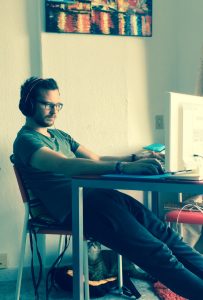 I should lead with one of the big reasons I wanted Nik Smon on the show: He uses Ableton. Music producers, especially electronic producers, might say, "So what?" But in the Radio Imaging world it's rather rare to work in this DAW.
(Warning - Voice talents or NOT-so-nerdy-audiophiles - we get super nerdy with audio geekery)
I saw Nik in action on stage at the Imaging Days in Amsterdam. He was methodically, efficiently and creatively moving around the software building musical, tight, effective production in no time and I was REALLY impressed. I had to know more! Nik is a freelance Radio Imaging producer based in Slovenia. He works for stations and brands on an international scale and is a specialist in music branding, custom intro production and (in my words) making everything he produces feel like it was "born that way."
PLEASE visit the SHOW NOTES page for this show. He provided a lot of great content: bonus audio, studio pics and plenty of links!
I should lead with one of the big reasons I wanted Nik Smon on the show: He uses Ableton. Music producers, especially electronic producers, might say, "So what?" But in the Radio Imaging world it's rather rare to work in this DAW.
(Warning - Voice talents or NOT-so-nerdy-audiophiles - we get super nerdy with audio geekery)
I saw Nik in action on stage at the Imaging Days in Amsterdam. He was methodically, efficiently and creatively moving around the software building musical, tight, effective production in no time and I was REALLY impressed. I had to know more! Nik is a freelance Radio Imaging producer based in Slovenia. He works for stations and brands on an international scale and is a specialist in music branding, custom intro production and (in my words) making everything he produces feel like it was "born that way."
PLEASE visit the SHOW NOTES page for this show. He provided a lot of great content: bonus audio, studio pics and plenty of links!Transcript
94 min read • 14,010 words
Announcer: This is The Producers Podcast. Featuring the most respected international talent in the world of audio production and voiceover. TV, radio, film, and more. In-depth interviews and industry insights, putting you on the inside. Learn more at ryandreen.com. The Producers Podcast. With Ryan Dreen.
Ryan: And we are here, Producers Podcast. I appreciate you listening. A couple things to mention here in the intro, but first, Wendy Kay Gray, the great pal of mine who has lent me her voice. I was able to update the intro finally. I kind of liked the intro I had, so I never updated it, but figured I'd mix it up a bit. So thanks to Wendy for doing that for me. It's very nice of her. And then Brian Cooney, of course. I can't live without my signature voice, who, I'm pretty sure I saw him or heard him voicing the promos for the massive new show The Passage based on that book. Pretty confident that's Brian. I didn't double-check. But I mean, I've listened to his voice intro this show long enough. I am pretty confident. So anyway, thanks to both of them as always. If you could do me a favor and rate and review this show, it'd be so awesome. I'm, you know, not making money off this thing or anything, but you know, the more people that get to check it out, the better. And if you wouldn't mind doing that over at the iTunes or wherever the heck you get your podcasts, I don't really care. That'd be helpful. And oh, little warning. I was gonna throw a small warning. I hope you enjoy the show. I do hope you listen, but I have a bit of a unique audience, and there's a lot of people that are kind of in the voiceover world and listening to those guests, and this episode isn't really for you. It might be for you if you want to hear about radio imaging production, especially when someone is using Ableton to do it and really talking some inside baseball audio nerdy geeky junk, plugins and ways to manipulate Ableton to do radio imaging production, then great. But like I said, this, this episode's pretty specific. I had a blast. Talking to Nick about that, so I know there will be plenty of other people that will really enjoy this because I have spent almost no time on Ableton in the past. But that will bring me to talk about my guest, Nick Schmon. He is in Slovenia. I will say most of the words incorrectly, but I am ready to be corrected at any time. So you know, like Nick's name, pretty confident I screwed that one up a few different times. But nickschmon.com, N-I-K-S-M-O-N. You can check him out there. He's on SoundCloud. He's on Twitter and LinkedIn too, but I think he's got more happening on SoundCloud. soundcloud.com/nikschmon. N-I-K-S-M-O-N. I'll have links in the show notes page too, which leads me to my final point here. Show notes page is filled for this episode. Not every episode has a show notes page. This one does. A lot of audio, the extended version of the demo I'll play here in just a minute. Pictures, he gave me lots of pictures to put on there. And finally, links. He mentions a number of different plugins and free tools and just some stuff that you may not have heard of before that he really enjoys. And I will have the links to those on the show notes page as well. All right, freelance producer based in Slovenia, working for brands all around though. I think by virtue of his geography, you know, he's going to be working for stations that are not in his own country, which is pretty cool. He's always looking for more, but he's doing some excellent, very musical radio imaging production, very skilled at that. Musical branded intros, and maybe at the end of the episode we talk about something special that's coming out soon as well. But I welcome in the one and the only Nick Schmahn. Antenna. Immer einen Hit voraus. What's the trick? I wish I knew. Radio SI Music. But I said no, no, no, no, no, no. I said no, no. From this to this. This. Is Radio SI your home of music? Antenne, Antenne, immer einen Hit voraus. Can we still be friends? Because it has to end. Antenna immer einen Hit voraus.
Announcer: There it is, a big old batch of work. I have more to listen to though from the guest today out of Slovenia, or Slovenia as I'm told it's completely proper to say. Nick Schmon. Now, right out of the gate, Nick, say your name correctly because even though I just learned how to say your name correctly, now correct me and tell me how I should read it. say your name?
Nik Smon: You were very close. I would say, I would say like you were 87%. So 87, 87. So it's Nick Schmon.
Ryan: Schmon. So is it like Schmon, like, like, like, what would it rhyme with? I know you said on, turning on. Okay, so it's more like on as opposed to own. Okay, got it. Nick Schmon. Hey man, dude, we've known each other now for a couple years. we've emailed a ton. We were just chit-chatting before we started the interview. dude, I love your work. We heard the demo there. You do great stuff. So I'll pay you a real nice compliment right out of the gate. great work. I'm really happy to have you here.
Nik Smon: Thank you. I'm flattered. Thank you very much, man. Nice.
Ryan: so I wanted to— I want to start— in fact, I'm going to start by talking about some of the audio I just heard in the demo. But I do want to talk more kind of like worldly stuff and hear about just your life in general and where you live and all that stuff, if it's cool. But just And just to kind of not so much warn people, but give them a highlight, we're gonna be talking Ableton today because that is your DAW of choice.
Nik Smon: Yes!
Ryan: Right? So we will get in— we'll get it. Yeah, we'll get it. I don't really do a lot of sound effects, but that was good. We'll get into the Ableton in this episode, probably more— no, certainly more, and maybe I'm not sure if I've really talked about Ableton a lot on this podcast, so this will be a great show for people looking to sort of expand their reach or just learn about a DAW, if you will, that they may know nothing about, or they may have tried and just decided to throw away because it wasn't for them. But let's start with the demo audio there.
Nik Smon: All right.
Ryan: Clearly you have, you know, music theory in your brain, in your skill set. A lot of things are on tempo. You're real good at manipulating tempo. I noticed that. So, you know, something might be sitting at about 100 BPM and you cleanly bring the entire mix up to 120 or 130. How do you start when you're making anything in audio production? Do you have a typical way you start a piece?
Nik Smon: I have my template, which I renew every, I would say, every 3 to 4 months, but it's not such a big big renewal. It's just adding or removing some stuff that I don't use a lot. I usually start with an empty canvas, you could say, and Ableton has this really nice feature. It has 2 kinds of views, like you would say in Pro Tools, maybe you see the mixer and then you see the arrangement view, right? In Ableton it's the same.
Ryan: Or edit view.
Nik Smon: Yeah, you have the mixer view and above that you have the clips, the clip view. So you, you throw the tracks into those slots. Any tracks you want. I mean, any piece of audio you want, and you can play around with it really quickly because it immediately guesses the tempo most of the times correctly of the songs. And then you can just like play them together and see, oh, that works. Oh, that doesn't work. Oh, that works. Oh, oh my God, that works. That works really well. I didn't know because, you know, sometimes some things are— the software I'm using, Mixed In Key, wouldn't tell you that they're in the same key, but somehow on some occasions, some things work Although they're not in the same or in the compatible key.
Ryan: So like if you have your wheel of fifths or whatever, and you should be using these 2 keys together, suddenly these 2 keys sound correct, and you may not have known it just by using the science, if you will.
Nik Smon: Exactly. Just by looking at the notes and stuff, you would go, oh, this probably doesn't go together. But then you can, like I said, quickly put it in and just listen to it and sometimes discover interesting combinations. So the second thing I do, when you ask me how I start, the second thing I do is, if I don't know the song, I try to listen to it a few times, so just to get it into my brain. and then I, when I listen like to all the songs that I have, or maybe I choose 5 or 6 that I will use in the next promo, I kind of, you know, it might sound silly, but I sing it. You know, I just go, I sing the chorus of one song and then I try to connect it Like in my head or out loud, but not really loud. I try to connect it like that. You know, I go like da da da da da da. Oh, okay, that works. And then I try it, and if it works, great. If it doesn't, then I try something else.
Ryan: So you almost do like your own little previews before you put a lot of legwork into it in your head or out loud, right? Just to kind of see if where you think it should go, right? If it should go that way.
Nik Smon: Exactly.
Ryan: Yeah, it's cool. We heard a lot of stuff there. Clearly a lot of music mixing. You're mixing different. you know, types of songs, a lot of tempos and keys and whatnot. Generally, like, what are those for? Are you— I mean, we'll get into your job here in a bit, but you're making music promos. Do those stand alone? Are those always going to be mixed together with other— you just tell me basically what all that stuff is for.
Nik Smon: What all that stuff is for? Listen, that's an interesting question. I would say from my point of view, and probably the point of view of the PDs, it's, it's like a little compact, nice sounding showcase of what the station is about musically.
Ryan: Yeah.
Nik Smon: So in which, what can you expect from the station to hear today or in the, I don't know, like what are you about? That's the purpose of this thing. So when a listener is in the car and like hears, oh, I like this song. Oh my God, I like this song too. Oh, this is a new song, but this goes together well. It's something like that. That's what I would say.
Ryan: And some of the stuff that I heard in that demo, for example, it was even hard to tell. I mean, it was so well done, it was hard to tell where maybe one piece began and one ended, etc. Generally, how long are some of those music mixes you're making, and where do they play on the air? In between songs, in a commercial break, that kind of a thing?
Nik Smon: They are positioned— many times they're positioned after the commercial break, so like half and a half hour. So there's a big commercial break. And after that, like, they go back to music and they play this to, like, get the listener back into the musical mood and stuff like that. Or they play songs in a row, like 3 or 4 songs in a row. And they have this as the breaking point between many songs to not have just songs and just, just like regular imaging.
Ryan: Yeah.
Nik Smon: To, like, convey more music and like, like this. Yeah.
Ryan: Yeah, yeah, awesome. All right, let me, let me switch gears because we're gonna go a lot more into the, sort of tech, the real, the real nerdy stuff a little bit later. you are currently in Slovenia. I'm gonna say Slovenia like you would say it, if that's cool.
Nik Smon: Cool.
Ryan: Yeah, yeah, because, one of these days I'll come visit you and it'll just be— it'll be just like I'm a local. Oh man, no one will know him.
Nik Smon: You really should come visit because it's, it's a really beautiful country. Really, I'm not saying that just because as Slovene, because I'm also Slovene, but other people that come here say this, like tourists that come here. I think especially Americans are really impressed because they have never heard of it, and then they come here like, "Wow, this little gem!" And like, yeah, you would definitely enjoy it.
Ryan: Definitely, man. I actually was doing a little research on your country because I just to be candid, I didn't know much about it, and I've met not just you. I met some other people from there. at the conference, you know, a couple years ago that we'll possibly talk about later. But anyway, what part of the country are you in currently?
Nik Smon: I'm in the, you could say, northeastern part. It's the second largest city— city, it's a town compared to your cities. it has like 100,000, 100,000 inhabitants. it's called Maribor. yeah, yeah. And it's surrounded by Beautiful hill and forests and like beautiful nature and a river runs through it. It's a cozy little town.
Ryan: How do you say the capital of Slovenia?
Nik Smon: It's a tongue twister, right? Yeah. It's Ljubljana.
Ryan: Ljubljana.
Nik Smon: The first L is with a— I don't know, with a Y you could say like Ljubljana. Ljubljana.
Ryan: Yeah, yeah, that, I had seen it written and I, I couldn't remember ever hearing someone say it, you know, so I wanted to at least get the capital city said correctly.
Nik Smon: To you it probably looks like Ljubljana, right?
Ryan: Yeah, well, it's L-J-U-B-L-J-A-N-A. That's how it's spelled, so I wasn't even gonna attempt it.
Nik Smon: Just replace the J's with the Y and then maybe you can, you can get closer to that.
Ryan: Yeah, yeah, I'm still not gonna try because I think I would be—
Nik Smon: I'd really like to hear it though.
Ryan: Okay, fine, I'll try. Ljubljana, Ljubljana.
Nik Smon: Yeah, yeah, pretty close. We're at, we would say, 73%, right?
Ryan: 73%.
Nik Smon: Can you do more?
Ryan: All right. Now, yeah, I'll save that for the end. Okay, I'll edit it in in post. I'll make it sound like I knew what I was talking about in post. No, the other thing I was gonna say is I've become a bit of a soccer fan. I'm gonna still call it soccer, but I've become a bit of a soccer fan over the last few years. I, I had heard of one team, and now I believe you live in the town that your best team by far is, right?
Nik Smon: Oh my God.
Ryan: Maribor?
Nik Smon: Yeah, it could be.
Ryan: NK Maribor? The Purples?
Nik Smon: I would— if I would really pay attention to football, then this, what you just said, could be very well right.
Ryan: Could be true, but you don't even know because you don't pay attention to football.
Nik Smon: Seriously. I mean, yeah. All right.
Ryan: But well, I I had I had to double check myself because I had thought I had heard of a team from Slovenia, and I think Slovenia made it to the World Cup a couple times now.
Nik Smon: Yes, that that that that I know that I know they did, and I think it was Maribor. Yes, I think it was Maribor. Oh my God! My friends are gonna kill me.
Ryan: Well, I think they were in the Champions League in the last few years possibly. Yes, it doesn't matter.
Nik Smon: Yes. I think so.
Ryan: Well, whatever. This ain't a soccer podcast, that's for sure.
Nik Smon: Yeah, because we would be, you know, it's whatever you can do to put our country on the map. It's really good. So I support that.
Ryan: and I— so then I was on Wikipedia. Here's something I didn't know, but I, I didn't know exactly when this was. I didn't look too much detail, but, when Slovenians were immigrating away from the country, I guess this was probably a long time ago. Most of them went to America, and in America, most of them went to Cleveland. Did you know that the biggest population is in Cleveland?
Nik Smon: I heard that. I heard that, actually. It's true.
Ryan: And Cleveland turns out some of the best radio imaging people, like, per capita.
Nik Smon: No way!
Ryan: It's crazy how many just absolute monsters have come out of Cleveland. So there's something in the blood. Something in the Slovenian blood, the Slovenes are— it's imaging, there's something going on there, but they all went to Cleveland and anyway.
Nik Smon: Well, you just blew my mind, man. Thank you.
Ryan: I thought that was—
Nik Smon: yeah.
Ryan: All right, the last thing I was curious about. Are you older than your country? I actually don't know how old you are.
Nik Smon: You don't know how old I am? Hmm.
Ryan: No, I mean—
Nik Smon: How old do you think I am?
Ryan: when I met you, I guess I would have guessed you were, maybe late 20s or 30.
Nik Smon: Okay. Yeah, I'm listening. Late 20s. Yeah.
Ryan: Okay, so I'm guessing you were actually older than that then. Yeah, but I don't know, I'm gonna put you in your 30s now because it's been a couple years since I met you.
Nik Smon: Yeah, I'm a little bit over half 30s. Let's say that.
Ryan: Okay. So then let me think here. Let me do some math. So you are older than your country then?
Nik Smon: I am.
Ryan: Yeah, so where were you born?
Nik Smon: I was born in that country, in this country, in this city that I'm right now.
Ryan: And so was it Yugoslavia or tell me how dumb I am?
Nik Smon: It was still Yugoslavia, true. We separated in 1991.
Ryan: So was it like, did you have a rough childhood? Like was there violence? Was it crazy? What was it like?
Nik Smon: Not really, not really. The thing is the war when it raged through Yugoslavia, Slovenia got the least of the whole war. Like other southern countries, Bosnia and Croatia and Serbia, they, they got really hit really bad. Slovenia had maybe, I don't know, I'm gonna say something wrong now, but maybe a month maximum of like of a bad situation. And then things were like calmed down and it was okay. So yeah, no, I didn't have a rough childhood. I had a beautiful childhood. It was amazing.
Ryan: Good, good. That's cool. That's, that's good. I also noticed. So you were born in a socialist, or I guess a communist country.
Nik Smon: Yes.
Ryan: You guys transitioned to democracy faster than just about any country in that region, I think.
Nik Smon: Yeah, it could be true. I'm learning new things today about history. That's amazing. I would never expect that.
Ryan: I'm just curious because, I mean, I love— I have a degree in history, but—
Nik Smon: Oh, okay, I see where it's coming from.
Ryan: Okay, It's just so interesting to me, you know. I mean, you know, there's a lot of stuff we take for granted living in the States, you know, democracy for example. But it's cool, you know, when a country is able to transition like that so quickly. Anyway, maybe—
Nik Smon: I don't even, you know, I was that young that I don't even remember how that was.
Ryan: Okay, so as far as audio and/or radio, I might— I'm gonna play a piece here in a minute, but first tell me what was your very first job or first experience working with audio?
Nik Smon: Okay, my first experience working with audio was being a DJ. It was a big dream since I was, I think, 10 years old or something like that to become a DJ. And then when I was a teen— I will just shorten this really, really quickly. I became a DJ for 4 or 5 years when I was a teenager and the co-DJ at the club I was playing was working at a radio station, which I really, really liked from early childhood. And he said one day, hey, we need some people to be an on-air technician, you know, would you be interested in that? I was like, oh, of course, yeah, I love the station. And that's how I became an on-air technician, like, you know, behind the mixing desk and stuff. And I got more and more interested in, in how to put the songs together. I was always that guy who was really Can you say anal about it? I think you can, right?
Ryan: Yeah.
Nik Smon: I was really like, there's a word I say, I think they say frame fucker here. So I heard that from a consultant here. Like, I was really like zooming in and like getting the beats on the perfect, you know, that it sounds, everything sounds perfect. That was me. And then I got, then I really got interested into production. And I remember this same friend who got me that job, I mean, who told me about that job, he got a tape from a friend. I don't know, he got a tape from the UK and they recorded Kiss FM UK on that tape, like just 2 hours of program.
Ryan: Oh, okay.
Nik Smon: And I heard that and I was like, my mind was blown. I was like, I couldn't even understand what was happening. And from that moment on, I was like, I was obsessed with this. I was— I wanted to reach— I wanted to reach that goal. And also, I don't know if you know, I don't know how how far that goes, because I— if I look at SoundCloud and stuff, you don't see many Italian producers, not many Italian imaging guys. Italy has a really, really strong, deep, interesting, different radio culture than I think the whole Europe. And I listened to a lot of Italian radio stations back in the day, and that's also where I got a lot of influence from.
Ryan: So You can hear them literally where you live because you're next— you're all the next area?
Nik Smon: Not really, no. I was— no, okay. You can hear them when you go to the seaside, and when I went to the seaside, I had the Italian radio blasting all the time.
Ryan: So where you live, do the mountains sort of mess up your ability to hear foreign stations? Can you really only just get local radio?
Nik Smon: Yeah, I can get— we can get Croatian and Austrian. So that's the south, to the south and to the north. That's what we can get. Like Italian, we can't. And some Hungarian maybe, but—
Ryan: Okay. Yeah. Let's see here. A lot of things popped out there, but I guess what was the first radio job there? I mean, you should say the station.
Nik Smon: Yeah, the station was Radio SI. That's the station we were talking before we were recording, I think. It's an international radio station. So there aiming at the foreigners, at the visitors of the country, or the expats who live in the country. So they speak 3 languages: Slovene, German, and English.
Ryan: Okay.
Nik Smon: And they have the info, I mean, the news and traffic and everything that's in the foreign language. And they also aim at the people who travel through the country because there's a lot of traveling, especially in the summer, because people go to the coast, to Croatia. And yeah, that's who they aim for. And I have a really broad music selection. They're a part of the national broadcaster, the public broadcaster.
Ryan: Okay.
Nik Smon: They have a really broad music selection and kind of specific. It's a little, I would say, I don't know, maybe a little bit to the alternative side and maybe a bit more quality. They try to put more quality music into it, not so much mainstream chart things, you know. And that's what I really liked about them from the get-go. And they continue to this day to be like that. Maybe they they loosened a little bit because of the numbers and everything, and all the other stations in the market are playing pop, and they had to a little bit adjust, but still they try to keep their soul intact, and I'm still working for them to this day.
Ryan: Oh, I thought so. Okay, that's really cool to hear. Now, you are 100% freelance now, right?
Nik Smon: Yes, I am.
Ryan: And so, when did you— I mean, you had the job at the station, you were a DJ, Are you doing, like, is your entire living being done making audio production for radio? Is that 100% of your life now?
Nik Smon: It is, I would say it's 80%, and the other 20% gets filled up by occasional DJ gigs.
Ryan: Oh, you still do that?
Nik Smon: I still do that, yeah. But I just, you know, I just enjoy, I just enjoy the part, the technical part I enjoy, and I also enjoy the feedback part, you know, when you give People a song they really like. They like give you give you some energy back, and this is a great feeling. So I'm kind of addicted to that, and that's why I keep going for.
Ryan: Yeah, no, I would understand that.
Nik Smon: That's why I keep going for as long as I will be able to keep up with the music and everything because it's it's changing a lot. So we'll see how long that will go. Yeah. So yeah.
Ryan: Nice. I don't know if I said this. I know I told you before, but you speak very good English. So if I hadn't actually complimented you in the podcast, but I was.
Nik Smon: Credit goes to credit goes to my best friend who's an American. American who moved to Slovenia, I think now maybe 20 years ago, and he also works at that radio station that I was talking about before. And we're best friends, and I basically abused him because I was talking to him English all the time, and he had to talk English to me back. So I got a lot from him. So I have to—
Ryan: And meanwhile, did he move there and he's wishing he could learn Slovene? How do you— is it just said Slovene?
Nik Smon: Slovene, yeah, perfect. We're at 97%, Ryan.
Ryan: Haha, yeah, I'll get there. I'll get there. I don't know if I'll get 100, but he's probably like, I want to keep— I want to learn Slovene. I need, you know, for my job, I need to learn this language better, and this jackass over here keeps talking to me in English.
Nik Smon: Exactly, that's what happened. But everybody— I mean, he kind of— I guess he knew what I was doing, so with everybody else, he tried to talk Slovene, and he's very good at Slovene right now.
Ryan: Very good. Now, you, you gave me a bunch of pieces of audio. We'll play a couple of them, but there was one interesting one I saw, and you're like, hey, let me explain why I gave that to you. It's a piece of Dave Fox production. I believe you said you heard it on this podcast. Should I play that first and then we'll talk about it?
Nik Smon: Go right ahead.
Ryan: It's time for C-100 Zootopia. Music's brightest come together for one night.
Nik Smon: And you can be there.
Ryan: Lawyers say we can't tell you who'll be there just yet. JJ will announce the complete lineup Monday at 5. Saturday, May 16th, Izod Center. Z100 Zootopia 2009. Oh, look at that. We have 5 seconds left over. A little music, please.
Nik Smon: Forever Yagami. Shorties know nothing.
Ryan: See you later. Join the crowd. Save the date. Okay, cool. So you, you talked about that and a great piece of production from Dave Fox back in 2009, obviously, as he said it there. But the end is something you highlighted. So why was that piece of audio important to you?
Nik Smon: That piece of audio was important because this ending piece, this like last 5 seconds, first of all, the witty comment at the end is great. And then how he took advantage of this spare time he had. And then how the songs are combined. They're combined in a very, you could say, chaotic way. But it comes off, for me at least, it comes off very natural. Although it's like purely chaos, but it's something I'm striving to— I'm struggling to actually achieve because I'm all about flow and all about perfect blends and like, you know, melting songs into each other. And this is like cut, cut, cut, cut, cut and put everything together. It reminds me a little bit now that I found out about him, it reminds me a little bit of Mike Anderson.
Ryan: Sideshow?
Nik Smon: Yeah, Sideshow.
Ryan: Yeah, past guest of the podcast.
Nik Smon: Yep, yep. I mean, I heard, I heard of him before I saw the podcast, and I was, I was blown away by his, you know, his— it's, it's very, it's very fast-paced. It's very, you can't expect anything what's gonna happen. And this is what I love about this last part. It— I think it's, although it's what, 9 years old now, to me it's still completely relevant because I'm I would have a hard time replicating it. You know, I would, I would, I would just— it's just, it's crazy. It's great. I love it.
Ryan: So, so, and I think one thing I pulled out of that is you liked the surprise element of it.
Nik Smon: Absolutely.
Ryan: In fact, so making people like, you know, coming out of left field would be a phrase we might use here.
Nik Smon: This is what I'm aiming for with my production always. I always try to do the surprising thing or something that somebody would not expect.
Ryan: Have you ever made a piece of production that you were 100% satisfied with?
Nik Smon: No.
Ryan: And that's kind of what I assumed you'd say, but do you think you ever will, or are you always going to be ultra-critical of what you're doing?
Nik Smon: I hope so, that one day some piece of audio is gonna come along and I'll be like, oh, you're the one, baby. But I don't know. I can't say.
Ryan: You're the one, baby. That's, this is one of those sultry audio production podcasts. Yeah.
Nik Smon: Yeah, but I know, I don't know, it's, you know, it's, it's— I, I can't say this is art, what I'm doing, because I would be, I would be, downgrading art, maybe. I don't know. But people say that art is never finished, it's only abandoned. So in that regard, I say that there's always something you could do better, or you could do more, you could improve on. And that's why I don't— I don't know, maybe, but maybe one day I'll settle. I'll say, you know what, this is it, man. You can stop.
Ryan: I don't know. I haven't known you that long, but I suspect you're not going to settle at any point. So I like that.
Nik Smon: I don't think so either. Yeah.
Ryan: I also think it's important to think of what you— we do as art and not say, well, maybe it's not art. I think it is art.
Nik Smon: For me, it totally is art.
Ryan: For me.
Nik Smon: And when I hear other producers, what they do, for example, Stef Jansen, or Stef Jansen, I'm not sure, from 538, or Chris Hardgers, or Simon Palfreman, I'm also not sure.
Ryan: Palfreman?
Nik Smon: He blows my mind.
Ryan: Well, you brought up KISS.
Nik Smon: Yeah, KISS FM UK. This is like, it's, for me, it's Absolutely art what those guys are doing. Absolutely. But for other people it might not be. That's what I'm saying, that like I put a buffer on it so that nobody's offended or something. But for me personally, it's, it's complete art. Yeah.
Ryan: And let me maybe real quick, as far as your freelance work, how do you get new work? What— how many different stations are you producing for? How many different sort of entities are you producing for right now?
Nik Smon: This is, I think this is the hardest part of the job, just getting new work and hold. I mean, trying to get new clients and talking to new clients. This is the hardest part for me. I'm not that kind, that much of an open guy, you know, like be that one to attacking guy, or I don't know how to say. So this is the hardest part.
Ryan: You're not a hardcore salesman.
Nik Smon: No, I'm not a salesman. No, that's true. I'm not. I'm a strong believer that quality should be selling itself, but it's not the case today. So I need to train my sales skills, I guess.
Ryan: Well, what kind of things are you doing? Or, I mean, how have you acquired some of the clients you have? Is it making a phone call? Is it just word of mouth?
Nik Smon: Yeah, I mean, the ones I kind of know or I got to know I could approach easier, but like a cold thing, I don't know if I could do that ever. I got approached, which helped a lot. For example, for Trill, I got approached by Anthony Timmers. He heard my stuff on SoundCloud. Same for Imaging Days. He said, hey man, you should present your stuff. And I was like, yeah, of course. And yeah, who I do work— you asked who I do work for. Right now I'm doing for Antenna, which I've been doing for the last 5, 6, I think, years, oddly, something like that. This is also— I got there because they liked what I was doing. So I didn't go like, hey guys, can I work for you? Because I, I'm unable to do that, actually.
Ryan: So I think everybody can, can relate to what you're saying, by the way. It's very hard to sell ourselves. Yes, some people do it and they do it pretty well. Yeah, they do it obnoxiously.
Nik Smon: I would love that. I would love to have that feature, but I don't have it. And I'm really also, I'm quite, how do you say, self— no.
Ryan: You're an introvert, maybe?
Nik Smon: I am. I am. That's one thing, but self-conscious, is that the right word?
Ryan: Oh, yeah.
Nik Smon: Okay. About my work, I'm very critical, and I'm like, oh no, that's not good enough for them. I won't do that. No, no, no, no, no. And then I hold back for long, for too long. And then I'm like, I get discouraged and things happen. And then I I have to pick myself up again and then start anew and say, okay, no, this is good. You could do that. You could do that. So it's like an up and down process, you know, all the time.
Ryan: Did I see that you're doing something for Studio Brussels?
Nik Smon: Oh my God, you mentioned Studio Brussels? What are you doing, man? You want to stab my heart?
Ryan: Oh, did I? What does that mean?
Nik Smon: No, it's good. It's good. The thing is, I'm actually probably the biggest fan of Studio Brussels outside of Belgium. I can, I can share. Or maybe there's some Belgians who are living abroad somewhere and they listen to Studio Brussels.
Ryan: Yeah.
Nik Smon: But like, as a non-Belgian guy, I'm probably, I'm probably the biggest fan, definitely, because I have it on my phone. I listen to it in my car. I use my, my, my data on Studio Brussels. So yeah, they're, they're absolutely amazing. And I did one project for them and that was it, sadly. That was it. And I'm still to this day, I'm not really sure why. I mean, they were happy with it and everything. And Steven and I have a good relationship. We saw each other this year at the Radio Days.
Ryan: Okay.
Nik Smon: And when I saw him, I was like uber happy. And I talked to him and I said, I have several ideas and I do have several ideas, but I still didn't get back to him because I'm too self-conscious about my ideas. I'm like, no, I shouldn't mess this up. This has to be perfect before I send it out. So I was I'm still holding, holding back to contact him.
Ryan: But in the— well, take my advice. I mean, I've known Steven now a while. We've done a few things together. you should, you should definitely— that's one of these good examples since you already have the, you know, you have the relationship, you know, reach out to the guy.
Nik Smon: No, but I don't want to blow it.
Ryan: Don't hold yourself back.
Nik Smon: If I, if I reach out to him, I wanted to reach out with him with this, with some stuff that he's gonna go like, oh, this is great, man. Not that he goes like, oh yeah, this is, this is interesting, you know, you maybe, maybe, you know, that's, that's my aim when I do stuff like that. But luckily what happened is I saw, I saw just really quickly, I saw that there were, there was, how do you say, vacancy for a job at M&M, which is a sister station of Studio Brussels for VRT, the Belgian public broadcaster. And I said, well, what can go wrong? I'll apply. And I applied and they were searching actually for freelancers and I got rejected. Oh, you can, do you have a sound? You can play like the sad trombone or something like that.
Ryan: No, I'll just let that sit.
Nik Smon: But no, yeah. Oh, I was rejected, but I mean, I wasn't fully rejected. The recruiter got back to me and said, hey, we liked your stuff. We'll put you on our roster. And if we have something that fits your style that we might need from you, we'll get back to you. And it happened. It happened this year. So I did something beautiful for Eminem. I'm really proud of that, what I did. We can also play that if you want to. And it's the first piece of audio in the demo is the Eminem stuff.
Ryan: All right, let's hear that now.
Nik Smon: Put that record on again.
Ryan: Music and more. Soundcloud.com, I already mentioned this in the intro, soundcloud.com/niksmoon. It's N-I-K-S-M-O-O-N, just in case people— but you can go, they can hear more of your stuff from M&M there, right?
Nik Smon: True, although I haven't been updating my SoundCloud lately, but I will.
Ryan: Yeah, you'll update.
Nik Smon: Yeah, I'll get back. I mean, I reposted the stuff I did for them because they posted it on their VRT SoundCloud. and I reposted it. So yeah, they can hear it there.
Ryan: So, let me just really drastically switch gears, and if any of the other stuff we've been talking about comes up again, but Ableton. So, I definitely wanted to devote a good chunk of time to this because I haven't really done that in a podcast. Now here's what I kind of knew about Ableton. I got it, 8 years ago probably. It's been a long time. I loved the fact when I was trying to just first get into making loops and just some kind of random production music that I could drop little chunks of music in there. And like you had already mentioned, it was sort of just automatically matching all the tempos and the keys is what it sounded like. And I didn't really know how it was doing it. And that's all I knew about Ableton. Why did you start making radio production in Ableton?
Nik Smon: Simon— 2 words— Simon Palfroman. Palfroman. I always try— I always want to say Palfroman. I don't know why. Maybe it's my Slovene language because I'm— I'm sorry, Simon. I'm sorry, Simon. timing. No, you're probably saying it right. I'm just—
Ryan: Yeah, we both met him the same time though, at 2014 Imaging Days, right?
Nik Smon: That's where he blew my mind. And that's where he showed me that Ableton is perfectly capable of producing world-class extraterrestrial imaging, like the stuff he does. Because before that, I was using Ableton only as a mix tool, like for mixing songs together. And then I exported that and put it in my DAW that I was using back then, which was Steinberg WaveLab. I don't know if you know it. It's also very basic, no automation. What else? No. Yeah, that's basically it. Yeah, no automation.
Ryan: Did Steinberg invent the VST? Is that true?
Nik Smon: They did. They did. Amazing job, guys. Really.
Ryan: Yeah. Okay, so you would kind of do part of the work in Ableton, Yes. And then you would kick your stems out and bring them into WaveLab and kind of do the rest. And then Simon helped you realize that you don't need to do that. You can do everything in Ableton.
Nik Smon: Exactly.
Ryan: You mentioned in an email though, when we were kind of going back and forth, that while Ableton does have some shortcomings, enough unique features that you love, that's why you just keep using it. So maybe we should start with these features that you love. And I think we even threw out like a top 10. Maybe that's a good way to start discussing this, this audio editor.
Nik Smon: Definitely, I'd love to. I never felt the need that I need something else. I mean, it does have shortcomings when I see other DAWs, what they can do, especially Pro Tools with the editing and stuff. It's really fast that Ableton doesn't have that, not even in the latest version, which I don't have, but it still didn't get to the level of editing that Pro Tools is. But yeah, the features. The first feature that is, it's just fast, you know, everything is very fast. I can do things that I couldn't do before in like 2 clicks. And this is what got me into— the other part was the beat matching and everything. But yeah, I can go down a list. I wrote actually—
Ryan: Well—
Nik Smon: When we were talking about it, I wrote a list of things. I pointed it out. I just have to find my notes.
Ryan: And yeah, let me— while you're looking there, when you say fast, you know, while you're looking for that, I always like to know if, if, you know, software is just generally lightweight. That'd be a term I would use. In other words, it's not a big resource hog. You open up, Reaper and it's like you're not even using software. The thing is, it just moves quickly. It doesn't suck a lot of resources. You can load plugins. And so Reaper I would consider to be very lightweight yet feature-rich.
Nik Smon: The installation file is also like tiny, right? 10 megabytes. I don't know. It's really, really tiny. I wouldn't say that Ableton is light on resources because I can bring my computer to its knees without any problem. But that's probably also because of other plugins. But still, it's not I mean, yeah, it is, but it's not as lightweight as—
Ryan: But when you say fast, when you say fast, you just mean that it's very efficient. It's logical. Yes.
Nik Smon: It's logical to me. It's some shortcuts or stuff that I can get to, I can get to really fast, like immediately. That's the first thing I want to point out. Like in Ableton, I would say 90% 4% of things are duplicatable. So imagine whatever you want to duplicate, you can duplicate it with the Command+D. So I want to—
Ryan: Give me an example besides just a sound.
Nik Smon: I want to duplicate that clip. Okay. I want to duplicate that envelope. Okay. I want to duplicate that track. Okay. I want to duplicate that plugin. Okay. I want to, I don't know, whatever comes to mind is duplicatable. So this is like, for example, you have a really cool envelope of a filter and you would really like to use that somewhere else. You just copy and paste that envelope or duplicate it and use it on a secondary clip. I mean, this is, for me, it's indispensable. I abuse this shortcut constantly.
Ryan: Cool. What's next?
Nik Smon: What's next? I don't know. You can reply to what, I mean, if there's a counterpart for that on Pro Tools, because I don't know.
Ryan: Oh yeah, I don't even want to, I want to learn about Ableton, to be honest. I don't want to be Yeah, I wasn't going to defend Pro Tools.
Nik Smon: It's not defending, it's not a competition. I would just like a comparison maybe. I'm not saying that Ableton is better, it's just preference for somebody. And the interesting thing is just today in the morning, I think, no, it was in the afternoon, I saw on Facebook in the radio imaging group, someone posted a video of an Ableton imaging session, like a hip-hop imaging session. And I replied to that and we started a conversation like how he was using Pro Tools for 23 years. And he moved to Ableton and he's really happy with it. So yeah, it's moving, man. It's the movement.
Ryan: So there's 3 of you out there making imaging with— Okay.
Nik Smon: Oh my God.
Ryan: It used to be 2. A few hours ago it was 2. Now it's 3.
Nik Smon: Got it. Maybe there's some more hidden guys somewhere. I'm pretty sure.
Ryan: Now tell me some other cool things about Ableton you like.
Nik Smon: Cool. So imagine you have a session, you have a track on that session with voiceover on it, with plugins on it that you really, really like.
Ryan: And you would like to use that example exact same track in a different session?
Nik Smon: No problem. You open up the session, you just drag and drop that track into your new session with every plugin intact, with all the files on that track. Oh wait, with all the envelopes, with everything intact. Yeah, or you want—
Ryan: you can have 2 sessions open at the same time?
Nik Smon: No, it's not 2 sessions open. You go into, you go into the session file like you would go into a folder. Okay, it opens up all the tracks like it would open up files, and then you just Really? Grab that track and drop it into your session on whichever position you want. So you want it in, I don't know, in the voice track, and you want to put another voice track from another session into that voice track, no problem, you can do that. Or you can combine 2 sessions into one if you want to.
Ryan: Oh, really?
Nik Smon: Yeah.
Ryan: And you're doing this without having sessions open, you're doing it sort of in the folder and the file structure?
Nik Smon: Exactly, exactly. You have one session open and you want to import something from the other session that you can do that without any problem.
Ryan: Yeah, okay.
Nik Smon: I use that a lot because I have, I don't know, I have some vocals which I remember I used there and I had really nice processing on it. Cool. Okay, let's bring that in and use the processing, maybe exchange some vocals and I'm done. You know, it's really fast. Oh yeah, copy, cut, copy and paste time. That means that you select, I don't know, any selection of your project and you can either like cut it and then you just shrink everything together. I use that a lot because I don't know, I decide that this track is too long and I have on the right side, I have like 1,000 clips and I don't want to move those clips by hand or like selecting them all and moving. I just select a portion of time and just cut it and it snaps together. Like, this is great. And like expanding also works the same way as this. I don't know how special that is, but to me it really helps.
Ryan: It sounds like shuffle mode in Pro Tools, just for anybody who listening. What about manipulating music? Do you have any, any cool tips or tricks or just thoughts on, on like what Ableton is doing when you're bringing music tracks in? Because it did seem to me to be sort of automatic on a lot of things.
Nik Smon: It does, yeah. I think, what's it called now, Logic Pro X, I think they added this feature now and it was like a big thing. Wow, wow, wow, Oh, you drop in your track and it analyzes your BPM. Wow, Ableton had that since, I don't know, 2004, but that doesn't matter. Okay, what happens is you drop a track into it and Ableton starts or doesn't start. You can decide in the settings. It starts analyzing the track. I think it measures the transients and then the length of the whole clip, and then it calculates what the BPM should be. And with electronic music, it's like 97% of the time it's it's perfectly correct. Sometimes you have to adjust a little bit. And with live music, it's a bit different. You have to go in by hand and drop markers and then like put it on the grid and stuff. But it's, I mean, once you get a hold of it, it's really easy. It goes like you don't even think about it. And it has several algorithms how it processes that sound. So you can have like, if you have only drums, you have a different algorithm which works really well with drums.
Ryan: Okay.
Nik Smon: It preserves the transients. so it doesn't, you know, muddy it up or something. Or if you have like a full song, it has a different algorithm and the algorithm is really great. It doesn't get grainy or it does when you do too much, but it's really, it goes a long way.
Ryan: Interesting.
Nik Smon: Effect racks. This is a really, really important feature. I think I talked about it at the Imaging Days. Effect racks is, it's basically you can throw in Wait, let me, let me think about that. You have one track, okay? You have one voiceover track, right? And you want to, you want to process that voiceover track with, I don't know, 10 plugins. But you, you want to, you don't want to do it, how do you say, serial. You want to do it parallel. So that means essentially that you would open 10 of those voiceover tracks and put one plugin on each of those tracks.
Ryan: Yeah, or run it through like 10 buses in Pro Tools. I mean, might be a different way to say it.
Nik Smon: This is what the effect rack is for. You can open up chains in that effect rack, and every chain has the source audio intact. Only if you put a plugin in front of that, because everything works like in a serial mode. If you put a plugin in front of that, then it gets processed. Otherwise, you get the clean sound, and you can You can process it 20 times if you want to differently, and then you can adjust the level of that processing separately, the pan of that processing. You can mute that processing if you want to. And it's really helpful for complex sound design, or if you want to do really crazy voices or whatever. You can do that really quickly on one track only. You don't have to duplicate and then mix it or something. This is really cool.
Ryan: And what's key there is you're not processing in series. As you said, where, you know, compressor into EQ into compressor into compressor 3 into some phaser.
Nik Smon: You can if you want to.
Ryan: You can.
Nik Smon: You can.
Ryan: On each chain, you don't have to.
Nik Smon: Yeah, you don't have to. On each chain, you can have 20 plugins, but then you have a parallel, parallel one, which you have again 20 plugins if you want to, you know. And you can then mix those 2 together.
Ryan: And you can control the output independently of each plugin. And, and the big key here though is you You can use this effect rack and do it one effect rack on one channel of voiceover and make it seem like you've created 10 different iterations of that voiceover.
Nik Smon: Exactly. And then you can put in front or in the back new effects which affect the whole chain, like the input to the whole chain or the output of the whole chain. Like if you want to put a limiter at the end, this is a great feature. And then it has— I explained that too. Every effect rack— I'm too fast— every effect rack has 8 knobs which you can map to any parameter in any plugin, and you can control plugins with those knobs. And it's really, for me, it's really great because I have that saved. So you can save all those effect racks like you would save, I don't know, presets or something. And I have a unified thing. I don't have to remember how this plugin looks like, where this knob is. I just know exactly, okay, I have it in Ableton, I have it written down where is what, and I just immediately can start working with it. This is what's really great because it's like a unified form, or I don't know how else I can say that.
Ryan: It's cool. A lot of these features I can hear benefits You know, and there's a lot of benefit to using Ableton when you're doing anything with music. I mean, I think right out of the gate, it's why you'll see a lot of kind of home, like bedroom DJs and EDM producers are using Ableton.
Nik Smon: Yeah.
Ryan: Because it makes working with music so easy. But you're also giving us some tips as to how you can then implement, you know, voiceover tricks. And obviously when making radio imaging, we're typically dealing with voiceover and music and effects. I mean, I don't want to take this off.
Nik Smon: Sidechaining is also really easy, really fast to do in Ableton, like 3 clicks and you're done.
Ryan: I remember that actually. So I wanted to say you gave me a picture of you, it's on the website, at the Imaging Days. You look like an Ableton professor up there. I think I was sitting like front row because I was just so keen on learning more about this. But sidechaining was a big deal, and I think Simon might have mentioned that as well when he did Ableton session.
Nik Smon: True.
Ryan: so what's the big deal with sidechaining in Ableton? Because I know a lot of people will, will understand why sidechaining is important.
Nik Smon: For me, sidechaining is important. I use it, for example, if I do mashups and stuff, I use it, I use like a bandpass sidechain. So with Ableton, you have stock plugins which, which you can select which band it will sidechain. So you have an acapella and you want to put it on a track which has has a lot going on in that same frequency range, and you just put on that acapella and you sidechain it to the track so the vocal pops out more.
Ryan: So the effect is to carve out the music whenever the vocal is there. And instead of manually writing in automation, you're using a sidechain.
Nik Smon: And you don't really hear that it's doing something, but it's doing something. You know, you don't hear it so much. Yeah, yeah, yeah. Because you just carve out, I don't know, from 1 to 3 kHz, you just use that range. And it doesn't really, to a listener, it doesn't really like, there's nothing missing. For example, if you would use volume automation, you could hear like there's a big change in the track, you know, the highs went away and everything went away. But this is like a perfect, perfect thing to sit things into the mix.
Ryan: Let me, let me ask you this one because you kind of brought it up there. Tell me about the stock plugins with Ableton. Do they offer a lot and how good are they? Because I know you're— I'm going to ask you in a little bit here about other tools you use, but how good are the stock plugins and what do they give you?
Nik Smon: They're very good, but they're, I would say, they're not as— I mean, you have to work a little bit harder to get the sound you want out of them. But once you learn them, they're amazing. You can replace everything with them, almost everything, I would say. I won't say everything. Everything because there's obviously great plugins out there. But yeah, they're really good. They don't seem that way when you start using them because maybe they didn't, they didn't give you the presets you really like. So you have to put in a little bit of work to get them, get them to work. But once you get the hold of it, it's amazing. There's also one thing about plugins. Ableton has a separate program which they've implemented into Ableton 10, which is out now. It's called Max for Live, and Max for Live is basically a program language for plugins and users, any user around the world are submitting their solutions for problems or for maybe ideas they have. And some ideas are absolutely like extraterrestrial, you know?
Ryan: So when you say solutions for—
Nik Smon: And it's free. It's free. It's all free. So it's comparable to Tresor. I'm sorry. Comparable to Reactor from Native Instruments. instruments. I think they have a database of users who produce plugins and stuff too, and that's comparable. But this is like integrated into Ableton. It seems like a native plugin when you put it in.
Ryan: Does that mean that people are producing actual plugins in the Max for Life language, like a compressor? Or they're just like contributing presets for existing plugins?
Nik Smon: It's plugins. It's actually tools, plugins. It's like devices you would never think It's like, you know, people go very creative. They're like painters. They have like an idea. I need something to do this for me exactly. And they go into it and they program it. I mean, there's almost anything you can think of and even like things you would never think of are on there.
Ryan: So is there some sort of a community that Ableton hosts and it's like free and you can just go on there and search and download?
Nik Smon: It's a database, searchable. You have also companies that make Max for Live plugins, which are payable, but they're not that expensive. And they're again, like out of this world. They're like really crazy stuff.
Ryan: Well, and it's just like anything, the community will tell you if something's worth buying. So you'll know pretty quickly if it has, you know, 2,000 5-star reviews or whatever the heck there is.
Nik Smon: True, true. You can sort by downloads, by reviews, by anything. Yeah, it's true.
Ryan: Let me switch gears a bit. Just because, you know, we're getting on in time here and I want to get everything in. You told me that you have a list or you came up with— you've listened to my podcast quite a bit and then you've also, you know, we were at conferences together and you've heard people talk. You have some plugins or tools that you haven't really heard many other people talk about. I'd like to hear some of those.
Nik Smon: Yeah, sure, definitely. One that pops into mind immediately and it's free and it's, I think, very, very usable for any imaging guy, may it be the biggest guy out there or a beginner. It's called OTT and it's made by Steve Dada. I think it— I think I pronounced it correctly. It's the guy behind Serum. I think everybody knows this plugin. It's like, yeah, it's the biggest—
Ryan: Serum is—
Nik Smon: yeah, yeah. So he made this plugin, I don't know how many years ago, and he was just— he's just dropped it on his site as a free thing. It's basically an abbreviation— is that a right word? for over the top. And what it is, it's a multiband compressor, and it's really— it's— it can get really crazy nasty. But what it does to the voice, what I really, really like, is it brings out those sweet high frequencies, you know. It makes it cut through the mix very, very, very, very good and very, very quickly. You get good results Builds very fast and it's free. You know, why not? Why not try it?
Ryan: It's the initials OTT.
Nik Smon: OTT, over the top. Yeah.
Ryan: Okay, awesome.
Nik Smon: And it's, I know it's used by many famous EDM producers because it gets stuff done really quickly. Like they process their leads and stuff. They pop out of the mix. This was kind of the intention to get a tool that helps you get get things to pop out of the mix. And if you use it on a voiceover, it's beautiful. It just cuts through everything.
Ryan: You use it radio imaging voiceover a bit and you like the effect of that?
Nik Smon: I love it. I love it. I must admit, my voiceover game, I mean, my voiceover processing game is weak. I'm going to be completely honest. It's weak because I'm concentrating on other stuff more and I should be concentrating on that stuff more. But I will, I promise I will get better at it. I will, I will. Nice.
Ryan: Cool. What else do you like?
Nik Smon: What else? Oh wait, I lost the train of thought again. Let's go into— I have those labeled as FSU, which means fuck shit up, right? Yeah.
Ryan: Okay.
Nik Smon: One of those plugins which I really use a lot in my production is called Tantra, and it's by Dimitri Shess, or DS Plugins, I think is the company. I'm not sure right now. And basically, it's a, you could say essentially it's a gating machine, but it's a multi-processor gating, filtering, delaying, everything machine.
Ryan: Yeah.
Nik Smon: And it works really well with long things. So you have like a reverb tail or like a vocal that you stretched out and you want to gate it and you want to add some interesting effects or textures to it. It really helps well. I use it for transitions between songs, or maybe I use a vocal and stretch it out and then I put it through that and it makes like a really nice rhythmic effect out of it. I really love it. I use it— no, I wouldn't say always, but a lot of times. And I haven't heard people mention it.
Ryan: I was gonna say, I don't think I've heard that one mentioned. I'm looking it up right now to see if it's even familiar to me. Yeah, awesome, cool, I got it.
Nik Smon: Yeah, then I really use a lot— my go-to delay plugin is EchoBoy Jr. by Soundtoys. What I really like about it is the several types of delay that it has, and I Always try to use plugins out of what they're intended to be used for. I try. I'm not always succeeding, but sometimes I do, and I try if I if I can. And for this plugin, I find I'm sorry, I have to start again. And for this plugin, I started. I did that that I I used those algorithms it has, those delay algorithms for processing. So for voice processing. For example, I put a voice through it and then I layer that voice underneath the original voice to get like a stereo effect or maybe a distortion. And what I do is I just mix on full, feedback on zero. What else? Time also on zero. So it's almost in sync. If it's not, you can print it out and just align it a few milliseconds back. And it has really nice processing in it. It's all, again, it makes the voice cut through. It has like this, I think it's transistor or something like that is the setting. And it's really, it works great.
Ryan: Do you use the whole Soundtoys bundle or did you just pick and choose?
Nik Smon: Yeah, I have it. I didn't get into it like everything. When I got it, I immediately tried everything, but I'm not using it always. I use the Psi EQ. It's really smooth and really nice. I love it. I use I use Filter Freak for a specific— because I love filters. I'm crazy for filters and has a really nice cut-through sound too. And I use it for when I have— when I get a cappellas that are not— that are DIY, they're not studio a cappellas. I, most of the times I put it through that filter to get like a telephone effect, you could say, but that telephone effect really cuts through and it—
Ryan: Oh, yeah.
Nik Smon: It masks the bad quality a cappella, and I use that filter most, most of the times for, for stuff like that to cover things up. Then it's Iris from iZotope.
Ryan: Mm-hmm.
Nik Smon: Iris from iZotope is a, it's a, it's a synth basically, but it also, you can drop in your own samples. And what's special about it is that it has a spectrum, spectrum analyzer, and you can You can use that spectrum. I mean, you can, you can choose which part of the spectrum the plugin will play. And I use it mostly for song brandings where I can't find, where I can't find like the perfect synth that would match, create logos for like branding, song branding. I can't find the exact synth and stuff. And then I just go into the track, I find the synth, I try to extract like the meat part.
Ryan: The cleanest sample.
Nik Smon: Yeah, the cleanest sample and the meat part so that it resembles the original song and then I layer it with some other synths maybe. But that plugin really helps me get this out clean, you know, and it also has pitching and everything. I mean, you just choose that sample and then you can play it across the keyboard, which is great. And the sound is really good and it has lots of nice effects. And yeah, I use that a lot. And I just want to mention the guru who, who does things like in perfect way is Small Paul from Imaging Blueprint.
Ryan: Ah, yeah.
Nik Smon: He's, he's like, he's— I call those people extraterrestrial, you know. It's not in a derogatory or any— it's like in the most uplifting way possible because they do stuff that's for me humanly very, very difficult or maybe even impossible, you know. And he's one of those because when I hear those logos that he does, it's like the original producer would come and say, okay, I'm going to make a logo now. And yeah, it's crazy. And I mean, sometimes I catch it, I can get really, really close. And sometimes I mimic it, or sometimes I just, when I give up, I just say, okay, I'm going to find a synth that's similar, that meshes well with the song. And then I just use a different synth because this is just like, this is crazy.
Ryan: Let me ask you this about Plugins or bundles.
Nik Smon: Yeah.
Ryan: You— by the way, those are a few really cool plugins that people may or probably have not heard of before, much less used. So that's excellent. If you were told you could buy one bundle, I don't care what company it is, I don't care what bundle, I don't care what you're using it for, but which bundle— so if you're forced to just get one, and let's keep that price sort of down, You know, couple, few hundred dollars most. What would you get your hands on?
Nik Smon: Hmm, that's an interesting question. Let me think about that. Couple hundred dollars, you say?
Ryan: I don't know, you know, I don't know what the currency exchange is for you. Yeah, yeah, yeah, no, no, no, I'm just thinking what that's— A few hundred euro, few hundred euro. For example, I'll give you mine and I'll give you mine.
Nik Smon: Are we talking effects or are we talking sounds?
Ryan: I'll give my answer.
Nik Smon: Okay.
Ryan: And now I would love to own, for example, the Soundtoys bundle. It wouldn't be my first choice if I— again, I only have one bundle. I own a lot of iZotope products, but I don't know that they actually have a bundle. Anyway, I would wait for a sale, but I would grab at minimum the Waves Gold bundle, and probably I would get my hands on the Waves Diamond bundle, which is the the one that I actually do own and use. Anyway, that, you know, that's because for me, from a radio imaging standpoint, where again, that's where my brain is, it's gonna offer the most tools that I would use the most often. So, you know, you're not getting a lot of those really trendy, cool synths in there and a lot of the music production. But anyway.
Nik Smon: You know what, you know, bang for buck, I would go with Logic Pro X.
Ryan: Okay, I've heard the plugins in Logic are great.
Nik Smon: Absolutely. You get like a full sample library of very, very usable instruments. You get very good synths, you get very good plugins, and you get a DAW with it for like $200, which is like insanely cheap. So I think I would, if I would have to choose like one thing—
Ryan: That's probably a good answer.
Nik Smon: I would go with that.
Ryan: That's a better answer than mine. Yeah, and to be totally honest, I'd probably just buy Pro Tools because the Avid bundle you get is very good. Yeah, so I think you cheated actually. No, that's cheating.
Nik Smon: That's cheating. You're right, you're right, you're right. So let me think. A couple of hundred.
Ryan: Wait, or how about this? forget the processing or the DAW, but if you just want, you know, music-based plugins, you know, something that comes with some synths or just whatever, whatever the more music-based plugins Omnisphere. Okay. Spectrasonics.
Nik Smon: Yeah.
Ryan: Oh man, awesome, man. We are, you know, we, we could probably talk here for another hour, right?
Nik Smon: Are we done? No.
Ryan: Well, no, not quite. I got a couple more questions to bring up.
Nik Smon: Oh my God, this went so fast, man. Come on.
Ryan: Let me, let me ask you these few things left here. The future of radio. I like to get this, this perspective, especially from my international guests. 'Cause I can hear Americans tell me how they think the radio is going in the toilet, you know, 5 times a day, and I would respectfully disagree with them, by the way. But from your perspective, obviously you're not gonna give me somebody else's perspective, with the future of radio, 5, 10, 20 years from now, what do you think radio will be?
Nik Smon: I can't answer what happened. I was the first— this year I attended Radio Days for the first time in my life. It was an amazing experience. And the biggest message there was, and the most talked panel there was, was a guy from the US, I think. No, he was British and he's living in the US now. And his message was radio is dead, but audio is in its golden age.
Ryan: Okay.
Nik Smon: Which is like, which is actually a very good, I think, a very good message, right, for us. Because we're in the audio media spectrum. So maybe the, I mean, the format that's happening right now with radio, how they deliver the music, how everything is happening, this will maybe have to adjust a little bit.
Ryan: Yeah.
Nik Smon: Because if you compare how music is delivered via streaming services and maybe YouTube, it's pretty much, pretty much, I'm not saying it's the same, but it's very, very similar to how radio delivers music, right? It's one song after another. They have it mixed, they have some elements in between, they have talk in between, but like the gist of it, you could say it's pretty similar. So what I think is an advantage that radio has over streaming services, and I'm not saying that because I'm a producer, but I think production is a big, big plus, which should be taken advantage of to not fight, but to distance radio itself from streaming, to not be the same, to be a different experience for a listener. You know, he will choose, a listener will choose, like, okay, I don't want anything of that. I just want simple music and I will play a streaming service. If I want something else, I will put on radio. I will get the infos.
Ryan: Yeah.
Nik Smon: maybe some entertainment, some fun, and I'll get music delivered in a different way. And this is what I think has to be or should be. I'm not saying this is going to save radio, but this is something we could work on. We could improve that.
Ryan: Yeah, I've always said that radio certainly has a personality where streaming services do not and probably will not and can't.
Nik Smon: You have to ask yourself, sometimes the listener doesn't want They just want to listen to songs without any interruption.
Ryan: For sure.
Nik Smon: And streaming services give that to them. No doubt.
Ryan: Absolutely.
Nik Smon: And streaming services can also deliver it in a probably better way because they're backed by AI, which a radio cannot be because it's a mass medium and it's not tailor-made for a person. But what I think radio has the advantage of over AI-based music and everything, I mean, AI-based music selection, is the surprise element. And if you're a fan of the radio station, if you're a fan, like I am a fan of Studio Brussels, you will trust your radio station, which you're a fan of, that they will deliver the music that you like. Or even if they don't deliver a song, I mean, if they deliver a song that you don't like, you'll go like, okay, that's just another song that, you know, they think that's good. For me, it's not good, but the next song or the next few songs is going to be good. Because I trust this radio station because I, you know, they're my friends. They do stuff that I like.
Ryan: Yeah.
Nik Smon: So, and I like to, I listened to Stephen Lemons and he said like sending the listener away to the streaming services and then when they'll see that there's something missing, they will come back. And I think that that will happen. Right now it's good because they're not interrupted by commercials. They're not, you know, it's tailor-made. It's not, but I think it will come back. It will, with time, it will come back. And production can help giving the listener a different experience than they're experiencing now. That's my view. Not only because I'm a producer, but also because I'm a producer. But I think—
Ryan: And you're a fan of radio.
Nik Smon: Yes, I love radio.
Ryan: And you consume non-radio too, just like me.
Nik Smon: I do, actually, I do.
Ryan: Yeah. Let's see here. I want to spend just a minute on this. You had mentioned something about your sort of next big thing, a service that you're going to be— do you want to— what can you tell me about this that you're working on?
Nik Smon: This is like, it's a— I could say it's a dream of me. And it sparked out of this thing, like how can radio not— I won't say war or fight or anything, but how can radio just be like a completely different thing that streaming services provide nowadays. And it's the way— I'm a big fan of flow and connecting things together in a seamless way and stuff.
Ryan: Sure.
Nik Smon: This is the way I'm working on. I'm trying to develop a perfect fusion between songs that the listener won't be disturbed by and that the listener won't have to be disturbed by imaging. Which sometimes can be a disturbance to a listener if he just wants to listen to a song. Like, you can, you could add imaging incorporated more into the song that it will be less intrusive, like a jingle or a sweeper, which actually stops the program and then starts it new. I wanted, like, I'm working on a thing like that to, like, make a smooth, seamless flow of a playlist. And yeah, I mean, I have some examples. I'm working on it for a too long time now, I would say.
Ryan: Yeah.
Nik Smon: But this is the self-conscious part where I like think, okay, this is not good enough. I have to work on this more. And I pitched this idea to a few chosen stations and they were all, yeah, man, this sounds great. But, but, you know, You know, I don't know. You know, I don't know. So, you know how radio functions sometimes? Radio is— it can be very conservative, you know, set in their ways.
Ryan: Yeah, absolutely.
Nik Smon: And not like, not, you know, we're afraid. What's this going to do? But change is good. Change is happening right now. And I think that radio should move a bit faster than it's moving right now.
Ryan: I love it. I think that's a good little summary of what it is.
Nik Smon: And we'll look forward to hearing more on it. Yes, I didn't really tell a lot. I didn't really tell a lot. But you know, you can probably guess from what I do, I try to fuse songs together in a perfect way. And this is what I try to bring into like, not, I wouldn't say mainstream, but like that this would be more prominent in a radio station, you know?
Ryan: Yeah, definitely throw it on the blog. We'll check in with you again in the future. Like many of my guests, we could talk for hours and we'll go down the road. Why don't we?
Nik Smon: tweet? I'm asking you.
Ryan: You know what? I'm hungry and you need to sleep. Well, actually, no, it's not that late there. Anyway, let me, let me finish it off with a question I like to ask. You can answer this however you want, and you may have already answered it.
Nik Smon: Oh, I know what's coming.
Ryan: A piece of advice for, for everybody looking to do what you do and be what you are. What is the one key piece of advice?
Nik Smon: First of all, you gotta love radio. This is the first piece of advice. If you love radio, your passion will develop into something that you will think you can add or you can bring to radio, and you will start seeking ways of how to get there. And I think also if you talk about it, doors will open up. So you just gotta show passion, I guess, be present. That's what everybody says. Yeah.
Ryan: Yeah.
Nik Smon: And try, try it yourself, you know, listen to stuff. And if you're interested in that, try to replicate it, try to watch tutorials, try to contact people. Like, everybody's available today. You can talk to almost anybody anywhere in the world. So I think, yeah, follow your passion. That's a very generic way of saying things, but that's actually what I did. And I had a few lucky lucky interactions. But that's because I was following my passion and I was present in the moments and things just happened.
Ryan: Yeah, man, that's awesome. You sort of mentioned it, nicksmon.com, N-I-K-S-M-O-N.com.
Nik Smon: Yes.
Ryan: Can people reach out to you? I mean, you have a nice, simple, clean website, but can people shoot you a message and ask you questions and send you audio or whatever?
Nik Smon: Absolutely. Whenever. I have a They have a special section where they don't even have to write anything in the subject, just select something and just send it, send it my way. Yeah, that's cool. I'd love to talk about it.
Ryan: Hey, Nick, man, you're awesome. I appreciate you, you doing this. I know it took us a while to get connected, but, you know, you do great work. nickschmon.com. Am I saying your name? How close am I now? Nick Schmon.
Nik Smon: 93.
Ryan: How close is that?
Nik Smon: 93.
Ryan: 93? Yeah, all right, all right. you're on LinkedIn. You got a LinkedIn profile. I noticed you got the SoundCloud and you're going to put more updates on that soon.
Nik Smon: I do. I actually, I'm updating the site right now because it needed an update. And I'm, yeah, but because you contacted me, I went back into my like history and stuff and found a lot of stuff actually for me too, which I was like, oh my God, I did this. This sounds great. I should put that somewhere up. So I'll update my SoundCloud. I will update my website with some audio stuff and maybe write a bit more about me.
Ryan: So, and you're on the Twitter? You're on the Twitter?
Nik Smon: I have a Twitter. I won't say I'm—
Ryan: You have a Twitter. Yeah, that's a good point. You, you have a Twitter profile.
Nik Smon: Yes.
Ryan: I'll have all of this linked. I'll make a show notes page for you as well because you gave me a bunch of good pictures. There's a lot more audio to hear. I'll post the full demo you gave me, some the stuff that I played in the show too, and all these links on the show notes page on the website. All right, that, that'll do it, man. I think, I think we did it. I think we nailed this one. We got it. So, Nick, I'll say one last time, thank you so much for being on the show. I really appreciate your time.
Nik Smon: The pleasure was all mine, Ryan. Thank you for having me, and I'd love to continue, like, I don't know, for 3 hours more. I have more stuff to talk about. I mean, I don't get always the chance, you know, to talk with people. And I, and I also don't, I don't open up that much. And with you, I could open very well. And it like, it just keeps going. It just keeps going, going, going. And that's great. I love it.
Ryan: Yeah, that's good. That's good. one of these days I'll get out there and check out the beautiful sights of Slovenia.
Nik Smon: Definitely. Wow, look at you, 97.
Announcer: Visit ryandreen.com to subscribe, contact the show, and listen to every Please rate and review The Producers Podcast on iTunes or on your favorite podcast app. The Producers Podcast with Ryan Dreen.