Episode 123: Brad Leask
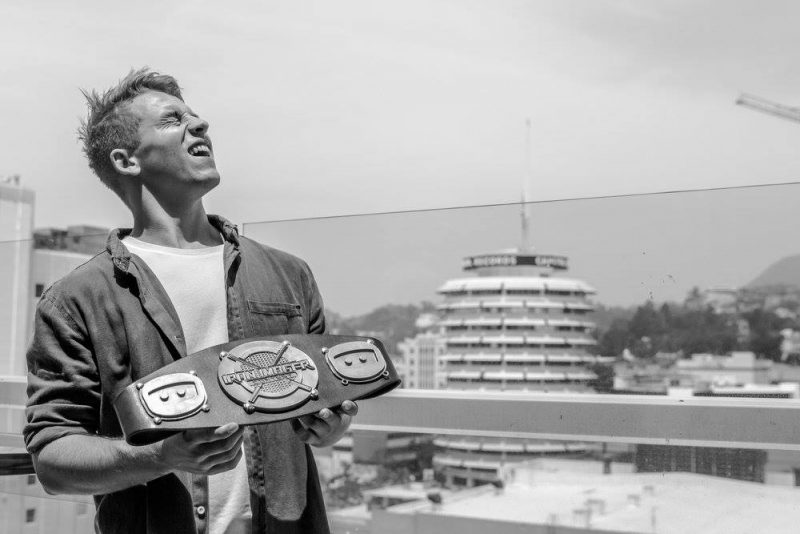 Brad is the Network Imaging Producer for NOVA Entertainment based in Sydney, Australia. Great gig for a seasoned veteran of the industry...or for someone who has been in for 5 YEARS and is all of 24 YEARS OLD! You wouldn't know how old or young he is by talking to him. You will know how much passion and love he has for the Radio Imaging Production industry and Radio in general. I would list some of the many places he's worked (credits so-to-speak) but there is NOVA and.....NOVA. He tells us about starting out, the realities of working 3 jobs, going to school and just being AT the station whenever possible and what it takes to get IN and get GOOD.
Voice Actors: I do make an effort to dig in and get some info for you about what is expected by the big producers... but you will hear at about the 30min mark that the setup between talent and producer at the major networks and stations in Australia is TOTALLY different from the states.
PRODCAST: Brad was featured as the first guest on Dom Evans podcast "PRODCAST." I mentioned this in my intro - so here is the link to that. I have listened and it is GOOD! In fact I didn't notice until now, but the show finished with Brad back for the finale so I still need to go hear that. Dom is smarter than me - doing his shows MORE often and in a season format. He is currently on break.
PICS!
[gallery link="file" ids="12998,12999,13000,13001,13002,13003"]
Brad is the Network Imaging Producer for NOVA Entertainment based in Sydney, Australia. Great gig for a seasoned veteran of the industry...or for someone who has been in for 5 YEARS and is all of 24 YEARS OLD! You wouldn't know how old or young he is by talking to him. You will know how much passion and love he has for the Radio Imaging Production industry and Radio in general. I would list some of the many places he's worked (credits so-to-speak) but there is NOVA and.....NOVA. He tells us about starting out, the realities of working 3 jobs, going to school and just being AT the station whenever possible and what it takes to get IN and get GOOD.
Voice Actors: I do make an effort to dig in and get some info for you about what is expected by the big producers... but you will hear at about the 30min mark that the setup between talent and producer at the major networks and stations in Australia is TOTALLY different from the states.
PRODCAST: Brad was featured as the first guest on Dom Evans podcast "PRODCAST." I mentioned this in my intro - so here is the link to that. I have listened and it is GOOD! In fact I didn't notice until now, but the show finished with Brad back for the finale so I still need to go hear that. Dom is smarter than me - doing his shows MORE often and in a season format. He is currently on break.
PICS!
[gallery link="file" ids="12998,12999,13000,13001,13002,13003"]Transcript
68 min read • 10,168 words
Announcer: The Producers, featuring the most respected international talent in the world of audio production and voiceover. Radio, TV, film, and online. In-depth interviews and industry insights, putting you on the inside. This is The Producers Podcast with Ryan Dream.
Ryan: Hi again, thanks for checking it out. let's see here, I have 3 things to do. I'm keeping myself on track because this is maybe the 15th time I've tried this intro. First thing is to talk about the intro and another podcast. Second thing, to talk about a little special event that happened for this podcast. Third thing is introduce my guest. So first, I got an email from a guy titled 15 Takes, and he was joking that, yeah, I do my podcast, sometimes it takes me 15 takes to get my opener right. I don't think I brought this up on the podcast before, and I should have. Dom Evans sent me that email. He started a podcast. It's similar to this one. And believe me, I'm a more the merrier kind of guy. So I'm very happy to promote his podcast. It's called Prodcast, very fitting. I will link to it on the post for Brad Leesk's episode. Maybe someday I'll do a better job on my site to collect a lot of links. I used to do that. I had a big old page with a lot of links. Well, they all got old or outdated, and then I didn't wanna keep up with it, and I'm lazy. So I just threw the page away. Maybe I'll do that again someday, but for right now— Yeah.
Ryan: If you're hearing this episode in the future and you want to figure out the link to that and you're not good with typing a single word into Google, okay, that's fine. Go to my site, search podcast or Brad Leesk. That should get you there. I'll link it there. But Dom's a great guy. And in fact, I believe his first guest on his podcast was the guest I'm going to have today. Even more fitting, Dom is Australian. He's the head of production for Fox FM in Melbourne. He works with Saidy, who gets mentioned a bunch on this podcast. It's a small world, literally, because these are all Australians I'm talking about. About, and I'm sitting in Texas. We all know each other. So anyway, thanks to Dom for reaching out though. It made me feel a little bit better. And congrats to him on his podcast. I hope you go listen and enjoy it. if you can, while you're checking his out, I'm told to do this, please leave me a rating and a review on my podcast. It helps, I guess, people hear it. And, if you— whatever you want to rate it and review it, I don't care. I'm not going to tell you what to write or how many stars or Whatever the heck. But I would really appreciate it if you could throw a rating or review up there. It does help the exposure and other people getting to hear this. It kind of escaped my mind, or I don't know, maybe I mentioned it and I just forgot. But technically, I have passed the 10-year mark on this show. August of 2008, I started this with the intention of talking to people that were more awesome than me and putting something back out into the community that would help people because I had a lot of help when I came up in the business. So I called up Dave. Fox since I kind of knew him. Hey, will you be on this new podcast I'm gonna start? Of course he said yes. Of course he was awesome, and he's been on again since then. But that was August of 2008. 10 years later, that was last month, hit that little anniversary. Pretty arbitrary, but I'm really thankful. And I wanted to say the best part about this by far has been the people, the guests. Yes, getting to know all of these awesome people. And now when I show up to places, they're like, hey, you're the guy with the podcast that I talked to 7 years ago. Yeah, that's me. Awesome. Awesome. We've become friends. I've been able to hire some of them, vice versa. We've worked together, collaborated. but also everybody that reaches out to me and says, hey, I love that thing, it's helped me get into my career, or, I got to meet so-and-so because of your show. I— whatever. That, by far, the people have been the best part. so I will keep doing this. That's that. So just thank you for, you know, helping me make this last 10 years and maybe 10 more. Now to the guest. Brad Leesk, as I already mentioned, is the guest. He is the network imaging producer for Nova Entertainment based in Sydney. He works for that brand all around the country, Nova 96.9 specifically in Sydney. We will get into everything about his job, but let me say a couple things. I think it's possible he's the youngest guest I've ever had on the show. I did not go back and check all the 123 or so episodes and see who might be younger, but at 24 years young, having been in the business for 5 years, already having a network imaging producer role in Sydney is a pretty major accomplishment. Super nice guy, really talented, and I'm really happy to have him on the show. So if I mention the fact that he's kind of young throughout the episode, that's why, because he is kind of young. He's on SoundCloud, soundcloud.com/brad_leask. He's on Instagram, brad_leask. He's on Facebook, Brad Leask. If you want to spell that, L-E-A-S-K. Don't forget to check out the post. There's some extra pictures there. If you go to ryandreen.com, depending on when you go, if you just look for Brad Leask, you'll find it. he sent in a few, fun pictures to show you as well. All right, that should do it. Woo! I think I got that out okay, and I'm not redoing this intro any more times. So, after a really solid, buck 20 or so demo, we will have on out of Sydney, the one and the only Brad Leask.
Announcer: Woo! Nova 96.9. Wake up with Fitzy and Wippa. Let's do a swap. I'll take some of your height and you can have my boobs. Nova's Greatest Hits Workday. All day while you work. I'm going to get to you. Brother. Gotta live for you, girl. And for the drive home. Kate's in the muddy. Kate Ritchie, she vomited everywhere. I had a bad oyster. You can't help that. An oyster in the shape of a pint glass? Can I have a dozen of Yatooey's new oysters, please? Yeah, you did it! This is Nova 96.9. Sydney. Nova. Hey, this is Justin Timberlake right here on Nova. I love you. All the cash, money, or the Mazda? Which will you choose? Nova, you are unbelievable. Chrissy's Salmon Brownies, money, or the Mazda? Tomorrow from 8 and all across your day, only on Nova 100. You ready, Novas? Thank you, Novas. Pleasure to be here. Sick. Welcome to Nova's Red Room, your money-can't-buy experience up close and personal with the world's biggest artists. This is not real.
Ryan: And there it is, some of the brilliance of my guest today, the network imaging producer for Nova Entertainment based in Sydney. Although I actually forgot to double-check that in case there was a change. But anyway, Brad Leask, are you in Sydney?
Brad Leask: I'm in Sydney, man. Yeah, I'm in Sydney.
Ryan: Yeah.
Brad Leask: You got it right.
Ryan: I was pretty sure, but right as I said that, I'm like, wait a minute, those guys are all over the place. So hey, thanks for being on the show, Brad. I appreciate it.
Brad Leask: Mate, thank you for having me. This is, this is awesome. I've, I've spent my whole career listening to this podcast and listening to my idols on here, mate. So to be featured on it is, is a big deal for me. So thank you for having me, mate. Appreciate it.
Ryan: That's cool. Yeah, I'm just the vehicle, but it is cool at this point. I've had people from all over the world I had one of your— I was going to joke and say your enemy. He's really not. You guys don't cross over that much. But Sidey, he was on recently, but you guys teed off in the Iron Imager a while back.
Brad Leask: We did.
Ryan: I'll bring that up later.
Brad Leask: Definitely. Yeah, definitely.
Ryan: Let me, let me immediately stray from my script, but it's something that I sometimes forget to ask. Do you ever get together with other imaging producers in town and hang out, have roundtables, talk shop?
Brad Leask: That's so funny, man. We actually all caught up last Friday night. Dom Evans came to town, so we all— I guess that was our excuse to get together. myself, Dom, a few others from the net, from other networks, Hunty, a few of the guys from here. yeah, it was just a big, just a big roundtable of dudes drinking beers and nerding out about radio.
Ryan: Nice. That's cool. I've, I've asked that to a couple people, and like I said, I usually forget, but I think in the States, depending on where you are, I've gotten the response of, oh no, no, no, you know, we don't do that. That wouldn't be cool. Our bosses wouldn't like that. There's no vibe like that there though, it seems.
Brad Leask: No, definitely not. I don't, I definitely don't think we do it enough. you, you look around, especially between Melbourne and, and Sydney, there's just so many talented dudes in those markets. And catch-ups definitely happen, but we should definitely be more proactive in making them happen more because it's, it's good for everyone.
Ryan: Absolutely. Well, I mean, my favorite events of the year are when, you know, I do a Worldwide Radio Summit and I'm standing there with you guys from the UK, guys from LA and gals from Atlanta, New York. I mean, there's nothing better. There's just nothing better.
Brad Leask: Absolutely not. It's just, yeah, it's such an inspiring place to be. And it's, it's good to talk about radio and imaging and yeah, it's great.
Ryan: Am I crazy or does it feel like if you were to get a bunch of program directors in a room, a bunch of voice artists in a room, and then a bunch of imaging people in the room, you're going to have so much less of that sort of side-eyed glance and sort of sizing people up and the attitude or the ego amongst the imaging producers than you would amongst the other groups?
Brad Leask: Yeah. Yeah. I agree.
Ryan: Is it weird? Yeah.
Brad Leask: Is it? Yeah.
Ryan: I'm not even talking down to programmers or, and I am a voice talent, but it just seems like in our side of the business, we're all just like, I don't know if it's not that we're not competitive, but we would just rather be cool with each other.
Brad Leask: Yeah, I guess. And there's just like a, an instant, like, respect there. It's like, man, I know, like, I know what you do. I know what you go through. You know, bring it in, you know.
Ryan: Yeah, well, you know, we're in a— the imaging side is very little recognition, a lot of man-hours.
Brad Leask: Yeah.
Ryan: And more of a laborious job than others, possibly.
Brad Leask: Yeah, definitely.
Ryan: cool. Let me— I'll go back to my script now. Oh, you know, before I forget, I will have mentioned this, when I officially produce this, but, you're on the social medias. I think you're more of an Instagram guy though, right? I could say Twitter, but I I don't really even think you use Twitter.
Brad Leask: Is that correct? I have a Twitter, but I don't use it.
Ryan: I just checked it out.
Brad Leask: Yeah. I think I've done one tweet that says tweet. Yeah.
Ryan: Yes. Yeah. I just, I actually know that is the case because I just went and looked because I noticed you didn't give me your Twitter and I thought, yeah, I don't think he does that because he's not— well, you're still young. I didn't really— I mentioned it in my intro, but you're on the young side. We'll get to that too. All right. So you're on Instagram. They can just look up Brad Leesk and they'll find you.
Brad Leask: Brad_Leesk.
Ryan: least.
Brad Leask: Do that.
Ryan: SoundCloud, you're pretty active on SoundCloud?
Brad Leask: Yeah, I haven't been as much lately. I still go on it a lot and, and listen to what's going on around, around the trap. So yeah, definitely shoot me a follow on there and I'll follow you back for sure.
Ryan: Nice. Yeah, absolutely. Then you're on Facebook too?
Brad Leask: Yep, all the good stuff.
Ryan: Cool. So let's take it all the way, all the way back because you're so old, but your first real job, quote-unquote, what was that?
Brad Leask: My first real job, It was essentially this one. My title hasn't changed since I got my first full-time job, so to speak.
Ryan: Yeah, I think I said it, but network imaging producer of Nova Entertainment based in Sydney. I'll get to more about that job, but what was your first non-real job? Like, how did you get to that job then?
Brad Leask: So I, way back in high school, I started playing in a band and sort of found my way into like production studios recording demos with the band. And that was sort of my first introduction to post-production, Pro Tools. And that sort of immediately sparked my interest. I remember just walking into the studio at the time and seeing Pro Tools and just seeing the outboard gear and just had this feeling of, man, this is cool. But like, this is— I feel like this is what I want to do, watching the engineers work.
Ryan: Yeah.
Brad Leask: Yeah, so I guess that started, and then, started, doing that quite a bit, and then set up a little sort of Pro Tools setup at home, started doing demos with the band just out of my room, and would just spend days on YouTube just watching tutorials and, sort of learning the back end of Pro Tools and, and how to do it all.
Ryan: Yeah.
Brad Leask: And then Yeah, did that for a couple of years through high school and then started studying an Advanced Diploma of Sound Production, I think it was, at RMIT in Melbourne, which is where I'm originally from. Did that for 2 years. And in the first 6 months of that course, we had this networking class and it was like, it was more of just like a time to focus on networking and trying to figure out what you want to do, making contacts within the industry on a really broad sort of aspect. A lot of the guys I was studying with were really focusing on sort of big recording studios and live sound. And I remember I hit a point in that first 6 months and went, I just, I kind of lost the passion a little bit for for recording bands and that sort of side of the business and mixing and all that. It wasn't— it just stopped sort of resonating with me. And then I just sent an email to like a job website. I was just asking a couple of questions. And miraculously, somehow it got forwarded on to my now boss, Dan Pearson. He got back to me and said, hey, mate, you know, come in. You know, check out the studios here at Nova. And I'll sort of give you a rundown of sort of what it takes to get into radio. And then I thought, wow, like radio, that'd be a cool job. That'd be great. Anyway, I was in Melbourne at the time. He was in Sydney. Put me onto a guy called Matt Dower in Melbourne who became one of the biggest influences in my career.
Ryan: Wow.
Brad Leask: And then, yeah, got into Nova there and just started doing sort of bits and pieces of work experience. Sort of played to my strengths a little bit at the start and would do some of the acoustic mixes of artists that would come through the door. So I guess that was sort of my in there.
Ryan: So the musical background was pretty key for you?
Brad Leask: Yeah, I guess just in terms of being useful to Matty in Melbourne then. So I'd get the call up maybe once every couple of weeks to come in. And it was more of just an assistant capacity helping him out and sort of, yeah, just mixing the acoustics that came through there. And then it just sort of happened so organically from there. The first time I walked into Nova, Matty showed me, just opened up a session and played a promo. And that was my first really, my first experience of seeing, seeing a promo. I just remember going like, holy shit, like, that is awesome.
Ryan: Yeah. like seeing how the sausage is made and it turns out.
Brad Leask: Exactly.
Ryan: Really awesome.
Brad Leask: Yeah. Yeah. and just all the moving parts. And I just remember at that moment having that same feeling that I did when I walked into that recording studio a few years ago, just going, yeah, like, this is what I want to do. This is awesome. Still knowing nothing about it. Like, but hey, this looks cool. I want to do this. And then, mate, it just, like I said, it happened organically from there. I just, for the next 2 years, I— for the next year and a half, I continued my studies. And I would just go into Nova maybe 2 or 3 times a week. and just sit with all the guys there. There's a soft AC station down in Melbourne as well. And then there's a— there was a brekkie producer at the time, drive producer, commercials.
Ryan: Just in case anybody doesn't know, brekkie is breakfast, which is morning show.
Brad Leask: Yeah, morning show producer.
Ryan: Yeah, for some of the Americans that may not know all the terminology.
Brad Leask: So basically there was just a team of 5 guys down there. who pretty much just taught me everything I know. I would just come in every week and sit behind them and just learn off each of them constantly. And then I guess the work started to trickle in there because I was always around the station. I kind of would get the odd job here and there, filling in for the morning show producer who would take a day off, or drive producer would take a day off or was sick.
Ryan: Yeah.
Brad Leask: I was just sort of the guy that was just always there.
Ryan: So if I can just hold on, when you started off like that, it sounds like you were kind of more on a part-time basis, but were you actually an employee of the station or were you just kind of, you know, just getting in there and just showing up?
Brad Leask: It was, it was kind of a weird one. I was just showing up and just, I was just working for free pretty, pretty much. Any time there was a, there was an official fill-in gig, I was on the books. So I tend to like I picked up some paneling shifts and stuff. like paneling out prerecorded shows and stuff just to, just to sort of get a little bit of money flowing through. but yeah, yeah, I would, I would, I would be getting paid for that for the days that I would officially be filling in. and then—
Ryan: And for the realities of it though, well, actually, can you give me a, like, what year is this? How long ago is this?
Brad Leask: God, this would have been 2000 and probably 2013, end of 2013. Yeah.
Ryan: Yeah. So 5-ish years ago.
Brad Leask: 5-ish. Yeah.
Ryan: Yep. And did you also have a day job? Because I like to kind of get a feel for the realities of how people really do have to get started. You know, other job you had to hold down or just school and this?
Brad Leask: Yeah, that was a pretty intense time. I remember I was working. Yeah, I was working as a laborer overnight. I was a DJ at a, like at an arena, Rod Laver Arena in Melbourne. I was doing that, studying during the day, doing Nova, and I think I had a job at a supermarket at the time as well. So it was—
Ryan: Really?
Brad Leask: Yeah, it was a pretty busy couple of years, but an enjoyable couple of years nonetheless.
Ryan: So it's one of those, because I've, you know, when I was younger, I had 2 or 3 jobs at the same time. But you get your full-time gig and they're like, all right, here's your studio, here's your tasks, and you can knock it out in 8 to 10 hours a day and you're You're kind of like, now what do I do? I have to go to my next job. I don't get how this life works now.
Brad Leask: I'm bored.
Ryan: Come on, give me more.
Brad Leask: Well, I think you just end up spending the time that you would at your other job at the radio job, really, wouldn't you? Yep.
Ryan: I was going to say that's what it— or you take on a side gig of some type.
Brad Leask: Exactly.
Ryan: We'll talk about yours.
Brad Leask: I'm not working hard enough. I need to do more hours.
Ryan: Well, then you punch out a family of some kind in some capacity, and then it's a whole different set.
Brad Leask: Okay.
Ryan: At some point, how long ago were you actually offered the full-time gig? And oh, so you're in Melbourne doing this sort of part-time situation and finishing up school.
Brad Leask: Yep.
Ryan: Then tell me about how the full-time gig came about.
Brad Leask: So then, yeah, I kept that going for a year and a half and the timing worked really, really well. I finished the course in about November and then sort of continued at Nova over the next 2 months, sort of into January. And then a guy called Nick Slater, who was in the network imaging role before I was. And that was, that was a newly created role. He was only in it for a couple of months, moved up to Sydney to work on the night show. And that was kind of like the perfect opportunity for me to jump into that role then, which at the time was, was again, more of an assistant sort of imaging job working under Matty Dower in Melbourne.
Ryan: Mm-hmm.
Brad Leask: Just in a, yeah, like I said, in an assistant capacity, which was really great for my skillset at the time. Cause I, I sort of knew how to make promos and do bits and pieces. Yeah, it was just sort of the perfect time to jump in and, and really just sink my teeth into, into radio.
Ryan: Yeah. And so that's Melbourne and you're full-time now as an assistant, but at some point you go to Sydney. Or did I miss something?
Brad Leask: Yeah. So, I've been in Sydney for 6 months now, so I've only really just moved up here.
Ryan: Okay. So, Sydney's really recent.
Brad Leask: Really recent. Yeah.
Ryan: So, in fact, when I saw you, had you— in May. So, what month are we in here?
Brad Leask: Where are we?
Ryan: Had you just started there?
Brad Leask: Yeah. So, when was— when did I see you? That was start of May?
Ryan: May 1st.
Brad Leask: Yeah. I started up here pretty much at the start of March, end of February. Yeah. So, I pretty much just made the move up here. Yeah.
Ryan: So what kind of a move is that in your radio landscape there? You're network imaging producer of some sort in Melbourne, and then you take this gig in Sydney. Is that a major leap? Is it?
Brad Leask: Yeah, it's kind of a weird one. So yeah, like I said, I've still got the same, same role. Dan Pearson, who was in Sydney, made a move to Brisbane, just a lifestyle move, moved up there. And then so my role more or less just relocated to Sydney. Sydney.
Ryan: Okay.
Brad Leask: To work out of here. And then in the meantime, Maddie Dower in Melbourne, who was group production director of the Nova Network, has stepped away from radio. And now PSO Dan Pearson in Brisbane leads the network now. So I guess in terms of, in terms of taking a step up, it's been really good to get to Sydney and sort of be the guy on the ground here.
Ryan: I think, you know, it could be true in a lot of countries, you know, in the States, a lot of people might have a goal of getting to, you know, LA or Chicago and maybe in the UK you might have a goal of getting to London. But for you, was Sydney sort of on your list? Like, I want to get a gig there, or was this more of a surprise?
Brad Leask: It was kind of something that I'd always in the back of my mind knew would happen one day. I kind of know this is the market to be in, especially with the way that the Nova Network runs is that everything sort of— Sydney's the hub. Everything pretty well happens out of here. So it wasn't something that I was like, I've got to get to Sydney. Like, Sydney is going to be where I'm going to be. I just remember the, like, the job was floated to me and it was, it was, I was approached about moving up here for, like, for this gig essentially. And I just remember going, yep, that's now's the right time to move. And, yeah, and it just sort of happened organically and, yeah, it was, was stoked to get up here. It's a, it's a great city. Yeah.
Ryan: That's cool.
Brad Leask: Yeah.
Ryan: I actually didn't realize you hadn't been there. So like I said, when I saw you, I kind of thought you'd been there for a long time and it'd only been a couple of months.
Brad Leask: Yeah. A couple of months.
Ryan: Congrats on that. So now let's dive in a little bit more. network imaging producer. I generally think I know what that means, but explain to me what all that entails for you on a day-to-day basis.
Brad Leask: So it's pretty much just, it's all the imaging for, for Nova 100 in Melbourne and 96.9 here in Sydney, and then the Nova network as well. It's a— in terms of the day-to-day.
Ryan: So let me clarify. So does that mean you do some stuff that airs nationally on the entire Nova network, but you also produce quote unquote local imaging for those 2 particular stations?
Brad Leask: Exactly right. Yeah. Okay. Not, not totally solo. We sort of, we share it around in the team. There's, there's a team of 3 of us that, that sort of, that gets divvied up too. But I tend to focus on, I still do a lot of Nova 100 imaging and then, yeah, it's a pretty fluid arrangement. We just sort of, as it comes through, we, we divvy it up and, and we get it done.
Ryan: So anyway, I actually kind of cut you off there. I apologize. But what, how much of your work is more like a local radio imaging producer where you're focusing on stuff for the local Sydney or Melbourne station?
Brad Leask: Pretty, pretty well all of it. It's— Nova runs like a very— it is a real network in the sense of, to give you an idea of a week, on say a Monday, we'll produce all of our integrated intros, all of the new music that comes through, and that's network. So that'll play around the whole the whole of the country, all 5 markets. And then there might be a local tactic going on in Melbourne. At the minute there is, there's a Money or the Mazda tactic where we're giving away cars and cash essentially. So I'll look after that, I'll look after the maintenance of that, promos, everything production-wise that surrounds that. At the same time, we're going to be running— the other week we did like a Madonna's birthday celebration on Nova. So I'll be working on that in the background, and that ran over 3 of the markets. So I'll be working with the PD in Sydney on that. And then, you know, there could be some weekend activity in Sydney that I'm looking after for the weekend. So like I mentioned, it's sort of a fluid arrangement. We sort of just approach it to how big each person's workload is.
Ryan: And would it be Dan Pearson?
Brad Leask: Yep.
Ryan: Did I just screw up his name?
Brad Leask: Yeah.
Ryan: Because I've definitely heard of him before.
Brad Leask: Yeah.
Ryan: I'm just— I think I've said this before. I'm pretty terrible with names. I remember a face, no problem, from a decade ago. But anyway, is he kind of the— he's the captain of the boat and everything sort of starts with him and then he disperses it?
Brad Leask: Yeah, it's kind of the structure that sort of comes down.
Ryan: Yeah, I would think with a system like that, and I know there's— You know, some of the best imaging in the world, and I'm going to get to this later too, but it's coming out of you and your team and then even some of your competition. But it sounds like there's a lot of it. And if you have multiple people working on the same stations and the same networks, yeah, there could just be some logistical nightmares that could happen if it's not kept under control.
Brad Leask: Yeah. Yeah. I can imagine. Luckily for me, it's kept under control and everything seems to run smoothly and Yeah.
Ryan: Cool, cool. Well, I kind of hinted at this. So why does it seem like, and I'm not even saying bad about UK production or the stuff I hear coming out of Russia and France and the States, but Australian imaging seems to be better and there's a lot more focus placed on it. Do you believe that's true? And also why?
Brad Leask: Yeah, it's interesting you say focus, focus like placed on it. I, I definitely agree in, in part, not to rag on, on imaging anywhere else in the world. I, I do feel like, yeah, there's a lot more focus placed on imaging in Australia and, and a lot more, time given. Quite often you'll, you'll hear of, someone in the States producing a number of stations in different formats and, and, you know, have an insane workload. And it's not to say that the workload here isn't massive, because it, because it is. but, yeah, I just, just think we just place a little bit more time and, and focus in on, on projects here.
Ryan: It still seems like the companies themselves though value it pretty significantly. They don't think it's sort of a necessary evil of operating a radio station or network or group. they actually praise, you know, value it and put a lot more resource into it. It feels like.
Brad Leask: I agree, mate. Totally. We've got, like, for example, here in Sydney, we've got 3 imaging producers working on 3 shows and they're full-time gigs and incredibly busy and incredibly talented dudes. Yeah, but there is like an assigned producer for For for the show, right?
Ryan: I've noticed that there's the breakfast show imaging producer at I mean like Kiss at like Triple M. Is is it also at a station like that?
Brad Leask: Yep, yep, yep. Network what?
Ryan: So you do some of the work for the station, I would say in general. But so are there four total people mainly producing for that one station?
Brad Leask: For this one station? Yeah. So like the So the brekkie show imaging producer, Michael Snitch, he'll look after the breakfast show, which is local, 6 till 9. He'll look after all the in-show promos, anything around the show. And then Darcy Milne, who I'm sure you've heard of, he looks after the drive show, which is national. So that goes out across the whole network. And then Dan Bazzina looks after the night show, which goes out across the whole network as well. Yeah.
Ryan: Yeah, I would say most people listening, that's different than they would be used to. Sure.
Brad Leask: And then in each of the local markets that Nova has, there is a local producer for the brekkie show. Yeah, yeah, yeah, yeah.
Ryan: It's just, I mean, it's great. It's just good to see. It's just weird because Australia in general, just, I think a lot of people agree, it always comes up when we go to these conferences and we talk about it. You know, if there's any kind of a competition, half the entrants are going to be from Australia. If you're talking about the top image stations and networks, Australia is always in the conversation. Yeah, it has been for a while.
Brad Leask: For sure.
Ryan: Yeah, it's good. I mean, it's great to see.
Brad Leask: The caliber of talent in this country is absolutely enormous. It's, yeah, it's incredible.
Ryan: Yeah. And not to take anything away from you, but I always feel bad because if I have I've had multiple people on from Australia and names always get brought up and it's all people that I should have on this podcast.
Brad Leask: Absolutely.
Ryan: And I'm, you know, I just hope nobody over there is like, that dude has this— What about me? Yeah, he's got Leask on there, but he won't have me on there. My friend gets through that guy.
Brad Leask: This guy sucks.
Ryan: Yeah, what are they doing? That podcast is worthless. No, no, but I do, I know there are so many great talented people. Okay, I'll stop, you know, being a fanboy for Australia so much, but—
Brad Leask: You have to get out here one time, my man. Get out of here.
Ryan: Oh man. Yeah, you know, I don't even mind traveling that far, but boy, that, that flight to Australia, it's pretty daunting, right?
Brad Leask: It's fine. Yeah, says the guy who's done it twice.
Ryan: Oh hey, twice though, that's more than a lot of people.
Brad Leask: Yeah, true.
Ryan: Now, yeah, I would say Australia, there's— I can't believe how many people I know there, to be honest, just from this industry. But for sure, switch gears completely for a bit. This is a topic that I know a lot of people in the voiceover world like to hear, although I don't know how many pure-play VO talents are still listening at this point, but whatever. When you work with a voiceover talent, some of your imaging voices, I guess let me start by saying, generally speaking, how do you work with them? Email copy, they send back, boom. Are there any other things that have to happen when you're working with your talent?
Brad Leask: So we will always get the talent into the station.
Ryan: Okay.
Brad Leask: And direct them face to face.
Ryan: You said always, which is a pretty firm 100% word. Is it really always or?
Brad Leask: Yeah, it's always. Yeah. I mean, we ran a tactic 3 months ago where we used an American VO, and in that case it was It was a script with like phonetics and stuff on it to— yeah. And then we sort of receive it back overnight. But I— that's kind of all I really know is, is local voices just coming into the station and, and directing them face to face, one on one.
Ryan: Yeah. See, that's another thing that a lot of people listening to me like, that's insane.
Brad Leask: Yeah. Okay.
Ryan: I can't get my voice talent live. No, but that's great. So you Do you direct them personally? Do you bring them into your studio? I mean, or is it somebody else's responsibility to direct the talent there?
Brad Leask: No. So currently all our voices are Sydney-based, so they come in here and I'll direct them out of my studio here. Okay. If it was a case of the voices were in Melbourne, someone in Melbourne would direct.
Ryan: Sure.
Brad Leask: Yeah, it's pretty fluid in that sense.
Ryan: So a lot of the next things I was going to ask you about, because these are kind of the questions that VO talents have. So, you know, I was gonna bring up turnaround time, the way they deliver it, how many takes they do, outtakes and all that. But since they're standing in front of you, how quickly do you kind of require your talent to get in there? You know, how much turnaround time, quote unquote, do you have?
Brad Leask: We have set sessions every week. So we have a Wednesday session and a Thursday session every week booked in. And then we sort of have a floating session as well, where if something pops up the PD needs, needs something done, or one of the show guys needs something voiced, we'll, we'll book in another session. And this is for the network too, mind you. So, any— all producers around the network have access to these sessions. and yeah, so we have those 2 sessions booked in, weekly. And then in terms of like a turnaround time of getting in here, —
Ryan: Yeah.
Brad Leask: It could be a case of, you know, 9 a.m. in the morning, we, we need an urgent change or we need, we need to get this promotion up or whatever it is. We can have the VO talent depending where they are at the time. They have busy lives too. Within the hour they could be in here or it could be, hey, they'll be here at 3 o'clock.
Ryan: Yeah. How long would a normal session last? How long are you in there recording the talent on an average day?
Brad Leask: Depends. On an average, I'd say about 40 minutes, 45 minutes. Okay.
Ryan: so it doesn't crush your entire day each time you have a session?
Brad Leask: It can, and it has before, but no, on average, no, it's fine.
Ryan: Yeah, I like that. It can.
Brad Leask: Yeah, it can.
Ryan: so are you familiar with, is that generally true with, most of the bigger stations and networks in Australia, or at least Sydney, Melbourne, some of the bigger markets?
Brad Leask: Yeah, I believe so. Yep.
Ryan: Yep, definitely. Wow.
Brad Leask: Yep.
Ryan: Because I think a lot of people listening will think that's sort of not crazy, but like, that's such a luxury for you. Because I would say, I don't know, if I had to guess realistically, of all American radio imaging, 95% of it would be audio, you know, scripts that were emailed out and audio that got emailed back in some capacity, you know?
Brad Leask: Yeah, I am. And, and from listening to your podcast quite a lot, I do get the sense that That the VO talent in the States, like voicing imaging for stations, is like an 8-hour-a-day gig. So there is, you don't really have that luxury of, of going into stations or not even going into stations about, you know, being directed down the line via ISDN or whatever it is.
Ryan: Yeah. Yeah. I was going to bring—
Brad Leask: Yeah. Not to say that the VO talent aren't full-time here because they definitely are. Yeah, I guess they just, they just have the luxury of a little bit more time perhaps to come in. And that's just sort of the way it's always been.
Ryan: Well, and I would assume that if you have somebody on NOVA— actually, I don't know specifically who all of the voices you might use are, but tell me the name of the main male voice.
Brad Leask: Our main male voice now is Ziggy Taylor.
Ryan: Okay. No offense, but I don't know who that is. But that person is on all of the local Novas in the network.
Brad Leask: Correct.
Ryan: Thus, he couldn't be on really any other major radio station in the country.
Brad Leask: No, no.
Ryan: So that's vastly different than here.
Brad Leask: Sure. Yeah. Okay. Yeah, definitely.
Ryan: Yeah. Yeah. But I'm sure you guys are paying Very— you're paying him handsomely, I would assume.
Brad Leask: Oh yeah, yeah, I mean, he has regular sessions and he's, yeah, he's across the network. So we, yeah, I guess it's in his interest to, to not, voice any other networks.
Ryan: Yeah, that's cool. I feel like I've probably gone on too long about this. It's interesting and I think some people will, and they'll also say, all right, move on. So, okay, let's see here. I did want to move on and hear about music production because you already mentioned you, you You either were or still are a musician of some type. Do you still utilize a lot of your music skills in your production?
Brad Leask: Yeah. In terms of probably more so of the musical theory side of things.
Ryan: Sure. I think I've heard some of your stuff is very tuned, very in key. A lot, you know, a lot of the trendier imaging is these days.
Brad Leask: Yeah. So yeah, I mean, I, I, I studied musical theory in high school, only very basic. and I played guitar for quite a number of years. I still do. and I guess that's come in handy in terms of, proactively trying to, to make my work you know, harmonic and in key and all that sort of stuff. It's kind of stuff that I had in the back of my head. And then when I started to approach my imaging in a way of keeping it harmonically and in key, it just sort of, ah, you know, it was kind of like the pin dropped and I'm like, okay, I sort of know a little bit of this stuff already from, you know, playing guitar and learning music. And it just sort of happened naturally.
Ryan: And how much of the content that you use in your productions, obviously short of original music from your artists and, you know, artist drops and that stuff, but how much of that do you actually produce from scratch? Any of it?
Brad Leask: None of it.
Ryan: So the music beds?
Brad Leask: I don't know. Nah, none of it. Nah, I don't produce any music. Nah, I'd love to.
Ryan: Yeah. Well, I was gonna say, I feel like you probably have the skills to sit down and make some music beds at least, if not some real original score.
Brad Leask: Yeah, I've never— to be honest, I've never tried. I play, I play the occasional, you know, synth chord in a promo to make something flow. But, God, yeah, in terms of producing and composing music, yeah, I'm definitely very, very green in that space.
Ryan: I was going to ask this earlier and I just really skipped over it. we all do a lot of different things to get better at what we do. And since you are still relatively new in the business, what are some of the things that you do What do you do to keep getting yourself better and better at imaging production?
Brad Leask: That's something that I'm really focusing on now more so, and just proactively sitting down each week and just like watching a YouTube video on a plugin or ensuring every week I go through SoundCloud and listen to all the latest stuff that goes up. what else? I'll always try and, I was so lucky to work with so many talented guys in this building. It's every week just trying to, you know, go in and just have a chat about, you know, how they did that or, or what they did there. yeah, it's definitely something that I'm trying to focus more on now is continually trying to learn something new and improve and find cool techniques and, and, you know, creative ways to do things.
Ryan: And I guess you sort of answered that, especially for when you were starting out. You got lucky and got a call and got to come in and actually see really talented people doing what they do live. For me, I know I need to sort of see it being done in front of me. It's really important.
Brad Leask: Yeah, totally. And that's something that, that's a really good point because I kind of went from knowing nothing about radio to knowing a little bit and being proficient in like a year or 2 years, just from like sitting behind these guys and—
Ryan: Yeah.
Brad Leask: And just learning and watching and just being a pest, really, and asking heaps of questions and just learning. And then I guess when you sort of get the job, that kind of eases up a little bit. It kind of stops. So I guess it's really important to still be proactively finding some time to go and sit behind, someone that you admire and respect and, and, and learn. Yeah, never stop learning.
Ryan: Yeah, yeah, for sure. I'll ask this a little differently. What is the most recent new plugin you bought?
Brad Leask: This recent new plugin I bought. I bought—
Ryan: Or audio tool of any kind, I guess, but something, I don't know, top of your mind.
Brad Leask: So what did I buy? I bought Effectrix recently.
Ryan: Okay.
Brad Leask: I heard Ben Marks talking about it on your podcast. Yeah. Oh, I've got to get that.
Ryan: I learned about that from those guys.
Brad Leask: I bought the Mouth at the same time as well.
Ryan: What about like desert island? Compressor slash limiter or EQ, if you could only have one, do you have a favorite?
Brad Leask: And it'd have to be the L1 because that's really— yeah, the only limiter that I've really ever used.
Ryan: For example, have you used the L2?
Brad Leask: I have.
Ryan: The L3? Any iteration of the L3?
Brad Leask: I have, but we don't have them installed at work. So I kind of just, yeah, it's, I've never really strayed away from the L1.
Ryan: I've heard various opinions on those. Some people say one or like, I think it was the L2. I think I've heard that the L2 colors more. I stopped using that a long time ago.
Brad Leask: Yeah.
Ryan: Anyway, people have strong opinions on compressors and limiters.
Brad Leask: They do. I have read, might've been Andreas talking about it, the difference between the L1, the L2, and the L3, and that they all do color differently. oh yeah, I don't have any experience with it, but, yeah.
Ryan: They all sound different anyway. I don't know what, what other kinds of tools do you tend to use a lot? I mean, it sounds like you guys have a specific batch of plugins there in the quote unquote work studio that you, you know, you might be sort of limited to. anything else you use regularly that you love?
Brad Leask: love Pitch and Time, love Waves Tune. Love H-Delay, all the, all the good stuff.
Ryan: The H series in general.
Brad Leask: Yeah, yep, yep. We've got the Waves Gold Bundle here at work, I think. Yeah, yeah. So I just— yeah, the Waves Gold Bundle is incredible. I love, I love the Focusrite. I don't know if I've got it here. The Focusrite D2 EQs, I use them quite a lot. in my sessions. But yeah, for the most part, I keep it relatively basic.
Ryan: What kind of stuff do you do on your master bus on a typical piece of imaging?
Brad Leask: I use Chris Nickel, WizFX, put up a template on his website years ago. And I remember grabbing that and whatever the master settings on that bus are, are what are mine.
Ryan: Nice.
Brad Leask: Just works, works incredibly well. It's very gentle. It doesn't do a whole lot. Just basic EQ, compression, limiter on the master bus. Nothing, nothing too, too crazy.
Ryan: Yeah. Cool. Cool. Anything else in your studio that you, you know, that gets a lot of mileage from you?
Brad Leask: We've got a, the Avid Artist Mix console. In all of our studios. So I use, I use the faders on that quite a lot to just within promos to have sort of natural sounding crescendos and decrescendos volume-wise. That's pretty well it. Yeah. Like I said, keep it relatively basic. Just try not to overthink it too much.
Ryan: Yeah. Right. Right. What about the Nova's Red Room?
Brad Leask: Yep.
Ryan: Explain, explain that. You sent me a picture.
Brad Leask: Yep. So Nova's Red Room is basically like a live music part of our business where we put the world's biggest artists. God, that sounds like a promo. World's biggest artists and put them in intimate environments for listeners to, to to watch. So that's a big part of our brand. And then in my voice booth, actually, which is just in front of me now, which is the photo you can see. Yeah, that's sort of like our acoustic space where we'll quite often get bands to come in and record just acoustics for our website, but we'll brand it as Nova's Red Room as well.
Ryan: And you look at that stage right out your booth window, right out your studio window.
Brad Leask: Yeah, I'm looking at it right now. It's right there. Yeah. And you track the set from that in your studio? Correct. Yep. Correct.
Ryan: Yeah, that's awesome. So who was the last band or artist you had in there?
Brad Leask: So we had the American Boys on Thursday night. Why Don't We? That young, young boy band, the next big thing.
Ryan: Sure. I don't know who they are.
Brad Leask: Yeah, that's on your iPod, isn't it, Ryan?
Ryan: Sure. Yeah, absolutely. Yeah. It's the first song in all of my Spotify playlists because I have to always hear them first.
Brad Leask: I knew it.
Ryan: Who, who else have you had in there recently?
Brad Leask: Recently we've had James Arthur. Who else have we had? I can pull it up right here and have a look. So we've had Calum Scott, George Ezra, Paloma Faith, Why Don't We, as I mentioned, Billie Eilish, Bebe Rexha. So yeah, they come through.
Ryan: That's cool. that— I mean, that's an experience as an imaging producer that not many actually get.
Brad Leask: For sure. Yeah, it's definitely a—
Ryan: Track live music like that.
Brad Leask: It's a really cool, really cool way to break up the week, and it's a, it's, it's a cool, cool experience to have.
Ryan: Yeah, yeah. You work at a bank, that's not how you're breaking up your week, you know.
Brad Leask: Pretty—
Ryan: you might have already answered the question, but do you have a favorite part of your job? Is there something that's just like like, damn, you know, I get to do that.
Brad Leask: I think it's, I think it's the whole thing, to be honest, Ryan. not to sound cliché. yeah, I do. Like, I do. So I had that moment last Friday. I was making like a little MJ mashup. we were celebrating his, his birthday, earlier in the week, and it was Friday morning, and I just thought, man, there are a lot worse ways I could be spending my Friday morning. I'm making a Michael Jackson mashup. This is, this is pretty cool thing to get paid for. So yeah, like I said, mate, the whole, the whole job is, yeah, incredible.
Ryan: Yeah, that's awesome. And I almost hate to ask this question, but you never know. Do you have a least favorite part of your job?
Brad Leask: Least favorite part?
Ryan: Having to do stupid podcasts on your Saturday?
Brad Leask: Yeah, yeah, exactly. You just hit the nail on the head. No, I mean, yeah, I mean, I haven't really put any thought into it. Least favorite part?
Ryan: It doesn't have to be something terrible. Just, I don't know, I hate making weekend promos. I don't know.
Brad Leask: I love it all. I love it all.
Ryan: Yeah, no problem.
Brad Leask: There's nothing wrong with that. Maybe I'll get back to you in a few years on that one.
Ryan: Yeah, let's, just because I feel like I know Sidey pretty well now, I'll wait and see how you are when you've had as much time in the business.
Brad Leask: Yeah, yeah, maybe I need some more flying hours before I start to hate everything.
Ryan: Yeah, I mean, that's another guy though who doesn't really seem to dislike his job.
Brad Leask: No, he loves it.
Ryan: He's doing damn fine for himself.
Brad Leask: Absolutely.
Ryan: This might be a dumb question, but since you are still on the younger side of the spectrum, have you ever thought of like a 5 or a 10-year plan? Is there anywhere you envision like, okay, I want to get to here by this date?
Brad Leask: Mate, the job I'm in right now and the market I'm in right now was sort of the— was always the goal. Yeah. And I mentioned at the start that I never really had a Hey, I've got to be in Sydney or I've got to be there at this time. I kind of felt like that's where I should be and I should go. Yeah, I'm— I haven't really put a whole lot of thought into it. It's just sort of been something that's just happened. Yeah, I guess I'm at my— kind of at my 10-year goal now, I guess.
Ryan: Yeah.
Brad Leask: In the job I'm doing now.
Ryan: Well, it took you 5 years to get there, so.
Brad Leask: Yeah, yeah, yeah, essentially.
Ryan: What about Dan Pearson's job? Let's make news. You're gunning for him, right?
Brad Leask: You're going to take him out. I'm coming after you, mate. Watch out. Yeah.
Ryan: Well, I kind of want to get wrapped up here. I try not to take up too much of everyone's time, but before I get to sort of my final question, I know that you are also working with my old, old, old friends at Benztown.
Brad Leask: Love those guys.
Ryan: In fact, first tell me a little bit about that. What is it you do for them?
Brad Leask: So I look after, yeah, some of the, some of the custom imaging that comes out from those guys.
Ryan: So the stuff that they do for literally custom station imaging, like not for the service per se, but—
Brad Leask: Not for the service, just for, yeah, for custom. Yeah. For custom stations around, around the States, which is, which is incredibly fun.
Ryan: Yeah, that's cool. It's, I think it's important for, you know, like if you're doing CHR or top 40 or whatever you call it there, Yeah. All the time, it can only help you to force yourself to stretch your legs out and do an alternative station or hot AC or AC or whatever. Yeah.
Brad Leask: Yeah. And that's been my experience and working with heaps of different voices and even dabbled in a bit of country imaging as well. It's, it's been an awesome experience.
Ryan: Now you've done a little bit. Did you give me some country imaging?
Brad Leask: No, no, I didn't. I haven't put any of that in there.
Ryan: Okay. I didn't think so, but I need to hear what you're doing in country. I got to hear something.
Brad Leask: I'll have to shoot something through.
Ryan: Nice. Let's see here. What else are you into? Are you into anything else? It could be audio related or not audio related. Are you, you know, a mountain climber? I don't know. I know you enjoy the occasional beer.
Brad Leask: Correct. Who in radio doesn't? Yeah, I love getting out camping, getting out of the city, which is something I haven't done in the last 6 months that I've been in Sydney. So, that's definitely something I've got to get better at being up here. Yeah, that's pretty well it.
Ryan: So, were you able to just move out there and kind of just, you know, immediately, what did you get, some kind of an apartment pretty close to the station?
Brad Leask: Yeah, yeah. I just rented a— just met some people online and renting a sort of like a small townhouse about 10 minutes from work. Perfect location. Yeah.
Ryan: Nice. That's cool. That's awesome.
Brad Leask: Right on.
Ryan: Worked out well. I did write this down. 2 years ago, the Iron Imager, and you beat Sighty in LA.
Brad Leask: Yeah.
Ryan: So congrats, dude. Congrats on that.
Brad Leask: Thank you, mate. Thank you.
Ryan: But of course I'm leading up to being a dick. So what the hell happened this last year?
Brad Leask: I dropped the ball.
Ryan: He dropped the friggin' ball. Australia should be ashamed of you.
Brad Leask: No, no, no. I met my match. That's what happened.
Ryan: That's cool though. What was that experience like though? I know we don't have to get into it too far, but I mean, basically you're thrown into a room kind of early in the morning in the middle of a conference where lots of alcoholic beverages are being consumed. You're given an hour to produce something. What was that experience like?
Brad Leask: Intense. So intense. I can't even explain it. I thought the second year would be easier, but it's not.
Ryan: Oh yeah, it's not. Was it harder? Was it actually harder?
Brad Leask: It just felt like the same. I don't know. It was, it's such a bizarre experience because people are looking over your shoulder and there's just this overwhelming fear of not finishing.
Ryan: How many people are looking over your shoulder while you're producing your piece?
Brad Leask: I couldn't even tell you. I just go into this like dark hole where I'm just— all I can see is a Pro Tools screen. Just think, go for your life, mate. Don't, don't mess this up.
Ryan: Now, I'm not trying to blow up your spot, so to speak, but if I recall, 2 years ago, you guys both, or, you know, everybody, me, myself included, but we kind of hit the— hit it hard the night before and you were feeling pretty rough when you walked in there and crushed it.
Brad Leask: I think there's a— there's a—
Ryan: Yeah, I was gonna say last year, as I recall, you're like, well, I'm not really drinking tonight. I'm having a couple, but I'm gonna go and I'm gonna get some good sleep. I'm gonna wake up early. And you didn't crush it.
Brad Leask: So maybe that's where I went wrong. There's a really funny photo that I shot through of you, myself, and I— myself and I— you, myself, and Sidi standing there. And the look on Sidi and I's faces, and that was just before the contest, just sort of says it all.
Ryan: Yep, that was the picture. I'll have it on the site where Sidi's actually holding the belt and I'm in the middle. I'm the good-looking one in the middle. No, but I remember walking up to you guys and I'm like, you know, hey, how was last night? I mean, because I was feeling it too. You were just kind of like, oh man, that was rough. Like you were—
Brad Leask: I must have done something right.
Ryan: Exactly, exactly. All right, well, hey, one final thing here. You might You might've already said it, you can recap, but you're still new in this business, but you have some perspective now. If you're going to offer one piece of advice to somebody that's coming up, what would that be?
Brad Leask: Piece of advice. I can only really speak from experience. And for me, it was just finding a really good mentor that'll give you time and give you opportunity. And then just work hard. Just, yeah, just work your ass off and say yes to everything. Just do, do everything.
Ryan: Yeah, that makes a lot of sense. I've heard the first one though, find a good mentor. That's good. Say yes to everything. I've heard that before. It's, it's not a bad strategy.
Brad Leask: Yeah.
Ryan: Don't be the guy that says no. It's not usually the person that somebody wants to hire.
Brad Leask: Yeah, exactly. And just, just put in the hours and it'll work out.
Ryan: Yeah. Awesome. Well, you are on Instagram. Just look for Brad Leask. He'll come up. Brad Leask is on Facebook. Your SoundCloud is soundcloud.com/brad_leask. Hey, Brad, thanks so much for being on the show. I really appreciate you, mate.
Brad Leask: Like I said at the top of this podcast, I've spent my, my career listening to this and listening to you talk to some of the best in the world. And I've learned so much from this podcast, mate. So thank you for having me. on. I'd really appreciate it.
Announcer: Contact the show, contribute your opinions, see additional content, or simply stay connected at producerspodcast.com.