Episode 117: Terry Phillips
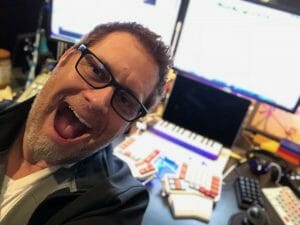 Terry Phillips is an old friend and one of my go-to guys for any audiophile related questions, issues, brainstorms, epiphanies or other. He is the Creative Director at Entercom Detroit producing imaging for WYCD and WOMC. These are two legendary stations with tons of Heritage and importance in their respective genres and the Detroit Radio Market. He knows his away around Pro Tools and NON-Pro Tools DAWS. He knows his Macs his PCs, Waves, UA, McDSP, Soundtoys, iZotope, and all the other plug-in fun. He is a talented Sound Designer (I don't think its a secret that I used his services to help me launch 360 COUNTRY at TM Studios in 2012), Video Editor and all around WEIRD but talented dude.
Reach out to Terry: www.TerryPhillips.com | Terry@TerryPhillips.com
BE SURE to check out the SHOW NOTES PAGE. He gave us a ton of other cool stuff to hear and see and click over there.
Terry Phillips is an old friend and one of my go-to guys for any audiophile related questions, issues, brainstorms, epiphanies or other. He is the Creative Director at Entercom Detroit producing imaging for WYCD and WOMC. These are two legendary stations with tons of Heritage and importance in their respective genres and the Detroit Radio Market. He knows his away around Pro Tools and NON-Pro Tools DAWS. He knows his Macs his PCs, Waves, UA, McDSP, Soundtoys, iZotope, and all the other plug-in fun. He is a talented Sound Designer (I don't think its a secret that I used his services to help me launch 360 COUNTRY at TM Studios in 2012), Video Editor and all around WEIRD but talented dude.
Reach out to Terry: www.TerryPhillips.com | Terry@TerryPhillips.com
BE SURE to check out the SHOW NOTES PAGE. He gave us a ton of other cool stuff to hear and see and click over there.Transcript
107 min read • 15,905 words
Announcer: The Producers, featuring the most respected international talent in the world of audio production and voiceover. Radio, TV, film, and online. In-depth interviews and industry insights, putting you on the inside. This is The Producers Podcast with Ryan Dreen.
Ryan: All right, thanks for checking it out again. Another edition of The Producers Podcast. Today we have a real-life producer. I've been stretching the legs on this thing for a while, diving into other forms of voiceover, other types of people in the industry, but I always have, you know, my personal roots were laid down in radio imaging. I really enjoy talking to the big-time imaging producers, and that's what we have today. I'm gonna try and blast through some of the stuff I wanted to talk about in the intro pretty quick. It's a bit of a long episode, which is totally fine, but just be aware. I get it, if you grab it and you wanna listen to 30 minutes and kinda hear the background stuff, we get super tech-heavy after, I think, about 30 minutes or so. Yeah. And then we go on for quite a while. If you're a voiceover talent, maybe you're thinking of doing imaging or you are voicing imaging, I have people ask me, you know, what do the producers think on this or that? You know, what do they want? What do they not want? We get into that. If you're a young producer starting out, we get into some of the stuff you wanna be thinking about, the stuff you wanna buy, stuff you don't wanna buy. You know, what do you have to spend your money on? What's the basics? All that kind of stuff. We get into that. It's a very tech-heavy show. I'll just make that very clear. We get all geeky and nerdy and, you know, could I cut it down probably, but I went ahead and just left it all in there and just had some fun. Just, just talked shop for quite a while. Terry produced a— or provided a lot of content for this show, a great show notes page. I really thank him for that. he's been a friend for a long time and he kind of knows what I like to do sometimes with the show notes pages. So a full-blown long demo with little Terry bits inside of it. I gave you that whole thing on the show notes page. And lots of pictures. He gave us pictures from the Intercom studio and also from the home studio, which he is redoing, and he's built himself a brand new steampunk desk. It's really awesome. And you're gonna see a lot of stuff in his pictures. You're like, what in the hell is he— is that like a Walmart cash register? Yes, but he uses it for cool stuff. Lots of pics. And then plugin list. This will become clear later on in the episode if that excites you, you'll understand what we're talking about. But that is provided on the show notes page as well. I honestly don't remember if I already did Terry's credits, so let me go again real fast. Terry Phillips is— oh, email address: terry@terryphillips.com. He's very wide open to taking your questions, comments, concerns, whatevers on the email there. He is the creative director for Intercom Detroit, WOMC Classic Hits, and one of my favorite country stations in America, WYCD. He does a lot of different things there, but he's also a sound designer. He makes the music. He does video, voiceover, and then of course one of the really great radio imaging producers in the US of A. So let's hear some, you know, demo audio from Terry, and then we'll get right to it. Terry Phillips.
Terry Phillips: Hi, I'm Terry.
Announcer: Hi, Terry.
Announcer: The Detroit original, 104.3 WOMC. Does he have Detroit's greatest hits? Strong lips. I feel the need for speed. Throwback Thursday with Bobby and Stacy. Want the knife? We make— What was that ruckus? The ruckus. Ruckus.
Announcer: Could you describe the ruckus, sir?
Announcer: The galaxy's greatest soundtrack. The hits keep coming. No! And so do the tickets. Okay.
Announcer: Ah!
Announcer: First orchestra on tickets now. Now.
Announcer: Now.
Announcer: The site: DTE Energy Music Theater. The date: Friday, June 1st, 2018. WYCD's Lowdown Hey, Detroit!
Announcer: Jerks!
Announcer: Now we're gonna get 5-1, 5-0'd. Come throw down with us! The castaway everyone wants to be. Just as free. You can't buy these tickets anywhere! I was gonna be yours forever. Become a partner in hope now. 800-374-4995.
Announcer: Scary superstitions in baseball.
Announcer: Players wear the same socks. Now sniff. Name their bats. I will name him George. And Giambi beat a slump by wearing a gold thong. Seriously. Me for last, perfecting the art of the paper cut. Ow, ow, ow, ow, ow, ow, ow! New, free, and beautiful.
Announcer: Beautiful.
Announcer: Big winning is back Tuesday with KKRV's Grand in Your Hand contest. You, you're a Detroiter from the greatest or greatest suburbia of the greatest town in America. Yeah, you've grilled in the snow or wanted to. You've broken out the short before the snow melted, and you are so ready to leave the house. Now!
Announcer: Yeah.
Announcer: Yeah, us too. Certified stunt gift wrappers. It ain't pretty. You better watch out. But it ain't pretty. Cabbage. Lettuce. Cheddar. Mac. Fins. 5-spots. Fibers. Folding stuff. Greenbacks.
Announcer: Get the loot.
Announcer: The moolah. 10-spots. 2 bits. Coin. Dead presidents. Get a big wad. And a lot of wampum.
Announcer: Money!
Announcer: Yeah, lots of money.
Ryan: All right, and we do it again. Terry Phillips is the guest. You just heard him talking and you heard him making noises there for the glorious WYCD and WOMC in beautiful Detroit, Michigan, and of course all around the world. Hey Terry, thanks a lot for joining me.
Terry Phillips: Hey, my pleasure, man. Happy to be here.
Ryan: So, I was gonna preface this a little bit. I think I mentioned it in my intro, but, I feel weird about when I actually have a full-blown friend who also happens to be great at what they do on the show, I'm always worried people will be like, oh, well, Ryan's just pals with him. But I wanna make it clear, if there is a producer in America that deserves to be featured, it is you. So there's my one compliment to you, okay?
Terry Phillips: Aw, the check's in the mail.
Ryan: Good. So, and you know, maybe a while back you would've said, hey, when you're talking country imaging producers, carry goes to the top of the list, but I'd say, you know, you've got your hands in all kinds of formats. so yeah, man, I consider you to be one of the best and technically savvy. You're one of my go-to calls for that as well.
Terry Phillips: So I appreciate that. I am a geek. I am definitely a geek. Not a nerd, but a geek. There's a difference. Right.
Ryan: Geek is— yeah, no, geek is good. Nerd is okay. Nerd's okay, but geek is good. All right, so let's dive in here. We got a bit of a different setup here. We're both in our home studios, and we're constantly trading— just, it's usually me stealing more from you, but, constantly trading emails and phone calls about what can we do next, where's the plugins we have to have, are you in the UA ecosystem yet, you know, Universal Audio.
Terry Phillips: Oh yeah.
Ryan: I'm gonna get into the keyboard that you brought up, but to— and so in other words, we're gonna go a lot of tech in this show. It's definitely gonna be a tech-heavy show. But for now, let's get to your background. You've got a pretty dynamic background. You're in Detroit, you've been there a long time, but you used to be known as Texas Terry Phillips. So where'd you get started out and what brought you to Detroit?
Terry Phillips: Well, I'm from Dallas, Texas originally, which is kind of weird because you're in Dallas, Texas, but you're from California. So it's like a prisoner swap we got going here. No, very long story. Long story very short, my parents divorced when I was a little kid. My dad, who was born in Fort Worth, Texas, graduated from University of Illinois and was getting his master's in entomology. Yeah, a bug scientist. Ain't that sexy, women? Yeah, you know, nothing turns a girl on like someone who has drawers full of beetles. So anyways, so, and my mom, who's from the Upper Peninsula of Michigan, that's where she was born, she ran straight to Texas on divorce when I was about three. So I was raised raised in Texas, elementary, junior high, high school, la la la la la. But I would come up to Michigan about three weeks to five weeks a year. So it wasn't an unknown place to me. But I started working at at KZPS, a classic rock station in Dallas, as an intern. From there, I wouldn't give up. I I kept turning a tape and resume into Y95 in Dallas. The country stations told me. immediately that I was too young. So I hit on The Edge, Y95, and Eagle, which is alternative, CHR, CHR at the time.
Ryan: Yeah.
Terry Phillips: And every day starting, in summer, I brought a new tape and resume over until Y95 finally buckled me— buckled and hired me as a board op. they ran their air check system through program 2. I figured this out. So my first day board opping, I took the mic out of air, Program 1, and ran a live airship to tape, even though on air I was doing what I was supposed to do, and shoved it under the PD's desk. He called me up with a couple of motherfuckers and how the hell did I do that. And surprise, surprise, he actually let me be on the air for 2 hours on overnights at first, and that grew from there. but—
Ryan: And I was gonna be clear, at this point you're, you're going for an on-air gig. You wanted to be on the radio. You weren't a producer. Yeah.
Terry Phillips: Oh yeah.
Ryan: Yeah.
Terry Phillips: But I was, and I wasn't at the same time. Here's where the geek gets in there. When I was a sophomore, I think it was, maybe it was a junior, in high school, a computer came out called the Amiga. Now I'd always, always, always, always been a computer geek. Even when I was literally a toddler, my dad would take me into the mainframe room when I was visiting him at University of Illinois, and I would punch cards in their antique mainframe that no one used anymore. shove them in and watch the lights blink. So, I mean, I— so the Amiga came out and I was working at a stereo/computer store, and they had a deal where you could buy it for cost, what they were selling it. So I bought this bugger for cost. I saved up all the money for, I think it was like 6, 7 months, and it was the first home computer and one of the first computers, period, that had a stereo sampler capable of 44.1 kHz at 16 bits.
Ryan: Whoa, yeah.
Terry Phillips: This was 1986.
Ryan: Yeah, yeah, I was gonna say it was like the '30s because you're older than me, but yeah, no, but yeah, this is the '80s. So, so this is, this is before, any of the DAWs. I mean—
Terry Phillips: Yeah, no, this is that— no, that was my freshman year.
Ryan: yeah.
Terry Phillips: And, so, so I bought that and I was dinking around with sound back then. So flashback forward to Y95 and I'm doing this on-air gig. I end up— I, I did silly voices, still occasionally do. and the morning guy brought me on his show. Jack Murphy was the guy at the time. And in concert with doing that, at the same time, my dumb butt was hanging out in Brian Wilson's room, who was the imager of Y95 at the time. Amazing, brilliant, talented guy. And just sitting there like a high school girl on a crush watching a football player. I mean, I was just watching everything he did, watching on the multitracks and the whole 9 yards. And I'd hang out with Aubrey Hayden a little bit in the production room on the other side, the commercial stuff. But I was mostly just fascinated in how he crafted the theater of the mind scripts. Y95 at the time just had these crazy amazing, promos. Now my context is Dallas, so, I think they're the best in the world, but you know, who knows. I do know Brian is one of the most respected writers there is, has been, period. but look, let me ask you about, about that right there.
Ryan: So this is still, what, what year are we talking about?
Terry Phillips: Oh gosh, this was, I don't know, '89, '90, something like that.
Ryan: Still Okay, but almost the '80s. But so he's cutting tape, right? I mean, you're watching him back in the days of tape cutting and cutting yourself and all that kind of stuff. Yeah, yeah, yeah. Okay. Oh yeah. So you're actually technically more advanced than he is at home, I guess, a little.
Terry Phillips: Well, and that's the funny thing. I would, somewhere lost in time, because my mom's not a saver, insert eye roll here, There— I made tapes when I was like 7, 8 years old. I started making tapes on one of those, long, rectangle recorders where it had that orange button inside of the rectangular play button for record that would leave an indent in your finger when you press it down.
Ryan: Yep.
Terry Phillips: I did, interviews with cartoon characters, and I— which I was doing both voices of. I'd do parody songs, and I would talk up records. I had no idea that me playing interviewer/DJ was actually kind of production. And I would try to replicate— now, the memory of computers back then was so small, you could only fiddle with about 12 seconds of multitrack audio. So not a lot, but I would try to replicate—
Ryan: And when you say multitrack, how many tracks?
Terry Phillips: 4 mono. Yeah, okay. Yeah, okay. And, so I would try to replicate some of the stuff that Brian was doing in, in the digital world back then. and, you jump forward from there, you know, I went to— from there I went to, a couple of— I was doing small market stations while I was in college and Y95. After, after college, I ended up in El Dorado, Arkansas for quite a while.
Ryan: Yep.
Terry Phillips: Learned so much from those folks there. Buzz Bennett taught me so much at Y95. And then Craig Dale and, and that group over there, they sold those stations. They are US stations now in Hot Springs. And if someone's looking for a part-time gig, they're the first people to call because they like getting people on their way up. They like, stewarding young talent.
Ryan: I've known a number of people that are— that, that did that, that particular group, and that have now gone on to very big things, very big jobs.
Terry Phillips: Yeah, they're great. They are fantastic. You want to talk about small market doing it right. so from there, I was for 5 seconds in Wichita, Kansas. Long story, won't bore you with it. And then in Tucson, Arizona, for about a little over 5 years, if I remember right. and they had a Pro Tools room. Now, this was 22, 23 years ago. it's back when Pro Tools was called Session 8.
Ryan: I was gonna say, yeah, Pro Tools wasn't even Pro Tools yet.
Terry Phillips: Yeah, yeah. and I, I cut my teeth on real multitrack back then, and back then Session 8 was called Session 8 because it only had 8 tracks.
Ryan: And was that— was that Session 8? I can't remember. I've never seen it or one except for maybe a picture, but was that on its own standalone piece of hardware?
Terry Phillips: no, the hardware, resembled Pro Tools proper as, as you know it, today.
Ryan: It was like— I mean, it was like Windows 3-point-something or whatever, or Windows 95 probably. It looked like that.
Terry Phillips: Yeah, I mean, the Windows was antiquated, but the interface of Pro Tools was, was very similar to what you see today. The external hardware was very similar. A matter of fact, the first versions of Pro Tools used the same hardware that Session 8 did. Yeah, was it the 192-something?
Ryan: Yeah, yeah, so I was just— I actually just traded emails with Jeff Berlin today, and he brought up his old 192, I think is how he referred to it.
Terry Phillips: Yeah, yeah.
Ryan: Anyway, so you get into Pro Tools in Tucson, but what was Tucson like? You were at which station? Were you at there, you know, what were you doing?
Terry Phillips: I was at KIIM-FM, K-I-I-M-F-M, Tucson, Arizona.
Ryan: Famous calls.
Terry Phillips: Yep, yep. I was hired, and through the brilliant people over at Rusty Walker, somehow thought I was worth a shit and hired me. And, and, and I had the time of my life out there and learned— I've been really blessed at the places I've worked. Learned so much there in many different ways and had the best equipment. It was just amazing. And—
Ryan: What company was it at the time? What company?
Terry Phillips: Jim Sloan. Jim Sloan. He was inducted recently in the Country Radio Hall of Fame, actually. Really smart guy, great broadcaster. Very religious, and, we couldn't have any swear words on the air. He wouldn't play Garth's Rodeo because, damned old rodeo. And, Garth actually called him personally on it. That was kind of funny. But, yeah, he basically said, well, if you said— used it in a biblical sense, I would accept it, but, nope. Okay.
Ryan: Like biblical sense. Oh, like, like you—
Terry Phillips: Like you're damned to hell?
Ryan: Yeah, not, not GD. I mean—
Terry Phillips: No, no, no, no. Well, yeah, that, that's definitely not the biblical sense.
Ryan: Yes, that would be the opposite, I think.
Terry Phillips: Yeah. Okay.
Ryan: so, so that group there though in Tucson, when you were there, how many stations were in your group?
Terry Phillips: they had just added their 3rd, K-Hits. and, and I think under Cumuladel, the, K-Hits still exists. I don't think it's the same format. It was a Classic Hits in the early days of Classic Hits.
Ryan: So at the time, I mean, it's not that I was joking about you being that much older, you started young, but I mean, at the time radio was completely different. What was it like to work in that market in a group of 3 stations? You know, how many companies were you competing against? Probably more than 2 like it is today.
Terry Phillips: Oh yeah, oh yeah, no, but not much more. We had Journal, who owned the AC and a couple other stations. Gosh, I forget the name of the company that owns the rock stations there. They still own them. And then Clear Channel at the time. It's now iHeart, obviously. The brilliance of Jim Sloan was, is he was an old DJ who bought an FM station before FM stations were big.
Ryan: Okay.
Terry Phillips: And he bought out his investors immediately. And he bought out all of the remaining radio towers on the mountain. So if you wanted a signal with full coverage in Tucson, Arizona, you had to pay Jim Sloan, and he had no debt. So Clear Channel, for half their stations, paid Jim Sloan to compete with him. Yeah, that's classic. And as well as the rock station, I believe, was on those towers. He gave, if I remember correctly, free tower space to the fire and police department. And one of the TV stations is up there and some cell people. And when he sold the whole thing to Cumuladel, he did not sell the towers. And he cashed out for, I think it was like $361 million. Smart guy. Never had any debt. It's like, wow. can I be like you when I grow up?
Ryan: Man, yeah, you know, I, I got to keep us on track because we could actually talk like these old radio stories.
Terry Phillips: Yeah, but, but that's where I got into the, the imaging heavily because, yeah, I started doing commercials. I, I, I, I got a little recognition with the award from the local ad club. I ended up doing all the imaging at KIM FM. They put me on the morning show, and even though that went you know, well, they— the PD found me more valuable in the production room doing the imaging, and he started decreasing my role on air. so, and at the pay I was getting at the time, I was like, well, if I'm gonna do this, I, I can get paid more. So I went to FBE in Flint which was a sign-on, and, I was, temporarily manning the controls of the ship while they got a PD. They had a PD set the plan. I was the production director, image director, and mid-days for sign-on, with the promise that once it got big enough of a boy, I could concentrate on production. They kept good on their promise. driving through town, gosh, a couple years later, the PD of YCD was driving through town. Her production person, was quote unquote retiring so he could focus on voiceover and, called up my PD and said, who the hell is doing your imagery? Have them send me a CD. And he ran in the room and said, put your stuff together and put it in overnight to YCD in Detroit now.
Ryan: Who was the PD at that time?
Terry Phillips: Lisa Rodman.
Ryan: Okay.
Terry Phillips: She hired me and Chuck Edwards and one of my favorite people, the brilliant Ron Chapman. And literally, I sent that overnight on a Monday I got a call for an interview Wednesday morning for Friday. I did the interview Friday afternoon. Driving home, I got a call with a job offer, and the next day I got married. So it's really easy to remember my anniversary date because my hire date, not my start date, but my hire date.
Ryan: Oh, man.
Terry Phillips: my wedding are literally a day apart.
Ryan: Oh man, that's classic. So, okay, so how long then— when do you— how long does it take you to get started at YCD? Did you have to give Flint some notice, or you just say throw the deuces up and run out of town?
Terry Phillips: Well, I gave him 2 weeks' notice, and that's the right thing to do. I actually offered 4 weeks' notice, and Zoe Berdine-Fly, who was the general manager at the time, she's She's with Town Square now and has run up that ladder quite a bit. She's done well. She looked at me and shook her head and said some not safe for work words, which I've already dropped the F-banger, but I respect her too much to quote what she said. She let me know that Cumulus, or yeah, it was Cumulus, I think. It was either Cumulus or Citadel. I just say Cumuladel because I get confused in the past. Had just purchased the group and she was going to announce it today, but she didn't want to announce it on the same day that it was being announced I was leaving because she didn't want to send an abandoned ship thing to the staff. Right, right. So they actually put off announcing, the, the purchase, which I thought was either incredibly paranoid or incredibly flattering.
Ryan: Just take it as flattering, I would say.
Terry Phillips: I went with paranoid because that's how I roll.
Ryan: I was gonna say, I know you, so yeah, of course you went paranoid. All right, so let's jump into Detroit then. So that's an exciting deal. I had a similar move in my life, which is— it's just an exciting experience. And it was even more exciting though back in that day because I know, you know, while I don't know your salary, I guarantee it was more than later in time. We'll just say imaging producers were making a lot more back then.
Terry Phillips: But, I wasn't. Well, I discovered when years later I went through my first contract negotiation that I was one of the lowest paid guys in town. It's like, wait a second. Hey.
Ryan: Hey, wait a minute. So now you're in Detroit. now you've been there for 18 years. Is that true?
Terry Phillips: Yeah, 18 and a half.
Ryan: 18 and a half years. So, I've said this before and it's becoming rarer and rarer, if that's a word. I said it twice. you are not seeing 18-year veterans at a station, and I've talked to your boss multiple times. I'd say I happen, you know, I kind of know Tim. It doesn't seem like he's about to boot you out the door anytime soon. Seems like he might want to keep you around too.
Terry Phillips: I hope not. I mean, the human condition, you can whine and bitch about anything, and I honestly believe that people will complain roughly the same amount no matter what circumstance they're in.
Ryan: Yeah, if you're a complainer, you're gonna complain.
Terry Phillips: Yeah, we all hit highs and lows, and, and, you know, I've had my lows. I have. God knows I've had my lows. but, my general manager, Deb Kenyon, is one of the most amazing women, as far as a leader, a businesswoman, and so honorable. Tim is great, the kind of boss that you can walk in You know, and respectfully, but shut the door and go, I think this is stupid as fucking shit. And he'll listen to you even though you may be calling his, baby ugly, and, and, and not lose his mind on you. And you know what, even in those cases, those rarefied cases where I'm saying the baby's ugly, sometimes he completely changes what he's gonna do based on, you know, my input. Mm-hmm.
Ryan: You know, I didn't get this out there up front. I said it in the intro, but your official title, are you labeled as creative services director, imaging director, but also APD, right?
Terry Phillips: You know, I'm kind of a man without an official title at the moment.
Ryan: Okay.
Terry Phillips: You know, I am kind of, I'm a lot of things. I do the role of mostly—
Ryan: Forget official title. Yeah, yeah, what is it you say you do there?
Terry Phillips: I do the role of a creative services director. I oversee production for my station's commercial, so on. They just tell me the prize and I write and produce whatever. There's no approval process. I've been there long enough that they trust me, and even though I've been there long enough, Dang. I mean, y'all know that having no approval process at all is a lot of trust. And, I'm pretty rare. I'm, I'm honored by that. I try to keep my perspective, you know, that, that's a cool thing and not common.
Ryan: Well, I was going to bring that up. I'm curious, we'll get a little more into the creative side, the writing, the workflow, and all that. But when is the last time you put something on the air that you were told, okay, No, let's pull that back off and readjust.
Terry Phillips: That's only happened one time.
Ryan: Okay. What was that all about?
Terry Phillips: Well, okay, 2 technically. The first one was the Ilitch family owns the Tigers. They own the Red Wings. They also own Little Caesars, thus the new Little Caesars Arena. Very smart. business folks, but also very protective of their brands. Well, we had a winning weekend that we were giving away Red Wings tickets and the sponsor was Wendy's and someone in the Ilitch Group hit the roof and I had to drive in and change that. So, so that, that's one of them. That's where I said technically 2. The other one was a thing where I was—
Ryan: Wait, I wanna double check that. So, so you had, a Red Wings giveaway and it was sponsored by Wendy's, and because Wendy's competes with Little Caesars, they were able to— you're right, they were able to say, take that sponsor off.
Terry Phillips: Yeah, well, and, and, and it was the most, indirect sponsor possible, you know, blah blah blah Red Wings, blah blah blah Red Wings, blah blah blah Red Wings, another winning weekend brought thanks to Wendy's.
Ryan: Yeah, thanks to like a— yeah, like a by the way Wendy's at the end.
Terry Phillips: Sure, right. It wasn't, Wendy's is giving you Red Wings tickets! Yeah, no, no, it was just, you know, hey, and Wendy's. so, and you know what, hey, it's their team, man. If that's what they want to do, that's what they— you know what, they can do that, and that's okay. so, so, you know, lesson learned.
Ryan: I was gonna say, a lesson learned also, if you think— don't, don't ever put something on the air Not that this is what you did, but thinking, oh, they won't hear it. I've heard that uttered in my life so many times I can't believe it. And, you know, they might hear it. Just next time you put something on the air and you say, oh, they won't hear it, yeah, they might hear it. You know, that's all.
Terry Phillips: Oh yeah.
Ryan: okay. And, did you have another one about you, you did a bad and somebody had to pull your stuff off the air?
Terry Phillips: Well, I— it was, it was a difference in opinion. I was riffing off of— this was, I don't know, maybe a decade ago. and it was, I was, I was riffing off short codes for texts, you know.
Ryan: like BRB and that kind of stuff?
Terry Phillips: Yeah, BRB, LOL, you know, pretty much the standard stuff. Nothing uber geeky. but it, you know, the short codes were starting to become a really, really, really known big thing.
Ryan: Yeah.
Terry Phillips: And I was basically making fun of both sides of it, trying to do the young and the old together, because it's a country station, you have both listening. So, and I positioned it in a way so the young people could laugh that the old people didn't know what they were talking about, and the old people could laugh that the young people couldn't write an entire word. And there was some disagreement whether the audience would get it or not. And so I made an adjustment midstream on the promo for the weekend.
Ryan: But really not a big deal. You're not losing the license to the station with your error.
Terry Phillips: No, no, no. Actually, there's a third now that I think of it. You remember we had a very infamous mayor here.
Ryan: Yes.
Terry Phillips: We based a whole contest on Kwame Kilpatrick. It was, you know, basically, you know, live like Kwame. And everything, every sweeper, everything was making fun of Kwame. At the time, the song by Jared, what was it called? I Pray for You, was just climbing up the charts, and we actually got him to re-sing the song about Kwame Kilpatrick. so we had the actual artist, while the song's climbing up the charts, sing the parody song himself.
Ryan: Oh wow.
Terry Phillips: And every sweeper, every top of the hour, every contest promo was making fun of Kwame. Everything full bore. And then after that aired for about 5 days, the song had been airing for a couple of weeks. He didn't catch that. You know, maybe he's not a country fan. Shocker. But they caught the promos and the sweepers, and they called up—
Ryan: Or someone did.
Terry Phillips: Mm-hmm. And they called up and said, you know that thing you do called the Downtown Hoedown that happens to be downtown in a city park using our police department? For security, yeah, you want that to keep happening? You need to stop right now. So we had to turn that whole contest to live like big and rich.
Ryan: Oh, well, that's an easy— apples and oranges. Okay, yeah.
Terry Phillips: Yeah, you know, easy swap. I had a lot of outtakes of them being silly, so I was able to pull it off. But okay, so 3, but those— that's it in 18 and a half years.
Ryan: We've been talking YCD quite a bit. I mean, I hope most people listening are familiar with it because it is, I mean, truly a pretty legendary country station and unique, a unique country station in that. You know what, why don't you tell us, what are some of the things that make YCD unique in the country landscape?
Terry Phillips: Well, okay, you're asking imaging-wise, so I'll talk on that, but my first answer would generally be You know, Chuck Edwards, Tim Roberts, blah blah blah. We have an incredible pool of talent. We just do. And any success that we've had, I'm a cog in the machine. But the first thing is we don't use any services. You know, that'd be actually number 1 through 10. All sound design I create.
Ryan: Yeah, I was gonna say. To describe service for anybody who didn't get that, but okay. Yep.
Terry Phillips: Yeah. And nothing against the Benztown, the Short Bus, the Chase Cuts Country, and all of those. Some of those have— and the service that you've had for quite a while there. A lot of those have had some damn fine work. Some of those have had some work that I've been critical of when I've had to ask my opinion too. But I just, I, out of necessity, because I didn't have any money, learned how to do this and the amount of money that it ends up being in trade. And once I had money that I could use, YCD's ratings were high enough that basically of sold inventory, not some magical bullcrap number, of sold inventory in a year, it would cost us $80,000 to $120,000 a year for one of these services.
Ryan: Wow.
Terry Phillips: Now they don't get that cash, they resell the inventory and they get a smaller chunk of that, and they actually get a chunk of a chunk because, you know.
Ryan: Believe me, working for a syndication company, Terry, I can tell you that, yeah, we don't get all that. But yeah, you have a good point though.
Terry Phillips: Yeah, you know, if it's worth a dollar, you probably get a quarter. But, you know, it's still nothing to sneeze at, but $80,000 to $120,000 of lost revenue that we actually would sell. and I can make the sounds myself, so I just do. So YCD and OMC and WWJ, the work I do for them, none of that, none of that uses any libraries. there are a couple of, foundational stuff that I've, I've gotten a couple of buyout libraries, and I'm not afraid to say that because, you know, these people do good work. You know, a shout out to Alien Imaging you know, nothing but respect for that man. I have, I have a library from him. and—
Ryan: I have all of the libraries from him. He's awesome. Jeff Schmidt, everybody.
Terry Phillips: Yes, yes, Jeff Schmidt. Look it up. Good stuff.
Ryan: I'm glad you, you went here. I was actually, you know, the imaging is absolutely unique, the, the feel of the station. Any way that as a, as a person who gets hired by someone that you can bring extra value, for example, Terry saved them potentially $100,000 a year in lost revenue because of a barter they didn't have to run. Clearly makes you more valuable. Yeah, that's just for YCD. That's just for YCD and it makes you more valuable. But put all that aside, 'cause that's great, but we also wanna be, you know, triple, quadruple threats as just talents. You know, we do production, we do voice work, we do this, we do that, you do sound design. So how did you get started in the world of sound design? How'd you get better at it? What are the tools you use?
Terry Phillips: Well, I mean, first it goes all the way back to that Amiga. Oh, is that right? And when you only have 12 seconds in multitrack to dink with, you're not doing long-form things. You can't even do a full sweeper back then. Things were much longer form then than they are now. But even that, you got to remember, you're talking 12 seconds of total audio. So I had to be very compact. So I ended up you know, doing, station name and noise. so there's that. And I learned how to dink with square waves and, and, and different oscillators and stuff like that. FM synthesis. and, you know, as things went, like a lot of people, I would pull demos from different things and listen, and literally I would pull and slice apart noises from those libraries and try to figure out how they did that. you know, how did they do that, you know, boosh or drop or flyby or whatever? And, the first, modern— modern's the wrong word because we're talking old— but, after, working at KIM FM in Tucson at FBE, we had one of the first Odysseys.
Ryan: Mm-hmm.
Terry Phillips: before they even had manuals. And, Yeah. they asked me for my feedback on that, which I, I, I, I try to be very positive, but if someone asks over and over my real opinion, I, I give them my real opinion. And I was like, well, without a mouse, and this is an ISA bus, and ISA buses are dead, that's motherboard geeky talk.
Ryan: You know, and this is the Orban Odyssey you're talking about, right? And it has a spin wheel, I think, is kind of the—
Terry Phillips: Yeah, yeah, it was designed thinking of the world of tape. And I got really fast with the bugger, and I was laughing my butt off. I think it was on your podcast when Mr. K-Rock Man Man himself said, you know, he, you know, was in love with the Orban Odyssey because he's so quick with it. Great compressor, great, great reverb, great echo, but it was limiting to me because I had already messed with the world of Pro Tools and the mouse. So I got a copy of Cool Edit Pro and somehow talked them into paying for it. This is in 1.2 days. And so I started messing with that and speeding up and slowing down things and using their internal effects, which were rudimentary, but, but were, you know, were good for Flint. And I would just use a compressor off the Orban and the reverb off the Orban and just record it into Cool Edit Pro. And when I went to YCD, they had a DSE-7000 which is the predecessor to the Orban Odyssey, and one of the channels was broken. And I immediately told them that in the interview, it's like, I can't do what I'm doing on that, just so you know. And I was supposed to get this big budget, and long story short, I didn't get it.
Ryan: Long story short, I didn't.
Terry Phillips: Blah, blah, blah. And I made a bet with one of the corporate engineers that if they gave me a computer, $1,000, and Kool Edit, that I could do better than the Orban Odyssey, because that's what they wanted to buy. I won that bet. And this was in the year 2000. So I had Cool Edit all the way to 3, and most of the studios in Intercom Detroit are still on Cool Edit 3, even though because of new computers they've bought a license for a more recent Cool Edit, they installed 3 on it because a lot of the changes in the newer version—
Ryan: Do you mean Audition? Do you mean Audition?
Terry Phillips: Audition, I'm sorry. Yeah.
Ryan: Okay.
Terry Phillips: Yeah.
Ryan: Yeah.
Terry Phillips: Because a lot of the changes in especially 6.5 and CC, just not thrilled with. And now I'm in Pro Tools land again because of that same reason.
Ryan: I want to make sure we spend a little time talking about OMC because it is, if anybody's not aware, it's a classic hits Classic hits, right? Not classic rock, it's classic hits.
Terry Phillips: Yes, yes, yes, yes. The difference is, is we play more OMD than we play Blue Oyster Cult.
Ryan: Okay, good, good. That's the difference. But seriously, it's a very successful classic hits station, and I know in the market there, the numbers are very good. You guys do well. Tell me a little bit about that. You know, what's good about it? Why does that work there? Classic hits work Some places, other places they just don't.
Terry Phillips: Well, you know, in all fairness and in complete modesty, you know, the numbers are good, but we're still tweaking the knobs to get everything where we want it. You know, we want the bigger magic 25-54 female numbers. We want that better. Larger. The, you know, I honestly, if you do classic hits or classic rock or any format for your market, it's kind of a no-lose. Everyone wants to feel young, and if you focus your station on your audience and making them feel good, you've got the home run.
Ryan: Let me ask you this way, the difference between the way you approach YCD and And OMC is?
Terry Phillips: YCD is hair on fire, yeehaw, and we're going to paper the town in concert tickets. Damn it, let's go, baby. Where OMC is tongue-in-cheek, lean back sarcasm, and try to be inclusive with, hey, this stuff ain't that old, and it's pretty damn cool, ain't it? to, to include, you know, the younger end. you know, oh, oh, I'm— well, like, I'm working on a, a thing with sales. I had a meeting with the sales manager today, coming up with, ideas for, mapping out the next 3 quarters, mainly the next 2, for sales and and ideas and all that they can sell. And one of them, our afternoon guy, Bo Daniels, they had free grills to give away. How do we do this and not sound lame? It's, well, let's do Botopia and get trade with, call this or this or this company. You can get a bounce house on, you know, mention Detroit Popcorn also has margarita machines. We have a good relationship with them. Get a popcorn machine, a margarita machine on trade, get a bounce house on trade. You know, we'll call it Botopia Party.
Ryan: Yeah.
Terry Phillips: like your parents ain't home. Kind of sarcastic because we're talking to the parents now.
Ryan: Exactly.
Terry Phillips: Yeah. So, you know, you rewind to the idea of them thinking, hey, they're gonna have fun like their parents are out of town. It's like, they are the parents. but that's also something relatable to a 25-year-old who doesn't have kids yet, that that's still a throwback to them. so trying to find a way to find that throwback that pings something on both ends.
Ryan: You know, a lot of stations, programmers or managers, they'll have— when you talk about the target demographic of a station, they'll often break it down to a single person. Like, we're talking to this female who is 29, she lives here, she does this, she has this much money, she does that. I don't know if you guys do that, but But describe the differences in your 2 sort of target listeners for each of those stations.
Terry Phillips: Well, country is more of a lifestyle brand. So to me at least, you zone in on your life group because not in every family, but there are families out there and I know them who once they're adults, Dad and son, you know, will have plenty of beers together. And, you know, whether they're going hunting or whether they're watching, you know, their team play football or what have you, you know, they'll, they'll have a couple beers and throw it down. It's, it's a, it's a lifestyle thing. You just have to not sound too hip for the old end and you're fine. If you focus on lifestyle, you're good to me in country. That's the thing, knowing your home. In classic hits, it's more of a person you're thinking of. And, you know, in an ideal world, you're looking at a 40 to 42-year-old, you know, feeling or acting woman, someone who has kids, and doesn't want to be as old as they are.
Ryan: Sure.
Terry Phillips: And that kind of qualifies to a lot of age groups. But to extract that further, where I was gonna squirrel, there's a cool piece of research that was done by Sony a long time ago, and it was for the launch of the PlayStation 2. That's how old it is. But in the research, they asked A wide swath of demographics, male and female. One very interesting question that they got very interesting feedback on, and it is, if you could be any age, how old would you be? Here's the funny thing. From 12 years old to 54 years old, all the women said 19. Oh, come on. All the men said 21.
Ryan: Huh.
Terry Phillips: So to me, I always remember that research, and it was a very big sample pool, and it was, you know, across multiple cities, including Detroit, actually. But I remember that because, yeah, maybe I'm talking to a 40-year-old or 38-year-old or 36 or 25 or 58, but Everyone wants to feel that 19 to 21. That's what they want to feel. So talk to them in a reference of, okay, you have kids, but make them feel like they're 21. That's OMC to me.
Ryan: Would you say, there's this idea that I've heard thrown around over the years of— since I'm, you know, I'm old now too, I've been around a bit. That whole respecting the music type of attitude. So maybe in a CHR station, you're not too worried about what you talk up. You might chop intros off songs to get things moving along. But is there still a mentality of sort of respecting the music in classic hits? Or if you're branding it towards somebody that's younger, are you able to— you know what I'm getting at here? Can you sort of chop stuff up and abuse the music a little bit?
Terry Phillips: Well, I think because of not only what radio has presented for decades and decades and decades, but also because of what the different streaming services do, that the idea of respect the music has morphed at the least, died at the worst.
Ryan: Okay.
Terry Phillips: Because, I mean, you gotta remember— well, here's a perfect example, okay? Okay, someone who is, let's say 48 years old. Okay, someone who's 48 years old today, most likely was born in 1970 to, what, '69, '70?
Ryan: Yeah, yeah.
Terry Phillips: they graduated in 1987 or '88. I'm not good with the math, so I'm trying to do it in my head. I'm not that bad, but And so their reference— most people really solidify their music tastes, you know, around, you know, 13, 14, 15 years old. So when they were solidifying their music, you know, it was mid-'80s. In mid-'80s, that's when every radio, every pop station in the country— not every, but a lot— were speeding up the music by 2 to 3%. That's when they started doing that shit.
Ryan: So yeah.
Terry Phillips: As far as respect the music, you know, boom, no. But the, the point mainly being is, is that we treat the music— I do, and, and, you know, the jocks do— in reference to the era and the way the listeners were presented with them. but I also treat it like this is their memory, man. So, you know, I don't destroy things, I play with them. Yeah.
Ryan: Yeah, artist audio and listener audio. Let's start with gathering. You have the luxury of being in a great market like Detroit. You know, some of these top 10, top 20 markets get a lot more access. How do you approach, you know, when you have an artist available to you, how do you get the best audio from them?
Terry Phillips: Well, I wish I could do what I used to do, which was I'd bring them in my studio and we'd have a have a couple of shots of tequila, and then I'd have them read the liners. Nobody stops me from doing that now officially, you know, so it's not like they've gotten all fuddy-duddy on me.
Ryan: Right.
Terry Phillips: I just haven't brought a bottle of tequila in the new building. I don't know if they— I don't know if Deb would get mad if I did. She won't listen to the podcast, I'm sure. But, but I heard—
Ryan: What's her name again?
Terry Phillips: Deb Kenyon. Deb Kenyon. Deb as in Deborah?
Ryan: Yeah, yeah.
Terry Phillips: God, she's so great.
Ryan: Hi, Deb. I just want to say hi, Deb, because I know she's listening.
Terry Phillips: The, but, you know, I, I have a, a set of trick things that I have that I try to get them to do, and some of them do and some of them don't, and Every— a lot of people do some of them, you know, you get them, you try to get them to sing the call letters if they will. Why not? sing them to the tune of either your jingle or their latest song. I don't care which, just sing it, baby, if they will. you know, get them to say the kind of things that other radio stations don't do. I hate the, ha, this is insert artist here, thanks for coming to my show, that you play.
Ryan: Yeah.
Terry Phillips: When people are driving home from the concert, because you've just wasted a liner on a very small amount of people that you can use one time every time they're in town for a concert, when you could use that liner for something that would be usable over and over and over and over and over and over again.
Ryan: What are some examples that you'll throw in front of artists? Okay, well, actually, no, I want to even go back. Are you a I know with listeners we like to do it this way where you'll sort of, you know, give them— you'll speak the words you want, the phrases, and then let them sort of, you know, pare it back. But with artists, I don't know if you can do that. And then what are some of the things that you like to have them say that aren't just your generic samey liners?
Terry Phillips: Well, you know, we'd all like to think we have our secrets that nobody knows, but you listen to my damn station long enough and you'll hear them. so I'll just say it. I have them say the phone number of the radio station and call now to win.
Ryan: Oh, cool.
Terry Phillips: because a perfect example is, what's more valuable, having the artist say, thanks for coming to the show, on the way home from a concert, or when you're giving away the tickets, call now and win, 313-298-1999. That's our request line. You know, instantly it sounds like the— not only is the artist endorsing your station, it sounds like the artist is personally giving away these tickets on your station.
Ryan: Yeah, yeah, yeah. And then like, they work there, like they're part of the family.
Terry Phillips: Like, they're—
Ryan: yeah.
Terry Phillips: So, you know, things like that are what I look for to try to get them in a place where them saying it has a value.
Ryan: You know, the back, the one you said, thanks for— I've never even thought to have an artist say that.
Terry Phillips: I couldn't believe—
Ryan: I couldn't believe that's a good idea.
Terry Phillips: I won't say the person's name because I respect them as a programmer, okay?
Ryan: Yeah, yeah.
Terry Phillips: But I had a very, very big programmer, who, was one of the lead guys in the company, not one I worked for, it was at CBS.
Ryan: That's okay, I get you, yeah.
Terry Phillips: But he said that that was his secret weapon, that that was the ultimate greatest thing to have an artist say. And It's making me think—
Ryan: yeah, it's making me think of— it's a different way to look at it. It's in this similar vein though.
Terry Phillips: Yeah.
Ryan: It's most important to tell people what you're going to do, do the thing, and then tell them what you did. It's more important to tell the entire audience what you're going to do and what you did. Doing the thing, yeah, okay, fine, that's important and all, but not nearly as important. Okay, so it's in that vein, I guess, right?
Terry Phillips: Yeah, yeah. I, you know, and I respectfully disagreed, you know, but I mean, he's a great person, so I don't want to out him on something that I think was not a good idea. No, no, no, it doesn't matter.
Ryan: I've had plenty of terrible ideas. I've had plenty of terrible ideas. I'm sure you've had at least one bad idea, so, you know.
Terry Phillips: Oh God, I can't count that high.
Ryan: Okay, okay, so artist audio, you know, I don't want to— I want to move on to other stuff too. I'm torn, rock and a hard place. But any other tricks to how you deal with the artist just to get that real good, like, that content that makes it sound like they actually are part of the station?
Terry Phillips: Well, I shoot the shit with them for a while before and try to create a rapport, you know. almost like it's an interview. Get them comfortable in the room. Get them to forget about the microphone. Artists are not DJs. They're not used to talking, and they certainly aren't used to reading from a sheet.
Ryan: Right.
Terry Phillips: You know, if they're struggling with something, you know, I'll tell them to move on, or, you know, I'll say, oh, you're thinking about it too hard, dude. Just throw back. Use whatever words you want. Go for it. And, you know, sometimes magic happens because you're just saying, say whatever you want. Well, I'm gonna say Chuck is a bitch. Blah, blah, blah, blah, blah. Yeah, that's like, ding, now I'm gonna keep that one.
Ryan: I'm sure, I'm sure you do this, and you would probably say it. I might even be cutting you off, but for anybody that has an artist walk into your studio, start rolling before they've walked in the studio. And that way, because you never know what conversation's gonna happen while they're just sitting there not thinking you've started yet. And, and, you know, they're not gonna be upset that if you end up grabbing something that sounds awesome and you use it in some way. Plus, they're just never gonna know.
Terry Phillips: As long as, as long as you're respectful to, you know, knowing, right, that they're a country artist. You know, you don't want to have them saying the F-banger and you bleep out just barely enough to be legal, because then, you know, you just defamed their image. Right. You know, I mean, there's some limits, but yeah, I mean, I have some of the craziest things from some artists by just rolling. I, I have Taylor Swift saying some, some stuff that, that, nobody has because when she first made the rounds and sang off the trunk of Tim Roberts' car, he was off to a meeting. I dragged her up in the studio and had that 15-year-old read a whole bunch of stuff.
Ryan: Yeah.
Terry Phillips: And she was just giggling all the way through it and, having fun. And I have used her laugh when she was doing country in so many damn things. And yeah, I mean, I got all sorts of crap out of that. I have Big and Rich saying the dumbest things and it's brilliant. I love it.
Ryan: Here's another one, you know, posit your opinion. When I first got to to Dallas, I was sort of, you know, I'd let other people decide, you know, okay, well, this artist will come in and talk to you. But after the first couple artists that I knew had come in and I didn't get liners from because they were nobodies yet, and then suddenly they're on their 3rd number 1 hit.
Terry Phillips: Yeah.
Ryan: So I started doing liners with every single person that ever came to the building, and some people didn't really agree with that. What are your thoughts on that?
Terry Phillips: You know, I used to do that, and I wish that I still did. Tim trying to it. Tim's great in a lot of ways, and some of those great ways are also frustrating. And and this is one of them. You know, he's like, "Well, well, you're so busy. You don't need to be bothered with this." It's like, "No, I want to be bothered with this." Well, this this person da da da da da da. You know, and sometimes he'll have them record the liners with the jock, and the jock will, trying to be nice, oh, well, just skip those. No, no, don't skip those. I need those.
Ryan: Right.
Terry Phillips: And they sometimes only worry about their liners and a couple of generics. It's like, yeah, I need them to say this and this and this too, dude. There are other shows. Not, not anyone trying to be a butt, but they feel the pressure. They've been talking to them for a long time. They feel like they need to let them go. And it's like, no, no, no, no. Yeah, let them go. Let them come in my room and I'll have them say everything. So it's much attention.
Ryan: Once you get someone in your room, have you ever had them say, okay, that's enough, I'm leaving?
Terry Phillips: Oh, no, no, no. Without fail, the record rep comes in and I've had a couple that we were having so much fun. that the record rep sticks his head in and goes, are y'all still doing liners? And they're just like, yeah, no, we're just having fun here. Leave us alone. Go away.
Ryan: Yeah.
Terry Phillips: you know, and, and there's been a couple where, you know, they just— again, they're singers. That's what they do. They're not, you know, announcers or, or actors or, you know, used to being— especially when they're baby acts— thrown in a studio and, and, and used to reading off a sheet and trying to sound natural. or riffing off of people they don't know because they've been to their, you know, 32nd radio station in, you know, 15 days, and they don't remember their own name at this point, barely. so, you know, there's some that it's just, you know, you're— it's kind of— it's flat. It's just flat. And that happens. And don't blame yourself if it is when you got an artist in. try to set a rapport, roll on everything. You know, give them something funny to say, making fun of someone. That usually loosens them up. And, you know, just do your best and roll with it.
Ryan: What about, real quick, because I want to just end here on a lot of tech talk— actually, I have one other thing. Anyway, listeners, everybody's got some tricks and tips, but where do you gather it? I mean, do you physically go out and gather it? And if so, where? And then And how do you get the good stuff?
Terry Phillips: Whenever I can. I don't get to go to concerts very often. I don't get the tickets. I don't know why, I just don't get the tickets. But my favorite place to get listener audio is in the smoking section of a concert. You know, wait till the band has played a couple of songs. Most bands will play a couple of hits out of the gate and then roll some new music or something obscure. You know, whether they're country, classic hits, whatever, you know, whether you're, whether you're, you know, you're talking about Dirks Bentley or whether you're talking about, REO Speedwagon, you know, they're gonna play some hits. You're glad you're here. And then they're gonna throw some obscure stuff, or some new music or whatever and mix that with hits. At some point, nah, about 4 songs at least in, people will go for smoke. And out there, you do not have the echo of the room. You do not have a big crowd wallah. You do not have the loud music, but you have people partially liquored up and ready to have fun. And man, you wanna get people to scream stupid shit? That is the best place on the planet to do it.
Ryan: When we are talking about, let's go to the workflow, you know, voiceover. You know, I think I mentioned it originally, you do plenty of voiceover yourself, but you also deal with voiceover talent.
Terry Phillips: Yeah.
Ryan: I've seen a lot of chatter. I don't know why, maybe I don't pay attention to social media enough. I, you know, it's because it's usually annoying, but I've seen a couple of forums or chatter, whatever, threads get started. You know, what can I get from my voice guy? And voice people wondering You know, what are the expectations of imaging producers? So on that end, what are some reasonable expectations?
Terry Phillips: Well, the answer to that depends upon the audience you're talking to. A lot of producers would like to someday be the big voice, the voiceover person, and a lot of imagers are wondering that, how much they can use and abuse a voice guy. Save your shit and reuse your scripts where you can. If you have your 3rd contest or 2nd contest with an artist, don't make the damn voice guy say the name of the venue twice. Save that line, that space of paper, for them saying something different. It's better for you as a producer, and it's better for them, because they don't have to read as much stuff. And there's a magic little thing if you can get the voice guy to enjoy reading your scripts, they're going to look forward to it. They're going to have more fun with it. We're big on doing updates. So, every concert is, you know, this date, literally, you know, March 20th, you know, and then Wednesday, tomorrow, today, or what have you. And I get the voice guys, unless I'm doing a very different context, to say, those things enough that I rarely— like in the contest, OMC, we just changed our voice guy a year ago. We're using David Kaye now. Love him, great guy, great talent. and I don't have him say, the phone number or be caller blah anymore because I have him saying it enough. There's no reason to have him say it. I put in parentheses, call now.
Ryan: Yeah.
Terry Phillips: So, he knows what's going on there, but, I don't have him say that anymore. Why? I do make them say the call letters a lot because I— you can never have too many versions. But if you smartly reuse things, that allows you to abuse them on other things.
Ryan: right.
Terry Phillips: As a, as a voice talent starting out, man, you got to do whatever you can do to get the business. you know, whether it's an unlimited deal or what, there is a point where the, the grief isn't worth the green. But you got to understand that, sometimes you just have to suck it up because that's the only way to get the clients to get more clients.
Ryan: Hey, let me, move us to some tech before we round it out here. I, I hope, this won't be too long for people, but I, I think we had a lot of cool stuff to get into. But I mean, you're one of my, you know, I had a couple conversations with Berlin today and Steve Sykes is a guy I like to go to on occasion when I need some—
Terry Phillips: Hang on, hang on, hang on. I got to pick up that name you dropped there.
Ryan: Oh yeah, yeah, yeah, yeah. Get those for me. My point is Terry Phillips is also a name I will drop of a guy who I off-email or call or text, et cetera. Like, hey, what do you think of this? I'm looking to get into that. I just broke this. Fix my that, you know. So let me try these first 2 questions. As far as hardware, what are mandatory tools that every imaging producer should have?
Terry Phillips: Well, I mean, obviously that's a sliding scale because budget and money. So yeah, you know, you got to put that little asterisk in there because man, you know, I worked in the smalls too, and it's tough.
Ryan: Yeah, and that's what I'm saying.
Terry Phillips: Even in the big stations.
Ryan: Yeah, the basics.
Terry Phillips: You know, well, first of all, you need a good DAW. It, you know, it doesn't have to be Pro Tools. I'm a fan. I was the biggest Adobe fan on the planet, and I still have a warm spot in my heart for them. I just— they've made some changes, so I'm just not— Audition Audition lost a little bit of that lovin' feelin' for me. But if neither of those are in your wheelhouse, because those are monthly payments, or your company doesn't want to have a monthly payment, you know, look at something like Reaper. A lot of the original programmers who made Audition what it is made Reaper, and it's amazing.
Ryan: Yeah.
Terry Phillips: And you can get a non-commercial license for it for a freelancer for, I think it's $40, and the full boat for a company to buy it is a little over $200. Very affordable, very powerful.
Ryan: $200 for Reaper is a good price, but, but yeah, any individual can just buy their own license for— yeah, for— yeah, real, real quick, get into Reaper for people. The power of Reaper in some ways is more than Pro Tools in that I know one big advantage, it uses VSTs natively.
Terry Phillips: Yeah, yeah, that's one of the weird things as far as plugins are concerned. And for those who don't know the world of AAX, VST, ASIO, etc., etc., ad nauseam. Yeah, VST and AAX are 2 plugin formats, and it has to do with Pro Tools is AAX only that's Avid's thing. They've got good code, it works well. VST is what the rest of the world runs on.
Ryan: Yeah, and they can lock down the AAX nicely as well. Yeah, VSTs are often free, there's millions of them, and they often do things that are very niche— nichey, but, but, you know, there you can't find the same effect in an AAX or Or at least not one you can't pay zero or $10 for.
Terry Phillips: Yeah, now there's limitations to what you can get free for VST. You don't want to paint too rosy of a picture because, I mean, universally, to some extent, you get what you pay for. And sometimes to a fault, man. I've seen the fun that, you know, some people have with Serato Pitch 'n Time, but I'll tell you what, I can't afford an $800 time and pitch plugin. as much as I want the damn thing, I can't afford it.
Ryan: I don't think it's valuable enough for that for me.
Terry Phillips: Not for $800!
Ryan: I don't— nah, it's just not good enough for that price. I don't care.
Terry Phillips: Honestly, if they drop the price down— I mean, if you wait for a good sale, you can get the entire Soundtoys, everything they make, for $800. Yeah, you know, the Christmas sales that they have and some other sales occasionally, they'll drop it in that range for everything and And oh my God, Echo Boy, Jesus, for that alone.
Ryan: I was gonna put an asterisk on VSTs. I actually don't use them, so I should, I should say that I'm a big proponent because I feel like for the people that are starting out or that just want to get their hands on a lot of tools, it's a good place to do it. I always find just little glitchy problems with them, so I don't even open them anymore. But yeah, just, you know, it's something about Reaper is all Yeah, yeah, the—
Terry Phillips: and then that's kind of the thing as far as Reaper is concerned, having the VSTs is good. There's a lot of like, from Plugin Alliance to Plugin Boutique, 2 different websites, yes,.com. They have sales and low-cost plugins that you can get there. Watch the sales, dude. Anybody who's trying to get plugins on for themselves or for their company, subscribe to the newsletter of these things. Oh my Lord, the, the amount you can get a discount on a Waves bundle if you're paying attention is insane.
Ryan: I'm trying to, I'm trying to pull mine up here. I owned about 10 Waves plugins myself, and then of course through my day job at TM, I had the Platinum bundle. Yeah, but I'm trying to pull up my order. I— they just had one of their big sales. I got the Diamond bundle for maybe $200 with a coupon.
Terry Phillips: I mean— I fell in love with the UAD world, Universal Audio, and their Apollos and everything else. And before that, when they had the UAD-1 card in 2000, that's what I spent part of that $1,000 in the bet on, is buying a UAD-1 card, and fell in love with their stuff. And I'm a big fan of that. It's not cheap, but what you get is among the best in the business, hands down. Now, because of that, I was later on, picked up some Waves things, but nickel and diming here and there and waiting for sales and, and, and, you know, falling to the whim of, oh, that sounds nice, it's how much? They'll have flash sales for $29 for single plugins. $29.
Ryan: Right.
Terry Phillips: VST or AAX compatible. And you get both versions at once. So, you can— and I did personally, I bought the Gold version for cheap, and then I added a couple effects and added a couple effects and added a couple effects. And because I had enough things, I could move to, Platinum for like $110.
Ryan: Right.
Terry Phillips: And slowly adding some more things, I moved to Diamond for, you know, I think it was like $152 when I got Diamond because I had bought enough little things. If you do that, I mean, that's your way to get nickel and dimed up there. You don't have to drop, you know, retail, which is like almost 8 grand.
Ryan: Yeah, I was gonna say, I mean, we're talking thousands of dollars in savings, and people do actually pay retail. But back to the hardware real quick. Mandatory, you need a box, you need some kind of a computer to work on. Do you have to have a Mac? Can you work on a PC?
Terry Phillips: I'm one of those weird people who have both. I have a Mac laptop, MacBook Pro. It's my 3rd MacBook Pro. It's cute, it's sexy, it runs great. I love it. But—
Ryan: Yeah, but when we were in Nashville, I'm pretty confident you said you were gonna hurl it into the wall and you were never buying a Mac again, right? Did those words come out of your mouth?
Terry Phillips: Yeah, I wanted to break it over my knee. Yeah, yeah. Anybody, anybody, I've been messing with computers forever. I've had Macs, PCs, and others. and I know computers really well. yes, there are some intrinsic things that are better with one operating system versus another, but all in all—
Ryan: But you can, you can work with either.
Terry Phillips: Neither one on an operating system general thing is better than the other. My Mac crashes just as often as my PC. The thing with the PC is though, it's easier to junk it up. So, so don't. Yeah, yeah.
Ryan: Hey, what about this? Do you have any tips on the cheapest way to get a good enough audio machine? Because you can't just go and buy any PC. You have certain, you know, specs that you have to reach and for everything to play nicely. But anyway, do you have any advice on the best way to get into a computer that you can run a DAW on well?
Terry Phillips: Well, the cheapest way to do it is gonna be either— if you want to go in the Mac world, go get an older one. You can find— they're lovingly called the cheese graters, the old desktops. You can find those for pretty damn cheap, and those are—
Ryan: The big old silver Mac Pros, for anybody who doesn't know cheese grater.
Terry Phillips: Yes, when you look at the front, it kind of resembles a cheese grater. They're sexy beasts, but it does kind of resemble a cheese grater.
Ryan: Yeah.
Terry Phillips: And, you can get one of those on, on eBay and other places for a startlingly low amount. Yes, they're big. yes, if you look at the stats, it's not going to sound as sexy as that Dell you can get for cheap, but that's one of the apples to oranges that people compare that don't make sense. to make the shortcuts to get that $300, $400 Dell, the things they cheap out on to make that possible screw up audio computers. Don't buy a $300 Dell. Don't buy a cheap-ass, you know, computer like that. Buy an older one or build it yourself. and if anyone wants, you know, some advice on that, I'm a geek, email me. me, you know, whatever, I'll happily— Drake, I, I get, I get called out more often on being someone's tech helper than my production expertise. Drake, on a different podcast, sourced me as his IT guy, you know, Drake Donovan. even talking to him on voiceover, he had his Alienware die, and it, it, it was old enough that it wasn't a surprise. And I basically, buy this motherboard, buy this and buy that.
Ryan: Sure.
Terry Phillips: And instead of buying a new computer, he bought 3 pieces to replace and ended up with a way faster computer that worked way better for him. It's better to build your own or get something high-quality used than it is to buy that cheap Hewlett-Packard or Dell or whatever.
Ryan: And if we are gonna be entering the production industry, we're not interested in being a voiceover artist, we're just, you know, gonna produce audio, a computer and your software. And again, most— I'm trying to think— any DAW that someone's gonna buy, they might get into Ableton Live, they might get into Reaper, of course. They're all gonna come with enough plugins to get you going though, is my point.
Terry Phillips: Oh yeah.
Ryan: You don't have to buy any separate plugins to get good— to produce— I'm talking to produce imaging that could be heard in Detroit or Dallas or LA or New York. You can get it done on the stock Pro Tools and a computer, and that's it.
Terry Phillips: You can. You absolutely can. And that, that's where art versus science— that's where the rich kid who has all the toys and doesn't know how to use any of them versus the scrappy, poor kid, you know, who, refines and takes every ounce of power out of what they have. Now, I, I'm not gonna lie to you, if you have someone who's, who's good and knows what they're doing and has more toys than you, they're gonna, they're gonna win. they're gonna sound better. but, you know, you can get on these mailing lists, you know, put together a smart computer, and, and build your way up. You know, you do not have to buy a $2,000 Apollo audio interface to sound good. You can buy a $150 or $200 Focusrite USB one and be fine. Now, the Apollo is gonna sound better, but if you don't know what you're doing, someone with that Focusrite can kick your ass.
Ryan: I still— the Focusrite is a great piece of hardware to mention. If you want, you know, you're gonna want an external audio and a balanced audio interface would be the term, but People talk about the preamps often, and the Focusrite preamps, agree, are some of the best, especially in their price range.
Terry Phillips: For their price range, they're pretty much impossible to beat. There are some boutique name brands that we could go on all day about that I could name-drop, and if anyone's interested, just email me. I can give you some alternatives. But— You can get into a power fight. But Focusrite, if you're gonna say something about a brand, that you're looking at, I have, you know, this much money to spend and it ain't that tall, you're better off making sure you have something, you know, the best Focusrite you can, you can get, or that you need. You're gonna, you're gonna do really good with that. You're gonna be okay with that.
Ryan: They have the little single channel, I don't know, is it a Scarlett, the red one? I was actually thinking of getting it for a new Rode device. I've seen— anyway, the preamp in that, I was reading, is exactly the same as the stuff in their more expensive models, but that's $100. That's a great audio interface to get started with for $100.
Terry Phillips: The entire Scarlett line uses the same preamps. Now, if you buy their $599, you know, whole bunch of channels and ADAT, you can add even more channels version, you get more of those preamps if you're gonna record a band. But— or you have multiple mics and you're doing a podcast, or you have a whole band talking.
Ryan: Yeah, yeah.
Terry Phillips: But yeah, the Focusrite stuff, it's just— it's rock solid. It just is. Now, if you get their higher series, there is some better guts in that, but again, for doing what we're doing where it's compressed over a stream or over the FM band, And if you practice your craft, you know, you're better off if you have outside of your computer X number of dollars to spend, you're better off in spending a little extra on the microphone or a little extra in buying a plugin and getting a solid Focusrite rather than going berserk bananas and buying more than you need in the sound card.
Ryan: Yeah, and again, assuming for at least for now today We're talking to people that are just looking to get into audio production or imaging production.
Terry Phillips: Yeah.
Ryan: Plugin-wise, so they've got their DAW, but now they want to stretch their legs. You already brought up Soundtoys. I'm gonna go ahead and say that as my answer because I'm gonna assume the DAW you came with came with a good enough compressor and EQ and a nice reverb and a delay.
Terry Phillips: Yeah.
Ryan: But anyway, where do you think they should put their next piece of money when they want to get into the— to more software toys?
Terry Phillips: Well, and, and, and here's where I'll disagree with you, not just to be problematic, but I would— the first plugin, if someone was gonna buy just a plugin, I love iZotope, and I would say Ozone, buy Ozone first no matter what, because it's a good mastering plugin. You can also use it on your voice channel. It does have some basic reverb in it. it, it, it has EQ that's really good. it, it is, it is a great tool set. And, the— when, when I made that bet, I bought the UAD-1 and I bought Ozone. and I did a lot of research and I was really, really damn lucky because, man, I, I've, I've bought every version of Ozone since then.
Ryan: Mm-hmm.
Terry Phillips: and I am a gigantic fanboy of iZotope. I own every single plugin they make except for their, their synthesizer. And to be honest, I just, I can't answer why I haven't bought that. I just, I can't. I, I, I, I, I, I want it. I just haven't bought it. so, but Ozone all day long because you can master your audio with it and use it on your voice channel. And bring your voice guy out and make him stand out, or if it's you, make you stand out. Where Soundtoys, I adore, but those kind of echoes and, and, and, and such, for the dollar amount, even on sale, you have to pay a lot more for something you're gonna use a lot less than the mastering bus and the voiceover bus.
Ryan: For sure. Sure, cool. That's a, that's a good one, although you disagreed with me, so I—
Terry Phillips: you're— See, you got— well, no, you got 2 different views. and yeah, yeah, both, both Ryan and I are fanboys of, of, of Soundtoys. That, that ain't kicking them. you know, Echo Boy is one of my favorite little toys.
Ryan: I want to get your take on this, or maybe how people can think in terms of this. Okay, you could buy 1,000 different EQs if you wanted to right now. And generally speaking, they— some of them look differently. They have sliders instead of knobs, or some of them have different words in parallel and this and that. But what really is the difference in all of these EQs or compressors? Or, you know, why are there thousands of every type of plugin?
Terry Phillips: Well, and that— the The answer can be as confusing as, as, as the, the question you're asking.
Ryan: Yeah.
Terry Phillips: Okay, well, with, with EQs and compressors, they all do something a little differently or they wouldn't exist. with a giant asterisk, when, when someone is, emulating vintage gear, you know, there's, there's gonna be multiple versions of, of those kind of things. You know, you'll find the world is lousy when LA-2As and 1176 reproductions.
Ryan: Yeah, yeah, who doesn't have— that's a compressor.
Terry Phillips: Yeah.
Ryan: And who doesn't have their version of the— of those? Yeah, you see them everywhere.
Terry Phillips: Yeah, yeah. And, and, and there's, there's a lot of ways to go at that. And part of the reason for all those different versions of those things is because when people are recording bands and those old tube-style compressors, they actually change the sound period. Even if you're not tweaking the knobs, even if you just turn it on and you, you don't have it doing any compression at all, it's coloring the noise. It's, it's adding the tube effect that, you know, the analog at the time did. so that's those— the, the older where they have some sort of, code number or name and, you know, based on so-and-so's rack unit or this company's unit. That's what those are. And, and just know that what they're doing is they're trying to emulate something that is beloved for one reason or another, and it's beloved for a reason, but that reason may not be useful to you.
Ryan: Mm-hmm.
Terry Phillips: You know, if you're a voiceover person, yeah, you may sound great on an 1176 or an LA-2A or a Manley VoxBox or what have you, but then there's the other classification where they're in more in the digital realm, and they may have some analog optional coloring, but they're doing things that analog could never do. Like, I don't know how they pronounce it, Sound Radius has the Power or Power, something like that, their new one.
Ryan: Oh.
Terry Phillips: That, that is pretty cool, and there's, there's several like that that are doing it dynamically. Neutron is mastering suite by iZotope, again designed for the, the music world mainly. You can get really complicated with this shit. The bottom, bottom line is, is you want, you want, as far as a compressor is concerned, multi-channel compression. So you can treat the low end differently than the high end, so you can bring out the best part in a voice or a piece of production or the song in the background. As far as EQs, same thing. There's the vintage shit and there's the modern shit. You know, you can go with the Surfer EQ by Sound Radiics, which is dynamic which will actually move the EQ following the zone of audio that you've picked, which is really cool. Or you can go old style where it just looks like, you know, grandpa's old silver face thing with a whole bunch of sliders.
Ryan: Yeah, that's more my speed. I like EQs like that. They make sense to me.
Terry Phillips: Yeah, yeah, you know, and, and that— what you said is exactly it. what makes sense to you. Start with that, and then from there, play with the demos of the other ones.
Ryan: Yeah, oh, that's key. I mean, any software company that's worth anything will allow you to try it out, and so go and try stuff.
Terry Phillips: Yeah, yeah, but, and I'm gonna say this for probably like the 6th time, sign up for their email lists. McDSP has sales. A lot of these big companies with these big expensive things will have these flash sales where you can buy a $500 program, plugin for, you know, $59 or $29. you know, they want you to get into their ecosystem and to buy more stuff. yeah, so get on those lists.
Ryan: since I think we're into our 5th hour now, I'm, I'm—
Terry Phillips: hey, I— us production people live in a box, man. You get us talking, sometimes we won't shut up.
Ryan: Well, actually, I have a few, you know, VO friends that are, you know, 100% VO. They're in their home studio 24/7. And when I hang out with them sometimes, they're so excited to be in public with humans, like they've just been let free from prison. And you can tell. And sometimes I just feel nice, like, giving them a human being to speak to. So it happens on all sides of the wall. Oh yeah, absolutely. So I'm gonna make myself a note to ask you for the Terry Phillips list of audio companies that we need to sign up for all their mailing lists and get all their discounts. So I'm gonna have that. That's gonna be a bonus that I'll wait to post this until we have that from you. And I know that it'll take you 5 minutes. But we'll give people a good idea. You know, this is for more of the amateurish, you know, newbie, if you will.
Terry Phillips: Well, no, I mean, dude, Alien Imaging, Jeff over there, he— this is a while back— he showed a picture of his studio and he had something running on his iPad, and I shot him a message, go, dude, dude, what the fuck is that? That looks cool. He goes, oh, it's this, you know, a little synthesizer. I ran out and immediately bought it. So I, you know, I don't think it's just, yeah, I want to know what other people are finding cool too, because, you know, toys.
Ryan: Yeah, yeah, 100%. I do have quite a bit of iZotope. I will, I will echo you on that. Sample Logic, I've gotten into some Sample Logic quite a bit actually. there's a— because I'm getting a little more into the music side, I'd say. I like to tinker on that end, so I'm trying to get my hands on a lot more types of instruments. But anyway, your email, they can use terry@terryphillips.com, right?
Terry Phillips: Yep.
Ryan: Cool, because you said they can email you, so hopefully people will. And I will say Terry is actually really good at just simply, like, if you have a question, why is this happening, or, you know, what does this sound like to you, what am I missing here, all that, you know, he's not gonna sugarcoat and he's not gonna bullcrap you, and he is going to give you well-thought-out responses. So yeah, yeah, it's nice to have people.
Terry Phillips: And I'm not a condescending prick either. I remember cobbling together the things from having zero to no budget. So if that's your world, I feel for you. I've been there. And I've also been in the I work for a big company and they won't let me buy things budget. I work for Milk Armazon.
Ryan: Yeah, I— oh, you made me lose my train of thought. Once we get our keyboards fully functional, I don't know, this is a teaser. I'm assuming you're gonna write a blog about it. So I— if you, if you don't hurry up though, because I'm very excited. So you got me into that. Basically, Terry, Terry has gotten me into making our own programming customizable shortcut mechanical keyboards. Yeah, really, you can, you can do it for any DAW, but we made ours for Pro Tools. It's an addiction. So you got me into it, and you said you were gonna write up a real nice blog post about it. I don't want to take away your thunder, but I do want to write something up about it.
Terry Phillips: Yeah, so yeah, no, and I'll send along a studio shot because I'm sickly proud of my monstrosity. Oh yeah. I've— the desk I built. So, and I like seeing other people's studios, so if I don't share mine, then, you know, that's not fair.
Ryan: Then, yeah, you know, you're asking for the pics and not sharing the pics, right? yeah, so, it's— it's— I'll just say this, I've seen pictures. I love what you've, — I love what you've done with the place, but, it's— it's steampunkish.
Terry Phillips: Yeah.
Ryan: Can I say that? Yeah, yeah, steampunkish. Yeah, it's really Really cool. All right, great. So on the podcast page, there will be pictures of the nice new studio, something about the keyboards, and then the list of all the companies Terry recommends you get your name onto.
Terry Phillips: Yeah, yeah, absolutely. Absolutely. And any other stupid crap I think of as well.
Ryan: I have my final question. A, I think, because you were on this podcast a long time ago already, for different stuff, but I think you answered it. But also, you've probably answered it now, maybe in like, you know, 20 seconds, just this— the top thing that if, if people are looking to get into the industry that they should focus on right now.
Terry Phillips: Well, if you're looking to get into radio, the number one thing is, is, is be available to move. it sounds stupid, but I can't tell you how many people from the local broadcast college or a university who think they're gonna get out and they're gonna work in Detroit. It's like.
Ryan: Yeah.
Terry Phillips: No, no. You might need to move around there a little bit, Bubba. I sure the hell did. I did not think after a couple years here, a couple years there, that I would end up, you know, 18 and a half years in Detroit, Michigan. I— that was— that was not my original plan. And man, you know, cool town. And seeing this town come back back like a fighter and just refusing to die is just awesome.
Ryan: Yeah.
Terry Phillips: So that, and do not be afraid to reach out and ask. Don't.
Ryan: Yeah.
Terry Phillips: When I was starting out, I passed things back and forth between Dave Fox and several other people. Just some amazing talent. The guy who founded Brown Bag, he and I have had so many long conversations on the phone I can't even count. You know, you've already mentioned, you know, a couple other people, you know, not so much Jeff Berlin. I have actually never talked to him, which I don't know why not. That's just dumb.
Ryan: You guys would be some sort of a weird vortex of tech Geeks? The universe might collapse upon itself if you actually connected. It's possible.
Terry Phillips: Well, me and Mr. Sound Design of Phoenix are similarly differently geeky as well. Oh yeah, Rick Allen. And the same thing for Jeff Schmidt, you know, similarly but differently geeky. But none of us, man, this is our passion too. And welcome, join us, call. It doesn't have to be me, it can be one of them.
Ryan: Yeah, you give them, give their information out, Terry.
Terry Phillips: No, no. But if you reach out to them on social media, they're all very cool guys.
Ryan: Yeah, everyone you mentioned is.
Terry Phillips: They absolutely are. Last but absolutely not least, don't let anyone tell you you can't do it. I'm a dyslexic kid, who was told by a professor I would never make it in radio. A professor at Texas A&M told me I would never make it in radio because I'm dyslexic, and the reason I'd never make it in radio because I wouldn't be able to do production. Because I couldn't do a first dry read and nail it as a freshman in college. And you know what? I love that man to death, but he was fucking wrong.
Ryan: Nice.
Terry Phillips: So, you know, I could bore you all day with people who said, you know, I wouldn't get where I am However good or not good that is. But don't let someone say you can't do something. If you want it bad enough, you will surpass the person with natural talent. You will, because you want it more than they do.
Ryan: Right on, man. All right, well, I'm glad we finally got to do the full, the long-form interview. It's been a long time coming. Reach out to Terry. His website, terryphillips.com. He's on the Facebook, /terryphillips, Twitter @fmprodguy, Instagram @fmprodguy.
Terry Phillips: Yep.
Ryan: Look him up. He's on all of the socials. He's posting pictures constantly on every social network everywhere, all the time.
Terry Phillips: And I hardly ever get to play, but you can find me on Xbox Live and PlayStation Network on FMProdGuy too.
Ryan: Oh God. You know what, that— it's possible, it's possible that's the first, video game, usernames I've had put out on this podcast. So that's, that's cool. Good for you. You will not find Ryan on any video game system because I stopped playing video games after Blades of Steel.
Terry Phillips: I'm a dude. I'm a grown-up child, man. I love Fortnite right now and, and, and PUBG.
Ryan: I don't know what that— are those words? I don't even know what that is.
Terry Phillips: I'm actually not kidding. The immature and the young know exactly what the hell I'm talking about.
Ryan: Oh my gosh. Wow.
Terry Phillips: Okay, good.
Ryan: I'm glad. Cool. All right, Terry, thanks a lot, man. Thanks for coming on.
Terry Phillips: Yeah. Oh God, my pleasure. Thank you.
Announcer: Contact the show, contribute your opinions, see additional content, or simply stay connected at producerspodcast.com.