Episode 134: Malcom Ryker
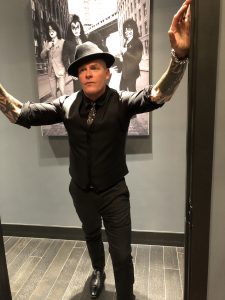 I can safely say my guest is a "ROCK GUY" and that is both a compliment and true. He would also be the first to tell you it's what he loves and what he has done his entire career. The thing is, he also does a ton more. Malcom Ryker is the Creative Services Director (Radio Imaging) at iHeartMedia San Diego. Malcom also serves as the "Rock Guy" iHeart's national production team. He voices countless stations across the US, mostly Rock and Alt, in big markets like NYC, Dallas, Atlanta, San Francisco etc. He is also doing plenty of Promo Voice work on TV Networks and affiliates around the country. We discuss all things MALCOM: Where he's been, radio imaging, a little tech, old station stories, growing up in a military family, house rehab (he restores old Spanish Houses) and of course... VEGAS!
*Warning: There may be a little more bad language than usual in this one (which is usually none). I don't edit these shows or censor my guests at all, I never will. We are all adults and I am not gearing this toward children (how boring for them!). But maybe you listen in public work areas or church or at a wedding...this show may need to go in ear buds or the privacy of your bathroom ...car...whatever. Enjoy!!
I can safely say my guest is a "ROCK GUY" and that is both a compliment and true. He would also be the first to tell you it's what he loves and what he has done his entire career. The thing is, he also does a ton more. Malcom Ryker is the Creative Services Director (Radio Imaging) at iHeartMedia San Diego. Malcom also serves as the "Rock Guy" iHeart's national production team. He voices countless stations across the US, mostly Rock and Alt, in big markets like NYC, Dallas, Atlanta, San Francisco etc. He is also doing plenty of Promo Voice work on TV Networks and affiliates around the country. We discuss all things MALCOM: Where he's been, radio imaging, a little tech, old station stories, growing up in a military family, house rehab (he restores old Spanish Houses) and of course... VEGAS!
*Warning: There may be a little more bad language than usual in this one (which is usually none). I don't edit these shows or censor my guests at all, I never will. We are all adults and I am not gearing this toward children (how boring for them!). But maybe you listen in public work areas or church or at a wedding...this show may need to go in ear buds or the privacy of your bathroom ...car...whatever. Enjoy!!
-Show Notes-
-Watch on Youtube-
Transcript
80 min read • 11,937 words
ANNC: This is The Producers Podcast. Featuring the most respected international talent in the world of audio production and voiceover. TV, radio, film, and more. In-depth interviews and industry insights, putting you on the inside. Learn more at ryandreen.com. The Producers Podcast. With Ryan Dreen.
RYAN: Here we are, another Producers Podcast. Thank you so much for checking out the show. always appreciate your time, and also appreciate if you could review or just rate the show wherever you get your podcast. That would be super awesome. One quick note, I'm working on an episode with James Stodd, a UK-based radio imaging producer and manager of talent. I've known him for quite some time now, and I've been able to etch out some of his time soon. And so that will be, if not the next episode, coming very soon. But someone I've been wanting to get on this show for quite a while, and it'll be nice to get back to the UK with a guest as well. Now, today, Malcolm Riker, and unapologetic rock guy, and he lives the life. Some great stories in the interview, by the way, but just a real dude. He, he is what he does and loves it. And, I don't think I mentioned this, but I think this is kind of a get. I'm considering him a get because according to him, he hasn't really done any interviews ever. He doesn't have a website short of the website just promoting his radio show, which we talk about in the interview here. He doesn't have social media. I had to to go to Vegas to meet him in real life to make that contact and to get him on the show here. But it was well worth it. I've been wanting to have him on for a while. Officially, he is the Creative Services Director at iHeart San Diego, and he has been there for quite some time. He's seen major transition in not just the market, but in the genre. He also voices many stations around the country here in America. He's on in Dallas, locally to me. He's in Tampa, Atlanta, Cleveland, San Fran, Seattle, New York, and others, many others. He's also doing a lot of voiceover on television. So if you watch TV in the States, you may have heard him on CBS, Fox, FS1, NASCAR Speed, Discovery Channel. Or if you listen to the radio, you've most likely heard him. He's one of those guys. He's one of those guys I'm having on that has likely been heard by everybody who's checking this out, even if you didn't know you were hearing him. So please go to the website, ryandreen.com, and click the Malcolm Riker Show Notes because there's a lot more to see and hear there. I'm gonna play some snippets of his demos here in a moment. The full demos are there. He gave me some cool in-studio video. In fact, he shot 2 of them and said pick, and I said no. I put them both on the website, so I hope you check those out. He also has new music out, so I've got a link to that plus the actual, you know, YouTube embed on the show notes page as well, and links to websites too. All right, so there's a lot for a guy who hides in a, you know, in his studio and doesn't have social media and all that. There's a lot going on. A great guy. So let's hear some of his work, and then let's bring on the and the only Malcolm Riker. Cornelius. Yes? The humans at Rock 105.3 are having a Comic-Con Tuesday. But that should only be for apes. And for gorillas. 15th caller now to 570-105-3. Snacks, Comic-Con badges. Damn those humans at Rock 105.3. Oh, sure, when the Victoria's Secret models walk down the aisle in their skimpy underwear, it's called art and fashion. But when we do it, we're called drunk and no longer invited to work gatherings. WEBU. We like all kinds of music, as long as it's rock. 98 Rock, Tampa. Side boob is awesome. Sweet side boob! Till it's on your neighbor Bob. Put on a shirt, for Christ's sakes! There's children around! WAAF, Boston's rock station. An all-new episode of Deadliest Catch, Tuesday at 9:00 on the Discovery Channel. The best riders in the world set their sights on reigning champ Ryan Dungey, next Saturday at 9:30 Eastern on FS1. DIY Network's new show Deconstruction shows you the science behind home improvement. Bigger family, bigger challenges, and that's just the way he likes it. The NASCAR Sprint All-Star Race Watch and Win Contest.
RYAN: All right, if you are listening to this podcast, and it's been going a while now, but there's a very, very good chance you have heard that voice before. I was about to start rattling off your title And I don't know if I have enough time right now to say everything you do, but let's just say first and foremost, the creative services director for iHeart in San Diego and the voice of frickin' everything. It's Malcolm Riker. Hey, what's up, man?
MALCOM: Hey, hey, Ryan. What's happening, bro?
RYAN: All right, so you are— are you still in the iHeart Megaplex in San Diego as we speak, or—
MALCOM: That I am, man. I'm in my studios where I've been, God, 20, 25 years in this same frickin' room with no window. Oh my goodness.
RYAN: Oh, yeah. Okay. So, I'm sure I— I haven't recorded my intro yet, but I'm sure I will have mentioned this. But you sent me a kick-ass, a kind of a, hello, here's my studio video. And actually, you gave me 2 POVs on that, which was cool.
MALCOM: Oh, man.
RYAN: So, I've got both of those posted on the website. So, you've got to go check out the website, 'cause that is a studio that you can tell a guy has worked in for 2 decades.
MALCOM: Yeah, dude. I got history, man. I mean, dude, I was back with— I came to San Diego in '95. when J-Corp owned this place, and then it turned into Clear Channel over the years, and then it turned into iHeart, and they just kept me, man. You know?
RYAN: Yeah. You know, I've got a question about that sort of— not so much why they just kept you, but I want to get into that in a bit. Let me start. I know you— in fact, you told me you have a military background, military family background.
MALCOM: But maybe talk about— Yeah, 60 years, man.
RYAN: So originally then, I don't know, where did you grow up? And is that a question that has to be answered?
MALCOM: Oh yeah. Well, I mean, I was born in— my dad was a pilot in the Air Force for 30 years and he was in Vietnam a few times. He was just a badass dude. I lost him a couple years ago. RIP. But I'm actually named after him. My grandfather was Malcolm. I'm a Malcolm. My dad was a Malcolm too. But yeah, I was born in Germany in Wiesbaden on the Air Force base.
RYAN: Wow.
MALCOM: And then we moved around like every 2 years to 4 years, the whole— my whole, you know, lifetime as being a kid, which got me ready for radio where you move around all the time too, you know, especially in your early years. But yeah, my dad was in the Air Force 30 years. My grandfather was in the Army 30 years before that too. And then my mom said, bullshit, we're done with the service for a little bit here. You're gonna do something different. And I wanted to go in the Marines, actually. And she was like, no, you're going to college for 4 years and you're going to try something different. So I got my degree in radio and television out of Arkansas State, believe it or not.
RYAN: Okay.
MALCOM: And started working a little country radio station while I was in Arkansas. And, and that got me a gig, which got me another gig in Memphis, my first rock station. And I never looked back, man.
RYAN: So when you finally did settle, or when mom said, all right, you know, we're done with this, were you in Arkansas? Is that kind of where the—
MALCOM: Yeah, yeah, Arkansas State. My dad was stationed at Jacksonville Air Force Base. So yeah. Oh, wow.
RYAN: And so Memphis was when you got started in rock. You want to ballpark a year for us when that was?
MALCOM: No, I'm fucking getting old, dude.
RYAN: Okay.
MALCOM: No. All right. You know what?
RYAN: I feel like A few of these have led to—
MALCOM: Let's say this. I'll tell you this. I've done cocaine with Mötley Crüe in the late '80s. So that probably does— probably gets you in the better frame of where I am.
RYAN: There we go. No, that's better than just telling me a year. That's a better answer than just saying, well, Ryan, I started in rock radio in Memphis. Yeah.
MALCOM: No. Yeah.
RYAN: No. Without question—
MALCOM: We're having fun, right?
RYAN: Yeah, absolutely. And without question, you're one of those people that is what you do. I mean, when you think— if you've never seen Malcolm Riker and you just know he's that rock guy, and we know your sound.
MALCOM: Yeah.
RYAN: I met you only for the first time in Vegas in, what, late June, right?
MALCOM: Oh yeah, the Pro Max thing, right?
RYAN: Yeah. I'm like, of course that's Malcolm. And you were cool as hell. And so how many times— how many websites do you have? How many social media?
MALCOM: How many—
RYAN: How many places are you online?
MALCOM: None. I already—
RYAN: that was a bit of a leading question. And, how many— how many times you've been—
MALCOM: my thing—
RYAN: how many times you've been interviewed before?
MALCOM: this is like really the first like podcast thing or anything like that.
RYAN: All right, so I'm really excited, so I'm gonna try not to screw this up basically.
MALCOM: Oh dude, come on, we're just having fun. Like I said, it's just— yeah, I'm honored actually to be— that you would even want me to be on your show, so it's cool.
RYAN: Well, you have a couple credits that stand out, you know, and you're doing a few things that stand out. So, all right, maybe before we get to some of that, though, I didn't want to blast by all of your history.
MALCOM: No worries.
RYAN: You're in rock radio in Memphis. You say you got your start there and didn't look back. Maybe tell me what happened next or how you got to San Diego.
MALCOM: Oh, God. It was a wild trip, you know, because I started out in— And doing radio production and being a DJ and being a— I was a program director, a music director, an operations manager. I did it all. I jumped around all kinds of stations. What got me to San Diego was 91X in 1995. And then I was the voice of 91X from '95 to 2006. And then basically that's when Clear Channel let go of 91X because it was a Mexican signal.
RYAN: Yeah.
MALCOM: And we had to, We had to cut off 3 signals because we owned 7 in the market. And that's when I moved to Rock 105 and stayed with Clear Channel, which turned into iHeart. But before San Diego, I was at 92X in Denver, which was an offshoot from 91X. It was an early alternative station in Denver. Before that, I was at KNAC, which was Pure Rock 105.5 in the late '90s. I mean, middle '90s, excuse me. And that was like the last of the hair band metal rock band kind of radio stations. So I was there the day that they shut down KNAC in LA and Long Beach, which was pretty frickin legendary because that station, like, I mean, it was like the metal god rock station. So I had that heritage in me.
RYAN: Yeah.
MALCOM: Before that, I worked at Z-Rock. Before that, I worked at a rock station in San Antonio. I've worked in Oh gosh, Little Rock's Arkansas rock stations. I worked in the Quad Cities at XLP 97X back in the day day. I've been all over them.
RYAN: Man. Do you know, and you know what's crazy is you've been in the same spot now for, like you said, over 2 decades actually. But how many times have you moved? Do you know the— well, in fact, in your professional life, not even counting your childhood, but if you want, you can count your childhood, but how many times have you moved?
MALCOM: a shit ton. And I was telling my, I was telling my chick this the other day. I'm like, I'm good at moving. So if you need to move, I'll move you because I just know how. And I know, you know, how to like put it all together. It's in, it's in my DNA. But you're right. Like San Diego is such a fricking killer city. Then I've been so blessed to stay here and be able to be creative that I didn't want to move. And I fell in love with this town and with the beach and, and just with everything that it stands for.
RYAN: Yeah.
MALCOM: So it's cool.
RYAN: Yeah, no, it's, it's a great place. Let's see here. When, when did voiceover be— no, no, actually, let me take another step back. When, when did, you know, producing audio and not so much focusing on being a program director or being on the air or maybe even being like the next kick-ass morning guy, you know, whatever, whenever that stuff left you, you decided to get focused more on the production side and just using your voice? Yeah.
MALCOM: Yeah, well, I was doing DJ stuff for years and years and years, and I was a killer night rock jock guy back in the days, in the early days. And then I did afternoons and mid-days and all that stuff. And the crazy thing was, is, I remember I always did— you know how we all start out in production? Well, I, I always did like badass concert spots for like the concert promoters in town or whatever, and that was just in my in my DNA from back in the get-go when I was a DJ and stuff. So, I was at 91X and I think I was doing mid-days and it was in about '95, '96. And, the program director at the time was a guy named Tim Dukes and he was with J-Corps. And he came up to me one day and he was like, dude, you're a good DJ, you know that? Don't get me wrong, but You're really good at production. You're really good at the stuff that you put together. And he's like, I can get DJs every day, but I can't get that. I can't get the production and I can't get the voice stuff that you do. He was like, why don't we pull you off the air and put you in a studio and just have you do that kind of stuff? And I was like, at first I was like, okay. And then I just took off from there. You know, I was able to sit in and be in a creative alternative rock station and just—
RYAN: Yeah.
MALCOM: And that was back in the day when you only did one station. You didn't do 15 or 5 or 3 or whatever, you know? So I just could focus on doing really cool shit. And that was like with me, it was me, like John Frost was in LA at KROQ. I was at 91X and Keith Eubanks. Oh my God, that's a crazy old school name. But he was at— in Atlanta. Yeah. Uh-huh. At the X in Atlanta. So.
RYAN: Oh man.
MALCOM: And we were kind of like the 3 alternative guys doing our shit then. I just never looked back, you know.
RYAN: Were you like— what would you say, that you were buddies with them back then, or just aware of them, or—
MALCOM: Yeah, we were all— no, we were all— Frost is fucking God, dude. I mean, I love all his stuff. I didn't really have the chance to know Eubanks that well. Yeah. But Frost and I are friends for sure.
RYAN: Back then, this is, you know, mid-late '90s, what kind of How would you trade secrets? How would you talk shop? What was the world like back then?
MALCOM: The craziest thing about those early days were, you know, I mean, granted, yeah, John had his Frostbite, but I remember when he used to come out on a CD and he didn't even have a website or whatever. You know, the craziest thing about those times was, granted, I was only doing one station, but I spent so much time finding sounds and making sounds and looking for shit. In my studios, you can see I have tons of albums. I used— I still go to swap meets and look for cool old records that had like, not musical records but talking records and records that have old sound and audio, you know. I think that's one of the biggest differences. I used to have to spend way more time finding my own shit, whereas nowadays I can go anywhere and get stuff. And we subscribe to production services and we have cool—
RYAN: Sure.
MALCOM: You know, music and stuff like that. So back in the day, it was almost like you had to handcraft everything more yourself.
RYAN: Yeah. So it took more time sourcing the content than it did actually putting it together.
MALCOM: Yeah, yeah, yeah. But I go back to even like reel-to-reel days, dude. When I first started doing radio, man, we were splicing tape with razor blades and doing other things with razor blades.
RYAN: Well, we already heard of one story, at least of that one razor blade related story.
MALCOM: Oh yeah.
RYAN: boy, all right, I gotta, I gotta stay on task here a little bit.
MALCOM: I call a spade a spade, you know. There's, you know, I'm not gonna sit here and bullshit you. I've lived it, man, for sure.
RYAN: Right. No, yeah, that's, yeah, probably my first impression. Although, you know, you can't really fake— you can't fake genuine, right, in this business. You just can't fake it. You're either real or you're not.
MALCOM: Right. And I learned that a long time ago too when you're doing production and when you're doing stuff for rock stations. The kids, they'll smell the cheese a mile away. Yes. Either you are it or you're not. If you're not it, you're not going to make it. And if you are it, then just roll with it.
RYAN: And it's probably true in any format, but even Hot AC, like, a 32-year-old woman knows that a guy that looks like Malcolm Riker made her promo, and it ain't printing. It's just not quite connecting like it could have, maybe. So the transition— or maybe the addition of voiceover? I mean, you get into the studio in the '90s and you start, you know, your PD made probably a great move there. When— and, you know, you just said you were doing concert promos. And the way I wrote this is, when did voiceover change from something else you did to something you were truly gonna excel at?
MALCOM: That was about— that was it. That's when I started doing— when I became a full-blown creative services director. That was at 91X. And then, and then, you know, I mean, I just kept doing it for a while there. I also, I mean, back in those days, I used to send out a monthly CD that used to go to a lot of different rock stations around the country that was just like produced pieces that was like my Malcolm Riker Productions thing. It sounds so cheesy, but yeah.
RYAN: Yeah.
MALCOM: I used to do like 20, 30 bits on a CD and send it out and rock stations, but I would customize it for each station too. That was like early customization days. And stuff.
RYAN: And just so I'm not missing the point, like, what was your point in those CDs? Were these paying clients?
MALCOM: No, they would be like sweepers for rock stations. They would just be like cool attitude stuff and fun things for, you know, things that stations would run.
RYAN: But, but was this just you like doing people a solid or were these like paying clients?
MALCOM: I was freelancing stuff out of my studio and then I'd also voice their stations and then they'd pay me monthly for sending stuff out.
RYAN: Yeah. So when you got your first freelance station, How did that come in, you know, outside of the San Diego cluster?
MALCOM: Well, I've always been— I've been a— I've been, like I say, a J-Corps/Clear Channel/iHeart guy. And I probably owe a big, huge, big high five to Brad Hardin as far as like helping me with my career in the rock world. For those of you that don't know Brad, he originated out of like Florida. I knew him from Tampa. Now he's like fucking I Heart God or whatever.
RYAN: Yeah.
MALCOM: But I, I, I bow down and kiss the ring of Dom for Brad Hardin. I mean, he, he was the guy that pretty much ran all our rock stations across the country. And, and, yeah, he helped me out so much in the beginning and still, is just an amazing radio guy. so yeah, him. and then in other worlds, like Dave Richards up in Seattle, KISW, I fucking throw him huge props too, because, I'm I'm blessed to be able to work with other radio companies as well too. I don't know how it worked out, but I still do stuff with other companies as well too. So. Yeah.
RYAN: Well, I mean, at the end of the day, the cream rises to the top. And so if you're the right choice, you're the right choice.
MALCOM: Yeah. But I've also been like grandfathered in because I've been doing it so long that I did it back in the day when people couldn't— like now I feel bad for some radio guys and voice guys or whatever because their companies won't let them do anything for anybody else and they try and shut them down.
RYAN: Mm.
MALCOM: Okay. They gotta do only for this company. or this or that. And it's just a blessing to be able to work in iHeart. But when I work with other companies, I just like, I'm very professional. I do my shit and it doesn't matter what company it is. I just keep it all, you know, keep it all legit and keep it all good.
RYAN: Yeah, yeah, absolutely. I mean, we've been talking quite a bit about rock radio here, and I do want to talk specifically about that. But you do voice things that aren't rock radio.
MALCOM: Oh, yeah.
RYAN: So you do a lot of TV work.
MALCOM: Yeah. I mean, I'm with Atlas. You're with Atlas, but yeah, with John Wasserman and Lisa Marber Rich. And okay, here we go. On the next episode of Deadliest Catch. I mean, I've done the fucking promo thing as well. CBS, CBSI. I've done Survivor Island, all that kind of stuff for a long time. I've done Fox and Fox affiliates. I still do Fox affiliates.
RYAN: Yeah.
MALCOM: So a lot more like promo work kind of stuff.
RYAN: And where did— so how, you know, and really this is for anybody who's interested in dipping their toes into that world or whatever, but how does that come about for you? Is it an audition? You know, I mean, you get an agent doing radio work and then suddenly they're sending you out for TV stuff and you start booking or some other secret sauce?
MALCOM: Yeah, well, I'm going to— I'll break it off a little bit and I'm always real. I'm not going to bullshit anybody, but like in my case, and this is gonna sound crazy, but I was doing rock radio and radio was, was good for me. And rest in peace, but when Keith Eubanks passed away, it seemed like I picked up more rock radio stations and, started becoming a little more, I don't know, whatever you call it, but I, I got the attention of Atlas and, —
RYAN: Mm-hmm.
MALCOM: For people that don't know out there, you got to kind of get some clientele going. An agent doesn't want to hang out with you unless you can bring something to the table. So after getting more and more clients, I figured I'd parlay some of my radio stuff into trying to get an agent so that I could do TV stuff. Because in the TV world, if you don't have an agent, you can't really do crap. You can't get any auditions. You can't really You know, so that's what I did is I took my radio stuff and used that as, as some leverage to say, hey, yeah, okay, I'll kick you down some percentage here on some of my radio stuff. Just get me into the TV world if you can.
RYAN: Mm-hmm. People who don't have representation are always asking about it, especially if they're serious about the career.
MALCOM: Yeah, I—
RYAN: we both are repped by Atlas. I love Atlas, and I'm pretty confident you do too. Anything to talk about that relationship that people may not know? For example, expectations. In your opinion, what is the job of the agent in voiceover?
MALCOM: As long as they keep the auditions flowing in, that helps me. I mean, that's my biggest thing is getting the physical auditions. They can't wave a magic wand and get you work, but if you work at it and you're good and you know what you're doing and your agent knows the right kind of stuff to send you, Yeah. Then that's, that's the biggest thing within having an agent, I think.
RYAN: And they, they definitely do.
MALCOM: It's weird, I get a lot of my radio stuff just through word of mouth, just people that know me. But in the TV world, there's a lot of guys that are a hell of a lot bigger than me. I don't, I don't do crap really in the, in the TV world considering where a lot of people are, you know.
RYAN: But— Are you represented by anybody? I mean, you know, depending on the— really more on the commercial or maybe, narration or industrial side, there's a lot more representatives, agents. Do you have other agents or managers or any other people?
MALCOM: I don't. You know, call me lazy. I haven't really gone off into that way, although I really have a passion for narration and discovery and history and stuff. That kind of stuff really makes my clock go, man. So I don't know. I've been working in those areas. I haven't landed a whole lot in that way, That's something that interests me, especially as you grow older, different things that you can do later on in life.
RYAN: Someone like you, and again, people who definitely know you, but a lot of people might know you as the rock radio guy. What do you do when you say, all right, I want to excel at that more narrative style of read or other things? What do you do to get better in other styles?
MALCOM: Well, I had a coach, David Lyerly, for a year or two, who I don't even know if he coaches anymore, but he helped me in my promo world. And it's kind of like if you want to go to a gym and you want to work out and you want to get muscles, well, if you get a coach, that's the quickest way to really, like, get peaked up.
RYAN: Yeah.
MALCOM: So I would look at getting a coach to try and help me in some of those areas. Aside from that, it's just really working on it and practicing. And even if you audition your ass off and you don't get anything, you're just constantly working on voicing stuff. I have a tendency to like have this sound that's in my head too, when sometimes I need to just talk normal, you know, especially when it comes like in narration and stuff and things like that, you know.
RYAN: So— Explain that again. What did you mean by that? You have a sound in your head? I don't know if I know what you meant there.
MALCOM: I mean, it's weird. It's like sometimes, how do you want to say, in the radio world, I do a lot of voices, all different kinds of sounds. I have an active rock read. I have an alternative read. I have a classic rock read. I have a news talk radio read. I have a sports read. I have all these things. And sometimes in the TV world and/or like you say, going into narration, Yeah. And it's like, just forget about what Reed is, just be yourself. Yeah. Okay.
RYAN: That's okay. So from someone who has been working on more of the announcer side of the world, which is definitely a skill and definitely a sound, how hard is it for you to lose, to shed that and just be yourself when you're trying to do these other completely different types of voiceover or voice acting?
MALCOM: It is a little tough. I have to pull the headphones off sometimes. Ah, yeah.
RYAN: Yep.
MALCOM: Freaking— it's freaking weird, man. You know, like I've been doing this for Power Auto Media. They have this thing online. It's a show called 10K Horsepower Wars, 10K Shootout, because I love cars and stuff and things like that. And I'm narrating the show and it's like a reality show. You got 5 teams, they got $10,000 and and they build the sickest race cars kind of thing, whatever. So I'm doing like the micro narration on it. But yeah, it's, it's just being me, being real, having, having fun. And sometimes, like you said, I have to pull the headphones off and just, just have fun and be normal, not try to have a certain sound that you're looking for.
RYAN: When you, when you do more of your traditional work, actually, you know, I wanted to ask this before I played your demo. Leading off the show was the the radio imaging demo. There's more audio on my website if I haven't already mentioned that. Lots of different types of voices flowing through all of that production. What percentage of those are you?
MALCOM: I mean, my demo—it's mostly me. I was gonna say seriously, that's what I thought. All me.
RYAN: Like I don't have anybody else.
MALCOM: Like okay, so you so like 99.9 KISW. You know, I can do the deep shit, or if I'm doing Alt 105.7, you know, I'm just doing more like, like alternative stuff, or KTCL in Denver's alternative, or—
RYAN: But the little smartass voices?
MALCOM: Smartass, you know, Rock 105 kind of, you know, smartass kind of stuff too. So.
RYAN: Yeah, yeah. Okay. I just wanted to kind of point that out because it's while you are on the announcer side. But, but do you find it's important to voice more of that announcer-style read with headphones on? That might sound like a dumb question, but I want to ask it and get your opinion.
MALCOM: Yeah, I use it with— yeah, I use headphones. Yeah, I use Pro Tools. And what—
RYAN: but why, why would you voice with or without headphones, I guess is what I'm leading at? Like, why does it make a difference one way or the other when it's just you in the room? You know your chain is clean, you know, you know you're not going to have anything else popping into your ear that you necessarily need to hear.
MALCOM: No, in doing the radio stuff all over the years, that It's all— it's a combination. It's like that sound that I look, and there's different ways that I project into a microphone. I use that Sennheiser shotgun mic, and believe it or not, I have different ways to put my hand near the microphone when I talk sometimes that I can project different things, have different sounds and stuff. So I'm very in tune with it when I'm working in my studio.
RYAN: Do you find you need to, or you prefer not to stand when you voice copy, or in some cases you do, in some cases you don't? You don't?
MALCOM: No, I sit all fucking day, but then when I get home, I run 3 miles and do push-ups, sit-ups, and pull-ups. So when I'm here, I'm sitting, and then when I'm home, I'm home. And that's another thing that we can go— that we could talk about too, and that's separation of church and state.
RYAN: Yes.
MALCOM: And that's like, if you want— if you want to, you know, work to live versus live to work, you know, I am a huge believer in that. Like, I don't have a studio at home either, and people would be like, what the fuck? You know, I I have a really nice Rode kit and a Pelican case that I take, you know, with me whenever I vacation or do whatever. But yeah, I don't have a studio at home. I do other things. I enjoy life. I, you know, so, and I, and I recommend that to a lot of people.
RYAN: Yeah.
MALCOM: Like, dude, you know, and so when I'm at home, don't talk to me about fucking radio or voiceovers or TV or nothing like that. When I'm— and then when I'm at work, don't Don't fucking talk to me about home either, because I don't want to hear about that. I'm here to work. So, you know, it's like that way you're on and you're on, and then when you're at home, you're doing other things and you're refreshing your brain, and it allows you to be creative and stuff too.
RYAN: When you're— so how often— I'm sorry, how long would you say you're in the studio every day on average?
MALCOM: Oh, every day for sure. I'm 7:30 to 4 o'clock every day, and that's, you know, I'm on West Coast time, But I voice a lot of stuff on the East Coast, so that's already 10:00, 10:30. So, yeah. I get in early, and then I like to try and get out a little early so I can get home and garden, water, work out, do different things, have fun, enjoy the day, the rest of the day.
RYAN: Yeah. And you have a vast amount of experience, and you've learned not sitting in your cave for 14 hours a day. is a good thing. Get out there and be healthy.
MALCOM: Yeah. Well, and yeah, and, and with that being said too, there's days that I work 14 hours too. I mean, it all depends on what's going on. I mean, I know we've got Labor Day weekend coming up this weekend. I don't know if that's gonna date the show or whatever, but yeah, it's gonna get crazy. You know, Thursday, Friday is gonna be fucking crazy. I'm gonna be here a lot longer, you know, but on a normal, I'm usually here 7:30 to 4:00. Monday through Friday, on the weekends. And, but, but there's times that I come back to work at night, or there's times that I get home and I'm like, fuck, I forgot something. Oh my God, I forgot to put that sweeper together for a trigger for a cue to call for Rock 105.3. And then I turn around and go back home, you know, go back to the station. So, you know, yeah, right, you got to do whatever you got to do to just be focused and, and keep your job.
RYAN: No, it's cool though. I mean, you're not the first person to say, I don't have a home studio. And it's usually followed by, that makes me healthier and better and happier.
MALCOM: Right, right, right.
RYAN: You know, it's— but it's very rare. I'd say it is rare these days.
MALCOM: Yeah.
RYAN: You know?
MALCOM: Yeah.
RYAN: Let's talk about rock radio because I mentioned that early on. I'd love your perspective on it. So I've heard the rock radio is dying, using air quotes very strongly there, for quite a while now. Just straight up, is rock radio dying? Is it coming back from a near death? What's rock radio doing?
MALCOM: Wow. Well, I think radio in general, I mean, people could say, well, radio's dying or whatever, but no, radio's pretty damn strong right now. Rock radio, I don't see it dying. I see a little bit of a resurgence of some of the '90s rock radio kind of stuff, kind of that punchy rock that we all grew up on and that we all love. And that's actually good for my business because I'm associated with a lot of that. But yeah, as far as like, is rock radio dying and dead? I don't think so. I, I mean, I think there's, the cool thing about it though is like that there's kids that are out there now that are 12 that are into Nirvana and shit, you know? So it's like, you know, it's— that sound is still cool in certain ways. Has it changed? Yeah, it's morphed and rock radio stations, I don't know. Ah, I don't know what to say on that one. I know I, you know, I voice and produce Rock 105 in San Diego, and we're kicking ass. We're having a good time. Things are good.
RYAN: how about this? Since you've been in it for so long, you know, decades, and you, you definitely were there— I mean, rock radio was epic for a long time. Yeah. give us some perspective, especially for younger people listening now, What was it like back then versus now? For example, I mean, XFM to me, when I finally got to visit that over in London, right, like that was, that was shocking to me how huge that used to be and how it, you know, had a bit of a downfall.
MALCOM: Well, I think one of the biggest differences now is that kids got on-demand music so much. They can get their music from so many other places in so many other ways. Whereas back when I first started out, when we were doing it, it was like like, fuck, man, you were like the shit. And like, yeah, and people would tune in because they wanted to know what you were playing, what you were doing, where the music was coming from. It was like a super club that you could be involved in. I'm looking in my studio right now on the walls in here, and I'm looking at a Lollapalooza 1 poster, and it's like Jane's Addiction, Sushi and the Banshees, Living Colour, Nine Inch Nails, Ice-T, Butthole Surfers and Rollins Band. That was Lollapalooza 1. Those are all fucking legendary bands. I mean, Henry Rollins, okay, you know.
RYAN: Yeah.
MALCOM: And, at those points there wasn't so many different ways that kids could get music, and now they can get music so many other places. And another big difference is back then it was all about buying a record and getting— or a cassette or even a CD for that matter— and getting the whole music And nowadays it seems like kids are just getting singles and shit, and they're buying singles on iTunes and stuff. So—
RYAN: Or they're not even buying singles anymore. They're not even buying. They just stream them on Spotify, whatever. Yeah. You don't get that. You don't get the experience of opening it up and smelling it and holding the whole album and all of that. And that was probably really connected with, with rock radio as much as any other music genre.
MALCOM: Exactly.
RYAN: What about being in the building? I know there's plenty of stories about, you know, just crazy stuff happening with artists, and as you already mentioned, some extracurriculars that might have happened with, you know, but, but in general, is it just so tame now that it's like, ugh, or is it still kind of fun compared to the old days?
MALCOM: Well, it's definitely night and day. I mean, the old days were definitely a lot crazier and But that's something that you brought up that I would say is, is one of the reasons why I have longevity and have been in the business as long as I have been and am still working in radio is that fact that I am in the radio station. I know a lot of creative services directors and a lot of people that work in their home studios, and that's cool.
RYAN: Yeah.
MALCOM: And I respect them for that. But I feel like I grew up in the radio days where you had a creative services director or a guy or a production guy or whatever. He was in the radio station. And that meant he was getting the spillover from everything. That meant he was bumping into the morning show guys in the morning and hearing some stupid shit and being able to make some production about it. That means he was here when the artists come through and the artists come into your studios and like you say, you're meeting them and hanging with them and doing fun stuff with them.
RYAN: Yeah.
MALCOM: 'Cause that's all part of the radio station. And that means you're shooting the shit with the artists when they come in. And I mean, there's a bottle of tequila on my— in my studio here. I mean, and believe me, like, I've hung out with a lot of artists. And like, Yellow Wolf recently was in, and we were drinking and having fun, you know? I mean—
RYAN: Mm-hmm.
MALCOM: There's a lot of stories. I mean, I've only been laid off once or twice in my whole career, and every time that's happened, I've done a lot of really cool, fun things. One time in the mid to late '90s, I was laid off and I got on the tour bus with the Black Crowes and stayed with them for about 2 months, you know, just doing crazy shit, you know?
RYAN: Really? Wow.
MALCOM: Yeah. And that's another thing about this industry is when you do get laid off or if you do lose a job, take advantage of it. Do shit that you wouldn't normally do because otherwise, you know how it is. We're always working. You're constantly working, doing things. So whenever you, whenever you do get fired, look at it as a positive. Look at it as like, oh shit, man, I get to pack up and go to Hawaii for a month, or I get to go do something, or I'm going to, you know, to Europe or whatever. So take advantage of the time because it's, it's a blessing that's there. So go for it. And then, and then work your ass off when you get done.
RYAN: You know, I, I may as well ask you this. you clearly, you're at least okay at managing your money. I've seen, you know, in this industry, there's a lot of people that like the gig because they don't really have to grow up. You know, they joke, I don't have a job. But it's important to do some of the adult stuff. So how did you, or are you, or can you manage your money okay? Because that's the problem when you get blown out and you spend every penny you get every week of your life, and now you have no job and no money. You know, a trip to Hawaii is not really an option. And what are some things you've done to be okay at that, at least?
MALCOM: I mean, over the years, I was all— in the beginning, I was all sacking money away. I put it in my 401 and Fidelity. Wow, I sound like I'm a real corporate rock star now.
RYAN: I know. I like to talk about reality.
MALCOM: But I do have a Fidelity 401. And then the other thing was I was smart enough to stop renting eventually and save up your money and fucking buy something. something. In California, that's the only way you can get ahead is if you get into the real estate, because I've made almost more money in real estate than I have in fucking radio and TV production, you know. So, but you have to get in in order to be able to get in and, and take advantage of some of the equity and stuff, you know. That's another cool thing that I, I like to do is like I, buy properties and restore them and then sell them. I don't flip them. Because I'm not like a 3-month flyby guy, but I've had several really, really cool, like Spanish colonial houses that I'll buy and then treat them as art and then restore them and fix them up and then sell them and make good cash on it and roll it over and put it into another property.
RYAN: That's down there in the San Diego area?
MALCOM: That's in San Diego, yeah. Right now I got a 1920s Spanish colonial 3-bedroom, 2-bath that I've restored over the past 2 years. And it's crazy. I mean, it's got— it looks like Balboa Park. It's got like koi fountains and crazy arches and stone and iron and tiles. And I don't know, it's that like living 20 minutes from Mexico kind of feel, you know?
RYAN: I'm pretty interested actually in this. So let's stray for a bit, a little bit more on this. And if nobody cares, I don't care. So you gun for what type of house? completely dilapidated and go for a—
MALCOM: This house that I just bought, like I say, it's 1920s Spanish. I say just bought, but like 2 years ago, my latest project. The woman, God rest her soul, she passed away. She'd owned it since the '70s and it had fallen apart. But to me, I look at it as an open canvas and I was ready to just come in and bust out some walls and open it up and restore it and do all kinds of things to it. But I'm also like a— what do you want to call? Like, I'm into history and I like to put things back the way that period style that it should be.
RYAN: Yeah. Do you get emotionally attached to these properties? Because as far as I know, that's not a great thing to happen if it's just an investment you're trying to turn a profit.
MALCOM: I know. Yeah, I do. I've done some that's been— that I got attached to and then got rid of them. And then I built a complete Spanish colonial house in La Jolla with a ocean view that I lost in a divorce like 5 years ago. And I fucking loved that house, but it was also, it was also a blessing and a curse because it was just a lot to maintain and a lot and a big price tag on it. And, you know, when I finally got rid of it, I was like, oh, thank God. But it, but it was, you know, it was crazy. And the house that I'm in right now, I actually bought as an investment. And then 4 months into the restoration, I said, fuck it, I'm living here. This is too cool of a neighborhood. It's in an area called North Park, which is a super hipster, trendy, craft beer, cool part of San Diego right now. So yeah.
RYAN: So you hold on to these though, like 2 years, you're doing all the work yourself?
MALCOM: Yeah.
RYAN: You contract out anything?
MALCOM: I do like electrical, plumbing, some of the few things that you really got to Be careful on.
RYAN: Stuff that can make people die.
MALCOM: Roofing. Yeah, yeah, uh-huh. Yeah, things that can really fuck you up. But yeah, but I'm also kind of like the general contractor too, so I'm, yeah, I'm working with all the guys. And but I do a, I probably do about 60% of the stuff myself. Yeah, I have a beat-up pickup truck and all that stuff. Yeah, that's another crazy thing, you know, people laugh at me, dude. This is crazy because I drive a 1997 Nissan pickup truck a lot of times. I drove it to work today, you know, and it's fucking— those things are like crusher, like little gardener trucks out here, man. And they're bulletproof, but they're not much to look at. But no shame to my game, man. I don't care. That thing's my little work truck, you know.
RYAN: Yeah, that's awesome.
MALCOM: I do have a Mustang though, like black on black GT. 435 horsepower convertible.
RYAN: Nice. Nice.
MALCOM: And it's all murdered out. And that's the one that I keep under the COVID and only pull out on the weekends or when I'm trying to impress the lady.
RYAN: There you go. Do you have a garage where you're at? You don't keep it in a garage?
MALCOM: I don't. I have it under cover right now because my garage is full of restoration materials and things that I buy and stone and doors. and all these relics that I pick up, architectural savage shit.
RYAN: I do want to get a little bit back to the business, but I also just like chatting with you. I hope I don't put my foot in my mouth. Am I remembering correctly that some kind of congratulations is in order with you and your lady recently?
MALCOM: Okay. So, this one's an interesting one, okay? So, yeah, I am married, but I live in my own house, and my wife My wife lives in her own house too, and she's Polish and she's freaking beautiful. And she's—
RYAN: I met her.
MALCOM: 39. Yeah, Ava. And, so yeah, uh-huh. Like, we have a crazy, really cool relationship. Like, I respect her and who she is and her time and her space. She pole dances for like— like some women go to the gym That's what she has, a pole in her house. That's what she does and just keeps her—
RYAN: I've heard of that.
MALCOM: In shape. Yeah. Yeah. But all the stories you hear about Polish women are true, man. They like wear high heels to the grocery store. Yeah. They take amazing care of themselves and they take amazing care of their loved ones as well. You know, they're just like these superwomen, man. So, yeah. Nice.
RYAN: But you guys only got married— you got married like Wasn't it right before Vegas?
MALCOM: Yeah, it was during that weekend of Vegas, to be honest with you.
RYAN: Yeah, the day before I met you, maybe.
MALCOM: 6/16 or something like that.
RYAN: Yeah, that's hilarious. Okay, so you had gotten married like the day before.
MALCOM: Right.
RYAN: Yeah. Well, hey, congrats.
MALCOM: Yeah. And we were pimping at the Cosmopolitan in the penthouse, baby.
RYAN: Oh, you know what? I'm a big Vegas guy. I know my Vegas. And the Cosmo's one of the last remaining independent casinos, hotel casinos. It's fricking beautiful. It is such a nice place.
MALCOM: Yeah. And it's one of the only ones that has balconies too, still. And we have one that has the balcony with the Bellagio fountain view. And I got photos with that one, believe me. And they're ones that we can't post online. Okay.
RYAN: Well, some online, but not Facebook perhaps. Yeah. Yeah. Yeah. Yeah. All right. Yeah. Anybody has Vegas questions though, I mean, there's better people than me, but I love that town. Anyway.
MALCOM: You know, the whole time we were there for a week too, and we didn't gamble once. We just hung out. We just partied. We'd have fun. We'd go to shows. We'd do all that kind of stuff. So I'm not a big gambler. I know some people that are, but I'm not. But I love Vegas. You know, it's fun.
RYAN: I'm not saying I'm not. I can. I'm more of a poker player, but I don't think people that don't know Vegas well understand that you can go there for a week and have a blast and not actually gamble, right? You know, that's the misconception of that town though. There's so much to do that isn't putting money on a table or in a machine.
MALCOM: Yeah, I agree.
RYAN: Yeah. step over to music real quick. I mean, you're— what kind of musician are you?
MALCOM: Well, like, I mean, I've, I've always done jingles and radio rock stations and stuff, and then And as a kid, I played in bands where we were doing like Lynyrd Skynyrd covers and ZZ Top and shit and Jimi Hendrix and stuff like that. So, but I've also been playing around with a friend of mine here in San Diego where we're doing like cool funk stuff.
RYAN: Yeah.
MALCOM: And we got this one track that a lot of people were digging on. It was called West Coast Go-Go, and it's a super funk. It's almost, but it almost has a little rap flair to it also. So, you know, it's kind of— it's because the music's kind of— the vocals are kind of flowed a little bit. I don't know.
RYAN: The link is over on the site too.
MALCOM: Okay.
RYAN: So people should go check it out. But since they're not literally listening to it right this second, what are you doing in that track? Tell people what your role in that track they're about to go check out is.
MALCOM: Well, I wrote the song, but I'm also flowing. I mean, like, yes, I'm kicking back, back in Cali, yellow beach cruiser rolling down your alley. peeking at the ocean, headed to the shack. Summer's made for loving, just lay back. Go back, back, do it again. West Coast. That's the kind of the shit that I'll do, man. But I've always just kind of like flowed, and, and I love hip-hop music. And I mean, obviously was there in the beginning with the Beasties and all that stuff back in the day. So yeah.
RYAN: Yeah, that's cool, dude. I—
MALCOM: growing up in San Diego is always about like Like the extreme sports and the punk rock, they always melded that, like rock and hip-hop. And I remember going to parties back in the mid-'90s, and all the hot chicks would be in the hip-hop room at the club, you know? And so all the skater guys and all, we'd all figured out, hey, man, you know, we were mixing all that music together, man, and having a blast doing it.
RYAN: Yeah.
MALCOM: Speaking of which, I have a show too. It's called Scratch and Sniff, and it's on over 50 radio stations. stations, and it's a rock mashup remix show, and we do 2 different mixes. One's an alternative mix and one's an active mix, and that's, that's a whole nother part of my world. And that's with a partner of mine, DJ Mike Check, like mic check, 1, 2, mic check. But he's actually Czechoslovakian, and that's his name, DJ Mike Check. So it's spelled C-E-C-H.
RYAN: Yeah.
MALCOM: Website, sns-mix.com, but you can check all our mixes on SoundCloud. and stuff. But that's a whole nother world of mine. And that's something I recommend to people, is have as many irons in as many fires as you can to keep food on the table.
RYAN: Oh, absolutely. We get that advice often, and people should heed it. now wait, that show— I don't— I'm gonna be just dead honest, I don't know any damn thing about it. right, so is, is it all mashups?
MALCOM: We— it's a 2-hour weekend mix. we've been doing it 15 years. Believe it or not, we started on 91X and, okay, that was on probably like 50 rock stations around the country. Yeah.
RYAN: That's awesome. is your flagship locally?
MALCOM: Yeah, it's on Rock 105 here and we started it on 91X, but it's all over the country from like DC 101 in DC to wherever they end in Charlotte, Alt 157 in Atlanta. And like I said, we do 2 mixes too. One's an alternative and one's an active rock. rock mix for active rock for like our 98 Rocks in Tampa and MMS in Cleveland, EVN in Cincinnati, that kind of stuff. But it's a show that I've been able to launch and have fun with because one of the reasons why, because I have such good relationships with so many program directors on radio all over the country just through the radio voice work that I do too.
RYAN: So yeah, this is actually leading me something. Are you— is it a show— I wish I just, I feel bad. I should know about it.
MALCOM: Don't feel bad. No, you don't have to know nothing about that. I never talk about stuff like that either.
RYAN: Yeah. Well, you said you didn't even have a website and now suddenly you actually have one website that I can direct people to.
MALCOM: One website.
RYAN: One website. Are you like a talent on the show though? I mean, you talking often or is it really just you're in the mix?
MALCOM: It's very music oriented, but Mike Check and I, we both host it, but we do like 6 in 2-hour segment. We, in a 2-hour program, we do 6 mini mixes, like 3 segments an hour, and we talk in and out of each, okay, little mini mix there. So we do host it, but, but it is a very music-intensive show. And it's now, it's like we find killer remixes, we do our own remixes, we do— we've done mashups over the years when mashups were crazy. You know, they're not as popular now.
RYAN: Yeah.
MALCOM: But we used all kinds of rock hip-hop mashups and things like that too. Sometimes we do new music special mixes with different artists when their records come out. We do all kinds of crazy stuff.
RYAN: Well, I was gonna say, because a lot of stations— well, I can't say a lot, but I've seen where stations use you as— you're more than just the voice. You're a character on the station.
MALCOM: Yeah. And that's like you were saying, that comes with just Just being who you are and living what you do and just kind of like being— it's almost like being a part of that radio station. That's what I've always— I've never even thought anything different than that. So I just have a relationship with, with the station. They send me scripts, I send them back what they want, but I also do my own shit and have fun with it. And a lot of people, they, they encouraged me to do that kind of stuff too.
RYAN: And some of them actually refer to you as Malcolm, right? I mean, you're not— you know, they're like breaking the— to me, I've always called it breaking the fourth wall on radio when you're referring back to yourself. But so, yeah, anyway, I'm just saying it kind of comes full circle now. That guy who is our voice, who we've named— oh, it's— wait, it's his real name— he also has a radio show and we air it. You know, I just feel like it's kind of meta, like it goes all the way around there.
MALCOM: It does. It's full circle and it works pretty good. It's cool. It's fun.
RYAN: So I got to get into the technical side. I know I've held you here almost a damn hour, and I knew we would talk forever. I just knew we would.
MALCOM: But, well, the good thing is I suck at technical stuff, so this is going to be the short part of the show.
RYAN: So good.
MALCOM: Doing radio and TV and all this stuff this long, I've always had a badass IT and engineering department in the building, so I suck at all this stuff. So when something breaks, or if they run my life right now, so I use Pro Tools, I use a Sennheiser or shotgun mic.
RYAN: And so, so how about, how about this? When you're producing, because I've also found now that I've done like 130 whatever of these shows, you typically go in one of two categories. You're really technically savvy, like an audio perfectionist, or you're what you sound like, which is just, I make it so it sounds good. And that's kind of the fucking year I'm in, right?
MALCOM: I make it so it sounds good. I'm a creative son of a bitch. I know how to copywrite, and I'm creative as fuck, but I, but I don't have a website, and I, and I suck at all the technical stuff. And I can make music, but I, I'm not the GarageBand guy that's gonna go on the computer and make music and all that stuff. And that's not to say that that isn't all great, but that's just not my genre. That's not who I am. I don't know where it came from.
RYAN: Do you know Deke?
MALCOM: Yeah.
RYAN: He's in Dallas.
MALCOM: Hell yeah, Cousin Deke! Cousin Deke, goddamn, I think he runs half the fucking country radio market and the whole world.
RYAN: He sure does. I figure he won't mind me dropping his name. I feel like you guys are in the same category.
MALCOM: I agree. He just makes more money than me though. Well, good for Deke.
RYAN: I think we both got pretty badass ex-wives too.
MALCOM: I think there's a lot of— and I think he also does a lot of crazy shit when he's talking on the radio too. He does all his country shit.
RYAN: There's— yeah, there's no limits. No, he is to country as you are to rock, is what I'm— that's what I'm positing.
MALCOM: No, that's what I'm saying. That's a good key. Yeah, yeah.
RYAN: But he's not— he's not like tech nerd, you know? He doesn't have every plugin that's ever been made, and he doesn't know how to wire everything up, and he's using the I think he's actually on a newer Pro Tools now, maybe, but he was like on Pro Tools from 1997.
MALCOM: Right. That— we're like brethren. We are brethren. Cousin Dake, if you're out there, I love you. Give me a call. Let's talk.
RYAN: All right, cool. Well, I won't bore everybody with more technical questions then, but they do like to know what mic you're on. So you said you're on the 416. Do you run that through anything? You got any kind of outboard processing you run that through?
MALCOM: let me look around here. So I have a Focusrite that I use sometimes, but my— I, I have some old-school Valley, audio mic processors from back in the day that I use. I also have an old-school, what is it, like, this is gonna sound crazy, but it's, ABX-26 Pacific Recording and Engineering full-blown board in my studio here, which goes back to like old-school audio days. I still like to use the Command 8 DigiDesign Focusrite thing. It's like with the automatic faders that goes in my Pro Tools, so, so I can still do some fading by hand and stuff.
RYAN: You like tactile control?
MALCOM: Yeah, I like to put my hands on it.
RYAN: Yeah.
MALCOM: Kind of like women.
RYAN: Right, exactly.
MALCOM: I like to put my hands on it.
RYAN: What about when you're in the box, as they say, in Pro Tools? Do you do anything to your voice in there, or or you just roll it in and send it off?
MALCOM: so, well, when I'm working on my own production in Pro Tools, I have—
RYAN: Oh yeah.
MALCOM: You know, I have, I have my voice chain and I have my master chain and all that good stuff. So when I'm doing voice sessions for radio stations, a lot of times I'll just run it dry into Adobe Audition and just send it to them. A lot of people just want it flat and clean and they can do whatever they want on their end. So that's kind of what I do there.
RYAN: Yeah, that makes sense.
MALCOM: I'm finding TV and TV, they want it less and less affected and less and less. They just want— yeah. So big AIFF file for TV work and, and, you know, keep it, keep it clean.
RYAN: Nice, man. All right. So this— I always have to put a capper on these things because I'll just keep going and going.
MALCOM: Yeah, we're at 57 minutes right now. Shit.
RYAN: That's pretty good. I think an hour is good, although after my final question and then we'll, you know, BS for a little bit more. But no, seriously, if you had to break down, you know, to one piece of advice for young people, and there still are, it's not as many as there used to be, but there still are some young people that want to get into this business. And let's talk about it from the point of view of either working at a radio station or being a voice actor. What's that one piece of advice you'd like to throw out?
MALCOM: God, you got to be proactive as a motherfucker. You just gotta like go. I mean, I think that's what the world's missing right now. I think the, the millennials are too like on demand. Everything's handed to them, you know. I mean, when I grew up, I slept on the couch at the radio station and made coffee and swept the hallways and did whatever. So just, you just got to be motivated, man. You got to go and If you— I recommend getting a degree and getting college, and if you can, but if you can't, then get your foot in the door somehow or another, you know, intern, sleep on the porch, knock on the door, do something, anything. And don't expect to make any money in the beginning either. And you better have another job that's going to pay the bills too or something. But yeah, I just feel like kids these days aren't motivated as much. Even my own daughter, I talk to her sometimes, I'm like, you know, it's like, come on, man, you got to really want it, you know?
RYAN: Let me— we didn't even come up. How old is your daughter?
MALCOM: She's 19.
RYAN: Okay. Yeah, I was gonna say—
MALCOM: She goes to Cal State San Marcos. Her name's Coral. She's an amazing, beautiful, lovely young woman.
RYAN: That's awesome, man. Good for you.
MALCOM: She's dating a Marine right now, and he's a badass guy. His name's Jacob. Like I say, I grew up military family, so I love that whole side. Yeah.
RYAN: Nice. Yeah, I was just gonna say on that whole millennial generation, I think it's probably sort of true, but I think every generation looks at the next and goes, you're all lazy. You know, it happens since the damn '40s, the '20s, the 1850s, who knows? But I do think there's something weird happening with the generation following them. You know, the— I don't know, the teens on up into the early 20s. I would have said they don't have all the same negative qualities that the 20s and early 30s do. I don't know, that's just me.
MALCOM: I know the thing that worries me is like people that don't know how to change a freaking flat tire or something like that. But you know, I mean, that's—
RYAN: That's the dad's fault. That ain't the, you know, that ain't the kid's fault. Yeah, the parent, or the mom, not just dad. I ain't sexist. The parent's supposed to show that stuff, right?
MALCOM: Right. Yeah.
RYAN: All right, I think we went on a tangent.
MALCOM: That's my other thing about life is like everything's— don't get me wrong, man. I mean, iPhones and all the technology and everything, this world is crazy. But I myself have a love and I love history and I love like a stonemason is a huge turn-on to me. Like a guy that can take a piece of stone and turn it into a block or turn it into some kind of carving or whatever.
RYAN: Yeah.
MALCOM: that, that you do with your hands to me is like a huge attraction. So I'm, I'm into that kind of stuff. Guys that work on iron in an iron forge and can turn iron into a beautiful gate, you know, I mean, things like that.
RYAN: I was going to say just, just wood. I mean, I've seen working with wood, you take a solid piece of— yeah, it's, absolutely, I'm right there with you.
MALCOM: so yeah, don't get me wrong, I mean, the world is— I mean, technology is huge and everything, but just don't forget where we came from too, you know?
RYAN: Yeah, without question, man. Great advice, great show, great stories. Let's see here, where can you hear Malcolm Riker? Turn on— open your ears, turn on a radio, and you will hear him. Or turn on a television and you will hear him. But no, he's at iHeart in San Diego. He's on— I'll have a list, I'll have everything that you do on my website. But definitely check out the new track, West Coast Go Go. Oh, that's just—
MALCOM: you don't even have to check that out. That's just stupid. That's just like me just— I, I thought it was fun, man.
RYAN: I thought it was fun. It was throwback, and as you said, it was funky. Yeah, funky throwback jams. But it's a good example of why we shouldn't just lock ourselves in the room and make radio imaging. We should do other things, you know, do things healthy.
MALCOM: Yeah, and be good and be cool. cool to people and help people and be nice to old people and help women and children. And don't ever throw trash, you know, put it in a can. I hate people that litter and I hate people that steal. And like, be honest and have a backbone. Those are, those are my advices as we close out this amazing hour of chitchat.
RYAN: Right on, right on, man. All right, there it is. All the info will be on the website like I said. So let me say one last time, thank you so Thank you so much for being on, Mr. Malcolm Riker. I appreciate you.
MALCOM: Thank you, Mr. Ryan Drain, and your Worldwide Voiceovers audio production site, The Producers Podcast, voiceover and audio production worldwide. I love you.
ANNC: Visit ryandrain.com to subscribe, contact the show, and listen to every episode. Please rate and review The Producers Podcast on iTunes or on your favorite podcast app. This is the podcast with Ryan Dreen.