Episode 132: Jeff Schmidt 2019
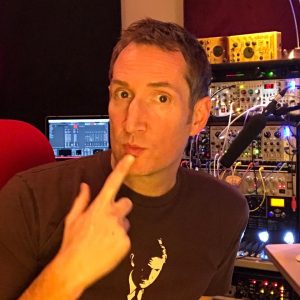 Another returning guest, Jeff Schmidt is back for a very specific reason: He is producing some of the biggest and most successful podcasts available. Jeff is atop-tier radio imaging producer and sound designer based in the Bay Area. Most recently, as I mentioned, he's focused on podcast production. In this "new" podcast realm he has produced DR. DEATH, DIRTY JOHN, FEAR, OVER MY DEAD BODY, IMAGINED LIFE, GLADIATOR, The "INSIDE" shows, well...I could go on and on.
I wanted to get a deep look at what goes into the creation of these high-production-value shows that have simply blown up in the last 3 to 5 years. And, in my opinion, it's only been in the last 1 to 3 years that have seen podcasts finally become ubiquitous. I try to discuss it all from how he started to the workload and the money and the general process from start to finish. I found it all very interesting and hope you do too!
Be sure to check out the Show Notes page for this one for links and plenty of audio!
Another returning guest, Jeff Schmidt is back for a very specific reason: He is producing some of the biggest and most successful podcasts available. Jeff is atop-tier radio imaging producer and sound designer based in the Bay Area. Most recently, as I mentioned, he's focused on podcast production. In this "new" podcast realm he has produced DR. DEATH, DIRTY JOHN, FEAR, OVER MY DEAD BODY, IMAGINED LIFE, GLADIATOR, The "INSIDE" shows, well...I could go on and on.
I wanted to get a deep look at what goes into the creation of these high-production-value shows that have simply blown up in the last 3 to 5 years. And, in my opinion, it's only been in the last 1 to 3 years that have seen podcasts finally become ubiquitous. I try to discuss it all from how he started to the workload and the money and the general process from start to finish. I found it all very interesting and hope you do too!
Be sure to check out the Show Notes page for this one for links and plenty of audio!
-Watch on Youtube-
Transcript
80 min read • 11,994 words
ANNC: This is The Producers Podcast. Featuring the most respected international talent in the world of audio production and voiceover. TV, radio, film, and more. In-depth interviews and industry insights, putting you on the inside. Learn more at ryandreen.com. The Producers Podcast. With Ryan Dreen.
RYAN: Hello, I, thank you so much for checking out the show. Jeff Schmidt is the guest, and yes, he is returning. there will be a show notes page. I'll tell you about that in a minute. But first, hey, if you wanted to rate and/or review this podcast wherever you get your podcasts, that would be totally cool. It might be literally as simple as hitting one of the star denotations. Hopefully it's 5 stars, if you know what I'm saying. But whatever, I'm not gonna tell you how to rate or review it, but I would appreciate it if you did it. There is a show notes page for this show, and it is going to contain a lot of podcast audio. So yes, this is a podcast about producing podcasts. I don't know if I'm like, you know, breaking some law of time or space, but that's happening today. If you're a voice talent or radio imaging producer, this really isn't exactly the same show that I always do. I think it'll be very fascinating. I just wanted to give you fair warning up front that you're not waiting for the guy who produces radio imaging to tell you more about it, or the voiceover artist to tell you how to become a better voiceover artist. That's not gonna happen today. However, Jeff is a guy who produces top-tier radio imaging. He's been doing that for quite a long time. I'm one of the best in the business. He produces sound design for radio imaging. He's worked in the video game industry. Basically, if it's audio, he's worked in it. But for the last few years, Jeff Schmidt has been working in the podcast world for some of the biggest companies, making some of the biggest podcasts and doing really high production value work. And I wanted to feature it. He's got plenty of credits. I'll list a few. He's done like 15 shows. Dr. Death was actually the show that got me hooked on this new world of podcasts. Jeff produced that one. Dirty John was a real big one that became a very success— a highly well-received TV show as well. But that's a monster podcast. Fear, Gladiator, Imagined Life, Inside Jaws, Inside The Exorcist, Inside Psycho. I know he's mentioned a few times he's pretty proud of that. The Undercovers. Business Wars, he helped start that podcast, but we'll talk about that in the show. Anyway, more about Jeff at jeff-schmidt.com. I will have that link, other links, all the audio on the show notes page. And to start, I'm gonna hit you with 3 samples, and not even to, you know, sort of promote these shows, as it is just to let you get an idea if you're not totally familiar with what's happening in this type of production. Just to give you a little idea of what's going into these shows. There's a lot of elements, a lot happening. So 3 in a row, about 30-second bits. We'll keep it short. But I think this pretty well highlights and demonstrates what Jeff is doing regularly now with some of these great podcast shows. And after the samples here, we'll bring on the one and the only Jeff Schmidt. He was saying, ah, there's so much blood I can't see. Kyle Kissinger was one of the nurses in the operating room that morning. He'd worked with Dr. Duntsch the day before and was already starting to wonder how good a surgeon he was. So he was using one of the scrub techs from our hospital, and so he just keeps telling her, suck more, suck more, get that blood out of there, I can't see. There was a lot of blood, way more than there should have been. It was approaching 0300, the only time that mattered, the time when everything goes kinetic. That's when the birds land a few hundred feet from a Taliban outpost. That's when Jason's Stone and his team engage the enemy. That's when the shots ring out and the people die. Stand by for a landing. Go, go, go! These operations work fast. A silver SUV pulls up alongside them. What's up now? Someone shouts. Followed by the N-word. There are 5 shots, shattered glass, clicks of an empty revolver, chaos. Operator 219, what is the location of your emergency? there's actually just a shooting.
RYAN: My guest today, Jeff Schmidt, who I will bring on here in a moment, is, is one of my favorites. Everybody knows that for a lot of reasons, but he gave me a lot of content from a lot of podcasts that he produces, so I created a Ryan Dream demo from those. So I don't know if it did you justice or not, but Jeff, thank you so much for coming on for a very special edition of The Producers Podcast.
JEFF: Thanks, Ryan. It's great to be here. And the best part of what you did is I haven't heard what you've done, so I can't help but love it. Yeah, I know.
RYAN: That's the best part. I will do this later and, you're helpless.
JEFF: Totally.
RYAN: Now, I, I, you'll, you'll trust me enough to know I won't have at least just slaughtered your work. I just might be using shorter bits than Some people would, but anyway, let me say this right out of the gate. I know I said it in my intro, but you did give me a lot of great samples and I've posted everything you gave me on my site so they can listen in full to the samples that you gave, which then of course will make them wanna go become an addict for podcasts like I am now. So just wanna get that out there as well. So thanks for that. Thanks for handing me all that great audio.
JEFF: Yeah, yeah. I mean, the challenge for me was like knowing that your audience and this podcast, which I have loved from the very beginning, was aimed at people who were imaging producers and voiceover people for radio mostly. And that this is not that. And I started evaluating the work and like, I'm like, oh, this is cool, but is it gonna be cool to someone who's like me in my other life, you know, where I'm an imaging guy? So it's like, I'm starting to try to filter this stuff out. It's like, oh wait, what am I doing? You know, so it'd be interesting to hear what you've picked and sliced together.
RYAN: Yeah, and I can't wait to hear the feedback. Now, boy, this is something I'll get to a little later in the show, but just the, It's just the colossal increase. The whole industry has just blown up very recently too. But again, I don't want to get ahead of myself. So I listed all of the shows that— sorry, I said all of the shows that you handed me audio for, and those are posted on my site. You've done more. And I will tell you first, the podcast that got me addicted, I don't know if it'll surprise you or not, was Dr. Death.
JEFF: Yeah.
RYAN: That is the one that got me.
JEFF: Yeah, it doesn't surprise me at all. That was a great show. I mean, okay. Yeah, you're not alone in that either. That converted a lot of people who were like, did I never listen to First? I'd never listened to anything before, but this was just so gripping from the get-go and all the way through. Yeah.
RYAN: And that got people. So that makes sense to me. Just a— it was a new world. But before, again, before I really get into the nitty-gritty, do you have a favorite I don't know if it's something you produced or not, but do you just simply have a favorite podcast that you've ever listened to?
JEFF: Well, out of the stuff here, look, we're gonna talk plenty about my work, so let me just point out some things that I thought, and I'll just say right up front, it took a long time for me to kind of get into this space because for the longest time it had been dominated, it is still dominated by a public radio approach, and public radio has been doing this kind of storytelling for a very long time, so they've got a really big jump on the storytelling aspect of it. What I've always felt was they never really had an aesthetic sense that appealed to another audience, right?
RYAN: Mm-hmm.
JEFF: And I was having this revelation along with a lot of other people at the same time, and so we've kind of like found each other in a way and started making stuff. And so I was not a fan of podcasts, even though I knew I should be, because it was like audio, and I'm an audio guy, and I should really like this more. So the first one that really hooked me, really early on was a public radio show called Radiolab, which was stunning in what they did with sound and how they cut tape, cut interviews. The editing was just, it was so hyper-contemporary for public radio, I was blown away. And that was my first ever binge, and that was back in probably '07, '08, so this was a decade ago. And I binged that.
RYAN: I was gonna say Radiolab is famous for being one of just way ahead of its time, way ahead.
JEFF: Yeah, yeah, yeah. And I fell away from it in recent years, mainly because it's kind of, after you read a sense— after you reach a level with a project like that, I think it kind of starts— the original intent was one thing, and then it kind of had to morph to stay going on into other things, and plus my interest kind of frayed too.
RYAN: Yeah.
JEFF: But that was the first one. And then most recently, within the past couple of years, the one that really caught me off guard was Mogul by Gimlet, which was the story— it's kind of a true crime story, but it's the story of Chris Lighty, who is, if you're a hip-hop fan, he was instrumental in East Coast hip-hop about launching. He was there at the very beginning. He was there with all the Plain Players. And he ended up killing himself. And that's what the story's about, is like, 'cause there's people saying, did he really do that? Or was he killed? And the way it was produced, the way it was addressed, the way it was handled, the voices used, the music, how— everything about it, I thought was great. Like, this is the kind of— like, I would've loved to have worked on that show.
RYAN: Mm-hmm.
JEFF: It was just hyper-contemporary, but also, it brought a journalist quality to it, like the stuff— like Dr. Death, for example. There's real journalism there. But there's also style. It doesn't mean that it has to be dry. It doesn't mean that it has to be— you know, that show had swag. And that was the first one I heard. It was just like, this is kind of journalism with a new edge on it. Totally cool.
RYAN: Yeah.
JEFF: And then just one more I'll mention, 'cause I love this show too, the first minute I heard it, and it's since kind of blown up and become— it's kind of— it's got radio roots now, but Disgraced Land, which is basically true crime and rock and roll. Like, how can you hate that? And the guy, Jake Brennan, like, the first time I heard that show, I reached out to him. I'm like, dude— 'cause it was kind of rough, you know, at first. It was like the writing was a little rough, and the production production was a little rough, but he had swag and he had attitude and he had the right delivery and he had the right ideas. And I just reached out to him like, if you ever, ever want somebody to work with us on you, I'm here. And he was a big fan of Dirty John, which I had worked on. So we had kept in touch.
RYAN: Mm-hmm.
JEFF: But I reached out to many people. I reached out to Fred Jacobs, US radio consultant. I reached out to Dave Biesing. I reached out to Chris— I forget his name. Chris Peterson at iHeart who was running their podcast division. I was like, you need to listen to this guy. Yeah. And now he's—
RYAN: boy, and they got big fast, right?
JEFF: Oh yeah.
RYAN: With that acquisition.
JEFF: Yeah. And then, and then, and then he's now, he's now he's doing a development deal with iHeart. He's, he's running multiple shows. So, yeah, this, this space is going crazy right now.
RYAN: Yeah. I mean, well, I work for a company that's owned by Westwood One. And of course I, I think I actually just had a meeting and Westwood One is somewhere in the ballpark of 5th in overall downloads, but they have recently announced their partnership with Wondery, which seems really exciting. And I know that you have a lot of ties with Wondery.
JEFF: Yeah, yeah, I do a lot of work with them. Yep.
RYAN: Right. I feel like for me, there's— it's weird because I didn't get into it as early as you did. I really started my podcast, and I'm not gonna lie, I went almost a decade and just ignored everything else.
JEFF: Yeah, no, that's very funny.
RYAN: Terrible, terrible thing to say.
JEFF: No, it's not. No, you had an idea and you were doing a show. It doesn't mean you have to be committed to the medium, right?
RYAN: To the medium?
JEFF: Yeah. Yeah, it doesn't, you know, I don't know. Well, to me— Well, I mean, just like, you bring up a good point. I just wanna make this one thing, 'cause I saw this with radio people a lot. There are a lot of radio people who are radio people. They're not audio people. They're radio people, right? And there are a lot of podcasters and podcast people who are podcast people. They're not audio people, they're podcast people.
RYAN: And that's different.
JEFF: And so you had a show, you had a show idea, and you were really early. And I think I reached out to you really early on. It's like, you're like reviving the old Rap Magazine, but it's like live and in real time and contemporary, and you can hear people. And like, it's like, yeah, it's so exciting. And that doesn't commit you to like liking every single thing that's put out and called a podcast. Like, no.
RYAN: Yeah, that's true. That's true. But, well, it definitely, it took me a while, but I was gonna say, So, I mentioned Dr. Death was the one that got me. Dirty John, what a huge success with that. And I do wanna get specific on some of your podcasts. And you might've already answered this, but I did write this question down specifically this way. In a nutshell, what would you say describes the podcast world, not as it relates to radio, but as a bird's-eye view?
JEFF: Yeah.
RYAN: On this space from an audio standpoint, how do you describe the podcast world today? Yeah, it's a tough one. Overarching.
JEFF: Yeah, yeah. I mean, it's— here's the thing. I think the fact that you and I are both technically podcasters, but our things are completely different. You know, podcasting, again, as a medium, it's just a way of delivering an audio file into a feed over the internet. That's technically all it is. Just like AM/FM radio is just about transmitting signals over the air to a from a transmitter to a receiver, that's radio.
RYAN: It's a technology term, really.
JEFF: Yeah, yeah, totally. It's a method of delivery, it's a medium. If you're talking to me about audio, like even when podcasting was blowing up, you know, after Serial in 2015, I still felt, and I know people that I'm now working with felt, that there was still, that was huge, but it still didn't do everything it could, and I think one of the things that Marc and I, Marc Ramsey and I connected over was the basic idea that you've got 2 speakers people's ears. Why are you not utilizing everything that that has to offer? And this came out of our frustration with broadcast radio. It's like, you claim you're audio, but you're not doing audio. You're not using audio. You're just putting a voice on and maybe a music bed and calling it a day. It's like there's a world of sound that you could tap into to tell stories, to draw connections, to immerse people. And we weren't hearing the kind of stuff that we thought was possible.
RYAN: Yeah.
JEFF: That's really how it started for us. I think we're still yearning for— I still am— for doing more. I still think there's room to do more.
RYAN: Yes!
JEFF: For me, it's still very young. Obviously, there's crazy money rushing into it, which means people are going to make a lot of dumb decisions. Dumb not in that they're trying to make money, but they're going to let money influence things more than just the thing of it, and that can always lead things astray. But I think there's still enough people, and the barrier to entry is still low, super low. So you're still gonna have indie podcasts. You're still gonna have somebody like you who has an interest and a passion for a subject and just does this for the— like you told me from very early on when I wanted to advertise on your podcast, you're like, I'm kind of just doing this for the love, but if you want to do some kind of swap or something— it wasn't a business for you.
RYAN: Yeah. Right?
JEFF: That'll still exist, but increasingly more and more people are gonna wanna turn it into some kind of, they're gonna wanna get paid for their effort 'cause this shit's hard. I'll just say that right out front. It's not easy. So, yeah.
RYAN: I think your answer is great. I mean, really it does come down to storytelling, I think, overarching. And that is a major difference from what, I mean, even spoken word radio is still just very in the moment. One human, maybe 2, maybe 3, but talking in the moment, not, like you said, not utilizing all the realms that that audio can be utilizing.
JEFF: Yeah, I think podcasts, you know, I know just having been in broadcast radio for long enough to know that you can't do this on the radio, not on a commercial station that needs to do what it needs to do, the cost of the license and all that. The business doesn't support that. But in an on-demand field, it can, right? There's— it's much more likely to get something like that supported and paid for than you ever could on broadcast.
RYAN: You're an audio guy. I mean, I know I'm not actually D-anything you. I say that in the highest of praise. You know, you're not a radio programmer, right? But I'm gonna ask you the question. I feel like as podcasting grows and grows, it's possible a format could be launched You know, where literally, you know, an iHeart could just start airing podcasts on a format and it could pop up in markets.
JEFF: Yeah, I mean, it started, I mean, yeah, there was back when podcasting before Serial, like there was a station here in San Francisco called KYOU and they turned it into all podcasts all the time. It was basically just a flanker AM station. This was probably back in '03, '04, something like that. And yeah, that was edgy at the time. They just, I think it was Clear Channel at the time that just had a, Or maybe it was CBS. Oh, it was CBS, or with Viacom, or whoever it was at the time. And they just ran podcasts. And, you know, that was— the content was really bad then, mostly. It was public radio and then a big steaming pile of junk, mostly.
RYAN: Yes, so that was 15 years too early.
JEFF: Yeah.
RYAN: You know, that was like 15 years too early. But now with the— yeah.
JEFF: Yeah, I mean, with Inside— no, Inside Psycho, for example, the thing that Mark and I did, that was picked up by iHeart, and they aired that on like 40 or 50 AM stations for Halloween one year. That was like the year after we made it. And then the thing that you just mentioned earlier, Wondery just partnered with Westwood One, and they're doing Sports Wars, which is one of their shows. I didn't work on that, but that's gonna get broadcast on commercial stations. So yeah, and I think iHeart's model is very much about the cross-pollination of like, how can we take— you know, they bought the HowStuffWorks works company who are experts at making desirable content in on-demand, and iHeart, who had no experience with that at all, really. So they bought talent, brought it in-house, which was smart.
RYAN: Yeah. And from what I understand, that made them the number 2 podcasting company in the world.
JEFF: Well, not only that, it was that, yeah, that and all the, you know, 'cause when you look at the number of active shows they have, they listed over like 600 shows, right?
RYAN: Yeah.
JEFF: So it's just mere tonnage. Whereas you look at some of these NPR, groups like WNYC or even Serial, This American Life, they have 3 shows and they're right up there, right? Right up the same—
RYAN: With 3 shows they do what iHeart might do with 500.
JEFF: Yeah, yeah, yeah. So it's like there's a tonnage thing and that's commercial radio's kind of model, and it's kind of a gaming of the system because they have a lot of morning shows posting up their bits of the day and that's called a podcast. Okay, fine, whatever. If they can monetize it, then all the more merry for them. That's not the game I'm playing, but that's certainly available to them.
RYAN: No, I've seen your work, man. I've heard your work, man. Yeah. So let me pivot a little bit here. And one of the things that I wanted to focus on here was the work that you are doing, because you are a hugely experienced radio imaging producer. You also create sound that gets used in radio imaging. I've been using it for, I can almost say, decades now at this point. But, there are humongous differences between what you do when producing podcasts, as people heard with the samples I played, or if they're on my site, versus what you do when you're a radio imaging producer. For those that want to get— those that want to transition, that want to get into this world, this space of producing these high-value podcasts, something that you would tell people you immediately have to stop doing X, Y, and Z, perhaps?
JEFF: To do the kind of work that I'm doing, or just to get in podcasting?
RYAN: Sure. Just, no, no, to take your chops and, you know, say you're a great radio imaging producer, what are you probably gonna have to forget to dive into this podcast world?
JEFF: Well, I'm assuming if, and I think great radio imaging producers have this already, I think instead of forgetting things, there's something they would need to amplify. There's other things you can turn down, like, you know, you don't need everything to be so loud, compression is, Compression, you don't need to blast, you know, listening to something for 40 minutes. Imagine listening to how you produce a promo for 40 minutes. Like, no one would ever— right? No one could ever bear listening to that.
RYAN: Yeah.
JEFF: So you really need to tone everything way down. And that doesn't make it less cool, it makes it more artful. And that's the thing you need. That's one of the things you need to gain is that kind of knowledge. The second, if you don't already have it, is a narrative sense. And I don't necessarily mean you have to have— you don't have to have screenwriting chops. necessarily, but you have to kind of have a feel for story and narrative, I think, and how to score for emotion, knowing what to score. Like, these are all things, and this can come not from taking a class or not from, you know, subscribing to something, but literally just paying attention to the media you like, how it's produced, how it's developed, why you're feeling certain things at certain times and not others, or why you think you're feeling something and it's not quite obvious, and usually it has to do with how things are produced.
RYAN: Yeah.
JEFF: And so it would be that kind of thing. That's really the most important. And I think one of the things that I've— the reason I'm getting a lot of work, I think, with this is because, while I don't necessarily have an aptitude, I couldn't take a test about storytelling and pass all the quiz, right? I have an instinct for it. And I don't think that makes me special. I just think I do because I've often throughout the years had a more cinematic way of thinking about this stuff, even with promos. And we say theater of the mind and wanting to tell a story with imaging and all that stuff. You know, if you've ever approached your imaging that way, I think this is a reasonable thing for you to think about looking into.
RYAN: Mm-hmm.
JEFF: And I've heard a few producers be able to do this. Can you tell a story with sound? Whether it be music hooks, and I mean, like, a real story, not like, you know, I mean, the goofy sitcom stuff that radio does a lot, that's a start. It's not, you know, but if you had to like literally like tell one of these stories where there's people's lives on the line, and they've been horribly injured, or like you were talking about Dr. Death, it's like there was an amazing amount, as much as I was able to push the boundary of what that journalism could sound like, I still had to be respectful of the fact that people died. There were still people alive that were suffering the wrath of what had happened.
RYAN: Yeah.
JEFF: And that they were talking earnestly, and you have to have a sense sensitivity for that. So it's not— you have to— so if the thing to drop is get out of promo brain, get out of trailer brain, get out of like loud, get their attention. Like, you've already got their attention. They pressed play. Now keep earning it every second. And that's the switch, right? And it's not by throwing things louder, bigger, faster, even though some of the stuff I sent you is all that. You know, that stuff exists within a much larger framework, 40-minute shows, and there's maybe 3 minutes of that kind of stuff.
RYAN: Yeah.
JEFF: So, context.
RYAN: Something that stood out to me is the use of silence, or letting things breathe. While even in radio imaging, it's a great comedic tool to bring— or, you know, it's a punctuation mark in a promo to let something go silent. We've talked about that before on this show. Silence is huge. But, you know, half a second, 1 second, 2 seconds. But producing these podcasts where you have to have that sensibility to know that, all right, something was said that we need to give everybody a moment here. I feel like that might have been tough at first, you know?
JEFF: Oh, totally. Yeah, yeah. You know, I think the very first thing I did with Mark, you know, the first episode of Inside Psycho was the first thing we did. And I was— I still had radio brain. And so it was very— I was like, you know, cutting the stuff together really quickly to keep pace moving, keep it moving, keep it moving, keep it moving. And I still feel that way. I still feel like, you know, silence has to be earned, not just thrown in because— like, it really has to be earned. You have to really do something that demands it. merits me taking a breath and going, yeah, that was important enough for me to just reflect on. So that door swings both ways. You can put silence in where it's too much and not needed, and then it's just like, why am I hearing silence now? Versus, I really needed to let that kind of hang for a bit and sink in. So that was definitely something I came at it at first with a very much, you know, the radio quick-cut brain.
RYAN: And another thing which leads— which is connected to that, You know, in radio, you're producing a promo, it's a concert promo, you have a few seconds of the hook, but you're moving through fast. You know, a lot of bumper music is getting used, thematic music in these podcasts. And I noticed that if I were producing some of these, I probably wouldn't have let that sort of theme music in transition last so long, but it was correct. So, I think there's also a sensibility there, not necessarily silence, but all the elements that go into this, you have to not be afraid to— Again, give people moments and know how long your transitional music is. That's got to be kind of a tough thing to deal with as well.
JEFF: It's tough because, you know what it is? It's subjective. You know, so I work with a bunch of different people, and everybody has— everybody I work with literally has a different sensibility about this. So, where I'm working with Mark, you know, one of Mark's notes is like, a little bit more of a beat there, more of a beat there, a little bit more of a beat, right? In other words, when he says beat, he wants more space. You know, he wants things spaced out.
RYAN: Yeah.
JEFF: And when I'm working on, you know, Dr. Death, for example, notes I would get back, close up that gap, close up that gap, close up that gap, right? So there's— and it was like, neither one of them are right. It's just that's what we're doing on this project, right? We're gonna tighten these things up over here, and we're gonna let things breathe over here. And they cross-pollinate. I mean, it's not a hard, fast rule. And you really just have to be able to sit back and listen to it and go like, how is this making me feel? And it's hard in the moment when you're producing it because you're producing it minute by minute, second by second, to get a sense.
RYAN: Yeah.
JEFF: Which is why you have to kind of do it and then give it some space and then come back and listen to it as a listener might from beginning to end. And then you start seeing like, wow, that tight cut really felt great when I was editing, but now it just like completely didn't leave me enough time to think about the thing that just happened. So I need to put some more space in there. And that's the crucial part of being able to go back and kind of feel it. Rather than just this edit, this edit, this edit, this edit.
RYAN: And all of this talk, especially when you talked about the different people you're working with and the sensibilities of everybody that's different, I've got to know the actual process here. And maybe we can talk about it in terms of one episode, and let's just say the episode lasts 45 minutes. So, yeah, I know this is averages, but how long does it take to complete one 45-minute episode of one of these, again, high-value, high-production-value podcasts? from the moment you get told to go to the last note until you're bouncing final mix?
JEFF: Well, so let me divide this into 2 things, because I work on 2 kinds of shows. So say, for example, Dr. Death, Dirty John, Gladiator. Those are what are called an investigative series, right? So there's a reporter that goes out and interviews a lot of people and gets a lot of interview tape that comes back. And they have a sense of what the story is, but based on the interviews they get, that can totally shape the story direction, right? So there's those kind of shows. Those kind of shows literally are months in the making. They take— I will get, for example, I get an assembly, what's called an assembly. So that's literally narration, and I'll get the script, I'll get the narration all laid out on a Pro Tools track with all the different interview elements laid out in order. So it's a linear assembly of the episode. Right.
RYAN: They're giving you this though. They're giving you these stems already?
JEFF: Yeah.
RYAN: Oh wow, okay, that's a good start.
JEFF: Yeah, well, not all of the things I work on start that way, but that one, like those shows with the— those shows I just mentioned do. That's the way they do. And it really is because they don't need me spinning wheels, churning out tape like that. They want me designing, right? So then—
RYAN: Yeah, that is not the highest and best use for you.
JEFF: Yeah, right. It's not Haboo. You're right. You're one of the family. I forgot about that.
RYAN: Yeah.
JEFF: Totally inside joke.
RYAN: Let's leave it there.
JEFF: Yeah, yeah. So those shows, all right, so they're months in the making because they're like— so I'm not involved in the reporting and all that kind of stuff. So once it eventually gets to me, once I get an episode, right, it might take me— early episodes where we don't have a real aesthetic Carved out, or when I'm still trying to figure out what the aesthetic is, that will take, you know, that will take days, sometimes a week or more, just trying to figure out what is the aesthetic of this series. And I'll try a bunch of stuff, and I'll put together, you know, a completed version of that episode, kick it back. 2 things happen at that point. One, they realize, okay, this story isn't what we thought, or that tape isn't as good as we thought, or our interviewer needs to be coached a little bit, or there's a bunch of stuff that gets considered.
RYAN: Right.
JEFF: In addition to, like, what did Jeff do, right? So I would say probably 70% of the notes I get back on all this— those kind of shows, initially, are all about the story. We're killing this section, we're adding a new section, we're moving this section back here, we're taking a section from Act 3 and moving it to Act 1, or we're kicking it to another episode. Like, all that kind of structural stuff that changes. So these take months, truthfully. I couldn't put the number of hours— I could, actually. I started tracking time on those.
RYAN: Mm-hmm.
JEFF: But they're the toughest because From series to series, they're completely different. You know, I worked on Gladiator pretty much, and I only had 6 weeks to do it because I got pulled into it last minute. And so I was able to do that in 6 weeks, but I already had a feel for what that should be. One I just— I'm working on now is called The Shrink Next Door. It's like, it took me forever to kind of get a feel for what this should be because it's kind of a— it's not really genre, right? So it kind of defied—
RYAN: Yeah.
JEFF: Easy answers. The other project— go ahead, I'm sorry. I was just gonna say the other projects I work on— Yeah, let me— Were they— oh, they come to me already scripted. So, I know that the stuff I get is locked. And then that stuff takes about— at the high-value stuff, that stuff takes between 20 and 30 hours to do an episode of that.
RYAN: Okay. Okay. So, in other words, it's way more dialed in by the time it gets to you than the first example.
JEFF: Yep.
RYAN: And really, the notes you're gonna get back are pretty much on everything you're doing.
JEFF: Yes, it's almost exclusively. I mean, not that there isn't story notes, occasionally there is, but that's like all the stuff with Mark Ramsey, for example. He scripts it, he turns his script in to whoever our partner is, our publishing partner. If it's Wondery, he turns it into Wondery, and they might make notes on the script. But then once the notes are done on the script, Mark cuts it, he cuts all the narration, or we get all the voiceover cut, and then it comes to me, and I know that content, it's content locked. So I can just go to town on it. Whereas the other stuff is much more iterative and it's much more time-consuming.
RYAN: First, let me ask about the actual content, the elements that you're using within the show. So you get, you know, your narrator is whoever it is, whether they wrote the show and they're actually narrating it themselves, or they've hired somebody, whatever. But you get all the voices. We obviously know where that comes from. Music themes. any of that stuff? What do you have to do with all that?
JEFF: Yeah, pretty much it's always— well, on the miniseries, what I mean— well, to answer your question, it's all on me, mostly. On the miniseries we've been working on lately, there's new people at Wondery on those, and they have connections to— they used to license music, so we're able to license more original music. And there's been budget for that too, so that's becoming an increasingly important thing. I always, on pretty much every series that I've worked on, there's little pieces in there that I've composed, right? It's not like I scored the whole thing, but I use a tremendous amount of music, and there's just no way I could see that any one composer could cover a whole show the way I use music.
RYAN: So— So as far as, especially in some of the earlier shows before there was any real budget for music. Where were you sourcing the music that you used, and how much of it were you actually producing?
JEFF: Yeah. So, for the very first series, Inside Psycho, it was a mix. I had to source royalty-free music, which is available online. You could just find these sites, and you can just pay. And it's usually not very high quality, right? So, I would have to really— I spent a lot of time poking through there trying to find stuff because you can't just go and use regular music. music, as we know, right? You don't have any protection of broadcast radio paying your royalties or your licensing fees. So this is— you're on the hook. If you put a Led Zeppelin song in one of these things, you're going to get sued. So there was that. And then I would— that also made me start literally working on my own stuff, just building little pieces that I could— so I built up a little library working on that show of different pieces. Same thing when I was working on— On the show. Dirty John. A lot of that— Wondery had a music library at the time. They still have it, I think, that I sourced a lot of that stuff from, but I also created a lot of little interstitial stuff myself. And I always would take the library material and I would— the library they were having at the time that had stems, so I could pull out different elements. And so I could get more mileage out of cues that way, but I would also enable me to say, take the guitar part or whatever and strip out everything else, and then I could put in, you know, something that's a little bit closer to the vibe I'm looking for. Like, if it was an ominous thing, but it was just kind of the guitar thing, I could lay in ominous vibes underneath that by using the stems. So I was kind of, in a way, you know, adding to or subtracting from the cues that exist. And that's something I constantly do, even with when the music gets better. So for example, this, this latest show we just did, I'm still working on, we licensed Got a Spell on You. We didn't like— we didn't get the— we couldn't get the original version, the one everybody knows, but it's a very cool version. And it was recorded at a time when it was mixed Beatles style. So there's like vocal on the left and instruments on the right.
RYAN: Oh, yeah.
JEFF: Well, I was able to use that and kind of create a cool different version out of it, right? So there's a lot of that kind of stuff. Exorcist, for example, Inside the Exorcist we did, almost 90% of that was all audio that I created. So there was no library. There was just a few instances of library music that were really necessary for what was called for in the script. So—
RYAN: Having those abilities to manipulate, compose, produce, et cetera, music like that, still probably very important when producing these podcasts?
JEFF: Yeah, I think, you know, one of the things I think radio imaging people tend to think about music is they tend to think rhythmically. You know, they tend to think about things on the beat. And where the 4 is, where the 1 is. And that's important, like knowing where— but it's also important knowing where the keys are. Like where—
RYAN: Mm-hmm.
JEFF: Oh, when you're leaving this— when I have to, like, for example, I'll cut music a lot. And sometimes the music doesn't resolve the way you want it to, right? You want this music to end at a certain point, and the cue just doesn't. It just doesn't end. Sometimes it'll fade, or it'll end on the tonic, but you want to leave us some kind of suspended feeling there. Well, you have to go find the suspended chord in that progression and find a way to end on that and then make it feel and sound natural. And you do that by instrumenting around it. You might have to add elements to it to make it feel like it naturally goes there. So that kind of thing, it definitely helps. And I'm— again, I have like an ear, and I think a lot of radio people probably do have an ear for music that way. They just need to like think about it probably a little bit more specifically or more inherently than just always thinking about things rhythmically, which is kind of what when radio imaging producers talk about, I'm a musical producer, that's really mostly what I've heard is it's mostly very rhythmic. And sometimes it's tonal. Sometimes they'll play a melody or something like that, or they'll have their jingle stuff.
RYAN: Yeah.
JEFF: There are tones or whatever, but scoring musically over a period of a minute and a half, 2 minutes, is a little different. And it requires, I think, a little bit bigger sensitivity to those kind of musical changes.
RYAN: And when these shows are hiring someone like you, the expectation is that you will bring music to the table, I'm assuming. They're not really hiring people that are gonna be like—
JEFF: I mean, I, you know, it's hard to say because I only know what people want when they hire me.
RYAN: Yeah.
JEFF: And I think— well, here's the thing. The space is so young right now, still, despite it kind of booming, that everybody's trying to figure out, like, who has the skills for this. So, you know, just from my experience, like, public radio people have a certain skill set, and that mostly has to do with story structure and that kind of thing. And then there's film composers— pardon me. film composers and television composers and producers and sound designers who have that kind of vibe, but those things don't always necessarily translate into an audio-only format. So, you know, I kind of straddle both worlds, having worked in commercial radio and then also video games, which ties very closely to film and television.
RYAN: Mm-hmm.
JEFF: So that, I think, puts me in an interesting spot. At least, I'm not saying I'm unique. I'm just saying, like, in the world right now, there isn't a lot of people who kind of have all these sensibilities in one package.
RYAN: Yeah, that's what I'm sensing.
JEFF: That was surprising to me, because I think in radio, radio is so great at just devaluing yourself that you never really think what you do is all that special. That's what radio is great at teaching its employees, like, yeah, you're not that special, I can replace you with anyone.
RYAN: Destroying your self-confidence? Yeah, yeah, yeah.
JEFF: Without me, you'd be digging ditches. That's the kind of radio mentality to keep talent in line. But the truth is, is that the space is, you know, even me, like, for example, I think I reached out to you earlier. I was looking for people, right? I was looking to bring some help on.
RYAN: Yep.
JEFF: And, you know, there's definitely people that I would hire and use, but they're super busy. And then, and mostly they're busy in television and film. And I thought, like, God, I can't be the only radio imaging guy that has this kind of— these sensibilities, or has an instinct for this kind of stuff. I can't be. It just seems dumb. And then there's just the interest. Like, if you're not interested in it, then it doesn't matter what your instincts are, you're never gonna want to do it. But if anybody is interested and they're curious to learn more, I'd love to talk to them about it.
RYAN: Yeah, without question. In fact, I knew you had reached out to me, kind of curious about who might be out there. But it leads me to this. And, you know, we've always talked in complete honest terms, so feel free to withhold specific numbers, but I am interested in the money.
JEFF: Yeah.
RYAN: You know, you say some of these have been hard for you to actually put an actual hour count of your work, but what are we talking about in general? If a series comes to me, they have 10 episodes, they're gonna be, I don't know, 30 to 45 minutes an episode, real high production values. What kind of— what are you looking at here?
JEFF: Well, what are they looking to pay versus what are you looking to earn, right? So you have to have—
RYAN: Yeah.
JEFF: Early on, I mean, it's like I've been doing this since late 2015, I think. And then it was literally like, you know, Marc and I had this idea. We had a 6-minute demo we produced. We pitched it and Wondery picked it up. And they said, okay, can you make 6 30-minute episodes? And we're like, yeah, sure. And they gave us a figure and we're like, Okay, we can— we'll make it work for that. You know, it wasn't covering my day rate, and I know what my day rate is from, you know, working in video games. And I assumed that—
RYAN: Yeah.
JEFF: Okay, that was years ago. I could probably charge more now. But this was about building a body of work and getting some experience with it. Because truthfully, as, you know, as good of a producer as I thought I was or whatever, you know, the stuff I did very early on is, you know, I wouldn't put that out and say now and say, look at what I did.
RYAN: You know? Yeah.
JEFF: There was clearly a lot of growth that I experienced, and I did that by taking work that didn't pay my day rate, right? And it was worth it, because in the end, I think it enabled me to do the work and get a sense of it. And then once I started feeling— once I started working on these true crime shows, or these investigative series, where I started realizing, and I even told people I was working with, it's like, these things are black holes for time and effort. They just keep demanding more. And they were flat rate gigs to start off with. So you got X number of dollars and like the hours could seem endless, right? And eventually I'm just like, yeah, I can't do that. I can't just burn endless hours on these projects. And thankfully I've always, so far I've worked with people who've been appreciative and helpful with that. And so now I'm basically on a situation where On that kind of stuff, I log my hours, I charge for my hours, right? And I'm getting a rate that's commensurate with my experience in it. So, but it didn't start that way. And to net it out for you, yes, I could quit radio tomorrow and it'd be fine. Okay.
RYAN: I was going to say, if you have a— just to give us a real-life example, if you have a radio imaging producer who's probably also on the air, let's be honest, very few people are producing imaging for one station. Yeah, but you're producing for a couple stations, you're on the air, and you're making $50 grand a year.
JEFF: Yep.
RYAN: They live in, I don't know, somewhere in Middle America. What kind of content are they gonna be producing? You know, are you making the average of $100 an episode? You making $1,000 an episode? You know, ballpark it to give people an idea of how much they would probably have to be producing to equate what their gig is.
JEFF: Yeah, I mean, I— that's hard to do because if you're talking about stuff that, like, for example, I've been doing this, like I think I said, like late 2015. I mean, I've worked on maybe 15 shows. I think I've done a total of— this is the high-end stuff, right? Of maybe 100 episodes total, which doesn't sound like a lot if you're doing interview shows. And for interview shows, I would expect you're gonna get bottom nickel-dollar, because interview shows, anybody can edit a nickel— anybody can edit an interview show. That's not to demean it.
RYAN: Yeah.
JEFF: It's just not a high-value thing. But for somebody who wants, you know, the kind of skills that we're talking about, they're gonna have to expect to pay more than that. And so, you know, it could be as little as $500 an episode to $6,000 an episode, depending on where you're at.
RYAN: I was thinking the bottom would be about $500 an episode for the high-level stuff, in that you're going to have hours of work into it and a lot of back and forth. A lot of drafts and edits.
JEFF: Yeah. And you have to be willing to walk away too. Like, I'm just gonna say, like, build a body of work, but also realize that it can be very demanding. And when people want to do shows weekly, that's a big ask. It's a lot of time. So just make sure that you're gonna be compensated for it, but also make sure that you like the work enough to be doing it all the time.
RYAN: You know, and there really is— I've heard both schools of thought on this, but really, in anything in life, if you feel like you want to do it, there's nothing wrong with doing something at a low rate or even for free right out of the gate to build your body of work, and also for yourself to find out if it's something you really want to do. But just don't do that very long.
JEFF: Yeah, I mean, at a certain point, you're either— like, you know, for me, like, it was kind of taking a flyer on working on Inside Psycho when Mark had this thought. And he's like, can you do audio for this? And I'm like, sure. For me, it was a fun challenge to do this because I hadn't heard— I produced it in a way, it's like I hadn't heard anything like this before. I played it for my wife who was kind of a lot of podcasts. She listened to a lot of podcasts. She's like, I haven't heard anything like this before. And so it got picked up and that was kind of encouragement, right? So it's like, okay, we've kind of found something that's kind of cool. Let's do 6 episodes. And I don't need to get my hourly rate. I didn't need to be that strict about it because for me, it was just as much an important to do 6 episodes, get them out into the world, have a body of work that I could point to. and, and, but here's where it gets more difficult. That was kind of, it— I wouldn't say it's uncommon, but it doesn't happen a lot where people are going to put something out and then a major network's going to want to fund you to make it. There's a lot of people, a tremendous amount of people doing really good work in the space, that are not getting paid what they're— In fact, this is a big thing with this company that's just launched called Luminary, where they've got this big war chest. They've got all this VC money that they're going to spend on talent. Some big-name talent are going over there. They're going to put all their podcasts behind a paywall because Luminary is offering them pretty attractive rates to produce exclusive content. They're saying, look, I've toiled on my show for 4 years. I haven't taken a profit. I'm putting in 40 hours a week on it, plus keeping a day job. People are putting in a lot of time on stuff because it's a passion project, but sooner or later, you've got to eat. It's a tough space. There's no guarantee that even just because you're good that you're going to get the break. I mean, it's kind of like music in a way.
RYAN: Yeah.
JEFF: It's like some stars just break through. It doesn't mean that they're the most talented. They just happened to have the right thing at the right time, and so luck plays a good part of it. I certainly count myself as a recipient of that. I mean, do I have talent? Of course. I wouldn't keep getting work if I didn't have some sense of what this is. But, you know, it was lucky that Mark and I had this thing at just the right time when somebody was looking for something different, right? And that's how it kind of started. So, you can't discount luck.
RYAN: That brings me to another kind of major thing here, though, is your timing has been pretty perfect for this industry. I've noticed things Well, in fact, you shared the link with me, but I had— I thought I'd seen it. But, you know, Business Wars was a good example of the amount of content, the way shows were getting produced, but also clearly the budgets, because I started hearing music coming up in these shows that they had to pay a lot of money for.
JEFF: Right.
RYAN: So it seems like that's our benchmark here, and anything that's happened really in the last 1 to 3 years is where we've really seen an explosion.
JEFF: Oh, for sure. Yeah. I mean, but it starts prior to that. Things happen behind the scenes and then stuff becomes public. Obviously, Serial launched and that hit the world by storm, but that was being worked on for a year or more behind the scenes. Nobody had heard of that, but still the space was kind of like— And Marc and I, our initial conversation about some of these ideas preexisted Serial. And I remember having a conversation with Marc about the specific idea we wanted to try, and I went and talked to some of my people who work maybe in film and television, and they're like, who's gonna listen to that? Like, nobody listens to stuff. You know, this was late 2014, early 2015, and then Serial hit, and all of a sudden, oh, people do listen to stuff. Holy shit. You know, it's like—
RYAN: Yeah, yeah.
JEFF: And now it's opening up, and the number of people who are looking to do cool stuff in the space has multiplied. And from that, money has poured in. And, you know, that's kind of what's happening.
RYAN: Do you see— so you already kind of mentioned this, that radio would tend to let the money control a lot more of the content than it should. And you mentioned that maybe some dumb decisions get made when money is driving things. But are we gonna be seeing a lot more of that in podcasting because so much more money is getting put into it?
JEFF: Yeah.
RYAN: Okay, so my follow-up would be, is podcasting gonna somehow do it right? Are they gonna somehow not let the monetization control the content?
JEFF: No, of course they will. No, because it's all people. This is all people doing it. Like, you can say radio, but it's ultimately just people, and people behave like people no matter what the circumstance. What gives me hope about podcasting in general as a medium, right, is that it's still— the barrier to entry is still very small. That said, you can make a great show and no one can hear it. So distribution is still king. And if— and the distribution is going to be really gobbled up by the moneyed interests. So eventually this is all going to play out like a record label kind of thing where the labels are going to kind of control what gets on the top of the iTunes charts because of the way that algorithm works. Like it's— there's a way that you get there, right? And it's, and it's not by being an indie podcast, although an indie podcast can get there. Just like you don't need a record deal to be discovered on YouTube, as we've discovered in the last decade, right?
RYAN: Yeah.
JEFF: The internet still exists, and the openness of all that still exists, but the formal money structure that you're talking about will definitely calcify around key publishers putting out content with big distribution platforms, and they will be able to create their own hits based on the size of their network. That's different than saying, just toil away in your basement and have a great idea, and you can make it. Yeah, but not as much.
RYAN: What about the future of consumption? So here's— this is the part that I've been a little worried about lately, and while seeing all of, you know, these much, much larger corporate entities controlling more of the content, for me, I've never paid a dime to listen to a podcast.
JEFF: Yeah.
RYAN: And I'm happy to hear the ads, whatever. And it might remain ad-based, but—
JEFF: Well, you know, you do voice some of them, so yeah, of course you'd want to hear some of those ads.
RYAN: Yeah, I do voice some of the— yeah, I voice probably a lot of it, but, you know, so I guess I'm wondering if the corporate entities might view the entire thing completely different than, you know, radio broadcasters who are, you know, it's obviously an ad-based industry. So I'm just wondering if in the future, are all the great shows gonna suddenly be kind of like a Netflix or an HBO model? Am I gonna have to really pay?
JEFF: It's possible. I think that's still a ways off. Certainly, that's Luminary's—
RYAN: It's a ways off?
JEFF: Yeah, I think Luminary's experimenting with that now, but they're very early in on that. Like you said, there's no market indication that people will pay for this content. It's literally just taken the mainstream, and we're literally just now crossing 50% of citizens having listened to a podcast. I think they're early in, and they may have enough muscle to carve out a space, or at least at least sell the idea to people that you have to pay for exclusive stuff or good stuff. I don't find that that's necessarily a bad thing. I think we certainly know that the stuff we pay for in other media, for example, television, tends to be better.
RYAN: Yeah.
JEFF: Or tends to have a higher production value. They take more risks. I think things liberated from ad-based models are inherently more creative. But that doesn't mean that you can't be creative in an ad-based model.
RYAN: My question was completely stupid, as I just completely discounted SiriusXM. I love SiriusXM. I'm an idiot.
JEFF: No, no, you're not an idiot. It's just there's so many examples of media now that you can't possibly keep up with it all. But I specifically remember 2006, Lou Dickey, the Dickies had just bought Susquehanna, our station in San Francisco. They came rolling into town with their dogs and pony show and doing that. Somebody asked Lou Dickey, 2006, what's your vision to protect the business against SiriusXM? He sat there and goes, look— I'll never forget this. He said, when a family sits down at the end of the month having to write all their checks, I can't see that family writing a check for something that we give them for free.
RYAN: Yeah, wow!
JEFF: Boy, was he wrong!
RYAN: Yeah.
JEFF: Boy, did he miss that boat.
RYAN: I mean—
JEFF: Because not only are they paying for it, that business is more profitable than what he left behind. So—
RYAN: Yeah. Well, and I think they're up to— they've got to be damn near 30 million subscribers, so they're doing something right.
JEFF: Not only that, but all the people that pay for Spotify, and all the people that pay for Pandora, and all the people that pay for Apple Music, all the people that pay for Amazon that get music and videos with their Prime subscription. People are paying for stuff.
RYAN: Yeah.
JEFF: Right?
RYAN: So it's not— You add them all up and Yeah. What are you at, a billion?
JEFF: Yeah, I mean, it's not unreasonable to expect that people would pay. It's just, I don't think it's there yet.
RYAN: So, you know, again, I fumbled through my question, but as I've just been listening to you and thinking about it, not only is it not unreasonable for the best of podcasting to go behind a paywall of some kind, it probably is going to happen. That actually makes sense.
JEFF: It's just a matter of like what the timing is. And truthfully, at this point, you know, let's, you know, 'cause Mark and I are trying to develop a few different ideas and, you know, it's getting harder to get, you know, we both acknowledge that if we started out today doing what we did 3 and a half years ago, we probably wouldn't get a lot of interest.
RYAN: Yes, and that's what I was trying to get to before, that whole, you know, it's really been blowing up in the last 1 to 3 years, but you needed to have started out before that. So what if you started out today?
JEFF: Yeah, well, I mean, without my experience— here's the thing, here's what I can't do. I can't project myself to today without having the experience that I've already gained today, right? So I can't imagine myself 4 years ago today wanting to get into this space, right? Because 4 years ago, 8 years ago, 10 years ago, I picked out a novel that I wanted to adapt for audio, but there was just like no ecosystem at all to be able to support something like that. So it was a pipe dream. and, and so now I'm actually trying to get that done, you know, because there's, there's actually an ecosystem.
RYAN: Yeah, nice.
JEFF: Yeah. so I, I think you just have to, you have to start wherever you are, no matter where you are in life. You have to start where you are, and here's where we are. So if you're just starting, if this is something that really is interesting you, then it really is about picking up the skills, getting some storytelling chops, If you want to do, like, write, you know, don't think about this in terms of like separating all these like film does. They have this— the system of film breaks making of a film into 100, you know, 1,000 different pieces because they have, you know, you've seen the credits for a film, right? Just like every single little chunk of what gets done, there's some specialist that will do that, that one thing, because there's an entire industry supporting that. Well, podcasting is not like that. So you really have to be able to write, or at least understand good writing. You have to be able to know music. You have to be able to produce, create sound design, have a sense for production, and have a sense of mixing, right? Mixing for this kind of format, not necessarily mixing music. So it requires a lot of skills, but you don't have to be like the number one expert at any one of them. You just have to be pretty decent at putting it all together, and a willingness to do it.
RYAN: I think I ultimately— I masterfully led you to the end here with a great piece of advice. You rounded us out perfectly here, Jeff.
JEFF: Fire.
RYAN: Before I forget or let you have a final, final thought, I did make reference to that Forbes article. I really enjoyed it. It's about— it has you in it too, so that's fun.
JEFF: Well, that's why I sent it.
RYAN: Yeah. I'm going to link that on the site. So, I wasn't going to get too deep into that.
JEFF: Yeah, yeah, yeah. It's not like I was just like, oh, here happened this article I found.
RYAN: Yeah, exactly. Here's a random article.
JEFF: I don't know if I'm in it, but I'm gonna send it to you.
RYAN: Well, look at that, I was in it.
JEFF: Yeah, yeah. No, I think that was part of it. Well, it was the discussion of like, how did you know, where does all this start? And it really kind of started with that approach anyway, the approach that Mark and I took and how it kind of became the house style of the Wondery Network was just indicated in that article. That's all.
RYAN: Yeah. And I do think that, that, that style, it probably can save some money by Well, the article talks about how more and more there's this style where the host is sort of playing all the roles and doing a lot more of the heavy lifting. But I really like it. And to me, it's an audiobook meets full theatrical production. And so there's a lot more onus on the talent, for one thing. But it's a great structure. It's a great structure. And Business Wars is one of my favorite podcasts. And I know you helped start that. And then it just became a little too time-consuming for you to keep going with it, from my understanding.
JEFF: Yeah, I mean, I've tried. That was the first one. All I ever agreed to when they pitched me on launching that with them was I said, I'll do the first, what they call arcs. So the first story of 7 episodes. So every 7 episodes, 6 to 7 episodes, they change the focus of what the story is, right? So that first one was Netflix versus Blockbuster versus HBO. So we did that story. And then by the end of the story, I knew I couldn't stay on that series. That's an always-on. I think they're even doing twice a week now, which is crazy to me. Yeah.
RYAN: I can't believe how much content they put out, to be honest.
JEFF: Yeah. No, it's amazing. It's a heavy lift. And I knew that that kind of work wasn't for me, right? So I'm happy to have launched it, proud of the work, but I'm also equally proud of myself to say, I can't do this, I need to jump off.
RYAN: Yeah.
JEFF: And, and I jumped on another weekly show later in the year, this year, Imagine— last, last year, Imagine Life. And, and that was a very heavy lift. And I gave it a try again because there was more components to that that I thought could keep me engaged with it. But at the end of the day, it was again these weekly shows. It was like putting out Putting 30 hours a week into a show, it's a big, big ask, even when they're paying for it. It's a lot of time.
RYAN: You gave me a couple samples from that, by the way, just so people know. That's on the website. I already rattled off the list. Hey, before I wrap it up here, tell everybody the way that you want them to reach out to you nowadays. By the way, I didn't even bring up alien imaging because I wanted to focus 100% on your podcast, Oh yeah, that's fine. I still love Alien Imaging, by the way. I just wanted to tell you, still my favorite. Awesome, appreciate it. So what are the ways you'd like people to reach out to you and find you and see you and touch you?
JEFF: I'm funneling everything to jeff-schmidt.com. That's kind of like home base.
RYAN: Okay, okay, jeff-schmidt.com. Obviously I'll link it on the page, but you don't need to rattle off 15 other websites or everything else.
JEFF: You got it all going there. That's the primary focus of what I'm doing professionally right now.
RYAN: Great. All right, man. How's the day gig real quick? Everything good over there?
JEFF: Yeah. Yep. They keep paying me, so I keep showing up.
RYAN: Excellent. All right. Jeff Schmidt, hey, you're the man. I knew this would be great. I think I only really botched a couple of the questions, so that's good for me. I learned a ton.
JEFF: Well, let's hope I botched fewer answers, but I'm sure I did.
RYAN: Yes, exactly. Yeah, no, anyway, you do excellent work. Jeff Schmidt, thank you so much for being on the show again. Appreciate it.
JEFF: Thanks, Ryan.
ANNC: Visit ryandreen.com to subscribe, contact the show, and listen to every episode. Please rate and review The Producers Podcast on iTunes or on your favorite podcast app. The Producers Podcast with Ryan Dreen.