Episode 112: Mike "Sideshow" Andersen
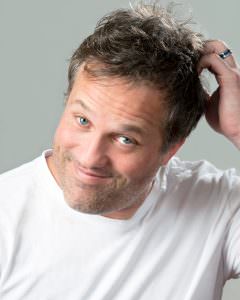 ...OR you might know him as "Sidey." Mike Andersen is the Imaging Director at Triple M in Sydney and the Triple M Network. There are a million reasons why he has been the Imaging MAN there for over 20 years and hopefully you'll hear about a few of those in this show. I guess to put one word on his style I'd go with "Unpredictable". You could say he is quirky, edgy, funny, succinct, interesting and a whole bunch of other descriptors that mean you don't know what you are going to get...ever...in the best way possible. Mike is also a prolific Voiceover artist heard on radio (Triple M), Commercials and TV networks like Channel 7 and FX. Mike is a Rock guy at heart but you'll hear plenty of contemporary things going on in his sound, original writing, and even some old school, brassy, jingly stuff too.
Oh...did I mention award winning? He's won a bunch of Radio/Broadcast awards (which I know from the internet, I didn't bring them up in the show) but he is also the 2016 Benztown Iron Imager, the one head-to-head competition for us imagers.
...OR you might know him as "Sidey." Mike Andersen is the Imaging Director at Triple M in Sydney and the Triple M Network. There are a million reasons why he has been the Imaging MAN there for over 20 years and hopefully you'll hear about a few of those in this show. I guess to put one word on his style I'd go with "Unpredictable". You could say he is quirky, edgy, funny, succinct, interesting and a whole bunch of other descriptors that mean you don't know what you are going to get...ever...in the best way possible. Mike is also a prolific Voiceover artist heard on radio (Triple M), Commercials and TV networks like Channel 7 and FX. Mike is a Rock guy at heart but you'll hear plenty of contemporary things going on in his sound, original writing, and even some old school, brassy, jingly stuff too.
Oh...did I mention award winning? He's won a bunch of Radio/Broadcast awards (which I know from the internet, I didn't bring them up in the show) but he is also the 2016 Benztown Iron Imager, the one head-to-head competition for us imagers.
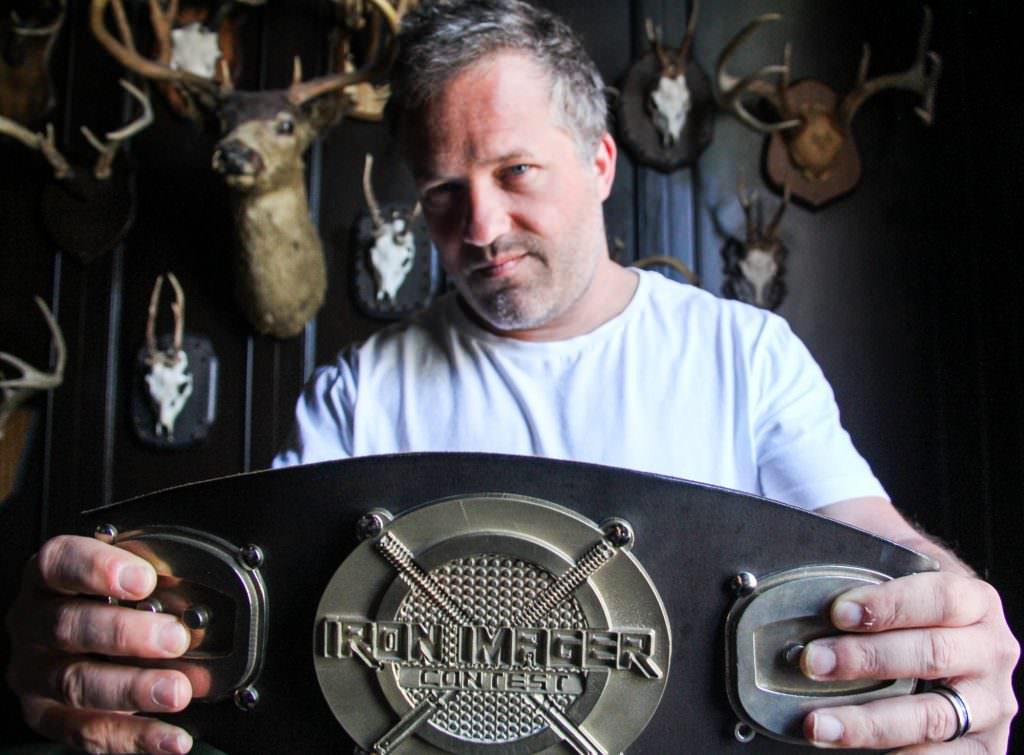 And I am sorry Mike, but I had to post this picture...
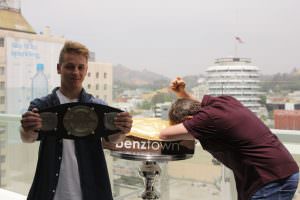 That's Mike being beaten in 2017 by Brad Leask...yep, Australian, Brad Leask. I'm ONLY posting this to backup the opinion that the best Imaging is still coming out of Australia. That's the ONLY reason. ;)
I had a great time learning from him and I appreciate him navigating our 16-hour time difference to get together.
Now, it's time to get to the damn show!
That's Mike being beaten in 2017 by Brad Leask...yep, Australian, Brad Leask. I'm ONLY posting this to backup the opinion that the best Imaging is still coming out of Australia. That's the ONLY reason. ;)
I had a great time learning from him and I appreciate him navigating our 16-hour time difference to get together.
Now, it's time to get to the damn show!Transcript
76 min read • 11,274 words
Announcer: The Producers, featuring the most respected international talent in the world of audio production and voiceover.
Announcer: Radio, TV, film, and online.
Announcer: In-depth interviews and industry insights, putting you on the inside. This is The Producers Podcast with Ryan Dreen.
Ryan: Here we are. Welcome back. Mike Sideshow Anderson is the guest on episode 112. Right out of Sydney, Australia, the image director at Triple M and Triple M Network. I've known of Mike for quite a long time. We've exchanged a few emails. We finally did get to meet in person, so that was awesome. And that really sparked the, yeah, I gotta have that guy on the show. It's way overdue. so really happy that he found some time for me. I want to touch on a couple things real quick, because I am going to play like a big old massive demo from Sidi. I'll call him Mike to kick it off here in just a minute. On the website in the show notes, I'll have more audio from Mike, including this demo that you can listen to again. a little special nugget of audio. It's sort of an Easter egg, if you will. I did place it into the episode. He references this in the episode. You might have to listen for quite a while. If you miss it at the end of the show, yeah, all right, I gave you a little hint. Anyway, it's on the website as well. Again, show notes page, ryandreen.com, should be pretty clear. He has lots of links and lots of audio to enjoy. One thing I wanted to just point out, just kind of highlight, because I'm glad we got to talk about it. For me, I know when I was maybe not even just first starting out, but sort of getting good at imaging, I stopped wanting to stretch my legs so much. And I, you know, I'm like, I'm kind of good at this stuff. What if I wanted to try to make some like fake jingles or just stuff that I wasn't comfortable with? I was almost afraid to do it because it's hard and I might not be good at it, and then they'll think, oh, wait a minute, well, this guy's not really that good. What are we doing here, right? Wrong attitude to have, and Mike talks about that. And in fact, part of his sort of advice to the world deals with that as well. But what you're about to hear in this demo, it's, you know, short of the female voices, I think we're talking almost everything Everything is Mike. Particular attention to be paid to his comedic music jingles that, as he says, he's not a musician, but I beg to differ. Anyway, that'll do it for the intro. I hope you enjoy the episode. Again, right out of Sydney, Australia at Triple M and Triple M Network, the one and the only Mike Sidey Anderson. Music coming out of the speakers. What is it? Rock music. Why rock and roll music was important. Welcome to work. Every hour, nonstop. This is Triple M. Triple M music. Hey, hey! Can't stop the spirit. Come on and get your kicks. Here comes another 40 minutes nonstop Triple M music. Triple M testing the lyrics of your favorite songs. But if you close your eyes, does it almost feel like nothing changed at all?. Hmm, yeah, kind of does. Triple M. This is the Grill Team. I'm singing about the Triple M Grill Team. If this was your ringtone, you'd probably smash your phone right now. Some like Macklemore. Yo, this is Macklemore. Triple M prefers Macklemore less. What? Just Sydney's modern rock. Triple M blah blah blah blah. The cast of The Walking Dead celebrate Christmas. Merry Christmas, everyone! Ho ho! He was a zombie, right? Merry! He was about to Merry Christmas from the M's. Remember the '90s, Beavis? Yeah, the '90s were like cool. hey look, I'm Kurt Cobain. Whoops. Triple M. Turn it up really loud, Triple M rocks. This is what it sounds like when doves cry. Rest in peace. They sound a lot like seagulls, don't they? Prince. Mr. Trump, I want to make America great again. The Death Star will be completed on schedule. We have a lot of work to do. Build that wall! Build that wall! Build that wall! As you wish. Triple M. Well, welcome back to the grill team once again. Good morning, folks. Like a busy porn star waking up with three blokes. Hey guys, it's me, Noodles. I'm from the Offspring. Always good for a bit of Triple M rock. Bitch, you gotta keep. Until the break, you can do it! Triple M rocks. Triple D triple triple M triple D triple M. Struth, mate, what's that thing on your face? Don't look at me. It's my Suzanne Boyle. Let me have a closer look. Oh yeah, just stand back. I'm gonna pop it. Dear God! Get your triple M on, get your triple M on. Everyone that's cool's getting triple M on. We're gonna beat juicy H for the ratings. Come on, come on, everybody. Get your Triple M on! Triple M. Nothing but Sydney's best rock.
Ryan: All right, and, if you didn't enjoy that audio, then you don't have a soul. Or maybe you do have a soul, and that's why you couldn't get down with that. Some of the, the nastiness that is Mike Sidey Sideshow. I'll add in Sidester, Anderson. No, Sidey, I believe, is what most people would refer to you. How you doing, Mike?
Mike Sideshow Andersen: I'm great. Hey, Glenn.
Ryan: Cool.
Mike Sideshow Andersen: Really good.
Ryan: I'm glad you were able to join me. I'm going to probably just refer to you as Mike. I'm less of a nickname guy. I'm more just a, you know, but I know most people know you as Sidey, right? Is that kind of—
Mike Sideshow Andersen: Yeah. Except for you and my mom.
Ryan: Yeah. Okay, great. Me and your mom will— yeah, I'm going to leave that there. In fact, I'm not going to go any farther on your mom topic. We were kind of joking. Now you are right now, you're in Sydney, right? I mean, you were at the Triple M Empire. You are the image director of Triple M Sydney, Triple M Network, all things amazing. But you're actually in the Megaplex right now.
Mike Sideshow Andersen: We are at the Tower of Rock World Square in Sydney.
Ryan: Sydney, not a bad place to live, right?
Mike Sideshow Andersen: No, it's a great place. You know, beautiful harbor, lots of beaches, pretty cruisy people. I grew up here, so I've never had to leave Sydney, which is great. And I've been here at Triple M for 22 years, so there's obviously something good going on.
Ryan: Yeah, that's, you know, one of the few, or well, one of the things I wanna get to, but you are becoming an extreme rarity in this business, which is good. It's great. But let me start with this question. After hearing tons of, so much audio from you over the years, somebody I've wanted, just truly speaking, I've wanted to have you on this show for a long time. You got it. Something's messed up in your brain, I think. So what happened in your life To get you the way you are?
Mike Sideshow Andersen: man, I don't know. I, I think I just, I've always tried to do things a little bit outside the box. And, I've always tried to be a bit of a troublemaker in the station. And, you know, you've always got a list of things that you've got to do day to day. You've got your, your mechanical type stuff and your strategy and your positioners and all that kind of stuff. But then I also like to go a little bit further and just do something a little bit weird. you know, maybe have a bit of fun when the program director goes on holidays. And put something on the air that you might not be allowed to usually. Yeah, but it's just, you know, just generally trying to have a bit of fun with that kind of Aussie larrikin kind of vibe.
Ryan: I've got a lot of questions about the content, actually. I think I'll get to those in a little bit. And of course, I'm joking. You seem like a very well-put-together individual now that I've, I've met you in person. You have a real family. You're a real person. You have, you know, you seem to bathe and all that, but you definitely have a demented side to you. But, you know, maybe we can touch on that a little more in a little bit. Yeah.
Mike Sideshow Andersen: I mean, I would like to think of myself as being a little bit out there, but the reality is that I wish I could be edgier, you know, like I've got my favorite image producers out there who always push the boundaries and go that little bit kind of further, like edgy-wise. But I find that my stuff's almost, it's almost, it might be kind of quirky and stuff, but it always passes that kind of family-friendly grandma or kids in the car kind of test.
Ryan: Yeah, let me get over to that in a little bit. But you just kind of told everyone you're a Sydney guy. You've never had to leave. You've been at just a monster powerhouse of a station for 22 years. What was the first gig in radio? And maybe tell me a couple of the reasons why you've never had to leave Sydney.
Mike Sideshow Andersen: Well, I say I've never left Sydney. I've never left New South Wales, which is the state that Sydney's in. So I grew up on the Central Coast, which is about an hour north of Sydney, and my first job would have doing work experience at the local radio station, which was Coast Rock FM. And when I was doing work experience there, I got a demo together as a writer. And then my first real job in radio was about 3 hours north of Sydney at a place called Taree at Coastal Radio 2RE, where the mountains meet the sea.
Ryan: Nice.
Mike Sideshow Andersen: And I was a copywriter. So yeah, that was my first gig in radio as a copywriter.
Ryan: Oh, really? That's probably— okay, well, let's start, or let's go there. Writing. without that experience in writing, would you be what you are today?
Mike Sideshow Andersen: no, I, I kind of, always wanted to be a writer. Like, I thought, originally I wanted to be like in advertising or a journalist or something, but yeah, once I got into radio and I started writing and started watching the production guys make stuff, I kind of figured out that that was fun and I wanted to do that. So, yeah, but I got in— I got into radio through writing, but then just spent hours in the studio on the weekends figuring out how to press buttons and make stuff.
Ryan: Yeah. What were you working on, technologically speaking, when you first started out in production?
Mike Sideshow Andersen: just a 16-track multitrack tape. reel-to-reel machines. Actual tape.
Ryan: Yeah. Real tape. Yeah.
Mike Sideshow Andersen: Yeah. Yep. that was my first job in production was actually, I had one production job before I got to Triple M. because I'd had, I had, I went to 2 stations as a writer. And then my third job was as production back at Coast Rock. And then I was there for 5 months before I came to Triple M and they had a reel-to-reel. And then when I came here to Triple M in '95, we had a 16-track multitrack tape as well. Wow.
Ryan: So how, how much time in total were you working in radio before you then got to Triple M? We're talking less than a year. We're talking a year or two.
Mike Sideshow Andersen: No, first job was in February '93, and I was in— at Triple M was my 4th station in September '95.
Ryan: Yeah, not bad. That's a good trajectory.
Mike Sideshow Andersen: Yeah.
Ryan: So you get to Triple M then. I mean, like you said, you were still working on tape. Were you able to sort of usher in all the technology that you wanted to along the way, or were you a guy that pushed against it, or were you willing to You know, grab on to whatever you could get?
Mike Sideshow Andersen: Well, these days it's different. These days, you know, you can kind of put in requests and you can get new stuff and they're pretty helpful. But back in the day, it was more like you just got what you got. And I remember it was like 1997 when we rocked up to work on a Monday and we had this new thing called Pro Tools. I think it was Pro Tools 5. And we just— they just stuck it in there and they took the tape machine out and we had to figure out how to use it.
Ryan: Oh, really?
Mike Sideshow Andersen: Yeah.
Ryan: So, learning curve on that, because, it's not that you're that old because you started young, and— but, you know, the, the newer generation doesn't understand the concept of never having been on digital, you know. They don't— that's a much different change than from like going to Audition to Pro Tools. Tell me about that change.
Mike Sideshow Andersen: I guess, for starters, like, everything was so much easier, like, you know, At the time I was making a lot of, you know, commercials for gigs and bands and stuff, and you'd be making music montages and splicing, you know, splicing songs together on a tape. And then suddenly you had Pro Tools and you can like, you know, zoom in and you can, you know, scrub on the audio and see the waveform and stuff. And it made things a lot easier. But there was still like a lot to learn with, you know, plugins and compression and all that and EQ and everything was different because, you know, up until then, in fact, when we had, we first got Pro Tools, I think we were still using outboard gear for a while. And then basically like, you know, because you've got digital, then the workload just gets bigger and bigger and bigger because they expect you to work faster and faster and faster.
Ryan: Yeah.
Mike Sideshow Andersen: And I think back now and like the amount of work that we churn through on a day-to-day basis, you know, day-to-day now, I don't know how we would do back in the '90s. It would have been crazy.
Ryan: Is there anything about producing on tape or, you know, that, that multitrack tape system that you think you're actually able to do better than since the advent of the digital side? It might be a dumb question, but just curious.
Mike Sideshow Andersen: Well, I only really use tape for like The first year and a half to 2 years of my career in production. So back then I was pretty shit anyway.
Ryan: So super basic and you're—
Mike Sideshow Andersen: Yeah. So I would say that, you know, I really didn't start getting the hang of production until probably post-2000, I reckon.
Ryan: Yeah. And you're Pro Tools?
Mike Sideshow Andersen: Definitely nothing I did better on tape. Yeah.
Ryan: Have you been Pro Tools the entire way? Have you ever stretched your legs and gone into other DAWs?
Mike Sideshow Andersen: No, we, we've always had Pro Tools. I've had, I had Cool Edit at one point, but I kind of only used that to like record voice sessions, I think. But I don't even have that anymore. Just everything's in Pro Tools. Yeah.
Ryan: Yeah. I always kept Cool Edit around because it was just so light and fast. So if you just needed to do something really quick, it always seemed, you know, you kind of jump in and out quicker than Pro Tools, but like you, I've long gotten rid of it. I understand that.
Mike Sideshow Andersen: Well, we used to have a system where we had PCs and studio and, and Macs in the studio. And, you know, if you wanted to email something, you had to email it on the PC. So you'd roll the audio into Cool Edit. So you could create an MP3 and send it to somebody, but now everything's on Mac, so I can just shoot an email from the, from the Mac and I don't need the PC at all.
Ryan: I'm sure everything's networked too, so you don't ever have to live record anything anywhere.
Mike Sideshow Andersen: I think that's still a work in progress here, actually. It's something they've been talking about for a while, but we do, we do have network drives and stuff that you can drop everything into, but we still work off our local drives on the Macs.
Ryan: Yeah, it's, you know, there's definitely pluses and minuses. We've got a big SAN here. We've got, you know, 8 different studios and it breaks often and it's a real hassle when it does. And about once, once, maybe once every 6 months or a year, somebody will be like, hey, my entire drive is gone. Oh, that's a shame. You know, it's very difficult. Yeah. So anyway, but when it, when it works, it's very cool. All right. Enough about that.
Mike Sideshow Andersen: Yeah.
Ryan: As an imaging producer that I will just tell you, you don't have to be modest or whatever, your name has come up a lot and people look up to you. They respect your work, truly do. I've had your name brought up to me a lot. We finally got to meet in person, like I said. It was exciting for me. Big respect for your work.
Mike Sideshow Andersen: Well, thanks.
Ryan: But flip that around. Who is it, the work out there that, especially being in Australia, this is becoming a long question, but We also respect the work of producers in Australia, the imaging sounds that come out of Australia. I think people would generally agree that it's some of the best in the world. But flip it around, and, and what are you listening to? Who do you listen to? Who do you look up to? What are some of the stuff that you like?
Mike Sideshow Andersen: well, I guess, I mean, the first person I kind of looked up to was Jeff Thomas because he had my job before me. I mean, there was one guy between me and the guy that hired me was Slash, and, Slash was hired by Jeff Thomas, but I'm basically sitting in Jeff Thomas's in his seat. So big shoes to fill.
Ryan: Yeah.
Mike Sideshow Andersen: And there's always been that kind of, you know, that dream to kind of get your production having that bigger kind of sound. But I don't know if I've ever kind of gone in that way, but I've always had that in the back of my head, that Geoff Thomas kind of, you know, cinematic style. I'm a big fan of that. And then I guess on the other side, the quirky kind of side of— I discovered, you know, Jon Frost a while back and I listen to his stuff all the time and I pick it apart. And, you know, you try to mimic stuff and you try stuff your own. You add your own little kind of little bits and pieces and styles along the way. Here in Australia, we've got a lot of other great guys who are still working. The Nova guys are awesome. I'm a big fan of Ben Ryan up at Nova in Brisbane.
Ryan: Cool.
Mike Sideshow Andersen: He pretty much just does funny shit every day. And, down in Melbourne they've got Matt Dower.
Ryan: Yeah.
Mike Sideshow Andersen: And, then you've got the big— the, the heaps of, massive CHR guys like Konski, right? Matt Niklik. And, you know, a bunch of guys over at the KISS Network as well. So, yeah, there's heaps of stuff to listen to.
Ryan: And again, I— again, be as modest as you want, but I'd love it for you to just be totally honest. Compare the— and maybe you don't have to say what's better, but compare what you hear imaging-wise in Australia versus the States?
Mike Sideshow Andersen: well, it's—
Ryan: and we can talk, we can bring Europe into the picture in a minute, but really just the States versus Australia.
Mike Sideshow Andersen: Yeah, I mean, for starters, there's just so much more variety in the States. Like, here in Australia, we've got one rock station, you know, Triple M is it. We've got, a classic hit station which is, you know, runs pretty minimal imaging, then a bunch of CHR's, and then we've got the smooth, easy listening station. But in America, you've got, you've got your alt-rock and your CHR and your urban and your rhythmic and all the different things. So there's naturally going to be a bit more kind of variety. I like the, the added— the American rock stations have a lot more attitude than we do here in Australia. Like, we are way safer. We do silly stuff, but we never really push the boundaries as far as being edgy. When it comes to CHR, I find that, you know, pretty much across the board around the world, everyone's kind of on par.
Ryan: Yeah.
Mike Sideshow Andersen: You know?
Ryan: From what you hear? Yeah.
Mike Sideshow Andersen: Everybody seems to be doing kind of doing the same kind of thing.
Ryan: Do you think that there is an Australian sound in imaging and an American sound and a European sound? Do you have that perception?
Mike Sideshow Andersen: Yeah, I reckon there would be. Yeah, for sure. I think maybe, maybe the, the English sound, as far as what I've heard with CHR, is, you know, really big and kind of cinematic and, you know, kind of, you know, voiceover guy sounds like they've just stuck a microphone in a cave with a bear.
Ryan: Yeah.
Mike Sideshow Andersen: Here in Australia, it's probably a bit more kind of relaxed and still got the kind of cool production techniques, but with a bit more of a relaxed vibe. And then maybe in America, I mean, just based on the fact that, you know, here in Australia, American voiceovers just sound bigger and kind of exciting.
Ryan: And, you know, you guys use a lot of American VO there?
Mike Sideshow Andersen: On the CHR side. Yeah, pretty much. Like 2Day FM, KISS FM, they do. But You'd rarely hear one on Triple M or any of the other stations. It's just the big CHRs that do it because they're going for a big— they're going for that kind of entertainment celebrity kind of vibe.
Ryan: Yeah. Yeah, I've definitely noticed that. Let me throw this one at you and then I'll get a little more specific. But like I said, I would say you do funny well. You've got like that— I think you explained yourself pretty well. You dance around the lines, but you don't ever seem to cross over. You know, I got a little sex, a little violence. Very good at all that stuff. Is there anything about your production that, you know, after all of this time, so many people looking up to you, that you still feel you need to get better at?
Mike Sideshow Andersen: yeah, all the time. I mean, yeah, I, I hear, just sonically, just it's a constant battle to, you know, get your stuff to that next level. Like, yeah, I'm a big fan of dynamics in my work, especially working in rock. I like things to be dynamic. I don't want it to be flatlined and kind of, you know, just wall-to-wall sound, but I kind of still want to try to achieve that punch and the cut-through that you get with that kind of L1 limiter kind of across the top.
Ryan: Right. Dragging the threshold to the floor and then just sending it out the master. Yeah.
Mike Sideshow Andersen: Yeah. I mean, I'm always listening to other people's work and I mean, something I kind of worked on for years was trying to mimic that American rock VO processing thing that, you know, I still don't know if I'm doing it, but it's way closer to what I think it is. I'm trying to get that kind of edgy, cool, cut-through kind of sound. you know, mastering is just a daily, you know, fight trying to figure out how to do that. I've never had anyone show me how to do anything. So it's just trial and error still.
Ryan: That's funny. That's a good spot to get to then. well, first talk about mastering. I mean, you just said you've never had anybody show you. How have you figured out what you do, technically speaking? trial and error, but— and then tell me a little bit about what you do. Start with the master though, how you master your sessions, your overall sound.
Mike Sideshow Andersen: okay, well, I've stripped it right back. So, on my master now, what is that plugin called? It's just the— I think it's the one that comes free with DigiDesign now. Oh, Pro Tools. the Dyn 3 compressor limiter. I use that.
Ryan: Yep.
Mike Sideshow Andersen: And I pretty much just use the hard limiting setting. So through mucking around with that, I've kind of found that that can do similar to the L1, but, doesn't kind of, have the harsh kind of flat feel that that one has. and that's all I've got on my master these days.
Ryan: Oh, really?
Mike Sideshow Andersen: Okay. In the past, I've mucked around with like the C4 and I've used like iZotope and various multi-brand compression compressors, but in the end I kind of just thought I have no idea what I'm doing and I just turned them off.
Ryan: Yeah, well, you spend a little more time in your mix. I think that's what I've seen— people that are willing to spend a little more time and meticulously mixing the session, less time on the master.
Mike Sideshow Andersen: Yeah.
Ryan: What kind of things are you doing in your, you know, in the mix on vocal, your vocal treatment? What do you do to Things that are already sort of, you know, like produced songs that you're using in sessions, anything in general that you're doing in your session?
Mike Sideshow Andersen: it's pretty simple really. I mean, I use Audio Track for all my EQs except for the master. So I've got all my voiceovers are put through the Audio Track plugin. And that's—
Ryan: just so people don't know, that's a Waves plugin, Audio Track. It's kind of a channel strip plugin.
Mike Sideshow Andersen: Yeah, it's a Waves plugin. It's a compressor and EQ and a gate all in one. So I use that across all my VOs. And I can also use that for effects and stuff. Like, you know, if you wind up the attack and release, you can get distortion effects and stuff. So I use that on all my VOs. And then apart from that, I'll just add, you know, I just use R-Verb for reverb and H Delay for delay.
Ryan: The H series is very good. Yeah.
Mike Sideshow Andersen: I use a lot of, GTR just to kind of, you know, overlay distorted effects on the VOs. And, at the moment I've been mucking around with Filter Freak just to kind of have a bit of a stereo effect on the voice.
Ryan: What do your sessions look like when you start? If you're— I mean, okay, I'll throw a couple of scenarios. Are you a guy who just keeps producing in the same session over and over and over? Or do you create a new session for every single project somewhere in the middle?
Mike Sideshow Andersen: yeah, kind of. I'll, I'll start. It depends. I mean, at the moment I'm kind of— so we've got a Foo Fighters ticket giveaway at the moment. I've got a Foo Fighters October session and, I also had a Foo Fighters September session. So I'll just work in that for a month. so any kind of thing that I'm working on or 40 minutes nonstop might have a session for a month. Then the next month I'll just start a new session, usually just mainly because I don't want them to get too big and messy. Yeah. But also just helps me keep track of what dates I kind of worked on stuff. Yeah.
Ryan: Okay. That's cool. I know one problem for me, and I'm sure others listening have done this, where you, you set up a session and it's, you know, everything just seems to sort of gone right. Your, your processing just sort of worked that month and you keep using it for 6 or 7 months. And it gets huge, and also you can't figure out where that sweeper you did, you know, 3 months— you know what I mean? You lose stuff. So that's a pretty good habit you have there, I would say.
Mike Sideshow Andersen: Yeah. Well, man, the other weird thing that, I think most people would probably find weird about my sessions is for the last kind of 2 or 3 years, I've been audio sweetening everything. So apart from my master, that one plugin on my master, I don't have any plugins in my session at all.
Ryan: Keeps them really lightweight. So, and just so people— in case people don't know what that means, you're basically destructively editing in the tracks. And with Pro Tools, it keeps your original, you know, undestructively edited files off to the right. But anyway, you don't have a lot of live active plugins.
Mike Sideshow Andersen: No. So it makes things, you know, the sessions kind of run better. The computer power, the CPU power doesn't get drained, and it just kind of keeps everything clean. And also, I like the fact that instead of having a bunch of effects on tracks, I can just have as many effects as I want within the session, and I don't have to create new tracks. I just, you know, drag them on top of the other tracks or overlay things, and I can do whatever I want.
Ryan: So how would you approach this? You've, you're making Foo Fighters, you're 197 edits into the session, and then you realize, I don't like the reverb that I put on the vocals in the very beginning. But since you destructively edited it, are you over there on the right now sifting through the How do you go back on something like that?
Mike Sideshow Andersen: No, because on the main VO track, I'd have a clean vocal, and then I'd have the reverb 100% stereo underneath it on separate tracks.
Ryan: Okay.
Mike Sideshow Andersen: So I could just take them away.
Ryan: Okay. So you always sort of leave whatever it is you've destructively edited, you always leave the clean version there, and then create—
Mike Sideshow Andersen: I'll have the original clean one will be just in a bounced out file like the VO, but I'll have the compressed and EQ'd voice track there, and then any effects I'll put on another stereo track below. Okay, I like doing that because if I put like, a delay on the track below, then I can also put a reverb on top of that delay, and then I can filter freak the delay, and then I can distort the filter freak, and then I can compress it, and then I can pan it. And if I don't like it, I can just delete it and do it again.
Ryan: But you got to do it all again. I mean, that's what I was kind of thinking, like Like, I get what you're saying, I think, but, it— for, for a very light session, but it still could cause you to have to sort of undo and then redo a lot of steps you, you've just done, right?
Mike Sideshow Andersen: Yeah, that's true. But I think, usually kind of when you're working, you know, you kind of get your system in place where you, you have your steps that you do each time and it just kind of becomes second nature.
Ryan: And believe me, I'm not criticizing you. I'm, I'm more trying to learn like, hey, you know, Sometimes you're working and you've got, you know, 83 plugins instantiated and the session just becomes semi-unusable. So you start, you know, you print tracks and you make them inactive, and that takes a lot of time too.
Mike Sideshow Andersen: No, I know. I feel weird showing people my sessions because it looks so basic.
Ryan: I've heard it all.
Mike Sideshow Andersen: I've heard it all.
Ryan: Yeah, at this point I've heard it all. I mean, there's nothing, you know, you could— there's nothing you could tell me that would shock me, I don't think. but I've definitely heard all styles. but that's cool. let's see here. I didn't want to go too hardcore in the tech side, but, in your studio, obviously you have a microphone. We could talk about voiceover a little bit. I know you do, voiceover for your career. How much voiceover are you doing actually at the station level there?
Mike Sideshow Andersen: well, we have about, what, like 100 radio stations in the network, I think, or 92 or something like that. And so half of them are split on the 2Day side, 2Day FM side, and then half of Yeah, I do a lot of them on the Triple M network. So I do voiceovers for about 40 or 50. Yeah. So each day I'll just, scripts will just come in and I'll probably do a couple of hours worth of VOs each day just for the regional stations around the country.
Ryan: And who are the people that would be sending you copy at the regional level there? Just to give us an idea of how your network works.
Mike Sideshow Andersen: There's like a couple of hubs around the country. Like there's a hub up in Townsville that looks after Far North Queensland. There's one on the Gold Coast, looks after, I think, some of the bigger picture regional Triple M network. There's another hub south of Sydney, which looks after the bottom of New South Wales and the Victorian stations. Then you've got Western Australia, Radio West, which is part of the Triple M network. There's like a whole bunch of stations over there. I don't know how many. And then you've got the metro stations, Triple M Sydney, Melbourne, Brisbane, and Adelaide. are the big ones. And usually the image producers are the ones that send them— send me the scripts.
Ryan: Sure. How many image producers are along that chain of that massive network you just described?
Mike Sideshow Andersen: I'm not sure exactly. I'll probably get this wrong, but there's, —
Ryan: Or you could ballpark it.
Mike Sideshow Andersen: We, like, well, Sydney, Brisbane, Adelaide, Melbourne will have an image producer. then in the major capitals, we'll have producers for the breakfast shows. so there'll be one in Sydney, one in Melbourne, one in Adelaide, one in Brisbane, and then same for the afternoon show and occasionally for a night show. And then the regional stations, I think, are divided up into maybe 5 or 6 guys that kind of share the load around the whole country. So they're, they're kind of doing mass stations.
Ryan: Okay. Content-wise, how similar or dissimilar are your Triple Ms in Sydney versus Melbourne, et cetera? How much localization do they do in each market?
Mike Sideshow Andersen: Well, we've all got our local breakfast shows. So the breakfast shows always try to be really local. And there's always a bit of local imaging. Like there's always Melbourne and Sydney branding and, you know, 104.9 in Sydney, 105.1 in Melbourne. And whenever there's something kind of a seize the moment type thing, we'll, we'll do that. You know, I mean, like in Sydney, we're doing, it's hot weather at the moment. We'll do stuff like that. Sydney and Melbourne programming-wise, like music, pretty much the same station. And then Brisbane and Adelaide are slightly different. So, you've got the 4 main Triple Ms, but they're all kind of different. You know, Triple M Brisbane and Adelaide are more classic stations, whereas Sydney and Melbourne are a bit of a bit more new rock.
Ryan: Okay. And what about outside the major markets? Is it— okay, you said you're imaging producer of Triple M Sydney, also Triple M Network. So are you producing imaging that also shoots out across every station on the network?
Mike Sideshow Andersen: Yeah, like basically, like if we do like things like music stuff, I'll pretty much just look after Sydney and Melbourne. But if I do something topical, Or something for a show. Like we have shows that go right out across the network. So, I look after a lot of that. Or sport, because we have— Triple M is a massive sporting network.
Ryan: Okay.
Mike Sideshow Andersen: The footy season's just ended, but we're getting into cricket now. So, like, I mean, our whole position is rock, sport and comedy. So, sport is just as big as music on the station now. So, that's always networked right around the country.
Ryan: Okay. So you would do a lot of work that would be heard nationwide, especially on those, that type of programming?
Mike Sideshow Andersen: Yeah.
Ryan: Yeah. Is there anybody else that's sort of a national producer for Triple M?
Mike Sideshow Andersen: Yeah. There's quite a few. Brendan Tacey does a whole lot of stuff right around the country. And I think basically anyone who does anything for any of the major Triple Ms, the stuff will get shared at some point.
Ryan: Okay, cool. That's cool. It sounds like it is top-down there, but maybe not as much as other quote-unquote networks would be. There's still a lot of localized production and talent and, you know, jobs and content out there.
Mike Sideshow Andersen: Yeah, yeah. I think this— I think compared to what I've heard in America, I think it's still— there still are quite a lot of people over here doing imaging.
Ryan: Let me switch gears a bit. In the demo that I played right off the bat, you had some good sung production in there. I don't know if you would call it jingles or— there was singing. How do you handle that? Tell me about that.
Mike Sideshow Andersen: well, that's just me.
Ryan: I thought it was, but I wasn't sure, to be honest.
Mike Sideshow Andersen: What do you mean? Like, how do I handle that?
Ryan: Okay, well, so that's you singing. The person, the vocalist we heard is you. So you write it, you come up with the music, you sing it, everything's you? You, you, and you?
Mike Sideshow Andersen: Oh, sometimes I come up with the music, but I think in that demo it's all just kind of, I think a lot of those kind of punk rocky type jingles, I usually go to Green Day or something like that.
Ryan: Sure.
Mike Sideshow Andersen: So I'm just singing it, singing over the top of a Green Day song.
Ryan: Yeah, some kind of a, like an album cut or even something popular, but whatever. But you're not, you're not, contracting out to a jingle company in any way, shape, or form for that?
Mike Sideshow Andersen: No, no, that's just, having a bit of fun at work and, you know, just making stupid jingles for the breakfast show.
Ryan: I mean, look, it's really— it's high quality. It's very good. But one of the things I know when I was younger, I always kind of gave my own roadblocks and I'd think, well, I wish I could do something musical or sung, but I'm not a singer. You know, I guess I just won't do that kind of production. But I feel like that's an example of there's no limits to what you want to do creatively.
Mike Sideshow Andersen: Nah, I mean, like, if I, I go back to my stuff that I produced here at Triple M in '97 and you can hear my voice and stuff and my production and everything's just terrible. And if you had at that point said, no, no, I can't do this, you never would have done anything.
Ryan: Yeah.
Mike Sideshow Andersen: And I remember, you know, I mean, my jingles get better and better every time I'd have a crack at one. But, you know, you just got to keep practicing and trying new stuff, you know?
Ryan: Now, you are some kind of a musician. I believe that's a fair statement, right?
Mike Sideshow Andersen: Well, I can't play any instruments, but thanks to Pro Tools and MIDI, I can kind of create stuff so I can actually make jingles. Generally what I'll do is I'll write something on a keyboard and then I'll give it to one of my musician friends and they often turn it into— they'll play it on a guitar. Okay.
Ryan: Okay. So you might pluck out a single-noted melody. They'll actually apply chords to it and make it feel a little bit bigger and more, more like music.
Mike Sideshow Andersen: Yeah, like I'll come up with a basic, basic structure for something like a, like a traffic theme or something, and then they can kind of just play Just freestyle a guitar thing to the tune I've written or, you know, like a jingle. Like I've got sometimes like you can sing a jingle and you kind of know how you want the vocal to sound and you can build around it or, you know. Yeah. I mean, generally, like my go-to for jingles is just grabbing some music and just singing over the top of it.
Ryan: Yeah. No, that's cool. I mean, I love it and I kind of thought it was all you, but it sounds great. What about the actual, you know, get a little more in-depth on the actual production of your music? Because producing music is different than producing imaging. The layering is different. The way you're affecting the vocals is different. Is this just all you kind of figuring stuff out and making it sound the way you want? Have you ever been in a real vocal session with—
Mike Sideshow Andersen: No, I mean, I've had heaps of bands in over the years, and but usually it's an acoustic kind of performance, so there's not a lot of production going on. But yeah, I have over the years kind of picked up little things like Oh, that's what a harmony is.
Ryan: Oh, sure.
Mike Sideshow Andersen: That's how they get that sound. I mean, I think the first time I tried to make a jingle, it was always going for that like old, you know, classic cheesy kind of sound.
Ryan: Yeah.
Mike Sideshow Andersen: And it took me forever to kind of figure out how to do that. And then eventually you figure out, oh, they've got layered harmonies. There's 4 harmonies. And so you do them all originally and they're all really bad, but then you get better at it and it says, okay, that kind of sounds like what I want it to sound like. And then you go, But it's not big enough. Oh, because they've got 18 vocals on top of each other.
Ryan: Yeah, there you go.
Mike Sideshow Andersen: And then they've got reverb, you know, so it's just trial and error.
Ryan: Yeah, that's cool. What about, you know, Vocal Align or tuning or anything that to your vocals? Have you gotten into that side of it?
Mike Sideshow Andersen: I don't use TuneIn because I've never really figured out how it works, but I do use Vocal Align when I want things to kind of sound really tight and perfect. But then quite often I don't use that because I'm going for that kind of group. Like if I've got a bunch of You know, if I've got a choir of singers and, you know, they're all singing Triple M rocks and then Triple M rocks and I've got all these different verses, like voices laid over the top of each other, I want it to sound like a stupid crowd. I'm not going to use Vocal Align because I want it to sound a bit messy.
Ryan: Yeah, absolutely.
Mike Sideshow Andersen: But if I'm going for a clean kind of nice harmony thing where everything kind of needs to fit, then I'll use Vocal Align because it makes everything perfect.
Ryan: Yeah, nice. I wanted to get back to content a little bit. I actually threw that one aside near the very beginning and I don't want to forget. You said that— it actually surprised me, but you tend to stay a little bit on the— what's the— I don't know the words you used, but you're not so aggressive. You don't push the boundaries quite as much. Most of the stuff you make ultimately is relatively family-friendly. Where is the line and how is it determined there? Is it just by the company? Does the government have a lot of restrictions on what can go on the air? Where is your line on content?
Mike Sideshow Andersen: Oh, well, I think, I mean, there's guys on the air here who push the boundaries a lot more than me, like on the breakfast shows and stuff. And I guess the line is generally the program director, like, will pull you back and say, oh no, that can't work. But I mean, from an edgy point of view, I just kind of don't feel like I have that in me. Like, I've always kind of thought of my sound as more quirky and stupid, but I've never really been edgy, so it's not like I have to kind of walk that fine line. Like, I mean, you know.
Ryan: Okay, so like a brand like Triple M, especially, you know, the, the big boy— I'm assuming Sydney would be considered the, the biggest of the stations on the network. Maybe I don't know the markets well enough there.
Mike Sideshow Andersen: Yeah, Sydney's the biggest, I guess. Melbourne's probably pretty close these days.
Ryan: I figured. Okay, if So, let's say the sickest, most demented producer gets hired there. You know, is it gonna be, you know, curse words that get stuck? You know, content? I'm trying to get a better idea of the landscape there and what people would be shocked by in Australia or Sydney.
Mike Sideshow Andersen: Oh man, I don't know. I mean, I hear a lot of stuff on like active rock stations in America and I think, wow, we couldn't do that.
Ryan: Oh, really?
Mike Sideshow Andersen: It's not necessarily— it's not like swear words or anything. Like, you know, like we could— we can say fuck and shit and whatever and just beep it out. But it's more to do with the actual kind of content of the, you know, what they're saying. You know, you're like politically incorrect or sexist. I find that the rock stations in America are way more sexist than we'd ever be here.
Ryan: Oh, is that right?
Mike Sideshow Andersen: Yeah.
Ryan: Is there any rock stations in America? I mean, I'm— maybe I'll, I'll just let you answer that, that you really admire or that you tend to listen to more than any— anything else.
Mike Sideshow Andersen: yeah, I mean, K-ROCK obviously is like, you know.
Ryan: Yeah, I almost said you can't answer K-ROCK, but yeah.
Mike Sideshow Andersen: Yeah, I know.
Ryan: I mean, they're the— yeah.
Mike Sideshow Andersen: what else? Alt 98.7 is a favorite of mine. oh, what's that one in, Channel 99, Channel 93.3?
Ryan: Yeah, in Denver. Roger Keeler.
Mike Sideshow Andersen: I don't know, there's a whole bunch of stuff. I usually kind of flick onto iHeartRadio a lot too, and, I'll generally just search out alt, alternative stations. That's the kind of stuff I'm into, so I'll find that kind of stuff. The End in Seattle. Yep, that was a bunch of stuff.
Ryan: That was our, our great reality show. I'm thinking of the wrong one. Real World. Do you guys ever get Real World over there? Do you have Real World Australia?
Mike Sideshow Andersen: No, that was in the '90s, right?
Ryan: Yeah, yeah, yeah. That was like the first— well, maybe not the first, but one of the first reality shows. And they did a show where they worked at the radio station there. And, yeah, that one didn't end well, if I recall. I think somebody, got a disease and someone else might have gone to jail for assault. But anyway, yeah.
Mike Sideshow Andersen: It's a pretty standard radio station activity.
Ryan: Yeah. Anyway, I was also thinking about other places. I mean, and, you know, as an imaging producer, you might not actually be, you know, listening to stations all around the country or the world. I tend to go in lulls where I might not hear, you know, sort of outside sources for a long time. But if you're listening outside of the States and outside of Australia, is there any ghost I'm generally listening for rock stations.
Mike Sideshow Andersen: So I find that, you know, usually America is my go-to, but, every now and then I'll still listen to, you know, the big UK stations and, anything random on SoundCloud and, flick around everywhere around the world. Like, if I hear about a station, I'll, I'll check it out online, but I'm generally looking for those rock stations.
Ryan: Yeah.
Mike Sideshow Andersen: 'Cause I'm trying to find, you know, effects and techniques and seeing how I can do things differently with guitar stabs and, you know, what kind of vocal effects they're using. And yeah, just looking and also just stealing ideas and stuff.
Ryan: Sure. Yeah, that's the best. Who doesn't do that? Someone at your level, you know, you can stream stations all you want, but coming up with new ideas and new content Besides stealing from other stations? What's the best strategy? You know, so, so besides the theft, what's the best things that you do to keep it fresh writing-wise, production-wise, your sounds?
Mike Sideshow Andersen: I guess, I don't know, production-wise, just listen to a lot of music. I mean, I pretty much download everything and I'll just flick, flick through every kind of album and listen for those kind of little sounds and not just rock, like, you know, I'll get a lot of effects from like, you know, electro artists and stuff and try to mix that into my work as well. you know, watch lots of TV and the news and YouTube. And just recently, like, I've just been rolling tape on my Facebook feed a lot, just kind of getting grabs and stuff.
Ryan: And explain that one. What does that mean, rolling tape on the Facebook feed?
Mike Sideshow Andersen: Oh, I mean, like, you know, just I've got my internet open and I just roll it into Pro Tools, but I'll just kind of, you know, mark grabs as I'm watching Facebook videos.
Ryan: So just random videos on Facebook, just literally scrolling through Facebook. Whenever a video shows up, you roll tape on the audio.
Mike Sideshow Andersen: Yeah. I might get Donald Trump saying something stupid. Like this morning, apparently he invented the word fake.
Ryan: Oh, really?
Mike Sideshow Andersen: Yeah.
Ryan: I think there's— I don't— okay. This ain't that show. Sometimes I wish it was, but that's cool though.
Mike Sideshow Andersen: But just, you know, like obviously just keeping an eye on everything and like TV. Like, I mean, often there's like a TV show that I can see on my Facebook that everyone's talking about it, but I'm— I don't like it, but I'll still watch it because I kind of got it. I've got to get some ideas from it.
Ryan: Yeah.
Mike Sideshow Andersen: I don't know, like, and then just random stuff, you know, like, I mean, depending on what you're writing about, I mean, you just like, I mean, we're doing this 40 minutes nonstop music thing at the moment. So start off by writing down a list of things you can do in 40 minutes. That's cool.
Ryan: What about this element? I used to kind of go through these. I haven't really been in-house at the station level in a little while, but you have your busywork. You know, it's like you said, 40-minute nonstop music, whatever you're actually calling it, but you gotta make a bunch of sweepers that are really fast and just literally say, hey, it's 40 minutes, move on. You know what I mean? Does it ever feel like a lull to you? Like, are you always trying to be quirky or funny, or are you okay with producing 20 sweepers that are not funny, that are just generic, that just get the job done.
Mike Sideshow Andersen: Yeah, I mean, you always have that. I mean, basically every time you kind of get a new positioner on the air, you'll always have to kind of do a bulk kind of hit of heaps of stuff and you've got to get it on the air. I find that kind of, I'll just get all that kind of busy work done and then the kind of the best ideas will just come one by one. So I don't work, I won't do 20 at a time. Like, you know, I might do 5 maybe, but, you know, I don't think it's— I don't, I don't see the point of sitting down and trying to write 20 funny sweepers. You know, I'd rather just get all the kind of strategic stuff on air, all the simple stuff that's just kind of position art and effects or whatever, or cold voice or whatever. And then, you know, spend a bit more time actually thinking some— thinking of some great ideas after that. And then, you know, just building them as they come. So I might send send one to the network today, you know, like, and I might send one on Thursday, you know. I'm not going to do 10 at a time.
Ryan: Yeah, I— yeah, that's cool to hear, I think. And maybe a lot of people listening will, completely disagree with me, but I feel like when you hear, you know, the Mike Seidy Andersons of the world, the John Frosts, you know, you feel like everything they ever made was going to make you laugh or be really creative. You know, you can't imagine them sitting down and just knocking out 20 generic sweepers. I think it's important to know that everybody has to do that.
Mike Sideshow Andersen: Yeah, it's like 99% of my job is just that.
Ryan: Right, regularly.
Mike Sideshow Andersen: I mean, you know, from March to October, I'm pretty much spending 90% of my time making footy promos, you know?
Ryan: Yeah.
Mike Sideshow Andersen: And then, and then, and then the footy season ends, and I've been— I've spent 3 months making Foo Fighters promos. And how many times, how many different ways can you use the riffs from the Foo Fighters?
Ryan: Yeah, yeah, I hear you. Oh, how do you know when— what's your burn factor when you guys know something needs to come off? How do you figure— what do you guys do? How do you know?
Mike Sideshow Andersen: Well, generally we have so much production on the air that stuff doesn't get— it's not on for very long usually. I guess if something's really basic and kind of just strategic, it can stay on for a long time. But if it's creative in any way or it's funny, it's going to burn really quick. If it's, obviously, obviously if it's a topical kind of thing, it might be just a few days, or if it's something for summer, you know, it'll, it'll last all summer.
Ryan: When you're entering your production though, the imaging pieces into the system, is it— do you have a system there where you're putting a kill date on things?
Mike Sideshow Andersen: No, I just put everything till further notice and just leave it in there. And, and if I hear something on the air that I don't like down the track, I'll just delete it.
Ryan: Yeah.
Mike Sideshow Andersen: Yeah.
Ryan: But generally, the stuff then gets pulled off the air.
Mike Sideshow Andersen: How?
Ryan: Manually, basically? Everything is sort of manually removed?
Mike Sideshow Andersen: Well, we've actually just got this new computer system called Zetta, which apparently you never have to delete anything, but I don't know. It'll just get taken off the air by the guys scheduling.
Ryan: Okay. Yeah. So here it might be a program director. I don't know who schedules there. But they're scheduling the imaging.
Mike Sideshow Andersen: Yeah.
Ryan: Yeah. Okay. That's not the case everywhere. I mean, I've worked at plenty of stations where there's like, here's the sweepers container, you know, whatever sweepers I have in there, they're going to run. There's nobody that manually schedules anything, you know. I think that's true in a lot of places, even promos. You know, we had our A spot, our B spot, and maybe at one point a C spot, and it would just— if I had 4 promos in the A spot, they would all rotate, you know.
Mike Sideshow Andersen: Right. No, everything, everything, every tiny little bit of production is hand-placed.
Ryan: Hand-placed. Yeah. Like who hand-places it? Is it the jock, like the person on the air, or is it one person?
Mike Sideshow Andersen: It's all done on the— it's done when the music log's kind of scheduled. So it's usually the music, the music director will do the music and then probably the assistant content director usually does the, the form guide of all the production and promos.
Ryan: Yeah.
Mike Sideshow Andersen: And schedules where the live breaks are gonna be.
Ryan: This is the part of an interview where I wonder if people are thinking, what the hell is Ryan asking about? But to me, this stuff is kind of interesting. I like to hear the nuts and bolts of it.
Mike Sideshow Andersen: Yeah, let's go deep.
Ryan: Yeah, who knows? Some people are either like, all right, well, I'm done with this podcast. This jackass is asking about who schedules imaging. But let's move over to voiceover. I know it's a moderate— I don't actually know how large of a portion of your job is, But what percentage would you say voiceover plays in your career?
Mike Sideshow Andersen: It's about 50/50. So I've got my main full-time job here at Triple M, and then I've got a voiceover agent, and I have voiceover clients just randomly around the place, TV stations, and then whatever other jobs I can pick up.
Ryan: And you have Triple M stations, you have non-Triple M stations you voice?
Mike Sideshow Andersen: So I don't, I don't do any other radio. So just Triple M. That's my full-time employee. They're my full-time— that's my full-time job. And then everything else is just freelance. It's usually TV.
Ryan: Gotcha. A lot of TV. You do a lot of commercial work, industrial, anything besides?
Mike Sideshow Andersen: Yeah. You know, whatever commercials I can get. And I've got a couple of TV networks that I do, Channel 7 here in Australia and FX, the FX Network in Australia.
Ryan: Oh, okay. I heard some of that with like The Walking Dead promos, I think.
Mike Sideshow Andersen: Yeah.
Ryan: Yeah, I'll link, I'll link to your— you want me to just link to your agent's site actually so they can hear your voice reel?
Mike Sideshow Andersen: Yeah, yeah, cool.
Ryan: Yeah, we'll throw that on there too. I've got all your— I was gonna go through all your social media networks, but I mean, you're just way— you're too out there, man. I mean, there's just—
Mike Sideshow Andersen: I don't have Tumblr.
Ryan: Oh, you don't have Tumblr? Okay, yeah, good, good.
Mike Sideshow Andersen: Actually, you know, it's pretty funny actually.
Ryan: I think I do have Tumblr.
Mike Sideshow Andersen: I can actually— I can do better than that. I've got Pinterest.
Ryan: Oh, you do? So I don't even know what that means to have Pinterest. I thought you just go on Pinterest and you look at pictures. So you actually have your own Pinterest account?
Mike Sideshow Andersen: I don't know. I use it for tattoo ideas.
Ryan: Oh, okay. All right. Yeah. I got my one final question I want to ask you. Not that you're old, but you got some youngsters coming up and they're going to want to be stealing your job at some point here. So, let me have a pretty key piece of advice, something you would tell them to be successful in your industry.
Mike Sideshow Andersen: I would say, get your busy work done, do what you've got to do, listen to your program director, get your job done, do what you're paid for, and then spend some time, you know, doing what you don't have to do. You know, come up with some different ideas, spend time, you know, late at night, on the weekends, whenever, like go to that that extra little bit further to kind of create something that nobody asked for, you know. Always do, if you're gonna send out 10 sweepers, send out 11. The 11th one should be something that no one asked for, that might be completely wrong for the radio station, that there's a chance that it'll never go to air, but then there's that little chance that someone might go, oh wow, that's really cool.
Ryan: Yeah.
Mike Sideshow Andersen: And then I think second part of it would be to kind of, sure, go out there, do your own thing, live in your studio by yourself, be a hermit creating ideas 24/7. But then also kind of spend a bit of time learning how to collaborate with people and share ideas with people around the station.
Ryan: Yeah. So try this. I love the advice.
Mike Sideshow Andersen: Is that something I completely stuffed up?
Ryan: Yeah, it was awesome. I love the advice, but that's come up. The first one's great. That hasn't come up as much. The second one comes up often and we get into our little holes and we forget how to be social. You know, we forget how to be in a group of people and contribute. It's really important.
Mike Sideshow Andersen: And if you get outside the studio, too, you tend to get a better tan as well, because, you know, we've all got great moon tans. Can I just say that I've been listening to this podcast for years and years and years, and I always love the last question. And there's a couple of times over the years where people have said something that I've gone, wow, that's actually really cool. Like, you know, great bit of advice that you can—
Ryan: Oh, that's cool.
Mike Sideshow Andersen: You know, even 20 years down the track, you go, And I go, oh, that's so simple. Why didn't I do that?
Ryan: Yeah. That's cool. Especially though, when you're like, I'm 20 years into this career. I had 20 years I could have been doing that. Yeah. Your advice is going to fit very nicely into that batch of final questions. Because I think it is key. In fact, when you stumble on doing something like that, you know, kind of giving the one extra step, You know, that's how you get the long-term clients and that's how you go from part-time to full-time. And that's how you go from a small market to a big market.
Mike Sideshow Andersen: I think you've also got to do stuff that's going to piss off your boss every now and then, you know? Like I remember this one time when, my boss went on holidays down the South Coast and as he was driving back into the city, he would, the first thing he heard was, this sweeper I made, which was a spontaneous montage of farts.
Ryan: Aren't farts always funny?
Mike Sideshow Andersen: It went to air once.
Ryan: It went to air once? So you got the phone?
Mike Sideshow Andersen: I'll send it to you. You can stick it on your website.
Ryan: Oh, please do. I can't believe it. Yeah. See, this is, I missed out on a little bit of this. And you know what? I'll drag it out. I'll edit this out if I need to later. But, give me some other ridiculous story. I mean, you've been at Triple M so long now and you have big celebrities coming through there. Anything that stands out as like, holy crap, I can't believe that happened?
Mike Sideshow Andersen: Yeah, yeah. I had Lenny Kravitz in my studio once. We did an acoustic and he walked into the studio wearing his sunglasses, looking really cool. And then I just blasted his ears with the worst feedback you've ever heard in your life. And he just threw his headphones on the ground and I'm like, holy shit, what have I done? There was that.
Ryan: Oh, man.
Mike Sideshow Andersen: I've got lots of stories. Yeah. Actually, one day I was eating my sandwich in this little lunch area just outside my studio. This would have been like early 2000s, I guess. And I'm just sitting there eating a salad sandwich and there's this blonde girl sitting there and I was just chatting away with her. Anyway, that turned out to be Lady Gaga.
Ryan: Wow.
Mike Sideshow Andersen: I didn't know who it was.
Ryan: And that's early 2000s.
Mike Sideshow Andersen: I think she was actually promoting Poker Face.
Ryan: I was just gonna say, that would be when she was just blowing up.
Mike Sideshow Andersen: Yeah.
Ryan: Yeah. Wow, man. Yeah, I know. I bet we could sit here and do a bunch of those stories. I'm glad I squeezed a couple of those out of you to end it up here. All right, so, you're on the Instagram, you're on the Twitter, the Facebook, you're even on Snapchat. All the links will be on my website. Everybody can go there and click them, but, I like on Snapchat, which I stopped using because I, I don't know, maybe it's different where you are, but I'm not 15 and I feel like Snapchat just isn't for me.
Mike Sideshow Andersen: Yeah, no, I'm just desperately trying to be cool and keep up with the young people.
Ryan: Nice.
Mike Sideshow Andersen: I have no idea what I'm doing.
Ryan: You have, you have some kind of family, kids? Yeah, 3 kids. Are they old enough to have, you know, beyond the Snapchat and whatnot?
Mike Sideshow Andersen: The oldest one is 11 and he's just got an Instagram account, but nothing else.
Ryan: I, I went from like, you know, bachelor to like stepfather type of young teenagers. So I had to learn real quick that I needed to get on the Snapchat and all these things just to see what it's about, just to understand, you know, what the evils that they might be stumbling into are, you know, learn how to combat them. Anyway, sorry, Psyche with 5 Y's, of course.
Mike Sideshow Andersen: Psyche with 1 Y, 2 Y's, 3 Y's, 4 Y's, and even 6 Y's.
Ryan: They exist.
Mike Sideshow Andersen: But they're not me.
Ryan: That's amazing.
Mike Sideshow Andersen: In fact, I think I'm gonna try to round them all up and catch up one time.
Ryan: Ha! That—
Mike Sideshow Andersen: I'm Siddy with 5 Ys.
Ryan: gosh, what— there was a social network, social thing, group, what was it? They would have like— oh, Meetup. I think Meetup was one. I don't know if that still exists. Might not ever have been in Australia for all I know, but you can have a meetup with the Siddys of Snapchat.
Mike Sideshow Andersen: Wow.
Ryan: Maybe Televisa. God knows what'll happen.
Mike Sideshow Andersen: That'd be so awesomely awkward.
Ryan: SideshowMA on Twitter, SideshowMHA on Instagram. I'll have them all linked. Hey, man, I think I've— I think I've gone on long enough here and taken up enough of your time. Thank you so much. I truly do appreciate you being on the show, and I'm being dead serious when I say there are people out there that really, really look up to you. And if those of those that are listening that didn't know who you are They should go and visit your SoundCloud and listen to your work. You do some great stuff, so thank you.
Mike Sideshow Andersen: Thank you so much. Yeah, I really appreciate it. And now spontaneous medley of farts.
Announcer: Contact the show, contribute your opinions, see additional content, or Or simply stay connected at producerspodcast.com.