Episode 110: Daniel Testa
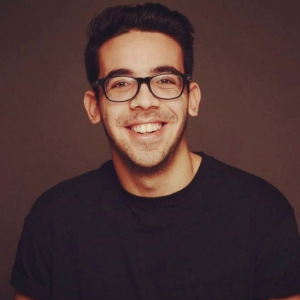 My first Maltese guest, Dan Testa, is one of, if not the youngest guests on the show to date. I actually had no idea he was this young BECAUSE of how advanced his skill-set is. I believe when you hear his work and hear him talk about radio it will obvious why I had to get him featured. A "Young Gun" for sure but a skill level beyond his years, Dan is Head of Production at 897 BAY in Malta. He is a shining example of how Networking can and should be used in a positive manner, how you can learn from the BEST in this business even if you are secluded on a tiny island "near" Italy and the barriers to becomig VERY good if not GREAT at radio production are of your own making. Enjoy this one as we start with the big picture stuff (Like where is Malta?) on down to the nuts and bolts of how he accomplishes his sound.
Distorted Panda - DistortedPanda.com
*Note: Distorted Panda will be out in the next few days! OR maybe it's already out...if you are listening in the future...
If you want to reach out to him he is wide open to field your messages: d.testa@bay.com.mt
Soundcloud - https://soundcloud.com/danielesta
Find him everywhere else with @Dantesta897
My first Maltese guest, Dan Testa, is one of, if not the youngest guests on the show to date. I actually had no idea he was this young BECAUSE of how advanced his skill-set is. I believe when you hear his work and hear him talk about radio it will obvious why I had to get him featured. A "Young Gun" for sure but a skill level beyond his years, Dan is Head of Production at 897 BAY in Malta. He is a shining example of how Networking can and should be used in a positive manner, how you can learn from the BEST in this business even if you are secluded on a tiny island "near" Italy and the barriers to becomig VERY good if not GREAT at radio production are of your own making. Enjoy this one as we start with the big picture stuff (Like where is Malta?) on down to the nuts and bolts of how he accomplishes his sound.
Distorted Panda - DistortedPanda.com
*Note: Distorted Panda will be out in the next few days! OR maybe it's already out...if you are listening in the future...
If you want to reach out to him he is wide open to field your messages: d.testa@bay.com.mt
Soundcloud - https://soundcloud.com/danielesta
Find him everywhere else with @Dantesta897Transcript
84 min read • 12,583 words
Announcer: The Producers, featuring the most respected international talent in the world of audio production and voiceover. Radio, TV, film, and online. In-depth interviews, industry insights, putting you on the inside.
Announcer: This is The Producers Podcast with Ryan Dreen.
Ryan: Howdy, podcast time. I'm Ryan. Thanks for checking her out. let's see here. Guest today coming up here in just a minute. today, as if, you know, whenever you're listening, assuming it's a day. Daniel Testa, we'll call him Dan. Dan is the head of production at 897 Bay in Malta. I love doing this podcast for a lot of reasons, but, the more international episodes to me, especially when I'm talking to someone from a place I know nothing about. So I did spend a little bit of time, kind of learning about the environment there, the, the radio landscape, if you will. Dan's the head of production. He's also on the air. He works 8 days a week, turns out. And here's the kicker. Dan might be— I'm trying to think. I didn't put any thought into this. He might be the youngest guest I've had on the podcast ever. How about I say extremely early 20s? Technically, he's in his 20s. We'll leave it there. Hope you enjoy the show. Oh yeah. Distorted Panda is the newest offering from Dan. He's already starting his own imaging and branding service. And so we talk a little bit about that. We get some audio from that. Although when you're— depending on when you're listening to this podcast, distortedpanda.com is the website, but it might not actually be up yet. It's still so new. Another thing I want to bring up there. Okay. This person who I will mention in just a second was brought up during the podcast, which reminded me He's been doing his own podcast for a little while, and I call myself a friend of his, and yet I haven't mentioned it on my podcast, 'cause I'm a dick. No, one of my favorite people in radio, period. I've gotten to hang out with him multiple times in multiple countries. just one of the good guys, one of the good guys. Chris Nickel started a podcast, The Radio Imaging Podcast. Little on the nose there, isn't it, Chris? Anyway, go to wizfx.com to get the details there. That's Chris's website. Imaging effects, imaging tips, he's got plugins, I think free plugin settings, all kinds of stuff there. You should have visited that website anyway, but the Radio Imaging Podcast can be found there and then various other places on planet Earth, but wizfx.com. Okay, that's enough. Let's get to it. The interview with the one and the only, Maltese Daniel Testa. Here we go! Let's see those hands in the air, Malta! The 897 Bay Weekender just got louder. Sam Feltz, Martin Garrix in the mix. The weekend lives on 897 Bay. Come on! Hey, this is Martin. This is Tracy Button. Hip music right here. Oh, now we raise it up to the next level. 897. Babe, I woke up pissed off today. How you doing tonight? The sound of the weekend. How many people can't just pop? Now, Liam Hinks in the mix. Let's go! Hey, with the rhymes, this is our single Middle of the Night. Ready? I keep coming back to that moment. Here we go. How you guys feeling tonight? Man, I'm shaking a little bit right now. Malta's number one hit music station. Here we go then, Wednesday morning. Hope you're well. This is Simon. Let's do it. Let's get those hits on. Hello everybody. Hey, this is Shawn Mendes. Get all the hits right here. 897 Bang. Turn your radio up. I wanna follow where she goes. Throughout the last decade, we've given away cars, cash, trips to see The biggest stars. Coldplay, Rihanna, Bruno Mars. Now, now we're about to take it to the next level. Are you ready? 897 Bay and Bing Insurance Brokers are giving you the chance to win €100,000 in cash. Wow! But I have my money. To apply, visit bay.com.mt. Fill in the details, and we could be calling you back to guess the digits to our safe. Money rain, rain, rain. Cash in with the island's biggest ever on-air 100 days to win $100 grand with Ving Insurance Brokers and Malta's number one hit music station, 897 Bay.
Ryan: And, here we are. Some, some epic production right there. Let me welcome my guest from Malta, Daniel Testa, or Dan. How are you, man? Thanks for joining me.
Daniel: It's a pleasure. How are you, Ryan? I'm great.
Ryan: Wow. so we, we've known each other now for quite a long time online. I've heard your work for quite a long time. You do great work. I just wanted to compliment you right out of the gate. I think your imaging is stellar.
Daniel: Thank you so, so much. Thanks a lot.
Ryan: I, I know a lot of people will have heard you on YouTube. I mean, I'm sorry, on SoundCloud. they can look for Dan Testa 897. Of course, 897 Bay is your station, your official title, head of production, right?
Daniel: Yes, that's it.
Ryan: And I'll be honest, I hadn't done a lot of, of investigation because I knew you as, you know, a really, solid, even still maybe maybe up-and-comer, we could even say up-and-comer still, but as far as an imaging producer, you're actually the afternoon host at that station.
Daniel: Yes.
Ryan: And while I won't give anything away, you might even have bigger things in your future there as far as on-air.
Daniel: Yeah, I mean, from a presenter's point of view, everyone has that dream, you know? Right now I host drive time from Monday to Sunday on 897 Bay from 3 till 6:30, so that's like half my day here at Bay. The other half is doing the imaging.
Ryan: Yeah, that's cool. So tell me about— why don't we just start right there? You host— is the show live the whole way, at least Monday through Friday?
Daniel: Yes, it's live Monday to Friday. Most weekends I come in and do it live too, but I— Oh, do you? Yeah, I do actually. I'm here Monday to Sunday, which a lot of people will probably find weird. I work here during the week, but then in the weekend I'm here in the afternoons really. and I try to finish all the stuff which would have been pending throughout the week just to try to keep everyone happy.
Ryan: Yeah, wow. So then, so you're on the air for whatever you said, 3.5 hours or so a day, and I'm sure you need a little time for show prep and just to get stuff completed. And then how many hours a day are you actually producing imaging?
Daniel: I'd say a good 2, 3 hours a day on imaging. It's only recent that I'm completely on imaging because up until a few months back, I was doing the commercials as well, so you can imagine how tight the day was taking care of all the things.
Ryan: Oh, so you were actually doing more?
Daniel: Oh, yes.
Ryan: Oh, wow.
Daniel: But now we have a commercial producer as well. His name is Emerson. I'm sure he'll listen to this actually. So I have to tell him a little hi because he's new into the radio world. I'm really, I'm getting him into this. So he's really starting to geek out. So that's cool as well.
Ryan: Oh yeah. Shout out Emerson.
Daniel: All right.
Ryan: Awesome. Okay, cool. So that's a pretty stacked schedule and you don't have a weekend. So that's—
Daniel: Yeah.
Ryan: For those, I get this question all the time and I always ask the advice of all of the guests I have on the show. But, you know, for the young folk wondering, you know, what do I need to do? How about working 7 days a week? That's a start. That's one thing you can do to— so let's go with, first of all, sort of the area. Now, I'll be honest, I had heard of Malta without a doubt, and I knew it was somewhere near Italy.
Daniel: Yes.
Ryan: That was about as far as I got. So I pulled up the Wikipedia page just to kind of like You know, refresh my mind, but tell me about life there. It's a small group of islands, and then just give me a little flavor of what it's like to live there.
Daniel: It's tiny. As you said, it's pretty close to Italy. Flight-wise, it's, I'd say, about an hour, especially from Sicily, which is right near Italy. And then Malta is divided mainly into Malta, Gozo, and Comino. No one really lives in Comino. There's like a person or two which actually lives there. And there's just a huge hotel, and it's a place for tourists. It has lovely beaches and stuff.
Ryan: Wow.
Daniel: Then there's Gozo, which is our sister island, which is a bit smaller than Malta, and lots of people call it the older version of Malta, 'cause lots of older people live there. It's a bit, not laid back, but it's a bit different. It's like Malta, I'd say, 10 years ago. And then there's obviously Malta, which is a typical European country, I'd say. I think I find it pretty close to Spain and stuff. We have a city, a little city really, which is dedicated to clubbing. It's called Paceville, lots of clubs there. It's an area. A city for us is nothing for you guys. Every little place you get, for example, for me to get to work, it takes 15 minutes. And that's not far, but that's okay. The furthest distance from one side of the island to the other, just to get how small Malta is, would take you not longer than 45 minutes.
Ryan: I was going to ask that actually. So, 45 minutes to drive coast to coast, if you will.
Daniel: Yeah, that's it. And the only way to get to Gozo right now is, well, the way most people use is by boat. There's been this whole thing that they're going to build a tunnel to go to Gozo, but it's never happened yet.
Ryan: And are you in the capital city?
Daniel: No, the capital city is Valletta. We're a bit further away from that. We're in St. Julian's, which is right where you find this beautiful place. It's literally down the road to us, actually.
Ryan: Sure.
Daniel: So that's nice as well. And the best thing about working in St. Julian's, I find, is that we've got lots of like restaurants and stuff like the McDonald's and all these places, which are literally opposite the road. So even for us to go out and grab something to eat is really easy. We don't even need to drive. So that's great. And well, the big thing about Malta is our sun, which is probably why most tourists come to here. It's sunny almost every day of the year.
Ryan: Is that right?
Daniel: Yeah, we get rain, but It's very, very small amounts of rain.
Ryan: Like in the afternoon or something every day? Like Hawaii maybe?
Daniel: Oh no, no, not even every day. In winter, in winter it rains that maybe say once, twice, mostly 3 times a week if it does. And it starts to get hot after February. And it's just—
Ryan: Oh wow.
Daniel: Yeah. And right now we're in a heat wave actually. It feels like 43 degrees in Malta right now. So it's Boiling.
Ryan: Yeah, it's crazy.
Daniel: And winter, when it's cold, our cold is 8 degrees at its lowest, and the typical coldness for Malta would be like 15 degrees. So it doesn't really get that cold here. It's never even snowed in Malta, so you can imagine.
Ryan: So, and just a little bit more on that, more your background. Where were you born and raised? I mean, there, or where did— and then where else have you lived?
Daniel: Yeah, I was born in our hospital, in our old hospital, which was in Pietà. It's a place in Malta. My family is completely Maltese. Everyone's Maltese, fully Maltese, as we'd say. And I live in a place called Shamsheya, which is a very, very tiny place. It's around like 3 different roads. That's it. A few people live there only. It's a bit of a quiet place as well, which is nice. And yeah, that's it really. And then getting to work, as I said, takes 15 minutes, which is nice.
Ryan: So you've lived on, do you say in Malta or on Malta? Malta. How would you say it? But you lived there your whole life.
Daniel: Yeah, I've lived in Malta.
Ryan: Your whole life? Wow, great. Wow, that's cool. Now, and just one final— I just like to learn about, you know, these other places, you know, before we get into the nerd stuff.
Daniel: Yeah.
Ryan: But English is one of your official languages there. So you've spoken English your whole life?
Daniel: Yes, I've spoken English my whole life. The way I learned it was my mom always used to speak to me in English and my dad always used to speak to me in Maltese. So that way, even at school. In Malta, it's very 50/50. You might get some people which actually just speak English, which is a bit sad in a way, but you'll also get people which will just speak Maltese, but most speak both.
Ryan: Yeah, cool.
Daniel: Even on air, for example, we have shows in English and shows in Maltese. Same thing with our commercials, it's some in English and some in Maltese in one ad break, because even in a sentence sometimes, well, a lot, Maltese and English. It would be half and half. It's a bit weird for people, but when foreigners are here, they'd get like half a sentence because we'd use a few words. Yeah. Uh-huh.
Ryan: Okay. Yeah. So then let's step over to that side now for the radio product and for the, I guess, the market, if you will. Give me an idea of the landscape there. 897 Bay.
Daniel: Yep.
Ryan: Big, big, you know, pop station, top 40 station, whatever you say. What other competition is there? What's the landscape like?
Daniel: Okay. So in Malta, we have 13 stations. We have 3 which are owned by the government, the national stations, and then obviously the private ones. And then there are a few which are just on DAB and some community stations which you'd only be able to get obviously from that certain area. In Malta, we have been number 1. Bay has been number 1 for the last 10 years now. We have 25% of the audience shares and reach, which is great. We always want to keep— Yeah. Pushing it up. The bosses are always trying to get us. Let's get that thirty. Let's get that thirty percent, which is everyone's dream here, which would be which would be great. It's very different because obviously when you see like radar surveys and stuff, you see the number one station. Sometimes it would have like eight nine percent, and twenty five percent might might sound like a wow thing. But obviously the population of Malta is much tinier. We have about four hundred fifty thousand people living in Malta. So it obviously can't get— that's why it's 25%, I would say. And obviously, we've always— the thing with Bay is we've always stuck to our rules of what we play, what we do, and why we do it. We've never really tried to be— the problem, I think, with some stations in Malta is they try to have different formats. So each show kind of has a format rather than a station.
Ryan: Yeah.
Daniel: And obviously, you can always notice as well from their survey numbers, they're inconsistent. Which is what I think is one of the biggest problems. But yeah, that's probably as well why we've been so successful. Obviously then there's all the other radio things which come in, the way we use our social media, the prizes we give away, and all these things, which obviously also helps. So yeah, that's Bay right now. We're a top 40 station. We have— the only thing here is we don't have presenters, which you'd probably hear on a big top 40 station abroad for 24 hours. Finding a presenter in Malta is very tricky. The radio community, as I like to call it, is very, very small. As in, every person that works in radio here is friends. We all know each other. We've probably all worked. Some have worked here and left. But it's very small. It's probably not even 100 people that are into geeky radio kind of thing. So it's very, very small.
Ryan: The company, so you're obviously with a private media company. Is it a Maltese company?
Daniel: Yes, yes, yes. It's called the Eden Leisure Group. They own lots of things around here, even in our whole street where Bay is. There's a cinema, bowling alley, a huge car park, the Intercontinental Hotel, a casino, and all these things. And Bay is part of the group.
Ryan: Okay. Are they a company that also has property, you know, I don't know, stations or media or anything outside of Malta?
Daniel: Outside of Malta, no, but we do have 2 digital stations, Bay Easy and Bay Retro. Bay Retro is obviously retro, so we play oldies on Bay Retro, and Bay Easy is a soft AC kind of station. It's very laid-back. There's no presenters on. We just have a guy on breakfast on Bay Easy, but then it's just non-stop music all day. They're on digital radio, which is very, very small in Malta. It's about 8%, I believe, of people that tune in through DAB. So it's still very, very in its early stages.
Ryan: Yeah, do you think that's because it's new, or do you think that's because it's just not gonna really catch on?
Daniel: I have my doubts that it will kick off because it's been here for a while now and it's never really kicked off.
Ryan: Well, I guess it's like HD— you're familiar with HD Radio in the States?
Daniel: Yeah.
Ryan: Yeah, I mean, you know, it's been around forever now, and I mean, it's hard to get devices to catch on, and then people have it and they don't listen to it and Yeah.
Daniel: Sometimes we say maybe the only way it will kick off is if we do what Norway did and just turn FM off, but I think it would piss a few people off as well, so.
Ryan: That's a scary proposition.
Daniel: Yes.
Ryan: Yeah, I mean, that's just a tough band-aid to rip off for anyone anywhere. Cool, so I guess switching over to more on the production side, I do wanna talk a little more about your on-air stuff, maybe we'll get to that in a bit, but as far as the production side, how long have you been producing imaging? You know, why did you start that? How did you start that?
Daniel: Okay, so I started getting into radio itself when I was 10 turning 11, so that's 10 years ago.
Ryan: You said when you were 10 turning 11?
Daniel: Yes, I bought my first little mixer at that time, which I had no idea how to use. I still have it now, actually. And I started doing a little show at my house, just playing. At the time, I couldn't— I hadn't yet figured out how to play music off a PC, which is literally, I could have just got a jack and plugged it into the mixer. I hadn't figured that out yet. So you can only imagine how clueless I was. So I had the DVD player, which I used to burn music onto and play off that at the time.
Ryan: Well, give yourself some— cut yourself some slack. You were 10.
Daniel: Yeah, exactly. Then I joined this community station, which closed down now, the one closest to my area. And I figured out this whole how to record music off a computer, and I downloaded this free automation which I had found, which I think it was called Zara Radio. And I used to do a drive time show on this community station, which I used to record and just send over. That's how I started here. I was about 12. Then I wanted to kind of try grow a bit, so I tried to get into a station, one of the national stations in Malta. I was on there. when I was 14. I had my first national show on radio in Malta when I was about 14.
Ryan: Wow.
Daniel: And then I moved to Bay at about 16, and I've been here ever since. With imaging, it kind of started at the same time. I'd say when I had this show on the community station, I obviously wanted to make jingles, and I could— I had no money to obviously buy jingles or to try convince my mom to buy me a jingle, obviously. So I had got my mom to voice a little jingle, and I tried to put it together with some free effects and stuff, and it was a complete disaster. I actually have it somewhere saved on a CD.
Ryan: I was going to say, you keep that around somewhere to go back and listen to?
Daniel: I have these shows somewhere on CDs at home.
Ryan: Yeah.
Daniel: But that's how I started getting into imaging. I had started on Cubase. I had this free version of Cubase, which I got with this mixer that I had bought, and I started messing around on that. At the same time as well, I was also very much into like audio production, how to make music. and stuff. So I used to like go to studios. Back at this time, I used to sing a lot. I had taken part in the Junior Eurovision. I had represented Malta and all these things, which really had got me into music a lot. So yeah, then I started looking at studios and going there and asking them lots of questions and bugging them, can I come spend an hour with you to look at that and look at this? And I had no idea what was going on.
Ryan: Yeah.
Daniel: And then I started to discover proper radio imaging and how amazing it is and what you could do with it. And I had just, then I started, I was still on this station and I had the community station. I started making some sweepers for them. And at the time, then I moved to the national station, but they obviously, I played them my jingles and they weren't good at all at the time. So they didn't ever let me air them. So yeah, and that was one of the reasons I left actually, because I loved production so much and I was, so keen to getting my work on FM, kind of just to listen to it in the car and say, yeah, I made that.
Ryan: Mm-hmm.
Daniel: And then I left and I came to Bay and they said, yes, we'll get you, we'll teach you how to do some basic stuff, like some basic sweepers and stuff, and you'll get them on air. And that's actually one of the reasons why I moved to Bay. And then it started from there. I really started to get into imaging, watching your podcast and videos on YouTube, like all the Dave Fox ones. and Googling and listening to these videos, the Mike Russell ones on Music Radio Creative. That's how I started. And I started on Adobe Audition. That's when I moved to Adobe Audition. I started to figure out what does what. I used to do everything in the wrong way, really, when I look at it now. But that's how I started to get into it. Yeah, then we started making stuff for Bey at the time. And obviously they started to trust me a bit more. So I started to do some promos, and then it all built up from there. The old guy left. And no one here in radio had ever used Pro Tools. So I started to try that out because every video and every photo I used to see from the pros, everyone used to use Pro Tools. So I said, maybe I should try figure this out. And I was clueless on Pro Tools. I had started to become a bit decent, let's say, on Adobe Audition. But then when I moved to Pro Tools, I'm like, okay, this is not good. I have no idea what to do.
Ryan: Yeah, let me jump in on that part because I know that that's a topic that comes up with people, especially those that are like, well, I have to know Pro Tools, right? So you were on Audition and you knew it very well. Why did you have to or want to move to Pro Tools besides the fact that you just saw people using it?
Daniel: I think I look at it in a different way now. I don't think Pro Tools— Adobe is for beginners and Pro Tools is for the pros at all. They can both achieve a great result.
Ryan: Yeah, for sure.
Daniel: The thing with Pro Tools which I wanted to move to Pro Tools for was the grid and the whole way warping works and everything. But the grid, which is— I really never got why Adobe Audition doesn't really have the proper grid that Pro Tools does. I like to work everything on my grid. I like to warp everything when I'm producing something, and I couldn't really do that. So even—
Ryan: I haven't seen Audition in so long. Audition still doesn't have a grid?
Daniel: No, not that I know of.
Ryan: That is surprising. Yeah, maybe— oh wow, okay, sorry. So yeah, that's a huge reason then to work on Pro Tools, especially if you want to do anything tempo-based, you know, anything musical. Yeah, that's true. Even though it's— yeah, if you want your imaging to sound musical, tempo-based, yeah, you've got to have your grid.
Daniel: Yeah, that's the reason really. I mean, it all depends what you're going to do. If it's CHR, if you need to do something which involves a beat, everything on the beat, it will take much longer to do it on Audition. You'd probably get there, but it would take much, much longer than just copying everything on a grid and boom, it's done.
Ryan: That's pretty interesting. That's a really good reason. So you were pretty young to have figured that out. I'm assuming this wasn't just yesterday. This was a few years back.
Daniel: Yeah, I was about, I think I was about 18 at this time.
Ryan: Okay.
Daniel: I'm 20 now, so it's only been 2 years. It's not been that long. And I'm trying to figure out how to properly get onto Ableton and Studio One now as well. I've got them on my Mac at work because I've seen a few videos of people using Ableton as well, which is, I'd like to try it out. I use Logic as well, but it's more for composing stuff. Let's say use Logic. I prefer Logic for that. But when it comes to mixing and putting stuff together for jingles and imaging and radio, it's all on Pro Tools for me.
Ryan: Cool. That's a few different topics there. Yeah, the Logic is definitely— every musician I've talked to has that attitude. Like, well, I use Logic for composing because it's just that much easier. So one of my questions was, and I think you've already alluded to this, are you a musician officially, or you're at least musical? And how important is that for your production?
Daniel: Yes, I play the drums. I had done all the exams and stuff when I was younger. So yeah, I play the drums. I learned—
Ryan: I've had so many drummers on this podcast, by the way. It's weird.
Daniel: Today I saw a post. I can't remember who posted it, but it was something to do with help when you know drums, it helps in imaging. And I think it actually does a bit to a certain extent. Then I learned the keyboard because I wanted to start composing. So I figured out, I started by learning out some chords, watching loads of videos on YouTube, and yeah, I can play the piano pretty well now, I guess. Just enough to do what I want, really. Yeah, and I sing, which helps as well, because sometimes I need to do some stuff, so singing comes in handy as well.
Ryan: Yeah, okay, so musician then, that's key.
Daniel: Yeah.
Ryan: Obviously it's important to your production. I gotta say though, I mean, like I told you, since the first time I heard some of your stuff, it was pretty good, but you've gotten I mean, you're putting out some, some really great sounding work, but very musical.
Daniel: Thank you so much. Thanks.
Ryan: Are you familiar with like George Taylor?
Daniel: Of course. Yeah.
Ryan: So I would assume—
Daniel: geek when it comes to names and who works where and who does what and all these.
Ryan: So I was gonna say, I assume George Taylor is an influencer of you. Who else? What else do you look at? Who else have you, you know, listened to, to hone your sound?
Daniel: I'd say, and he knows this because I speak to him all the time, Chris Nickel from Emitter and the old head of production at Capital.
Ryan: Great guy.
Daniel: Yeah, fantastic. Yeah, I think he, I remember listening to some of his reels on SoundCloud and saying, how on earth do you get that sound? This is, I think, one of the ways I learned. I just used to go on SoundCloud and listen to things and try. and get that sound of that certain bit. Or if not, if I couldn't figure it out, I'd message them. And that's what I did. In fact, I had messaged Chris a long time ago, and then we became friends and everything. So yeah, I think there's Chris, one of my favorites, I would say, and people who have really helped me. So there's Chris. Capital, anything Capital. I love their sound. It's even Capital Xtra. It's fantastic. The way I try to make Bey sound is as Capital as possible, but then obviously Bey has its own unique sound. Lots of things are pretty similar, I would say. So everyone like Dan Hill, Ashley Bard, one of my, I would say, actually my bestest radio friend is Denzel, who you had interviewed a few weeks back. Denzel Lacey.
Ryan: Oh yeah.
Daniel: Big hello. I told him we were going to do this show and he's like, I'll be the first one to listen to it. Denzel and I have been speaking every day for a long time, for quite a few months now. And we're always asking each other, how do you do this? And I'll ask him, hey, you have that artist drop, can you send it over? And can I have this? And I'll give you this song. And Denzel is amazing. I've learned a lot from him as well.
Ryan: That's important, right? I would say especially for those of you that are kind of in your own world, you know, you can't just jump in a train and ride for an hour and be in a totally different country with humongous radio stations, you know. So the internet is putting you together with people in Ireland and, you know, London and And there's Brad Leesk.
Daniel: I don't know if I'm saying his surname right. Leesk.
Ryan: Leesk.
Daniel: Yeah, he's— we've only started talking a few weeks ago. He's amazing. His work is absolutely fantastic.
Ryan: I'm hearing you're kind of talking new guard people, you know. Hell, Chris Nichols is kind of an old man now, but you know, you and Denzel and Brad, you're all the— you're the ones that are gonna be like the Dave Foxes in—
Daniel: Oh, I wish.
Ryan: You know, you're the ones that are gonna be that in the next 10 or 20 years.
Daniel: I hope so.
Ryan: What else do— I'm trying to figure out to really elucidate what the digital world has done. So you and Denzel are able to just kind of talk like, hey, how'd you make that sound? Do you guys do any screen sharing? How do you discuss sessions and how do you discuss techniques?
Daniel: When it comes to like chains and stuff, it's through print screens, I guess. We send print screens to each other. Same thing with Chris as well. I think Chris is probably one of the most that I'd probably say I used to bug at a point because I used to message him so often. How did you do this? How did you do that? Chris is amazing. Every time I'm in London, I always meet him for a coffee and for a chat. And I try to go to the Imager Studios as well. That's where I had met George once. He probably doesn't remember. I've met all the people there. Kenny as well, who's great. Last time I was in London, I sat with Kenny for a while just to show me some things and all the other people there.
Ryan: Yeah.
Daniel: I'm probably forgetting someone as well. But everyone at Imgur and Wise Buddha is fantastic.
Ryan: Yeah. So you say last time, do you get over to London? Do you get over to other places in Europe often? Are you able to, you have that luxury?
Daniel: Every time I want to go abroad, my first option is London. I love London. I've been quite a few times, I'd say now. Yeah, as I said, when I'm there, I try and meet as many people as possible. Some people from Capital as well, even if it's just for a coffee and just to geek out for a little bit. I meet Chris all the time. So yeah, when I'm in London, it's always a geeky radio trip. Last time I was there, I went to Kiss as well for a tour with Andrew Wilson, who's another fantastic producer. So yeah, I've been to quite a few places.
Ryan: That's cool. What is it like from Malta? I don't mean to get off, but it's like EasyJet to London, like €30 or something, or Ryanair? Ryanair.
Daniel: It depends when you book it. If I had to book a flight for like the next 6 months, it would cost like €30. But if you had to book one from now till next week, it would come to about €150, €200, I'd say.
Ryan: Oh, okay. So yeah, if you can plan ahead, then €30 Ryanair right to London.
Daniel: That's what I do usually. When my pay comes in, I just say, okay, let me book a flight for the next 3, 4 months. And then a month later, the reminder comes up. Oh, okay, I'm going to London. I need to book my leave. That's how it is usually.
Ryan: Yeah, you know how many places inside my own country I can fly to for what would amount to about $40?
Daniel: None.
Ryan: There's no places. There's no $40 places in my country, my own country. Forget about going to another country. Anyway, that's just jealous American of those of you in Europe. Hey, you know, not like we're out of time quite yet, but I wanted to make sure I really hit on this because the timing of this is kind of working out. Distorted Panda.
Daniel: Yes.
Ryan: I'm gonna throw that out there like that and you tell me what that's all about.
Daniel: Okay, so Distorted Panda is a new project which we're working on, which will be launched in the next few weeks, possibly days as well. Depends when you're listening to this really, because if you're listening to it in like 6 months, it would probably hopefully be on as well. So that would be good. And it's—
Ryan: Yeah.
Daniel: I wouldn't call it a production service, just like the others, like Image-Air. They're great, fantastic stuff, and Production Vault and all these. It's a bit different because it's not somewhere, something you would log into, download audio, and that's it. We have some kits which are available, which you can just purchase. So let's say if you need certain stage shoutouts, is what I like to call them. So like Justin Bieber saying, you guys are awesome, thank you so much. Some different ones of those, and then some artists drop some sound packages, effects packages. So like a producer's best friend is what I like to call that section.
Ryan: Sure.
Daniel: So that's great. And then we have the other section, which is obviously for stations to get in touch if it's a brand new station and they want us to create their sound, or if they want a new breakfast show package, or if, for example, they want us to set up retainers. Let's say we'll take care of all their branded intros for a monthly fee, for example. And then there's another section of the website as well, which we're launching, which is to the near future, which is obviously jingles. So jingle packages.
Ryan: And this is musical jingles?
Daniel: Yes, but we're still in the early phases of that. So we'll wait a bit on that.
Ryan: I've just noticed over the years that sometimes the word jingle is used for a produced piece of imaging and then other, then it's also just musical jingles. Cool. That's excellent. So you said we, is there anyone else you wanted to mention as far as who's involved in this? No.
Daniel: I'm producing all the audio myself, but then obviously there's, we have the sales team and well, it's all part of the Eden Leisure Group, which I mentioned. It's another business unit. So it has like the marketing team for the company, which is also helping the marketing for the Storied at Paradise.
Ryan: Oh, that's excellent.
Daniel: The accounts and the sales team. So it is a little bit of a team, but the audio side is all done by me.
Ryan: Yeah, that's great. So that sounds like a pretty solid company. They're kind of leveraging you, but you get to leverage them also. to make this project.
Daniel: It's great. We have Natalie Miller, who is the voice for it. Just, well, she's used obviously to promote everything, so, and to give examples.
Ryan: Where is she from?
Daniel: She's from the UK. She's the station voice for Capital right now as well.
Ryan: Yeah, that's—
Daniel: I'm a big fan of her voice as well. Since we're mentioning station voices as well, I just wanted to say a big hello to Harry Legg and Donna Franco, who are the voiceovers of BAE. They're amazing people too. I love working with voiceover artists and I love having these voiceover sessions as well. It's great to meet people from around the world and to have the guides together. It's fantastic.
Ryan: Yeah, that's great. Harry really stands out. He's definitely got a unique sound and I've heard him on your work for quite a while. You make him sound—
Daniel: Harry has been the station voice of Bay for as long as I can remember, as in probably as long as I think it's been open for at least 10 years, I think, if not longer, 10, 15 years Bay's been open. It was another name before. I think it was called Eden Radio. Bay technically has been open for about 25 years, but Harry's been part of Bay for ages.
Ryan: So since you were a little kid, really since you could remember, literally?
Daniel: If you play Harry's voice to a 6, 7-year-old, they'd say Bay. That's how part of the brand he is.
Ryan: Yeah, so his— that's a cool little— his voice is kind of like a jingle is. You hear it, and instantly you think of that brand.
Daniel: Instantly.
Ryan: Yeah.
Daniel: Yes, yes, yes, definitely.
Ryan: Yeah, that's pretty cool. The word Bay, is it, I mean, you know, what does that, why is it named Bay?
Daniel: Good question. I honestly have no idea why it's called Bay.
Ryan: As I stutter through that question, but yeah.
Daniel: At a point we were called Bay Radio, but then they changed it to 897 Bay. A long time ago it was Bay Radio, and it had another name before, which I have no idea. thinking it was Eden FM, but I'm not sure. But yeah, Bay, I wasn't here when they decided. It's just what it is, really. Maybe because we're near a bay, I don't know.
Ryan: Well, that's what I was wondering. Is it literally— there's like a bay?
Daniel: Oh yes, there's a beach down the road to us.
Ryan: Yeah, okay. You know, to me, a bay though, whatever, it doesn't matter. I was just curious. I forgot to ask it earlier.
Daniel: What—
Ryan: so, okay, distortedpanda.com, is that Yep, that's right. Okay, great. Distortedpanda.com. Now, as we speak, we're still pre-launch on that, and I had already had this interview set up with you before, and you're like, hey, well, look at this new project I'm working on. So it's sort of timed out really nicely here. Yes, perfect. So it's possible— okay, but, but the website is live, so people can definitely at least go check out what you're working on.
Daniel: The website is not live.
Ryan: Okay, not live.
Daniel: No, well, we're not really done yet with the website. We're working on it, but I've got all my audio stuff and all my kits ready to go. So we're testing out just to see if everything works on the site and stuff. And I'm also going to be doing with Distorted Panda some freebies as well, which is nice. I mean, everyone loves like a free branded intro and all these things, which I love. When I was starting out, when people— I remember Chris Nickel from Wizz FX used to put away these free audio bits and like a free branded intro and everything, and I used to love them. So I'm guessing people would too, I hope. Yeah, I hope so. So we're gonna be giving away some, some freebies as well.
Ryan: Hey, there's one, one global truth, and if it's free, people will take it.
Daniel: Yeah.
Ryan: So now what they do with it, you know, that, that could vary, but yeah, free is never bad. Free— people like free. Well, that's great. Distorted Panda, I hope that is hugely successful for you.
Daniel: Thank you. Thank you very much.
Ryan: I don't know how you possibly have time for it. But good question. Yeah, you know, I mean, I know that basically your entire life is kind of wrapped into Bay 897. Yeah, but what, what else are you up to working? I know you've mentioned Capitol a few times. I don't actually know what you may or may not do with them, but—
Daniel: I work in radio all day. Radio is kind of just what I do. Obviously, then when I'm not at work, I'm probably— I have a little studio It's a little garage which I turned into a studio, which I do some stuff there. I have my drum kit there because obviously I won't be bugging the neighbors because it's underneath the houses, so no one can really hear it. And it's all soundproofed and stuff, so that's nice. I like to go and kind of unwind and play the drums sometimes. I find it very relaxing. Yeah, that's it really. That's my life. It's all rotated around radio. People here tell me I need to get a girlfriend because I need to get a bit of a life.
Ryan: But yeah. Hey, that's true. I mean, you know, sometimes passion is hard to put away, you know?
Daniel: Yeah.
Ryan: It takes over for everything. This studio though, is this like, I don't know where you live. I don't know if you have an apartment or a house or you live in your mom's basement.
Daniel: Oh no, I still live with my parents. I'm 20. And then Malta people would generally move out at let's say 26, 27.
Ryan: Oh, okay.
Daniel: Wow. So yeah, I still live with my parents, but I drive at least, which is nice because I don't need to catch the buses.
Ryan: Nice. What's the, what's the legal age of drinking there?
Daniel: 18. No, 17. That's 17.
Ryan: Oh, oh wow. Yeah, cool, cool. Okay, that's surprising. so it's just kind of normal, 26 years old or so is when you sort of get out there on your own.
Daniel: The only thing I, I do, but I, I still consider it work although I love doing it, is DJing. I, I play at a few clubs, maybe that's, I'd say, once a week at most, but I try to Recently, I've calmed down a bit on that because after a whole day of work, sometimes I just want to chill out rather than go to a club and party. That's the thing I found myself. I need to calm down at a point because it gets tiring. My ears are just— my ears probably hate me.
Ryan: Yeah, well, that's true though. That's actually— that can be a big problem is like ear fatigue, you know, and you can't work quite as well. So let's talk about some of the tools. I mean, you've already mentioned that you made the transition over to Pro Tools. You would like to get into Ableton. Ableton and maybe Studio One. And what about, you know, what kind of plugins do you like to use and why do you like to use them? You know, what has made you choose what you're using?
Daniel: So basically the way I work for Bey is I have a template which I had created on Pro Tools, which is just— it just speeds my work up really. And obviously Harry's chain is more or less always the same, same thing with Donna. I'm a big Waves fan. I have the Waves, the huge Waves bundle. And on my chain though, I do have quite a few of the plugins which come with Pro Tools. I also love the air bundle which they have, so like the air filter gate and air distortion and all these things which I love to use as well. And I really want to try get onto Soundtoys now as well. I've been looking at it and I know a few people that have it and use it a lot, so that's something I want to get in. We've recently just got Komplete 11 here, the ultimate version, so I haven't even opened every plugin yet because there's obviously so many. It's the same thing with the virtual instruments.
Ryan: I've had Komplete since maybe 9, and I have 11 now, and I still haven't opened everything that Komplete comes with. Like, because you get like 3 or 4 of them that you love. And yeah, sorry, continue.
Daniel: The most one I would use right now is probably the mouth of Komplete, and I'm starting to get onto Molecular a bit as well. When I had gone to Image-Air last time, I had seen them using it and they showed it to me a bit, so I'm trying to get onto that as well. But yeah, everything is Waves. I'm a big fan of the One Knob series as well, like the One Knob Filter, which is really handy as well. Yeah, I've got that. When it comes to delay, I have H-Delay. Reverb, I use R-Verb. Those are the main things. Then there's the L1 for my limiting, and EQing mostly is all done through the ones on Pro Tools, actually. Then Q10 as well is one of my favorites. I enjoy using Q10 as well. So yeah, there's quite a few. But I think it's the general ones. Waves is like— I think you kind of need to have Waves, no matter what you use it on, if it's on Audition or Pro Tools. I think Waves is just amazing. Every plugin on it is fantastic.
Ryan: I think you mentioned the L1, and you might have said the L2 there, But I don't believe you brought up the L3 series, any of the L3s. Are you partial to others? Like, do you not like the L3, or do you just, you just don't use it?
Daniel: I just don't use it, really. I just don't use it. Obviously, then there's the multiband compressors from Waves, which are great as well. And there's a plugin as well which I want to try, Saturn from FabFilter, I think. The FabFilter series seems pretty good as well. my next paycheck would probably go to Soundtoys or, or, or to FabFilter because I want to get those on as well. But the thing is, yeah, I have so many EQs and stuff and plugins, even the Waves ones, which I haven't even used. So I say, yeah, maybe there's something which is there that could give me the same sound.
Ryan: Yeah, I was just talking to— we were kind of— we had a little meeting here yesterday. We've got about 7 or 8 producers that work in the building here, and Waves will have their $29 you know, sales.
Daniel: Oh yeah, I get those emails all the time.
Ryan: Yeah, so, I don't know how many euros they are, but whatever. So, they, you know, we start to think like, you buy yet another EQ, I probably have 3 EQs that are probably to me gonna sound exactly the same. It's hard to know when, you know, you're buying something that is truly uniquely different and useful, or when it's just a repeat of something you already have.
Daniel: That's the thing with Soundtoys, they have like Little Alter Boy, which, which seems fantastic. I've seen a few people use it, So that might give a bit of a different sound, so I want to try that. And yesterday I was watching this video as well. I can't remember the name of it. It's a Soundtoys plugin, but it's a delay as well, which has some really cool effects on it.
Ryan: Is it kind of a simple one? Is it like Primal Tap, maybe?
Daniel: Yes, that's it. Primal Tap. Yeah, that's the one. It seems pretty cool as well, so that might be worth having a look.
Ryan: I think I got both of those for free. If you get on their mailing list, then they're putting out occasional specials and free plugins. sometimes they'll put out a new one of those, like Alter Boy, and they'll release it for free for a while.
Daniel: Oh, that's cool. Good to know.
Ryan: But the other thing I will say for anyone listening, that I use the Soundtoys bundle all the time. I use almost every plugin in the bundle. I use it on voice, on music, you know, you can use it anywhere. Anyway, they also have specials, so I would definitely, you know, pop yourself on their mailing list and then they'll offer $100 off, you know, here and there.
Daniel: So That's great.
Ryan: Yeah, it's definitely worth owning, but I don't know how much it costs regular price, but yeah, it can be a tough bullet to swallow.
Daniel: Yeah, I think the whole bundle is about €500-600. So yeah, it's pretty tough when it goes to plugins especially sometimes.
Ryan: As far as being musical in your production, a lot of people are asking, you know, how do you get that sort of harmonic mixing stuff going on? For you, what are some of the tools you currently have that you do to get that more musical sound embedded in your production?
Daniel: Okay, so as I said, everything is done on Pro Tools. FX-wise, as an FX bundle, I have with FX, I've got 1, 2, 3, and 4, which are fantastic. I use those for Bay, and then obviously for Distorted Panda, I've created an FX package which I use. on that. I have this really good subscription going on as well, which is called Splice.
Ryan: Yeah.
Daniel: I don't know if you've ever heard of it, but it's really worth checking out. You pay monthly, they give you a certain amount of credits, and you can download lots of sounds. So they have lots of kicks and claps and everything, which I like to include. For example, in a promo or a branded intro, I always have a clap going on the whole time, most of the time. So because I just I just find it makes it— it blends everything better. Another thing is, for example, with a branded intro, I always add a crowd, a light crowd. This is something which Chris Nickel had told me about a few years back. I had seen him do it once. We had Skyped and he had done a branded intro for us from beginning to end. It was with Denzel as well. We were all on the Skype session and he showed us, and I'd seen him add this crowd. So, okay, that makes sense. And then I always started adding crowds because I just find it blends Especially if you have a stage shout which you're using from a stage, like, thank you so much, and it obviously helps to blend it much more. Then I have just some rules which I always do. I like to use— I call them sucks, that's how they are on WizFX— like short wipes, so to be like, just a quick one. And most of the time going into something, I'm always using one of those. Something I created with the Distorted Panda package is these light hits which I add to kicks. It's just a fresh tshh which you add to a kick, which I think brightens the whole So I really like to use those as much as I can. But yeah, that's it really. Then there's the usual rules. For example, I don't like to use noise and breakers anywhere in between. I hear it sometimes. It's just not the way I like it. I just have noise in the beginning and the rest is all done with sucks and all those.
Ryan: I can kind of guess what your answer might be, but why don't you like to use those noises and breakers and transition-y type things in the middle of stuff?
Daniel: I just find it the way I work, I don't really like the sound of how it sounds like that. I find it a bit messy. So I'd rather have a suck and stuff like that.
Ryan: Yeah.
Daniel: A big favorite sound which I like to use is a sub bass. I love to use like sub drops and all these things in some part of the promo or branded intro or something like going into the song and stuff. That's another thing actually, when it comes to branded intros, when I go into the song, I spent a while doing it, but I don't really do it anymore. The most I'd use going into the song is a kick, is a sub kick, just really, really low. Going into the song, I don't add any effects. When the song starts, it just ends. When it comes to a branded intro, I just find it cleaner. I'm a big fan of having clean things as well.
Ryan: That's why I was going to say, you want it to sound a little more organic and clean is why you're not putting a lot of that digital junk in there.
Daniel: Yeah. doing the opposite with Distorted Panda, just to try it out with this thing of like power intros and having a kick there going into the song, a bit of a more punchier kick. And that's the way I designed some of the sounds as well, just to have a bit of a different sound. Just obviously nothing sounds the same. And then obviously tuning is something which I use but not too much.
Ryan: You said tuning for those that might not have heard you, but yeah, and we're talking using literally Waves Tune or even Auto-Tune?
Daniel: Waves Tune. I've heard Melodyne is great, Denzel actually told me about, as in I had heard of it before, but I know he uses it as well. So I want to get that on as well because I heard it's really, really good. But Waves Tune just does the job for me right now, so I haven't really bothered with Melodyne.
Ryan: How did you learn Waves Tune? Was it from some of your trips to London to see those guys, or did you just get the plugin and just start teaching yourself?
Daniel: I had once again Skyped Chris, and he had shown me how to use it, and then I just continued messing with it.
Ryan: And you'll take some dry vocal, even a hairy leg bit or whatever, maybe not hairy, but whatever, someone saying something, and then using your own ear, you'll tune literally syllables within the phrase to the exact notes you need it to be on.
Daniel: I find females tune better when it comes to tuning. It's a bit cleaner, and I always like to tune on the lower side. When I tune things to a higher side, sometimes I don't like the sound. So sometimes it gets a little bit of a robotic sound when you take it really down a notch with tuning the notes. So if you're on one note, you just take it a scale down and go down there. With tuning as well, I think, for example, some words don't work, and it depends on if there's a vowel, for example.
Ryan: Yeah.
Daniel: Sometimes it tunes out better as well. And then I just like to chop it up. So if it's, hey, this is Rihanna, I'll get the Anna at the end because there's an A, especially in the beginning, and I'll cut it up to Anna, and then I'll tune all those separately And then as well, I was having this conversation with Denzel earlier today, actually, layering. I think layering is very, very important as well. Sometimes I think it's very hard to get a good sound or to get that big sound you hear on other reels with just one tuned track. I like to have 3, maybe sometimes with an octave lower as well and an octave higher, and then blend them all in. So yeah, that's the way I do it really.
Ryan: And when you said layering, we're still talking about the voice. So literally have 3 layers of Rihanna, and then you're tuning each of those layers differently.
Daniel: Exactly. So if I tuned it one way, then the other one will be the exact same way, just an octave lower or an octave higher, really. And then I like to— I put quite a lot of reverb on this when it comes to tuning. I think EQing is very important when it comes to tuning. The EQing makes a big difference to how it sounds. I had seen them do it at Imager, because when I went there, I told them, please help me out with tuning. I just can't get it to sound as good as you guys get it to sound sometimes.
Ryan: Yeah.
Daniel: And then it was all about EQing, really. So I find that to be a very important tip as well. And I like to give them quite a lot of reverb. I just find it— I think they flow better and they fit in better into the song. Or whatever it is, the branded intro, when you tune. So yeah, that's the way I do it usually.
Ryan: Do you, when you're making your branded intros, you know, because you're kind of, at least my opinion is, you're a little more limited in your material because you have to make stuff stick into that artist's song. Do you find yourself tuning other things to make them work? You know, tuning kick drums or snares or anything like that? Do you get that detailed?
Daniel: No, I don't really tune kick drums, but What I do is I always have, as I said, I'll have my clap going on, and I do like to create a little drumbeat. Sorry about that. Nice and low. So I'll have my drumbeat going on with the song, just to make it sound a bit pumpier as well at the same time. So that's the way I usually do it on a branded intro. I always have a kick going on or a clap going on, and together it just sounds like a little bit of a drumbeat. I just find it really helps. Yeah, but I don't tune kicks, no.
Ryan: Yeah, okay. And I just like to just talk about this. A lot of people are interested, and I think some people feel there's like this magic plugin that makes that sort of, you know, musical spoken word stuff happen. Like, you know, turn on the harmonic tuning plugin and make Rihanna do all that cool stuff. And it's a lot of manual labor.
Daniel: Yeah, it is. It is pretty time-consuming, I think. I find it pretty— It's probably the most thing that takes time. And the thing is as well, I've seen this on a few different blogs and stuff. There is no real wrong or right with some things. I think the way I learned mostly was just experiment, try everything. This whole thing of cutting things up and just layering it, most of the time, I just figured it out. Most things I just figured out.
Ryan: Yeah.
Daniel: And try create your own sound as well, because obviously you don't want to sound just like that thing, just like that piece of work or that piece of work. It's good to create your own sound as well. Yeah, but something I have in most of my tracks, as I said, is the one-knob filter. I'm a big fan of that. I use that a lot.
Ryan: And you're using the mouth. I mean, you brought up the mouth, but the mouth for some of this harmonic stuff.
Daniel: Depends how heavy I want to put, how heavy I want to go on with the tuning. That's when I'll go into the mouth then. But generally it's almost always on Waves Tune. And I don't tune much. As I said, it would probably be like, hey, this is Rihanna, and it wouldn't be the whole drop. It would be the Rihanna at most.
Ryan: Yeah.
Daniel: It depends as well, because sometimes I feel it doesn't fit. I hate forcing tuning just for the sake of it. As in, I don't— some people might say, if you don't tune, you're not that good. I really don't believe in that at all. I believe that you can get things that sound fantastic without tuning as well. Tuning just might give it that extra sparkle sometimes, but you don't always need to tune. That's my opinion.
Ryan: Yeah, no, it makes perfect sense. You know, there's gonna be one of those, you and I could yap on and on forever. So let me throw 2 more at you. First, and you know, answer this however you want, it might even relate to the last one, but When you're producing, you know, basically you're producing for 897 Bay and that's it. What's the number one goal? Like, who are you targeting? What are you thinking about? What's your goal when you make imaging for that station?
Daniel: It needs to be quick, even with a branded intro. My style, it's the style I edit in. I don't really like to use the chorus of a song to go into a branded intro, for example. So I always try to revolve it around the hit music. So if the first one that comes to my mind is Magic Rude, the song, That's one of the ones where I had put the hit music in it. It's been a while now, but in the song they say, can't live without, and then I just add the hit music. That's the way I like to do the branded intros, but sometimes you can't do that. So when I can't do that, I'll get a stage clip. I'm a big fan of— I go through concerts once a week. I have a slot every week where I download a few concerts and just get some audio off them, just to get as many different samples of whoos and—
Ryan: That's cool.
Daniel: As many as I can, because I love to use those in my images. It's probably the thing I use most, actually.
Ryan: So, and you said you literally have it like blocked off in your calendar. Every week you have an amount of time that you spend pulling concert drops.
Daniel: Yeah, I don't think you ever have enough. As in, the more you have, the better. And I find I use them everywhere, in promos, in branded intros, in top of hours. I use those all the time. They're probably the biggest part of a Bey jingle or whatever it would be. So yeah, I do like to use those a lot. And the thing is, obviously in Malta, the biggest problem we have is we don't— artists don't really come here often.
Ryan: I was just about to ask you that. I was gonna go off on a little side note. How often would you say you get— I mean, maybe not a Justin Bieber, I don't know, but anyone, like how often are artists coming through the station that have value to you as a producer?
Daniel: So once a year we have this annual event which is called the Isle of MTV. We had the Chainsmokers here. This is at the beginning of every summer, we had the Chainsmokers, Last time I had Jonas Blue here and a few others as well. Every year we get those, and we always get the chance to interview one of the artists. Not— they don't come here, but we—
Ryan: You gotta go there.
Daniel: Yeah, we go to their hotel and ask them a few questions. And that's the only time I get— I try get a drop from, like, for them to say 897 Bay. I've only got, I think, Martin Garrix, I have James Bay, and I think that's it actually. It's literally almost close to impossible to to get them to actually say Bey. And the thing with James Bay, it's quite funny. He was here in Malta filming a music video, and I figured out, we had tried to find out where he was. I went there, I waited for him till like 1 or 2 in the morning until he actually finished shooting, and I recorded it off my phone, and that's it.
Ryan: And that's how you got half of your drops.
Daniel: Yeah.
Ryan: Half of your Bey drops is 1 in the morning on a phone. Oh man, that's crazy. Yeah, well, I mean, that just shows you one way to do what you can. I mean, you know—
Daniel: Yeah, I think you'll find lots of things online when it comes to sourcing drops. You find a lot of things on YouTube as well. I find YouTube very good. I know the quality is a bit annoying sometimes, obviously, when you download something off YouTube, but I seem— I think I always seem to get it to sound pretty decent with stage clips and stuff, because obviously there's lots of noise. But if you don't afford to get, obviously, or if you can't get concerts and stuff onto here, onto your country or onto your station, that's the way I think you need to get them.
Ryan: Yeah, I've also noticed, I mean, I'm sure many people would have already thought of this, but, you know, there's so much more online content. And whenever a new artist, you know, if you just don't have any content from them yet, you don't have drops from them, they're just too new, someone's interviewed them and someone's posted it. And usually because they're so new, they kind of are going to say, hi, I'm Bill Smith. So people are out there doing your work for you. You just have to go literally grab it.
Daniel: The way I do it usually is I type, for example, if it's Rihanna, I type Rihanna live session, and in a live session once or twice they'll say it, so you'll find something. And the best is when it's a radio interview and they ask them to introduce their song and it's dry, because then you can actually try to find it. That is amazing.
Ryan: Otherwise, otherwise they're playing it over some part of their song and you have to line your intro up with the beats of that. Yeah, yeah, exactly. It gets a little messy. Awesome. Dan Testa, let me ask you my final question. You know, basically you're still really young, but you clearly have a lot of knowledge and you've put a lot of the work in here.
Daniel: Thanks.
Ryan: You know, other people that are coming— the 11-year-old that's out there right now Trying to learn radio. What should they start working on? Because they're 11, damn it. They need to get their life together. What should they start working on to take away your job in a few years?
Daniel: Once I had seen this video which Howard Ritchie had posted. As I said, I'm a big radio geek, and I'm pretty sure that the people listening to this would have probably also seen this video. It's a video he had uploaded going to Capitol and meeting the producers. It's on YouTube.
Ryan: I saw that. It was awesome.
Daniel: And I had seen that and I had said, wow. And there's some tips there. And I think it was Andrew Wilson who had said to try work for free. And I think that's the thing. It sucks, but I think one, you need to try work for free, try get work experience anywhere. Even if the SoundCloud is a great way to learn, it's probably the best way to learn, I think. There's lots of podcasts as well, including this, which gives you a lot of different tips as well.
Ryan: Yeah.
Daniel: So if you grab one thing out of that show and one thing out of that SoundCloud reel and just practice, practice, practice, you're going to get loads of nos, but eventually you'll get a yes. And maybe that yes will help you grow. And I think as well, because for example, you'd think that some of these big imaging stars wouldn't speak to you if you had to try to add them on Facebook. But most of them, or I think almost all of them, will probably speak to you and help you out. So if there's a guy that you love his work, just go at him on Facebook, find him on Facebook, and ask him. And I'm pretty sure that they'll help you out. Even if you need my help, but there are probably many better people, so.
Ryan: Nah, I think that there will be at least one person that'll email you after this.
Daniel: That'd be—
Ryan: it happens every single show I do. How do they— what's the best way to reach out to you? Just on Facebook?
Daniel: I'm on Facebook, Daniel Testa, you can find me there. I'm on Twitter, @DanTesta897. although Twitter is not popular.
Ryan: Except, yeah, I was gonna say, in Malta, as I learned an hour ago, Malta does not like Twitter.
Daniel: It is dead. It never kicked off, and it's been here for a long, long time. Never kicked off. But I do have it because I find it useful to speak to all the radio people from abroad and stuff. SoundCloud, once again—
Ryan: Wait, I cut you off. What's your Twitter? What are you on Twitter?
Daniel: DanTesta897. Everything is DanTesta897 for me. My Instagram, my SoundCloud, just DanTesta, D-A-N-T-E-S-T-A-897, and you'll Yeah, awesome.
Ryan: Yeah, definitely hit up your SoundCloud. You're posting lots of great stuff there all the time. You send me some audio on Facebook, which is always fun. I like to get— people send me stuff all the time, but it's, it's fun, you know. It's nice when you're working and someone shoots you an awesome promo and you're like, oh yeah, now I'm pumped again. I can't wait to go back to work here.
Daniel: Yeah, I think when, when something— as you said, when someone says, wow, that's really good, it's really, really really boosts your morale as well.
Ryan: Yeah, that's true.
Daniel: But it's a great way to learn as well when you ask us, and maybe they'll tell you, okay, put that down or put that up or EQ that better, boost those frequencies. so I think as well, if you speak to them, send them your work and ask them what you think.
Ryan: Yeah, yeah. I, I'll just— to piggyback that, I've never heard someone say, oh, I emailed all of these people and none of them emailed me you know, it doesn't happen.
Daniel: Oh no, no, they're all fantastic. As I said, George Taylor, Chris Nicholl, Denzel, Stax, Brad from Nova, they're all fantastic. And there's way more. Everyone will answer you. Everyone's answered me.
Ryan: Right, right, right. Anyway, awesome, man. So I'm gonna end here by playing— I'm just gonna fire off the entire demo that you gave me for the Distorted Panda the launch. I guess it's kind of a teaser, but yeah, we'll just end with that. So I will say, Dan Testa, great to know you, great work, and thank you so much for joining me on the show.
Daniel: Lovely chatting with you. This has been— I've been listening— I told you this on Facebook a few times— I've been listening to this podcast for a very long time, and this has been one of my dreams. And when you— when this came together, it made my day. I I called my mom, mom, and she's like, who? What show is this? It's amazing. I couldn't believe it. Thank you so much for this. Let's get it started. Yo, I'm Justin Bieber. This is David Guetta. Oh yeah. Turn up the hits. Distorted Panda. No limit in the sky that I won't fly for you. Distorted Panda, the all-new imaging service taking your station sound to the next level. Browse through our imaging kits and take your pick. Or get in touch with our sales team now for more info. Distorted Panda, let's build the next sound of your station together.
Announcer: Contact the show, contribute your opinions, see additional content, or simply stay connected at producerspodcast.com.